
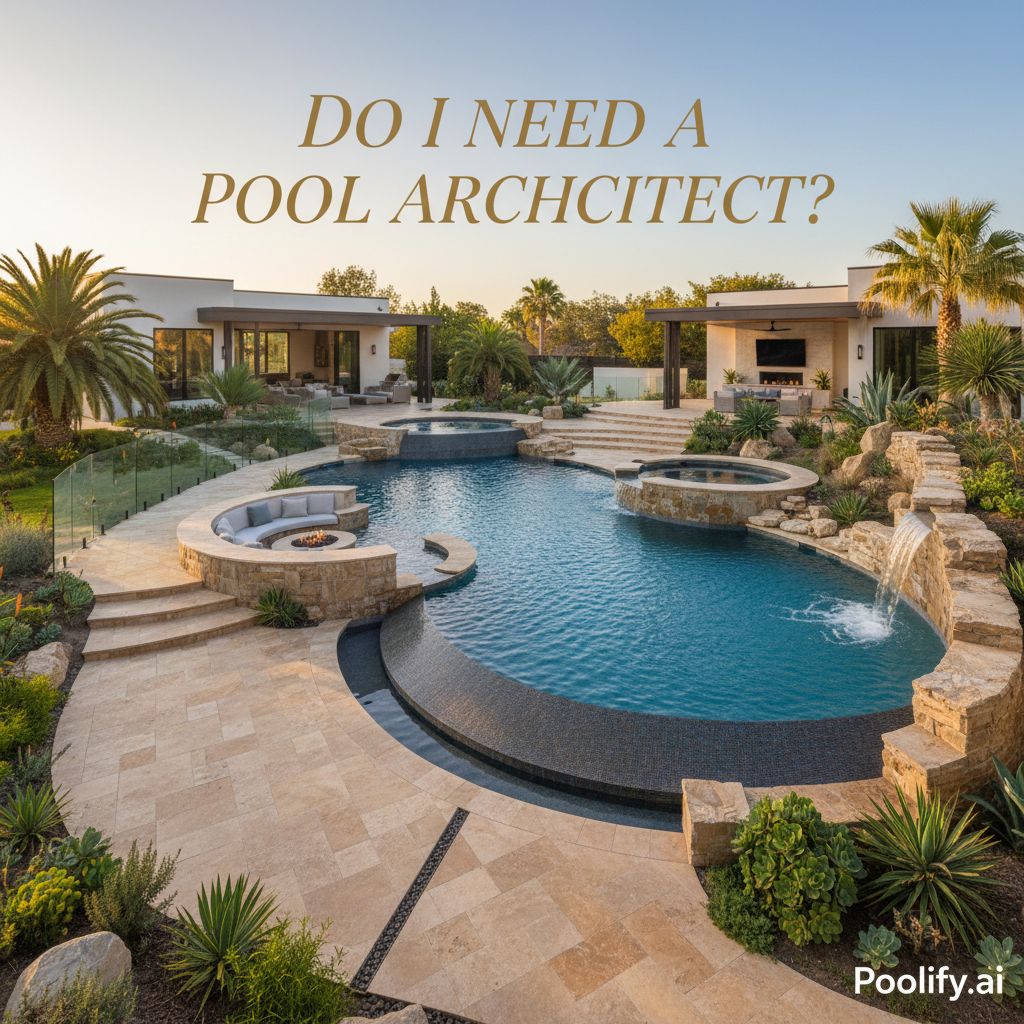
Do I need a pool architect is a common question for homeowners, contractors, and developers planning anything beyond a basic pool. The answer depends on project complexity, site conditions, design expectations, and risk tolerance. In many cases, a pool architect is not required — but in others, their involvement can prevent costly mistakes and elevate the final result.
This article explains when you need a pool architect, when you likely do not, how pool architects differ from builders and designers, and how to decide what level of professional support makes sense for your project.
What a Pool Architect Actually Does
A pool architect focuses on design intent, spatial planning, and integration rather than construction alone.
Typical responsibilities of a pool architect
- Developing overall pool concept and layout
- Aligning pool design with home architecture
- Solving complex site conditions
- Coordinating pool, landscape, and hardscape design
- Producing design-forward drawings for builders and engineers
- Managing aesthetics, proportion, and long-term usability
They are typically involved earlier and at a higher conceptual level than builders.
Pool Architect vs Pool Builder vs Pool Designer
Understanding the differences helps clarify when an architect is needed.
Pool Builder
Pool builders focus on construction and delivery.
Strengths
- Construction knowledge
- Cost estimation
- Permits and execution
- Equipment and systems
Limitations
- Designs may prioritize build efficiency
- Fewer concept alternatives
- Less focus on architectural integration
Builders often provide basic design as part of the build contract.
Pool Designer
Pool designers sit between builders and architects.
Strengths
- Custom layout planning
- Feature placement
- Better aesthetics than standard builder plans
- More flexibility than builder templates
Limitations
- Not always licensed
- Limited authority for complex engineering
- May still defer heavily to builder constraints
Pool Architect
Pool architects operate at the highest design level.
Strengths
- Deep focus on proportion, form, and integration
- Ability to solve complex sites
- Coordination across disciplines
- Strong conceptual vision
Limitations
- Higher upfront cost
- Not always necessary for simple projects
- Still require builders and engineers for execution
When You Likely Do NOT Need a Pool Architect
Many pool projects succeed without architectural involvement.
Situations where a pool architect is usually unnecessary
- Flat, rectangular lots
- Simple rectangular or geometric pools
- Standard residential neighborhoods
- Budget-driven projects
- Builder-led installations with minimal customization
In these cases, a good builder or pool designer is often sufficient.
When Hiring a Pool Architect Makes Sense
A pool architect becomes valuable as complexity increases.
Complex Site Conditions
Pool architects are especially helpful when:
- The yard is sloped
- Retaining walls are required
- Drainage is challenging
- Space is constrained or irregular
These conditions benefit from early spatial problem-solving.
High-End or Luxury Projects
Luxury pools demand restraint and proportion.
Architects help:
- Avoid oversized or awkward layouts
- Align pool geometry with the home
- Integrate materials and finishes
- Maintain long-term design relevance
Their value is often in what they remove, not what they add.
Architectural Integration Is Critical
If the pool must align precisely with:
- Modern architecture
- Traditional symmetry
- Indoor-outdoor transitions
- View corridors or sightlines
An architect’s training becomes an advantage.
Multi-Discipline Projects
When pools interact with:
- Landscaping
- Outdoor kitchens
- Structures or pavilions
- Elevation changes
An architect can coordinate design intent across elements.
Cost Considerations When Hiring a Pool Architect
Pool architects add upfront cost but can reduce downstream expense.
Typical pool architect cost range
- $3,000–$10,000+
- Higher for complex or custom projects
What that cost often prevents
- Late-stage redesigns
- Poor site utilization
- Oversized or inefficient pools
- Construction change orders
For complex projects, architectural fees are often a form of risk management.
The Biggest Misconception About Pool Architects
The most common misconception is that architects always make projects more expensive.
In reality:
- Poor design is expensive
- Redesign during construction is extremely expensive
- Overbuilt pools cost more to operate long-term
Architectural input early often leads to simpler, more efficient solutions.
How Pool Architects Typically Work With Builders
Pool architects do not replace builders.
Typical workflow
- Architect develops concept and layout
- Builder reviews constructability
- Engineer handles structure and systems
- Builder executes construction
When collaboration is healthy, outcomes improve for everyone.
The Role of Visualization in Deciding Whether You Need an Architect
Many homeowners hire architects because they cannot visualize alternatives.
Visualization allows you to:
- Explore layouts before hiring
- Identify whether complexity truly exists
- Clarify design priorities
- Reduce paid concept revisions
Seeing options often reveals whether architectural-level input is truly required.
How AI Pool Design Fits Into This Decision
AI pool design tools help bridge the gap between DIY planning and professional services.
With AI-generated designs, users can:
- Explore multiple layouts quickly
- Test proportions and placement
- Identify complexity early
- Enter architect or builder discussions prepared
Tools like Poolify focus on this early-stage clarity, helping homeowners and contractors decide whether a pool architect is necessary before committing to higher design fees.
Pool Architects From a Contractor’s Perspective
Contractors often benefit from architectural clarity.
Benefits for contractors
- Clear scope before bidding
- Fewer client revisions
- Reduced liability
- Cleaner construction documents
Architectural input can streamline construction rather than slow it down.
Pool Architects and Permitting
In some jurisdictions, architectural involvement is required.
This may occur when:
- Pools are part of larger additions
- Structural walls exceed certain heights
- Zoning or historic districts are involved
Local requirements vary, so verification is essential.
A general overview of how professional design roles differ in construction projects is outlined by the American Institute of Architects, which explains when architectural services add value in residential projects:
https://www.aia.org/resources/6263781-working-with-an-architect
How to Decide if You Need a Pool Architect
Ask yourself these questions:
- Is my site simple or complex?
- Does design quality matter as much as function?
- Will the pool interact with other structures?
- Am I confident in the layout choices?
- Am I trying to avoid expensive revisions later?
If several answers raise uncertainty, architectural input may be worthwhile.
Common Mistakes When Deciding on Design Support
Hiring too early
Paying for full architectural services before understanding the layout wastes money.
Hiring too late
Bringing in an architect after construction decisions are made limits their impact.
Assuming builders and architects do the same thing
They solve different problems.
Key Takeaways
- Not every pool project requires a pool architect
- Simple sites often work well with builders or designers
- Complex, luxury, or integrated projects benefit most from architects
- Architectural fees often reduce total project risk
- Early visualization helps determine the right level of support
Whether you need a pool architect depends on complexity, expectations, and risk tolerance. The right decision is the one that gives you clarity early — before construction decisions become expensive to undo.