
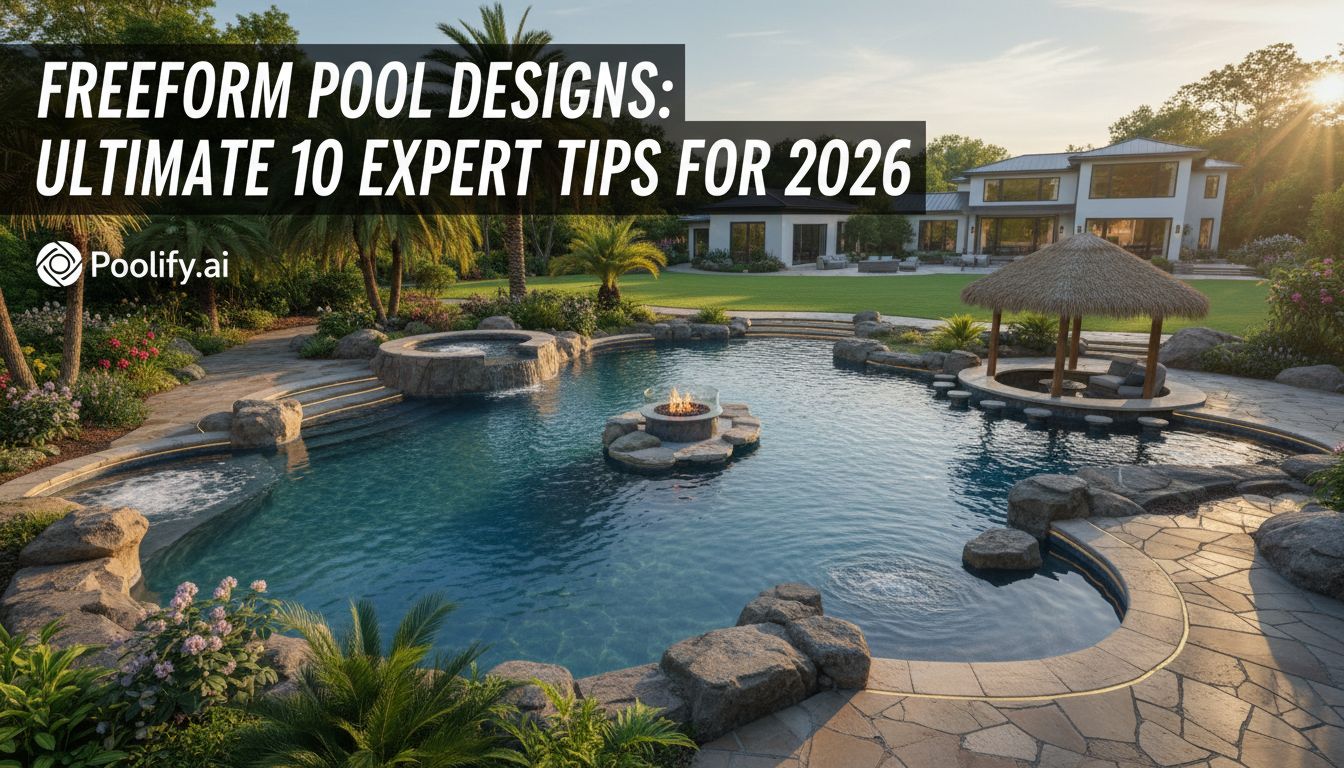
Introduction to Freeform Pool Designs
Freeform pool designs have revolutionized backyard aesthetics by offering homeowners the opportunity to create natural-looking oases that blend seamlessly with their landscapes. Unlike traditional rectangular pools, freeform pool designs embrace organic curves, irregular shapes, and natural contours that mimic lagoons, ponds, and natural water features. As we move through 2026, these custom pools continue to dominate the luxury outdoor living market, providing both visual appeal and functional versatility for families seeking unique backyard retreats.
The beauty of freeform pool designs lies in their adaptability to any yard size, terrain, or architectural style. Whether you’re working with a compact urban lot or sprawling suburban property, these custom pools can be tailored to maximize your available space while creating a stunning focal point. This comprehensive guide explores everything you need to know about planning, designing, and installing freeform pool designs that will transform your outdoor living experience.
Understanding Freeform Pool Designs and Their Benefits
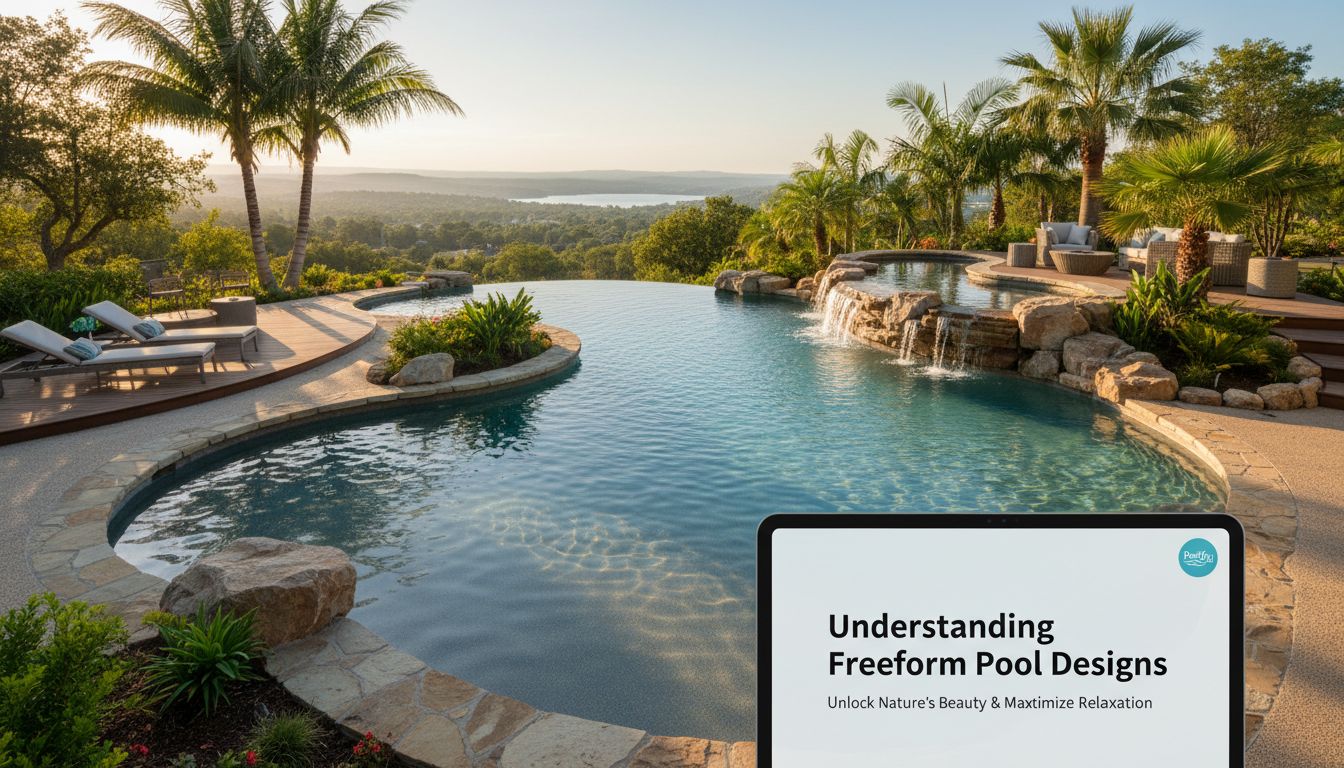
Freeform pool designs represent a departure from conventional geometric pool shapes, offering fluid lines and naturalistic curves that create a more relaxed, resort-like atmosphere. These pools are characterized by their irregular perimeters, which can incorporate kidney shapes, figure-eight configurations, or completely custom contours that follow your property’s natural topography.
The primary advantage of freeform pool designs is their aesthetic flexibility. They complement various architectural styles, from Mediterranean villas to contemporary homes, and integrate beautifully with natural landscaping elements. According to the Department of Energy’s guidelines on swimming pools, custom pool shapes can also optimize energy efficiency by reducing surface area relative to volume, potentially lowering heating and maintenance costs.
Beyond aesthetics, freeform pool designs offer practical benefits including improved circulation patterns, natural gathering areas at various depths, and the ability to incorporate multiple features like beach entries, integrated spas, and rock formations. These pools create distinct zones for different activities, from shallow play areas for children to deeper sections for swimming laps or diving.
Key Characteristics of Freeform Pools
Successful freeform pool designs share several defining characteristics that distinguish them from traditional pools. The absence of straight lines creates visual interest and allows the pool to appear as a natural extension of the landscape rather than an imposed structure. Curves and bends provide opportunities to incorporate water features, landscaping pockets, and seating areas that would be difficult to achieve with rectangular designs.
Modern freeform pool designs in 2026 increasingly incorporate sustainable features such as natural filtration systems, saltwater chlorination, and energy-efficient variable-speed pumps. These elements align with growing environmental consciousness while reducing long-term operational costs. The organic shapes also facilitate better integration with native plantings and rock formations, creating ecosystems that support local wildlife.
Top 10 Design Tips for Freeform Pool Designs in 2026
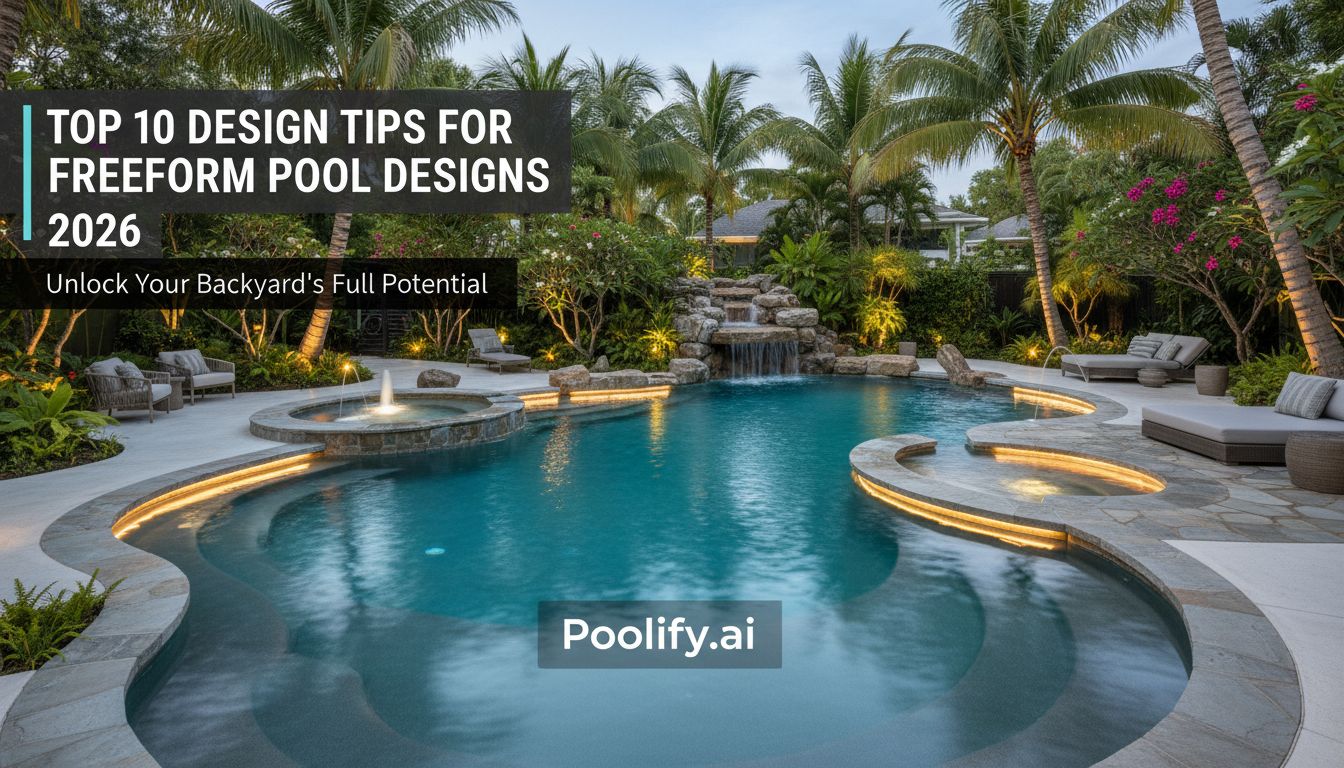
1. Start with Site Analysis and Planning
Before finalizing your freeform pool designs, conduct a thorough site analysis that considers sun exposure, drainage patterns, existing vegetation, and views from your home. The best freeform pools work with your property’s natural features rather than against them. Identify areas where the pool can take advantage of natural slopes, existing trees for shade, and sight lines that maximize privacy while showcasing the pool’s beauty.
Professional site surveys should assess soil conditions, underground utilities, and local building codes that may affect pool placement and design. Understanding these constraints early prevents costly modifications during construction and ensures your freeform pool designs comply with all regulations.
2. Create Natural Flow and Movement
The most compelling freeform pool designs feature curves that feel intentional and organic rather than arbitrary. Avoid creating too many sharp turns or excessive undulations that can complicate construction and maintenance. Instead, aim for smooth, flowing lines that guide the eye naturally around the pool’s perimeter. The curves should have purpose, whether wrapping around a patio area, following a property line, or creating a protected cove for seating.
Consider how people will move around and within the pool. Freeform pool designs should facilitate easy circulation with logical entry and exit points, clear pathways between different depth zones, and comfortable resting areas along the edges. The shape should encourage exploration while maintaining safety and accessibility.
3. Integrate Multiple Depth Zones
One advantage of freeform pool designs is the ability to incorporate varied depths that serve different purposes. Create shallow areas ranging from 3 to 4 feet for young children and lounging, transitional zones at 4 to 5 feet for general swimming, and deeper sections of 6 to 8 feet if diving or advanced swimming is desired. The transitions between these zones should be gradual and clearly marked.
Beach entries or zero-entry sections have become increasingly popular in freeform pool designs, providing accessible entry points that gradually slope from deck level into the water. These features are particularly valuable for families with young children, elderly users, or individuals with mobility challenges, while also creating visually stunning shallow areas perfect for lounge chairs.
4. Incorporate Water Features Strategically
Freeform pool designs provide ideal canvases for water features that enhance both aesthetics and ambiance. Waterfalls, grottos, spillways, and bubblers can be integrated into the pool’s curves to create focal points and mask equipment noise. When planning water features, consider their placement relative to seating areas, ensuring the sound is pleasant rather than overwhelming.
Rock formations and natural stone features work particularly well with freeform pool designs, creating the illusion of natural springs or mountain streams. These elements can also serve functional purposes by housing equipment, providing shade, or creating private alcoves. For more ideas on enhancing your pool area, explore our comprehensive pool landscaping guide.
5. Plan for Comprehensive Landscaping
The landscaping surrounding your pool is just as important as the pool itself in achieving a cohesive freeform design. Select plants that complement the naturalistic aesthetic while providing practical benefits like shade, privacy, and wind protection. Native species typically require less maintenance and water while supporting local ecosystems.
Layer your plantings with varying heights and textures, using taller specimens like palms or ornamental grasses as background elements, mid-height shrubs for screening, and low groundcovers to soften hardscape edges. Avoid plants with invasive root systems near the pool structure, and choose species that don’t drop excessive debris into the water. Strategic lighting within the landscape extends the pool’s usability into evening hours while highlighting key design features.
6. Select Appropriate Materials and Finishes
Material selection significantly impacts the overall appearance and longevity of freeform pool designs. Interior finishes range from traditional plaster in various colors to more durable options like pebble, quartz, or glass tile aggregates. Darker finishes create a more natural, lagoon-like appearance and help retain heat, while lighter colors provide better visibility and a more traditional pool aesthetic.
Coping and decking materials should complement both the pool and your home’s architecture. Natural stone, travertine, and textured concrete are popular choices that work well with freeform pool designs. These materials can be laid in irregular patterns that reinforce the organic feel. Ensure all decking materials have appropriate slip-resistant properties and remain comfortable underfoot even in direct sunlight.
7. Optimize Pool Equipment and Technology
Modern freeform pool designs benefit from advanced technology that improves efficiency, convenience, and water quality. Variable-speed pumps reduce energy consumption by up to 80% compared to single-speed models, while automated control systems allow you to manage filtration, heating, lighting, and water features from smartphone apps.
Saltwater chlorination systems have become standard in many freeform pool designs, providing gentler water chemistry with less maintenance than traditional chlorine. Robotic cleaners navigate irregular pool shapes more effectively than older suction or pressure-side models, ensuring thorough cleaning of every curve and corner. Invest in quality equipment that matches your pool’s size and features for optimal performance and longevity.
8. Design for Year-Round Usability
In 2026, homeowners increasingly view pools as year-round features rather than seasonal amenities. When planning freeform pool designs, consider heating options that extend your swimming season. Heat pumps offer energy-efficient warming for moderate climates, while gas heaters provide rapid temperature increases for occasional use. Solar heating systems align with sustainable design principles and can significantly reduce operating costs.
Incorporate covered areas, outdoor fireplaces, or heating elements that make the pool area comfortable during cooler months. Integrated spas or hot tubs within your freeform design provide warm-water retreats when the main pool is too cool for swimming. These features transform your pool from a summer-only amenity into a true outdoor living space used throughout the year.
9. Balance Aesthetics with Maintenance Considerations
While freeform pool designs offer stunning visual appeal, practical maintenance requirements should influence your design decisions. Extremely tight curves or narrow sections can be difficult to clean and may create circulation dead zones where debris accumulates. Maintain adequate access around the entire pool perimeter for skimming, vacuuming, and equipment servicing.
Consider how your design choices affect long-term maintenance. Multiple water features require additional plumbing and equipment that needs periodic service. Complex tile work or intricate stone formations may demand specialized cleaning. Balance your aesthetic vision with realistic assessments of the time and resources you’re willing to dedicate to pool care. Our essential pool maintenance guide provides valuable insights for keeping any pool pristine.
10. Work with Experienced Pool Designers
Creating exceptional freeform pool designs requires expertise in hydraulics, structural engineering, and aesthetic design. Partner with pool builders who have extensive portfolios of custom freeform projects and can provide references from satisfied clients. Experienced designers understand how to translate your vision into functional reality while navigating technical challenges and regulatory requirements.
Request detailed 3D renderings or virtual reality walkthroughs that help you visualize the completed project before construction begins. These tools allow you to refine design elements, adjust proportions, and ensure the pool integrates seamlessly with your home and landscape. Don’t hesitate to ask questions about construction methods, material choices, and warranty coverage to ensure you’re making informed decisions.
Cost Considerations for Freeform Pool Designs
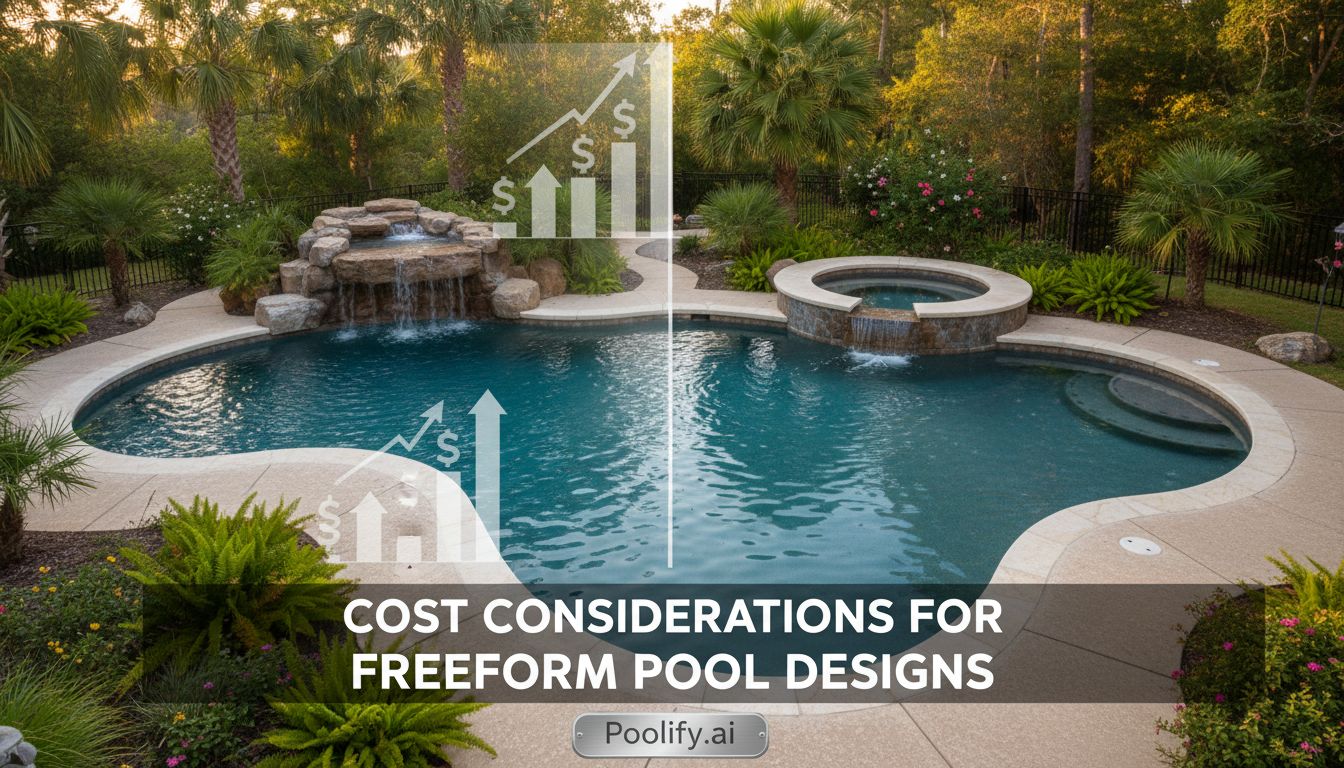
Understanding the financial investment required for freeform pool designs helps you set realistic budgets and make informed decisions about features and finishes. In 2026, custom freeform pools typically cost between $50,000 and $150,000, with luxury installations exceeding $200,000 depending on size, complexity, and regional labor rates.
The irregular shapes of freeform pool designs generally increase construction costs by 10 to 20 percent compared to simple rectangular pools due to additional excavation complexity, increased material waste, and specialized formwork requirements. However, many homeowners find this premium worthwhile given the aesthetic and functional advantages these pools provide.
Factors Affecting Project Costs
Several variables influence the total cost of freeform pool designs. Pool size remains the primary cost driver, with larger pools requiring more materials, excavation, and construction time. Complexity of shape also matters—pools with gentle curves cost less than those with multiple lobes, tight radiuses, or intricate configurations.
Site conditions significantly impact costs. Properties with challenging access, rocky soil, high water tables, or steep slopes require additional equipment and labor. Premium finishes like glass tile, natural stone coping, and custom water features add substantial expenses but create distinctive appearances that justify the investment for many homeowners.
Geographic location affects both material and labor costs. Urban areas and regions with high costs of living typically see higher installation prices. Seasonal demand also plays a role, with some builders offering discounts for off-season construction. Obtaining multiple detailed quotes from reputable contractors helps ensure competitive pricing while comparing the scope of work and quality standards.
Long-Term Operating Costs
Beyond initial construction, consider ongoing operational expenses when planning freeform pool designs. Monthly costs typically range from $150 to $300 for chemicals, electricity, water, and routine maintenance. Energy-efficient equipment reduces these expenses, with variable-speed pumps and LED lighting offering the most significant savings opportunities.
Heating represents the largest variable operating cost, particularly in cooler climates. Budget approximately $200 to $600 monthly during heating season depending on pool size, desired temperature, and heating method. Covers reduce heat loss and evaporation, potentially cutting heating costs by 50 to 70 percent while also reducing chemical consumption and debris accumulation.
Popular Freeform Pool Design Trends for 2026
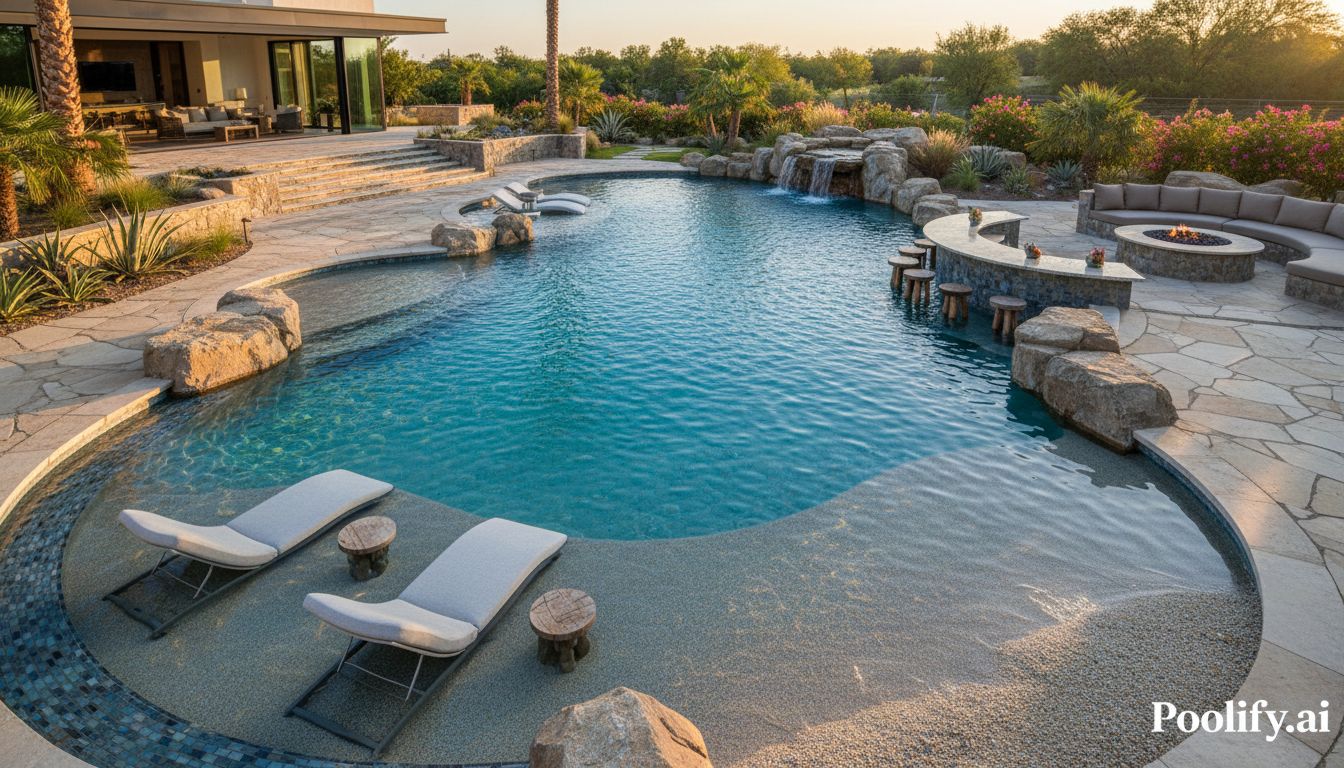
The pool design industry continues evolving, with 2026 bringing fresh approaches to freeform pool designs that balance aesthetics, functionality, and sustainability. Understanding current trends helps you create a pool that feels contemporary while avoiding dated elements that may diminish appeal in coming years.
Natural and Sustainable Design Elements
Eco-conscious design dominates current freeform pool designs, with homeowners seeking ways to minimize environmental impact. Natural filtration systems using planted wetland zones or regeneration pools reduce chemical usage while creating habitat for beneficial organisms. These systems require larger footprints but appeal to environmentally minded homeowners willing to embrace alternative maintenance approaches.
Sustainable materials including recycled glass tile, reclaimed stone, and locally sourced aggregates appear increasingly in freeform pool designs. Solar heating and photovoltaic panels offset energy consumption, while rainwater harvesting systems provide pool water without depleting municipal supplies. These features align with broader sustainability trends while potentially qualifying for tax incentives or utility rebates.
Integrated Outdoor Living Spaces
Modern freeform pool designs serve as centerpieces for comprehensive outdoor living environments rather than standalone features. Integrated kitchens, dining areas, fire features, and comfortable seating zones create resort-like settings that rival interior spaces for functionality and comfort. The pool’s curves naturally define different activity zones while maintaining visual cohesion across the entire outdoor area.
Swim-up bars, submerged seating ledges with umbrella sleeves, and tanning ledges with built-in loungers blur the boundaries between pool and patio. These features encourage social interaction and extended pool use beyond active swimming. Weatherproof audio systems, outdoor televisions, and Wi-Fi connectivity support entertainment while maintaining the natural aesthetic central to freeform pool designs.
Smart Pool Technology
Automation and smart technology have become standard expectations in 2026 freeform pool designs. Comprehensive control systems manage all pool functions through intuitive smartphone interfaces, allowing homeowners to adjust settings remotely. Automated chemical monitoring and dosing systems maintain optimal water balance with minimal user intervention, sending alerts when supplies need replenishing.
Advanced LED lighting systems offer millions of color combinations and programmable shows that transform pools into dynamic nighttime features. These systems consume minimal energy while providing safety illumination and dramatic visual effects. Some installations incorporate fiber optic lighting within rock features or underwater grottos for magical effects impossible with traditional lighting.
Wellness-Focused Features
Health and wellness considerations increasingly influence freeform pool designs as homeowners recognize pools as tools for physical and mental wellbeing. Resistance current systems transform pools into exercise facilities for low-impact cardiovascular training and rehabilitation. These systems generate adjustable currents that allow swimming in place regardless of pool size.
Hydrotherapy zones with strategically placed jets provide massage benefits similar to dedicated spas while integrating seamlessly into freeform pool designs. Cold plunge areas or separate therapy pools complement warm swimming zones, supporting contrast therapy protocols popular in wellness circles. These features position pools as health investments rather than purely recreational amenities.
Common Mistakes to Avoid with Freeform Pool Designs
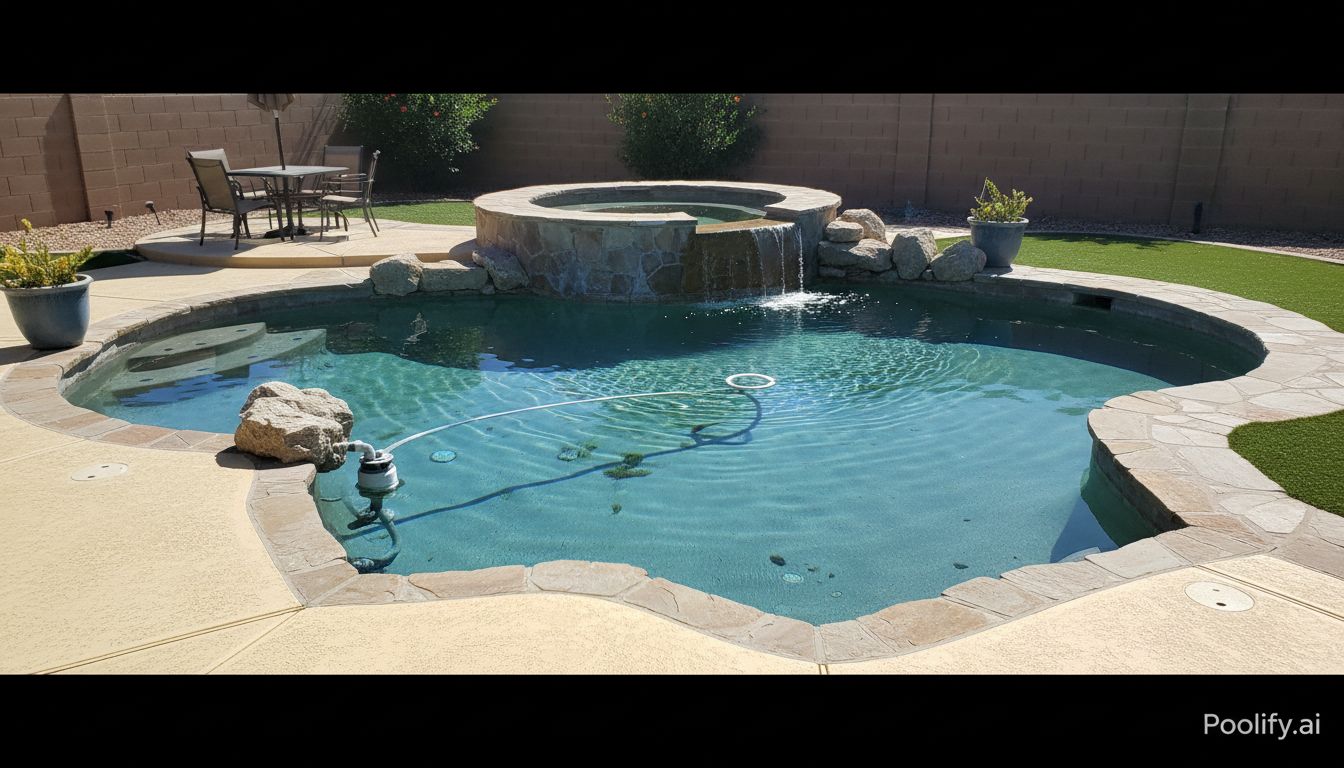
Even with professional guidance, certain pitfalls can compromise the success of freeform pool designs. Awareness of these common mistakes helps you avoid costly errors and ensures your pool meets expectations for aesthetics, functionality, and longevity.
Overcomplicating the Design
While freeform pool designs offer creative freedom, excessive complexity creates maintenance challenges and visual confusion. Pools with too many protrusions, extreme curves, or disconnected sections become difficult to clean and may develop circulation problems. Strive for elegant simplicity with purposeful curves rather than arbitrary complexity. Each design element should serve a clear functional or aesthetic purpose.
Neglecting Proper Circulation Planning
Irregular shapes require careful planning to ensure adequate water circulation throughout the entire pool. Dead zones where water stagnates can develop algae problems and uneven chemical distribution. Work with designers who understand hydraulic principles and can properly position return jets, skimmers, and drains to maintain consistent water movement. Computer modeling helps identify potential circulation issues before construction begins.
Inadequate Budgeting
Underestimating the total project cost leads to compromises that diminish the final result. Include contingencies of 10 to 15 percent for unexpected site conditions or design modifications. Factor in landscaping, decking, fencing, and equipment costs that extend beyond the pool shell itself. Realistic budgeting from the outset prevents mid-project value engineering that may compromise your vision.
Ignoring Future Needs
Design your pool for long-term use rather than only current circumstances. Families with young children should anticipate future needs as kids grow, while empty-nesters might consider accessibility features for aging in place. Including conduit for future technology upgrades or pre-plumbing for additional water features costs little during construction but provides valuable flexibility later.
Frequently Asked Questions About Freeform Pool Designs
How long does it take to build a freeform pool?
Construction timelines for freeform pool designs typically range from 8 to 14 weeks depending on complexity, weather conditions, and contractor schedules. The process includes excavation, plumbing and electrical installation, steel reinforcement, shotcrete or gunite application, tile and coping installation, equipment setup, and final finishing. Complex designs with extensive rock work or multiple water features may require additional time. Permitting processes can add several weeks before construction begins, so plan accordingly when scheduling your project.
Are freeform pools harder to maintain than rectangular pools?
Freeform pool designs require similar maintenance to traditional pools, though extremely complex shapes with tight curves may present minor cleaning challenges. Modern robotic cleaners navigate irregular shapes effectively, and proper circulation design ensures even chemical distribution. The key is avoiding overly complicated configurations with narrow sections or sharp angles that trap debris. Well-designed freeform pools with smooth, flowing curves maintain easily with standard equipment and procedures.
Can I add a freeform pool to a small backyard?
Absolutely. Freeform pool designs adapt well to compact spaces, often utilizing available area more efficiently than rectangular pools. Smaller freeform pools ranging from 200 to 400 square feet provide full functionality while fitting challenging lots. The irregular shapes can work around existing features like mature trees, utility easements, or property setbacks. Experienced designers excel at maximizing limited space while creating pools that feel spacious and inviting despite modest dimensions.
What is the best finish for a freeform pool?
The ideal finish depends on your aesthetic preferences and budget. Pebble finishes have become extremely popular for freeform pool designs because their natural texture and varied colors enhance the organic appearance. These finishes prove durable and hide minor imperfections well. Quartz aggregates offer similar benefits with smoother textures. Glass tile creates stunning visual effects but requires higher investment. Traditional plaster remains cost-effective though less durable than aggregate options. Consider how the finish color affects water appearance and heat retention when making your selection.
Do freeform pools increase home value?
Quality freeform pool designs typically increase property value, though the return on investment varies by location and market conditions. In warm climates where pools are standard amenities, well-designed installations may return 50 to 70 percent of their cost in added home value. The boost comes not just from the pool itself but from the enhanced outdoor living environment it creates. Pools that integrate beautifully with home architecture and landscaping appeal most to buyers. According to real estate professionals, unique custom features like freeform pool designs can differentiate properties in competitive markets, potentially reducing time on market even if the dollar value increase is modest.
Key Takeaways
- Freeform pool designs offer unmatched aesthetic flexibility that allows homeowners to create custom backyard oases reflecting personal style while complementing existing architecture and landscapes through organic curves and natural contours.
- Successful projects require comprehensive planning including thorough site analysis, realistic budgeting with contingencies, and collaboration with experienced designers who understand both artistic vision and technical requirements for hydraulics and structural integrity.
- Modern technology enhances both efficiency and enjoyment through variable-speed pumps, automated controls, advanced lighting systems, and smart monitoring that reduce operating costs while providing convenient management of all pool functions.
- Integration with outdoor living spaces maximizes value by creating cohesive environments that extend usable living area, incorporate wellness features, and provide year-round enjoyment rather than serving as seasonal-only amenities.
- Balance aesthetics with practical maintenance considerations by avoiding overly complex shapes, ensuring proper circulation design, selecting durable materials, and planning for long-term care requirements that fit your lifestyle and available resources.
Conclusion
Freeform pool designs represent the pinnacle of custom backyard design, offering homeowners the opportunity to create truly unique outdoor environments that enhance property value, support wellness goals, and provide endless enjoyment for family and friends. As we progress through 2026, these naturalistic pools continue evolving with sustainable materials, advanced technology, and integrated outdoor living concepts that transform backyards into personal resort destinations.
The journey from initial concept to completed installation requires careful planning, realistic budgeting, and collaboration with skilled professionals who can translate your vision into functional reality. By understanding design principles, current trends, and common pitfalls, you position yourself to make informed decisions that result in a pool perfectly suited to your property, lifestyle, and aesthetic preferences.
Whether you envision a tropical lagoon with cascading waterfalls, a sleek contemporary pool with clean curves, or a naturalistic swimming pond that blends seamlessly with native landscaping, freeform pool designs provide the creative freedom to achieve your dreams. The investment in a quality custom pool pays dividends for years through enhanced outdoor living, increased property appeal, and countless memories created in your personal backyard paradise.
References
- U.S. Department of Energy – Swimming Pool Energy Efficiency Guidelines: https://www.energy.gov/energysaver/swimming-pools
- Centers for Disease Control and Prevention – Healthy Swimming: https://www.cdc.gov/healthywater/swimming/