
Introduction to Your Gunite Pool Guide
Building a gunite pool represents one of the most significant investments you’ll make in your home. This comprehensive gunite pool guide walks you through every aspect of planning, constructing, and maintaining a gunite swimming pool in 2026. Whether you’re considering your first pool or upgrading an existing structure, understanding the gunite pool construction process helps you make informed decisions that protect your investment for decades to come.
Gunite pools dominate the custom swimming pool market because they offer unmatched durability, design flexibility, and longevity. This gunite pool guide explains why homeowners continue choosing gunite over other pool types, what the construction process involves, and how to maintain your investment properly. You’ll learn about realistic costs, timeline expectations, and the critical decisions that separate successful projects from problematic ones.
What Makes Gunite Pools Different: Understanding the Basics
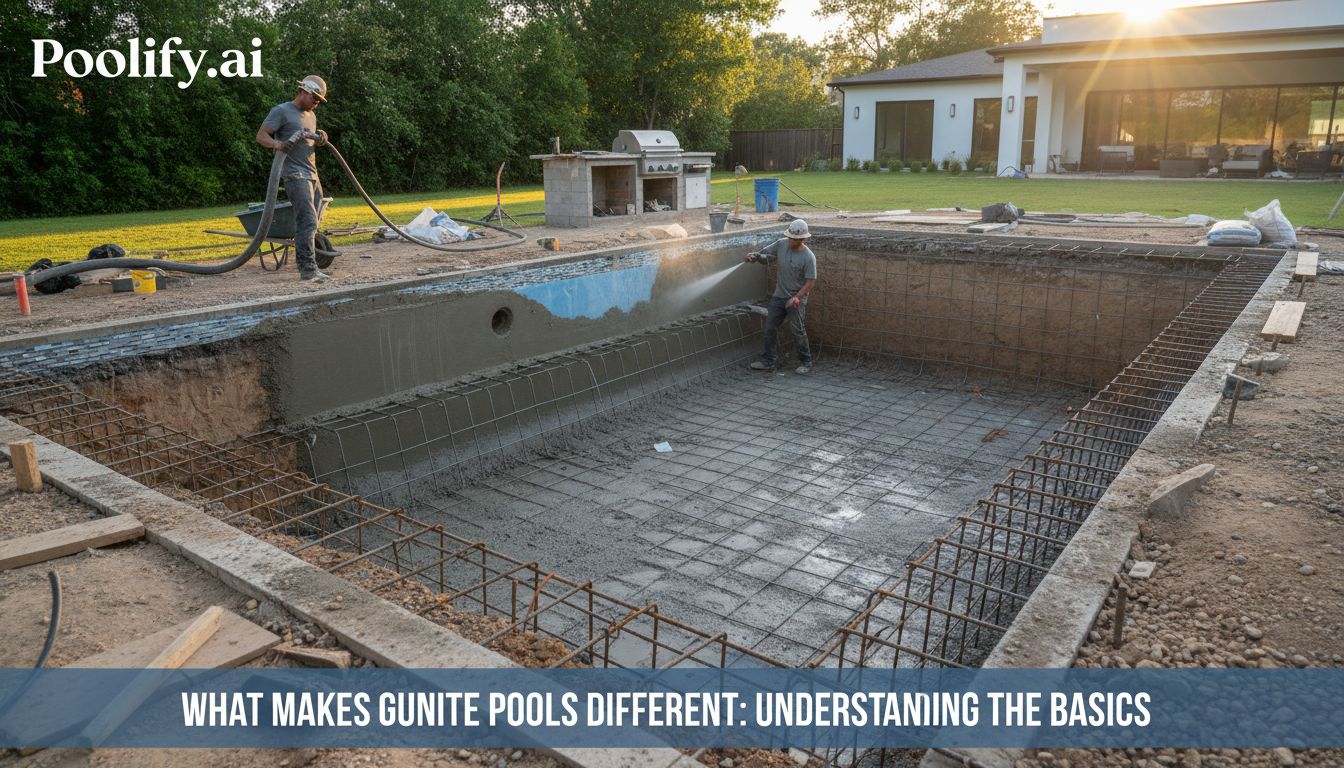
A gunite pool uses a mixture of cement and sand sprayed at high pressure onto a rebar framework. This gunite pool guide emphasizes that the pneumatic application process creates an incredibly strong, watertight shell that conforms to virtually any shape or size. Unlike prefabricated pools with dimensional limitations, gunite construction allows complete customization to fit your property and design vision.
The term “gunite” refers specifically to the dry-mix application method, while “shotcrete” describes a similar wet-mix process. Most contractors use these terms interchangeably, though purists note technical differences. For this gunite pool guide, we focus on the practical reality that both methods produce durable, custom concrete pools that last 50 years or more with proper maintenance.
Gunite pools offer several advantages over fiberglass and vinyl liner alternatives. The concrete structure resists algae growth better than smooth fiberglass surfaces, supports unlimited size and depth configurations, and allows for integrated features like beach entries, swim-up bars, and custom benches. This gunite pool guide highlights that while initial costs run higher than other pool types, the longevity and customization options justify the investment for most homeowners.
Key Components of Gunite Pool Construction
Every gunite pool consists of several integrated systems working together. The structural shell provides the foundation, but proper construction requires careful attention to steel reinforcement, plumbing lines, electrical conduits, and drainage systems. This gunite pool guide breaks down each component so you understand what contractors mean when discussing your project specifications.
Steel rebar creates the skeleton that gives gunite its incredible strength. Contractors typically use #3 or #4 rebar spaced 8-12 inches apart in a grid pattern, with additional reinforcement around stairs, benches, and spa areas. The gunite mixture bonds to this framework, creating a monolithic structure that distributes stress evenly and resists cracking from ground movement or freeze-thaw cycles.
Gunite Pool Guide: Planning Your Project in 2026
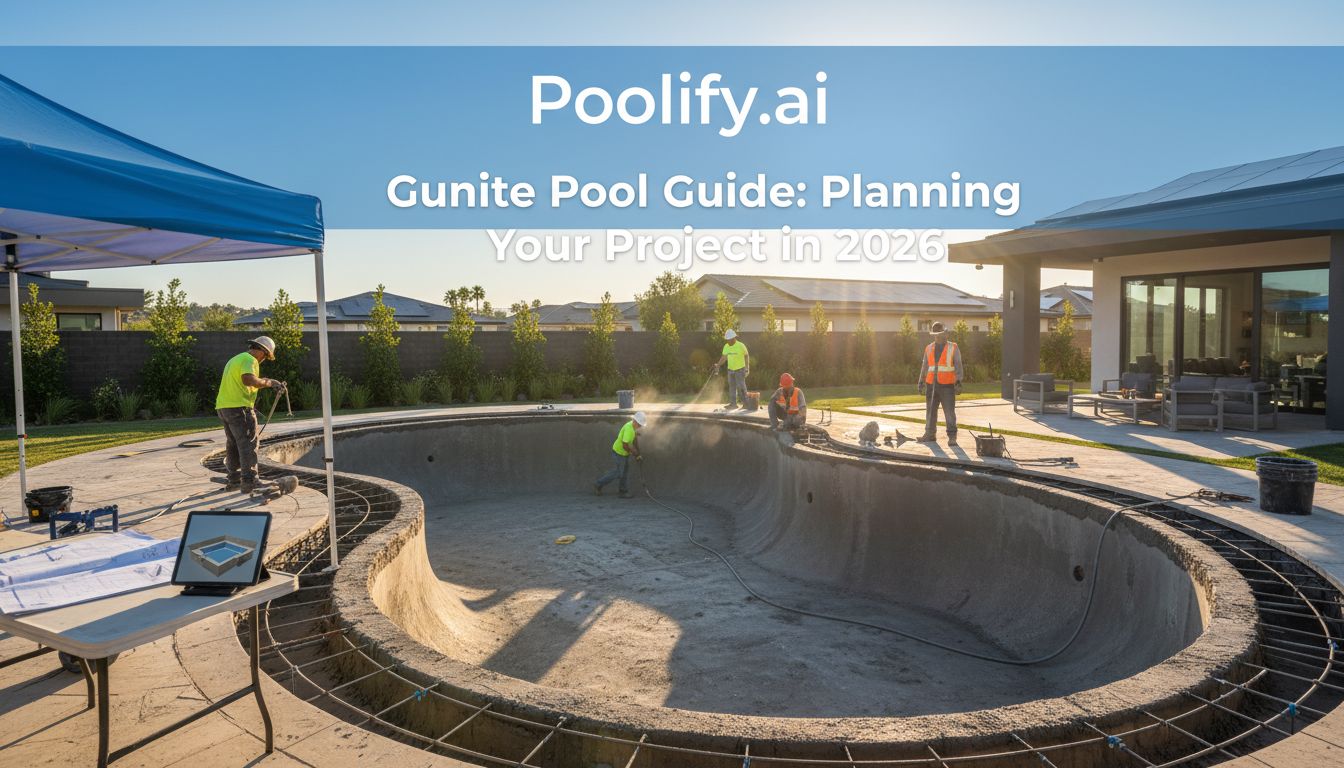
Successful gunite pool projects begin with thorough planning months before construction starts. This gunite pool guide recommends dedicating 2-3 months to the planning phase, which includes design development, permit acquisition, contractor selection, and budget finalization. Rushing this phase leads to costly changes during construction or disappointing results that don’t match your vision.
Start by assessing your property’s suitability for a gunite pool. Factors like soil composition, drainage patterns, utility line locations, and setback requirements all impact feasibility and cost. According to the Association of Pool & Spa Professionals, proper site evaluation prevents 80% of construction complications. This gunite pool guide suggests hiring a qualified pool designer or engineer to evaluate your property before committing to specific plans.
Design decisions made during planning affect your pool’s functionality and enjoyment for decades. Consider how you’ll use the pool—lap swimming requires different dimensions than family recreation or entertaining. This gunite pool guide emphasizes that depth, shape, entry points, and integrated features should align with your lifestyle rather than following generic templates or trending designs that may not suit your needs.
Budgeting for Your Gunite Pool
Gunite pool costs in 2026 typically range from $50,000 to $150,000 depending on size, features, and regional labor rates. This gunite pool guide provides realistic budget expectations: basic 12×24 foot pools start around $50,000-$70,000, while elaborate designs with spas, waterfalls, and premium finishes easily exceed $100,000. These figures include excavation, construction, decking, and basic equipment but may not cover landscaping, fencing, or luxury upgrades.
Material costs have stabilized since the supply chain disruptions of 2023-2024, but labor remains the largest expense component. This gunite pool guide notes that skilled pool contractors charge $100-$200 per hour in most markets, with total labor representing 40-50% of project costs. Regional variations significantly impact pricing—pools in California or Florida typically cost 20-30% more than identical projects in the Midwest or Southeast.
Hidden costs catch many homeowners unprepared. This gunite pool guide identifies common budget overruns: utility relocations ($2,000-$8,000), rock excavation ($3,000-$15,000), drainage solutions ($1,500-$5,000), and permit fees ($500-$2,500). Smart planning includes a 15-20% contingency fund for unexpected site conditions or design modifications discovered during construction.
The Gunite Pool Construction Process: Step-by-Step
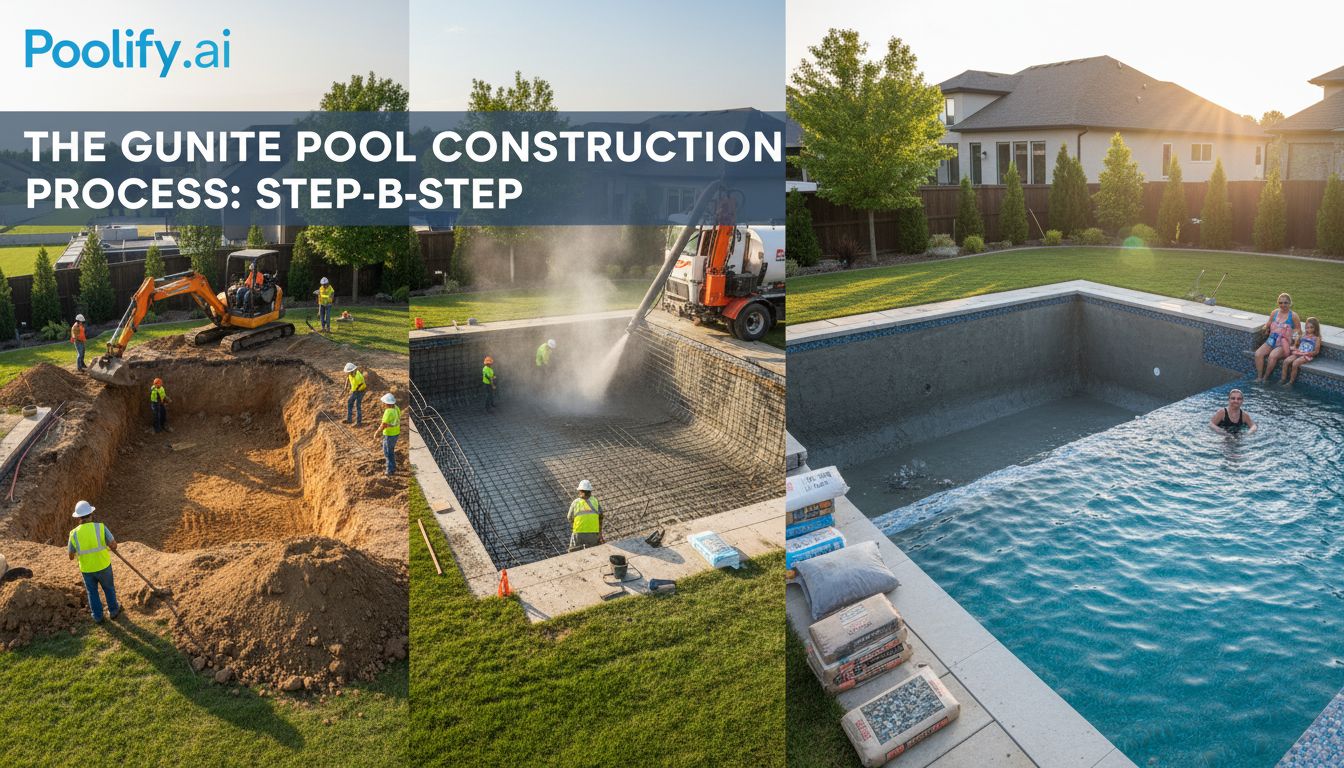
Understanding the construction sequence helps you monitor progress and communicate effectively with your contractor. This gunite pool guide outlines the typical 8-12 week timeline from excavation to completion, though weather, permit delays, and material availability can extend schedules. Setting realistic expectations prevents frustration and helps you plan around construction disruptions.
Excavation and Steel Installation
Construction begins with excavation, which typically takes 1-3 days depending on pool size and soil conditions. Contractors use excavators to dig the hole according to engineered plans, creating the rough shape with appropriate depth transitions and slopes. This gunite pool guide emphasizes that proper excavation includes over-digging by 8-10 inches to accommodate the gunite shell thickness and any necessary gravel base.
Steel installation follows excavation, requiring 2-4 days for rebar placement and plumbing rough-in. Skilled steel workers bend and tie rebar into the three-dimensional framework that defines your pool’s final shape. This gunite pool guide notes that quality steel work directly impacts structural integrity—proper spacing, adequate overlap at joints, and correct tie wire tension all matter for long-term durability.
Gunite Application Day
Gunite shooting represents the most dramatic construction phase, typically completed in a single intensive day. A specialized crew uses pneumatic equipment to spray the concrete mixture onto the steel framework at velocities exceeding 100 mph. This gunite pool guide explains that the high-velocity application compacts the material, eliminating air pockets and creating a dense, watertight shell stronger than poured concrete.
The gunite crew works methodically from deep end to shallow, building up 6-8 inches of material in multiple passes. Experienced nozzlemen control the spray pattern to ensure uniform thickness and proper compaction around plumbing penetrations and structural transitions. This gunite pool guide recommends being present during gunite application to observe the process and address any questions about shell thickness or surface preparation.
After application, the gunite shell requires careful curing for 7-10 days. Contractors spray the surface with water multiple times daily to prevent rapid drying that causes cracking. This gunite pool guide stresses that proper curing dramatically affects long-term durability—rushed curing leads to surface defects, reduced strength, and premature finish failures.
Plumbing, Tile, and Finishing
Once the shell cures, contractors complete plumbing connections, install tile and coping, and prepare for interior finishing. This phase takes 2-3 weeks and involves multiple specialized trades. This gunite pool guide identifies tile installation as particularly critical—proper waterline tile prevents staining and provides a finished appearance that defines your pool’s aesthetic character.
Interior finish options include plaster, aggregate finishes, or tile. Traditional white plaster costs $3-$5 per square foot and lasts 7-12 years, while premium aggregate finishes run $8-$15 per square foot but last 15-20 years. This gunite pool guide suggests evaluating finish options based on your budget, aesthetic preferences, and willingness to perform eventual refinishing maintenance.
Gunite Pool Guide: Design Ideas and Features for 2026
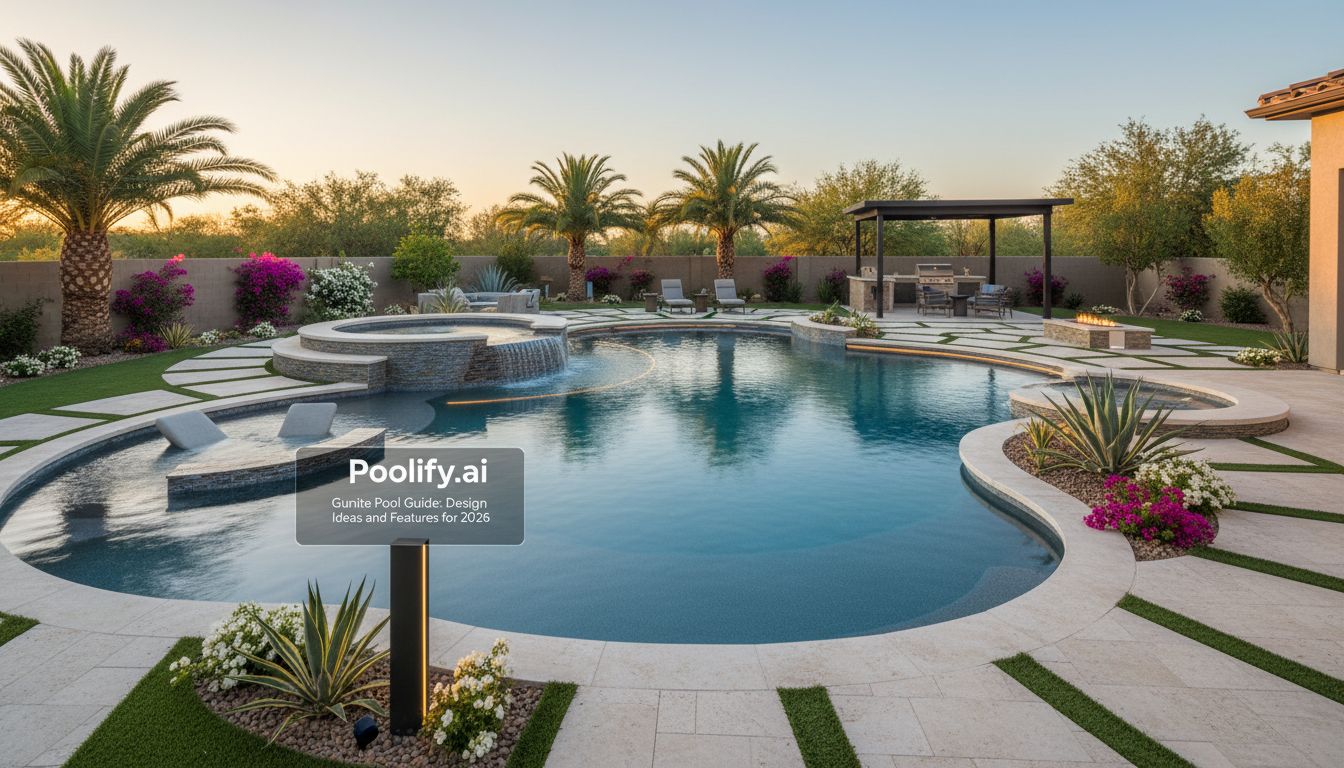
Modern gunite pools incorporate features that enhance functionality, aesthetics, and property value. This gunite pool guide explores popular design elements that homeowners request in 2026, from practical additions like sun shelves to dramatic features like infinity edges and grottos. Understanding available options helps you create a pool that perfectly matches your lifestyle and entertainment needs.
Functional Design Elements
Sun shelves or baja benches rank among the most requested features in this gunite pool guide. These shallow ledges typically measure 6-12 inches deep and provide comfortable lounging areas where adults can relax partially submerged while supervising children. Sun shelves work particularly well for families with young children or homeowners who enjoy reading and socializing without full immersion.
Beach entries create gradual slopes from deck level into the pool, mimicking natural shorelines. This gunite pool guide notes that beach entries enhance accessibility for elderly users or those with mobility limitations while providing safe, intuitive entry for children. The gradual transition also creates visual interest and expands usable pool area for various activities.
Integrated spas represent another popular feature in this gunite pool guide. Building the spa as part of your gunite pool construction costs less than adding a separate unit and creates a cohesive design. Spillover spas positioned above pool level create attractive water features while the elevated position allows spa users to enjoy better views of the surrounding landscape.
Aesthetic and Entertainment Features
Water features transform ordinary pools into dramatic focal points. This gunite pool guide covers options ranging from simple deck jets to elaborate waterfalls and grottos. Deck jets shoot arcs of water into the pool, creating visual interest and pleasant sounds without occupying pool space. Sheer descents produce smooth water walls that work beautifully with modern architectural styles.
Fire features have gained popularity in recent years, creating stunning visual contrast with water. This gunite pool guide describes fire bowls, fire pits, and fire walls that integrate with pool designs to extend evening entertainment hours. The combination of fire and water creates an upscale resort atmosphere that dramatically increases property appeal and enjoyment.
Lighting technology has evolved significantly, and this gunite pool guide emphasizes that LED systems now offer energy-efficient, long-lasting illumination with virtually unlimited color options. Modern pool lighting systems integrate with smart home technology, allowing you to control colors, intensity, and patterns from your smartphone. Proper lighting extends pool usability into evening hours while enhancing security and ambiance.
Maintaining Your Gunite Pool: Essential Care Tips
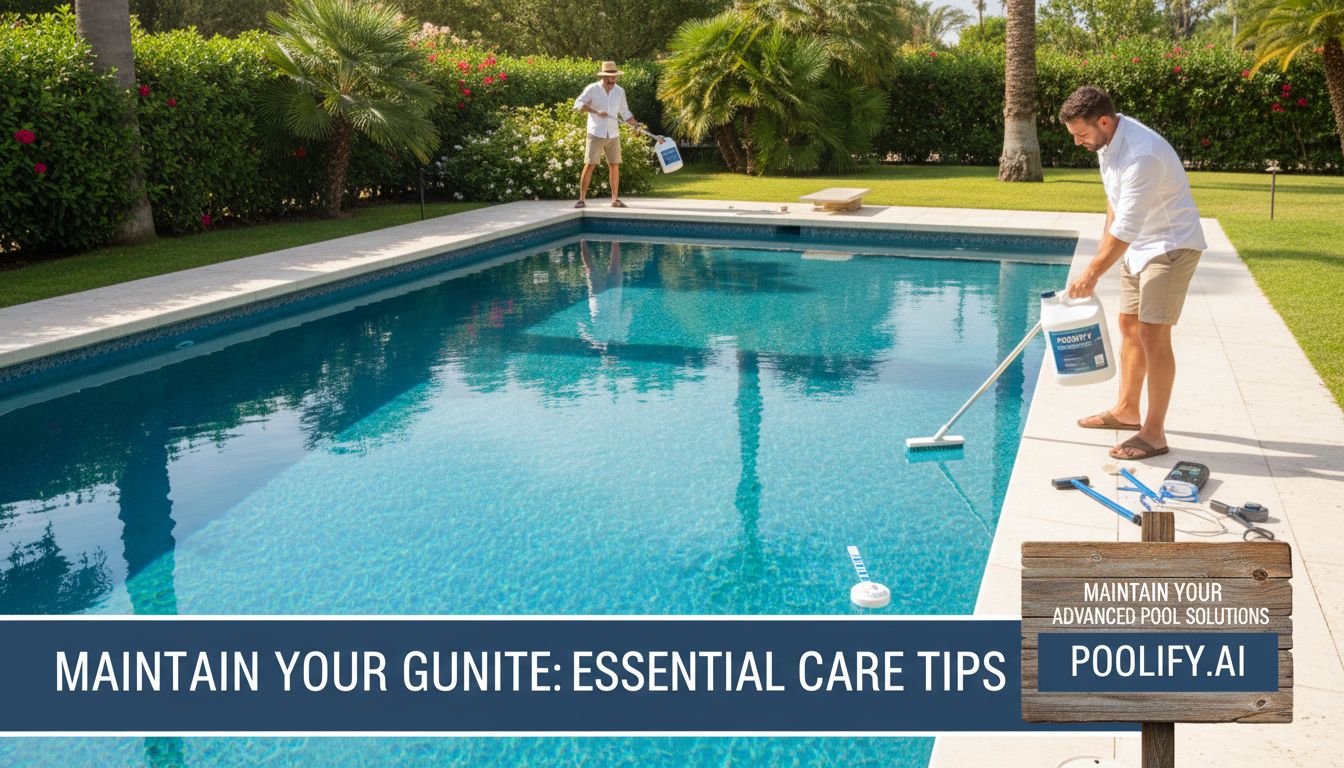
Proper maintenance protects your investment and ensures decades of trouble-free enjoyment. This gunite pool guide outlines essential care routines that prevent costly repairs and keep water chemistry balanced. While gunite pools require more maintenance than some alternatives, the tasks become routine once you establish consistent habits and understand the underlying principles.
Water Chemistry Fundamentals
Maintaining proper water chemistry represents the most critical aspect of gunite pool care. This gunite pool guide recommends testing water 2-3 times weekly during swimming season, checking pH, alkalinity, calcium hardness, and sanitizer levels. The CDC’s swimming pool guidelines provide authoritative standards for safe water chemistry that prevent both health issues and equipment damage.
pH should remain between 7.4-7.6 for optimal comfort and chemical effectiveness. This gunite pool guide explains that pH affects everything from chlorine efficiency to plaster longevity—water that’s too acidic etches plaster surfaces while high pH causes scaling and cloudy water. Regular testing and small adjustments prevent the dramatic swings that damage pool surfaces and create swimmer discomfort.
Calcium hardness matters particularly for gunite pools because the concrete shell continuously interacts with pool water. This gunite pool guide recommends maintaining calcium levels between 200-400 ppm to prevent the water from leaching calcium from plaster or depositing scale on surfaces. Regional water supplies vary dramatically in mineral content, so understanding your source water helps you maintain proper balance.
Routine Cleaning and Care
Physical cleaning complements chemical maintenance in this gunite pool guide. Skimming debris daily prevents organic material from decomposing and consuming sanitizer. Brushing walls and floors weekly dislodges algae spores before they establish colonies and removes dirt that settles on surfaces. Gunite’s textured surface requires more aggressive brushing than smooth fiberglass, but this same texture provides better algae resistance.
Vacuuming removes settled debris that filtration systems can’t capture. This gunite pool guide describes three vacuuming options: manual systems that connect to your existing equipment, automatic suction or pressure cleaners that operate independently, and robotic cleaners with self-contained filtration. Each approach offers different cost-to-convenience ratios, with robotic cleaners providing the most thorough cleaning but requiring the largest initial investment.
Filter maintenance directly impacts water clarity and equipment longevity. This gunite pool guide recommends backwashing sand filters when pressure gauges read 8-10 psi above clean baseline, typically every 2-4 weeks during swimming season. Cartridge filters require removal and hosing every 2-3 weeks, with annual deep cleaning using filter cleaner solutions. DE filters combine aspects of both systems and generally provide the finest filtration when properly maintained.
Seasonal Maintenance Tasks
Opening and closing procedures protect your gunite pool during off-season months. This gunite pool guide outlines spring opening: removing cover, cleaning deck and pool surfaces, reinstalling equipment, filling to proper level, balancing chemistry, and running systems continuously for 24-48 hours. Taking time to properly open your pool prevents algae blooms and equipment problems that create frustrating delays when you want to start swimming.
Winterization requirements vary by climate. This gunite pool guide notes that northern pools require complete draining of equipment and plumbing lines to prevent freeze damage, while southern pools may operate year-round with reduced filtration schedules. Mid-climate regions often benefit from partial winterization—reducing chemical levels, covering the pool, and running equipment periodically to prevent freezing during cold snaps.
Common Gunite Pool Problems and Solutions
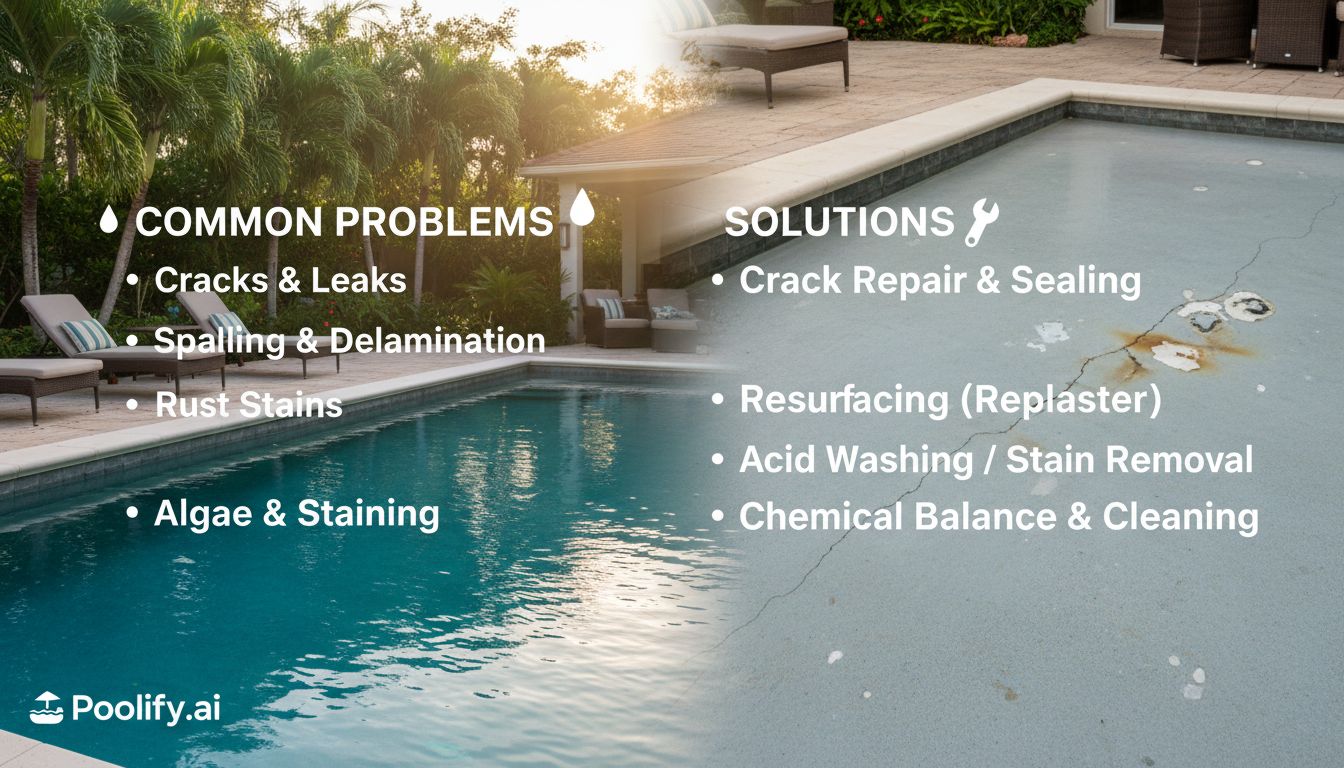
Understanding potential issues helps you address problems quickly before they escalate into expensive repairs. This gunite pool guide identifies the most common gunite pool problems homeowners encounter and explains both prevention strategies and appropriate solutions when issues arise. Early intervention typically costs a fraction of what you’ll spend if problems progress unchecked.
Surface Issues
Plaster problems represent the most frequent complaint in this gunite pool guide. Etching occurs when acidic water dissolves calcium from the plaster surface, creating rough, pitted areas that feel uncomfortable and harbor algae. Prevention requires maintaining proper pH and alkalinity levels consistently. Once etching occurs, the only permanent solution involves acid washing or replastering, depending on severity.
Staining presents another common challenge covered in this gunite pool guide. Metal stains from copper, iron, or manganese appear as brown, green, or purple discoloration and result from source water minerals or corroding equipment. Organic stains from leaves, berries, or algae create brown or green marks in localized areas. Identifying stain type determines appropriate treatment—metal stains respond to sequestering agents while organic stains require chlorine shock treatment.
Structural Concerns
Cracks worry homeowners but don’t always indicate serious problems. This gunite pool guide distinguishes between cosmetic surface cracks and structural issues. Hairline cracks in plaster commonly result from shrinkage during curing or minor ground settling and rarely affect structural integrity. Cracks wider than 1/16 inch or those that extend through the shell require professional evaluation to determine if repairs are necessary.
Leaks waste water, increase chemical costs, and potentially damage surrounding structures. This gunite pool guide recommends the bucket test to confirm suspected leaks: fill a bucket with pool water, mark levels inside the bucket and in the pool, and compare water loss after 24 hours. If the pool loses significantly more water than the bucket, you likely have a leak requiring professional detection and repair.
Choosing the Right Contractor for Your Gunite Pool
Contractor selection dramatically impacts project success, and this gunite pool guide emphasizes that the lowest bid rarely delivers the best value. Experienced contractors command premium pricing because they understand the engineering principles, construction techniques, and problem-solving skills that separate quality pools from problematic installations. Investing time in contractor evaluation protects you from costly mistakes and project delays.
Start by verifying credentials and experience. This gunite pool guide recommends contractors with at least 5 years of gunite pool experience, proper licensing for your jurisdiction, and comprehensive liability and workers’ compensation insurance. Ask for references from projects completed 3-5 years ago—this timeframe reveals whether pools have developed problems that indicate construction quality issues.
Review portfolios critically, looking beyond attractive photos to understand construction details. This gunite pool guide suggests asking about steel specifications, shell thickness, plumbing materials, and warranty terms. Quality contractors eagerly discuss technical details and explain their methods, while less experienced builders may deflect or provide vague answers that should raise concerns about their expertise.
Contract and Communication Essentials
Comprehensive contracts protect both parties and prevent misunderstandings. This gunite pool guide lists essential contract elements: detailed scope of work, specific materials and brands, payment schedule tied to completion milestones, timeline with allowances for weather delays, warranty terms, and change order procedures. Never begin construction without a written contract that addresses these critical points.
Communication patterns during the bidding process predict how contractors will perform during construction. This gunite pool guide observes that contractors who respond promptly, answer questions thoroughly, and proactively address concerns typically maintain this professionalism throughout your project. Conversely, contractors who are difficult to reach or dismissive of questions during sales conversations rarely improve once they’ve secured your deposit.
Frequently Asked Questions About Gunite Pools
How long does a gunite pool last?
This gunite pool guide confirms that properly constructed and maintained gunite pools last 50+ years. The concrete shell itself remains structurally sound indefinitely, though interior finishes require periodic renewal. Plaster finishes last 7-12 years, aggregate finishes 15-20 years, and tile indefinitely with occasional grout maintenance. Equipment like pumps and heaters need replacement every 8-15 years, but the pool structure endures for generations.
Can you build a gunite pool in winter?
According to this gunite pool guide, gunite application requires temperatures above 40°F for proper curing. Northern regions typically restrict construction to April-October, while southern climates allow year-round building. Winter construction in moderate climates is possible but requires careful temperature monitoring and may involve curing blankets or heated enclosures. Many contractors offer off-season discounts that offset any weather-related complications.
What’s better: gunite or fiberglass pools?
This gunite pool guide explains that each pool type offers distinct advantages. Gunite pools provide unlimited customization, larger size options, and better long-term durability but cost more initially and require more maintenance. Fiberglass pools install faster, need less chemical maintenance, and resist algae better but come in limited sizes and shapes. Your choice should reflect your priorities regarding customization, budget, and maintenance commitment. For more pool comparisons, check out our comprehensive pool types guide.
Do gunite pools need special equipment?
This gunite pool guide clarifies that gunite pools use standard pool equipment—pumps, filters, heaters, and cleaners work with any pool type. However, gunite pools benefit from slightly higher-capacity filtration due to their textured surfaces that trap more debris. Variable-speed pumps offer the best efficiency and can adapt to your pool’s specific circulation needs while reducing energy costs by 50-70% compared to single-speed models.
How often should gunite pools be resurfaced?
Resurfacing frequency depends on finish type and maintenance quality. This gunite pool guide indicates that standard plaster requires resurfacing every 7-12 years, while premium aggregate finishes last 15-20 years. Proper water chemistry extends finish life significantly—pools with consistently balanced water reach the upper end of these ranges, while chemical neglect accelerates deterioration. Budget $5,000-$15,000 for eventual resurfacing depending on pool size and finish selection.
Key Takeaways from This Gunite Pool Guide
- Gunite pools offer unmatched customization and durability compared to other pool types, with properly maintained shells lasting 50+ years and supporting virtually any design configuration your property allows.
- Realistic budgeting includes 15-20% contingency funds beyond base construction costs to cover site challenges, permit requirements, and the inevitable design refinements that occur during planning and construction phases.
- Contractor selection matters more than finding the lowest bid because experienced builders prevent problems through proper engineering, quality materials, and skilled craftsmanship that less experienced contractors can’t match.
- Water chemistry maintenance protects your investment by preventing surface damage, equipment corrosion, and uncomfortable swimming conditions that result from pH imbalances, improper sanitizer levels, or calcium hardness problems.
- Design features should match your lifestyle and usage patterns rather than following trends or generic templates that may not suit how you actually use your pool for recreation, exercise, or entertainment.
Conclusion: Moving Forward with Your Gunite Pool Project
This gunite pool guide has covered the essential information homeowners need to successfully plan, build, and maintain a custom gunite swimming pool in 2026. From understanding construction processes and realistic budgets to selecting qualified contractors and maintaining proper water chemistry, you now have the knowledge foundation to make informed decisions that protect your investment.
Building a gunite pool represents a significant financial and lifestyle commitment, but the rewards of a custom-designed backyard oasis justify the effort for homeowners who value quality, longevity, and design flexibility. This gunite pool guide emphasizes that success requires careful planning, realistic expectations, and commitment to ongoing maintenance that preserves your pool’s beauty and functionality for decades.
Take time to thoroughly research contractors, develop detailed plans that match your specific needs, and budget realistically for both construction and long-term ownership costs. The gunite pool guide principles outlined here apply regardless of your location, property characteristics, or design preferences. For additional guidance on pool maintenance schedules, visit our seasonal pool maintenance guide.
Your gunite pool journey begins with education and planning. Use this gunite pool guide as a reference throughout your project, returning to specific sections as questions arise during design, construction, and the early months of ownership. With proper preparation and realistic expectations, your gunite pool will provide enjoyment, increase property value, and create lasting memories for your family and friends well into the future.
References
- Association of Pool & Spa Professionals – https://www.apsp.org/
- CDC Swimming Pool Water Quality Guidelines – https://www.cdc.gov/healthywater/swimming/residential/water-quality.html