
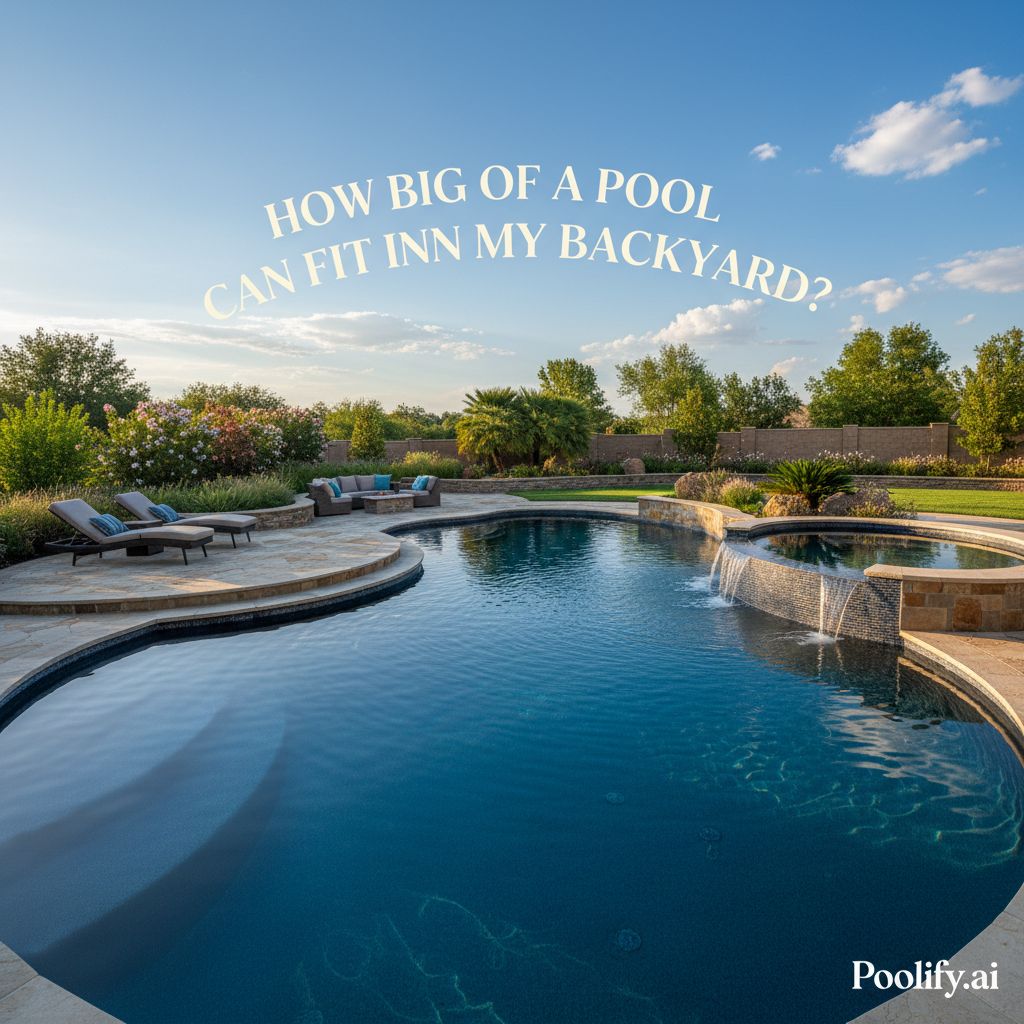
One of the most common questions homeowners ask when planning a pool is how big of a pool can actually fit in their backyard. While lot size matters, it is only one piece of the equation. The right pool size depends on usable space, layout, setbacks, and how you want to use the pool.
This guide explains how to determine how big of a pool can fit in your backyard, what limits size in real-world projects, and how to avoid designing a pool that overwhelms the space.
Start With Usable Backyard Space
The size of your backyard and the size of your pool are not the same thing. Many yards have areas that cannot be used for construction.
What reduces usable space
- Required setbacks from property lines
- Distance from the house or foundation
- Easements and utility lines
- Slopes or retaining walls
- Existing patios, decks, or structures
The usable area is what remains after these constraints are accounted for. Pool size should be based on this space, not total lot size.
Pool Size Includes More Than Just the Water
When calculating how big a pool can fit, it is critical to think beyond the pool shell.
Space needed around the pool
- Decking or hardscape
- Walkways and circulation paths
- Seating and lounging areas
- Safety clearances
- Landscaping buffers
A pool that technically fits but leaves no room to move around it will feel cramped and uncomfortable.
Match Pool Size to How You Will Use It
The best pool size is not always the largest possible pool.
Common use-based sizing
- Family recreation: Medium-sized pools with shallow areas
- Entertaining: Pools with generous deck space and seating
- Exercise: Long, narrow lap pools
- Relaxation: Smaller pools with tanning ledges or built-in seating
Designing around use prevents overspending on unnecessary water volume.
Typical Backyard Pool Size Ranges
While every property is different, most residential pools fall within common size ranges.
Common pool sizes
- Small pools: approximately 10×20 feet
- Medium pools: approximately 12×24 to 14×28 feet
- Large pools: approximately 16×32 feet and up
Smaller pools often feel more intentional and are easier to maintain, while larger pools require more space, cost, and upkeep.
How Yard Shape Affects Pool Size
A wide, shallow yard may support a different pool size than a long, narrow yard with the same square footage.
Layout considerations
- Narrow yards favor lap or rectangular pools
- Irregular yards benefit from custom or L-shaped pools
- Sloped yards may reduce buildable area
The shape of the yard often determines pool proportions more than total area.
Pool Size and Budget Go Hand in Hand
Larger pools generally cost more to build and maintain.
Cost factors tied to size
- Excavation and materials
- Structural reinforcement
- Filtration and heating requirements
- Ongoing maintenance and energy use
Choosing a pool size that aligns with your budget early avoids difficult compromises later.
Why Bigger Is Not Always Better
Many homeowners assume a larger pool is automatically better. In practice, oversized pools often reduce the enjoyment of the backyard.
Common issues with oversized pools
- Limited deck or seating space
- Reduced landscaping options
- Higher operating costs
- Visual imbalance in the yard
A well-proportioned pool almost always feels more luxurious than a pool that consumes the entire yard.
Visualizing Pool Size Before Building
It is difficult to judge pool size from measurements alone. Visualizing the pool in your actual backyard provides clarity that drawings cannot.
Seeing different pool sizes placed in your yard helps you:
- Compare proportions
- Understand how much space remains
- Balance pool size with outdoor living areas
- Make confident decisions before construction
This step often leads homeowners to choose a smaller, better-fitting pool.
How AI Pool Design Helps Determine the Right Size
AI-based pool design tools allow homeowners to test multiple pool sizes quickly. Instead of guessing, you can see how different layouts fit your yard and how much usable space remains around the pool.
Tools like Poolify focus on this early planning phase, helping you explore realistic pool size options before contacting a builder or finalizing plans.
Key Takeaways
- Pool size depends on usable space, not total lot size
- Decking and circulation space are just as important as water area
- The best pool size matches how you plan to use it
- Yard shape influences pool proportions
- Visualizing pool size prevents overcrowding and regret
Choosing the right pool size early leads to a more functional, balanced, and enjoyable backyard.