
Understanding Pool Depth: Making the Right Choice for Your Backyard
When planning a swimming pool installation, one of the most critical questions homeowners ask is: how deep should my pool be? The answer depends on several factors including your intended use, family composition, safety considerations, and budget. Pool depth directly impacts everything from construction costs to daily enjoyment, making it essential to get this decision right from the start. In 2026, modern pool design emphasizes versatility and safety, with depth options ranging from shallow wading areas to deep diving zones.
The depth you choose will influence your pool’s functionality for decades to come. Whether you’re planning family recreation, exercise routines, or entertaining guests, understanding the relationship between pool depth and usage patterns helps you make an informed investment. This comprehensive guide explores how deep your pool should be based on various activities, age groups, and practical considerations that affect both construction and long-term satisfaction.
Standard Pool Depth Ranges and Their Applications
Most residential pools feature depths between 3 feet and 8 feet, though the specific configuration depends on your needs. Understanding standard depth ranges helps answer the question of how deep should my pool be for different purposes. Shallow sections typically range from 3 to 4 feet, ideal for children, lounging, and casual recreation. These areas allow adults to stand comfortably while providing safe zones for younger swimmers.
Mid-depth sections between 4 and 5.5 feet serve as the most versatile zone for swimming pools. This range accommodates most recreational activities, allows adults to touch bottom while providing enough depth for comfortable swimming. When considering how deep should my pool be for general family use, this mid-range depth often provides the best balance of safety and functionality.
Deep-end sections ranging from 6 to 8 feet cater to diving, advanced swimming, and water sports. However, pools designed for diving require specific depth minimums based on diving board height and local regulations. The Consumer Product Safety Commission provides detailed guidelines on safe diving depths to prevent injuries. Most modern residential pools in 2026 trend toward shallower maximum depths of 6 feet or less, eliminating diving capabilities but reducing construction costs and safety risks.
Single-Depth vs. Variable-Depth Pools
Single-depth pools maintain consistent depth throughout, typically between 4 and 5 feet. These designs simplify construction, reduce costs, and maximize usable swimming space. When determining how deep should my pool be with a single depth, consider that 4.5 feet allows most adults to stand while providing adequate depth for swimming laps and water games.
Variable-depth pools feature graduated slopes from shallow to deep ends, offering versatility for different activities and age groups. These traditional designs answer the question of how deep should my pool be by providing multiple depth zones within one structure. The shallow end typically starts at 3 to 3.5 feet, gradually sloping to a deep end of 5 to 6 feet for residential installations without diving features.
How Deep Should My Pool Be for Different Activities
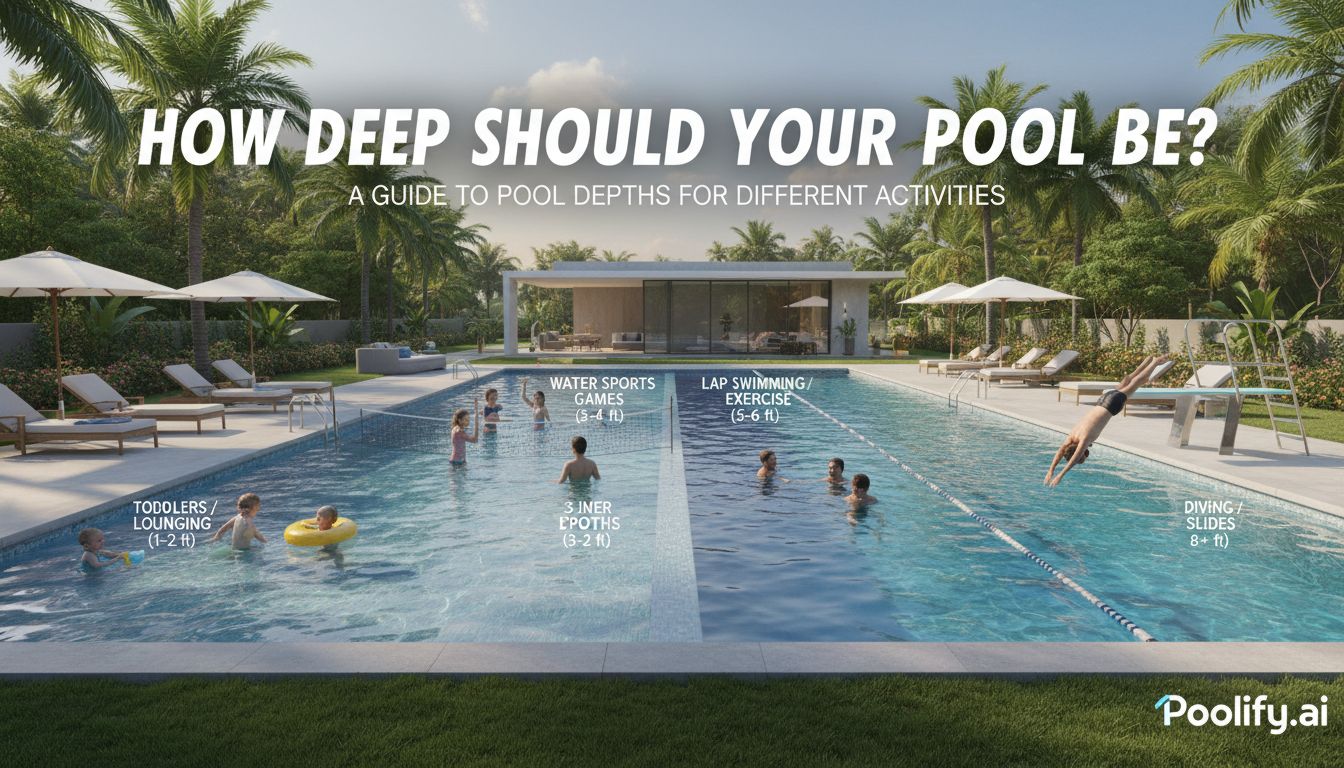
Activity-specific depth requirements significantly influence pool design decisions. Understanding how deep should my pool be for your primary activities ensures optimal functionality and enjoyment. Each activity type has ideal depth ranges that maximize safety and performance.
Swimming Laps and Exercise
For lap swimming and aquatic exercise, determining how deep should my pool be focuses on consistency rather than maximum depth. A uniform depth of 4 to 5 feet works ideally for most swimmers, allowing comfortable push-offs from the bottom during turns while providing adequate depth for proper stroke mechanics. Many competitive swimmers actually prefer shallower pools around 4 feet for training, as this depth facilitates interval work and technique drills.
Water aerobics and resistance training require depths between 3.5 and 5 feet, allowing participants to maintain stable footing while exercising. When asking how deep should my pool be for fitness activities, consider that chest-deep water (approximately 4 to 4.5 feet for average adults) provides optimal resistance without requiring constant treading water.
Family Recreation and Play
Family pools prioritize safety and accessibility across age groups. When considering how deep should my pool be for family use, a maximum depth of 5 to 6 feet accommodates most recreational activities while maintaining touchable bottoms for average-height adults. Shallow areas of 3 to 4 feet provide safe zones for children and less confident swimmers.
Pool games like volleyball, basketball, and water polo function best in depths of 4 to 5 feet, allowing players to jump and move freely while maintaining footing. The question of how deep should my pool be for entertaining often leads to versatile designs with both shallow lounging areas and deeper play zones around 4.5 feet.
Diving and Jumping
Diving significantly impacts how deep should my pool be, with strict safety requirements based on diving equipment height. Springboard diving from a standard 1-meter board requires minimum depths of 8 to 9 feet, extending several feet beyond the board’s tip. Platform diving demands even greater depths, making it impractical for most residential installations.
In 2026, many homeowners opt for pools without diving boards, reducing maximum depth requirements to 6 feet or less. This decision substantially decreases construction costs, ongoing maintenance, and liability concerns. For those who want jumping capabilities without formal diving, a depth of 6 feet provides adequate clearance for safe water entry from pool edges. Check out our comprehensive pool safety guidelines for more information on depth-related safety considerations.
Safety Considerations When Determining Pool Depth
Safety represents the paramount concern when deciding how deep should my pool be for your property. Shallow pools reduce drowning risks, particularly for young children and inexperienced swimmers. Statistics show that most residential pool drownings occur in water depths where victims cannot touch bottom, making depth selection a critical safety decision.
When evaluating how deep should my pool be from a safety perspective, consider your household composition. Families with young children often prioritize shallower maximum depths of 5 feet or less, eliminating areas where children cannot stand. Graduated slopes provide visual and physical cues about depth changes, helping swimmers recognize when they’re entering deeper water.
Supervision and Visibility
Pool depth affects supervision effectiveness and emergency response capabilities. Shallower pools allow better visibility of swimmers throughout the entire pool area, making it easier to monitor children and identify potential problems. When asking how deep should my pool be for optimal supervision, consider that depths under 5 feet enable adults to quickly reach any point in the pool while maintaining footing.
Emergency response becomes more challenging in deeper pools, where rescuers may need to swim rather than walk to distressed swimmers. The question of how deep should my pool be includes evaluating whether household members can safely assist others throughout the entire pool depth range.
Barrier Requirements and Regulations
Local building codes often impose different requirements based on pool depth. Some jurisdictions classify pools exceeding certain depths as requiring enhanced safety barriers, alarms, or covers. Understanding how deep should my pool be within your local regulatory framework prevents compliance issues and potential fines. The Association of Pool & Spa Professionals provides resources on regional regulations affecting pool depth decisions.
Cost Implications of Pool Depth
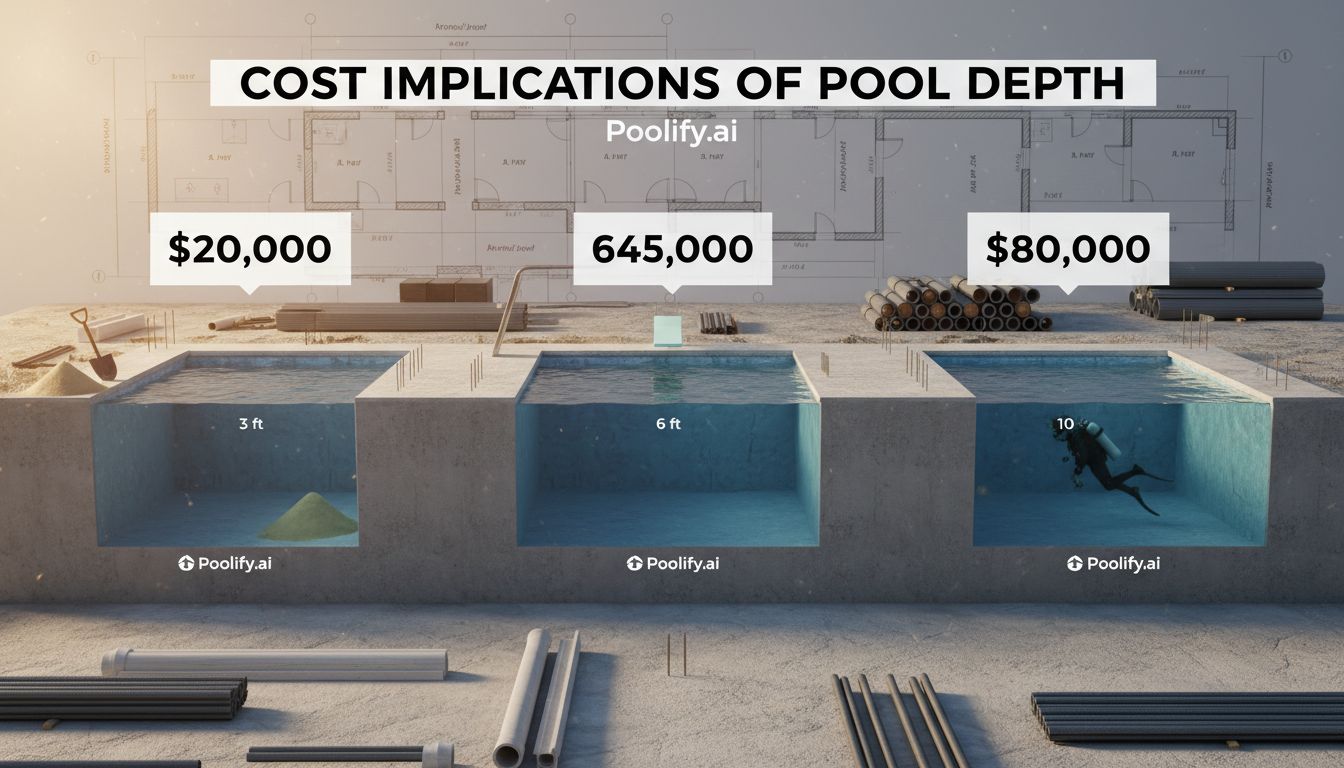
Construction costs increase substantially with pool depth, making economics an important factor when determining how deep should my pool be. Deeper pools require more excavation, additional structural reinforcement, increased material volumes, and more complex engineering. Each additional foot of depth can add thousands of dollars to your project budget.
When evaluating how deep should my pool be from a cost perspective, consider that a pool with a 5-foot maximum depth typically costs 15-25% less than a comparable design with an 8-foot deep end. Excavation becomes more expensive as depth increases, particularly in areas with high water tables, rocky soil, or limited access for heavy equipment.
Ongoing Operating Costs
Pool depth affects long-term operating expenses beyond initial construction. Deeper pools contain more water volume, increasing heating costs, chemical requirements, and filtration demands. When deciding how deep should my pool be, factor in that a deeper pool may cost several hundred dollars more annually in utilities and maintenance compared to a shallower design.
Heating represents the most significant depth-related operating cost. Each additional foot of depth increases water volume substantially, requiring more energy to maintain comfortable temperatures. For those wondering how deep should my pool be in cooler climates where heating is essential, shallower designs of 4 to 5 feet maximum depth offer considerable energy savings over time. Learn more about efficient pool heating options to minimize operating costs.
How Deep Should My Pool Be: Recommended Depths by Pool Type
Different pool types have established depth norms based on their intended purposes. Understanding how deep should my pool be for specific pool categories helps align your design with industry standards and user expectations.
Lap Pools
Lap pools designed primarily for exercise typically feature uniform depths between 4 and 5 feet throughout their length. This consistency eliminates depth variations that could disrupt swimming rhythm. When considering how deep should my pool be for dedicated lap swimming, 4.5 feet represents the ideal compromise, allowing push-offs during turns while minimizing construction costs and water volume.
Play Pools and Family Pools
Family-oriented pools benefit from variable depths accommodating different age groups and activities. The shallow end addressing how deep should my pool be for young children typically starts at 3 to 3.5 feet, while the deep end reaches 5 to 6 feet for adults and teenagers. This configuration provides safe zones for supervision while offering adequate depth for swimming and games.
Cocktail and Spa Pools
Small cocktail pools and spa-style installations prioritize lounging and relaxation over swimming. When determining how deep should my pool be for these compact designs, depths of 4 to 5 feet work well, allowing adults to stand comfortably while providing sufficient water for cooling and relaxation. These shallower depths also facilitate built-in seating and lounging platforms.
Natural and Lagoon-Style Pools
Natural swimming pools and lagoon designs often incorporate beach entries and variable depths mimicking natural water bodies. The question of how deep should my pool be for naturalistic designs typically results in maximum depths of 5 to 7 feet in central swimming areas, with extensive shallow zones of 1 to 3 feet around perimeters. These graduated depths create visual interest while accommodating diverse activities.
Regional and Climate Considerations

Geographic location and climate influence how deep should my pool be through several mechanisms. Warmer climates with year-round swimming seasons may benefit from deeper pools that provide cooler water temperatures during hot months. Conversely, cooler regions where pools are primarily used during summer months often favor shallower designs that heat more quickly and maintain comfortable temperatures efficiently.
In areas with high water tables or challenging soil conditions, determining how deep should my pool be must account for construction feasibility and costs. Deeper excavations in high water table areas require extensive dewatering and structural reinforcement, potentially making shallower designs more practical and economical.
Adapting Existing Pools: Can Depth Be Changed?
Homeowners with existing pools sometimes reconsider how deep should my pool be after years of use. While pool depth modification is possible, it represents a major renovation requiring structural engineering, permits, and significant investment. Increasing depth requires excavation beneath the existing structure, new plumbing configurations, and complete pool resurfacing.
Decreasing pool depth is more common and less complex, typically accomplished by raising the pool floor with concrete or specialized fill materials. This approach addresses how deep should my pool be when safety concerns arise or when family needs change. However, reducing depth decreases water volume and may affect pool aesthetics and functionality.
Future-Proofing Your Pool Depth Decision
When determining how deep should my pool be, consider how your needs may evolve over time. Young families with small children might initially prioritize shallow pools, but teenagers and adults may later desire deeper water for diving and advanced swimming. Conversely, aging homeowners may eventually prefer shallower pools for easier access and reduced safety concerns.
Versatile designs with variable depths from 3.5 feet to 6 feet accommodate changing needs across decades of pool ownership. This range answers how deep should my pool be for long-term satisfaction by providing options for different life stages and activities. The moderate deep end of 6 feet allows jumping and advanced swimming without the costs and safety concerns of diving-depth pools.
Key Takeaways
- Standard residential pools range from 3 to 6 feet deep, with most modern designs avoiding diving depths of 8+ feet to reduce costs and improve safety
- Activity determines ideal depth: lap swimming works well at 4-5 feet uniform depth, while family recreation benefits from variable depths of 3.5 to 6 feet
- Shallower pools cost less to build and operate, requiring less excavation, materials, heating, and chemical treatment than deeper alternatives
- Safety improves with shallower depths, particularly for families with children, as touchable bottoms throughout the pool enhance supervision and emergency response
- Consider long-term needs when deciding how deep should my pool be, as depth modifications are expensive and complex compared to getting it right initially
Frequently Asked Questions
What is the most common depth for residential pools?
The most common configuration for residential pools in 2026 features a shallow end of 3.5 to 4 feet gradually sloping to a deep end of 5 to 6 feet. Single-depth pools typically maintain 4 to 4.5 feet throughout. When homeowners ask how deep should my pool be, these ranges represent the industry standard for versatile family use without diving capabilities.
Can I have a diving board with a 6-foot deep pool?
No, a 6-foot depth is insufficient for safe diving board use. Standard springboard diving requires minimum depths of 8 to 9 feet, depending on board height and local regulations. When considering how deep should my pool be for diving, consult local building codes and safety standards. Most homeowners in 2026 opt for shallower pools without diving boards to reduce costs and liability.
Is a 4-foot deep pool too shallow for adults?
A 4-foot uniform depth works well for many adult activities including lap swimming, water aerobics, and recreation. While some adults prefer deeper water for diving and jumping, 4 feet allows comfortable swimming and exercise. When evaluating how deep should my pool be for primarily adult use, 4 to 5 feet provides adequate depth for most purposes while minimizing construction and operating costs.
How does pool depth affect insurance rates?
Deeper pools, particularly those with diving boards, typically carry higher insurance premiums due to increased liability risks. Pools exceeding 6 feet deep may face additional underwriting scrutiny and higher rates. When determining how deep should my pool be, consider that shallower designs under 6 feet generally result in lower insurance costs and fewer liability concerns.
What depth is best for pool volleyball and games?
Pool volleyball and most water games function optimally in depths of 4 to 5 feet, allowing players to maintain footing while jumping and moving freely. When asking how deep should my pool be for entertaining and games, this mid-range depth accommodates the widest variety of activities. Depths exceeding 5.5 feet require constant treading water, which fatigues players and limits game duration.
Conclusion
Determining how deep should my pool be represents one of the most important decisions in pool planning, affecting safety, functionality, costs, and long-term satisfaction. The ideal depth depends on your specific needs, including primary activities, family composition, budget constraints, and property characteristics. Most homeowners in 2026 find that pools with maximum depths of 5 to 6 feet provide excellent versatility without the added costs and safety concerns of deeper diving pools.
By carefully evaluating how deep should my pool be based on intended use, safety priorities, and financial considerations, you can design a pool that serves your family well for decades. Whether you choose a uniform depth for lap swimming, variable depths for family recreation, or a shallow design for young children, aligning pool depth with your lifestyle ensures maximum enjoyment and value from your investment. Take time to consider both current needs and future changes when making this critical decision, as pool depth modifications are complex and expensive compared to getting the design right from the start.
References
- Consumer Product Safety Commission – Pool Safely: https://www.cpsc.gov/Safety-Education/Safety-Education-Centers/Pool-Safely
- Association of Pool & Spa Professionals: https://www.apsp.org/