
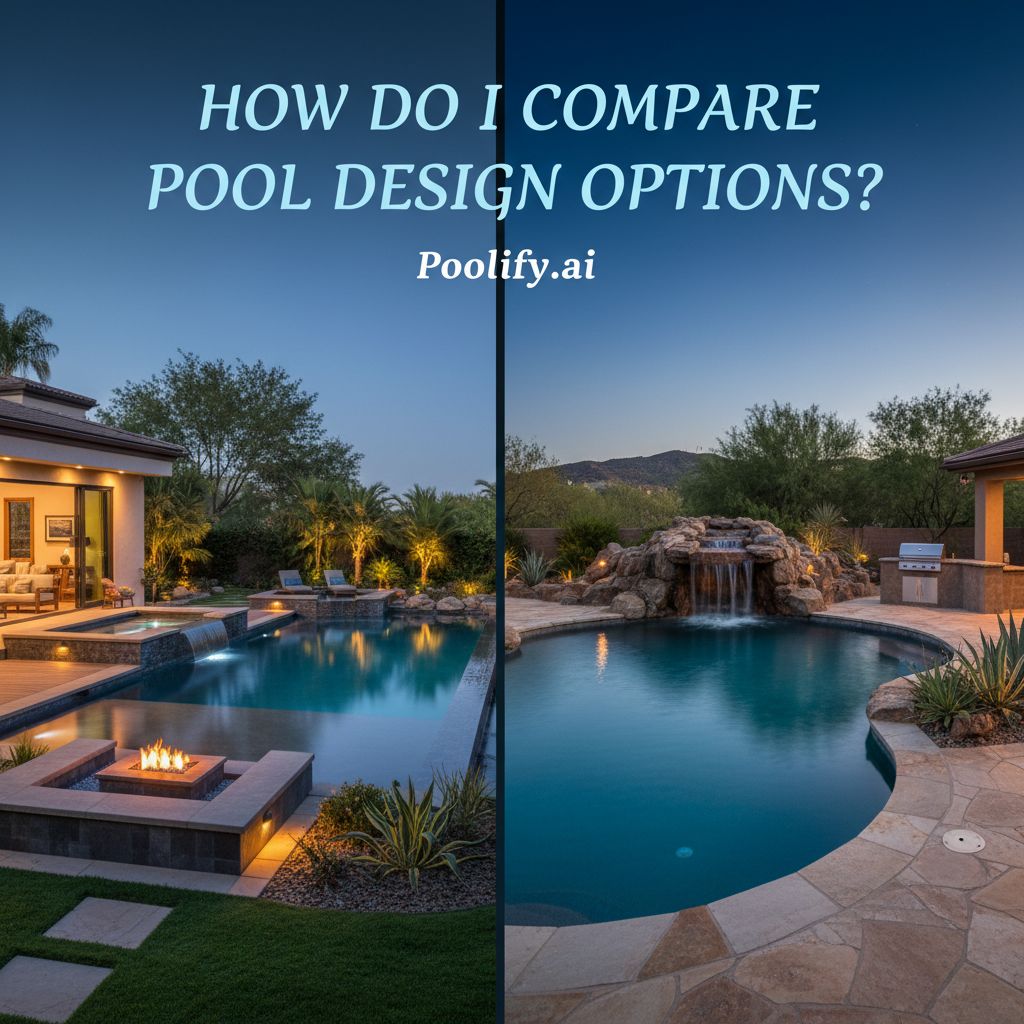
Comparing pool design options is one of the most important steps in planning a pool. Many homeowners see one design and assume it is “good enough,” only to realize later that another layout would have worked better for their space, budget, or lifestyle.
This guide explains how to compare pool design options effectively, what factors matter most, and how to avoid locking into the wrong design too early.
Why Comparing Pool Designs Matters
Pools are permanent. Once built, changing the size, shape, or placement is difficult and expensive.
Comparing multiple designs helps you:
- Understand tradeoffs between layouts
- Avoid oversizing or poor placement
- Balance pool space with deck and landscaping
- Choose features intentionally
- Feel confident before construction begins
Seeing only one option limits perspective.
Start With the Same Backyard Context
To compare designs fairly, each option should be evaluated in the same context.
What should stay consistent
- The same backyard photo or site layout
- Similar viewing angles
- Comparable scale and proportions
- The same surrounding features
Changing context between designs makes comparisons unreliable.
Compare Pool Size First
Pool size affects nearly every aspect of the project.
Questions to ask
- Does the pool feel too large or too small?
- How much usable yard space remains?
- Is there enough deck and circulation space?
- Does the pool overwhelm the house or yard?
Often, the “right” size becomes obvious when designs are viewed side by side.
Compare Pool Shape and Layout
Shape determines how the pool interacts with the space.
Layout factors to evaluate
- How the pool aligns with the house
- Flow between the pool and outdoor living areas
- Sightlines from windows and patios
- Ease of movement around the pool
Some shapes look appealing in isolation but feel awkward once placed in context.
Compare Features Intentionally
Features should be evaluated as part of the whole design, not individually.
Feature questions to consider
- Does the feature improve daily use?
- Does it reduce usable swim space?
- Does it increase maintenance or cost?
- Would you miss it if it were removed?
Comparing designs with and without certain features often clarifies priorities.
Compare Cost Implications Early
Design options can look similar but have very different cost implications.
Design elements that affect cost
- Pool size and depth
- Shape complexity
- Number of features
- Site constraints
- Decking and hardscape area
Comparing designs with cost in mind prevents surprises later.
Avoid Comparing Too Many Options at Once
While comparison is valuable, too many options can create confusion.
Best practice
- Start with 3 to 5 design options
- Narrow to 2 strong candidates
- Refine the final choice
Focused comparison leads to clearer decisions.
Why Visual Comparison Works Best
Written descriptions and measurements are hard to interpret. Visual comparison reveals differences quickly.
Seeing multiple designs side by side helps you:
- Identify which layout feels balanced
- Spot crowding or wasted space
- Understand how features interact
- Make decisions with confidence
Visualization turns abstract choices into concrete ones.
How AI Pool Design Helps With Comparison
AI pool design tools are well-suited for comparing options. Instead of manually creating each layout, AI can generate multiple design concepts using the same backyard image.
Tools like Poolify focus on helping homeowners compare pool designs visually, making it easier to choose the best option before committing to construction or a builder.
Common Comparison Mistakes to Avoid
Comparing designs in isolation
Always view designs in the same context.
Focusing only on appearance
Usability and flow matter just as much.
Ignoring future use
Think beyond the first season.
Choosing too quickly
Take time to evaluate tradeoffs.
Key Takeaways
- Comparing pool design options leads to better outcomes
- Keep context consistent when evaluating designs
- Compare size, shape, features, and cost together
- Visual comparison makes differences clear
- AI tools simplify side-by-side evaluation
Comparing pool designs thoughtfully helps ensure the final choice fits your backyard, your budget, and how you plan to use the pool for years to come.