
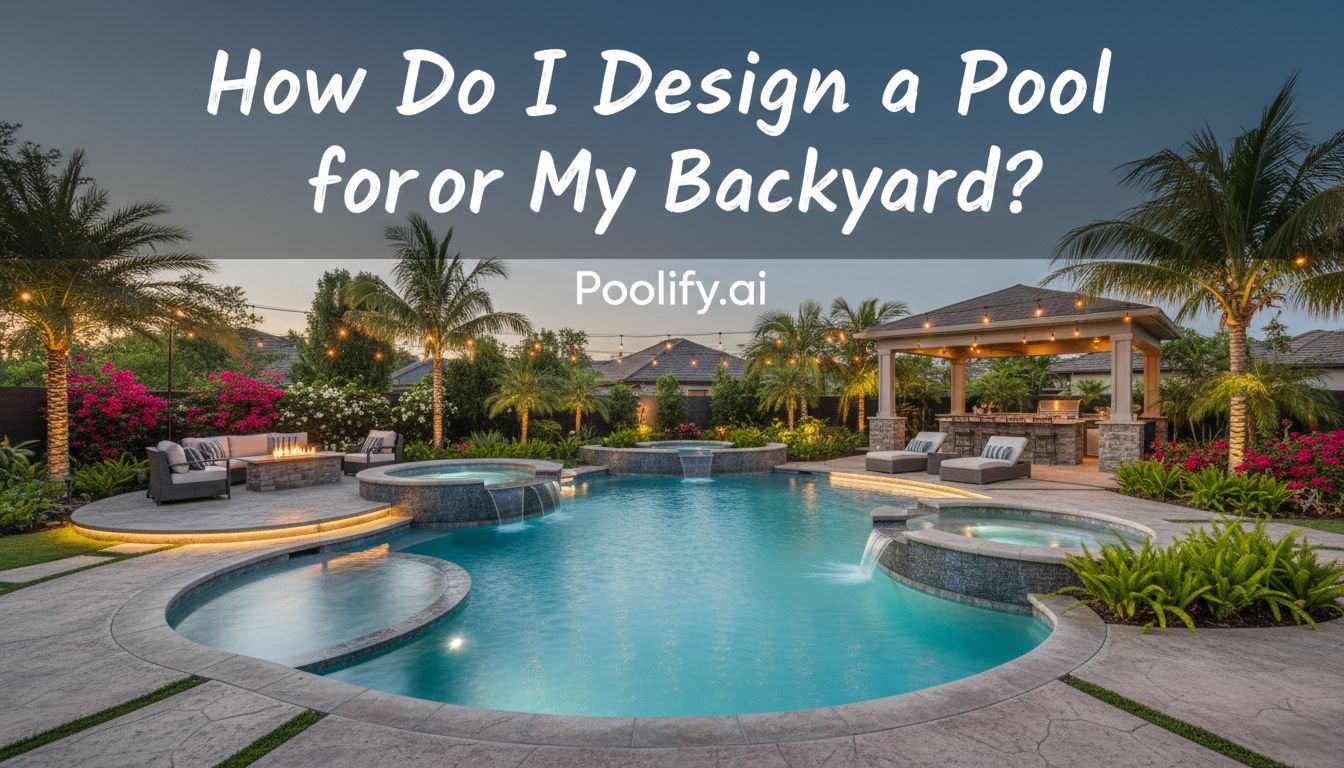
Designing a pool for your backyard is not just about picking a shape you like. The design stage determines how usable the pool will be, how much it costs, how well it fits your property, and whether you regret decisions later. Most costly pool mistakes happen before construction ever begins.
This guide walks through how to design a pool for your backyard step by step, what to think about before calling a builder, and how modern visualization tools make this process far easier than it used to be.
Start With Your Backyard, Not the Pool
A common mistake is starting with a pool style instead of starting with the yard itself. Every backyard has constraints that should drive the design.
Key site factors to evaluate
- Total usable space (not just lot size)
- Yard shape and setbacks
- Elevation changes or slopes
- Existing patios, decks, or structures
- Privacy and sightlines from neighbors
- Sun exposure throughout the day
A pool that looks great online may not work in your yard. The goal of early pool design is to fit the pool to the property, not force the property to fit the pool.
Decide How You Want to Use the Pool
Before thinking about materials or finishes, define how the pool will actually be used. This single step eliminates many bad design choices.
Common pool use cases
- Family recreation and kids
- Entertaining guests
- Relaxation and lounging
- Exercise or lap swimming
- Visual appeal and resale value
A family pool often prioritizes shallow areas and safety. An entertaining pool prioritizes seating, tanning ledges, and visual flow. An exercise pool may be long, narrow, and simple.
Design follows function.
Choose a Pool Size That Fits the Space
Many homeowners ask, “How big of a pool can fit in my backyard?” The better question is how big the pool should be.
Pool size considerations
- Walkways and deck space matter as much as water
- Oversized pools reduce usable yard space
- Smaller pools are often cheaper to build and maintain
- Shape can matter more than total square footage
A well-designed small pool often feels more intentional and luxurious than a large pool that overwhelms the yard.
Select a Pool Shape That Matches the Yard
Pool shape should respond to the geometry of the space.
Common pool shapes and when they work best
- Rectangular pools work well in modern, structured yards
- Freeform pools suit organic landscapes and curves
- L-shaped pools fit around patios or homes
- Narrow lap pools work in tight or urban yards
There is no universally “best” pool shape. The best shape is the one that complements the property layout.
Decide on Pool Features Early
Features affect cost, layout, and construction complexity. Adding them later is often expensive or impossible.
Popular pool features to consider
- Tanning ledges or sun shelves
- Built-in seating or benches
- Attached spa or hot tub
- Water features like sheer descents
- Lighting for nighttime use
Each feature should serve a purpose. Features that look appealing but aren’t used often add cost without real value.
Understand How Pool Design Affects Cost
Pool cost is not just about size. Design decisions directly influence the final price.
Design elements that increase cost
- Complex shapes and curves
- Elevated walls or infinity edges
- Integrated spas
- Custom finishes and tile work
- Significant excavation or retaining walls
Designing with cost in mind early allows you to prioritize what matters most and avoid redesigns later.
Visualize the Pool Before You Build
One of the hardest parts of pool design is imagining how everything will look together. Traditional methods rely on sketches or static renderings, which leave room for misunderstanding.
Modern tools allow homeowners to visualize a pool directly in their backyard before committing to construction. Seeing multiple layout options makes it easier to compare sizes, shapes, and features without guesswork.
This step alone can prevent thousands of dollars in design changes later.
Design the Pool Before Contacting a Builder
Many homeowners assume builders handle design automatically. In reality, builders often start with templates or standardized layouts.
Designing your pool first allows you to:
- Enter conversations informed
- Compare builders more objectively
- Avoid being upsold on unnecessary features
- Move faster once construction begins
Having a clear design concept puts you in control of the process.
Common Pool Design Mistakes to Avoid
Skipping visualization
Not seeing the pool in context leads to scale and placement mistakes.
Ignoring deck and circulation space
Pools need room around them to function well.
Overloading features
More features do not always equal better usability.
Designing without budget awareness
Late-stage changes are expensive.
How an AI Pool Design App Helps
AI-based pool design tools make early planning faster and more accessible. Instead of guessing, homeowners can generate multiple design concepts, compare layouts, and understand spatial tradeoffs visually.
Tools like Poolify are designed specifically for this pre-construction phase, allowing you to explore options before committing to a builder or final design.
Key Takeaways
- Pool design should start with your backyard, not a style
- Define how you plan to use the pool before choosing features
- Size and shape should fit the space, not overwhelm it
- Early design decisions directly impact cost
- Visualizing the pool before building prevents costly mistakes
- Designing first gives you more control when working with builders