
Introduction
When considering a swimming pool investment, understanding how long do concrete pools last is crucial for homeowners planning their backyard oasis. Concrete pools represent a significant financial commitment, and knowing their expected lifespan helps you make informed decisions about installation, maintenance, and long-term budgeting. In 2026, concrete pools remain the gold standard for durability and customization, with proper care extending their functional life well beyond other pool types. This comprehensive guide explores everything you need to know about concrete pool longevity, from construction quality to maintenance practices that can add decades to your pool’s lifespan.
Understanding How Long Do Concrete Pools Last
The question of how long do concrete pools last doesn’t have a single answer, as multiple factors influence their lifespan. Generally, concrete pools can last 50 years or more with proper maintenance and care. Some well-maintained concrete pools have remained functional for over 100 years, demonstrating the remarkable durability of this construction method. The concrete shell itself is incredibly robust, but the interior finish, plumbing systems, and equipment require periodic updates throughout the pool’s lifetime.
According to the Association of Pool & Spa Professionals, concrete pools outlast fiberglass and vinyl liner pools by significant margins. While vinyl liners typically need replacement every 7-10 years and fiberglass pools may show wear after 25-30 years, concrete pools maintain their structural integrity for generations. The key to maximizing how long do concrete pools last lies in understanding the difference between structural lifespan and cosmetic maintenance needs.
The concrete structure forms the permanent foundation of your pool, designed to withstand ground movement, water pressure, and environmental stresses for decades. However, the interior surface—whether plaster, pebble, or tile—requires resurfacing every 10-15 years on average. This maintenance doesn’t affect the structural longevity but keeps the pool aesthetically pleasing and functionally sound. Understanding this distinction helps pool owners budget appropriately for long-term ownership.
Factors That Determine Concrete Pool Longevity
Construction Quality and Materials
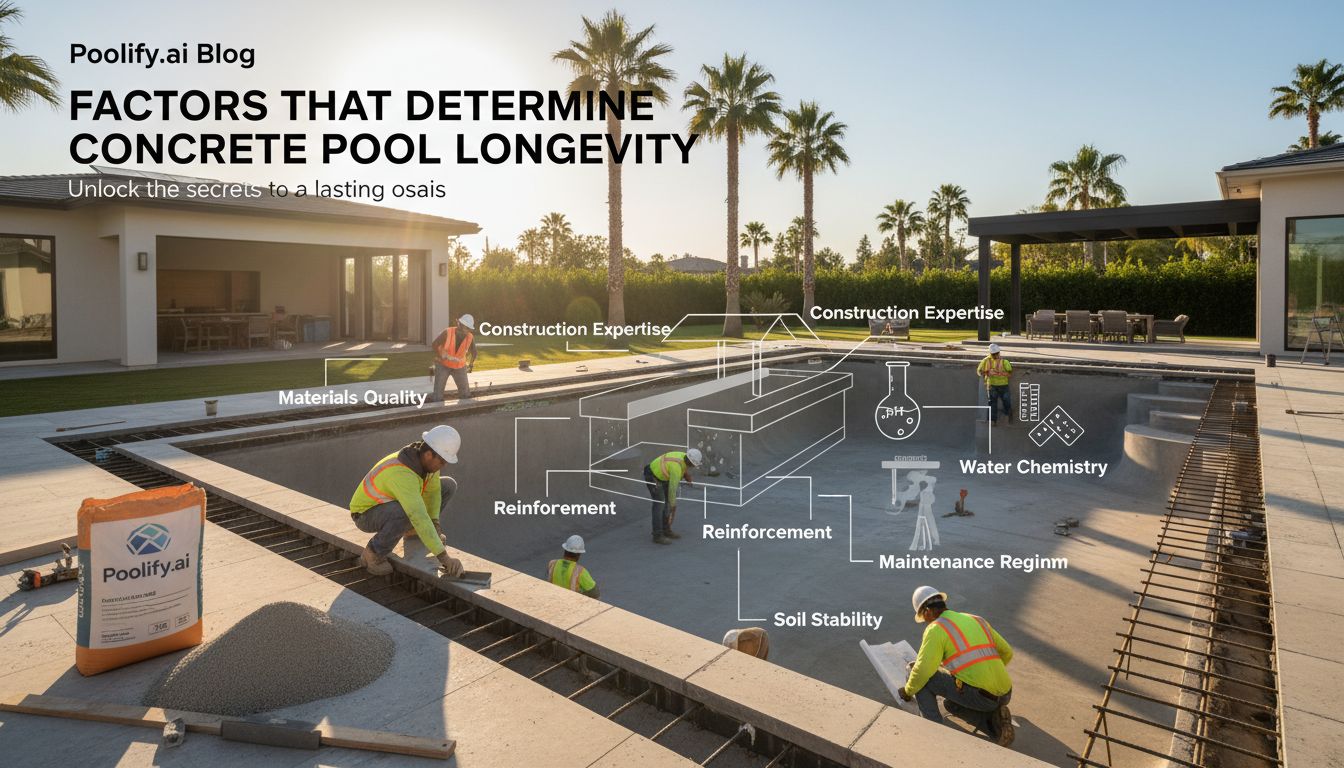
The initial construction quality directly impacts how long do concrete pools last. Pools built with proper engineering, quality materials, and skilled craftsmanship establish a foundation for decades of use. The concrete mix design, steel reinforcement placement, and curing process all contribute to structural integrity. In 2026, modern construction techniques include advanced concrete additives that improve durability, crack resistance, and waterproofing capabilities beyond what was available in previous decades.
Proper steel reinforcement, typically using rebar grids, provides tensile strength that concrete alone cannot achieve. The spacing, size, and placement of rebar must meet engineering specifications for your soil conditions and pool design. Shotcrete or gunite application methods also affect longevity, with experienced crews ensuring proper density and minimal voids in the concrete structure. These foundational elements determine whether your pool lasts 50 years or exceeds 100 years of service.
Climate and Environmental Conditions
Geographic location significantly influences how long do concrete pools last. Pools in stable climates with minimal freeze-thaw cycles generally experience less structural stress than those in regions with extreme temperature fluctuations. Ground movement from earthquakes, soil expansion, or water table changes can create cracks and structural issues over time. Coastal environments introduce salt exposure that can accelerate deterioration of both concrete and metal components if not properly addressed.
UV exposure affects surface finishes more than structural concrete, but intense sunlight can degrade exposed coping and deck materials. Areas with high mineral content in water sources may experience more rapid scaling and surface deterioration. Understanding your local environmental challenges allows you to implement preventive measures that extend your pool’s functional life. For comprehensive guidance on protecting your investment, explore our pool maintenance strategies tailored to different climates.
Water Chemistry Management
Consistent water chemistry management is perhaps the most controllable factor affecting how long do concrete pools last. Improper pH levels, alkalinity imbalances, and calcium hardness extremes attack the concrete surface and plumbing systems. Acidic water (low pH) dissolves plaster and etches concrete, while alkaline water (high pH) causes scaling and cloudy conditions. Maintaining balanced chemistry protects your investment and prevents premature deterioration.
Calcium hardness requires particular attention in concrete pools. Too little calcium causes the water to leach it from plaster and concrete surfaces, leading to etching and pitting. Excessive calcium creates unsightly scaling that damages finishes and equipment. Regular testing and adjustments keep water chemistry within optimal ranges: pH between 7.4-7.6, alkalinity between 80-120 ppm, and calcium hardness between 200-400 ppm for most concrete pools.
Maintenance Practices That Extend Pool Lifespan
Regular Surface Care
Understanding how long do concrete pools last requires recognizing that surface maintenance directly impacts longevity. Weekly brushing removes algae, prevents staining, and distributes chemicals evenly across surfaces. Brushing also helps identify developing issues like cracks, delamination, or rough spots before they become major problems. Using appropriate brushes for your surface type—stainless steel for plaster, nylon for aggregate finishes—prevents unnecessary wear.
Vacuuming removes debris that can stain surfaces and create chemical demand in your water. Automated cleaners provide convenience, but manual vacuuming allows closer inspection of pool surfaces. Regular cleaning prevents organic material accumulation that can harbor bacteria and algae, reducing chemical needs and surface stress. These simple maintenance tasks, performed consistently, add years to your pool’s functional life.
Seasonal Winterization
For pools in freezing climates, proper winterization is critical to how long do concrete pools last. Water expansion during freezing can crack concrete, damage plumbing, and destroy equipment. Lowering water levels below skimmers and jets, draining equipment, and adding antifreeze to plumbing lines protects against freeze damage. Pool covers prevent debris accumulation and reduce spring cleaning efforts while protecting surfaces from harsh winter conditions.
Even in mild climates, seasonal maintenance adjustments help preserve pool longevity. Reducing circulation times during cooler months, adjusting chemical levels for lower usage, and protecting equipment from temperature extremes all contribute to extended lifespan. Many pool owners overlook seasonal maintenance, but these practices prevent costly repairs and premature component failure.
Equipment Maintenance and Upgrades
While the concrete structure may last 50-100 years, equipment requires regular maintenance and periodic replacement. Pumps, filters, heaters, and automation systems typically last 8-15 years depending on quality and usage. Maintaining equipment according to manufacturer specifications prevents system failures that can damage the pool structure. For instance, a failing pump that allows water levels to drop can cause surface cracking and structural stress.
Upgrading to modern, energy-efficient equipment in 2026 not only reduces operating costs but often includes features that protect pool longevity. Variable-speed pumps provide gentler circulation, advanced filtration systems reduce chemical needs, and automated monitoring prevents chemistry imbalances. These investments pay dividends through extended pool life and reduced maintenance demands. Learn more about equipment selection in our comprehensive pool equipment guide.
Resurfacing: Essential to Concrete Pool Longevity
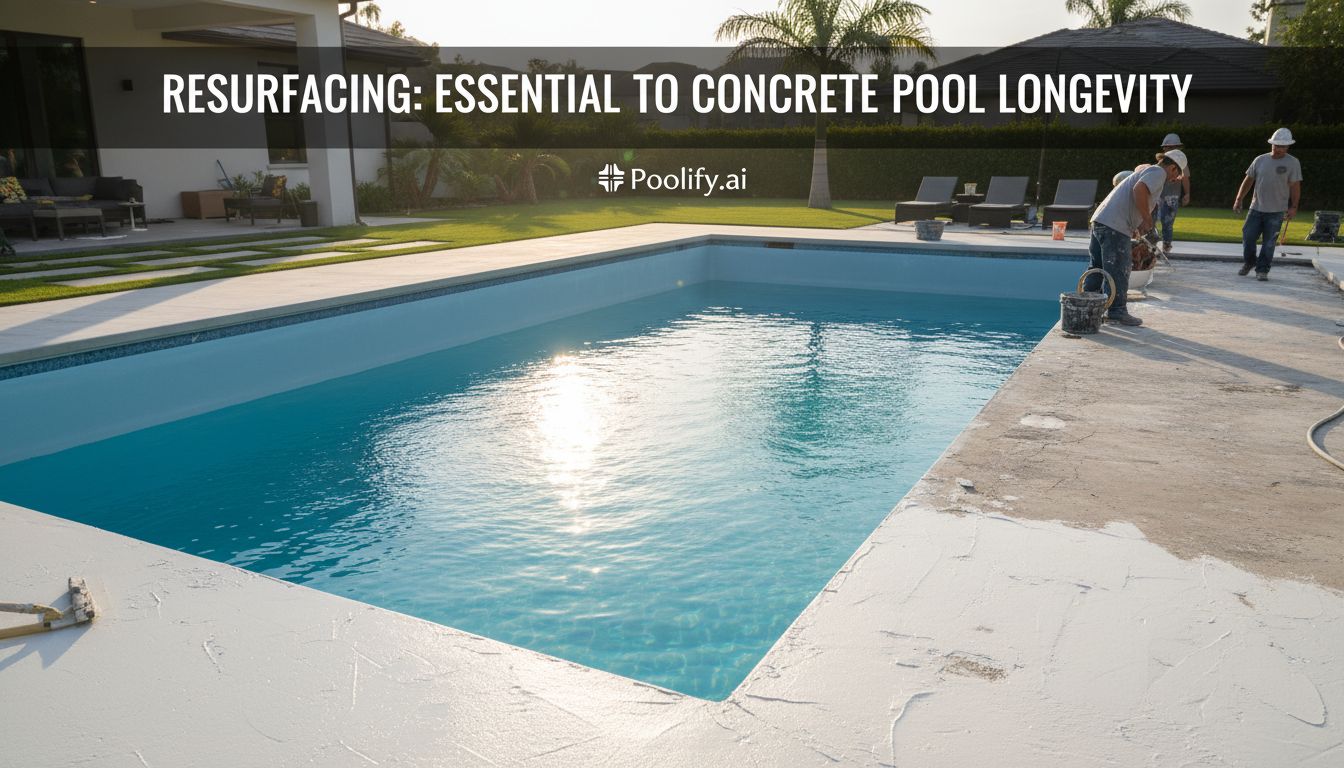
When considering how long do concrete pools last, resurfacing represents the most significant maintenance investment. The interior finish protects the concrete shell from water penetration and provides the smooth, attractive surface swimmers enjoy. Plaster finishes typically last 7-15 years, while aggregate finishes like pebble or quartz can extend to 15-20 years before requiring replacement. Recognizing resurfacing signs early prevents damage to the underlying concrete structure.
Common indicators that resurfacing is needed include rough texture, visible staining that won’t clean, frequent algae growth despite proper chemistry, and visible aggregate showing through plaster. Small cracks, delamination, or hollow-sounding areas when tapped also signal deteriorating surfaces. Addressing these issues promptly prevents water from reaching the concrete shell, where it can cause more serious structural problems that compromise how long do concrete pools last.
Modern resurfacing options in 2026 offer improved durability over traditional white plaster. Quartz and pebble finishes provide enhanced resistance to chemicals, staining, and wear. Glass bead finishes offer smooth textures with excellent longevity. Tile installations, while more expensive initially, can last 25-50 years with minimal maintenance. Selecting appropriate finishes based on your usage patterns, budget, and aesthetic preferences ensures optimal longevity between resurfacing projects.
Common Issues That Reduce Pool Lifespan
Structural Cracks and Leaks
Structural cracks represent the most serious threat to how long do concrete pools last. While hairline cracks are common and often cosmetic, larger cracks can indicate foundation issues, soil movement, or construction defects. Cracks allow water to penetrate behind the surface finish, where it can erode soil, corrode rebar, and cause progressive structural damage. Early detection and professional repair prevent minor cracks from becoming major structural failures.
Leak detection becomes crucial when water loss exceeds normal evaporation rates. According to the EPA’s WaterSense program, pools can lose significant water through undetected leaks, wasting thousands of gallons annually while potentially damaging surrounding structures. Professional leak detection services use specialized equipment to locate problems without invasive excavation. Addressing leaks promptly protects both your pool structure and surrounding property.
Inadequate Drainage and Soil Issues
Poor drainage around concrete pools creates hydrostatic pressure that can crack shells and cause structural failure. Groundwater accumulation behind pool walls exerts tremendous force, especially in areas with high water tables or clay soils. Proper drainage systems, including weep holes, French drains, and adequate grading, relieve this pressure and protect structural integrity. Understanding soil conditions during initial construction prevents many long-term problems affecting how long do concrete pools last.
Soil movement from expansion, contraction, or erosion can stress pool structures beyond their design limits. Expansive clay soils that swell when wet and shrink when dry create cyclical stresses that eventually cause cracks. Tree roots seeking water can penetrate and damage pool structures over time. Site evaluation and proper construction techniques mitigate these risks, but ongoing monitoring helps identify developing issues before they cause serious damage.
Neglected Maintenance
Perhaps the most preventable factor affecting how long do concrete pools last is simple neglect. Pools left without proper chemical balance, cleaning, or seasonal care deteriorate rapidly. Algae growth etches surfaces, unbalanced chemistry attacks finishes and equipment, and debris accumulation creates staining and surface damage. What might have been decades of service can be reduced to years through inadequate maintenance.
Many pool owners underestimate the commitment required for long-term pool ownership. Regular testing, chemical adjustments, cleaning, and equipment maintenance require consistent attention. Professional pool service provides peace of mind for busy homeowners, ensuring proper care that maximizes pool longevity. The modest cost of professional maintenance is insignificant compared to premature resurfacing or structural repairs caused by neglect.
Renovation and Modernization Strategies
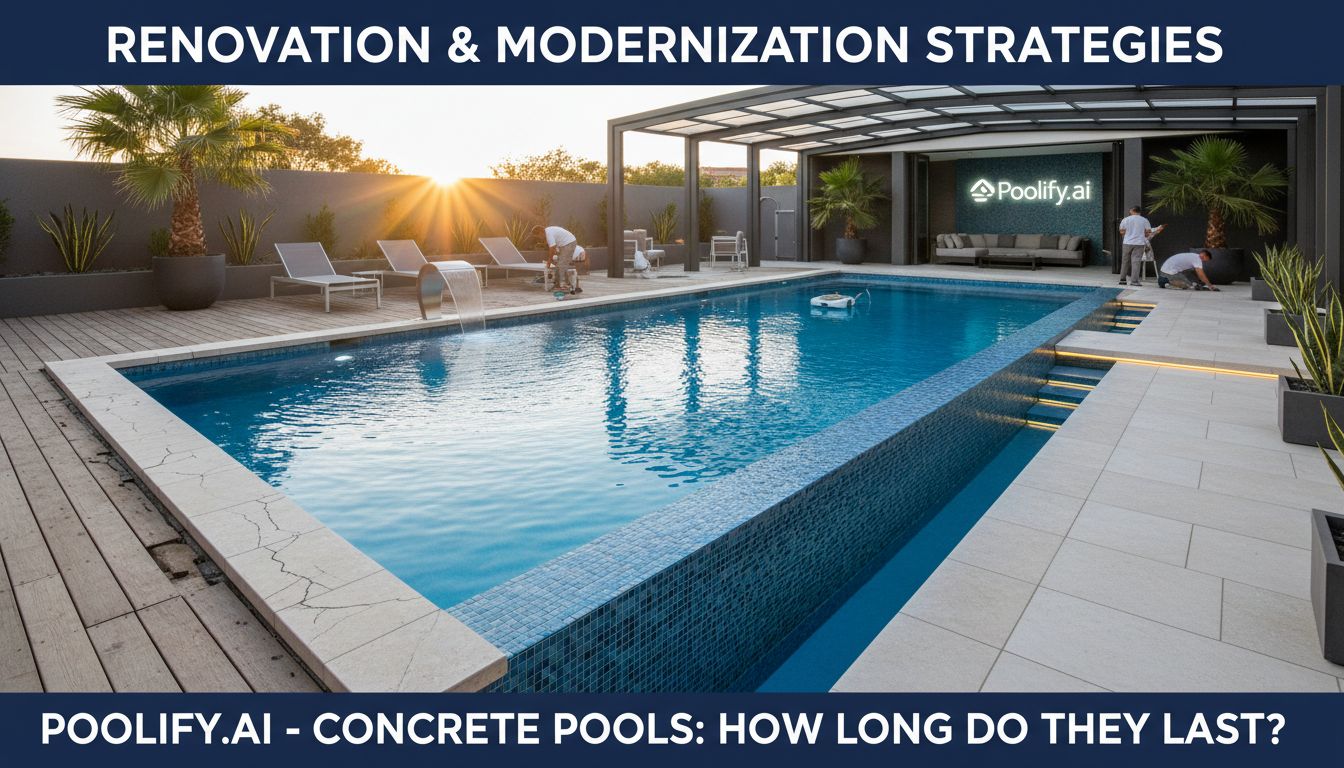
Understanding how long do concrete pools last includes recognizing when renovation makes sense versus complete replacement. Concrete pools rarely require complete demolition and reconstruction if the shell remains structurally sound. Even pools 40-50 years old can be completely transformed through resurfacing, equipment upgrades, and aesthetic improvements. This renovation approach costs a fraction of new construction while delivering a pool that functions like new.
Modern renovation projects in 2026 often include energy-efficient equipment upgrades, automation systems, LED lighting, and contemporary finishes that transform dated pools into modern outdoor living spaces. Adding features like tanning ledges, beach entries, or spa spillovers can be accomplished through structural modifications to existing concrete shells. These renovations extend both the functional life and enjoyment value of older pools.
Deciding between renovation and replacement depends on structural condition, desired features, and budget considerations. Pools with significant structural damage, poor original construction, or fundamental design limitations may warrant replacement. However, most concrete pools benefit from renovation, preserving the substantial investment in the concrete shell while updating everything else. Professional evaluation helps determine the most cost-effective approach for your specific situation.
Comparing Concrete Pool Lifespan to Other Pool Types
When evaluating how long do concrete pools last compared to alternatives, concrete pools demonstrate clear advantages in longevity. Vinyl liner pools require liner replacement every 7-10 years, with the complete structure typically lasting 20-30 years before requiring significant repairs or replacement. While initial costs are lower, lifetime ownership costs often exceed concrete pools when accounting for multiple liner replacements and structural limitations.
Fiberglass pools offer moderate longevity, typically lasting 25-30 years before showing significant wear. The gelcoat surface may require refinishing after 15-20 years, and the fiberglass shell can develop stress cracks or surface degradation over time. Size and shape limitations also restrict design options compared to fully customizable concrete pools. For homeowners prioritizing longevity and customization, concrete pools provide superior value despite higher initial costs.
The lifespan advantage of concrete pools becomes more pronounced over time. A concrete pool properly maintained can serve multiple generations of homeowners, with only periodic resurfacing and equipment updates required. This longevity makes concrete pools excellent investments for permanent residences where long-term value matters more than initial cost savings. Understanding these comparisons helps homeowners make informed decisions aligned with their priorities and timelines.
Cost Considerations Over Pool Lifetime
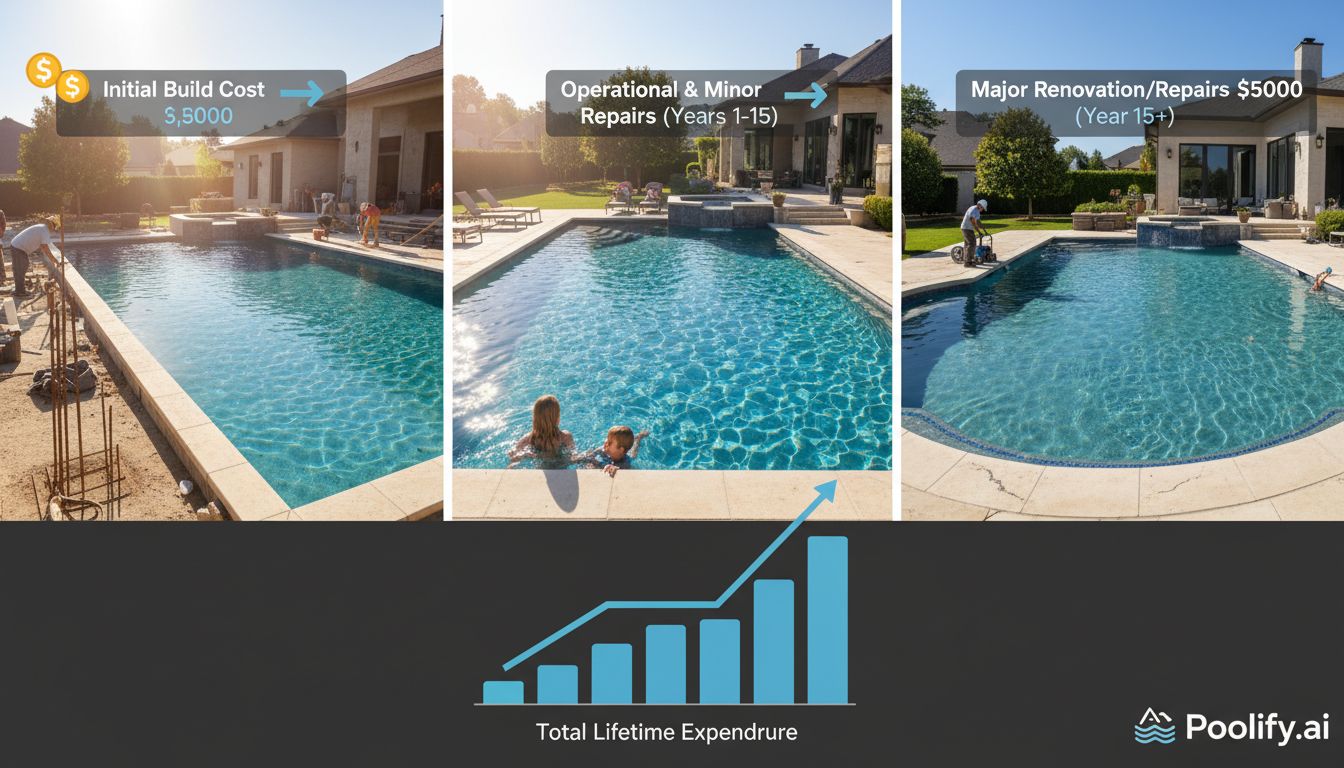
Evaluating how long do concrete pools last requires understanding lifetime ownership costs beyond initial construction. While concrete pools typically cost $50,000-$100,000+ for installation in 2026, their extended lifespan distributes this investment over many decades. Annual maintenance costs including chemicals, utilities, and cleaning average $1,200-$2,500 depending on size, location, and usage patterns. Major maintenance like resurfacing occurs every 10-15 years at $5,000-$15,000 depending on finish selection.
Equipment replacement represents another significant cost category over a pool’s lifetime. Pumps, filters, heaters, and automation systems require replacement every 8-15 years, with costs ranging from $3,000-$10,000 depending on equipment quality and features. Energy costs vary widely based on equipment efficiency, climate, and usage patterns, but modern variable-speed pumps and efficient heaters significantly reduce operating expenses compared to older technology.
When amortized over 50+ years, concrete pool ownership costs become remarkably reasonable compared to alternatives. A $75,000 pool that lasts 50 years costs $1,500 annually for the structure alone, not including maintenance and operating costs. Compare this to vinyl liner pools requiring multiple $4,000-$8,000 liner replacements plus eventual structural replacement, and concrete pools demonstrate superior long-term value. This financial perspective helps justify the initial investment for homeowners planning long-term ownership.
Expert Tips to Maximize Concrete Pool Lifespan
Tip 1: Invest in Quality Construction
The foundation of how long do concrete pools last begins with quality construction. Selecting experienced builders with proven track records, proper licensing, and comprehensive warranties ensures your pool is built to last. Don’t compromise on structural elements to save costs—proper steel reinforcement, quality concrete mixes, and skilled application pay dividends for decades. Research builders thoroughly, check references, and verify their experience with pools similar to your project.
Tip 2: Establish Consistent Maintenance Routines
Consistency matters more than intensity when maintaining concrete pools. Weekly testing and chemical adjustments, regular brushing and vacuuming, and prompt attention to minor issues prevent major problems. Create a maintenance schedule and stick to it, or hire professional service to ensure consistent care. This regular attention adds years to surface finishes and prevents structural issues that reduce how long do concrete pools last.
Tip 3: Address Issues Promptly
Small problems become big problems when ignored. Hairline cracks, minor staining, equipment noises, or chemistry imbalances all signal developing issues requiring attention. Early intervention costs far less than waiting until problems escalate. Establish relationships with qualified pool professionals who can diagnose and address issues before they compromise your pool’s longevity. Proactive maintenance always costs less than reactive repairs.
Tip 4: Upgrade Equipment Strategically
Modern pool equipment offers significant advantages over older technology. Variable-speed pumps reduce energy costs by 50-75% while providing gentler circulation that extends surface life. Automated chemistry systems maintain optimal water balance without daily testing. Saltwater chlorination systems reduce harsh chemical exposure to surfaces. Strategic equipment upgrades improve pool enjoyment while protecting your structural investment and extending how long do concrete pools last.
Tip 5: Plan for Resurfacing
Budget and plan for resurfacing as a normal part of pool ownership rather than an unexpected expense. Setting aside $400-$800 annually creates a resurfacing fund that eliminates financial stress when the time comes. Research finish options before you need them, understanding the longevity and maintenance characteristics of different materials. Proactive planning ensures you can resurface promptly when needed rather than delaying and risking structural damage.
Tip 6: Protect Against Environmental Stresses
Understand your local environmental challenges and implement protective measures. In freezing climates, proper winterization is non-negotiable. In areas with hard water, scale prevention becomes critical. Coastal locations require additional corrosion protection for metal components. Tree management prevents root intrusion and reduces debris. Adapting your maintenance approach to local conditions significantly impacts how long do concrete pools last.
Tip 7: Document Pool History
Maintain comprehensive records of construction details, repairs, resurfacing dates, and equipment replacements. This documentation helps identify patterns, plan future maintenance, and adds value when selling your property. Knowing when components were installed helps predict replacement timing. Records of water chemistry over time can identify trends that inform maintenance adjustments. This information becomes increasingly valuable as pools age.
Tip 8: Consider Professional Inspections
Periodic professional inspections by qualified pool engineers or experienced contractors identify developing issues invisible to homeowners. Structural assessments every 10-15 years provide peace of mind and catch problems early. Pre-purchase inspections protect buyers considering homes with existing pools. Professional expertise complements homeowner maintenance, ensuring comprehensive care that maximizes how long do concrete pools last.
Tip 9: Balance Usage and Maintenance
Heavy pool usage requires proportionally increased maintenance attention. High bather loads introduce contaminants that stress filtration systems and require additional chemical treatment. Frequent parties or large families should implement more aggressive cleaning schedules and consider upgraded equipment. Balancing enjoyment with appropriate maintenance ensures your pool serves your needs without premature deterioration.
Tip 10: Stay Informed About Best Practices
Pool technology, materials, and maintenance best practices continue evolving. Staying informed about new developments helps you make better decisions about upgrades, repairs, and maintenance approaches. Industry associations, reputable pool professionals, and educational resources provide valuable information. Understanding current best practices ensures you’re implementing strategies proven to extend how long do concrete pools last in 2026 and beyond.
Frequently Asked Questions
How long do concrete pools last without resurfacing?
Concrete pool structures can last 50-100+ years without resurfacing, but the interior finish requires replacement every 10-15 years for plaster or 15-20 years for aggregate finishes. The concrete shell itself remains structurally sound for decades, but the surface finish that swimmers see and touch needs periodic renewal. Delaying necessary resurfacing can damage the underlying concrete structure, so timely resurfacing actually extends overall pool longevity.
What is the main factor affecting how long do concrete pools last?
Water chemistry management represents the single most controllable factor affecting concrete pool longevity. Consistent pH, alkalinity, and calcium hardness balance prevents surface deterioration, equipment damage, and structural issues. While construction quality and environmental factors matter, proper water chemistry maintained throughout the pool’s life has the greatest impact on how long do concrete pools last. Weekly testing and prompt adjustments prevent most common problems that reduce pool lifespan.
Can a 50-year-old concrete pool be renovated?
Yes, 50-year-old concrete pools can absolutely be renovated if the structural shell remains sound. Most older pools benefit from complete resurfacing, equipment replacement, plumbing updates, and aesthetic improvements that deliver essentially new pool functionality. Professional structural assessment determines if the concrete shell can support renovation or requires replacement. Many pools from the 1970s and earlier continue serving homeowners after comprehensive renovation, demonstrating the remarkable longevity of properly constructed concrete pools.
How does climate affect concrete pool lifespan?
Climate significantly impacts how long do concrete pools last through freeze-thaw cycles, ground movement, and environmental stresses. Pools in stable climates with minimal temperature extremes generally last longer than those experiencing harsh winters or extreme heat. Proper construction techniques and maintenance adapted to local conditions mitigate climate challenges. Winterization in freezing climates, scale prevention in hard water areas, and corrosion protection in coastal environments all help concrete pools achieve maximum lifespan regardless of location.
Are concrete pools worth the investment considering their lifespan?
Concrete pools provide excellent long-term value when considering how long do concrete pools last compared to alternatives. The 50-100+ year lifespan, complete customization options, and ability to renovate rather than replace make concrete pools worthwhile investments for permanent residences. While initial costs exceed fiberglass or vinyl pools, lifetime ownership costs often favor concrete when accounting for longevity and minimal structural replacement needs. For homeowners prioritizing durability, customization, and long-term value, concrete pools justify their premium pricing.
Key Takeaways
- Exceptional Longevity: Concrete pools last 50-100+ years with proper maintenance, far exceeding fiberglass (25-30 years) and vinyl liner pools (20-30 years), making them superior long-term investments despite higher initial costs.
- Maintenance is Critical: Consistent water chemistry management, regular cleaning, and prompt attention to minor issues are the most controllable factors determining how long do concrete pools last, with weekly care preventing costly repairs.
- Resurfacing vs. Structure: The concrete shell lasts decades, but interior finishes require replacement every 10-20 years depending on material—understanding this distinction helps budget appropriately for long-term ownership.
- Quality Construction Matters: Initial construction quality, including proper steel reinforcement, quality concrete mixes, and skilled application, establishes the foundation for decades of service and cannot be corrected later.
- Renovation Over Replacement: Even 40-50 year old concrete pools can be completely transformed through resurfacing and upgrades rather than replacement, preserving the substantial structural investment while delivering modern functionality.
Conclusion
Understanding how long do concrete pools last empowers homeowners to make informed decisions about pool investments, maintenance commitments, and long-term budgeting. With proper construction, consistent maintenance, and timely resurfacing, concrete pools deliver 50-100+ years of enjoyment, serving multiple generations of families. The initial investment in quality construction and ongoing commitment to proper care pay dividends through decades of reliable service and minimal structural replacement needs.
In 2026, concrete pools continue representing the gold standard for durability, customization, and long-term value in residential swimming pools. While fiberglass and vinyl alternatives offer lower initial costs, their limited lifespans and structural replacement requirements make concrete pools superior choices for homeowners prioritizing longevity. The key to maximizing how long do concrete pools last lies in understanding the difference between structural longevity and cosmetic maintenance, implementing consistent care routines, and addressing issues promptly before they escalate.
Whether you’re considering new pool construction, evaluating an existing pool’s condition, or planning long-term maintenance strategies, the information in this guide provides the foundation for informed decision-making. Concrete pools represent significant investments that, with proper care, deliver exceptional value and enjoyment for decades. By implementing the expert tips and maintenance practices outlined here, you can ensure your concrete pool reaches and exceeds its expected lifespan, providing a beautiful backyard oasis for years to come.
References
- Association of Pool & Spa Professionals (APSP) – https://www.apsp.org/
- EPA WaterSense Program – https://www.epa.gov/watersense/pool-covers