
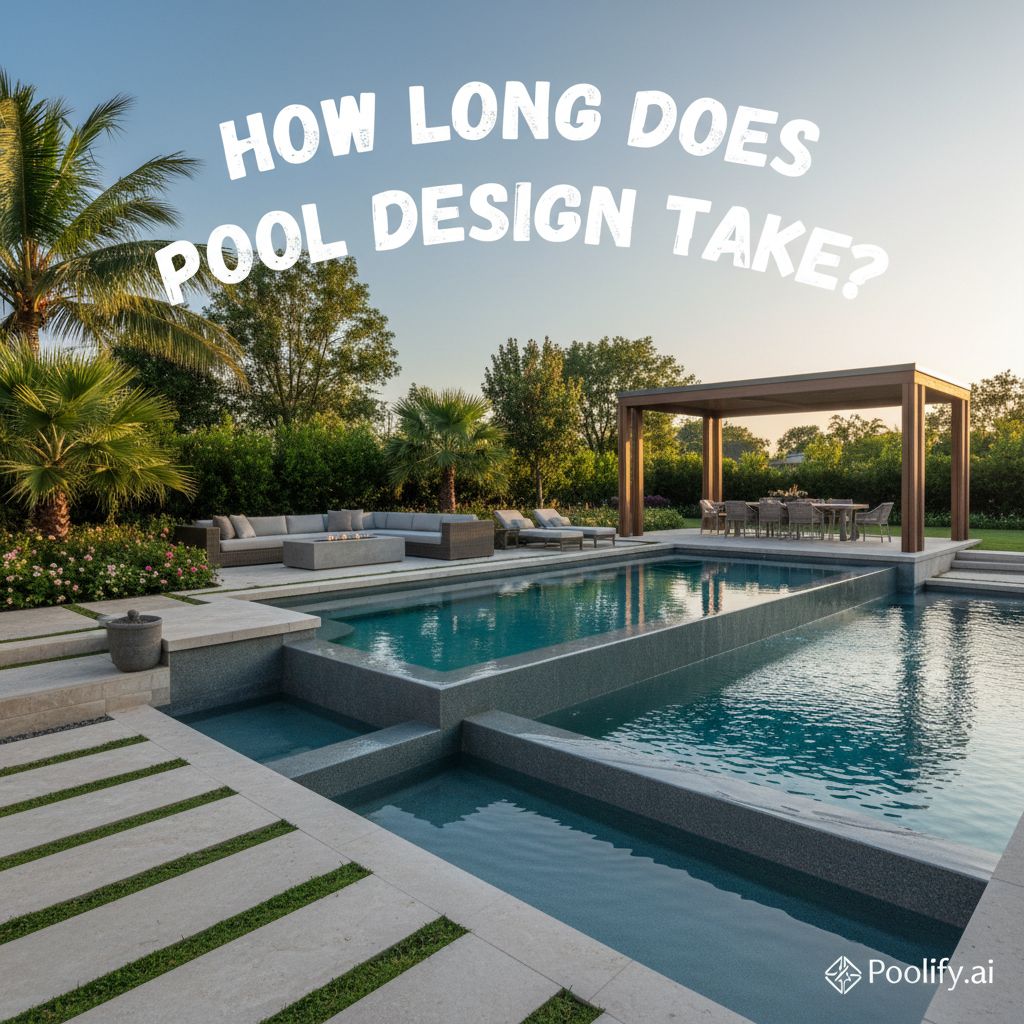
Pool design does not have to be a long, drawn-out process, but the timeline depends heavily on how the design is approached. Some homeowners move from idea to construction-ready plans in weeks, while others spend months revising layouts after construction has already started.
This guide explains how long pool design typically takes, what affects the timeline, and how early visualization can significantly speed up the process.
The Typical Pool Design Timeline
Pool design usually happens in stages. Understanding these stages helps set realistic expectations.
Conceptual design phase
This is where ideas are explored and decisions are flexible.
- Defining pool size and shape
- Choosing placement in the yard
- Exploring features and layouts
Typical timeframe: a few days to a few weeks
Design development phase
The chosen concept is refined and prepared for construction planning.
- Adjusting layout details
- Aligning features with budget
- Coordinating with builders or designers
Typical timeframe: one to several weeks
Construction-ready planning
This phase focuses on engineering, permits, and technical drawings.
- Structural and systems planning
- Permit documentation
- Final approvals
Typical timeframe: several weeks, depending on location and complexity
Most delays happen when early stages are rushed or skipped.
What Causes Pool Design to Take Longer
Certain factors commonly extend the design timeline.
Common causes of delays
- Designing without clear priorities
- Changing decisions late in the process
- Lack of visualization early on
- Unclear budget expectations
- Starting construction planning before design is settled
Time spent redesigning later is far more costly than time spent planning early.
How Early Design Choices Speed Things Up
Clear early decisions reduce revisions and backtracking.
Designing early allows you to:
- Narrow options before professional plans are created
- Align layout with budget expectations
- Reduce builder revisions
- Move into permitting faster
Well-defined concepts streamline every later phase.
How Visualization Shortens the Design Process
Visualization removes uncertainty quickly.
Seeing the pool in your backyard helps you:
- Confirm size and placement immediately
- Compare layouts without redrawing plans
- Identify issues early
- Make confident decisions faster
Visual clarity often reduces weeks of back-and-forth.
Pool Design Timelines for Different Project Types
Simple residential pools
Straightforward yards and simple layouts move fastest.
Typical design time: a few days to two weeks
Custom or complex projects
Irregular sites, slopes, or high-end designs take longer.
Typical design time: several weeks
Renovations and redesigns
Existing conditions add complexity.
Typical design time: one to several weeks, depending on scope
How AI Pool Design Accelerates Early Planning
AI-based pool design tools dramatically reduce early design time by generating multiple layout options quickly.
Instead of starting from scratch, homeowners can:
- Explore designs immediately
- Compare options side by side
- Narrow decisions before involving professionals
Tools like Poolify focus on this early phase, helping homeowners move from idea to clear direction in a fraction of the traditional time.
When Taking More Time Is Worth It
Speed is valuable, but rushing decisions can backfire.
It is worth slowing down when:
- The yard is complex
- The pool is a major investment
- Multiple features are involved
- Long-term use is a priority
Time spent clarifying the design early almost always saves time later.
Key Takeaways
- Pool design timelines vary by project complexity
- Conceptual design is usually the fastest phase
- Most delays come from late changes
- Visualization shortens decision-making
- Early planning speeds up construction later
Pool design does not need to be slow, but it does need to be thoughtful. Clear early decisions lead to faster timelines and better outcomes.