
Understanding Pool Costs in 2026
If you’re wondering how much does a pool cost in 2026, you’re not alone. Installing a swimming pool represents one of the most significant home improvement investments you’ll make, with prices ranging from $3,000 for basic above-ground models to over $100,000 for luxury inground designs. The total cost depends on multiple factors including pool type, size, materials, location, and additional features. This comprehensive guide breaks down every expense you’ll encounter, from initial installation to long-term maintenance, helping you budget accurately and avoid costly surprises.
The swimming pool industry has seen substantial changes in 2026, with material costs, labor rates, and technology upgrades all influencing the final price tag. Understanding these variables empowers you to make informed decisions that align with your budget and lifestyle goals. Whether you’re considering an above-ground pool for summer fun or a custom inground oasis, knowing the true cost breakdown ensures you’re prepared for this exciting investment.
Types of Pools and Their Price Ranges
The type of pool you choose dramatically affects how much does a pool cost for your project. Each pool category offers distinct advantages, maintenance requirements, and price points that suit different budgets and preferences.
Above-Ground Pools
Above-ground pools represent the most budget-friendly option, with prices ranging from $3,000 to $15,000 in 2026. These pools typically feature vinyl liners and steel, aluminum, or resin frames. Installation is relatively simple, often completed within a few days, and many homeowners can handle setup themselves with basic tools. Standard sizes range from 12 to 33 feet in diameter or length, with depths typically between 48 and 54 inches.
The lower initial investment makes above-ground pools attractive for first-time pool owners or those with limited budgets. However, they generally last 7-15 years depending on quality and maintenance, requiring liner replacements every 5-9 years at approximately $400-$1,200 per replacement. These pools also offer less aesthetic appeal and may not add significant value to your property.
Inground Vinyl Pools
Inground vinyl pools cost between $35,000 and $65,000 on average in 2026. These pools feature custom-shaped excavations with vinyl liner interiors supported by polymer, steel, or concrete walls. Installation takes 2-4 weeks, and the smooth vinyl surface feels comfortable underfoot while resisting algae growth better than concrete.
When considering how much does a pool cost for vinyl inground options, factor in liner replacement every 7-10 years at $4,000-$7,000. While less expensive than concrete or fiberglass initially, these recurring costs add up over the pool’s 20-30 year lifespan. Vinyl pools offer excellent customization for unique shapes and sizes, making them popular for properties with specific space constraints.
Fiberglass Pools
Fiberglass pools range from $45,000 to $85,000 in 2026, including installation. These pre-manufactured shells arrive at your property ready for placement into a prepared excavation. The installation process typically takes just 1-2 weeks, significantly faster than concrete alternatives. The smooth, non-porous gelcoat surface requires minimal chemical maintenance and resists algae naturally.
The durability of fiberglass makes it an excellent long-term investment when evaluating how much does a pool cost over time. These pools can last 30+ years with minimal structural maintenance, though the gelcoat may need resurfacing after 15-20 years at approximately $5,000-$10,000. The main limitation is size and shape—fiberglass pools come in predetermined designs, typically maxing out around 16 feet wide and 40 feet long due to transportation constraints.
Concrete (Gunite/Shotcrete) Pools
Concrete pools represent the premium option, with costs ranging from $50,000 to $150,000+ in 2026. These fully customizable pools use gunite or shotcrete application over steel rebar frameworks, allowing any imaginable shape, size, or depth. Installation takes 8-12 weeks, involving excavation, steel installation, concrete application, and finishing with plaster, tile, or aggregate surfaces.
When determining how much does a pool cost for concrete construction, consider the extensive customization possibilities including beach entries, tanning ledges, integrated spas, and custom depths. These pools last 50+ years with proper maintenance but require replastering every 10-15 years at $5,000-$15,000 and more frequent chemical balancing due to the porous plaster surface. According to the U.S. Census Bureau’s construction data, concrete pools remain the most popular choice for luxury home installations.
Key Factors That Influence Pool Costs
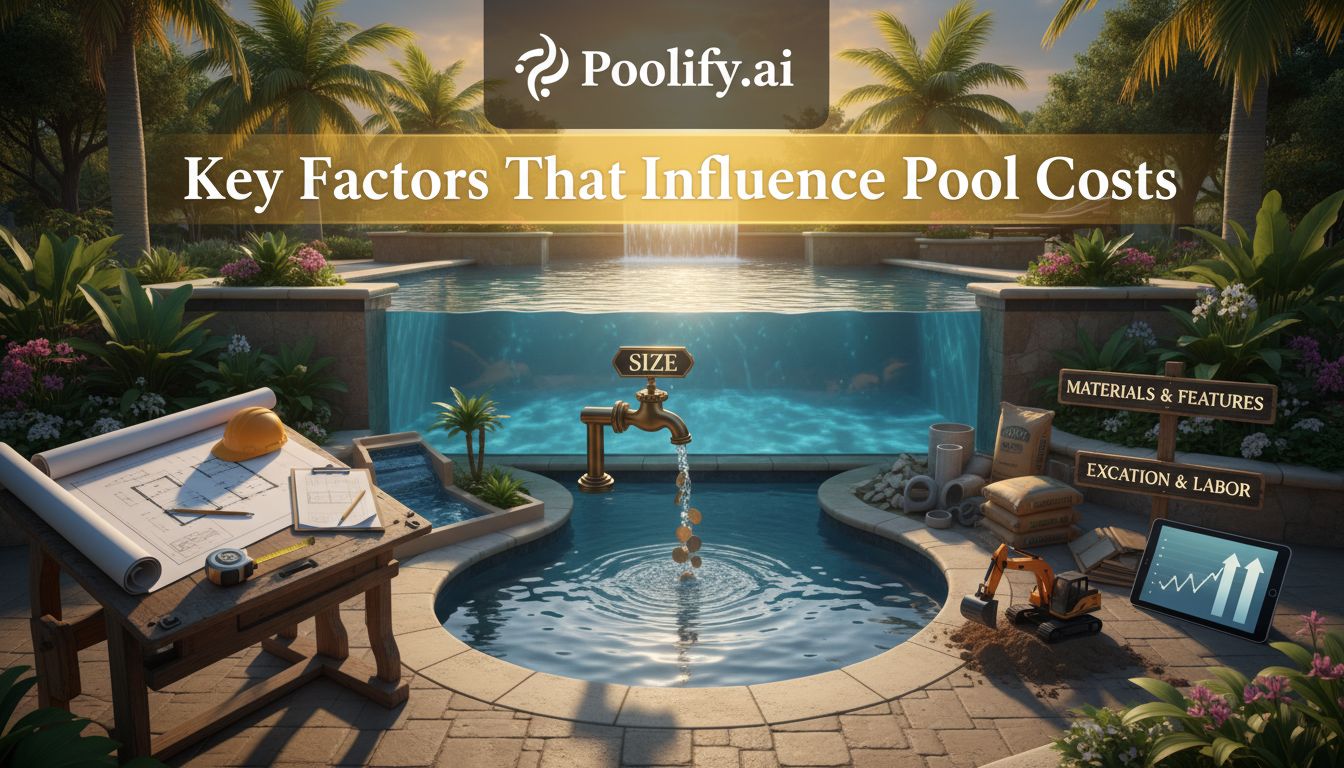
Understanding what drives pricing helps you anticipate how much does a pool cost for your specific situation and identify areas where you can optimize your budget without sacrificing quality.
Pool Size and Depth
Size directly impacts material quantities, excavation volume, and labor hours. A standard 12×24-foot pool costs significantly less than a 20×40-foot design. Depth also matters—pools deeper than 6 feet require additional structural support and more extensive excavation. In 2026, excavation costs average $8-$15 per cubic yard, while concrete pools cost approximately $50-$125 per square foot of surface area.
Location and Site Conditions
Your property’s characteristics substantially affect how much does a pool cost for installation. Difficult terrain, rocky soil, high water tables, or limited equipment access increase excavation expenses. Properties requiring retaining walls, extensive grading, or soil stabilization can add $5,000-$25,000 to the project. Urban locations with restricted access may need smaller equipment or hand-digging, increasing labor costs by 20-40%.
Regional labor rates also vary significantly. Metropolitan areas typically charge 25-50% more than rural locations for identical work. Climate impacts material selection too—northern regions need deeper frost footings and may require additional winterization features, while southern locations might prioritize cooling systems and shade structures.
Additional Features and Upgrades
Optional features quickly increase the total when calculating how much does a pool cost. Popular upgrades in 2026 include:
- Heating systems: $2,500-$10,000 (gas, electric, or solar)
- Lighting: $700-$3,000 (LED color-changing systems)
- Water features: $1,500-$15,000 (fountains, waterfalls, deck jets)
- Automation systems: $1,800-$4,500 (smartphone-controlled equipment)
- Saltwater systems: $1,500-$2,500 (chlorine generator installation)
- Pool covers: $1,200-$15,000 (manual to automatic safety covers)
- Diving boards or slides: $500-$5,000
- Attached spa: $8,000-$25,000 additional
Decking and Landscaping
The pool surround significantly impacts aesthetics and functionality. Basic concrete decking costs $6-$12 per square foot, while premium options like natural stone, pavers, or stamped concrete range from $15-$40 per square foot. Most pools require 300-600 square feet of decking, adding $4,500-$24,000 to the project.
Landscaping integration—including plants, fencing, outdoor kitchens, or pergolas—can add another $5,000-$50,000 depending on scope. When budgeting how much does a pool cost, allocate at least 20-30% of the pool price for surrounding hardscape and landscape elements to create a cohesive outdoor living space.
Hidden Costs and Unexpected Expenses
Many homeowners underestimate how much does a pool cost by overlooking expenses beyond the basic installation contract. These hidden costs can add 15-30% to your initial budget projection.
Permits and Inspections
Building permits typically cost $500-$2,000 depending on your municipality. Most jurisdictions require multiple inspections throughout construction—excavation, electrical, plumbing, and final—each potentially carrying separate fees. Some areas also mandate fence permits, setback variances, or environmental impact assessments that add time and expense.
Utility Upgrades
Pool equipment demands substantial electricity, sometimes requiring electrical panel upgrades costing $1,500-$3,500. Gas heaters may need new gas lines at $500-$2,000. Water fill costs vary by location but typically run $80-$200 for initial filling, while some municipalities charge sewer fees based on water usage even though pool water doesn’t enter the sewer system.
Fencing Requirements
Most jurisdictions mandate pool fencing for safety, as outlined by the Consumer Product Safety Commission’s pool safety guidelines. Fencing costs range from $1,500-$10,000 depending on materials and perimeter length. Basic chain-link starts around $15 per linear foot, while decorative wrought iron or glass panels cost $100-$300 per linear foot.
Insurance Increases
Homeowners insurance premiums typically increase $50-$300 annually after pool installation due to liability concerns. Some insurers require minimum liability coverage of $300,000-$500,000. Umbrella policies provide additional protection at $200-$500 yearly. These ongoing costs affect how much does a pool cost over its lifetime, adding $1,000-$6,000 over a typical 20-year ownership period.
Landscaping Removal and Restoration
Excavation often damages existing landscaping, requiring removal and replacement. Mature trees near the construction zone may need protection or removal at $500-$2,000 per tree. Lawn restoration, irrigation repairs, and replanting can add $2,000-$8,000 to the final bill.
Annual Maintenance and Operating Costs
Understanding ongoing expenses is crucial when evaluating how much does a pool cost over time. Annual maintenance averages $1,200-$2,500 for basic upkeep, with additional costs for repairs and utilities.
Chemical and Cleaning Supplies
Regular chemical maintenance costs $300-$800 annually, including chlorine, pH adjusters, algaecides, and shock treatments. Saltwater systems reduce this to $200-$500 yearly but require salt cell replacement every 3-5 years at $400-$900. Cleaning supplies—brushes, nets, vacuum heads, and test kits—add another $100-$300 annually.
Energy Costs
Pump operation represents the largest utility expense, costing $300-$800 yearly depending on electricity rates and pump efficiency. Variable-speed pumps, now mandated in many areas, reduce energy consumption by 50-75% compared to single-speed models. Heating dramatically increases costs—gas heaters add $300-$1,500 per swimming season, electric heat pumps cost $200-$1,000, while solar heating adds minimal operating costs after initial installation.
Professional Maintenance Services
Many owners hire professional pool services for weekly maintenance at $80-$150 per visit, totaling $1,000-$2,400 during swimming season. Year-round service in warmer climates costs $3,000-$7,000 annually. These services typically include chemical balancing, cleaning, equipment inspection, and minor repairs. For those interested in handling maintenance themselves, our comprehensive pool maintenance guide provides detailed instructions.
Equipment Repairs and Replacements
Pool equipment has finite lifespans requiring eventual replacement. Budget for these major expenses when calculating how much does a pool cost long-term:
- Pump replacement: Every 8-12 years at $700-$1,500
- Filter replacement: Every 10-15 years at $400-$1,200
- Heater replacement: Every 8-12 years at $2,000-$5,000
- Automation system: Every 10-15 years at $1,500-$3,500
- LED lights: Every 10-15 years at $500-$2,000
Seasonal Opening and Closing
In climates requiring winterization, professional opening and closing services cost $150-$400 each, totaling $300-$800 annually. DIY winterization saves money but requires proper knowledge to prevent freeze damage that could cost thousands in repairs.
Money-Saving Strategies for Pool Installation
Strategic planning reduces how much does a pool cost without compromising quality or enjoyment. These proven approaches help maximize value while staying within budget.
Timing Your Installation
Pool builders experience seasonal demand fluctuations. Installing during off-season (late fall through early spring) often yields 10-20% discounts as contractors seek to maintain steady work. However, weather delays may extend construction timelines in northern climates. Request quotes from multiple contractors and negotiate based on their current workload.
Simplifying Pool Design
Complex shapes, varying depths, and custom features increase costs substantially. Rectangular or simple oval designs cost 15-25% less than elaborate free-form shapes. Standard depths of 3-6 feet accommodate most activities without requiring expensive deep-end construction. Limiting size to what you’ll actually use—most families find 12×24 to 16×32 feet adequate—significantly reduces expenses.
Phasing Upgrades
Install essential features initially while planning infrastructure for future additions. Run conduit for lighting you’ll add later, install plumbing stubs for future water features, or prepare pad locations for eventual outdoor kitchens. This approach spreads costs over time while avoiding expensive retrofitting. Check out our pool design ideas for inspiration on phased development.
Handling Some Work Yourself
While pool construction requires professionals, you can reduce labor costs by handling peripheral work. Demolishing existing structures, removing landscaping, or installing fencing yourself saves $2,000-$8,000. Post-construction, handle your own landscaping, deck furniture assembly, and accessory installation. Learn proper maintenance techniques to avoid costly service contracts.
Selecting Cost-Effective Materials
Material choices dramatically affect how much does a pool cost. Vinyl and fiberglass cost less initially than concrete while providing decades of enjoyment. Standard plaster finishes cost half as much as premium aggregate surfaces. Basic concrete decking provides durability at a fraction of natural stone prices. Prioritize quality for structural elements and equipment while economizing on aesthetic features you can upgrade later.
Energy-Efficient Equipment
Investing in energy-efficient equipment increases initial costs but reduces operating expenses substantially. Variable-speed pumps cost $400-$800 more than single-speed models but save $300-$700 annually in electricity. LED lighting costs more upfront but lasts longer and uses 75% less energy. Solar heating requires significant initial investment but eliminates ongoing fuel costs. These upgrades typically pay for themselves within 3-7 years.
Financing Options for Pool Installation
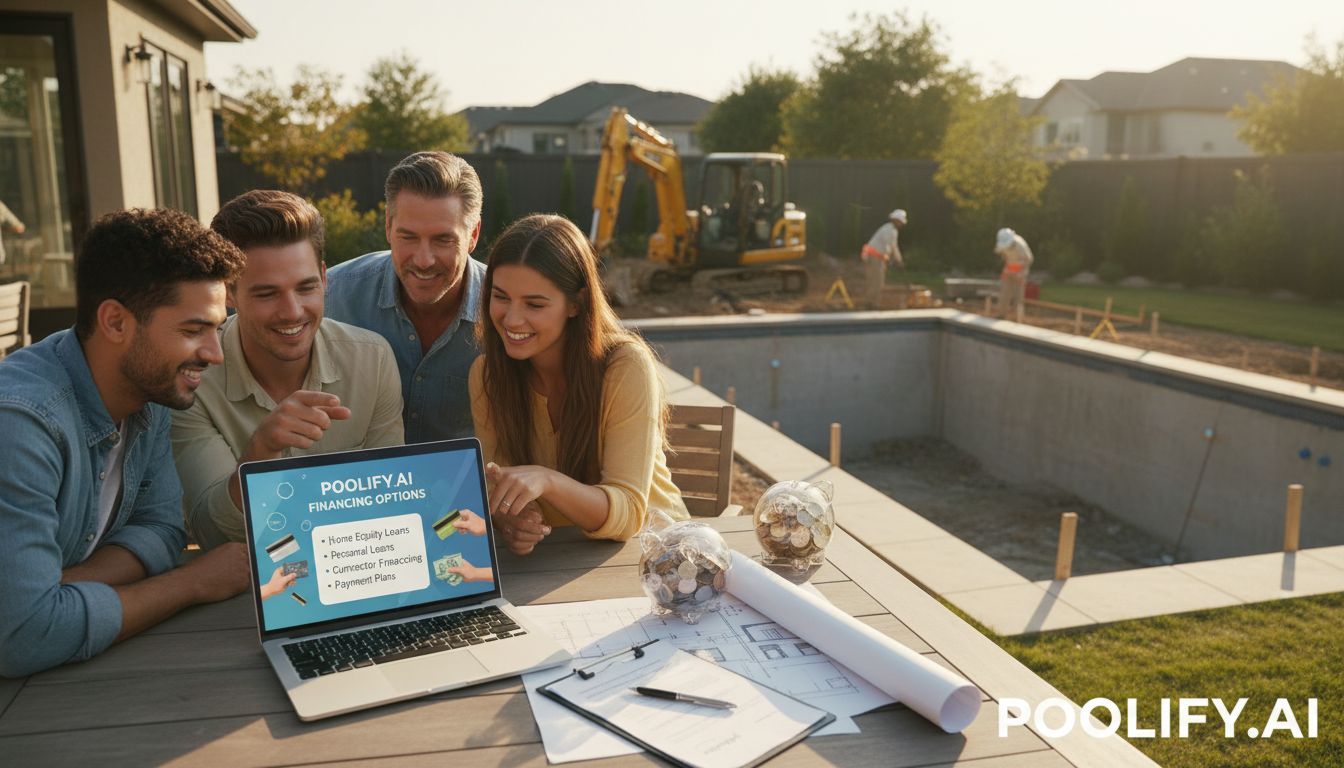
Most homeowners finance pool projects rather than paying cash upfront. Understanding financing affects how much does a pool cost over time due to interest charges.
Home Equity Loans and Lines of Credit
Home equity loans offer fixed rates (currently 7-10% in 2026) for lump-sum borrowing, while HELOCs provide flexible draw periods with variable rates. Both use your home as collateral and may offer tax-deductible interest if the improvement adds home value. Typical terms span 10-20 years, with monthly payments on a $50,000 loan ranging from $400-$650 depending on rate and term.
Personal Loans
Unsecured personal loans avoid using your home as collateral but carry higher interest rates (9-15% in 2026). Terms typically span 3-7 years with higher monthly payments but faster payoff. A $50,000 personal loan at 11% over 5 years costs approximately $1,090 monthly, totaling $65,400 including interest.
Pool Contractor Financing
Many builders offer financing through partnerships with lenders. While convenient, these programs may carry higher rates or fees than traditional lenders. Compare contractor financing against your own bank or credit union options. Watch for promotional periods offering deferred interest—these require full payoff before the promotional period ends or you’ll owe backdated interest on the entire balance.
Cash-Out Refinancing
If mortgage rates remain favorable, cash-out refinancing allows you to extract equity while potentially maintaining similar monthly payments by extending your loan term. This option works best when current mortgage rates approximate or fall below your existing rate. However, extending your mortgage term means paying more interest over the loan’s life.
Return on Investment and Property Value
When considering how much does a pool cost, evaluate potential returns if you plan to sell your home. Pool ROI varies significantly by location, climate, and market conditions.
In warm-weather markets like Florida, Arizona, and Southern California, pools are expected amenities that add 5-8% to home values, often recovering 50-75% of installation costs. In northern climates with shorter swimming seasons, pools may add little value or even deter buyers concerned about maintenance and safety. The National Association of Realtors indicates that pools appeal to approximately 50% of buyers nationally, meaning they can limit your buyer pool in some markets.
Pools provide intangible value beyond resale considerations. They offer family recreation, fitness opportunities, entertainment venues, and lifestyle enhancement that many owners value more than financial returns. When evaluating how much does a pool cost, consider your intended ownership timeline—staying 10+ years allows you to enjoy the investment fully regardless of resale impact.
Well-maintained pools with updated equipment and attractive landscaping command better returns than neglected installations. Modern features like automation, LED lighting, and energy-efficient equipment appeal to buyers more than outdated single-speed pumps and incandescent lighting. Premium materials like natural stone decking and salt systems also enhance perceived value.
Comparing DIY vs. Professional Installation
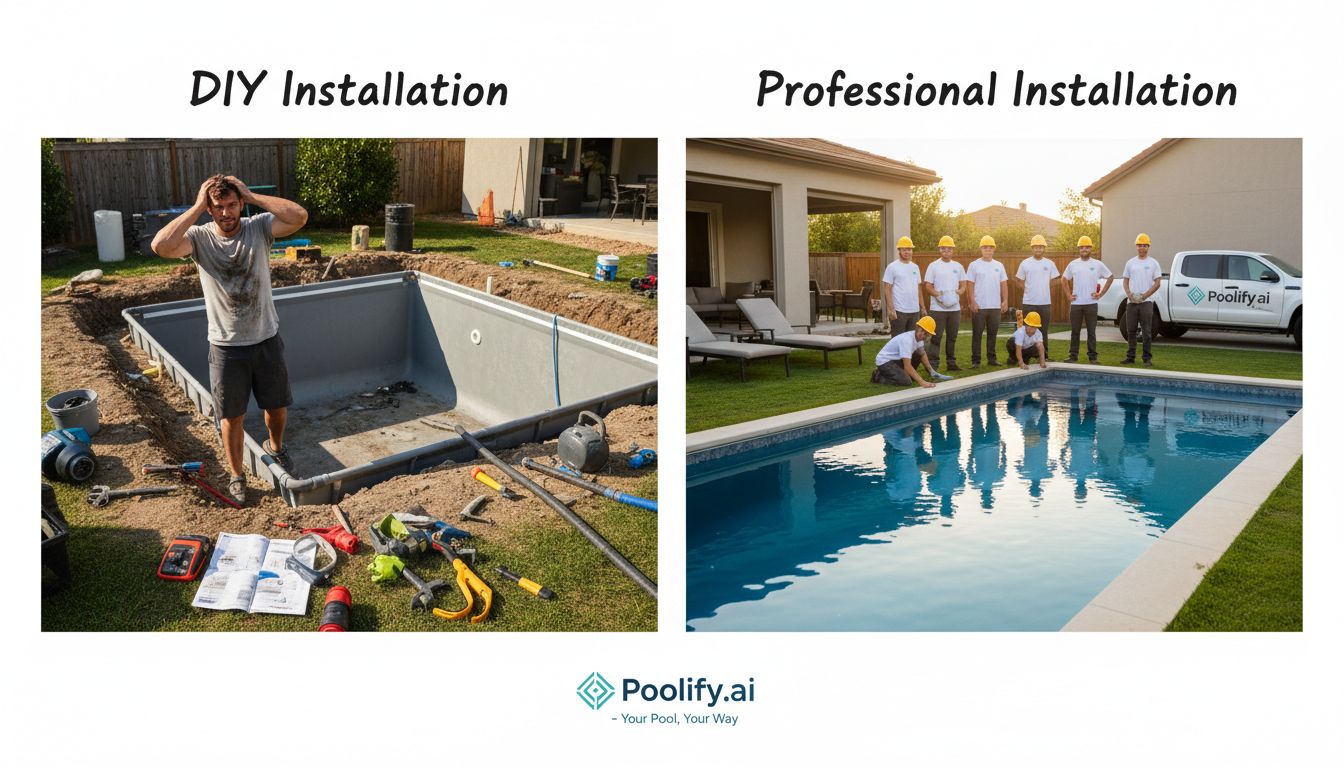
Some homeowners consider DIY installation to reduce how much does a pool cost, but this approach carries significant risks and limitations.
Above-Ground Pool DIY
Above-ground pools suit DIY installation, with manufacturers providing detailed instructions and support. Most homeowners with basic tools and 2-3 helpers can complete installation in 1-3 days. DIY saves $500-$2,000 in labor costs while providing satisfaction of self-completion. However, improper leveling or assembly causes premature wear and potential collapse, so follow instructions meticulously.
Inground Pool DIY Challenges
Inground pools present substantial DIY challenges. Excavation requires heavy equipment and expertise to avoid utility strikes, maintain proper grades, and ensure structural integrity. Plumbing and electrical work must meet code requirements and typically require licensed professionals. Concrete application demands specialized skills and equipment. Most municipalities won’t permit homeowner-installed inground pools without proper licensing.
DIY inground installation might save 20-30% on labor but risks costly mistakes that exceed any savings. Structural failures, improper drainage, or code violations can cost tens of thousands to correct. Most experts recommend hiring professionals for inground installations while handling peripheral work like landscaping and fencing yourself.
Frequently Asked Questions
How much does a pool cost to maintain monthly?
Monthly pool maintenance costs average $100-$210, including chemicals ($25-$65), electricity for pumps and equipment ($25-$65), water for evaporation replacement ($10-$20), and miscellaneous supplies ($15-$25). Professional service adds $320-$600 monthly. Heated pools cost significantly more, adding $100-$500 monthly during use. Annual costs average $1,200-$2,500 for DIY maintenance or $4,000-$8,000 with professional service.
What is the cheapest type of inground pool?
Vinyl liner inground pools represent the most affordable inground option, typically costing $35,000-$65,000 installed in 2026. These pools feature vinyl liners over structural walls, offering customizable shapes at lower prices than fiberglass or concrete alternatives. However, liners require replacement every 7-10 years at $4,000-$7,000, which should factor into long-term cost calculations when determining how much does a pool cost over its lifetime.
Do pools increase home value?
Pools increase home value in warm-weather markets by 5-8%, typically recovering 50-75% of installation costs at resale. In northern climates, pools may add minimal value or potentially reduce appeal to buyers concerned about maintenance and safety. The impact depends on neighborhood norms—pools add more value in areas where they’re common. Pools provide lifestyle value beyond financial returns, offering recreation and entertainment worth that may exceed resale considerations for long-term owners.
How long does pool installation take?
Installation timelines vary by pool type: above-ground pools take 1-3 days, fiberglass pools require 1-2 weeks, vinyl liner pools need 2-4 weeks, and concrete pools take 8-12 weeks. Weather, permit delays, and contractor schedules affect timelines. Complex designs with extensive features or difficult site conditions extend installation periods. Plan pool projects well ahead of desired completion dates, ideally starting 3-6 months before you want to swim.
What permits are required for pool installation?
Pool installation typically requires building permits covering excavation, structural work, plumbing, and electrical systems. Most jurisdictions mandate separate fence permits for required safety barriers. Some areas require setback variances if pools sit close to property lines, while others need environmental permits for drainage or wetland impacts. Permit costs range from $500-$2,000, and approval processes take 2-8 weeks. Your contractor usually handles permit applications, but verify this in your contract to avoid delays.
Key Takeaways
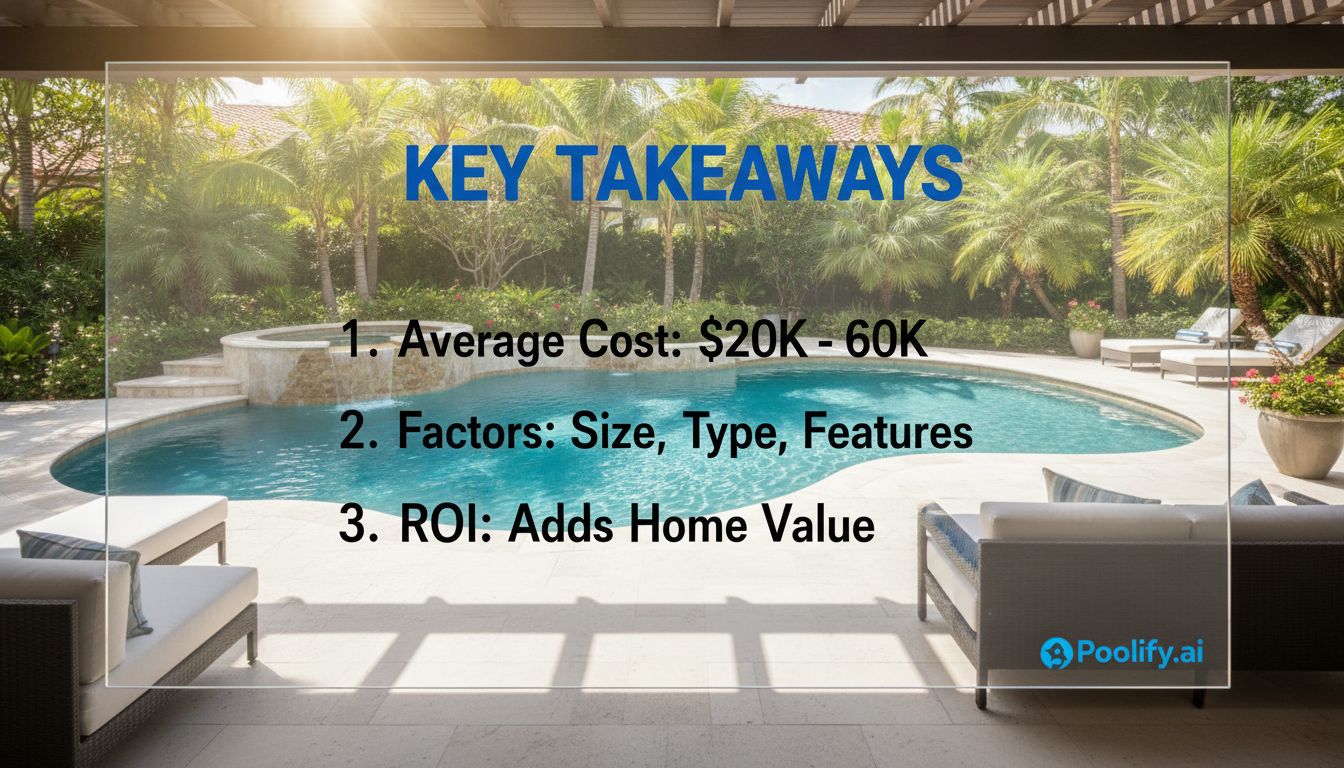
- Pool costs vary dramatically by type: Above-ground pools start at $3,000, vinyl inground pools cost $35,000-$65,000, fiberglass ranges from $45,000-$85,000, and concrete pools run $50,000-$150,000+ in 2026, making pool selection the primary factor in how much does a pool cost for your project.
- Hidden costs add 15-30% to base prices: Permits, fencing, utility upgrades, insurance increases, and landscaping restoration add substantial expenses beyond the installation contract, requiring comprehensive budgeting to avoid financial surprises.
- Annual maintenance costs $1,200-$2,500 for DIY or $4,000-$8,000 with professional service: Chemicals, electricity, equipment repairs, and seasonal maintenance represent ongoing expenses that accumulate to tens of thousands over the pool’s lifetime, significantly affecting total ownership costs.
- Strategic planning reduces expenses without sacrificing quality: Off-season installation, simplified designs, phased upgrades, DIY peripheral work, and energy-efficient equipment can save $10,000-$30,000 while still creating an enjoyable backyard oasis.
- ROI varies by location and market conditions: Pools add 5-8% to home values in warm climates but minimal value in northern regions, though lifestyle benefits often outweigh financial returns for homeowners planning to stay long-term, making personal enjoyment the primary consideration.
Conclusion
Understanding how much does a pool cost requires examining multiple factors beyond the basic installation price. In 2026, pool costs range from $3,000 for basic above-ground models to over $150,000 for luxury concrete installations, with most homeowners investing $40,000-$80,000 for quality inground pools. Hidden expenses including permits, fencing, landscaping, and utility upgrades add 15-30% to initial budgets, while annual maintenance costs $1,200-$8,000 depending on whether you handle upkeep yourself or hire professionals.
The key to successful pool ownership lies in comprehensive planning that accounts for both initial installation and long-term operating costs. By selecting the appropriate pool type for your budget, implementing money-saving strategies, and preparing for ongoing maintenance expenses, you can enjoy your backyard oasis without financial stress. Whether you choose an affordable above-ground pool for immediate enjoyment or invest in a custom concrete masterpiece, understanding the complete cost picture ensures your pool enhances your lifestyle for decades to come.
For more information on maintaining your new investment, explore our pool cleaning tips to keep your water crystal clear year-round. Remember that while pools represent significant investments, the memories created and lifestyle enhancement they provide often prove invaluable to families who take the plunge.
References
- U.S. Census Bureau – Construction Data: https://www.census.gov/construction/chars/
- Consumer Product Safety Commission – Pool Safety Guidelines: https://www.cpsc.gov/Safety-Education/Safety-Education-Centers/Pool-Safely