
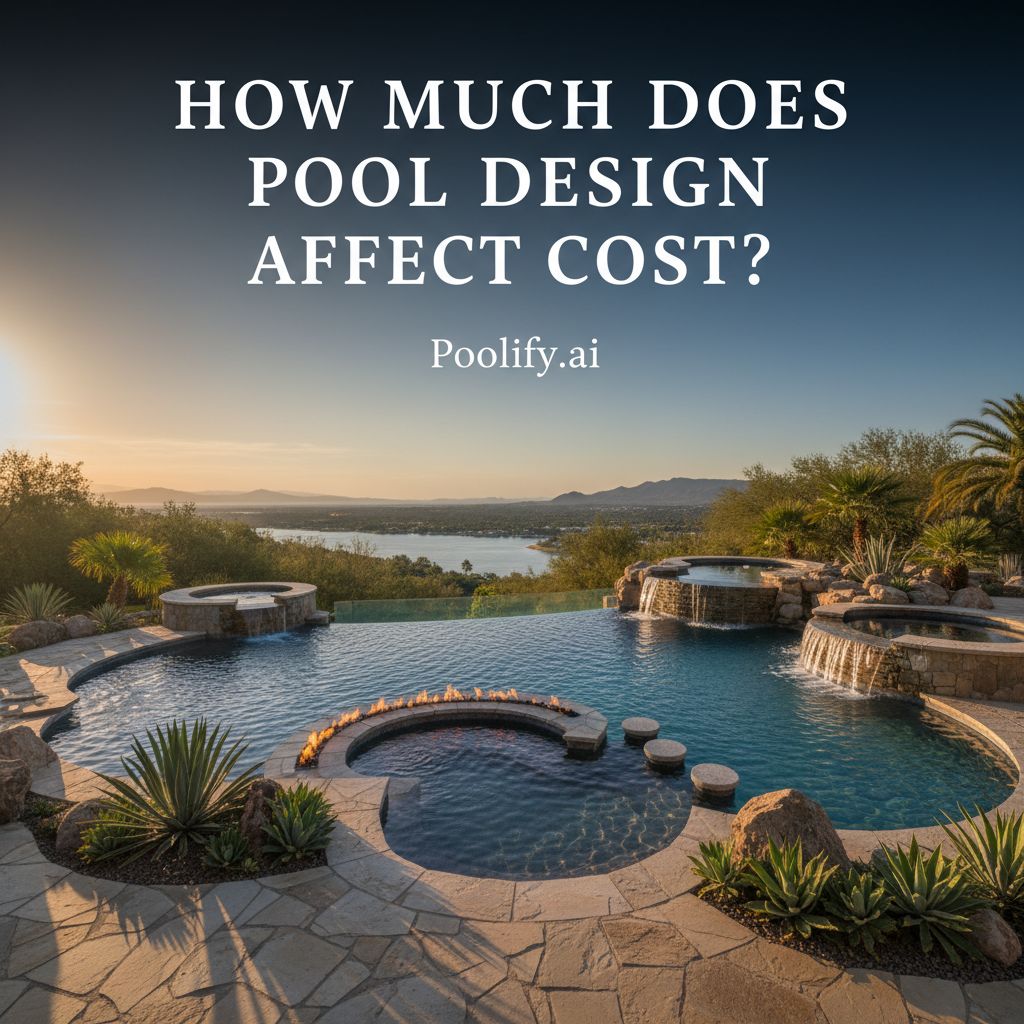
Pool design plays a major role in how much a swimming pool costs. Many homeowners focus on size alone, but design choices such as shape, features, layout, and site conditions often have a bigger impact on the final price than square footage.
This guide explains how pool design affects cost, which design decisions increase or reduce expenses, and how planning early helps you stay within budget without sacrificing what matters most.
Why Pool Design and Cost Are Closely Linked
Every design choice influences materials, labor, and construction complexity. Once a design is finalized, costs become harder to control.
Design affects:
- Excavation and site preparation
- Structural complexity
- Plumbing and electrical systems
- Finishes and features
- Long-term maintenance and operating costs
Smart design decisions made early can save thousands of dollars later.
Pool Size and Cost
Larger pools generally cost more, but size is not the only factor.
How size impacts cost
- More excavation and material
- Larger structural shell
- Increased water volume
- Bigger pumps, filters, and heaters
- Higher ongoing energy and maintenance costs
A slightly smaller pool with better proportions often delivers more value than a larger pool that dominates the yard.
Pool Shape and Complexity
Simple shapes are typically more affordable than complex designs.
Lower-cost design choices
- Rectangular or simple geometric shapes
- Straight walls and standard depths
- Minimal curves
Higher-cost design choices
- Freeform or custom shapes
- Multiple depth changes
- Curves and irregular geometry
Complex shapes require more labor, precision, and materials, which increases cost.
Pool Features That Increase Cost
Features add functionality and visual appeal, but they also increase construction and operating costs.
Common cost-driving features
- Attached spas
- Tanning ledges and sun shelves
- Infinity or vanishing edges
- Waterfalls and water features
- Custom tile and finishes
- Advanced lighting systems
Features should be chosen intentionally. Adding everything at once often pushes projects beyond budget.
Site Conditions and Layout
The backyard itself can significantly affect pool cost.
Site-related cost factors
- Sloped or uneven terrain
- Poor soil conditions
- Limited access for equipment
- Retaining walls or structural support
- Relocation of utilities
A design that works with the site instead of against it is usually more cost-effective.
Decking and Surrounding Space
The pool is only part of the total project cost. Decking and hardscape often represent a large portion of the budget.
Deck-related considerations
- Size of the deck area
- Material choice
- Elevation changes
- Integration with existing patios
Designing the pool and deck together helps balance cost and usability.
How Early Design Decisions Save Money
Many cost overruns happen when design decisions are made late in the process.
Designing early allows you to:
- Compare multiple layouts
- Understand tradeoffs before committing
- Remove unnecessary features
- Align design with budget expectations
- Avoid expensive mid-construction changes
Early planning is one of the most effective ways to control cost.
Visualizing Cost-Driven Design Choices
It is difficult to understand how design decisions affect cost without seeing them. Visualizing different layouts helps homeowners identify which elements add value and which ones can be simplified.
Seeing options side by side often reveals that simpler designs feel just as appealing and function just as well.
How AI Pool Design Helps With Budget Planning
AI pool design tools allow homeowners to explore different design options quickly. By visualizing multiple layouts, sizes, and feature combinations, it becomes easier to identify a design that fits both the yard and the budget.
Tools like Poolify focus on this early planning stage, helping homeowners understand how design choices affect cost before construction begins.
Common Cost-Related Design Mistakes
Designing without a budget range
This leads to unrealistic expectations and redesigns.
Overloading features
More features increase cost without always increasing enjoyment.
Ignoring site constraints
Designs that fight the yard often cost more to build.
Making changes late
Late changes are among the most expensive mistakes.
Key Takeaways
- Pool design has a direct impact on total project cost
- Size, shape, and features influence construction and maintenance expenses
- Site conditions play a major role in pricing
- Early design decisions help control budget
- Visualizing options makes cost tradeoffs clearer
Understanding how pool design affects cost allows you to make informed decisions and avoid surprises before construction ever begins.