
Introduction: Understanding Pool Space Requirements in 2026
Determining how much space needed for pool installation is the critical first step in transforming your backyard into a personal oasis. In 2026, homeowners face evolving regulations, modern design trends, and innovative space-saving technologies that make pool ownership more accessible than ever. Whether you’re dreaming of a lap pool, family recreation area, or luxury resort-style retreat, understanding spatial requirements ensures your project meets legal codes while maximizing functionality and aesthetic appeal.
This comprehensive guide explores the exact measurements, setback regulations, and design considerations that determine how much space needed for pool construction. From compact urban lots to sprawling suburban properties, you’ll discover expert strategies for optimizing every square foot of your outdoor living space while avoiding costly mistakes that plague unprepared homeowners.
Minimum Space Requirements: How Much Space Needed for Pool Installation
The foundational question of how much space needed for pool construction depends on multiple factors including pool type, local regulations, and intended use. Most municipalities require minimum lot sizes and specific setback distances that directly impact your available installation area. Understanding these baseline requirements prevents expensive redesigns and permit rejections.
For rectangular inground pools, the industry standard minimum is approximately 1,200 to 1,500 square feet of total backyard space. This allocation includes the pool itself (typically 12×24 feet for a small pool), mandatory deck area, equipment placement, and required setbacks from property lines. However, the actual pool footprint represents only 40-50% of this total space requirement.
Standard Pool Dimensions and Space Allocations
Small pools measuring 10×20 feet require roughly 800-1,000 square feet of total space when accounting for surrounding deck and access areas. Medium pools at 16×32 feet need approximately 1,800-2,200 square feet, while large pools exceeding 20×40 feet demand 3,000+ square feet of dedicated backyard real estate. These calculations assume standard rectangular designs with minimal landscaping.
According to the Association of Pool & Spa Professionals, proper planning allocates at least 50% additional space beyond the pool’s water surface for decking, equipment, and circulation. This ratio ensures safe access, comfortable lounging areas, and compliance with building codes that mandate specific clearances around pool perimeters.
Setback Requirements and Property Line Clearances
Setback regulations determine how much space needed for pool placement relative to property boundaries, structures, and utility easements. Most jurisdictions require 5-10 feet from rear and side property lines, though some communities mandate up to 15 feet. Front yard installations typically face stricter 20-25 foot setbacks to maintain neighborhood aesthetics.
Additional clearances include 10-15 feet from the main dwelling, 3-5 feet from utility lines, and minimum distances from septic systems, wells, and drainage structures. These requirements significantly reduce usable space on smaller lots, making accurate measurement essential before committing to specific pool dimensions or configurations.
Pool Type and Shape: Impact on Space Requirements
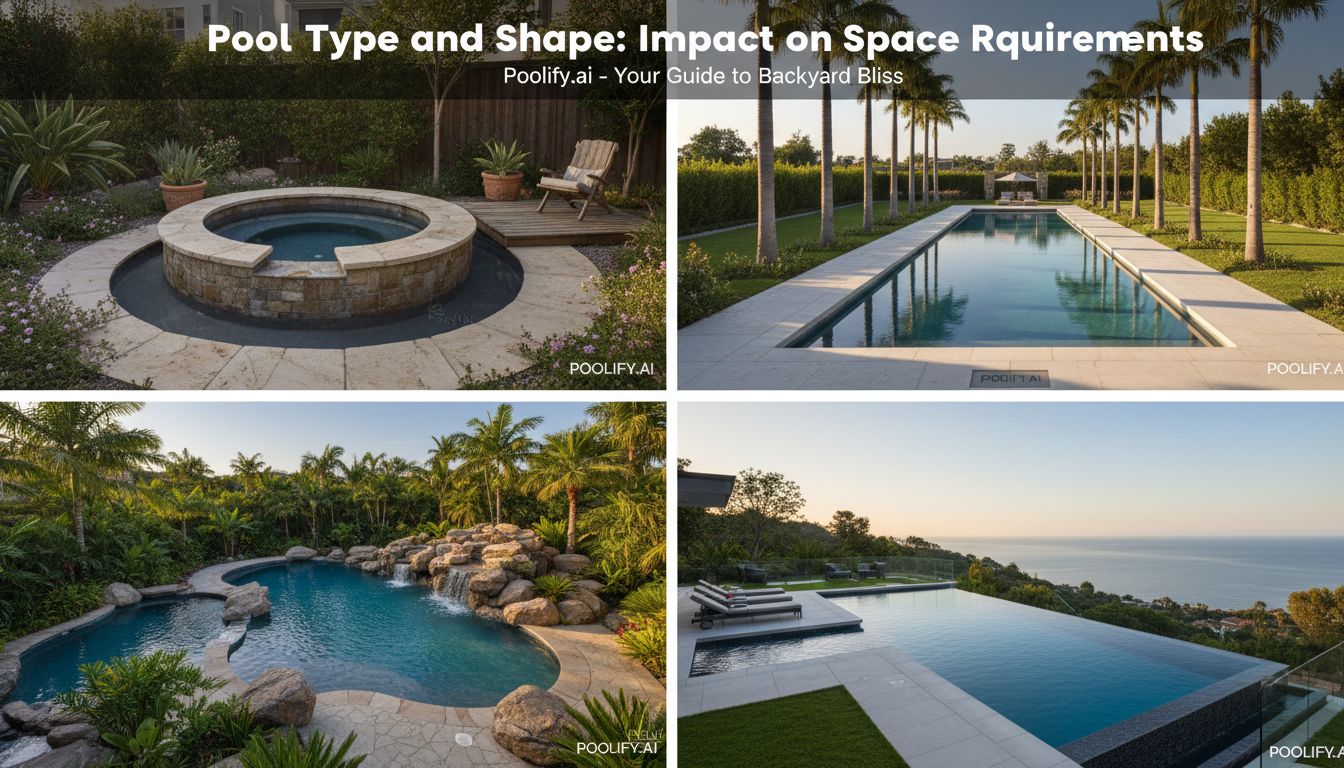
Different pool types dramatically alter how much space needed for pool installation and surrounding amenities. Inground pools require excavation access, equipment pads, and permanent decking that consume more total area than above-ground alternatives. The shape selection—rectangular, kidney, freeform, or geometric—further influences spatial efficiency and landscaping possibilities.
Rectangular pools maximize swimming area within compact footprints, making them ideal for narrow lots or lap swimming enthusiasts. Freeform designs create natural aesthetics but often require 15-20% more total space to achieve similar water volume. Geometric shapes like L-configurations or Roman ends offer functional zoning within single structures while potentially fitting irregular lot dimensions more effectively.
Inground Pool Space Considerations
Inground installations demand the most comprehensive space planning due to excavation requirements, equipment placement, and permanent hardscaping. Excavation equipment needs 10-12 foot wide access paths, often requiring gate removal or fence modifications. The pool equipment pad typically requires 50-80 square feet positioned 5-10 feet from the pool edge for maintenance access and noise reduction.
When calculating how much space needed for pool decking around inground designs, plan for minimum 4-foot walkways on all sides, with 8-12 feet preferred for furniture placement and entertaining areas. Shallow end lounging zones benefit from 10-15 foot depth allowances, while diving areas require clear overhead space extending 15-20 feet beyond the board for safety compliance.
Above-Ground and Semi-Inground Options
Above-ground pools reduce total space requirements by 30-40% compared to inground alternatives, requiring only level ground preparation without extensive excavation. A 24-foot round above-ground pool needs approximately 900-1,100 square feet including surrounding deck, while equivalent inground designs demand 1,400-1,600 square feet when accounting for equipment and landscaping integration.
Semi-inground installations offer compromise solutions for sloped lots or budget-conscious homeowners, requiring less excavation than full inground pools while maintaining aesthetic appeal. These designs typically need 20-25% less total space than traditional inground pools, making them viable options for properties with 1,000-1,500 square feet of available backyard area.
Lot Size and Yard Configuration: Maximizing Available Space
Understanding how much space needed for pool installation relative to total lot size determines project feasibility and design options. Urban properties averaging 4,000-6,000 square feet face tighter constraints than suburban lots exceeding 10,000 square feet. Effective space utilization requires analyzing yard shape, existing structures, landscaping, and future expansion plans before finalizing pool dimensions.
Narrow lots benefit from lap pools or plunge pools that maximize length while minimizing width, fitting into side yards or rear sections measuring 12-15 feet wide. Corner lot configurations offer increased flexibility with dual access points and potentially relaxed setback requirements on secondary street frontages. Irregularly shaped properties may accommodate custom freeform designs that work with natural contours rather than against them.
Small Lot Pool Solutions
Properties under 5,000 square feet can still accommodate pools through strategic design choices and space-efficient models. Plunge pools measuring 8×12 to 10×16 feet require only 500-700 square feet total, including minimal deck area. Cocktail pools, typically 10-14 feet in diameter, fit into tight corners while providing cooling and aesthetic benefits without overwhelming limited outdoor space.
Lap pools designed for fitness rather than recreation measure 8-10 feet wide by 30-50 feet long, efficiently utilizing narrow side yards or rear property sections. These configurations require 1,000-1,500 square feet total while delivering serious swimming functionality. For more ideas on optimizing compact spaces, explore our small backyard pool design strategies.
Large Property Planning Considerations
Lots exceeding 10,000 square feet enable resort-style designs incorporating multiple water features, extensive decking, outdoor kitchens, and landscaped zones. When determining how much space needed for pool complexes on larger properties, allocate 3,000-5,000 square feet for the primary swimming area, plus additional square footage for spa integration, waterfalls, and entertainment spaces.
Large properties benefit from zoning strategies that separate active swimming areas from quiet relaxation spaces, children’s play zones from adult entertaining sections, and wet areas from dry lounging spaces. This approach requires 40-50% more total area than basic pool installations but creates cohesive outdoor living environments that significantly enhance property value and lifestyle enjoyment.
Essential Amenities and Their Space Requirements
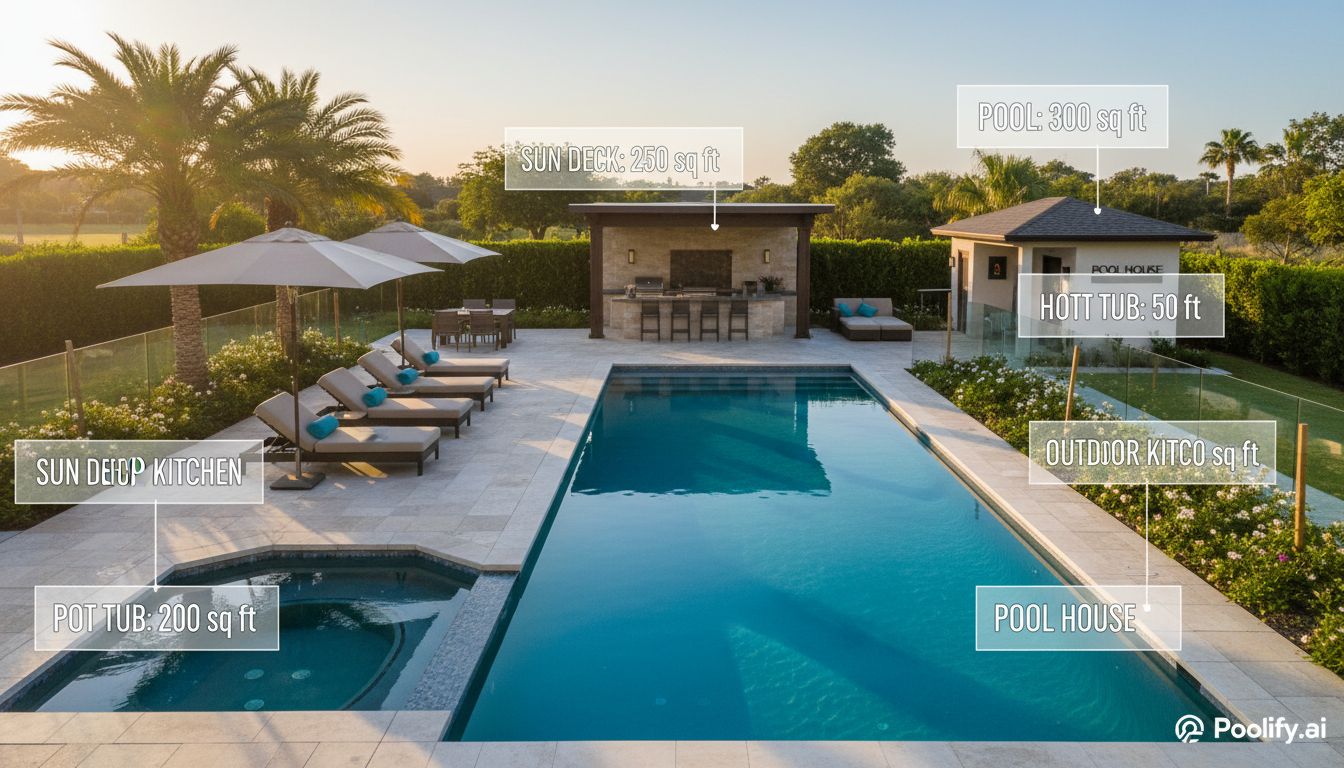
Calculating how much space needed for pool projects extends beyond the water feature itself to encompass critical amenities and support structures. Pool equipment, decking, safety features, landscaping, and recreational additions each consume specific square footage that must be incorporated into initial planning phases to avoid spatial conflicts and functionality compromises.
Equipment pads housing pumps, filters, heaters, and automation systems require 50-100 square feet positioned within 50 feet of the pool for efficient plumbing. These areas need hard, level surfaces with drainage and electrical access, typically located behind privacy screening or integrated into landscaping designs. Proper placement reduces noise impact while ensuring maintenance accessibility.
Decking and Hardscaping Allocations
Pool decking serves functional and aesthetic purposes, requiring minimum 4-foot widths for safe circulation around all pool edges. Comfortable entertaining spaces demand 8-12 foot deck depths to accommodate furniture, umbrellas, and traffic flow without crowding. Total deck area typically equals 50-75% of the pool’s surface area for balanced proportions and usability.
Concrete, pavers, natural stone, and composite decking materials each present different spatial considerations due to installation methods, expansion joints, and drainage requirements. Permeable surfaces may require additional subsurface depth for proper water management, while cantilevered coping extends usable deck space by 6-12 inches beyond structural pool edges without additional footprint expansion.
Safety Features and Compliance Requirements
Safety fencing mandated by most jurisdictions adds 4-6 feet of space requirements around pool perimeters, with gates requiring 3-5 foot clearance zones for proper operation. Self-closing, self-latching mechanisms need unobstructed swing paths, while mesh safety covers demand 12-18 inches of deck space for anchor point installation around the entire pool perimeter.
According to Consumer Product Safety Commission guidelines, barrier requirements include 4-foot minimum fence heights with specific gap limitations and climbability restrictions. These regulations directly impact how much space needed for pool installations, particularly on smaller lots where setbacks and safety zones consume significant percentages of available area.
Additional Features: Spas, Water Features, and Entertainment Zones
Integrated spas, waterfalls, diving boards, slides, and outdoor living spaces significantly increase how much space needed for pool projects. Each amenity requires dedicated square footage, structural support, utility connections, and circulation clearances that must be planned during initial design phases rather than added as afterthoughts.
Attached spas add 50-100 square feet to pool footprints, plus additional equipment space for dedicated heating and filtration systems. Spillover designs create visual continuity while requiring elevation changes and structural walls that increase excavation volumes and construction complexity. Separate spa installations offer placement flexibility but demand independent equipment pads and utility connections.
Water Features and Aesthetic Elements
Waterfalls, fountains, and decorative water features enhance ambiance while adding 30-150 square feet depending on scale and complexity. Rock waterfalls require substantial structural support and often consume 100-200 square feet including surrounding landscaping integration. Sheer descent or laminar jets mount on existing walls, adding visual interest without significant space demands beyond equipment housing.
Grottos, swim-up bars, and beach entries dramatically increase spatial requirements and construction costs. Beach entries alone add 200-400 square feet of shallow, gradually sloping area that reduces available swimming depth while creating family-friendly access. These features work best on properties exceeding 2,500 square feet of dedicated pool area where space constraints don’t force functionality compromises.
Recreation and Entertainment Additions
Diving boards require minimum 8-foot water depth extending 15-20 feet from the board, with clear overhead space and specific approach distances mandated by safety standards. Pool slides need 10-15 foot clearance zones at exit points, proper water depth (typically 3-4 feet minimum), and structural anchoring that may require additional deck reinforcement or independent foundations.
Outdoor kitchens, fire features, and covered pavilions extend pool environments into complete entertainment complexes, each demanding 150-400 square feet of additional space. When planning comprehensive outdoor living areas, allocate total space equal to 200-250% of the pool’s surface area to accommodate all desired amenities without creating cramped, dysfunctional layouts. Learn more about essential pool equipment planning for optimal functionality.
Access, Circulation, and Maintenance Space
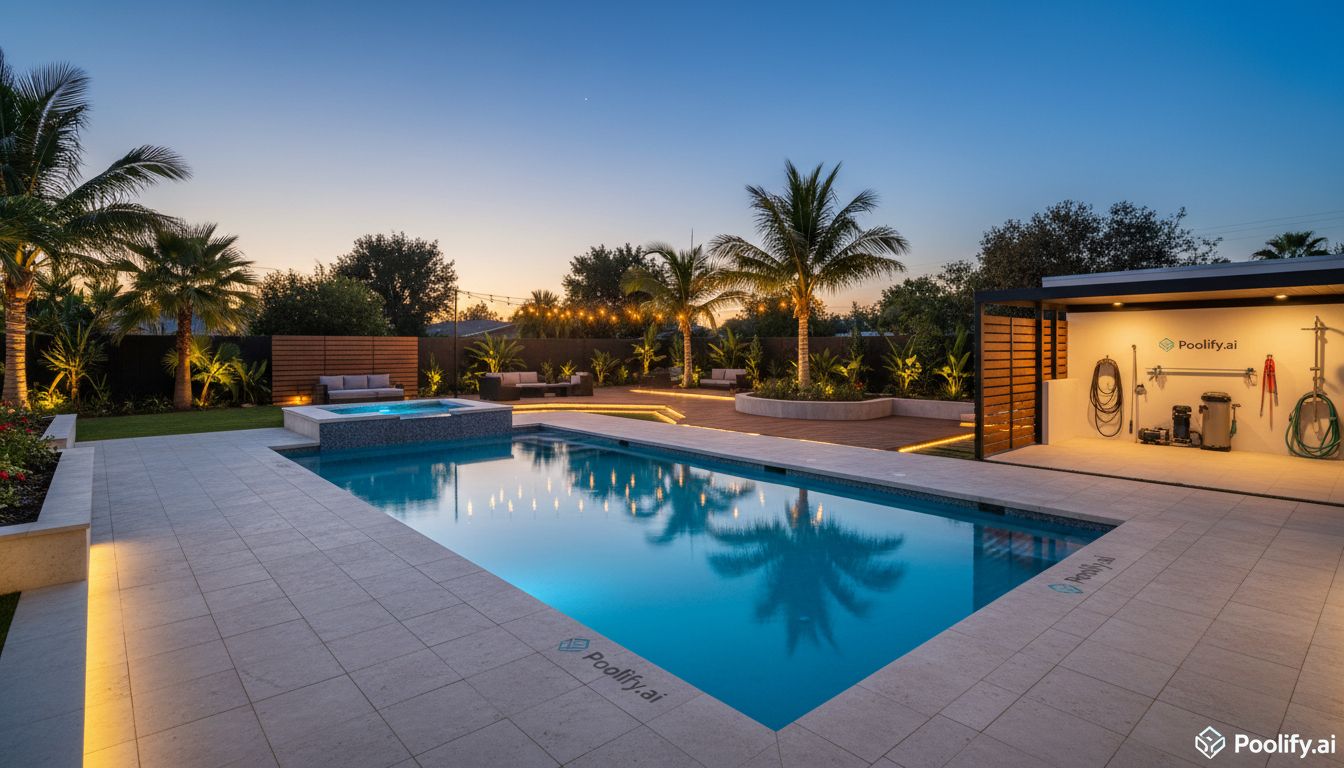
Practical considerations for how much space needed for pool maintenance and daily use often get overlooked during initial planning but prove critical for long-term satisfaction. Equipment access, cleaning tool storage, chemical housing, and circulation paths require dedicated space that doesn’t interfere with recreational activities or aesthetic goals.
Maintenance equipment including telescoping poles, vacuum heads, skimmers, and brushes need 15-25 square feet of weather-protected storage within 50 feet of the pool. Chemical storage requires ventilated, locked spaces meeting local fire codes, typically consuming 10-20 square feet in garages, sheds, or purpose-built enclosures. Proper planning prevents equipment clutter from degrading pool area aesthetics and functionality.
Excavation and Construction Access
During construction, excavation equipment requires 10-12 foot wide access paths from street to pool location, often necessitating temporary fence removal or gate widening. Concrete trucks need similar clearances for deck installation, while crane access for spa placement or prefabricated pool shells demands overhead clearances and stable positioning areas extending 20-30 feet beyond pool perimeters.
Properties with limited access may require alternative construction methods including hand-digging, smaller equipment, or crane lifts over structures, each adding costs and timeline extensions. Evaluating access constraints during initial planning prevents mid-project surprises and ensures realistic budget and schedule expectations aligned with site-specific limitations.
Long-Term Maintenance Considerations
Ongoing maintenance requires permanent access to all pool sides for cleaning, equipment servicing, and seasonal opening/closing procedures. Minimum 3-foot clearances around pool perimeters enable effective vacuuming and skimming, while equipment pad access needs 4-5 feet for filter cleaning, pump maintenance, and component replacement without landscaping damage or spatial constraints.
Winter covers, safety covers, and automated cover systems require 12-18 inches of deck space for track installation or anchor points around entire pool perimeters. Seasonal storage for pool furniture, umbrellas, and recreational equipment demands 50-100 square feet of protected space, factoring into overall property planning beyond immediate pool area calculations.
Regulatory Compliance and Permit Requirements
Understanding how much space needed for pool installation requires thorough knowledge of local zoning codes, building permits, and homeowner association restrictions. These regulations vary significantly by jurisdiction but universally impact allowable pool sizes, setbacks, fencing requirements, and equipment placement. Non-compliance results in permit denials, construction stops, expensive modifications, or forced removals.
Most municipalities require building permits for inground pools, with application processes demanding site plans showing exact pool dimensions, setback measurements, equipment locations, and safety feature placements. Permit reviews typically take 2-6 weeks, with inspections required at excavation, plumbing, electrical, and final completion stages before legal pool use commences.
Zoning and Setback Regulations
Zoning codes establish maximum lot coverage percentages (typically 30-40% for residential properties) that include all structures, hardscaping, and impervious surfaces. Pools and decking count toward these limits, potentially restricting how much space needed for pool projects on properties approaching maximum coverage thresholds. Variances may be available but require additional applications, public hearings, and neighbor notifications.
Setback requirements protect utility easements, drainage patterns, and neighbor privacy while maintaining community aesthetics. Front yard pools face strictest regulations (often prohibited entirely), while rear and side yard installations must comply with specific distance minimums from property lines, structures, septic systems, wells, and overhead utilities. These requirements often consume 20-30% of total lot area on smaller properties.
HOA Restrictions and Deed Covenants
Homeowner associations frequently impose restrictions beyond municipal codes, limiting pool types, sizes, fencing styles, and equipment visibility. Some communities prohibit above-ground pools entirely, mandate specific decking materials, or require landscape screening that consumes additional space. Review HOA covenants thoroughly before purchasing property or committing to pool designs to avoid conflicts requiring expensive modifications.
Deed restrictions, easements, and right-of-way agreements may further limit pool placement options even on properties meeting zoning requirements. Utility easements typically prohibit permanent structure placement within designated corridors, while drainage easements require maintaining natural water flow patterns that may conflict with pool excavation or deck installation plans.
Budget Considerations and Cost Per Square Foot
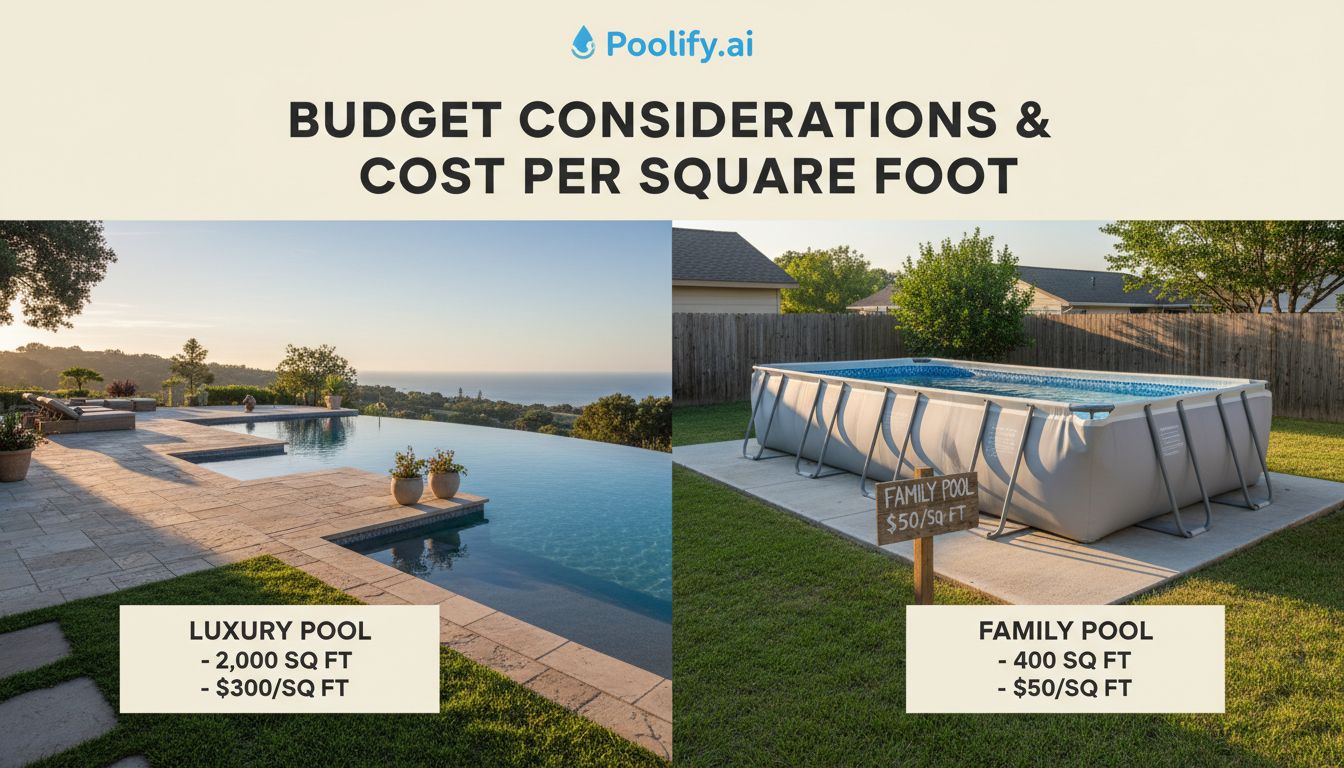
Financial planning intersects directly with how much space needed for pool projects, as larger pools and more extensive amenities drive exponentially higher costs. In 2026, basic inground pool installation averages $50,000-$100,000 for mid-sized designs, with luxury installations exceeding $150,000-$300,000. Understanding cost implications helps align spatial ambitions with realistic budgets and prevents mid-project funding shortfalls.
Pool construction costs break down to approximately $100-$200 per square foot of water surface area for basic concrete pools, with premium finishes, custom shapes, and integrated features adding $50-$150 per square foot. Decking adds $15-$40 per square foot depending on materials, while landscaping, lighting, and amenities contribute additional costs that often equal 30-50% of base pool expenses.
Space-Efficiency and Value Optimization
Smaller pools don’t proportionally reduce costs since fixed expenses including permits, excavation access, equipment, and basic plumbing remain constant regardless of size. A 12×24 foot pool might cost $45,000 while a 16×32 foot pool costs $65,000—a 78% size increase for only 44% more investment. This economy of scale favors slightly larger designs when space permits and budgets allow.
Value optimization focuses on maximizing functionality within available space rather than simply minimizing square footage. Strategic design choices like multi-depth zones, integrated spas, and thoughtful amenity placement deliver superior experiences without excessive footprint expansion. Working with experienced designers ensures every square foot contributes to enjoyment and property value enhancement.
Frequently Asked Questions About Pool Space Requirements
What is the absolute minimum space needed for a pool?
The absolute minimum space needed for pool installation is approximately 600-800 square feet total, accommodating a small plunge pool (8×12 feet) with minimal surrounding deck. However, this tight configuration limits functionality and may not meet local setback requirements on all properties. Most experts recommend 1,200-1,500 square feet minimum for comfortable, code-compliant installations with adequate circulation and amenity space.
How do I calculate how much space needed for pool and deck combined?
Calculate total space requirements by adding pool surface area plus 50-75% for surrounding deck. For example, a 16×32 foot pool (512 square feet) needs 256-384 square feet of deck, totaling 768-896 square feet. Add equipment pad space (50-80 square feet), setback requirements (varies by location), and any additional features. Most installations require 150-200% of the pool’s surface area for complete, functional outdoor spaces.
Can I install a pool in a small backyard under 2,000 square feet?
Yes, pools can be installed in backyards under 2,000 square feet using space-efficient designs like plunge pools, cocktail pools, or lap pools. These compact options measure 8-15 feet in one dimension while providing cooling and aesthetic benefits. Carefully evaluate setback requirements, equipment placement, and access needs with professional designers to ensure code compliance and functional layouts within spatial constraints.
Do above-ground pools require less space than inground pools?
Above-ground pools require 30-40% less total space than equivalent inground installations since they eliminate excavation access needs and typically feature simpler equipment configurations. However, they still need level ground, adequate setbacks, safety fencing, and surrounding deck or patio areas. A 24-foot round above-ground pool requires approximately 900-1,100 square feet total compared to 1,400-1,600 square feet for similar inground designs.
How much additional space do pool features like slides or diving boards need?
Diving boards require minimum 8-foot water depth extending 15-20 feet from the board, plus approach clearances and overhead space. Pool slides need 10-15 foot safety zones at exit points with 3-4 foot minimum water depth. Waterfalls add 30-150 square feet depending on complexity, while attached spas consume 50-100 square feet. Plan for 20-40% additional space when incorporating multiple recreational features into pool designs.
Key Takeaways: Planning Your Pool Space Requirements
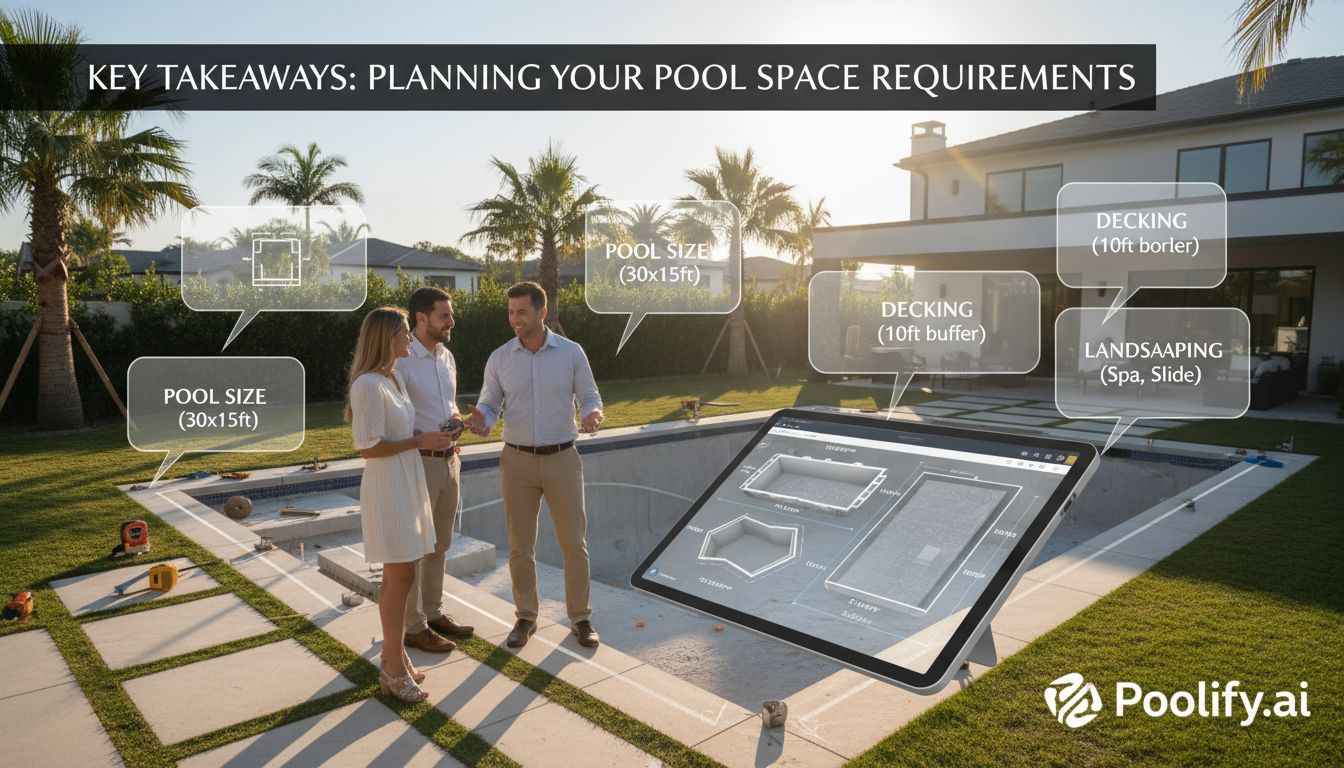
- Minimum space requirements: Plan for 1,200-1,500 square feet total for small pools including deck, equipment, and setbacks; larger designs need 2,000-3,000+ square feet for comfortable, functional layouts meeting code requirements.
- Setback regulations matter: Most jurisdictions require 5-10 feet from property lines, 10-15 feet from structures, and specific clearances from utilities, consuming 20-30% of available space on smaller lots before pool placement begins.
- Pool type impacts space needs: Inground pools demand more total area for excavation access and permanent features, while above-ground options reduce requirements by 30-40%; shape selection affects efficiency with rectangular designs maximizing swimming area in compact footprints.
- Amenities require planning: Equipment pads need 50-100 square feet, decking should equal 50-75% of pool surface area, and features like spas, slides, or waterfalls add 50-400 square feet each depending on complexity and integration.
- Professional assessment is essential: Site-specific factors including lot shape, existing structures, access limitations, soil conditions, and local regulations require expert evaluation to determine accurate space requirements and prevent costly mistakes during construction.
Conclusion: Making Informed Decisions About Pool Space
Understanding how much space needed for pool installation empowers homeowners to make informed decisions aligned with property constraints, regulatory requirements, and lifestyle goals. In 2026, modern design innovations and space-efficient technologies make pool ownership accessible across diverse property types, from compact urban lots to expansive suburban estates. Success requires thorough planning that balances spatial realities with functional aspirations.
The journey from initial concept to completed pool begins with accurate space assessment, incorporating not just the water feature itself but essential amenities, safety requirements, maintenance access, and future expansion possibilities. Working with experienced professionals ensures designs maximize available space while meeting code compliance, budget parameters, and long-term satisfaction objectives.
Whether you’re planning a modest plunge pool in a cozy backyard or an elaborate resort-style complex on a larger property, the principles outlined in this guide provide the foundation for successful project execution. Invest time in comprehensive planning, understand your specific space requirements, and partner with qualified designers and contractors who prioritize both immediate functionality and enduring value creation.
References
- Association of Pool & Spa Professionals – https://www.apsp.org/
- Consumer Product Safety Commission Pool Safety Guidelines – https://www.cpsc.gov/Safety-Education/Safety-Education-Centers/Pool-Safely