
Introduction to Pool Water Chemistry
Learning how to balance pool water is the foundation of proper pool maintenance and ensures safe, crystal-clear swimming conditions year-round. Balanced pool water protects your equipment, prevents algae growth, and creates a comfortable swimming environment for your family. In 2026, pool owners have access to advanced testing tools and chemical products that make water balancing more precise than ever before.
Understanding how to balance pool water involves monitoring five critical parameters: pH levels, total alkalinity, chlorine or sanitizer levels, calcium hardness, and cyanuric acid. Each element plays a specific role in water chemistry, and when these factors work together harmoniously, your pool remains inviting and safe. This comprehensive guide walks you through every step of the water balancing process, from initial testing to ongoing maintenance.
Why Proper Pool Water Balance Matters
Knowing how to balance pool water correctly protects your investment and ensures swimmer safety. Unbalanced water creates multiple problems that affect both your pool structure and the people using it. When pH levels drift too high or too low, chlorine becomes less effective at sanitizing, allowing bacteria and algae to flourish. Acidic water corrodes metal fixtures, etches plaster surfaces, and damages pool equipment, leading to expensive repairs.
Alkaline water causes the opposite problem by creating cloudy conditions and scaling on pool surfaces and equipment. The calcium deposits that form when water becomes too alkaline clog filters, reduce heater efficiency, and create rough surfaces that damage swimwear and irritate skin. Understanding how to balance pool water prevents these issues and extends the lifespan of your pool infrastructure.
Swimmer comfort depends heavily on proper water chemistry. Unbalanced water causes red, irritated eyes, dry itchy skin, and a strong chemical odor that many people mistakenly attribute to too much chlorine. In reality, that chlorine smell indicates chloramines—compounds formed when chlorine combines with contaminants—which signal that you need to learn how to balance pool water more effectively.
Essential Parameters for Balanced Pool Water
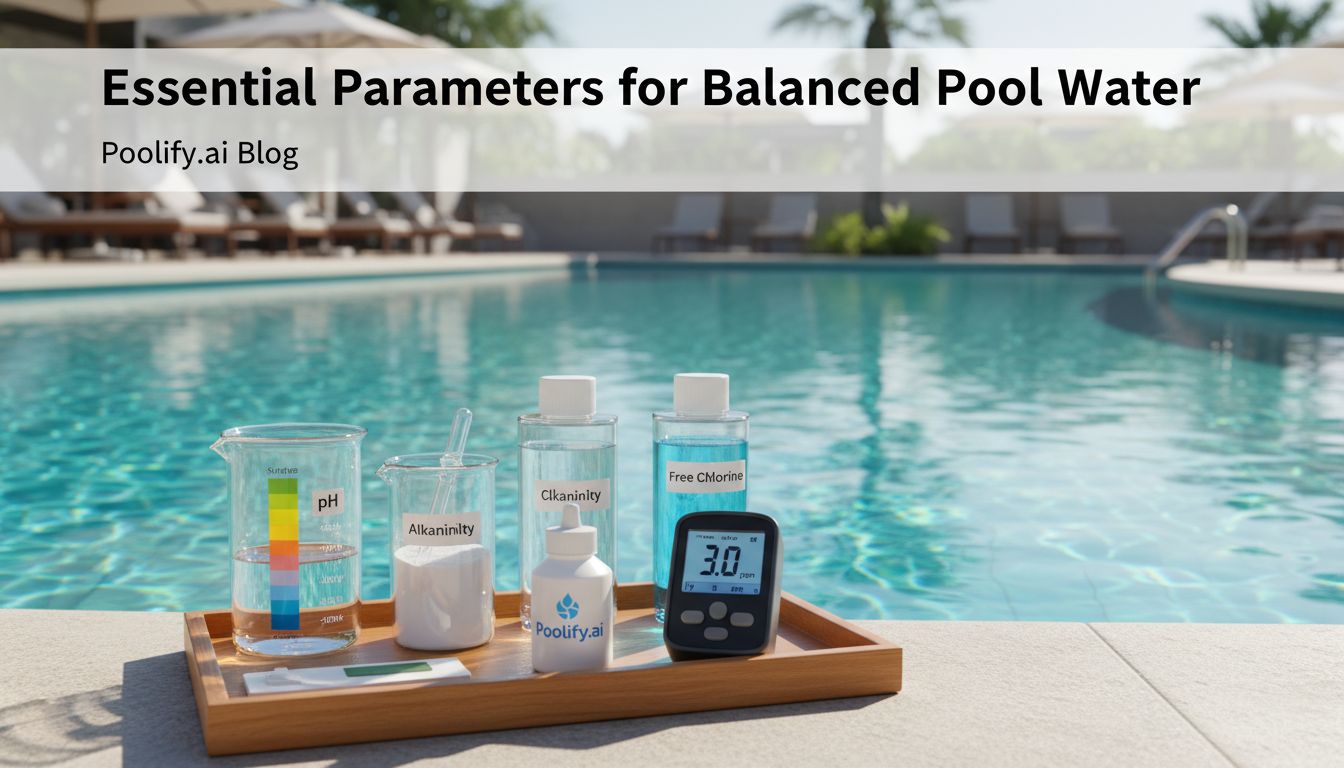
pH Levels: The Foundation of Water Chemistry
The pH scale measures how acidic or alkaline your pool water is, ranging from 0 to 14, with 7.0 being neutral. For pools, the ideal pH range falls between 7.4 and 7.6. This range optimizes chlorine effectiveness, prevents equipment corrosion, and ensures swimmer comfort. Learning how to balance pool water starts with maintaining proper pH because it affects every other chemical parameter.
When pH drops below 7.0, water becomes acidic and corrosive. Acidic water etches plaster, corrodes metal components, and causes rapid chlorine dissipation. Swimmers experience burning eyes and skin irritation in acidic conditions. Conversely, when pH rises above 7.8, water becomes alkaline, reducing chlorine effectiveness by up to 50 percent and causing cloudy water with scale formation.
Total Alkalinity: The pH Buffer
Total alkalinity measures the water’s ability to resist pH changes, acting as a buffer that stabilizes pH levels. The recommended range for total alkalinity is 80 to 120 parts per million (ppm), with 100 ppm being optimal. When you understand how to balance pool water alkalinity correctly, pH levels remain stable despite adding chemicals or encountering environmental factors.
Low alkalinity causes pH to bounce erratically, making it nearly impossible to maintain stable water chemistry. High alkalinity makes pH difficult to adjust and contributes to cloudy water and scaling. Balancing alkalinity before adjusting pH is crucial because alkalinity directly influences pH stability.
Chlorine and Sanitizer Levels
Chlorine serves as the primary sanitizer in most pools, killing bacteria, viruses, and algae. The ideal free chlorine range is 1.0 to 3.0 ppm for traditional chlorine pools, though saltwater pools may operate effectively at slightly lower levels. Knowing how to balance pool water includes maintaining consistent sanitizer levels that protect swimmers without causing irritation.
Free chlorine represents the active sanitizer available to kill contaminants. Combined chlorine consists of chloramines—spent chlorine that has already reacted with contaminants. When combined chlorine exceeds 0.5 ppm, you need to shock the pool to break down chloramines and restore effective sanitization.
Calcium Hardness
Calcium hardness measures dissolved calcium in your pool water. The ideal range is 200 to 400 ppm for concrete and plaster pools, while vinyl and fiberglass pools function well at 175 to 225 ppm. Understanding how to balance pool water calcium levels prevents both corrosion from soft water and scaling from hard water.
Low calcium hardness causes water to become aggressive, seeking calcium by etching plaster surfaces and corroding metal equipment. High calcium levels lead to cloudy water, rough surfaces, and scale buildup on tiles, equipment, and plumbing. According to the CDC’s guidelines on pool water quality, maintaining proper calcium hardness is essential for both pool longevity and water clarity.
Cyanuric Acid: Chlorine Stabilizer
Cyanuric acid protects chlorine from ultraviolet sunlight degradation, extending its effectiveness. The recommended range is 30 to 50 ppm for outdoor pools, while indoor pools require little to no cyanuric acid. Learning how to balance pool water includes monitoring stabilizer levels because too much cyanuric acid reduces chlorine effectiveness, requiring higher chlorine concentrations.
How to Balance Pool Water: Step-by-Step Process
Step 1: Test Your Water Accurately
Accurate testing is the cornerstone of learning how to balance pool water effectively. In 2026, pool owners can choose from test strips, liquid test kits, or digital meters. Liquid test kits provide the most accurate results for pH, chlorine, and alkalinity, while digital meters offer precision for all parameters including calcium hardness and cyanuric acid.
Test your water at least twice weekly during swimming season and once weekly during off-season. Always collect water samples 12 to 18 inches below the surface, away from return jets and skimmers. Test in the morning before sunlight and swimmers affect chemistry. For the most reliable results when learning how to balance pool water, test within minutes of collection.
Step 2: Balance Total Alkalinity First
Always adjust alkalinity before pH because alkalinity affects pH stability. If alkalinity tests below 80 ppm, add sodium bicarbonate (baking soda) to raise it. Calculate the required amount based on your pool volume—typically 1.5 pounds of sodium bicarbonate raises alkalinity by 10 ppm in 10,000 gallons of water.
When alkalinity exceeds 120 ppm, use muriatic acid or sodium bisulfate to lower it. Add acid gradually in small doses, testing between additions. This methodical approach to how to balance pool water prevents overcorrection and maintains stable chemistry. Broadcast alkalinity increasers across the pool surface, and add decreasers near return jets with the pump running.
Step 3: Adjust pH Levels
After stabilizing alkalinity, test and adjust pH. If pH falls below 7.4, add soda ash (sodium carbonate) to raise it. One pound of soda ash increases pH by approximately 0.2 units in 10,000 gallons. When pH exceeds 7.6, add muriatic acid or sodium bisulfate to lower it. Understanding how to balance pool water pH requires patience—add chemicals in small increments and retest after several hours of circulation.
Never add more than one pound of pH increaser or one quart of acid at a time. Allow the pump to circulate water for at least four hours before retesting. This gradual approach prevents pH from swinging too far in either direction and ensures accurate readings.
Step 4: Establish Proper Sanitizer Levels
Once pH and alkalinity are balanced, adjust chlorine levels. If free chlorine tests below 1.0 ppm, add chlorine according to product instructions—typically one pound of granular chlorine raises levels by 10 ppm in 10,000 gallons. When learning how to balance pool water sanitizer levels, consider your pool’s usage patterns and adjust accordingly.
High chlorine readings above 3.0 ppm usually resolve naturally through sunlight degradation and swimmer usage. If you need to reduce chlorine quickly, use sodium thiosulfate (chlorine neutralizer) or simply stop adding chlorine until levels drop. For ongoing maintenance, check out our comprehensive pool chlorine maintenance guide for detailed strategies.
Step 5: Check and Adjust Calcium Hardness
Test calcium hardness monthly and adjust as needed. To raise calcium hardness, add calcium chloride according to package directions—typically two pounds increases hardness by 10 ppm in 10,000 gallons. Dissolve calcium chloride in a bucket before adding to prevent clouding. Lowering calcium hardness is more challenging, requiring partial water replacement or specialized chelating agents.
Step 6: Monitor Cyanuric Acid
Test stabilizer levels at the beginning of each season and monthly thereafter. To raise cyanuric acid, add stabilizer (cyanuric acid powder) at a rate of 13 ounces per 10,000 gallons to increase levels by 10 ppm. Dissolve stabilizer in warm water before adding, as it dissolves slowly. When you master how to balance pool water stabilizer, your chlorine lasts longer and works more efficiently.
High cyanuric acid requires partial water replacement, as no chemical removes it. Drain and refill 25 to 50 percent of your pool water to dilute excessive stabilizer. This situation commonly occurs with stabilized chlorine products that continuously add cyanuric acid.
Common Pool Water Balance Problems and Solutions
Cloudy Water
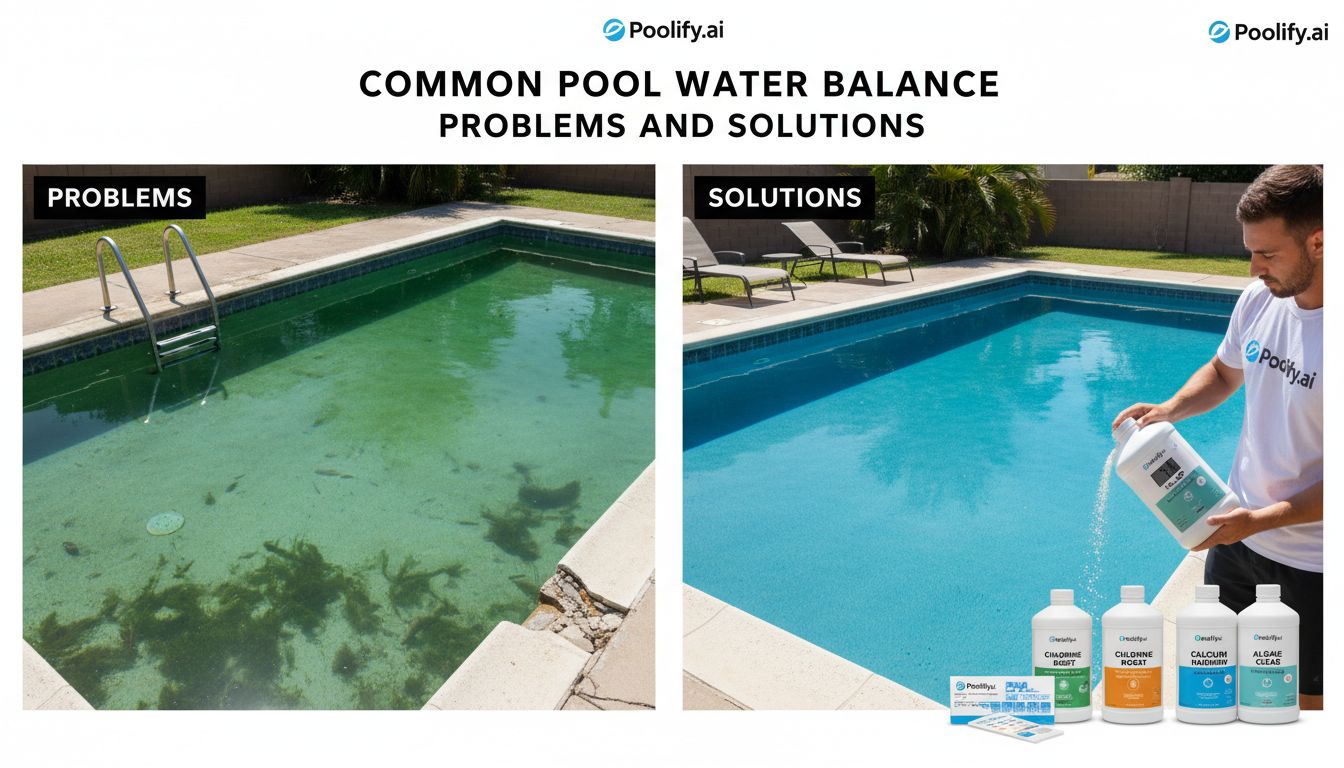
Cloudy pool water typically results from poor filtration, high pH, high alkalinity, or low chlorine. When troubleshooting how to balance pool water that appears cloudy, test all parameters first. Run your filter continuously until water clears, backwash or clean the filter, and shock the pool if chlorine levels are low. High calcium hardness also causes cloudiness—address by partially draining and refilling.
Green or Algae-Infested Water
Algae growth indicates insufficient sanitizer levels or poor circulation. To restore balance, brush all pool surfaces thoroughly, shock with triple the normal chlorine dose, and run the filter 24 hours daily until water clears. Learning how to balance pool water after algae blooms requires patience and consistent chemical maintenance. Vacuum algae debris to waste rather than through your filter to prevent clogging.
Scale Formation
White or gray deposits on pool surfaces and equipment indicate high pH, high alkalinity, or high calcium hardness. Lower these parameters to their ideal ranges and use a scale remover product for existing deposits. Understanding how to balance pool water chemistry prevents scale formation that damages expensive equipment and creates rough surfaces.
Corrosion and Etching
Pitted surfaces, dissolved grout, and corroded metal components signal acidic water with low pH, low alkalinity, or low calcium hardness. Raise these parameters immediately to prevent further damage. Corrosion progresses quickly, so addressing how to balance pool water when you notice these signs is critical for protecting your investment.
Eye and Skin Irritation
Despite popular belief, eye and skin irritation rarely results from too much chlorine. Instead, improper pH or high chloramine levels cause discomfort. Test and adjust pH to the 7.4 to 7.6 range, and shock the pool if combined chlorine exceeds 0.5 ppm. Proper knowledge of how to balance pool water eliminates these irritating conditions.
Advanced Tips for Maintaining Balanced Pool Water
Establish a Testing Schedule
Consistency is key when learning how to balance pool water long-term. Test pH and chlorine two to three times weekly during swimming season. Test alkalinity, calcium hardness, and cyanuric acid weekly at season start, then monthly. Keep a log of test results and chemical additions to identify patterns and prevent recurring problems.
Shock Your Pool Regularly
Weekly shocking breaks down chloramines, oxidizes contaminants, and restores chlorine effectiveness. Shock after heavy use, rainstorms, or when you notice cloudy water or chlorine odor. Use one pound of shock per 10,000 gallons for routine maintenance, or triple-shock for severe problems. Understanding how to balance pool water includes recognizing when shocking is necessary.
Maintain Proper Water Levels
Water level affects skimmer function and circulation efficiency. Keep water at the midpoint of your skimmer opening. Low water levels prevent proper skimming, while high levels reduce skimmer effectiveness. Proper water level ensures optimal filtration, which supports your efforts in learning how to balance pool water.
Clean Your Filter Regularly
A clean filter is essential for balanced water chemistry. Backwash sand and DE filters when pressure rises 8 to 10 psi above clean pressure. Clean cartridge filters monthly during peak season. Poor filtration makes it nearly impossible to maintain balanced water, regardless of how well you understand how to balance pool water chemically.
Consider Automation Technology
In 2026, automated pool chemical controllers monitor and adjust pH and chlorine levels continuously. These systems test water multiple times daily and dispense chemicals as needed, maintaining perfect balance with minimal effort. While learning how to balance pool water manually builds important knowledge, automation provides convenience and consistency. Explore our guide to pool automation systems for more information.
Seasonal Considerations for Pool Water Balance
Spring Opening
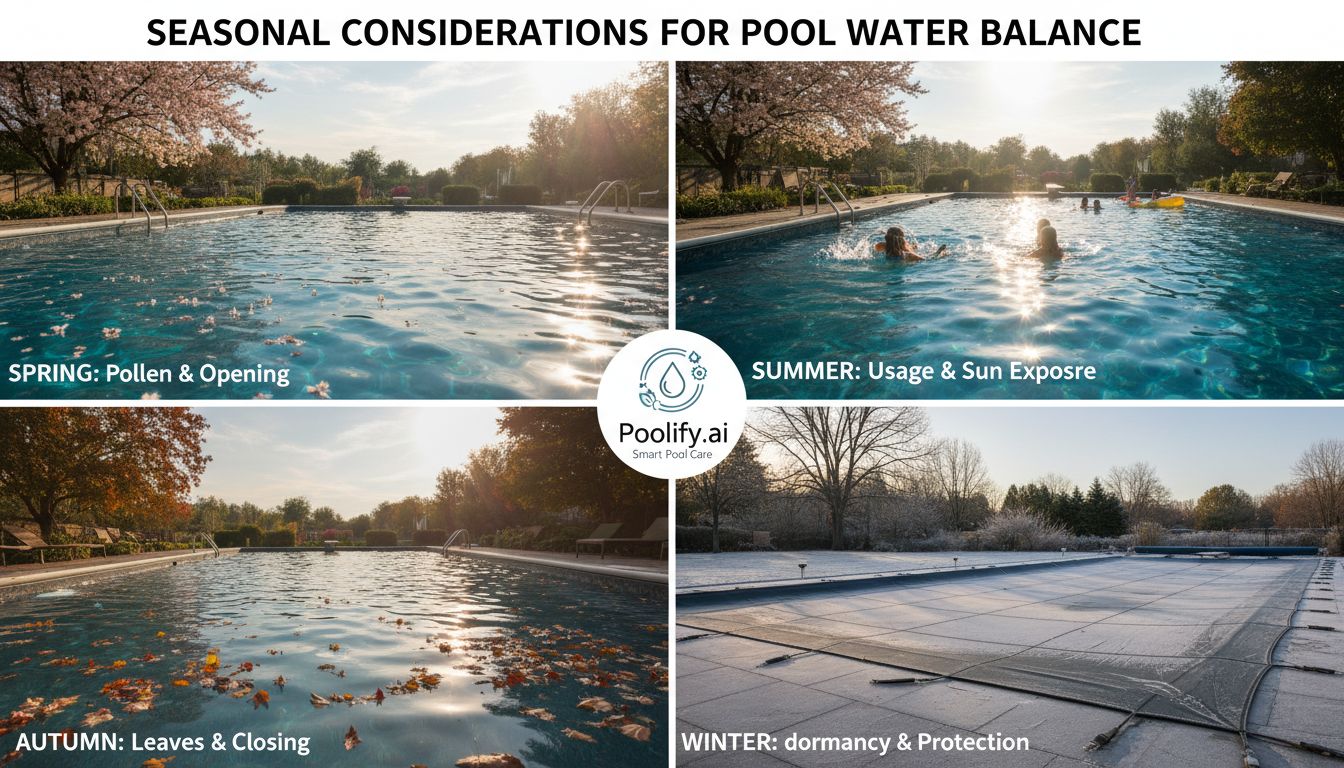
After winter closing, test all parameters before adding any chemicals. Expect pH and alkalinity to drift during dormancy. Shock heavily to eliminate any bacteria or algae that developed over winter. Knowing how to balance pool water during spring opening sets the foundation for the entire swimming season.
Summer Maintenance
Hot weather and heavy use challenge water balance. Evaporation concentrates minerals, raising calcium hardness and cyanuric acid. UV radiation depletes chlorine faster, requiring increased sanitizer or stabilizer. Test more frequently during summer and adjust your chemical routine based on usage patterns.
Fall Preparation
As swimming season ends, continue balancing water chemistry to prevent problems during winter. Properly balanced water at closing prevents staining, scaling, and algae growth. Understanding how to balance pool water before winterizing protects your pool during dormancy and simplifies spring opening.
Winter Monitoring
Even closed pools benefit from occasional testing and adjustment. Check chemistry monthly and maintain minimum chlorine levels to prevent algae. If you live in a climate with year-round swimming, continue regular testing and maintenance schedules throughout winter.
Frequently Asked Questions About Pool Water Balance
How often should I test my pool water?
Test pH and chlorine levels two to three times weekly during active swimming season. Test total alkalinity, calcium hardness, and cyanuric acid weekly when you open your pool, then monthly thereafter. After heavy rain, extended periods of non-use, or when you notice water quality changes, test all parameters immediately. Consistent testing is fundamental to mastering how to balance pool water effectively.
Can I swim immediately after adding chemicals?
Wait times depend on which chemicals you add. After adding pH adjusters or alkalinity increasers, wait at least 20 minutes with the pump running. After shocking or adding large amounts of chlorine, wait until levels drop below 5 ppm—typically 8 to 24 hours. Always follow product label instructions for specific wait times. Learning how to balance pool water safely includes understanding proper chemical handling and waiting periods.
Why does my pH keep rising?
Several factors cause pH to rise consistently. Aeration from waterfalls, fountains, or spa jets introduces carbon dioxide loss, raising pH. High total alkalinity makes pH more resistant to downward adjustment. Some chlorine products, particularly calcium hypochlorite, increase pH with each addition. Understanding these factors helps you develop strategies for how to balance pool water when facing persistent pH increases.
What causes my pool water to turn green?
Green water indicates algae growth resulting from insufficient chlorine, poor circulation, or high phosphate levels. Low chlorine allows algae to establish and multiply rapidly. Inadequate filtration or circulation creates dead zones where algae thrives. Knowing how to balance pool water prevents algae by maintaining proper sanitizer levels and ensuring adequate circulation throughout the pool.
Is it better to use liquid or granular chlorine?
Both liquid and granular chlorine effectively sanitize pools, each with advantages. Liquid chlorine (sodium hypochlorite) dissolves instantly, doesn’t affect calcium hardness or cyanuric acid, and works well for routine maintenance. Granular chlorine (calcium hypochlorite or dichlor) stores longer, offers higher available chlorine, but may increase calcium hardness or stabilizer levels. Your choice depends on your specific situation and preferences when learning how to balance pool water.
Key Takeaways
- Test water chemistry consistently – Regular testing at least twice weekly during swimming season provides the data you need to understand how to balance pool water effectively and catch problems early before they escalate.
- Balance alkalinity before pH – Total alkalinity acts as a pH buffer, so adjusting alkalinity first creates stable conditions that make pH adjustment easier and longer-lasting, forming the foundation of proper water balance.
- Maintain ideal ranges for all parameters – pH between 7.4-7.6, alkalinity 80-120 ppm, chlorine 1-3 ppm, calcium hardness 200-400 ppm, and cyanuric acid 30-50 ppm work together to create perfectly balanced, comfortable swimming water.
- Add chemicals gradually – Small, incremental adjustments prevent overcorrection and allow you to fine-tune chemistry precisely, making the process of how to balance pool water more controlled and predictable.
- Address problems immediately – Water chemistry issues compound quickly, so testing regularly and correcting imbalances as soon as they appear prevents expensive damage and extensive restoration efforts.
Conclusion
Mastering how to balance pool water transforms pool ownership from a frustrating challenge into a manageable routine. By understanding the five critical parameters—pH, total alkalinity, chlorine, calcium hardness, and cyanuric acid—and how they interact, you create safe, comfortable, crystal-clear water that protects your investment and enhances your swimming experience. The step-by-step process outlined in this guide provides a proven framework for achieving and maintaining perfect water balance throughout 2026 and beyond.
Remember that learning how to balance pool water is an ongoing process that becomes easier with experience. Start by establishing a consistent testing schedule, keep detailed records of your results, and adjust your chemical routine based on your pool’s specific needs and usage patterns. With patience and attention to detail, you’ll develop an intuitive understanding of your pool’s chemistry and enjoy worry-free swimming all season long.
References
- Centers for Disease Control and Prevention – Residential Pool Water Quality Guidelines