
Introduction: Creating Your Dream Pool in 2026
Learning how to design a pool is one of the most exciting home improvement journeys you can embark on in 2026. Whether you’re envisioning a sleek lap pool for fitness, a family-friendly recreational space, or a luxurious resort-style retreat, proper planning ensures your investment delivers lasting value and enjoyment. The pool design process involves careful consideration of your property’s unique characteristics, your lifestyle needs, local regulations, and budget constraints. This comprehensive guide walks you through ten essential expert tips that will help you navigate every stage of pool design, from initial concept to final construction. By understanding the fundamentals of how to design a pool effectively, you’ll avoid costly mistakes and create a backyard oasis that exceeds your expectations for decades to come.
Understanding Your Space and Property Assessment
Before diving into aesthetic choices, understanding your available space is fundamental to how to design a pool successfully. Begin by conducting a thorough property assessment that examines your yard’s dimensions, topography, soil composition, and existing landscape features. Measure your available space carefully, accounting for required setbacks from property lines, which typically range from five to ten feet depending on local zoning regulations.
Consider your yard’s natural slope and drainage patterns. Properties with significant elevation changes may require extensive grading or retaining walls, which impact both design possibilities and budget. Soil conditions also play a crucial role—rocky terrain increases excavation costs, while expansive clay soils may necessitate additional structural reinforcement. According to the Environmental Protection Agency’s swimming pool guidelines, proper site evaluation prevents future structural issues and ensures environmental compliance.
Identify underground utilities before finalizing your design. Contact your local utility companies to mark gas lines, electrical cables, water pipes, and sewer systems. These existing infrastructure elements may dictate pool placement and shape. Additionally, evaluate sun exposure throughout the day—southern exposure maximizes natural heating, while excessive afternoon sun in hot climates might necessitate additional shading features.
Analyzing Access and Construction Logistics
Practical construction access significantly influences how to design a pool for your specific property. Determine how equipment and materials will reach your backyard. Standard excavation equipment requires access paths at least eight to ten feet wide. Properties with limited side-yard access may need smaller equipment, potentially increasing labor costs and construction timelines. Some challenging sites require crane access or manual excavation, factors that should inform your design choices early in the planning process.
Defining Your Pool’s Primary Purpose and Usage
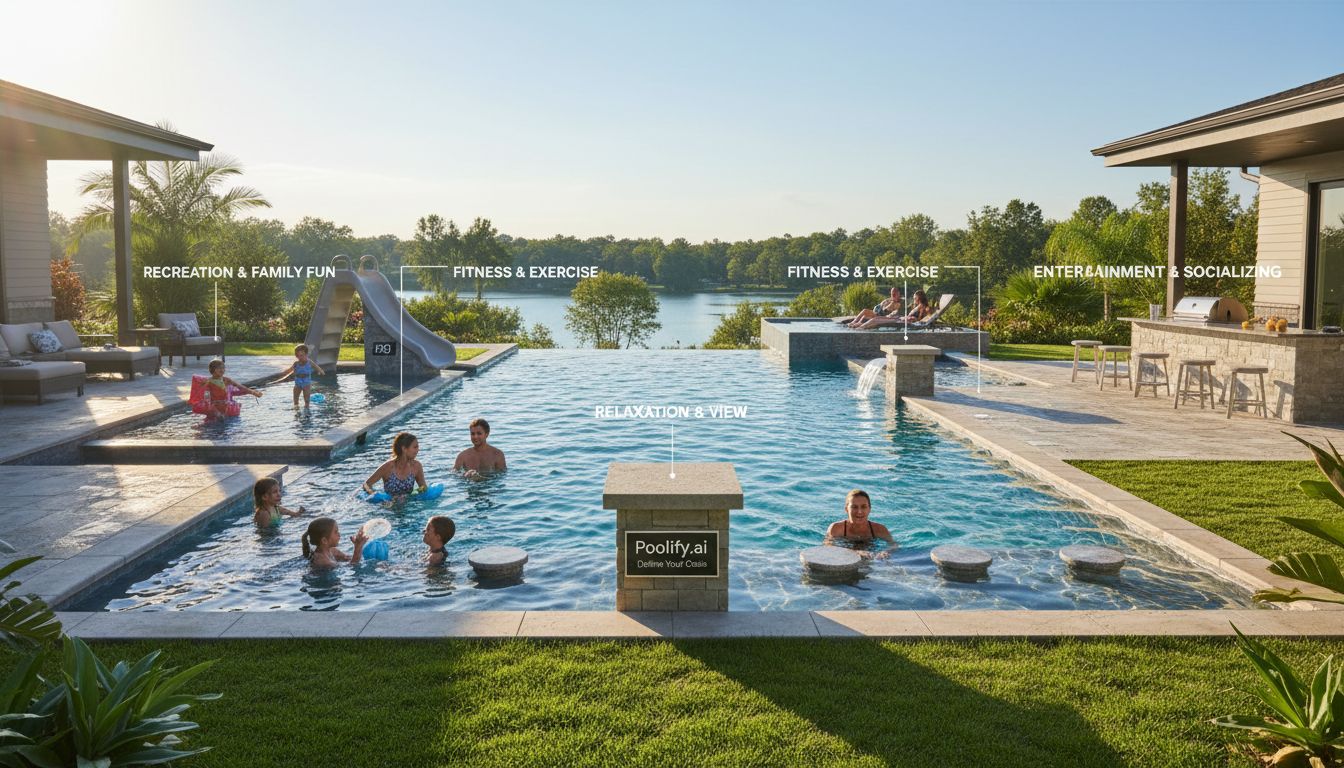
Clarifying how you’ll primarily use your pool is essential when learning how to design a pool that meets your specific needs. Different purposes require distinct design approaches. A lap pool for serious swimmers demands a long, narrow configuration—typically forty to seventy-five feet in length and eight to ten feet wide—with minimal depth variation to optimize stroke efficiency and turn mechanics.
Family recreation pools prioritize versatility with varied depths, ranging from shallow wading areas around three feet deep for young children to deeper zones of five to six feet for diving and games. These pools typically feature broader, freeform shapes that accommodate multiple simultaneous activities. If entertaining is your primary goal, consider incorporating a large shallow area with built-in seating, swim-up bars, or beach entries that facilitate social interaction.
Therapeutic and exercise purposes require specialized design considerations. Resistance swimming systems allow for effective workouts in compact spaces, while hydrotherapy features like targeted jets benefit from specific seating configurations and water depths. Understanding your primary purpose helps prioritize design elements and budget allocation effectively.
Accommodating Multiple User Groups
Most pools serve diverse users with varying needs. When considering how to design a pool for multiple purposes, create distinct zones within a single structure. Combine a shallow play area with a dedicated lap lane, or integrate a spa section that serves both relaxation and hydrotherapy needs. Thoughtful zoning maximizes functionality without requiring separate structures, optimizing both space utilization and construction budgets.
Selecting the Right Pool Type and Construction Method
Understanding available construction methods is crucial when determining how to design a pool that balances durability, aesthetics, and budget. The three primary pool types—concrete, fiberglass, and vinyl liner—each offer distinct advantages and limitations that influence design possibilities.
Concrete pools, constructed using gunite or shotcrete application, provide unlimited customization potential. Any shape, size, depth configuration, or integrated feature is achievable with concrete construction. This flexibility makes concrete ideal for complex designs, irregular yard shapes, or unique architectural visions. Concrete pools also offer superior longevity, lasting fifty years or more with proper maintenance. However, they require the longest construction timeline—typically eight to twelve weeks—and represent the highest initial investment, with costs ranging from fifty thousand to one hundred fifty thousand dollars or more for elaborate designs in 2026.
Fiberglass pools arrive as pre-manufactured shells that are delivered and installed in your yard within one to two weeks. These pools offer excellent durability, smooth non-porous surfaces that resist algae growth, and lower long-term maintenance requirements. The primary limitation is design flexibility—you must select from existing molds, which restricts size options to approximately sixteen feet wide and forty feet long. Fiberglass pools typically cost between forty thousand and eighty thousand dollars installed, positioning them as a mid-range option that balances quality and affordability.
Vinyl liner pools utilize a flexible liner installed within a structural frame of steel, aluminum, or polymer panels. These pools offer the lowest initial cost—typically twenty-five thousand to fifty thousand dollars—and moderate customization through varied shapes and sizes. However, liners require replacement every seven to ten years at costs of three thousand to five thousand dollars, and the material is susceptible to punctures and tears. When considering how to design a pool on a tighter budget, vinyl liner construction provides an accessible entry point with reasonable performance.
Optimizing Pool Shape, Size, and Depth Configuration
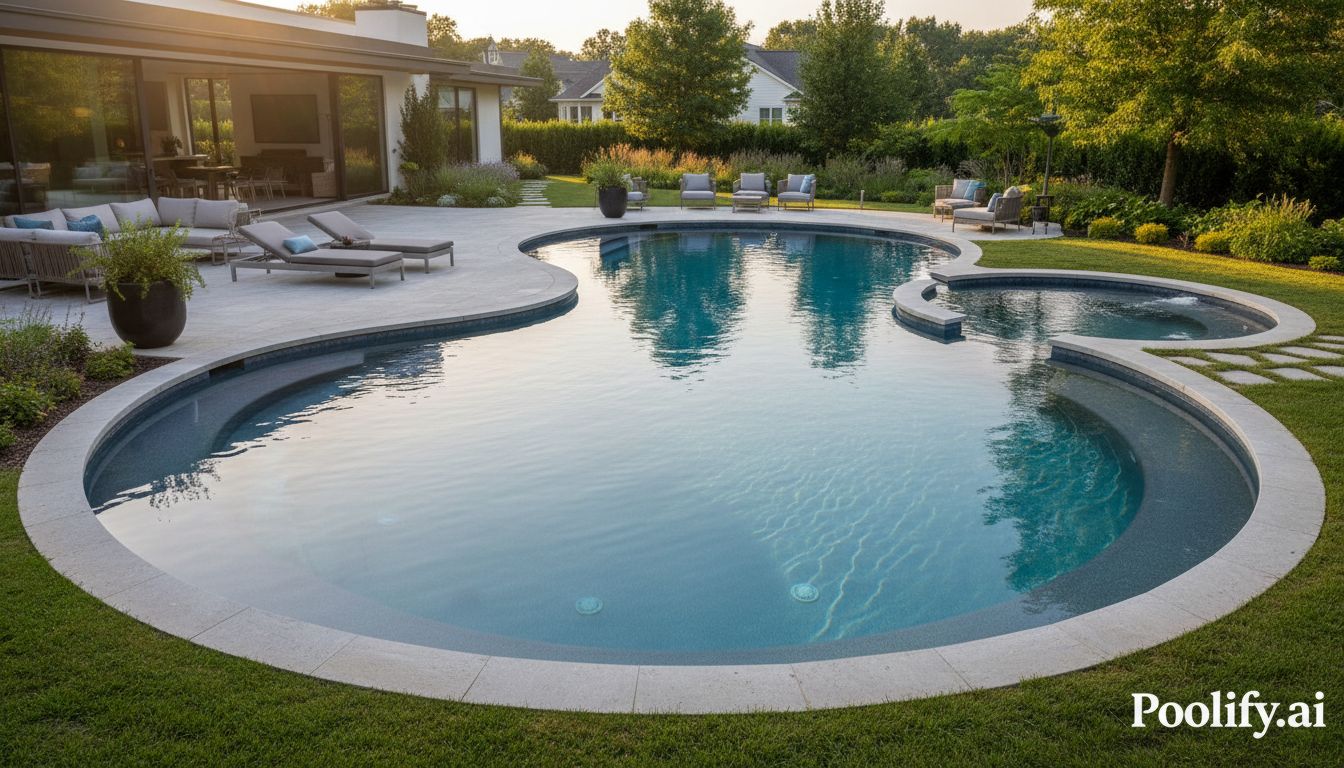
Determining appropriate dimensions is central to how to design a pool that functions effectively within your space and budget. Pool size directly impacts construction costs, ongoing maintenance expenses, heating requirements, and chemical consumption. Bigger isn’t always better—right-sizing your pool to your actual usage patterns prevents wasted resources.
For lap swimming, prioritize length over width. A minimum of thirty feet allows for meaningful swimming, though forty-five to seventy-five feet better accommodates serious training. Recreational family pools typically range from three hundred to six hundred square feet of surface area, providing adequate space for multiple swimmers without excessive maintenance demands. Compact urban yards might accommodate plunge pools or cocktail pools—smaller designs of ten to fifteen feet that still deliver refreshing enjoyment and visual appeal.
Shape selection balances aesthetic preferences with functional considerations. Geometric shapes—rectangles, squares, and ovals—offer timeless elegance, maximize swimming space efficiency, and simplify cover installation. They complement modern architectural styles and formal landscapes beautifully. Freeform organic shapes create natural, lagoon-like atmosphics that integrate seamlessly with lush plantings and naturalistic hardscaping. These curvilinear designs suit tropical, Mediterranean, or cottage-style properties but may sacrifice some functional swimming space to aesthetic curves.
Strategic Depth Planning
Depth configuration significantly influences both safety and functionality when learning how to design a pool properly. Modern pool design in 2026 increasingly favors shallower overall depths compared to previous decades. Most recreational pools now feature maximum depths of five to six feet rather than traditional eight-foot deep ends, reflecting updated safety standards and reduced diving board popularity.
Consider a graduated depth progression that transitions smoothly from three to three-and-a-half feet at the shallow end to five to six feet at the deep end. This configuration accommodates diverse activities while minimizing drowning risks. If you want diving capability, you’ll need a minimum depth of eight to nine feet in the diving zone, with specific approach distances based on diving board height. However, consult local regulations—many jurisdictions now restrict residential diving installations due to liability concerns.
Incorporating Essential Features and Advanced Technology
Modern pool features enhance functionality, safety, and enjoyment when you understand how to design a pool with thoughtful amenities. Prioritize features based on your defined purpose and budget allocation. Entry and exit options significantly impact accessibility and aesthetics. Traditional steps and ladders provide basic access, while built-in benches, beach entries, and tanning ledges create resort-style experiences with improved safety for children and mobility-challenged users.
Lighting transforms your pool’s ambiance and extends usability into evening hours. LED technology in 2026 offers energy-efficient, long-lasting illumination with programmable color options. Perimeter lighting enhances safety, while underwater fixtures create dramatic visual effects. Consider pathway lighting around the pool deck and landscape accent lighting to create a cohesive nighttime environment.
Water features add sensory appeal and therapeutic benefits. Waterfalls, fountains, deck jets, and spillover spas create soothing sounds while adding visual interest. Bubblers and spray features delight children in shallow areas. When planning how to design a pool with water features, ensure adequate pump capacity and plumbing provisions during initial construction—retrofitting these elements later significantly increases costs.
Smart Pool Technology Integration
Automation systems represent one of the most valuable investments in contemporary pool design. Smart controllers allow remote management of filtration schedules, heating, lighting, and chemical dosing through smartphone applications. These systems optimize energy consumption, maintain ideal water chemistry, and simplify routine maintenance tasks. Advanced options include robotic cleaners, variable-speed pumps that reduce energy costs by seventy to ninety percent, and automated covers that enhance safety while minimizing heat loss and evaporation.
Saltwater chlorination systems continue gaining popularity in 2026, generating chlorine through electrolysis rather than requiring manual chemical addition. These systems produce softer-feeling water with fewer harsh chemical odors, though they require higher initial investment and specialized maintenance knowledge. For comprehensive guidance on maintaining water quality, explore our detailed pool maintenance guide that covers chemical balancing and equipment care.
Planning Surrounding Hardscape and Landscape Integration
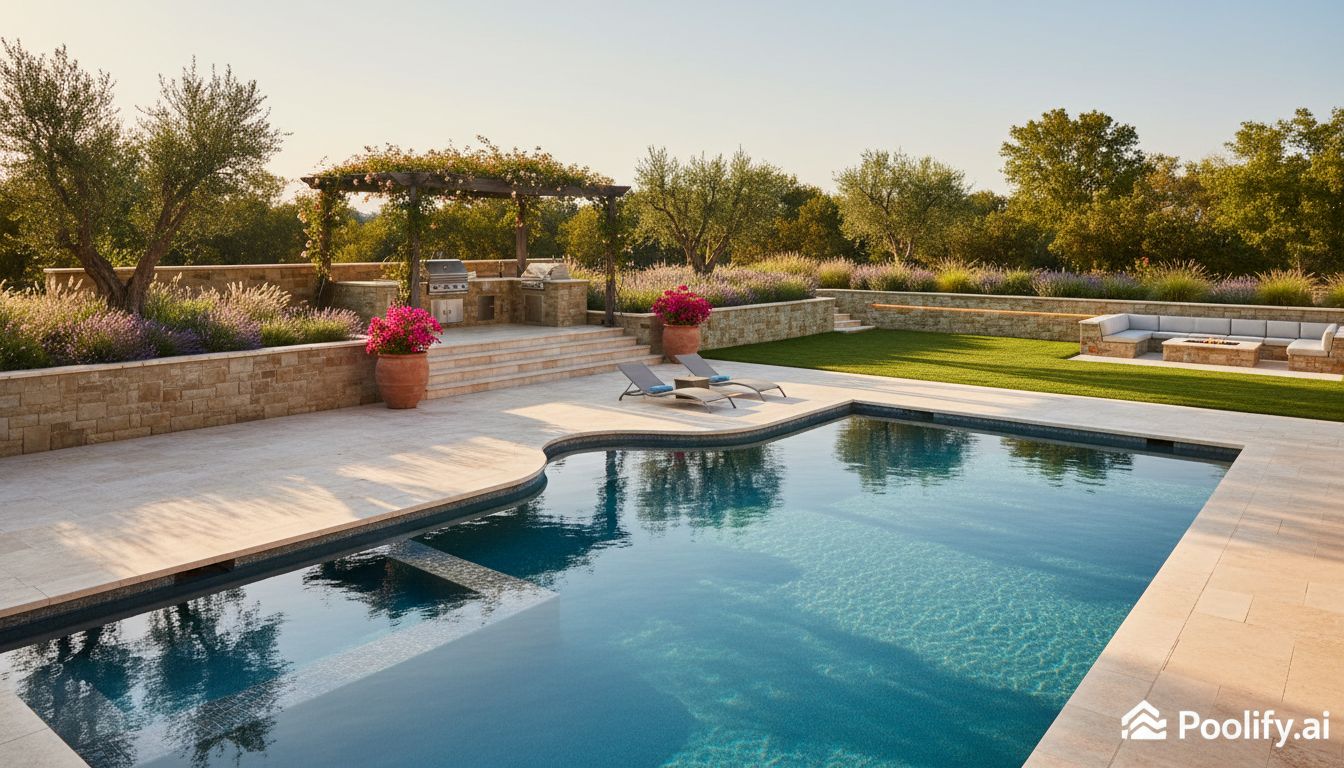
The pool deck and surrounding landscape are integral to how to design a pool that functions as a cohesive outdoor living environment. Your decking material selection impacts aesthetics, safety, comfort, and maintenance requirements. Popular options in 2026 include natural stone, pavers, concrete, and composite materials, each offering distinct characteristics.
Natural stone like travertine, limestone, or flagstone provides timeless beauty and stays relatively cool underfoot, making it comfortable for barefoot traffic. However, stone requires periodic sealing and can be slippery when wet. Concrete pavers offer extensive design flexibility with varied colors, patterns, and textures at moderate cost. Stamped or decorative concrete provides custom appearances while maintaining durability and easier maintenance. Composite decking materials combine wood aesthetics with low-maintenance synthetic performance, though they may retain more heat in direct sun.
Plan adequate deck space around your pool—a minimum of four to five feet on all sides for safe circulation, with eight to twelve feet in primary gathering areas to accommodate furniture and entertaining. Consider traffic flow patterns, sun exposure for lounging areas, and shade structures for relief during peak heat. Pergolas, shade sails, or permanent pavilions extend comfortable pool time throughout the day.
Landscape Design for Privacy and Atmosphere
Strategic landscaping enhances privacy, defines spaces, and creates your desired atmosphere. Evergreen hedges, ornamental grasses, or bamboo screens buffer neighboring views without requiring permanent structures. Select plants appropriate for pool environments—avoiding species that drop excessive leaves, flowers, or berries that create maintenance burdens. Salt-tolerant plants are essential if you’re installing a saltwater system. Incorporate lighting within landscape beds to highlight specimen plants and create depth in your nighttime pool environment.
Understanding Budget Realities and Cost Management
Realistic budget planning is perhaps the most critical aspect of how to design a pool successfully. Total project costs extend well beyond the pool structure itself, encompassing site preparation, decking, landscaping, equipment, permits, and ongoing operational expenses. In 2026, expect basic inground pool installations to start around thirty-five thousand dollars for simple vinyl liner designs, with mid-range fiberglass or concrete pools ranging from fifty thousand to eighty thousand dollars, and luxury custom designs exceeding one hundred fifty thousand dollars.
Break your budget into categories to maintain control: pool construction (typically fifty to sixty percent of total budget), decking and hardscaping (fifteen to twenty-five percent), landscaping (ten to fifteen percent), and features like lighting, water elements, and automation (ten to fifteen percent). Allocate a contingency fund of ten to fifteen percent for unexpected site conditions or design modifications during construction.
Consider lifecycle costs beyond initial construction. According to the Department of Energy’s pool efficiency guidelines, annual operating costs including chemicals, utilities, maintenance, and repairs typically range from twelve hundred to three thousand dollars depending on pool size, climate, and usage patterns. Energy-efficient equipment, proper insulation, and pool covers significantly reduce these ongoing expenses.
Strategic Value Engineering
When budget constraints require adjustments, prioritize elements that impact structural integrity and long-term functionality over purely aesthetic features. Invest in quality filtration, proper plumbing sizing, and durable construction methods—these foundational elements are expensive or impossible to upgrade later. Consider phasing decorative features like elaborate water elements, outdoor kitchens, or extensive landscaping, adding them in subsequent years as budget allows. For additional cost-saving strategies, review our comprehensive pool installation costs breakdown that details where to invest and where to economize.
Navigating Permits, Regulations, and Safety Requirements
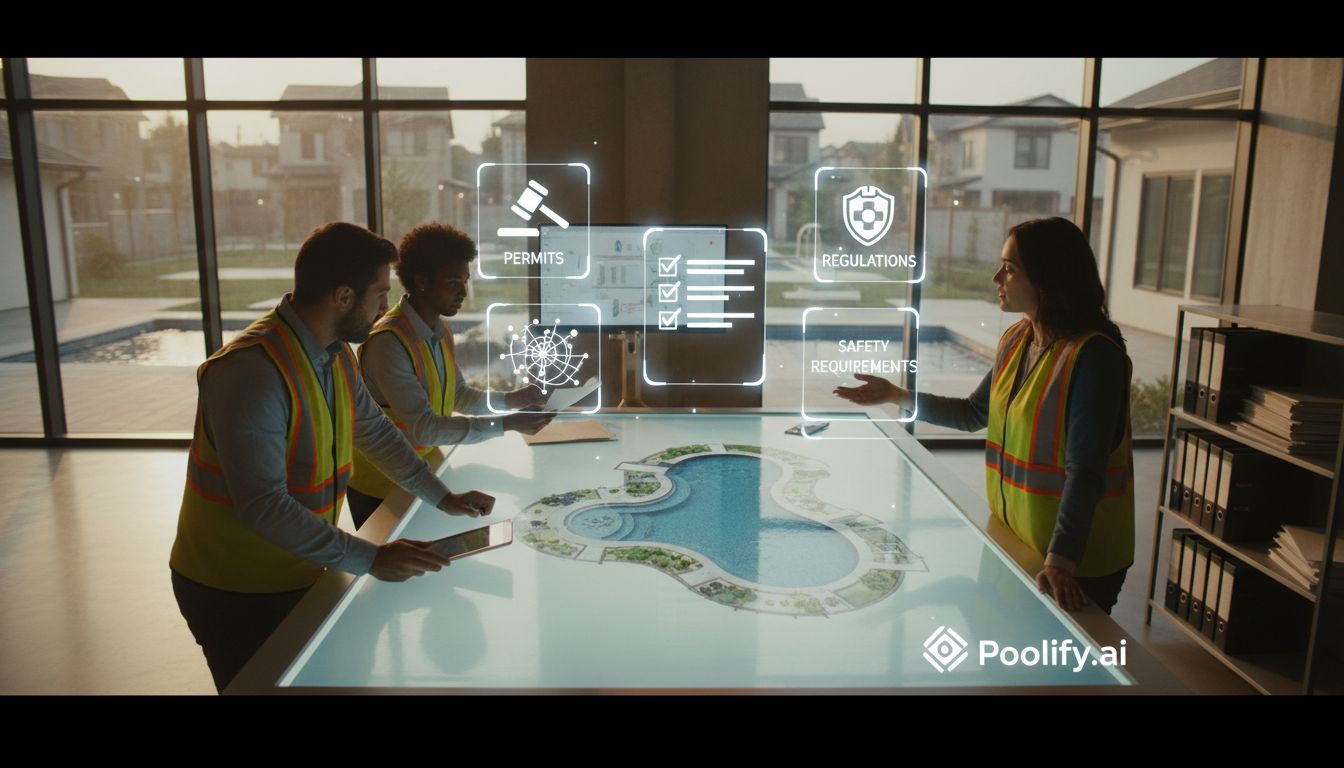
Compliance with local regulations is non-negotiable when learning how to design a pool legally and safely. Permit requirements vary significantly by jurisdiction but typically involve building permits, electrical permits, and sometimes separate plumbing or mechanical permits. Application processes require detailed construction plans, site surveys, and engineering specifications. Budget both time—permit approval can take four to eight weeks—and costs, which typically range from five hundred to two thousand dollars depending on project scope and location.
Setback requirements dictate minimum distances between your pool and property lines, structures, septic systems, and wells. Common setbacks range from five to fifteen feet but vary by municipality. Height restrictions may limit fence designs or shade structures. Some jurisdictions restrict pool lighting to prevent light pollution, while others mandate specific drainage systems to prevent runoff issues.
Safety regulations have become increasingly stringent in 2026. Most jurisdictions require barrier fencing at least four feet high with self-closing, self-latching gates that open outward. Fence spacing must prevent a four-inch sphere from passing through to protect young children. Many areas now mandate pool alarms that detect water disturbance or perimeter breaches. Some require safety covers or automatic pool covers as additional protective layers.
Working with Professional Designers and Contractors
While understanding how to design a pool empowers informed decision-making, most homeowners benefit from professional expertise. Licensed pool contractors bring technical knowledge of engineering requirements, construction methods, and local regulations that prevent costly errors. When selecting professionals, verify proper licensing, insurance coverage, and references from recent projects. Review portfolios to confirm their experience with your preferred style and construction method. Obtain multiple detailed bids that specify materials, equipment brands, timelines, and payment schedules. Be wary of unusually low bids that may indicate corner-cutting or hidden costs.
Considering Climate and Seasonal Usage Patterns
Your local climate significantly influences how to design a pool for optimal year-round value. In warm climates with extended swimming seasons, prioritize cooling features like shade structures, misting systems, and adequate circulation. Consider sun shelves and beach entries that allow cooling off without full submersion. In these regions, energy-efficient cooling options and evaporation management become priorities.
Moderate climates with distinct seasons benefit from heating systems that extend the swimming season. Options include gas heaters for rapid temperature increase, electric heat pumps for energy-efficient gradual heating, and solar heating systems that leverage renewable energy. Pool covers dramatically reduce heating costs by minimizing overnight heat loss and evaporation—they can reduce heating expenses by fifty to seventy percent while also decreasing water consumption and chemical usage.
Cold climates require winterization planning. Design considerations include proper drainage for pipes and equipment, frost-proof plumbing installations, and equipment placement that facilitates seasonal shutdown procedures. Some northern homeowners invest in indoor enclosures or retractable structures that enable year-round use, though these represent significant additional investments.
Sustainable Design Practices
Environmental consciousness increasingly influences how to design a pool responsibly in 2026. Variable-speed pumps, LED lighting, solar heating, and saltwater systems reduce environmental impact while lowering operational costs. Natural filtration systems using plants and biological processes offer chemical-free alternatives, though they require larger dedicated filtration zones. Rainwater harvesting can offset fill water needs, while proper drainage design prevents runoff pollution. Pool covers reduce water loss—a typical uncovered pool loses one to two inches of water weekly to evaporation, translating to thousands of gallons annually.
How to Design a Pool: Creating Your Timeline and Project Phases
Understanding the design and construction timeline helps set realistic expectations when learning how to design a pool from concept to completion. The entire process typically spans four to six months, though complex projects or permit delays can extend this timeframe. Begin with the planning and design phase, which takes four to eight weeks. During this period, you’ll refine your vision, obtain quotes, finalize designs, and submit permit applications.
Once permits are approved, site preparation begins. This phase involves marking utility lines, clearing vegetation, excavating the pool cavity, and preparing the ground for construction. Excavation typically takes one to three days depending on soil conditions and access. The construction phase duration varies by pool type—fiberglass installation completes in one to two weeks, vinyl liner pools take three to six weeks, and concrete pools require eight to twelve weeks for complete curing.
Following pool construction, decking installation, equipment setup, landscaping, and final inspections occur. Allow two to four weeks for these finishing phases. Finally, the startup process involves filling the pool, balancing water chemistry, and testing all systems—this takes several days to a week before the pool is ready for use.
Optimal Timing Considerations
Strategic project timing impacts both cost and convenience. Spring construction completion allows immediate summer enjoyment, but this peak season often means higher contractor costs and longer wait times. Fall and winter construction in moderate climates can secure better pricing and contractor availability, with completion ready for the following swimming season. Avoid scheduling construction during your property’s wettest season when site conditions complicate excavation and drainage work.
Frequently Asked Questions About Pool Design
What is the ideal pool size for a typical family?
For most families, a pool between four hundred and six hundred square feet of surface area provides adequate space for recreational swimming, games, and relaxation without excessive maintenance demands. This typically translates to dimensions around sixteen by twenty-four feet or eighteen by thirty-six feet. Consider your yard proportions, available space for decking, and how many people will typically use the pool simultaneously when determining your ideal size.
How much does it cost to design and build a pool in 2026?
Pool costs vary dramatically based on type, size, features, and location. Basic vinyl liner pools start around thirty-five thousand dollars, mid-range fiberglass pools range from forty-five thousand to seventy-five thousand dollars, and custom concrete pools typically cost sixty thousand to one hundred fifty thousand dollars or more. These figures include basic equipment and simple decking but exclude elaborate landscaping, outdoor kitchens, or extensive hardscaping. Always budget an additional ten to fifteen percent for contingencies and unexpected site conditions.
Do I need a professional designer or can I design my own pool?
While homeowners can develop initial concepts and preferences, professional pool designers or experienced contractors provide invaluable expertise regarding engineering requirements, local regulations, proper equipment sizing, and construction methods. They help avoid costly mistakes and ensure your design functions properly long-term. Most reputable pool contractors include design services as part of their project proposals, creating detailed plans based on your vision and site conditions.
What pool features provide the best return on investment?
Energy-efficient equipment like variable-speed pumps and LED lighting provides immediate operational savings that accumulate over time. Saltwater systems reduce ongoing chemical costs and maintenance time. Automation systems enhance convenience while optimizing efficiency. From a resale perspective, attractive lighting, quality decking materials, and thoughtful landscaping integration deliver the strongest visual impact. Avoid overly personalized features that may not appeal to future buyers if resale value is a concern.
How long does a properly designed pool last?
Pool longevity depends primarily on construction quality and ongoing maintenance. Concrete pools can last fifty years or more with proper care and occasional resurfacing every ten to fifteen years. Fiberglass pools offer similar lifespans with minimal maintenance beyond equipment replacement. Vinyl liner pools require liner replacement every seven to ten years but the structural components last decades. Regardless of type, quality filtration systems, balanced water chemistry, and regular professional maintenance maximize pool lifespan and minimize major repairs.
Key Takeaways: Essential Points for Pool Design Success
- Thorough site assessment is foundational – Understanding your property’s dimensions, topography, soil conditions, utility locations, and access constraints prevents costly surprises and informs appropriate design choices that work with your land rather than against it.
- Define your primary purpose before design decisions – Whether lap swimming, family recreation, entertaining, or therapy drives your pool use should dictate shape, size, depth, and feature selections that optimize functionality for your specific needs rather than generic designs.
- Construction method impacts design flexibility and budget – Concrete offers unlimited customization but highest costs and longest timelines, fiberglass provides durability with moderate costs but limited shapes, while vinyl liner delivers affordability with reasonable design options and higher long-term maintenance.
- Right-sizing prevents wasted resources – Bigger pools don’t necessarily provide better experiences but definitely increase construction costs, maintenance expenses, heating requirements, and chemical consumption—design for your actual usage patterns rather than maximum possible size.
- Lifecycle planning ensures long-term satisfaction – Consider ongoing operational costs, maintenance requirements, seasonal usage patterns, and energy efficiency from the initial design phase rather than focusing solely on construction budget to create a pool that remains enjoyable and affordable for decades.
Conclusion: Bringing Your Pool Design Vision to Life
Understanding how to design a pool transforms an intimidating project into an achievable dream. By systematically addressing site assessment, purpose definition, construction methods, dimensions, features, budgeting, regulations, and climate considerations, you create a comprehensive design foundation that guides successful implementation. The most satisfying pools balance aesthetic appeal with functional performance, incorporate quality materials and equipment that minimize long-term maintenance, and integrate seamlessly with your property’s architecture and landscape.
Remember that pool design is both an art and a science—creative vision must align with engineering realities, regulatory requirements, and budget constraints. Take time during the planning phase to research thoroughly, consult with experienced professionals, and refine your priorities. The decisions you make during design have lasting implications for construction quality, operational costs, and daily enjoyment. A well-designed pool becomes the centerpiece of outdoor living, providing recreation, relaxation, fitness opportunities, and social gathering spaces that enhance your lifestyle and property value for generations. Start your design journey today with confidence, knowing that thoughtful planning creates the foundation for backyard transformation that exceeds your expectations.
References
- Environmental Protection Agency – Swimming Pool Guidelines: https://www.epa.gov/sites/default/files/2017-03/documents/ws-ourwater-healthyswimming-pools.pdf
- U.S. Department of Energy – Swimming Pool Covers and Energy Efficiency: https://www.energy.gov/energysaver/swimming-pool-covers