
Understanding Your Inground Pool Cost Breakdown in 2026
Building an inground pool represents one of the most significant home improvement investments you’ll make, with costs ranging from $40,000 to over $150,000 in 2026. A comprehensive inground pool cost breakdown helps you understand where every dollar goes and prevents budget surprises during construction. Whether you’re dreaming of a simple rectangular pool or an elaborate resort-style oasis, knowing the financial landscape empowers you to make informed decisions that align with your vision and budget.
The inground pool cost breakdown varies dramatically based on materials, size, features, and location. Understanding these cost components before you start digging protects you from mid-project financial stress and ensures your investment delivers lasting value. This guide walks you through every expense category, from excavation to final touches, giving you the knowledge to budget accurately and negotiate confidently with contractors.
Primary Material Costs in Your Inground Pool Cost Breakdown
The material you select for your pool shell represents the foundation of your inground pool cost breakdown. Each option offers distinct advantages, longevity expectations, and price points that significantly impact your total investment.
Concrete and Gunite Pools
Concrete pools, including gunite and shotcrete varieties, dominate the premium market with costs ranging from $50,000 to $100,000 for standard installations in 2026. These pools offer unlimited customization potential, allowing you to create any shape, depth, or design feature imaginable. The construction process involves spraying concrete over a rebar framework, creating an incredibly durable structure that can last 50 years or more with proper maintenance.
The higher initial cost reflects the labor-intensive installation process and the skill required for proper application. However, concrete pools provide exceptional durability and the flexibility to incorporate custom features like beach entries, tanning ledges, and integrated spas. Resurfacing every 10-15 years adds to long-term maintenance costs but allows you to update the pool’s appearance.
Fiberglass Pool Shells
Fiberglass pools present a middle-ground option in the inground pool cost breakdown, typically ranging from $45,000 to $85,000 installed. These pre-manufactured shells arrive at your property ready for installation, significantly reducing construction time to just one or two weeks. The smooth, non-porous surface resists algae growth better than concrete, reducing chemical usage and maintenance time.
The primary limitation involves size and shape constraints, as fiberglass pools must fit on a truck for delivery. Most manufacturers offer shells up to 16 feet wide and 40 feet long. The gel coat finish lasts 15-20 years before requiring refinishing, and the structural integrity typically exceeds 25 years with minimal maintenance requirements.
Vinyl-Lined Pools
Vinyl-lined pools offer the most budget-friendly entry point in your inground pool cost breakdown, with complete installations ranging from $35,000 to $65,000 in 2026. These pools feature walls constructed from steel, aluminum, or polymer panels with a vinyl liner creating the waterproof barrier. The smooth surface feels comfortable underfoot and comes in numerous patterns and colors.
The trade-off involves liner replacement every 7-10 years at $4,000-$5,000 per replacement. Sharp objects can puncture the liner, though patches provide temporary fixes. Despite these considerations, vinyl pools deliver excellent value for homeowners prioritizing lower initial investment while accepting higher long-term maintenance commitments.
Excavation and Site Preparation Costs
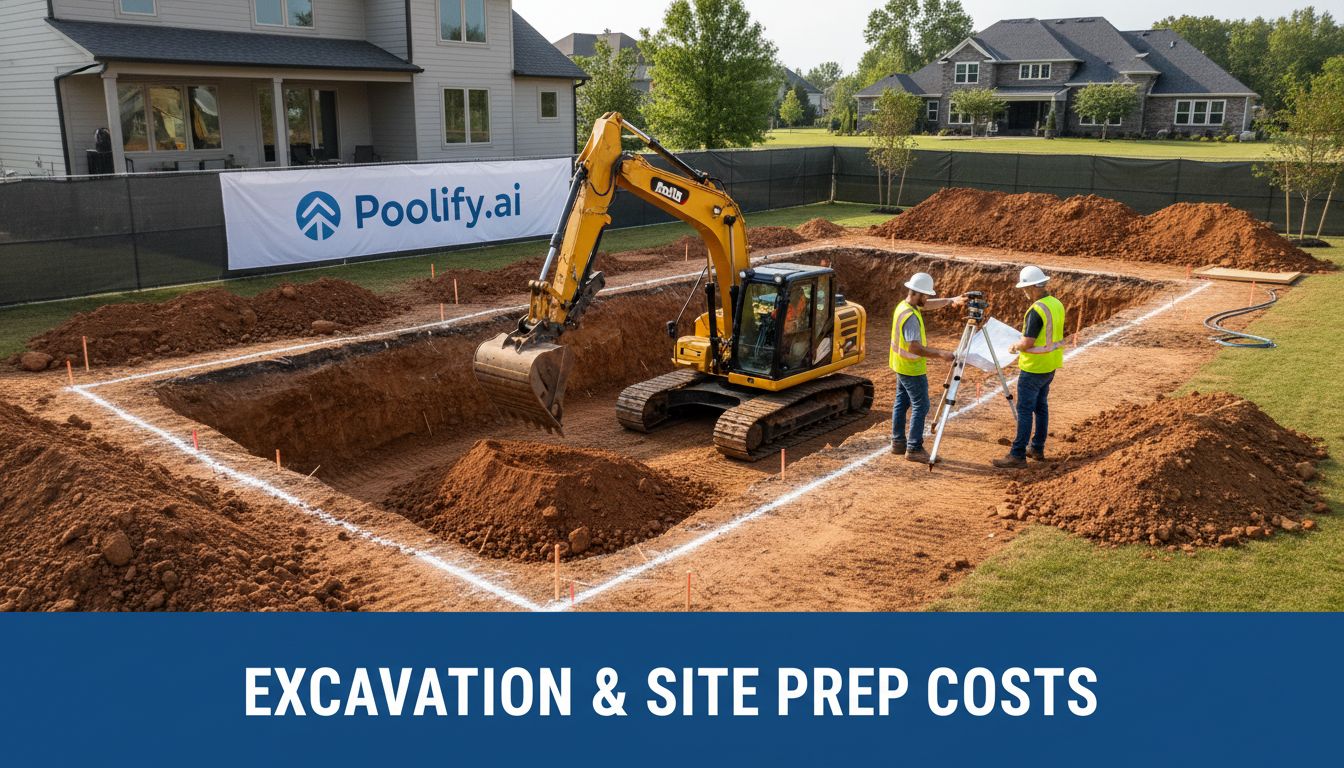
Site preparation represents a critical component in any inground pool cost breakdown, with expenses ranging from $2,000 to $10,000 depending on your property’s characteristics. Excavation contractors must remove thousands of cubic feet of soil, creating a hole precisely sized for your pool while managing the displaced earth.
Rocky terrain, high water tables, or difficult access significantly increase excavation costs. Properties requiring blasting through bedrock can add $5,000-$15,000 to your budget. Soil conditions affect both excavation difficulty and structural requirements, with clay soils requiring different approaches than sandy conditions. According to the Occupational Safety and Health Administration’s excavation safety standards, proper trenching and shoring protect workers and ensure structural integrity.
Utility line location and protection add another layer of complexity and cost. Professional excavators must identify and work around electrical, gas, water, and sewer lines, sometimes requiring rerouting. Tree removal, if necessary, costs $500-$2,000 per large tree. Grading and drainage work ensures water flows away from your pool and home, preventing future foundation issues.
Essential Equipment and System Costs
The mechanical systems powering your pool represent 15-20% of your total inground pool cost breakdown. These components ensure water quality, circulation, and temperature control throughout the swimming season.
Filtration Systems
Pool pumps and filters form the circulatory system that keeps water clean and safe. Standard single-speed pumps cost $800-$1,200, while energy-efficient variable-speed models range from $1,500-$2,500. Variable-speed pumps reduce electricity consumption by 50-75%, paying for themselves within 2-3 years through energy savings. Sand filters cost $300-$600, cartridge filters run $500-$1,000, and diatomaceous earth (DE) filters range from $600-$1,200.
Proper sizing ensures adequate circulation without wasting energy. Your pool volume determines the required pump capacity, with most residential pools needing systems that turn over the entire water volume every 8-12 hours. Undersized equipment struggles to maintain water quality, while oversized systems waste electricity and create unnecessary wear.
Heating Options
Pool heaters extend your swimming season significantly but add $2,000-$7,000 to your inground pool cost breakdown. Gas heaters cost $2,000-$4,000 and heat water quickly, ideal for occasional use or spa heating. Heat pumps range from $3,000-$5,500 and operate efficiently in moderate climates, using electricity to transfer heat rather than generating it directly.
Solar heating systems represent the most economical long-term option at $3,000-$7,000 installed. These systems use roof-mounted panels to capture solar energy, heating pool water with minimal operating costs. The payback period typically spans 3-7 years depending on your climate and usage patterns. For comprehensive guidance on maintaining optimal water temperature, explore our pool heating options guide.
Sanitization and Automation
Modern sanitization systems range from $800 for basic chlorine feeders to $2,500 for salt chlorine generators. Salt systems convert dissolved salt into chlorine through electrolysis, providing gentler water chemistry that’s easier on skin and eyes. The initial investment includes the generator cell ($800-$1,500) and salt ($50-$100), with cell replacement every 3-5 years at $400-$800.
Automation systems cost $1,500-$3,500 but deliver convenience and efficiency by controlling pumps, heaters, lights, and water features from your smartphone. These systems optimize equipment run times, reducing energy consumption while maintaining perfect water conditions. Advanced models integrate weather forecasts, automatically adjusting heating and cleaning schedules based on upcoming conditions.
Decking and Surrounding Hardscape Expenses
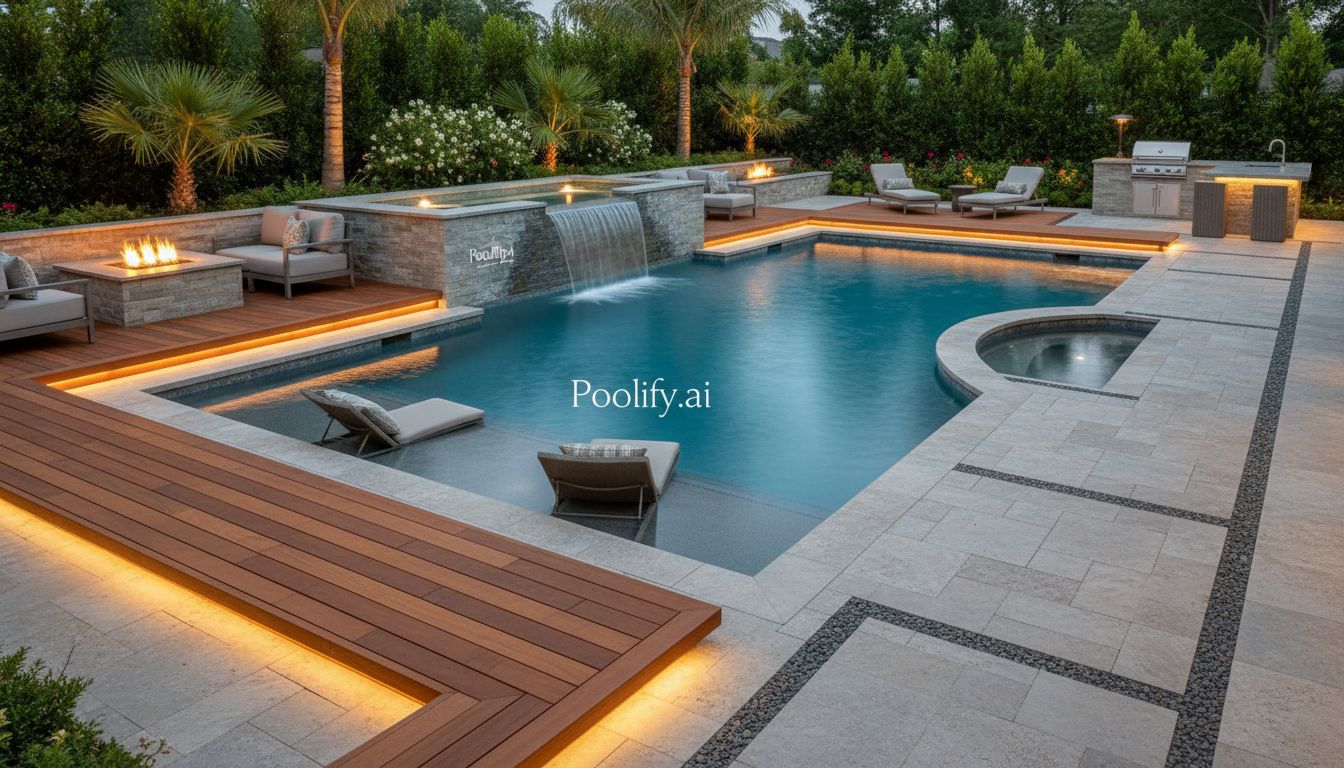
The area surrounding your pool significantly impacts both aesthetics and your inground pool cost breakdown, typically adding $8,000-$30,000 to your project. Decking materials range from economical concrete to premium natural stone, each offering distinct characteristics and price points.
Poured concrete represents the most budget-friendly option at $6-$12 per square foot, providing a durable surface that’s easily customized with stamps, stains, or exposed aggregate finishes. Pavers cost $15-$30 per square foot and offer superior aesthetics with easy repair capabilities—damaged pavers can be individually replaced without affecting surrounding areas.
Natural stone decking, including travertine, limestone, and bluestone, ranges from $25-$50 per square foot. These premium materials stay cooler underfoot in direct sunlight and deliver timeless elegance that enhances property value. The porous nature of natural stone requires sealing every 2-3 years to prevent staining and weather damage.
Proper drainage integration prevents water accumulation that can damage decking and create safety hazards. Slope requirements typically mandate a 1-2% grade away from the pool, directing water toward drainage systems or landscaped areas. Adequate decking width ensures comfortable movement around the pool, with most designers recommending 4-6 feet of walking space on all sides.
Additional Features That Impact Your Budget
Optional features can transform a basic pool into a backyard resort, but they significantly affect your inground pool cost breakdown. Understanding these costs helps you prioritize features that deliver the most value for your lifestyle and budget.
Water Features and Aesthetics
Waterfalls range from $1,500 for simple spillways to $15,000 for elaborate rock formations with multiple cascades. Deck jets cost $500-$1,000 per jet and create elegant arcs of water entering the pool. Sheer descent waterfalls, producing a clear sheet of water, run $1,000-$3,000 per unit and deliver contemporary visual appeal.
LED lighting systems cost $700-$2,000 and transform your pool into an evening entertainment venue. Modern LED lights last 10-15 years, consume minimal electricity, and offer color-changing capabilities controlled through smartphone apps. Fiber optic lighting provides even longer lifespan at $1,500-$4,000 but requires specialized installation.
Integrated Spas and Tanning Ledges
Attached spas add $8,000-$20,000 to your inground pool cost breakdown, depending on size and jet configuration. These features share filtration systems with the main pool, reducing equipment costs while providing therapeutic benefits and extending usability into cooler months. Spillover spas create visual interest as heated water cascades into the pool.
Tanning ledges, also called baja shelves or sun shelves, cost $3,000-$10,000 depending on size. These shallow areas (typically 6-12 inches deep) provide space for lounge chairs, allowing you to cool off while sunbathing. They’re particularly valuable for families with young children, offering a safe play area with adult supervision.
Pool Covers and Safety Equipment
Safety covers represent essential investments ranging from $1,200-$3,000 for mesh covers to $2,500-$5,000 for solid safety covers. These covers support adult weight, preventing accidental drowning while keeping debris out during off-season months. Automatic cover systems cost $8,000-$15,000 but deliver unmatched convenience, extending and retracting at the push of a button.
Pool fencing requirements vary by jurisdiction but typically add $2,000-$8,000 to your project. Glass fencing provides unobstructed views at $150-$300 per linear foot, while aluminum fencing costs $30-$60 per foot. Self-closing, self-latching gates ensure compliance with safety regulations that prevent unsupervised child access.
Hidden Costs in Your Inground Pool Cost Breakdown
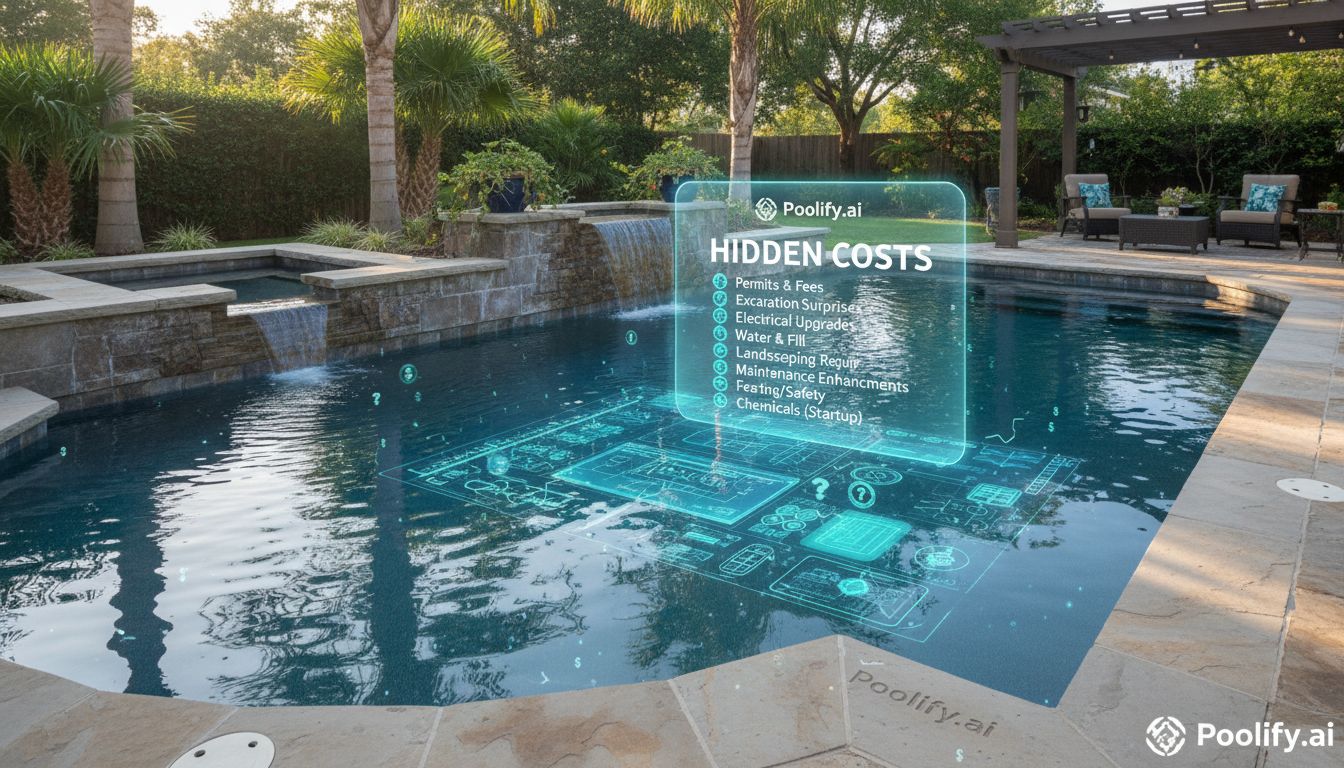
Experienced pool owners understand that the initial construction quote rarely represents the complete financial picture. Several hidden costs emerge during and after construction, adding 10-20% to your anticipated inground pool cost breakdown.
Permits and Inspections
Building permits cost $500-$2,000 depending on your municipality and pool size. The permit process involves submitting detailed plans showing pool location, setbacks from property lines, and safety features. Inspections occur at various construction stages, ensuring compliance with local building codes and safety regulations. Some jurisdictions require electrical, plumbing, and final inspections, each potentially delaying construction if issues arise.
Homeowners association (HOA) approval adds another layer of bureaucracy in planned communities. Review boards evaluate pool designs for aesthetic compatibility with neighborhood standards, sometimes requiring modifications that affect costs. This approval process can take 30-90 days, delaying construction starts and potentially affecting seasonal pricing.
Utility Upgrades and Connections
Electrical service upgrades cost $1,000-$3,000 when your existing panel lacks capacity for pool equipment. Pumps, heaters, and lighting require dedicated circuits with ground fault circuit interrupter (GFCI) protection. Running electrical lines from your home to the pool equipment area adds $500-$2,000 depending on distance and trenching requirements.
Water bills spike during initial filling, costing $80-$200 for 15,000-20,000 gallons. Some water utilities offer reduced rates for pool filling if you notify them in advance. Gas line installation for gas heaters costs $500-$1,500, including trenching and connection to your home’s gas supply.
Landscaping Restoration
Construction inevitably damages surrounding landscaping, requiring restoration that adds $2,000-$8,000 to your inground pool cost breakdown. Heavy equipment compacts soil, requiring tilling before replanting. Sod installation costs $0.50-$1.50 per square foot, while seed costs less but takes longer to establish. Mature trees and shrubs damaged during construction require replacement at $200-$2,000 per specimen.
Integrating pool landscaping with existing yards requires thoughtful plant selection. Salt-tolerant species thrive near pools where splashing introduces chlorine or salt to soil. Avoid plants with invasive root systems that can damage pool structures or plumbing lines. Strategic plantings provide privacy, shade, and visual appeal while complementing your pool design.
Ongoing Maintenance and Operating Costs
Understanding long-term expenses provides a complete inground pool cost breakdown that extends beyond construction. Annual operating costs typically range from $1,200-$3,000, depending on pool size, equipment efficiency, and climate.
Chemical and Cleaning Supplies
Chemical costs average $400-$800 annually, including chlorine, pH adjusters, alkalinity increasers, and shock treatments. Salt chlorine generator systems reduce chemical costs by 30-50% after the initial salt purchase. Regular testing ensures balanced water chemistry that protects equipment, prevents algae growth, and maintains swimmer comfort.
Cleaning supplies and equipment add $200-$500 yearly. Manual cleaning requires telescoping poles, skimmers, brushes, and vacuum heads. Automatic pool cleaners cost $300-$1,500 initially but reduce manual labor significantly. Robotic cleaners ($800-$1,500) offer the most thorough cleaning with programmable schedules and minimal energy consumption. Learn more about maintaining pristine water conditions through our comprehensive pool maintenance guide.
Energy Consumption
Electricity costs for pool operation range from $300-$1,200 annually depending on equipment efficiency and usage patterns. Variable-speed pumps reduce energy consumption by 50-75% compared to single-speed models, saving $400-$800 yearly. Running pumps during off-peak hours when electricity rates are lower further reduces costs.
Heating represents the largest energy expense for heated pools, adding $500-$2,000 annually for gas heaters or $300-$900 for heat pumps. Pool covers reduce heating costs by 50-70% by preventing heat loss through evaporation. Solar covers cost $50-$200 and pay for themselves within one season through reduced heating and chemical usage.
Repairs and Equipment Replacement
Equipment maintenance and replacement costs average $300-$800 annually. Pump motors last 8-12 years before requiring replacement at $400-$800. Filter media requires replacement every 3-7 years depending on type: sand ($50-$100), cartridges ($60-$150), or DE grids ($80-$200). Heater maintenance includes annual inspections ($150-$300) and occasional repairs ($200-$800).
Unexpected repairs add to long-term costs. Plumbing leaks require professional detection ($200-$500) and repair ($300-$2,000). Structural issues with concrete pools may necessitate patching ($500-$2,000) or complete resurfacing ($5,000-$15,000) every 10-15 years. Vinyl liner replacement costs $4,000-$5,000 every 7-10 years.
Financing Your Pool Investment
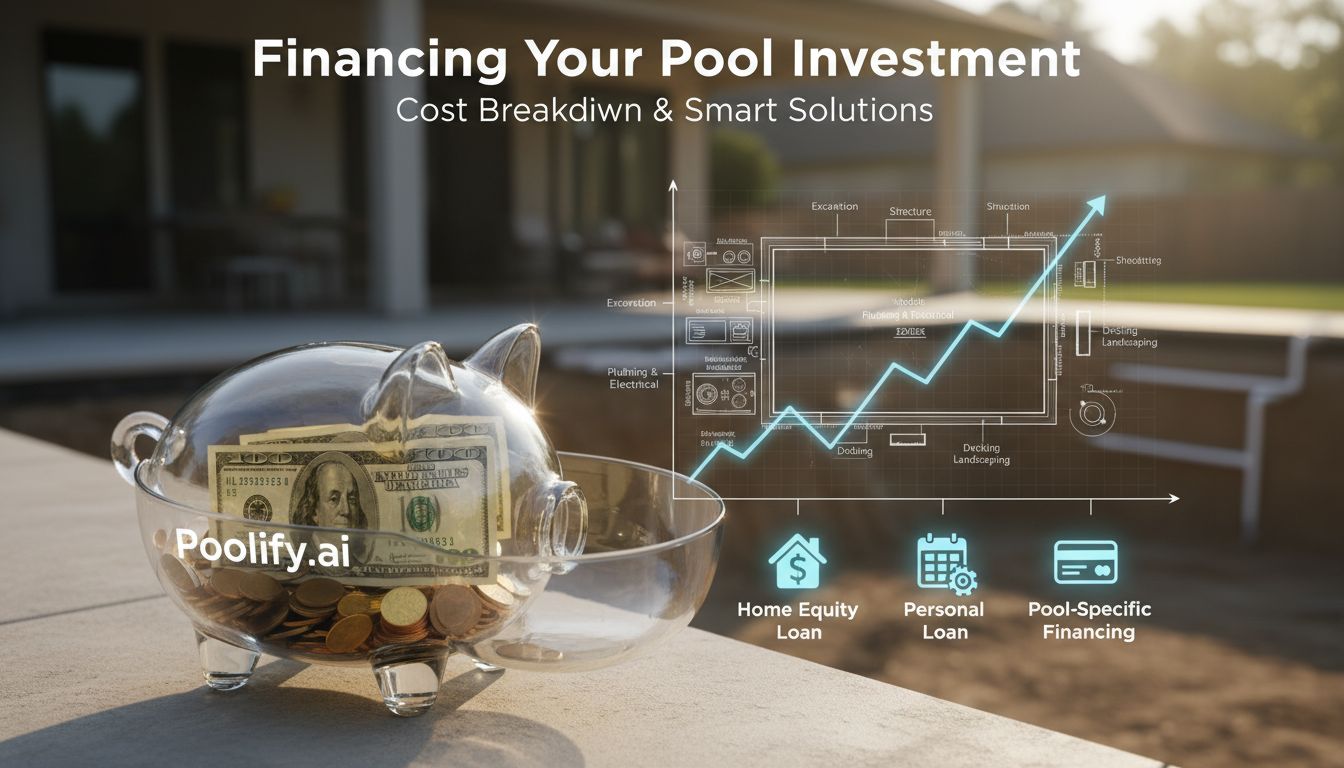
Few homeowners pay cash for pool construction, making financing a crucial consideration in your inground pool cost breakdown. Multiple financing options exist, each with distinct advantages and qualification requirements.
Home Equity Loans and Lines of Credit
Home equity loans provide lump-sum financing at fixed interest rates, typically 5-8% in 2026. These loans use your home as collateral, offering lower rates than unsecured loans. Repayment terms extend 5-30 years, keeping monthly payments manageable. Interest may be tax-deductible if the improvement increases home value, though tax laws change frequently.
Home equity lines of credit (HELOCs) function like credit cards secured by home equity. You draw funds as needed during construction, paying interest only on borrowed amounts. Variable interest rates create payment uncertainty but offer flexibility for projects with evolving costs. Draw periods typically last 10 years, followed by 20-year repayment periods.
Personal Loans and Pool Financing
Unsecured personal loans avoid using your home as collateral but carry higher interest rates (8-15%) and shorter terms (3-7 years). These loans work well for smaller projects or homeowners with limited equity. Approval depends primarily on credit scores and debt-to-income ratios, with decisions often made within days.
Specialized pool financing through contractors or manufacturers offers convenience but requires careful evaluation. Promotional periods with 0% interest can provide significant savings if you repay the balance before the promotional period ends. Deferred interest programs charge retroactive interest on remaining balances after promotional periods, potentially creating expensive surprises.
Cash-Out Refinancing
Refinancing your mortgage to access equity makes sense when current rates are lower than your existing mortgage rate. This strategy consolidates pool costs into your mortgage, spreading payments over 15-30 years at the lowest available interest rates. Closing costs (2-5% of loan amount) reduce the financial benefit, making this option most attractive for larger projects or when simultaneously securing better mortgage terms.
Maximizing Value in Your Inground Pool Cost Breakdown
Strategic planning and informed decision-making help you optimize your inground pool cost breakdown, ensuring every dollar contributes to long-term satisfaction and property value.
Timing Your Construction
Off-season construction (late fall through early spring) often yields 10-20% savings as contractors seek work during slower periods. However, weather delays can extend timelines in cold climates. Spring construction ensures completion before summer but commands premium pricing due to high demand. Obtaining multiple quotes regardless of season creates competitive pressure that benefits your budget.
Multi-year planning allows you to phase construction, installing the basic pool initially and adding features like spas, waterfalls, or upgraded decking in subsequent years. This approach spreads costs while allowing you to experience the pool before committing to additional features. However, some features cost more when added later due to mobilization expenses and potential damage to completed work.
DIY Opportunities and Limitations
Skilled homeowners can reduce costs by handling certain tasks, but pool construction requires specialized expertise for core elements. DIY opportunities include landscaping, simple decking installation, and fence construction, potentially saving $3,000-$10,000. However, structural work, plumbing, and electrical systems require licensed professionals to ensure safety and code compliance.
Attempting complex tasks without proper training creates expensive problems. Improperly installed plumbing leaks, wasting water and potentially damaging pool structures. Electrical errors create fire hazards and electrocution risks. Most municipalities require licensed contractors for permitted work, making DIY approaches impractical for primary construction elements.
Energy Efficiency Investments
Prioritizing energy-efficient equipment increases initial costs but delivers substantial long-term savings. Variable-speed pumps cost $1,000 more than single-speed models but save $400-$800 annually in electricity costs. LED lighting costs $200-$500 more than incandescent alternatives but lasts 10 times longer while consuming 75% less energy.
Strategic design choices enhance efficiency without increasing costs. Orienting pools to maximize solar heat gain reduces heating expenses. Windbreaks from fencing or landscaping minimize evaporative heat loss. Dark-colored interiors absorb more solar energy, naturally warming water. These passive strategies complement mechanical systems, optimizing performance while reducing operating costs.
Frequently Asked Questions
What is the average inground pool cost breakdown for a standard installation in 2026?
The average inground pool cost breakdown for a standard 14×28 foot pool ranges from $45,000-$75,000 in 2026. This includes excavation ($3,000-$5,000), the pool shell ($25,000-$45,000), equipment ($5,000-$8,000), decking ($8,000-$12,000), and finishing touches ($4,000-$5,000). Material choice significantly impacts costs, with vinyl-lined pools at the lower end and concrete pools at the higher end of this range.
How much should I budget for hidden costs beyond the initial quote?
Budget an additional 15-25% beyond your initial quote for hidden costs in your inground pool cost breakdown. This covers permits ($500-$2,000), utility upgrades ($1,000-$3,000), landscaping restoration ($2,000-$8,000), and unexpected site challenges like rock removal or drainage improvements. Setting aside this contingency fund prevents financial stress when unforeseen expenses emerge during construction.
What financing options work best for pool construction?
Home equity loans and HELOCs typically offer the best financing terms for pool construction, with interest rates of 5-8% and potential tax deductibility. These options leverage your home equity for lower rates than unsecured loans. Personal loans work for smaller projects or homeowners with limited equity, while cash-out refinancing makes sense when current mortgage rates are favorable and you’re consolidating other debts simultaneously.
How do ongoing maintenance costs compare across different pool types?
Fiberglass pools typically have the lowest annual maintenance costs at $1,200-$2,000, thanks to smooth surfaces that resist algae and require fewer chemicals. Vinyl-lined pools cost $1,500-$2,500 annually with periodic liner replacement. Concrete pools have the highest maintenance costs at $2,000-$3,000 yearly, including more frequent chemical adjustments and eventual resurfacing. Energy-efficient equipment reduces these costs by 30-50% across all pool types.
Does adding a pool increase home value enough to justify the investment?
Pools typically return 30-60% of construction costs in immediate home value increases, with returns varying by climate and local market preferences. In warm climates where pools are standard amenities, you may recoup 50-60% of costs. In cooler regions, returns drop to 30-40%. However, pools enhance lifestyle value and enjoyment that transcends financial returns. The investment makes most sense when you plan to use and enjoy the pool for many years rather than viewing it purely as a financial decision.
Key Takeaways
- Material selection drives costs: Your inground pool cost breakdown varies dramatically based on choosing vinyl ($35,000-$65,000), fiberglass ($45,000-$85,000), or concrete ($50,000-$100,000), with each offering distinct advantages in customization, durability, and maintenance requirements.
- Hidden costs add 15-25% to budgets: Permits, utility upgrades, landscaping restoration, and site challenges increase total investment beyond initial quotes, making contingency planning essential for avoiding mid-project financial stress.
- Equipment efficiency pays long-term dividends: Variable-speed pumps, LED lighting, and salt chlorine generators cost more initially but reduce annual operating expenses by 30-50%, paying for themselves within 2-4 years through energy and chemical savings.
- Strategic timing and planning optimize value: Off-season construction, phased feature additions, and competitive bidding can reduce costs by 10-20%, while energy-efficient design choices minimize decades of operating expenses.
- Financing options significantly impact affordability: Home equity loans and HELOCs offer the lowest interest rates (5-8%) for pool construction, while spreading payments over extended terms keeps monthly costs manageable for most homeowners.
Conclusion
A comprehensive inground pool cost breakdown empowers you to make informed decisions that align your vision with your budget. Understanding the financial landscape—from material selection and equipment choices to hidden costs and long-term maintenance—protects you from expensive surprises while maximizing your investment’s value. The 2026 pool market offers more options than ever, with innovations in energy efficiency, automation, and materials delivering better performance at competitive prices.
Your pool represents more than a financial investment; it creates a backyard retreat that enhances lifestyle, provides exercise opportunities, and creates lasting family memories. By carefully evaluating your inground pool cost breakdown, prioritizing features that matter most to your family, and planning for both initial construction and ongoing maintenance, you’ll create an outdoor oasis that delivers decades of enjoyment. Start by obtaining multiple detailed quotes, asking contractors to itemize every expense category, and comparing proposals to ensure you’re getting competitive pricing and comprehensive service.
References
- Occupational Safety and Health Administration (OSHA) – Excavation Safety Standards: https://www.osha.gov/excavations
- Centers for Disease Control and Prevention (CDC) – Pool Safety Guidelines: https://www.cdc.gov/healthywater/swimming/