
Understanding Inground Pool Florida Cost in 2026
The inground pool florida cost represents one of the most significant home improvement investments for Sunshine State residents. In 2026, Florida homeowners can expect to invest between $35,000 and $100,000 for a standard inground pool, with luxury installations exceeding $150,000. Understanding these costs helps you make informed decisions about materials, design features, and long-term maintenance that align with your budget and lifestyle goals.
Florida’s unique climate, geological conditions, and competitive pool construction market create distinct pricing dynamics compared to other states. The year-round swimming season, combined with high humidity and specific soil conditions, influences both installation expenses and ongoing maintenance requirements. This comprehensive guide breaks down every cost component to help you plan your pool project with confidence.
Whether you’re considering a basic lap pool or an elaborate resort-style design with waterfalls and integrated spas, understanding the inground pool florida cost factors ensures you avoid budget surprises and maximize your investment value. Let’s explore the essential elements that determine your total project expense.
Breaking Down the Inground Pool Florida Cost by Pool Type
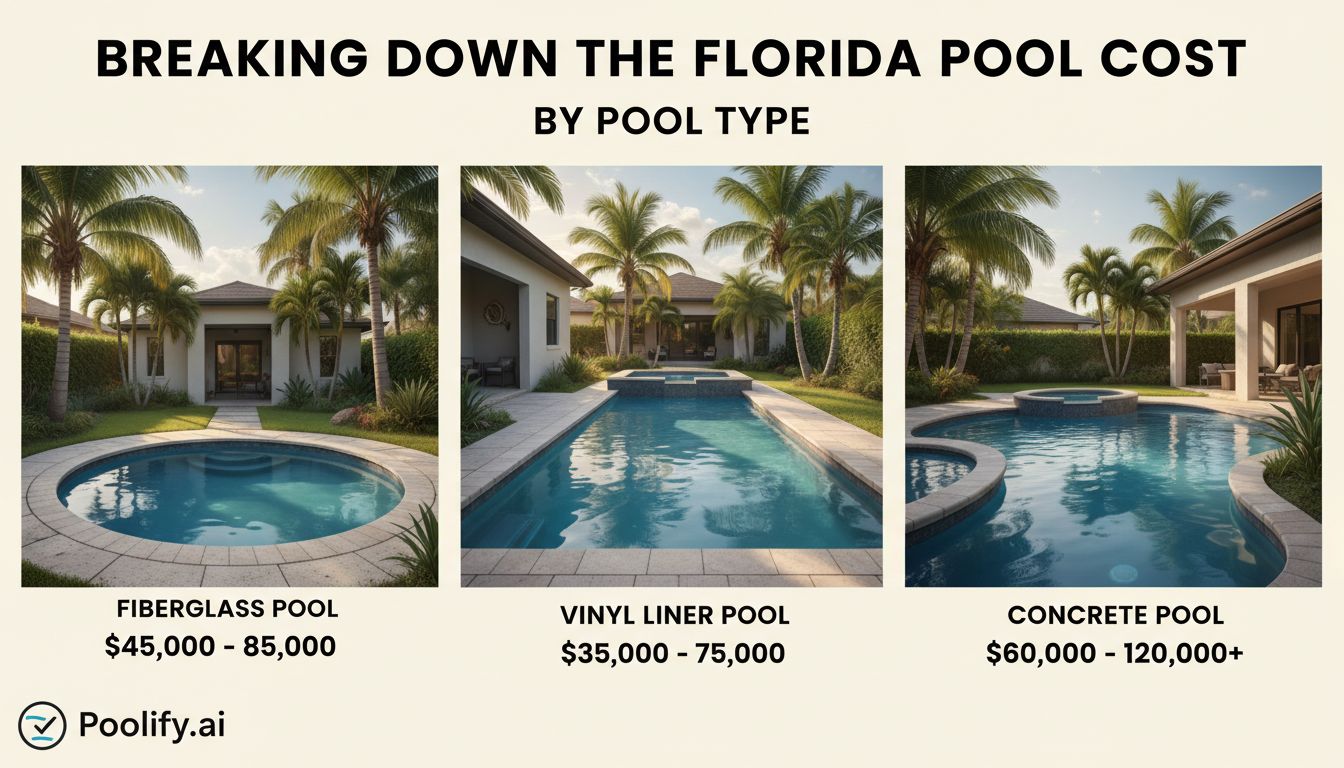
The material you select for your inground pool significantly impacts both initial installation costs and long-term maintenance expenses. Florida’s climate and water table conditions make certain materials more suitable than others, affecting overall value and durability.
Concrete and Gunite Pools
Concrete and gunite pools represent the premium option for Florida homeowners, with costs ranging from $50,000 to $150,000 in 2026. These custom-built pools offer unlimited design flexibility, allowing you to create any shape, depth, or feature configuration. The construction process typically takes 8-12 weeks, involving excavation, steel reinforcement installation, concrete spraying, and finishing with plaster, tile, or aggregate surfaces.
The higher inground pool florida cost for concrete pools reflects their durability and customization potential. Florida’s humid climate actually benefits concrete pools, as the material performs well in moisture-rich environments. However, these pools require resurfacing every 10-15 years at costs between $5,000 and $15,000, depending on the finish material selected.
Fiberglass Pool Installation
Fiberglass pools have gained significant popularity in Florida, with installation costs ranging from $35,000 to $85,000 in 2026. These pre-manufactured shells arrive at your property ready for installation, significantly reducing construction time to just 2-4 weeks. The smooth, non-porous surface resists algae growth naturally, reducing chemical usage and maintenance time.
The moderate inground pool florida cost for fiberglass options makes them attractive for budget-conscious homeowners. However, design limitations exist since you must select from pre-made shapes and sizes. Florida’s sandy soil conditions actually favor fiberglass installation, as the flexible material adapts well to minor ground shifting without cracking.
Vinyl Liner Pool Systems
Vinyl liner pools represent the most economical option, with costs ranging from $30,000 to $65,000 in 2026. These pools feature steel, aluminum, or polymer panel walls with a custom-fitted vinyl liner creating the water barrier. Installation typically completes within 4-6 weeks, making them a faster alternative to concrete construction.
While offering the lowest initial inground pool florida cost, vinyl pools require liner replacement every 7-10 years at approximately $4,000 to $7,000 per replacement. Florida’s intense UV exposure can accelerate liner degradation, potentially shortening replacement intervals. However, modern vinyl materials now include UV-resistant formulations specifically designed for the Florida climate.
Regional Variations in Inground Pool Florida Cost
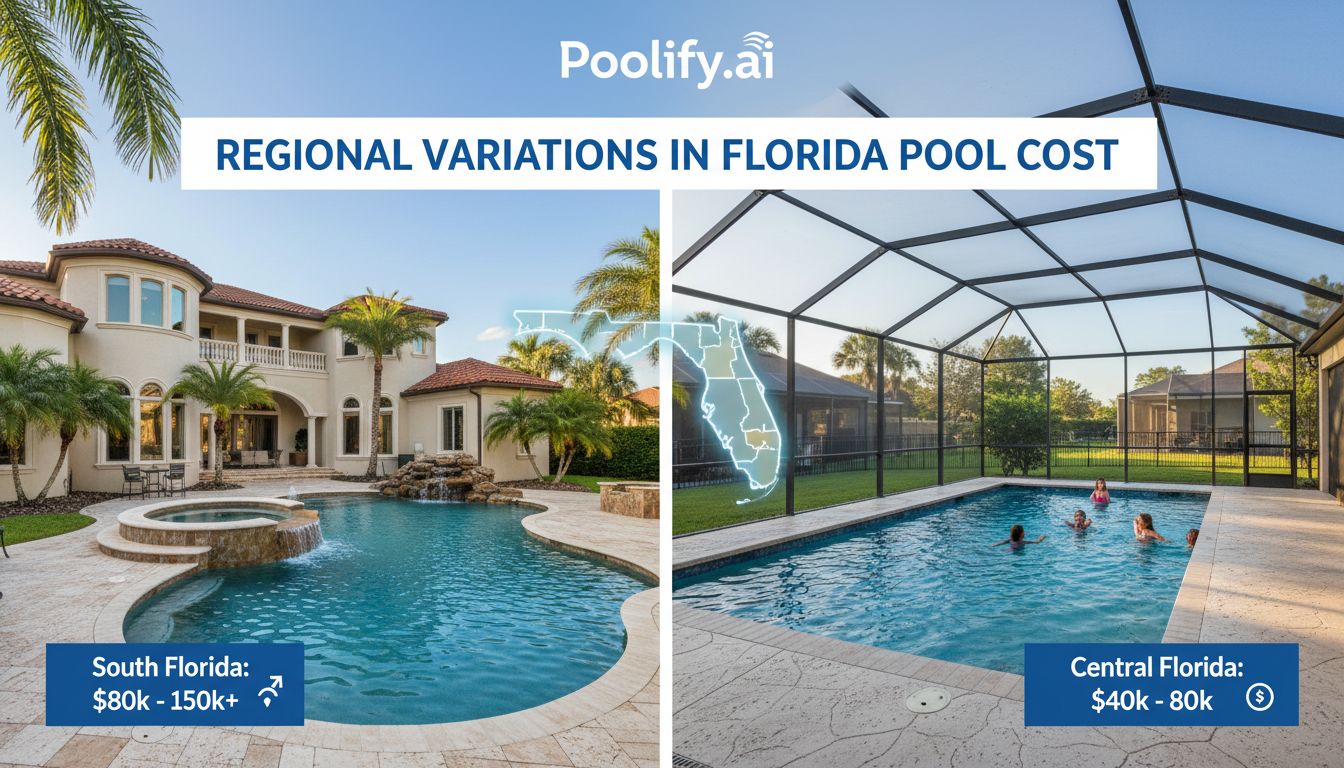
Florida’s diverse geography and regional economic conditions create significant pricing variations across the state. Understanding these regional differences helps you budget accurately based on your specific location and market conditions.
South Florida Premium Market
Miami-Dade, Broward, and Palm Beach counties consistently show the highest inground pool florida cost, with average installations ranging from $45,000 to $120,000. The competitive luxury home market drives demand for high-end pool features, while higher labor costs and property values contribute to premium pricing. According to the U.S. Census Bureau, Miami-Dade County’s median household income and dense population create a robust pool construction market with year-round demand.
South Florida’s coral limestone bedrock presents unique excavation challenges that can add $3,000 to $8,000 to standard installation costs. However, this solid foundation provides excellent structural support once excavation completes. The region’s tropical climate and saltwater proximity also necessitate specialized equipment and corrosion-resistant materials, influencing overall project expenses.
Central Florida Balanced Pricing
Orlando, Tampa, and surrounding central Florida markets offer more moderate pricing, with typical inground pool florida cost ranging from $38,000 to $95,000. The region’s sandy soil conditions facilitate easier excavation, reducing labor costs compared to southern coastal areas. Central Florida’s mix of residential neighborhoods and vacation properties creates steady demand without the extreme premium pricing found in coastal luxury markets.
The Orlando metro area benefits from competitive contractor availability, with numerous established pool builders offering diverse pricing options. Tampa Bay’s coastal location requires similar corrosion considerations as South Florida, but generally lower property values translate to more moderate overall project costs.
North Florida Value Market
Jacksonville, Tallahassee, and Panhandle regions typically show the lowest inground pool florida cost, ranging from $32,000 to $80,000 for comparable installations. Lower labor costs, reduced property values, and less year-round construction demand contribute to these more affordable prices. However, the shorter optimal swimming season compared to southern regions may influence design decisions and feature selections.
North Florida’s clay-heavy soil in some areas can present drainage challenges that require additional site preparation, potentially adding $2,000 to $5,000 to base costs. Conversely, the region’s lower average temperatures reduce strain on pool equipment and surfaces, potentially extending component lifespan and reducing long-term maintenance expenses.
Why Inground Pool Investment Matters in Florida
Florida’s unique characteristics make it one of the most pool-friendly states in America, with over 1.5 million residential pools across the state. Understanding the local context helps you appreciate how the inground pool florida cost represents not just an expense, but a strategic investment in your property and lifestyle.
Florida’s population of approximately 22.6 million residents includes a high percentage of homeowners seeking outdoor living enhancements. The state’s year-round warm climate, with average temperatures ranging from 65°F in winter to 90°F in summer, provides nearly 300 days of potential swimming weather annually. This extended usability significantly increases the value proposition compared to northern states where pools remain covered six months yearly.
The Florida housing market shows median home values ranging from $350,000 to $450,000 statewide in 2026, with coastal areas significantly higher. Real estate data consistently demonstrates that professionally installed pools can increase property values by 5-8% in Florida markets, often recovering 50-75% of installation costs upon resale. This return on investment exceeds national averages due to Florida’s pool-centric lifestyle and buyer expectations.
Florida’s tourism and hospitality economy, generating over $112 billion annually, influences residential pool culture. Many homeowners invest in resort-style features inspired by vacation experiences, driving demand for premium amenities. The state’s major industries including aerospace, agriculture, and technology support a diverse economic base with substantial disposable income directed toward home improvements.
Climate considerations significantly impact the inground pool florida cost equation. The state receives 50-65 inches of rainfall annually, requiring proper drainage systems and water management. Hurricane preparedness necessitates robust construction standards and proper equipment securing, adding to initial installation requirements but ensuring long-term durability. Florida’s high humidity levels actually benefit pool ownership by reducing evaporation rates compared to arid climates, lowering water replacement costs.
Interesting Florida Pool Market Facts
Florida leads the nation in residential pools per capita, with approximately one pool for every 14 residents. This concentration creates a mature, competitive contractor market that benefits consumers through pricing competition and expertise availability. The state’s pool industry employs over 50,000 professionals, ensuring robust support for installation, maintenance, and repair services.
Historical data shows Florida pool construction surged 35% between 2020-2023 as remote work enabled more homeowners to invest in residential amenities. This trend continues in 2026, with pool permits remaining 20% above pre-pandemic levels. The shift toward outdoor living spaces as functional home extensions rather than pure luxury items has fundamentally changed how Floridians view pool investments.
Florida’s unique geography includes over 1,350 miles of coastline, yet residential pools remain extremely popular even in beachfront communities. The convenience, privacy, and controlled environment of home pools outweigh beach access for most homeowners. Additionally, concerns about jellyfish, red tide events, and beach erosion make private pools increasingly attractive alternatives.
The state’s rapid population growth, with approximately 900 new residents daily, continuously expands the pool construction market. Migration from northern states brings homeowners unfamiliar with pool ownership, creating demand for educational resources and full-service installation packages. This demographic shift influences the inground pool florida cost landscape by supporting premium service offerings and comprehensive maintenance programs.
Essential Cost Factors Beyond Basic Installation
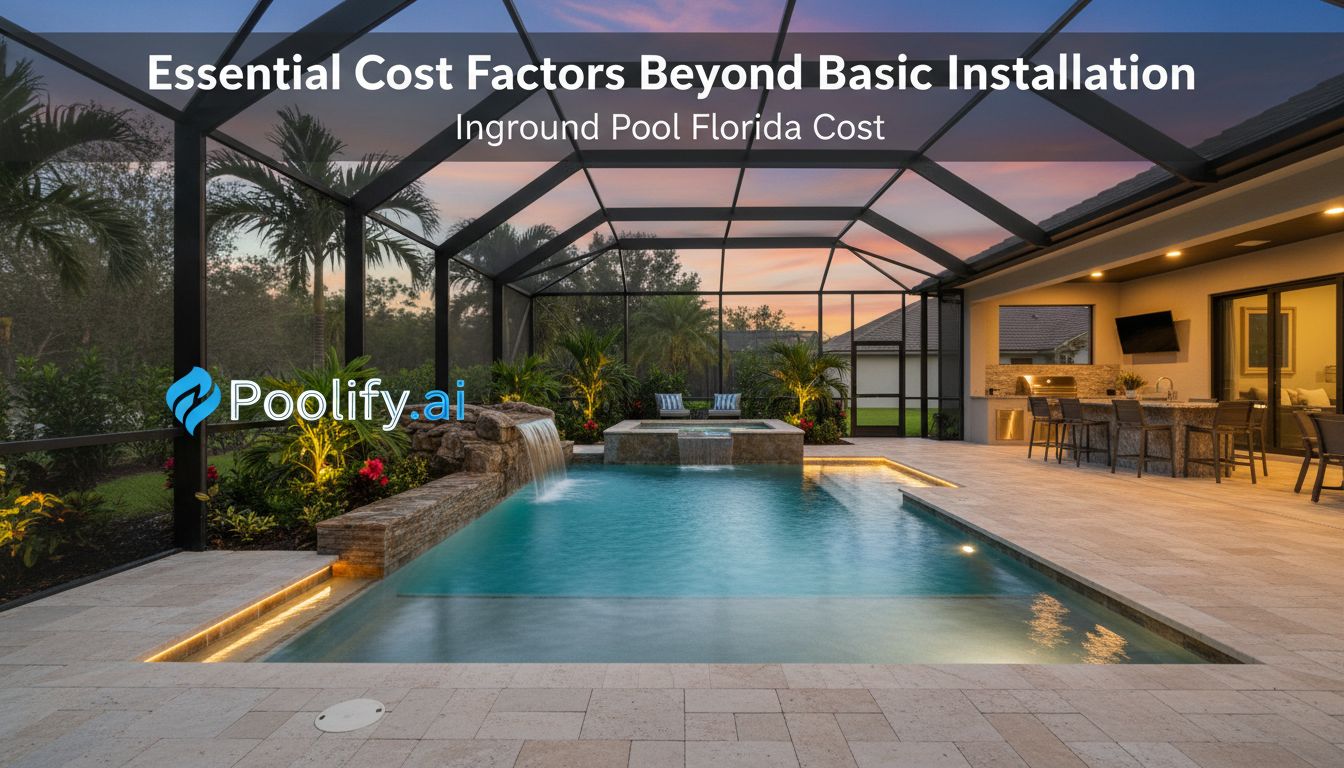
Understanding the complete inground pool florida cost requires examining expenses beyond the pool shell itself. These additional components significantly impact your total investment and ongoing operational budget.
Site Preparation and Excavation
Site preparation costs vary dramatically based on your property’s specific conditions, ranging from $1,500 to $15,000 in 2026. Florida’s diverse soil types create different excavation challenges. Sandy soil common in coastal and central regions excavates easily, minimizing costs. However, South Florida’s limestone bedrock may require rock hammering or even controlled blasting, substantially increasing expenses.
Lot accessibility affects equipment deployment costs. Properties with limited access requiring smaller equipment or hand excavation can add $3,000 to $8,000 to standard pricing. Existing landscaping removal, tree relocation, or utility line identification and protection add further costs. Smart homeowners coordinate pool installation with broader landscaping projects to minimize duplicate site preparation expenses and maximize overall design cohesion.
Decking and Hardscaping
Pool decking represents a substantial portion of the total inground pool florida cost, typically ranging from $5,000 to $25,000 depending on materials and square footage. Florida’s intense heat makes material selection critical for comfort and safety. Travertine, pavers, and textured concrete provide cool-touch surfaces that remain comfortable for bare feet even in direct sunlight.
Standard installations include 3-4 feet of decking around the pool perimeter, but many homeowners extend this to create entertainment areas, outdoor kitchens, or lounging spaces. Each additional square foot of premium decking costs $15-$40 in 2026. Proper drainage integration prevents water accumulation and extends material lifespan, making professional installation essential despite higher initial costs.
Equipment and Mechanical Systems
Pool equipment packages including pumps, filters, heaters, and automation systems range from $4,000 to $15,000 based on pool size and feature complexity. Florida’s year-round swimming season makes energy-efficient equipment a smart investment, with variable-speed pumps reducing electricity costs by 50-75% compared to single-speed alternatives. These premium pumps cost $800-$1,500 more initially but typically recover the investment within 18-24 months through energy savings.
Heating options significantly impact both installation and operational costs. Heat pumps, ideal for Florida’s mild winters, cost $3,000-$5,000 installed and efficiently maintain comfortable temperatures during cooler months. Solar heating systems, particularly effective in the Sunshine State, require $4,000-$8,000 initial investment but provide virtually free heating thereafter. Gas heaters offer rapid heating but higher operational costs, making them less popular in Florida’s climate.
Permitting and Inspection Fees
Florida requires building permits for inground pool installation, with costs varying by jurisdiction from $200 to $1,500. Most contractors include permitting in their quoted prices, but verify this before signing contracts. The permitting process typically takes 2-4 weeks and includes plan review, structural approval, and multiple inspections during construction phases.
Florida building codes mandate specific safety features including four-sided fencing with self-closing, self-latching gates. Fence installation adds $2,000-$8,000 to the inground pool florida cost depending on materials and perimeter length. Some municipalities offer fence alternatives including pool safety covers or door alarms, but traditional fencing remains the most common and often most affordable compliance method.
Premium Features and Upgrades Impact on Inground Pool Florida Cost
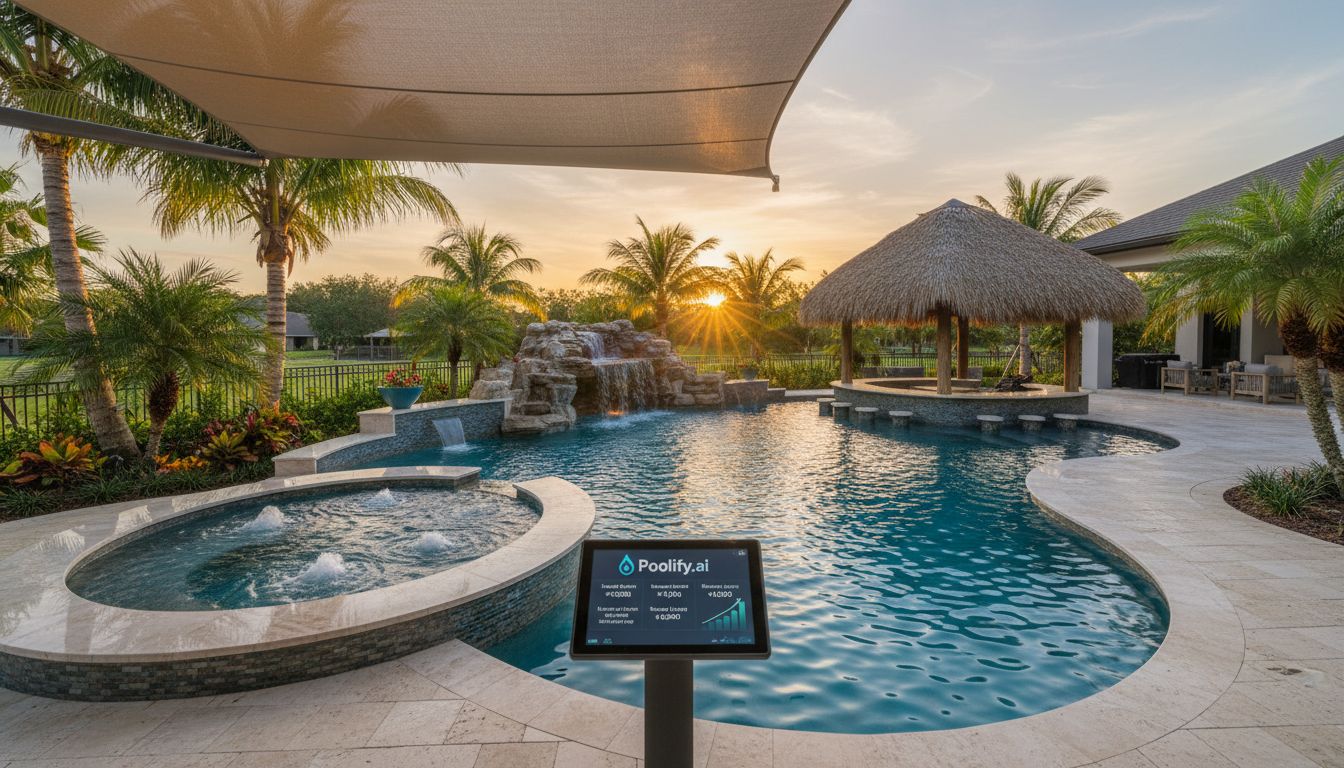
Customization options allow you to create a unique backyard oasis, but premium features substantially increase the total inground pool florida cost. Understanding these options helps you prioritize investments that deliver maximum enjoyment and value.
Water Features and Aesthetics
Waterfalls, fountains, and deck jets add visual appeal and soothing sounds, with costs ranging from $1,500 for simple deck jets to $15,000+ for elaborate rock waterfalls. Sheer descent waterfalls, popular in modern designs, cost $2,000-$4,000 per unit and create elegant water sheets. Bubblers and fountain features typically range from $500-$2,000 each, offering affordable enhancement options.
Lighting transforms evening pool use and enhances safety, with LED systems costing $700-$3,000 depending on fixture quantity and color-changing capabilities. Modern LED lights last 10+ years and consume minimal electricity, making them cost-effective long-term investments. Fiber optic lighting creates dramatic effects but costs significantly more, typically $3,000-$8,000 for comprehensive installations.
Integrated Spas and Tanning Ledges
Attached spas add $8,000-$20,000 to the base inground pool florida cost but provide year-round enjoyment. Florida’s mild winters make spas particularly valuable for comfortable water enjoyment during cooler months. Spillover spa designs create visual appeal while allowing heated spa water to warm the pool, improving energy efficiency.
Tanning ledges or baja shelves, shallow areas perfect for lounging and supervising children, add $3,000-$8,000 depending on size. These features have become increasingly popular in Florida, where sun exposure and water enjoyment combine perfectly. The shallow depth provides safe areas for young children and non-swimmers while creating ideal spaces for water loungers and chairs.
Automation and Smart Controls
Pool automation systems ranging from $1,500 to $5,000 allow smartphone control of pumps, heaters, lights, and water features. These systems optimize equipment operation schedules, reducing energy costs by 20-30% through intelligent programming. Remote monitoring alerts you to equipment issues or unusual water chemistry changes, preventing minor problems from becoming expensive repairs.
Automatic pool cleaners, while not typically included in base installation quotes, represent essential equipment investments. Robotic cleaners costing $800-$2,500 provide superior cleaning performance and energy efficiency compared to older suction or pressure-side models. In Florida’s environment where debris, pollen, and organic matter constantly enter pools, automatic cleaning systems significantly reduce maintenance time and chemical usage.
Long-Term Maintenance and Operational Costs
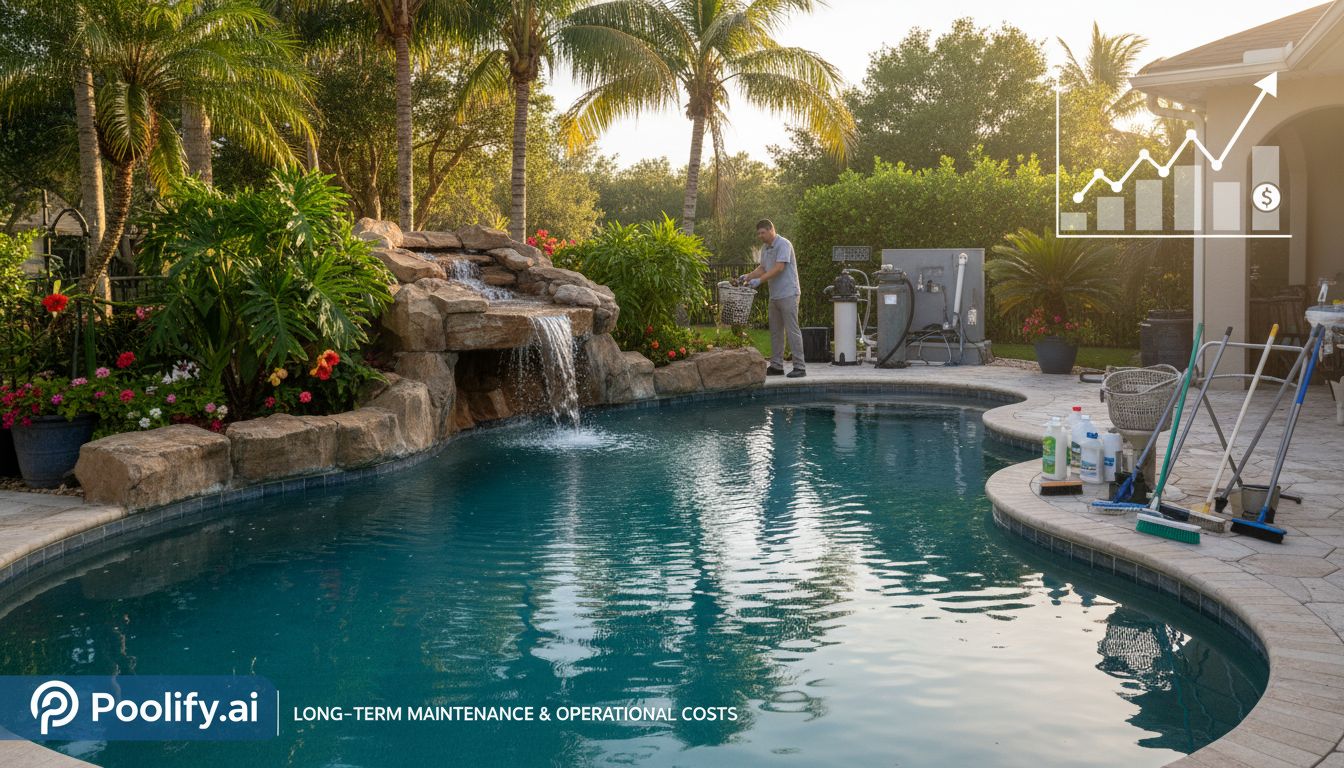
Understanding ongoing expenses provides a complete picture of the true inground pool florida cost over time. Florida’s climate creates specific maintenance requirements that influence long-term budgets.
Chemical and Water Treatment
Annual chemical costs for properly maintained Florida pools range from $400 to $1,200 depending on pool size, usage, and water chemistry challenges. Florida’s warm temperatures accelerate chemical consumption, requiring more frequent chlorine additions than cooler climates. Salt chlorination systems, costing $1,500-$2,500 installed, reduce ongoing chemical expenses by generating chlorine automatically from dissolved salt.
Florida’s frequent rainfall can dilute pool chemistry and introduce contaminants, requiring more frequent testing and adjustment. Professional water testing services cost $20-$40 per visit, though many pool stores offer free testing when purchasing chemicals. Home testing kits provide convenient monitoring between professional checks, costing $30-$100 annually for test strips or reagent kits.
Energy Expenses
Pool pump operation represents the largest ongoing energy expense, averaging $30-$120 monthly depending on pump type and runtime. Variable-speed pumps meeting Florida’s energy efficiency requirements significantly reduce these costs compared to older single-speed models. According to the U.S. Department of Energy, proper equipment sizing and operation scheduling can reduce pool energy costs by up to 75%.
Heating costs vary dramatically based on desired temperature and heating method. Heat pumps cost $50-$150 monthly during cooler months, while gas heaters can exceed $300 monthly with regular use. Solar heating provides free operation after installation, making it increasingly popular despite higher initial costs. Pool covers reduce heating expenses by 50-70% while also decreasing water evaporation and chemical consumption.
Professional Maintenance Services
Many Florida homeowners employ professional pool services, costing $80-$200 monthly for weekly cleaning, chemical balancing, and basic equipment checks. These services ensure proper maintenance while freeing homeowners from weekly tasks. Full-service contracts including chemical supply typically cost more but provide convenience and predictable budgeting.
Equipment repairs and replacements represent inevitable long-term expenses. Pump replacements cost $500-$1,500 every 8-12 years, while filter replacements range from $300-$800 every 5-10 years depending on type. Heater replacements cost $2,000-$5,000 every 10-15 years. Budgeting $500-$1,000 annually for equipment maintenance and eventual replacement ensures you’re prepared for these expenses.
Smart Strategies to Manage Inground Pool Florida Cost
Strategic planning and informed decision-making help you maximize value while controlling the inground pool florida cost. These proven approaches balance quality with budget considerations.
Timing Your Installation
Pool construction timing significantly impacts pricing and contractor availability. Fall and winter months typically offer better pricing as demand decreases, with potential savings of 10-15% compared to peak spring season. However, Florida’s year-round construction season means you’ll find available contractors any time, unlike northern states with weather-limited building windows.
Planning 6-12 months ahead allows you to research contractors thoroughly, obtain multiple detailed quotes, and potentially negotiate better terms. Rush projects often incur premium charges for expedited permitting and contractor schedule accommodation. Patient planning also enables you to coordinate pool installation with other home improvement projects, potentially sharing site preparation and landscaping costs.
Prioritizing Essential Features
Starting with core features and adding upgrades over time spreads costs across multiple years while ensuring you get a functional, enjoyable pool immediately. Essential elements include proper sizing, quality construction, adequate equipment, and code-compliant safety features. Premium additions like waterfalls, advanced lighting, or integrated spas can be added later without compromising structural integrity.
Some features integrate more economically during initial construction. Plumbing for future water features, electrical conduit for additional lighting, or rough-in for spa jets costs minimally during construction but becomes expensive to add later. Discussing future plans with your contractor allows them to include these preparations economically, even if you defer the actual feature installation.
Financing Options and Payment Strategies
Home equity loans or lines of credit typically offer the lowest interest rates for pool financing, with rates ranging from 6-10% in 2026. These options allow you to spread the inground pool florida cost over 5-15 years while potentially offering tax-deductible interest. Pool-specific financing through contractors or specialty lenders provides convenience but often carries higher interest rates of 8-15%.
Some contractors offer seasonal promotions or discounted rates for cash payment, potentially saving 3-5% on total project costs. However, never compromise contractor quality for price alone. Verify licensing, insurance, references, and previous work quality before committing to any contractor, regardless of pricing. Poor installation can cost tens of thousands in repairs, eliminating any initial savings multiple times over.
Selecting the Right Contractor
Contractor selection dramatically impacts both initial cost and long-term satisfaction. Florida requires pool contractors to hold state licenses, verifiable through the Department of Business and Professional Regulation. Always verify active licensing, insurance coverage, and complaint history before signing contracts. Requesting 5-10 references and actually contacting them provides invaluable insight into contractor reliability and quality.
Detailed written contracts protect both parties by clearly specifying materials, construction timeline, payment schedule, and warranty terms. Never accept verbal agreements or vague specifications. The contract should detail exact pool dimensions, equipment brands and models, decking materials and quantities, and all included features. Clear documentation prevents disputes and ensures you receive exactly what you’re paying for.
Learning about proper pool maintenance practices before installation helps you make informed decisions about equipment and features that simplify long-term care.
Frequently Asked Questions About Inground Pool Florida Cost
What is the average inground pool florida cost in 2026?
The average inground pool florida cost ranges from $35,000 to $100,000 in 2026, with most homeowners investing $50,000-$70,000 for a standard installation. This includes the pool shell, basic equipment, standard decking, and permitting. Luxury installations with premium features, larger sizes, or complex designs can exceed $150,000. Regional variations exist, with South Florida typically 15-25% higher than North Florida markets due to labor costs and geological challenges.
How much does pool maintenance cost annually in Florida?
Annual pool maintenance costs in Florida typically range from $1,200 to $3,600 depending on whether you self-maintain or hire professional services. DIY maintenance including chemicals, testing supplies, and minor equipment costs averages $800-$1,500 annually. Professional weekly service adds $960-$2,400 yearly. Energy costs for pump operation and heating add another $500-$2,000 annually. Budgeting approximately $2,000-$4,000 annually covers routine maintenance for most Florida pools.
Do pools increase home value in Florida?
Pools typically increase Florida home values by 5-8%, often recovering 50-75% of installation costs upon resale. This return exceeds national averages due to Florida’s pool-centric lifestyle and buyer expectations. However, value addition varies by neighborhood and price point. In communities where most homes have pools, not having one can actually decrease relative value. Luxury markets often expect resort-quality pools as standard amenities rather than premium upgrades.
What pool type offers the best value in Florida?
Fiberglass pools often provide the best overall value for Florida homeowners, balancing moderate initial costs ($35,000-$85,000) with low maintenance requirements and excellent durability in Florida’s climate. The smooth surface resists algae naturally, reducing chemical costs, while the flexible material adapts well to minor ground movement. However, “best value” depends on individual priorities. Concrete pools offer unlimited customization for those prioritizing unique designs, while vinyl pools provide the lowest entry cost for budget-conscious buyers.
How long does pool installation take in Florida?
Pool installation timelines in Florida vary by type and complexity. Fiberglass pools typically complete in 2-4 weeks from excavation to final inspection. Vinyl liner pools require 4-6 weeks for complete installation. Concrete and gunite pools take longest at 8-12 weeks due to curing requirements and multiple finishing stages. Permitting adds 2-4 weeks before construction begins. Weather delays, contractor scheduling, and inspection timing can extend these timeframes, so plan for potential variations when scheduling your project.
Key Takeaways
- Budget Comprehensively: The inground pool florida cost extends beyond the pool shell to include decking, equipment, landscaping, permits, and safety features. Plan for $35,000-$100,000 total investment depending on size, materials, and features selected.
- Consider Regional Variations: South Florida costs run 15-25% higher than North Florida due to geological challenges, labor costs, and market dynamics. Central Florida offers balanced pricing between these extremes, with competitive contractor availability.
- Factor Long-Term Expenses: Annual maintenance, energy costs, and eventual equipment replacement add $2,000-$4,000 yearly to ownership costs. Energy-efficient equipment and proper maintenance practices significantly reduce these ongoing expenses over time.
- Choose Materials Wisely: Fiberglass pools offer excellent value for Florida’s climate with low maintenance and quick installation. Concrete provides unlimited customization at premium prices, while vinyl offers the most affordable entry point with higher long-term maintenance.
- Prioritize Quality Installation: Selecting licensed, insured contractors with verified references prevents costly problems. Detailed contracts specifying exact materials, dimensions, and features protect your investment and ensure you receive the quality you’re paying for.
Conclusion
Understanding the complete inground pool florida cost picture empowers you to make confident decisions about this significant home improvement investment. Florida’s unique climate, geological conditions, and competitive market create both opportunities and challenges that informed homeowners can navigate successfully.
The initial investment of $35,000-$100,000 represents just the beginning of your pool ownership journey. Factoring in long-term maintenance, energy costs, and eventual equipment replacement provides realistic expectations and prevents budget surprises. However, the value extends beyond financial considerations to encompass lifestyle enhancement, property value increases, and years of family enjoyment.
Strategic planning, careful contractor selection, and informed feature prioritization help you maximize value while controlling costs. Starting with essential elements and adding premium features over time allows you to spread expenses while ensuring immediate functionality. Florida’s year-round swimming season means you’ll enjoy your investment more days per year than homeowners in virtually any other state.
The decision to install an inground pool represents a commitment to outdoor living and home enhancement that aligns perfectly with Florida’s lifestyle and climate. By understanding all cost components, regional variations, and long-term considerations, you position yourself to create a backyard oasis that delivers value, enjoyment, and satisfaction for decades to come.
For additional guidance on maintaining your investment, explore our comprehensive resources on effective pool cleaning strategies and selecting the right pool equipment for Florida’s unique environment.
References
- U.S. Census Bureau – Miami-Dade County Demographics and Economic Data
- U.S. Department of Energy – Swimming Pool Covers and Energy Efficiency Guidelines