
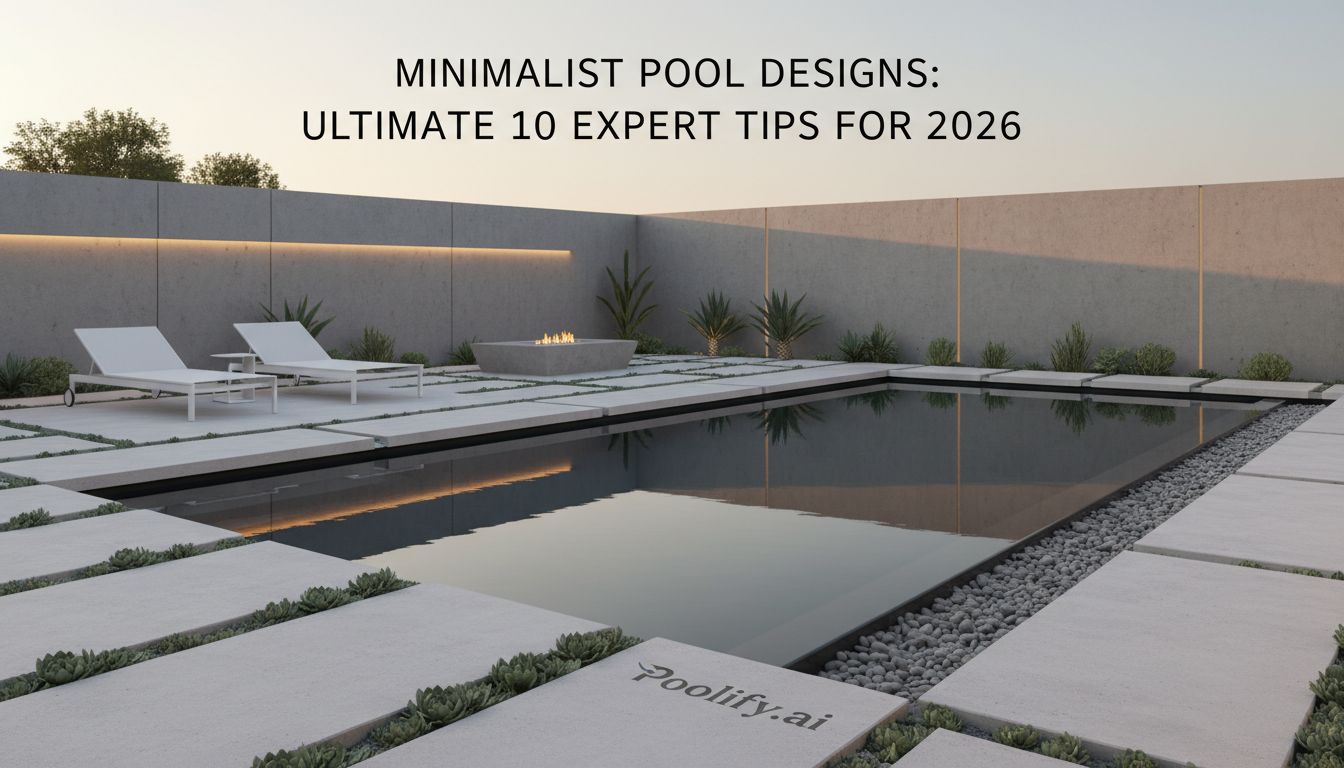
Introduction to Minimalist Pool Designs
Minimalist pool designs have revolutionized outdoor living spaces in 2026, offering homeowners a sophisticated approach to backyard aesthetics. These designs emphasize clean lines, functional simplicity, and timeless elegance that never goes out of style. Unlike traditional pools with ornate features and complex landscaping, minimalist pool designs focus on essential elements that create maximum visual impact with minimal clutter. This approach not only delivers stunning aesthetics but also reduces maintenance requirements and construction costs while maximizing the usable space around your pool area.
The growing popularity of minimalist pool designs reflects broader trends in contemporary architecture and lifestyle preferences. Homeowners increasingly value quality over quantity, seeking spaces that promote relaxation and mental clarity rather than visual overwhelm. Whether you’re planning a new pool installation or considering a renovation, understanding the principles of minimalist design will help you create an outdoor oasis that remains beautiful and functional for decades to come.
Core Principles of Minimalist Pool Designs
Understanding the fundamental principles behind minimalist pool designs is essential before diving into specific implementation strategies. These core concepts guide every decision from initial planning through final construction, ensuring your pool achieves that coveted minimalist aesthetic while remaining highly functional.
Simplicity and Clean Lines
The foundation of minimalist pool designs lies in geometric simplicity. Rectangular and square pools dominate this design philosophy, offering crisp edges and predictable forms that create visual harmony. These shapes integrate seamlessly with modern architecture and provide maximum swimming space within a given footprint. Curved elements, when used, are typically simple arcs rather than complex organic shapes, maintaining the overall sense of order and intentionality.
Clean lines extend beyond the pool itself to encompass surrounding hardscaping, fencing, and landscaping elements. Every component should contribute to a cohesive visual narrative without competing for attention. This doesn’t mean boring or sterile; rather, it means each element serves a clear purpose and enhances the overall composition.
Quality Materials Over Decorative Elements
Minimalist pool designs prioritize material quality and texture over decorative embellishments. Natural stone, high-grade concrete, and premium tiles become the stars of the show when allowed to speak for themselves. A beautifully finished concrete deck with subtle texture provides more visual interest than multiple competing materials fighting for attention.
According to the Department of Energy’s guidelines on pool efficiency, selecting quality materials also contributes to long-term sustainability and reduced maintenance costs. Durable finishes require less frequent replacement and maintain their appearance with minimal intervention, aligning perfectly with minimalist principles.
Negative Space as Design Element
Perhaps the most distinctive aspect of minimalist pool designs is the intentional use of negative space. Empty areas around the pool aren’t wasted space but rather essential components that allow the eye to rest and appreciate the pool’s form. This breathing room prevents visual clutter and creates a sense of spaciousness even in smaller yards.
Strategic placement of the pool within the landscape maximizes these negative spaces, creating visual balance and flow. The relationship between built elements and open areas becomes as important as the pool itself, with each defining and enhancing the other.
Essential Design Elements for Minimalist Pools
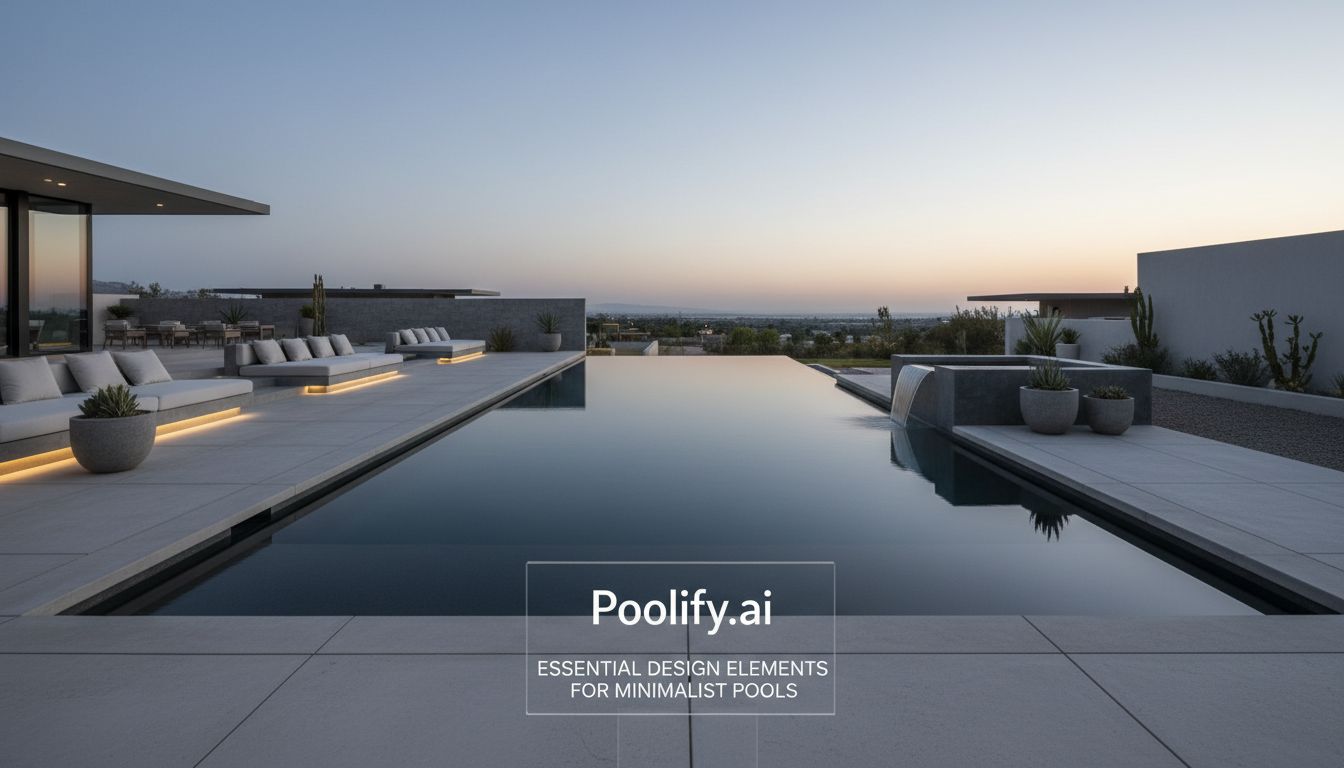
Creating successful minimalist pool designs requires careful attention to specific design elements that define the aesthetic. These components work together to achieve the clean, sophisticated look that characterizes minimalist outdoor spaces.
Geometric Pool Shapes
Rectangular pools remain the gold standard for minimalist pool designs in 2026. Their straight edges create strong architectural statements and integrate naturally with modern homes. Square pools work beautifully in compact spaces, offering maximum swimming area while maintaining geometric purity. L-shaped configurations can accommodate specific site constraints while preserving minimalist sensibilities through their angular precision.
The key is maintaining simple, readable forms that don’t require explanation. When someone views your pool, its shape should be immediately apparent and visually satisfying. Avoid complex curves, kidney shapes, or irregular forms that introduce visual complexity inconsistent with minimalist principles.
Monochromatic Color Palettes
Color restraint defines minimalist pool designs, with monochromatic or limited color schemes creating visual unity. Black, white, gray, and natural stone tones dominate successful minimalist pools. Dark pool finishes have surged in popularity, creating dramatic reflective surfaces that mirror the sky and surrounding landscape. These darker tones also make the water appear deeper and more mysterious.
Light-colored pools offer a different aesthetic, emphasizing brightness and the natural blue tones of water. Regardless of your choice, consistency is crucial. Select one primary color and allow subtle variations in tone and texture to provide visual interest without introducing competing hues.
Integrated Water Features
When minimalist pool designs incorporate water features, they’re typically integrated seamlessly into the pool structure rather than added as afterthoughts. Knife-edge or infinity edges create dramatic visual effects while maintaining clean lines. These features allow water to overflow into hidden catch basins, creating the illusion that the pool merges with the horizon or surrounding landscape.
Deck-level or perimeter overflow systems represent another minimalist approach, where water constantly flows over all edges into surrounding channels. This creates a mirror-like surface and eliminates the visual break of traditional coping, further enhancing the minimalist aesthetic. For more information on maintaining these systems, explore our guide on essential pool maintenance strategies.
Material Selection for Minimalist Pool Aesthetics
Material choices significantly impact the success of minimalist pool designs. The right materials enhance the clean aesthetic while providing durability and ease of maintenance that align with minimalist lifestyle values.
Pool Finishes and Surfaces
Polished concrete finishes have become increasingly popular for minimalist pool designs, offering smooth, seamless surfaces in custom colors. These finishes eliminate grout lines and create continuous visual planes that emphasize the pool’s geometric form. Glass tile in solid colors provides another excellent option, with reflective qualities that add subtle visual interest without pattern complexity.
Pebble finishes in monochromatic tones offer texture and natural beauty while maintaining color restraint. When selecting pebble finishes, choose varieties with consistent coloring rather than highly variegated options that introduce visual noise. The goal is creating a unified surface that reads as a single element rather than a collection of individual stones.
Decking Materials
Large-format pavers minimize grout lines and create expansive, uninterrupted surfaces around minimalist pool designs. Concrete pavers in neutral tones provide clean, contemporary looks with excellent durability. Natural stone like limestone, travertine, or bluestone offers organic beauty with the visual simplicity required for minimalist aesthetics.
Poured concrete decks with smooth or lightly textured finishes create seamless transitions between pool and landscape. These monolithic surfaces emphasize horizontal planes and geometric precision. Consider integral color concrete to eliminate the need for additional finishes or coatings that require ongoing maintenance.
Coping and Edge Details
Coping selection dramatically affects the visual impact of minimalist pool designs. Flush or knife-edge coping creates nearly invisible transitions between water and deck, emphasizing the pool’s geometric form. Cantilevered coping extends over the water, creating shadow lines that define the pool’s edge without visual bulk.
When traditional coping is necessary, select materials that match or complement the decking to minimize visual contrast. Thin profile coping maintains clean lines better than thick, bullnose styles that create prominent visual breaks. Every detail should support the overall minimalist vision rather than introducing complexity.
Landscaping Strategies for Minimalist Pool Designs
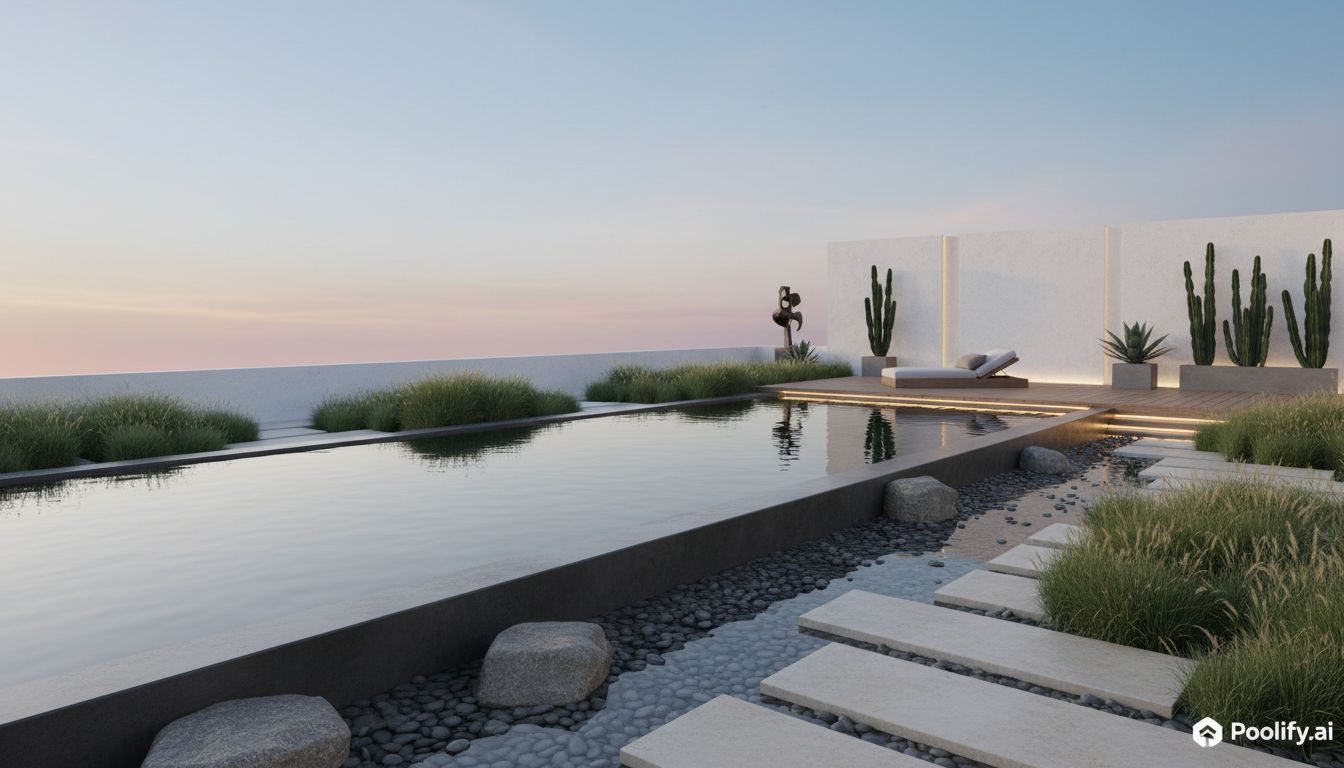
Landscaping around minimalist pool designs requires the same restraint and intentionality as the pool itself. The right plants and hardscaping elements enhance the minimalist aesthetic while providing necessary shade, privacy, and visual interest.
Strategic Plant Selection
Minimalist pool designs benefit from architectural plants with strong forms and limited color palettes. Ornamental grasses like Miscanthus or Pennisetum provide vertical interest and gentle movement without visual clutter. These grasses create soft textural contrast against hard pool edges while maintaining color restraint through green and tan tones.
Evergreen shrubs with dense, geometric forms work beautifully in minimalist settings. Boxwood, yew, and holly can be shaped into clean hedges or allowed to maintain natural rounded forms that echo the pool’s geometry. Avoid flowering plants with complex blooms or variegated foliage that introduces visual complexity inconsistent with minimalist principles.
Hardscaping Integration
Hardscaping elements should extend the pool’s minimalist aesthetic throughout the surrounding landscape. Simple retaining walls in concrete or natural stone create level changes without ornamental complexity. These walls define spaces and provide seating opportunities while maintaining visual simplicity.
Pathways connecting the pool to other outdoor areas should use materials consistent with the pool deck, creating visual continuity. Wide, straight paths emphasize the geometric nature of minimalist pool designs, while narrow, meandering paths introduce complexity that undermines the aesthetic. Every hardscaping decision should reinforce rather than contradict the minimalist vision.
Outdoor Furniture and Accessories
Furniture selection for minimalist pool designs emphasizes clean lines, quality materials, and functional simplicity. Modern lounge chairs and dining sets in neutral colors provide comfort without visual distraction. Avoid ornate wrought iron or heavily patterned cushions that compete with the pool’s clean aesthetic.
Limit accessories to essential items that serve clear purposes. A simple umbrella for shade, quality towel storage, and perhaps a minimalist outdoor shower are sufficient. Resist the temptation to fill space with decorative objects that clutter the visual field. Remember that negative space is a design element in minimalist pool designs, not a void requiring filling.
Lighting Design for Minimalist Pools
Proper lighting transforms minimalist pool designs from daytime attractions to evening showcases. The right lighting strategy enhances the pool’s geometry and materials while maintaining the clean aesthetic that defines minimalist design.
Underwater Lighting Approaches
LED pool lights have revolutionized underwater illumination for minimalist pool designs. These energy-efficient fixtures provide even, consistent lighting without the visual bulk of traditional pool lights. Position lights to emphasize the pool’s geometry rather than creating scattered points of illumination that fragment the visual field.
Perimeter lighting creates dramatic effects in minimalist pool designs, particularly when combined with infinity or knife edges. Lights positioned along the pool’s perimeter illuminate the water’s edge, creating a glowing outline that emphasizes geometric form. This approach works especially well with dark pool finishes, where the contrast between illuminated edges and dark water creates striking visual drama.
Landscape and Architectural Lighting
Landscape lighting around minimalist pool designs should be subtle and strategic. Uplighting architectural plants casts dramatic shadows and emphasizes plant forms without introducing visual clutter. Path lighting guides movement while maintaining safety, but fixtures should be minimal and positioned to avoid visual prominence.
Wall washing techniques illuminate vertical surfaces like retaining walls or house facades, creating backdrop illumination that defines space without competing with the pool. Avoid decorative string lights, lanterns, or other ornamental fixtures that contradict minimalist principles. Every light source should serve a functional purpose while contributing to the overall aesthetic.
Technology Integration in Modern Minimalist Pool Designs
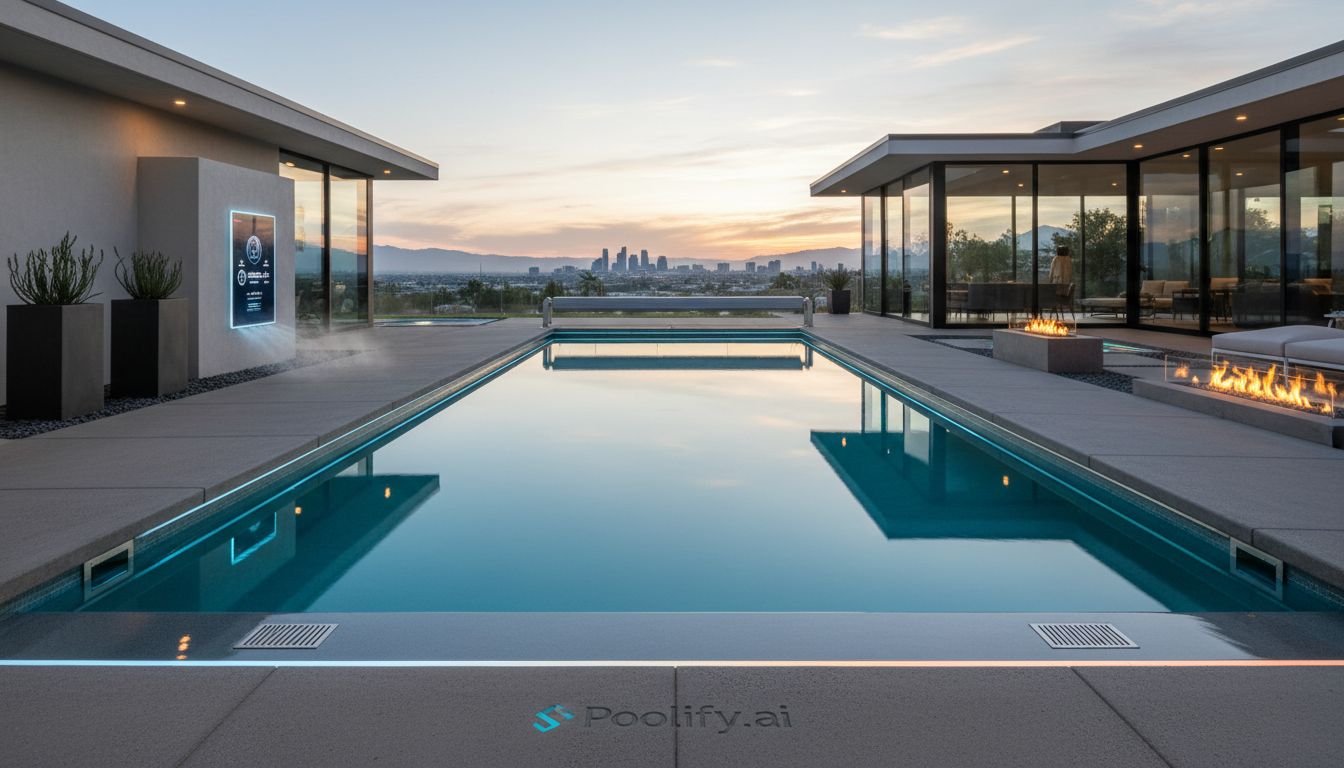
Contemporary minimalist pool designs seamlessly incorporate advanced technology while maintaining visual simplicity. Smart systems and automated features enhance functionality without compromising the clean aesthetic that defines minimalist design.
Automated Pool Systems
Smart pool controllers allow remote management of filtration, heating, and chemical systems from smartphone apps. These systems eliminate the need for visible control panels and timer boxes that clutter pool equipment areas. Integration with home automation platforms creates unified control of pool, lighting, and landscape irrigation systems.
Robotic pool cleaners have advanced significantly, offering efficient cleaning without visible hoses or manual intervention. These devices dock in discreet locations when not in use, maintaining the uncluttered appearance essential to minimalist pool designs. For comprehensive guidance on pool care technology, visit our resource on modern pool cleaning equipment.
Hidden Equipment and Infrastructure
Successful minimalist pool designs conceal necessary equipment behind screens, within equipment rooms, or below grade. Pool equipment pads should be positioned away from primary viewing areas and enclosed with simple fencing or walls that match surrounding architecture. Ventilation requirements must be met while maintaining visual discretion.
Deck drains, skimmers, and return fittings represent necessary functional elements that require thoughtful integration. Select fixtures in colors matching pool finishes to minimize visibility. Position these elements to maintain geometric symmetry when possible, making them part of the overall composition rather than random interruptions.
Budget Considerations for Minimalist Pool Designs
While minimalist pool designs can range from modest to luxurious budgets, understanding cost factors helps align your vision with financial reality. Minimalist doesn’t necessarily mean inexpensive, but the design philosophy can actually reduce costs in specific areas.
Cost-Saving Aspects of Minimalism
Minimalist pool designs often cost less than elaborate alternatives due to simplified construction. Rectangular pools are typically less expensive to build than complex shapes requiring custom formwork. Reduced landscaping complexity lowers installation costs and ongoing maintenance expenses. Fewer decorative elements mean less material purchasing and installation labor.
The emphasis on quality over quantity in minimalist pool designs means investing in fewer but better materials. While premium finishes and materials cost more per unit, using them sparingly can result in overall savings compared to covering large areas with mid-grade products. This approach also reduces long-term maintenance and replacement costs.
Investment Priorities
When budget constraints require compromises, prioritize investments that most significantly impact the minimalist aesthetic. Pool finish quality should rank high, as this surface dominates the visual experience. Decking materials deserve significant investment since they frame the pool and receive constant use and visibility.
Consider phased implementation for minimalist pool designs, starting with essential elements and adding refinements over time. Install the pool with quality finishes initially, then enhance landscaping and lighting in subsequent phases. This approach maintains design integrity while spreading costs across multiple budget cycles.
Common Mistakes to Avoid in Minimalist Pool Designs
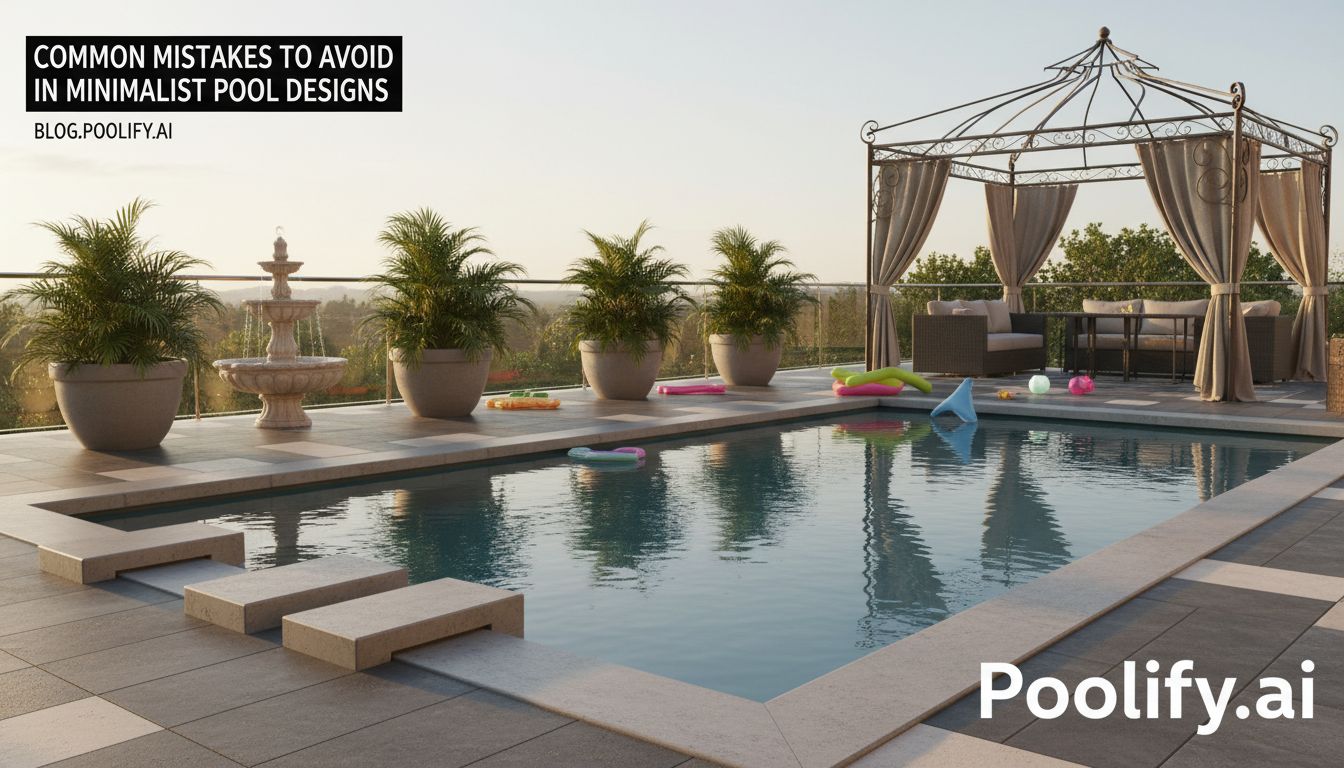
Even experienced designers sometimes stumble when creating minimalist pool designs. Understanding common pitfalls helps you avoid compromising your pool’s aesthetic and functional success.
Over-Simplification
Minimalism doesn’t mean eliminating all visual interest or creating sterile environments. Successful minimalist pool designs balance simplicity with subtle complexity through texture, material quality, and thoughtful composition. A pool surrounded by bare concrete with no landscaping or visual relief becomes austere rather than minimalist.
Include textural variation through material selection and strategic plant placement. Allow the inherent beauty of quality materials to provide visual interest without adding decorative elements. The goal is refined simplicity, not barren emptiness.
Inconsistent Material Choices
Mixing too many materials undermines minimalist pool designs by introducing visual complexity. Limit your material palette to two or three complementary options throughout the pool area. If you select concrete decking and natural stone coping, carry these materials through to surrounding hardscaping rather than introducing additional pavers, wood, or other surfaces.
Color consistency matters equally. Subtle tonal variations within a narrow range enhance visual interest, but jumping between warm and cool tones or introducing bright accent colors contradicts minimalist principles. Commit to your color palette and maintain consistency throughout the project.
Neglecting Functionality
Aesthetic purity shouldn’t compromise practical function in minimalist pool designs. Ensure adequate seating, shade, and storage even while maintaining visual simplicity. A beautiful pool that’s uncomfortable to use fails regardless of its aesthetic success. Integrate functional elements thoughtfully rather than eliminating them entirely.
Consider traffic flow, sun exposure, and privacy requirements during the design phase. These practical concerns should inform rather than contradict your minimalist vision. The best minimalist pool designs achieve both beauty and functionality without compromise.
Frequently Asked Questions About Minimalist Pool Designs
Are minimalist pool designs more expensive than traditional pools?
Minimalist pool designs can actually cost less than elaborate traditional pools due to simpler construction and reduced decorative elements. However, the emphasis on quality materials and precise execution can increase costs in specific areas. Overall expenses depend on material selections, size, and site conditions rather than the minimalist aesthetic itself. Many homeowners find that minimalist pool designs offer better long-term value through reduced maintenance and timeless appeal.
Do minimalist pools work in small backyards?
Minimalist pool designs excel in compact spaces by maximizing usable area and creating visual spaciousness through clean lines and negative space. The geometric simplicity of minimalist pools makes them ideal for small yards where complex shapes would feel cramped. Strategic material selection and restrained landscaping prevent visual clutter that makes small spaces feel even smaller. Many urban homeowners choose minimalist pool designs specifically because they work beautifully in limited square footage.
What pool shapes work best for minimalist designs?
Rectangular pools dominate minimalist pool designs due to their clean lines and architectural presence. Square pools work excellently in compact spaces while maintaining geometric purity. Simple L-shapes accommodate site constraints while preserving minimalist aesthetics through angular precision. Avoid kidney shapes, free-form designs, or complex curves that introduce visual complexity inconsistent with minimalist principles. The key is selecting shapes that are immediately readable and visually satisfying without requiring explanation.
How do I maintain the minimalist look over time?
Maintaining minimalist pool designs requires discipline and regular attention to prevent clutter accumulation. Establish storage solutions for pool equipment, toys, and accessories to keep them out of sight when not in use. Commit to regular cleaning and maintenance schedules that preserve material quality and appearance. Resist the temptation to add decorative elements that gradually compromise the minimalist aesthetic. Seasonal reviews help identify and remove items that have crept into the space over time.
Can I add personality to a minimalist pool design?
Minimalist pool designs accommodate personal expression through material selection, color choices, and subtle details rather than decorative embellishments. Select finishes and furnishings that reflect your preferences within the minimalist framework. Strategic plant selection and lighting design offer opportunities for personalization while maintaining clean aesthetics. The goal is refined expression of your taste rather than generic sterility. Quality and intentionality create personality in minimalist pool designs without visual clutter.
Key Takeaways for Minimalist Pool Designs
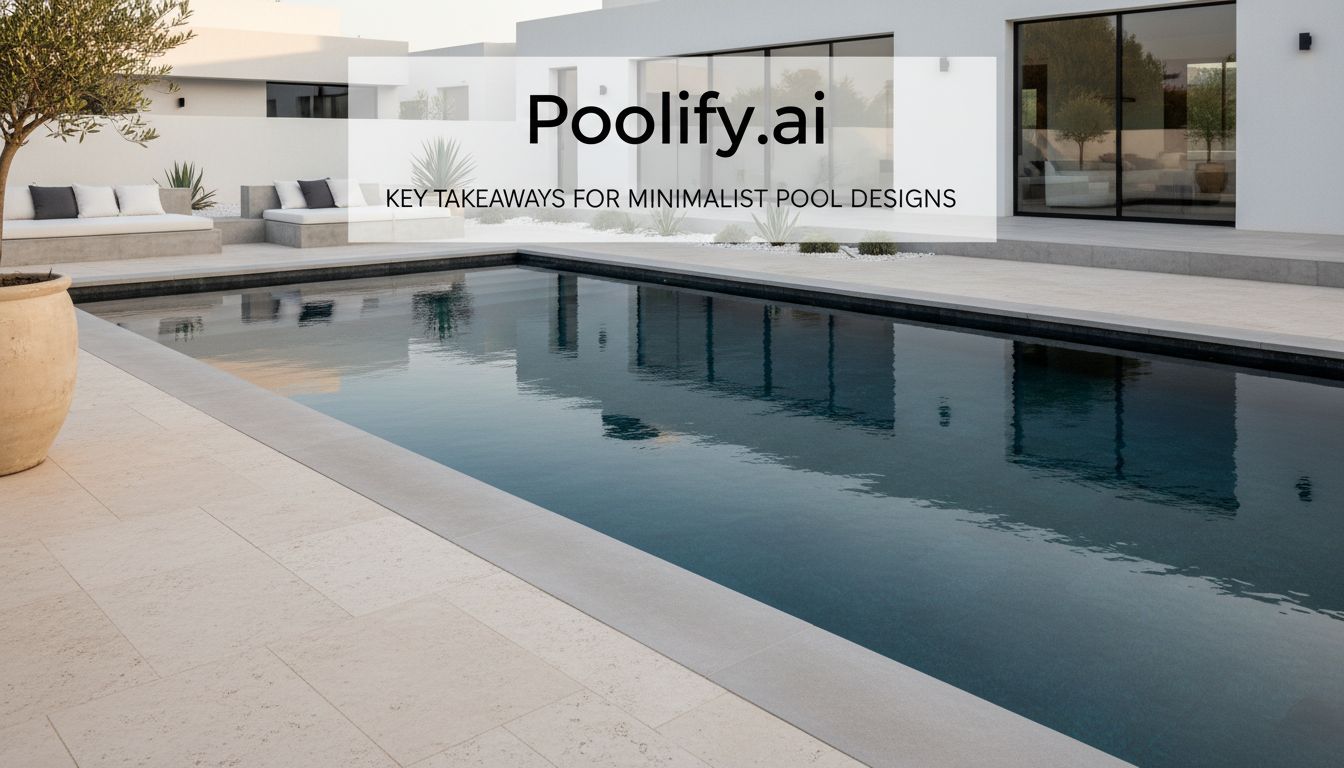
- Geometric Simplicity: Rectangular and square pool shapes create the strongest foundation for minimalist pool designs, offering clean lines that integrate seamlessly with modern architecture while maximizing functional swimming space.
- Material Quality Over Quantity: Invest in premium materials used sparingly rather than covering large areas with mid-grade products. Quality finishes, natural stone, and refined concrete create visual interest through inherent beauty rather than decorative complexity.
- Strategic Negative Space: Empty areas around the pool are essential design elements in minimalist pool designs, not wasted space. These breathing rooms prevent visual clutter and create a sense of spaciousness even in compact yards.
- Restrained Color Palettes: Monochromatic or limited color schemes using black, white, gray, and natural stone tones create visual unity essential to minimalist aesthetics. Dark pool finishes offer dramatic reflective qualities while light finishes emphasize brightness and natural water tones.
- Integrated Technology: Modern minimalist pool designs seamlessly incorporate smart systems and automated features while maintaining visual simplicity through hidden equipment and wireless controls that eliminate visible infrastructure.
Conclusion
Minimalist pool designs represent a sophisticated approach to outdoor living that prioritizes quality, simplicity, and timeless beauty. By embracing clean lines, geometric forms, and restrained material palettes, these pools create tranquil retreats that enhance rather than overwhelm outdoor spaces. The principles outlined in this guide provide a comprehensive framework for planning and executing successful minimalist pool designs in 2026.
Whether you’re working with an expansive estate or a compact urban yard, minimalist design principles adapt beautifully to create pools that remain visually striking and functionally superior for decades. The key lies in maintaining discipline throughout the design and construction process, resisting the temptation to add unnecessary elements that compromise the minimalist vision. By focusing on essential elements executed with precision and quality, you’ll create a pool that serves as a peaceful sanctuary and architectural statement.
As you move forward with your minimalist pool project, remember that successful minimalist pool designs balance aesthetic purity with practical functionality. Every decision should serve both beauty and purpose, creating spaces that are as enjoyable to use as they are beautiful to behold. The investment in thoughtful planning and quality execution pays dividends through reduced maintenance, timeless appeal, and the daily pleasure of living with truly refined outdoor spaces.
References
- U.S. Department of Energy – Swimming Pool Covers and Energy Efficiency: https://www.energy.gov/energysaver/swimming-pool-covers
- Centers for Disease Control and Prevention – Healthy Swimming: https://www.cdc.gov/healthywater/swimming/
- Poolify.ai – Pool Maintenance Tips: https://content.poolify.ai/pool-maintenance-tips/
- Poolify.ai – Pool Cleaning Equipment Guide: https://content.poolify.ai/pool-cleaning-equipment/