
Planning a swimming pool has never been easier thanks to the rise of the online pool designer. In 2026, homeowners are turning to digital design platforms to visualize their dream backyard oasis before breaking ground. These innovative tools combine professional-grade features with user-friendly interfaces, allowing you to experiment with shapes, sizes, materials, and features from the comfort of your home. Whether you’re considering a lap pool, a family-friendly design, or a luxurious resort-style retreat, an online pool designer empowers you to make informed decisions while avoiding costly mistakes.
What Is an Online Pool Designer and How Does It Work?
An online pool designer is a web-based application that enables homeowners to create detailed swimming pool designs without hiring an architect or visiting a showroom. These platforms use advanced 3D modeling technology to render realistic visualizations of your proposed pool within your actual backyard space. Most systems allow you to upload photos of your property or use satellite imagery to ensure accurate scale and placement.
The design process typically begins with selecting a basic pool shape from templates including rectangular, kidney, freeform, or geometric options. From there, you customize dimensions, depth configurations, and entry points like steps or beach entries. Advanced online pool designer platforms integrate material libraries where you can choose tile colors, coping styles, decking materials, and water features like waterfalls or fountains.
Modern systems also calculate approximate costs as you design, providing real-time budget feedback. This transparency helps homeowners understand how different choices impact the final price tag. Many platforms connect you directly with local contractors who can review your design and provide formal quotes, streamlining the transition from digital concept to physical construction.
Key Benefits of Using an Online Pool Designer in 2026
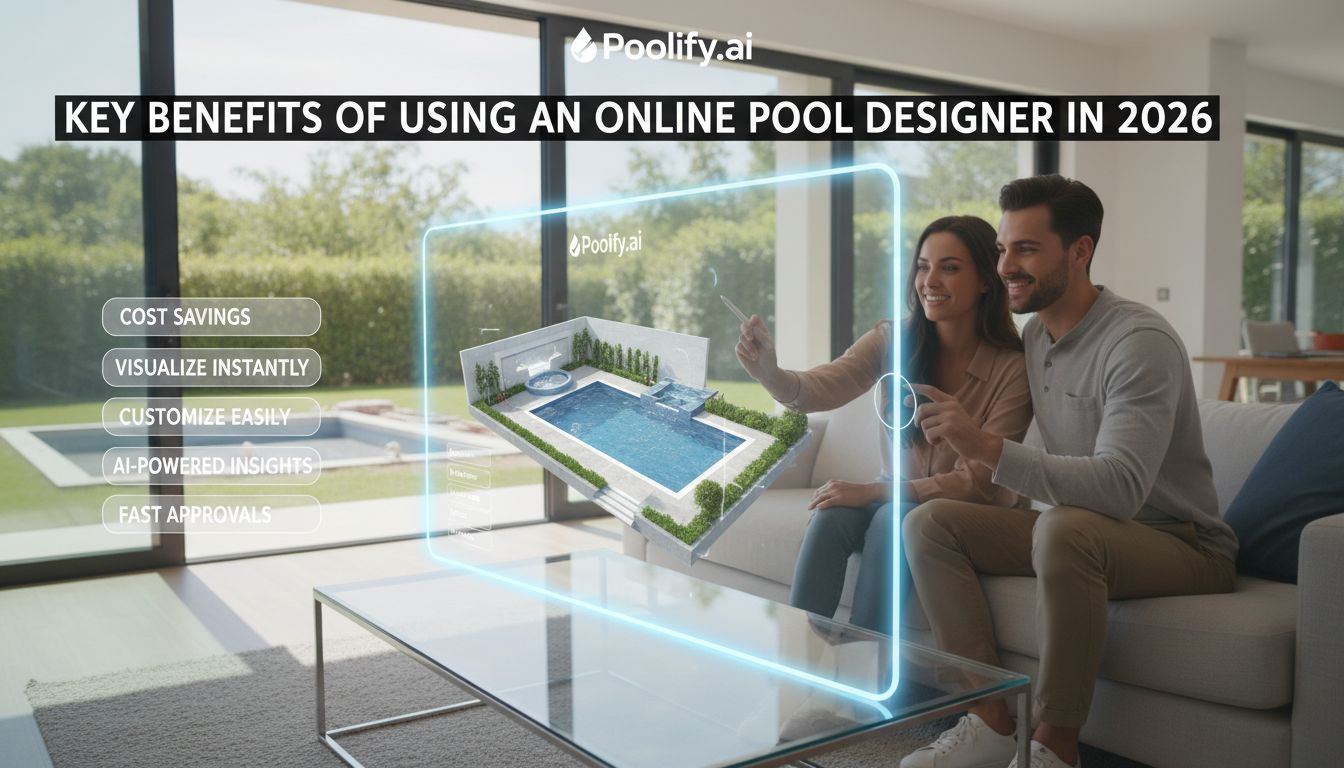
The advantages of digital pool planning extend far beyond convenience. Homeowners who use an online pool designer report higher satisfaction with their final results and fewer construction surprises. Here’s why these tools have become essential in modern pool planning.
Cost Savings and Budget Control
Traditional pool design consultations can cost hundreds to thousands of dollars before you even commit to a project. An online pool designer eliminates these upfront expenses while giving you complete control over budget parameters. By experimenting with different configurations digitally, you can identify cost-effective alternatives that maintain your vision without exceeding financial limits.
The transparency of real-time pricing helps prevent scope creep. When you see that upgrading from standard plaster to glass tile adds $15,000 to your project, you can make informed trade-offs. This level of financial clarity simply isn’t possible with traditional paper sketches or verbal descriptions.
Visualization Before Construction
One of the most significant advantages of an online pool designer is the ability to see photorealistic renderings of your completed project. These visualizations eliminate the guesswork inherent in interpreting blueprints or imagining how a pool will look in your specific space. You can view your design from multiple angles, at different times of day, and even simulate water effects.
This visualization capability proves invaluable when making decisions about landscaping integration, privacy screening, and outdoor living areas. You might discover that your initial pool placement blocks the best sunset views or creates awkward traffic patterns around your patio. Identifying these issues digitally costs nothing; discovering them mid-construction can derail timelines and budgets.
Time Efficiency and Flexibility
Unlike scheduling multiple in-person consultations, an online pool designer works on your schedule. You can design at midnight on a Tuesday or refine details over your morning coffee. This flexibility is particularly valuable for busy families who struggle to coordinate contractor meetings or for those in early planning stages who aren’t ready to commit to formal consultations.
The iterative design process happens at your pace. You can save multiple versions, compare options side-by-side, and share designs with family members for feedback. When you’re ready to move forward, you already have a refined concept rather than starting from scratch with a contractor.
Essential Features to Look for in an Online Pool Designer
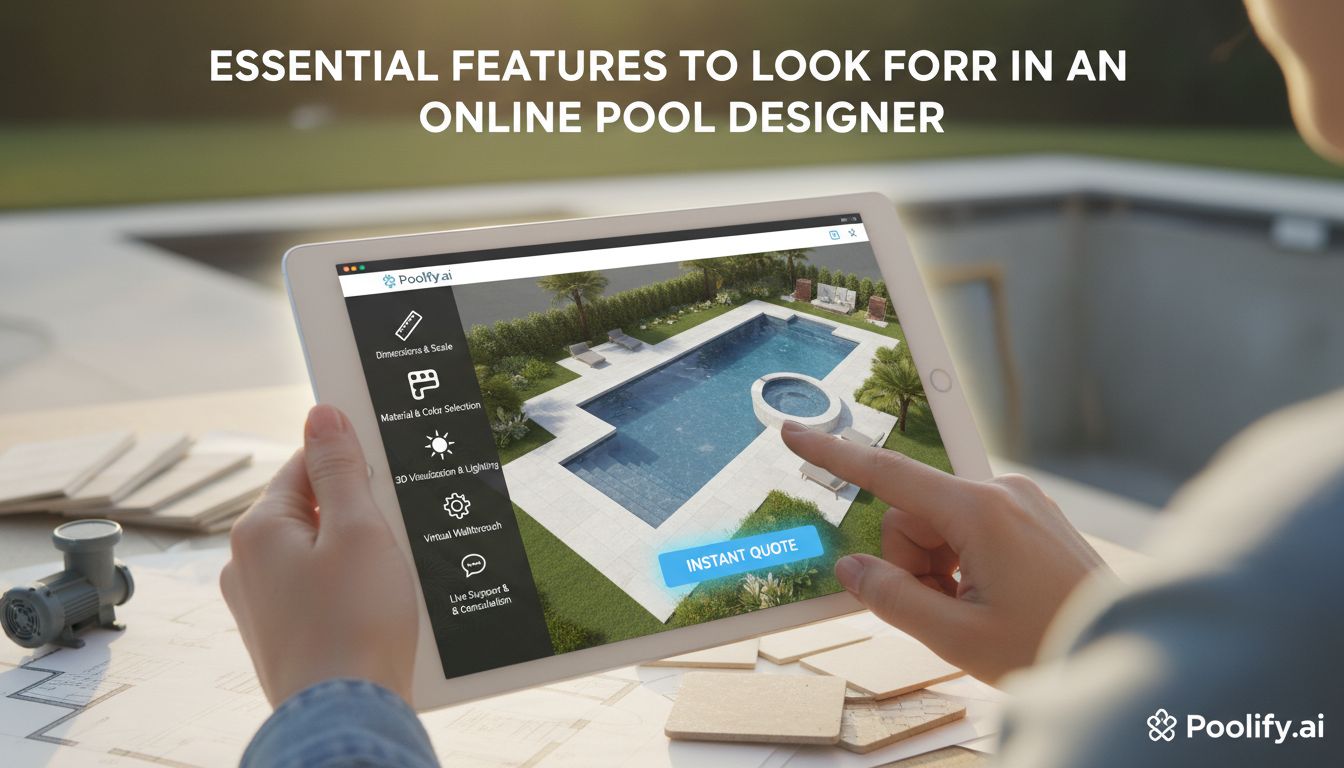
Not all digital design platforms offer the same capabilities. When evaluating options, prioritize these critical features to ensure you’re working with a tool that meets professional standards while remaining accessible to homeowners.
3D Rendering and Realistic Visualization
The best online pool designer platforms provide high-quality 3D rendering that accurately represents materials, lighting, and water effects. Look for systems that allow you to view your design in different lighting conditions and from various perspectives. This level of detail helps you understand how your pool will integrate with existing landscape features and architectural elements.
Advanced platforms offer augmented reality features that let you view your pool design overlaid on your actual backyard through your smartphone or tablet. This technology bridges the gap between digital concept and physical reality, giving you confidence in spatial relationships and scale.
Comprehensive Material Libraries
A quality online pool designer includes extensive libraries of actual products from reputable manufacturers. This means you’re not just selecting “blue tile” but choosing specific products with accurate colors, textures, and pricing. Material libraries should cover pool finishes, coping options, decking materials, tile selections, and equipment choices.
The ability to see how different material combinations work together prevents costly mismatches. You might love a particular tile color in isolation but discover it clashes with your home’s exterior when viewed in context. Digital experimentation solves these coordination challenges before ordering materials.
Accurate Cost Estimation Tools
Effective budget planning requires more than ballpark figures. The most useful online pool designer platforms provide itemized cost breakdowns that reflect current market prices in your region. These estimates should update dynamically as you modify your design, showing exactly how each change affects the bottom line.
According to U.S. Census Bureau construction data, accurate pre-construction cost estimates significantly reduce project overruns. Look for platforms that distinguish between must-have structural elements and optional upgrades, helping you prioritize spending where it matters most.
Integration with Professional Contractors
While an online pool designer empowers independent planning, the best platforms facilitate connections with qualified local contractors. Look for systems that allow you to share your completed design directly with pool builders for formal quotes. Some platforms maintain networks of pre-vetted contractors who are familiar with the software, streamlining the handoff process.
This integration ensures your digital design translates accurately into construction specifications. Contractors appreciate receiving detailed plans rather than vague concepts, and you benefit from competitive bidding based on identical specifications.
Step-by-Step Guide to Designing Your Pool Online
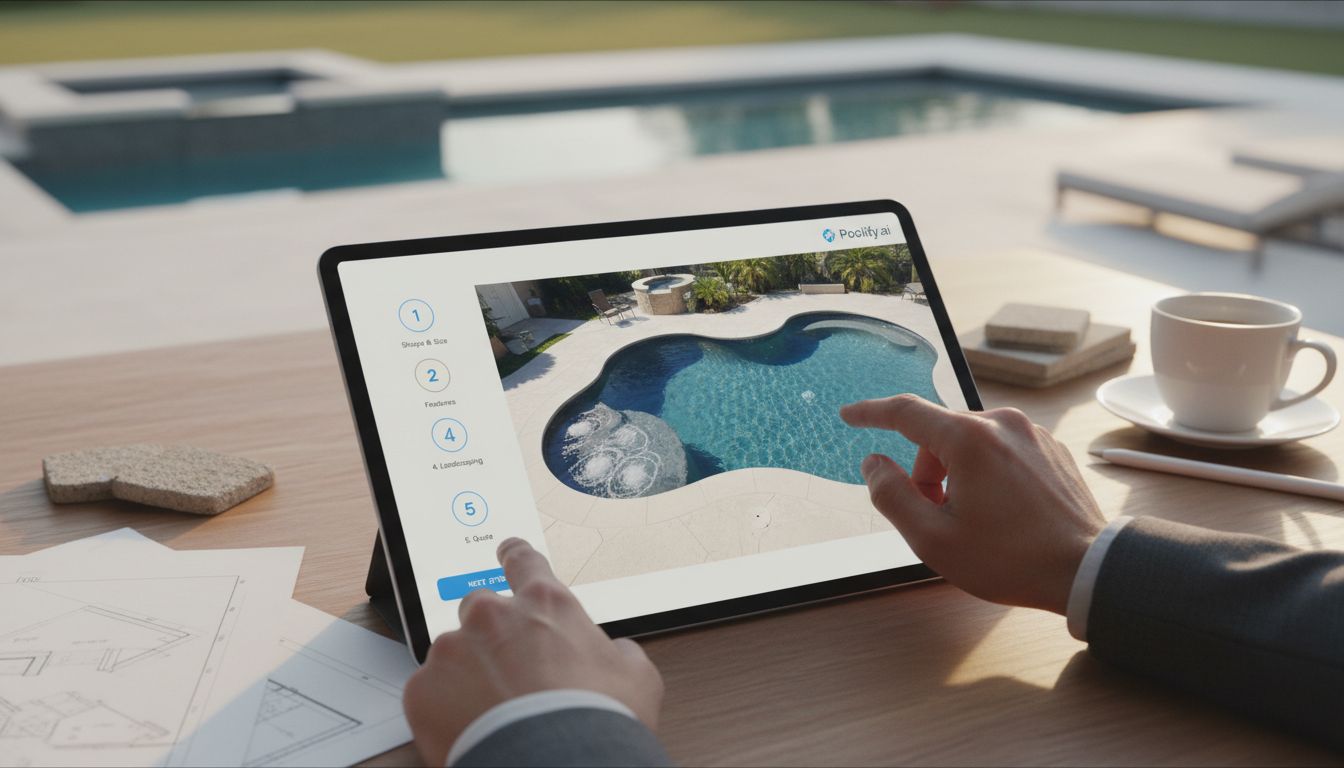
Creating a professional-quality pool design requires a systematic approach. Follow these steps to maximize the value of your online pool designer experience and ensure you’re considering all critical factors.
Step 1: Assess Your Space and Requirements
Before opening any design software, evaluate your yard carefully. Measure your available space, noting property lines, setback requirements, and existing features like trees, utilities, and structures. Most municipalities require pools to be a specific distance from property boundaries, typically 5-10 feet depending on local codes.
Consider sun exposure throughout the day, prevailing wind directions, and privacy from neighboring properties. Document these observations with photos and measurements. When you begin using your online pool designer, this information guides placement decisions and helps you create a design that works with your environment rather than against it.
Step 2: Define Your Pool’s Purpose
Different activities require different pool configurations. A lap pool for fitness needs a long, narrow design with consistent depth, while a family entertainment pool benefits from varied depths, steps, and play areas. Consider how you’ll actually use your pool and design accordingly.
If you’re planning to host gatherings, incorporate shallow areas for socializing and consider adding features like swim-up bars or built-in seating. Competitive swimmers need straight lanes of at least 45 feet. Families with young children prioritize gradual entries and shallow zones. Your online pool designer can accommodate all these requirements if you define them clearly from the start.
Step 3: Select Your Basic Shape and Size
Begin with a template that approximates your vision, then customize dimensions to fit your space and budget. Rectangular pools offer classic elegance and maximize swim space, while freeform designs create natural, organic aesthetics. Geometric shapes like L-shapes or lazy-L configurations work well for yards with unique dimensions or multiple use zones.
Size significantly impacts cost, with larger pools requiring more materials, chemicals, and energy to maintain. A typical residential pool ranges from 300 to 600 square feet of surface area. Use your online pool designer to experiment with different dimensions and see how they affect both appearance and budget.
Step 4: Customize Depth and Features
Depth configuration affects both functionality and cost. Pools with consistent depth are simpler and less expensive to construct, while variable depth designs with deep ends accommodate diving but increase excavation and material costs. Most residential pools range from 3.5 to 6 feet deep, with diving pools requiring at least 8 feet in the diving zone.
Add features systematically, starting with essentials like entry points and moving to enhancements like water features, lighting, and built-in elements. Your online pool designer shows how each addition affects aesthetics and budget, helping you prioritize investments.
Step 5: Choose Materials and Finishes
Material selection dramatically impacts both appearance and long-term maintenance. Pool finishes range from traditional plaster to premium options like pebble, glass tile, or quartz aggregates. Each offers different textures, colors, and durability characteristics. Use your online pool designer’s material libraries to compare options in the context of your complete design.
Don’t overlook decking materials, which frame your pool and integrate it with your broader landscape. Options include concrete, pavers, natural stone, and composite materials. Consider factors like heat retention, slip resistance, and maintenance requirements alongside aesthetics.
Step 6: Plan Surrounding Landscape
A pool doesn’t exist in isolation. The best online pool designer platforms include landscaping tools that help you plan the complete outdoor environment. Consider shade structures, privacy screening, outdoor kitchens, and seating areas. These elements transform a simple pool into a comprehensive outdoor living space.
Think about traffic flow between your home and pool, where you’ll place pool equipment, and how you’ll maintain privacy. Strategic landscaping can screen unsightly equipment, create intimate spaces, and enhance your design’s overall impact.
Common Mistakes to Avoid When Using an Online Pool Designer
Even powerful design tools can’t prevent poor decisions. Avoid these frequent pitfalls to ensure your digital design translates into a successful real-world project.
Ignoring Local Building Codes
Every municipality has specific requirements for pool construction, including setbacks, fencing, drainage, and permits. An online pool designer can’t automatically account for your local regulations. Before finalizing your design, research requirements through your city or county building department. Many areas require permits, inspections, and specific safety features like self-closing gates and pool alarms.
Failure to consider these requirements early can force expensive redesigns or prevent construction altogether. Some online pool designer platforms include code databases for major metropolitan areas, but always verify with local authorities before proceeding.
Underestimating Maintenance Requirements
Elaborate designs with multiple water features, intricate tile work, and complex shapes look stunning in renderings but may create maintenance challenges. Each fountain, spillway, or vanishing edge adds components that require cleaning, balancing, and eventual repair. Consider your willingness to perform or pay for ongoing maintenance when selecting features in your online pool designer.
Similarly, larger pools require more chemicals, more energy to heat and filter, and more time to clean. The U.S. Department of Energy notes that pool operating costs can exceed $1,000 annually for larger installations. Factor these ongoing expenses into your decision-making process.
Overlooking Site Conditions
Your online pool designer creates a perfect digital world, but your actual yard has slopes, drainage patterns, soil conditions, and underground utilities. Significant grading or retaining walls can add tens of thousands to construction costs. Before committing to a design, have your property evaluated for these practical concerns.
Rocky soil requires expensive excavation. High water tables may necessitate additional drainage systems. Mature trees might have root systems that interfere with pool placement. These site-specific challenges don’t appear in digital renderings but significantly impact feasibility and cost.
Designing Without Future Needs in Mind
Your family’s needs will evolve over the decades you’ll own your pool. Young children grow into teenagers with different entertainment preferences. Empty nesters may prioritize relaxation over active play. When using an online pool designer, consider how your design accommodates changing uses rather than optimizing solely for current requirements.
Features like removable basketball hoops, adjustable water features, and flexible lighting create adaptability. Avoid highly specialized designs that serve only narrow purposes unless you’re certain those needs won’t change.
Integrating Technology and Smart Pool Features
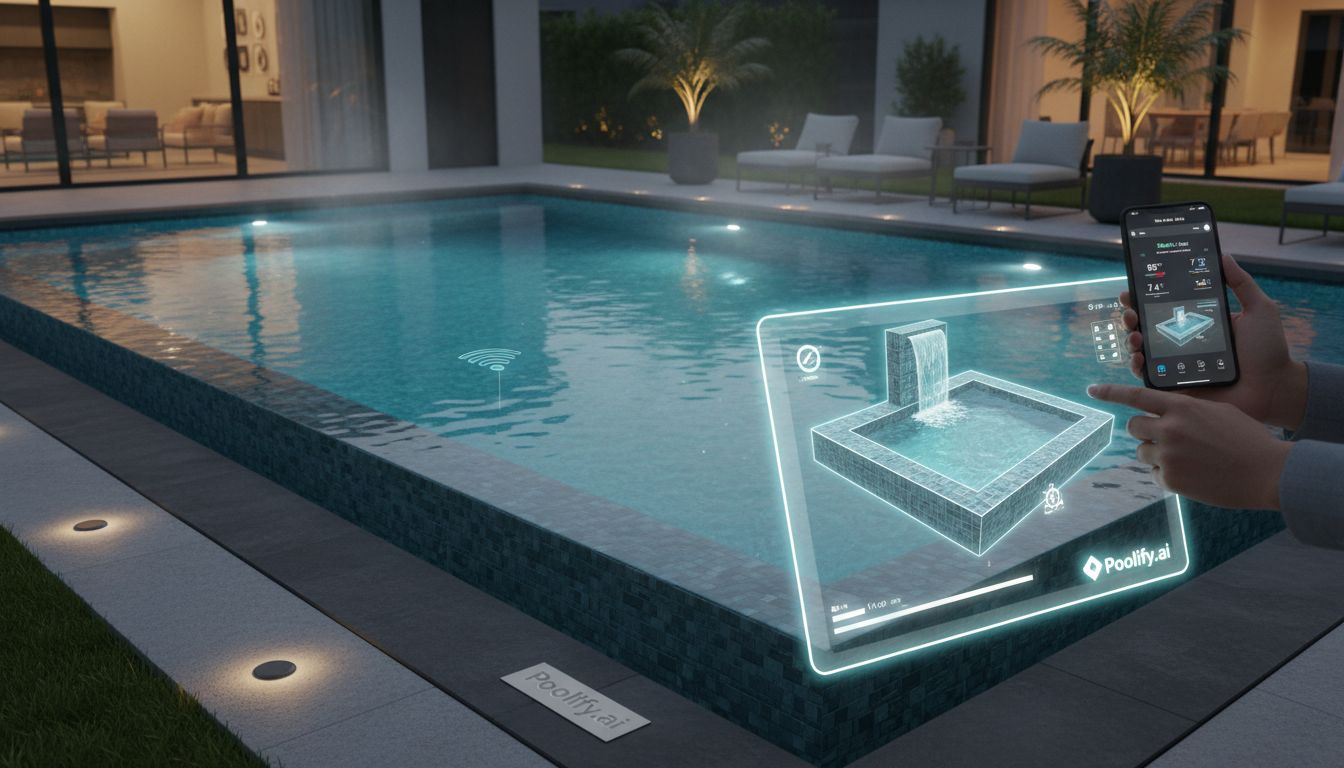
Modern pools incorporate technology that would have seemed futuristic just a few years ago. As you work with your online pool designer, consider these smart features that enhance convenience, efficiency, and enjoyment.
Automated Control Systems
Smart pool controllers manage filtration, heating, lighting, and chemical dosing from your smartphone. These systems learn your preferences, optimize energy usage, and alert you to maintenance needs. When designing with an online pool designer, plan for equipment placement that accommodates these control systems and their associated sensors.
Integration capabilities allow your pool to connect with broader home automation systems, enabling scenarios like “party mode” that adjusts lighting, temperature, and water features simultaneously. These technologies add relatively modest costs during construction but would be expensive to retrofit later.
Energy-Efficient Equipment
Variable-speed pumps, LED lighting, and solar heating dramatically reduce operating costs while minimizing environmental impact. Modern online pool designer platforms include these options in their equipment libraries with accurate cost comparisons between standard and high-efficiency alternatives.
While energy-efficient equipment costs more initially, the payback period is typically 2-4 years through reduced utility bills. Over a pool’s lifespan, these upgrades save thousands while providing superior performance.
Advanced Sanitization Systems
Beyond traditional chlorine, modern pools can use saltwater systems, UV sanitization, or ozone generation. Each approach offers different benefits regarding water quality, maintenance requirements, and operating costs. Your online pool designer should help you understand how these systems integrate with your overall design and their space requirements.
Saltwater systems are increasingly popular for their softer water feel and reduced chemical handling, though they require specific materials that resist salt corrosion. Plan for these considerations during the design phase rather than attempting conversions later.
Working with Contractors After Completing Your Online Design
Once you’ve finalized your design using an online pool designer, the next phase involves translating that digital concept into physical construction. This transition requires clear communication and realistic expectations.
Sharing Your Design Effectively
Export your completed design in formats contractors can easily use. Most professional online pool designer platforms generate PDF plans, 3D models, and itemized specifications. When requesting quotes, provide complete design packages to ensure contractors are bidding on identical scopes of work.
Include notes about priorities and flexibility. Indicate which elements are non-negotiable and where you’re open to contractor suggestions. Experienced builders often identify practical improvements or cost-saving alternatives that maintain your vision while addressing site-specific challenges.
Understanding Design Modifications
Even the most detailed online pool designer can’t account for every real-world variable. Contractors may recommend modifications based on soil conditions, local code requirements, or construction best practices. Approach these suggestions with an open mind while ensuring changes align with your core objectives.
Request explanations for any proposed deviations from your design. Legitimate modifications should improve functionality, reduce costs, or address unforeseen site conditions. Be wary of changes that simply suit the contractor’s preferences or capabilities without clear benefits to your project.
Monitoring Construction Progress
Your online pool designer creates a reference point throughout construction. Use your digital design to verify that the built pool matches specifications for dimensions, features, and materials. Regular site visits during construction help catch discrepancies early when corrections are simpler and less expensive.
Many homeowners find that having detailed plans from an online pool designer reduces miscommunication and ensures accountability. Contractors appreciate working from clear specifications, and you have documentation to reference if disputes arise.
Frequently Asked Questions About Online Pool Designers
How accurate are cost estimates from online pool designer tools?
Cost estimates from quality online pool designer platforms typically fall within 15-20% of actual construction costs, assuming accurate regional pricing data and no significant site complications. These estimates provide valuable budgeting guidance but should be confirmed with formal contractor quotes. Factors like soil conditions, access challenges, and local labor rates can cause variations that software can’t predict. Use online estimates for planning and comparison purposes, then obtain multiple contractor bids for final budgeting.
Can I use an online pool designer if I have an irregularly shaped yard?
Absolutely. Advanced online pool designer platforms excel at accommodating unusual spaces. You can input custom dimensions, work around existing features, and create freeform designs that maximize usable space in challenging lots. Many systems allow you to upload actual property surveys or photos, ensuring your design accounts for slopes, boundaries, and obstacles. Irregular yards often benefit most from digital design tools because visualizing how a pool fits requires more sophisticated planning than standard rectangular lots.
Do I need special software or can I use an online pool designer on any device?
Most modern online pool designer platforms are web-based applications that work through standard browsers on computers, tablets, and smartphones. No special software installation is required, though larger screens provide better design experiences for detailed work. Some platforms offer dedicated mobile apps with augmented reality features that let you visualize designs in your actual yard. Check system requirements before starting, but generally, any device with internet access and a current browser can run these tools effectively.
How long does it take to create a complete pool design online?
A basic pool design can be completed in 30-60 minutes using an online pool designer, while comprehensive plans with detailed landscaping, custom features, and multiple iterations might require several hours spread across multiple sessions. The advantage of digital tools is that you can save progress and return anytime. Most homeowners spend 3-5 hours total exploring options, refining details, and finalizing their design. This investment of time prevents costly mistakes and ensures you’re confident in your decisions before construction begins.
Will contractors accept designs created with online pool designer tools?
Professional pool contractors increasingly welcome designs from reputable online pool designer platforms. These digital plans provide clear specifications that facilitate accurate bidding and reduce miscommunication. However, contractors will still need to conduct site evaluations and may suggest modifications based on practical construction considerations. Choose online design tools that generate professional-quality output including dimensions, material specifications, and equipment requirements. Contractors are more receptive to detailed digital plans than hand-drawn sketches or verbal descriptions.
Key Takeaways
- Online pool designer tools democratize professional-quality pool planning, allowing homeowners to create detailed designs without expensive consultations while maintaining complete creative control over their projects.
- Real-time visualization and cost estimation prevent expensive mistakes by revealing how design choices affect both aesthetics and budget before construction begins, enabling informed trade-offs and priority setting.
- Successful digital design requires accurate site assessment and realistic expectations about local codes, site conditions, and maintenance requirements that software alone cannot fully address.
- Modern online pool designer platforms integrate smart technology and energy-efficient features that reduce long-term operating costs while enhancing convenience and environmental sustainability.
- Digital designs facilitate clear contractor communication and competitive bidding when exported as professional specifications, streamlining the transition from concept to construction while ensuring accountability.
Conclusion
The evolution of the online pool designer has fundamentally changed how homeowners approach swimming pool projects in 2026. These powerful platforms combine professional-grade design capabilities with user-friendly interfaces, empowering you to create, visualize, and refine your ideal pool before investing in construction. By taking advantage of realistic 3D rendering, comprehensive material libraries, and accurate cost estimation, you can make informed decisions that balance aesthetics, functionality, and budget.
The key to success lies in using your online pool designer as a planning tool while recognizing its limitations. Digital designs provide invaluable visualization and cost guidance, but they must be complemented by professional site evaluations, local code research, and experienced contractor input. When you approach pool planning with this balanced perspective, an online pool designer becomes an essential resource that saves time, reduces costs, and increases confidence throughout your project.
Whether you’re in the early dreaming stages or ready to request contractor quotes, investing time in thorough digital design pays dividends throughout construction and for decades of pool ownership. Start exploring online pool design tools today to transform your backyard vision into a detailed plan. For additional guidance on maintaining your investment once construction is complete, review our comprehensive pool maintenance resources and seasonal care recommendations to ensure your pool remains beautiful and functional for years to come.
References
- U.S. Census Bureau – Construction Data: https://www.census.gov/construction/chars/completed.html
- U.S. Department of Energy – Swimming Pool Heating: https://www.energy.gov/energysaver/swimming-pool-heating