
Introduction to Outdoor Pool Kitchen Design
An outdoor pool kitchen transforms your backyard into a complete entertainment destination where swimming, dining, and socializing converge seamlessly. In 2026, homeowners are investing more than ever in creating functional outdoor living spaces that extend their home’s usable square footage. An outdoor pool kitchen eliminates the constant back-and-forth between your indoor kitchen and pool area, allowing you to prepare meals, serve drinks, and entertain guests without missing a moment of the action. This comprehensive guide covers everything you need to know about planning, designing, and building an outdoor pool kitchen that enhances your property value while creating unforgettable memories with family and friends.
Why Build an Outdoor Pool Kitchen in 2026
The outdoor pool kitchen trend continues to gain momentum in 2026 as homeowners prioritize outdoor living experiences. According to the National Association of Realtors, outdoor kitchens can return up to 71% of their project cost at resale, making them one of the smartest home improvement investments. Beyond financial returns, an outdoor pool kitchen creates a resort-style atmosphere in your own backyard, reducing the need for expensive vacations while providing year-round entertainment value.
Modern outdoor pool kitchen designs integrate seamlessly with pool landscapes, offering convenience that fundamentally changes how you use your outdoor space. Instead of leaving guests by the pool to prepare food indoors, you remain part of the gathering while grilling, mixing drinks, or plating appetizers. This social connectivity makes every pool day feel like a special event, whether you’re hosting a large party or enjoying a quiet family dinner.
The health and wellness benefits also drive outdoor pool kitchen popularity in 2026. Families spend more time outdoors, encouraging physical activity through swimming while enjoying freshly prepared meals in the open air. The combination promotes healthier lifestyles and stronger family bonds, making your outdoor pool kitchen an investment in wellbeing as much as property value.
Essential Components of an Outdoor Pool Kitchen
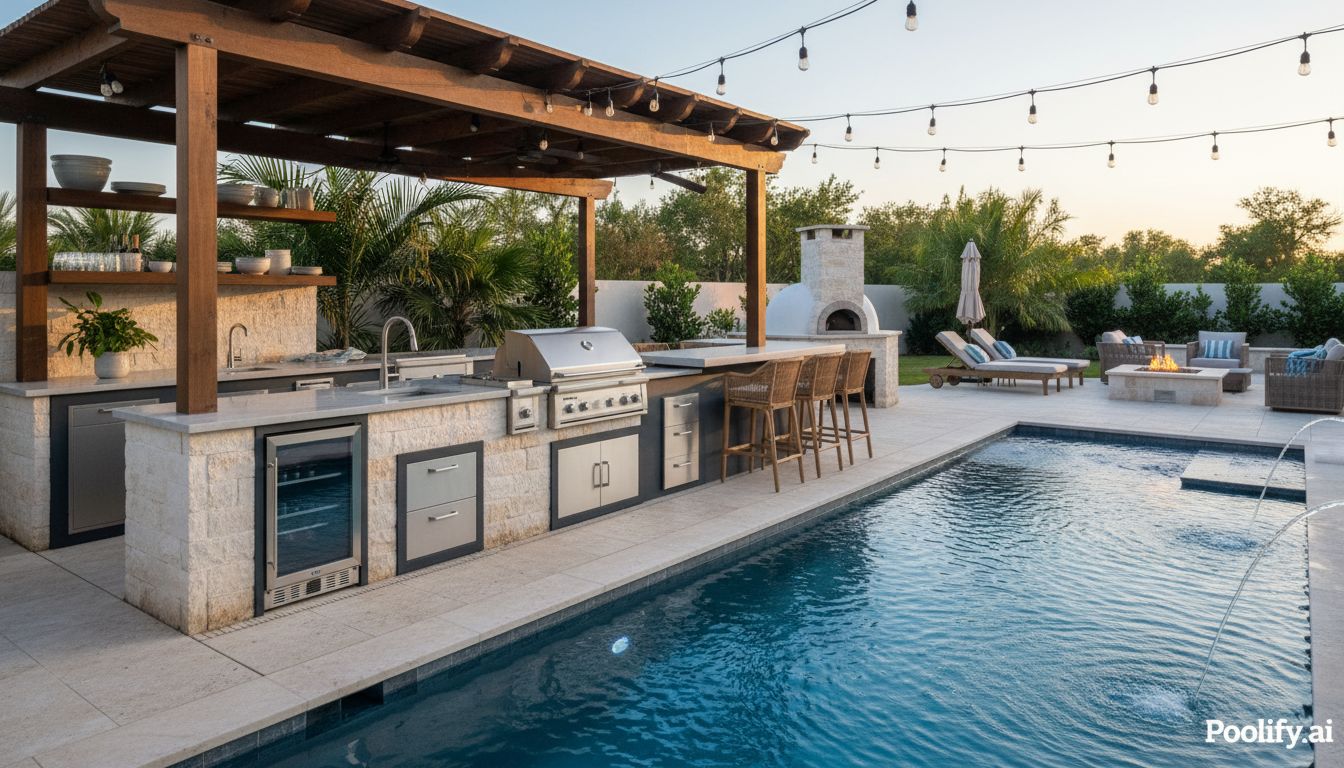
Every functional outdoor pool kitchen requires specific components that work together to create a complete cooking and entertaining space. Understanding these elements helps you prioritize your budget and design choices effectively.
Cooking Appliances and Equipment
The centerpiece of any outdoor pool kitchen is the cooking equipment. Built-in grills remain the most popular choice, with options ranging from basic gas models to premium infrared systems with multiple burners and rotisserie attachments. In 2026, smart grills with temperature monitoring and app connectivity are becoming standard features that serious outdoor cooks demand.
Beyond the primary grill, consider adding a side burner for sauces and side dishes, a pizza oven for authentic wood-fired cooking, or a smoker for low-and-slow barbecue. Your outdoor pool kitchen cooking capabilities should match your culinary interests and entertaining style. If you frequently host large gatherings, investing in commercial-grade equipment ensures you can prepare food efficiently for crowds.
Refrigeration and Storage
Proper refrigeration keeps beverages cold and ingredients fresh without indoor trips. Outdoor-rated refrigerators withstand temperature fluctuations and humidity better than standard appliances. Your outdoor pool kitchen should include at least one refrigerator or beverage center, with larger designs incorporating separate units for food and drinks.
Storage cabinets protect cooking utensils, serving dishes, and pool supplies from weather exposure. Choose marine-grade stainless steel or polymer cabinets specifically designed for outdoor use. Adequate storage in your outdoor pool kitchen eliminates clutter and keeps everything organized within arm’s reach.
Sink and Plumbing
A functional sink is non-negotiable for food preparation and cleanup. Your outdoor pool kitchen sink requires proper plumbing connections with hot and cold water lines. Position the sink strategically between cooking and prep areas for maximum efficiency. Include a faucet with a pull-down sprayer for versatility when washing vegetables or rinsing dishes.
Countertop Workspace
Generous counter space accommodates food preparation, plating, and serving. Plan for at least three feet of counter space on either side of your grill in your outdoor pool kitchen layout. Durable materials like granite, concrete, or porcelain tile withstand outdoor conditions while providing attractive work surfaces. Consider incorporating different counter heights for varied tasks and accessibility.
Outdoor Pool Kitchen Layout and Design Strategies
Strategic layout planning ensures your outdoor pool kitchen functions efficiently while complementing your pool area aesthetics. The right design maximizes workflow, safety, and social interaction.
The Kitchen Work Triangle Principle
Apply the classic kitchen work triangle concept to your outdoor pool kitchen design. Position your grill, sink, and refrigerator in a triangular arrangement with each leg measuring between four and nine feet. This configuration minimizes unnecessary movement while preparing meals, creating an efficient workspace that professional chefs prefer.
In linear outdoor pool kitchen designs where space constraints prevent a true triangle, arrange appliances in logical sequence: refrigerator for ingredient storage, prep counter, sink for washing, cooking surface, and plating area. This assembly-line approach works well for narrow spaces alongside pool decks.
Zones for Different Activities
Divide your outdoor pool kitchen into distinct zones for cooking, preparation, serving, and socializing. The cooking zone centers around heat-producing appliances and requires proper ventilation and clearance from combustible materials. Position this area downwind from primary seating to prevent smoke from bothering guests.
The preparation zone needs ample counter space and proximity to the sink and refrigerator. This becomes your command center for chopping, mixing, and assembling dishes. The serving zone acts as a buffer between cooking and dining areas, with counter space for buffet-style presentation or bar seating where guests can interact with the chef.
Traffic Flow Considerations
Your outdoor pool kitchen layout must account for traffic patterns between the pool, dining area, and indoor access points. Maintain clear pathways at least three feet wide to prevent congestion when multiple people use the space simultaneously. Avoid positioning the outdoor pool kitchen where it blocks natural circulation routes or creates safety hazards near pool edges.
Consider sight lines from your outdoor pool kitchen to the pool area, especially if you have young children. Parents appreciate being able to monitor swimmers while preparing food. Similarly, position seating areas where guests can comfortably converse with the cook without impeding workflow.
Material Selection for Durability and Style
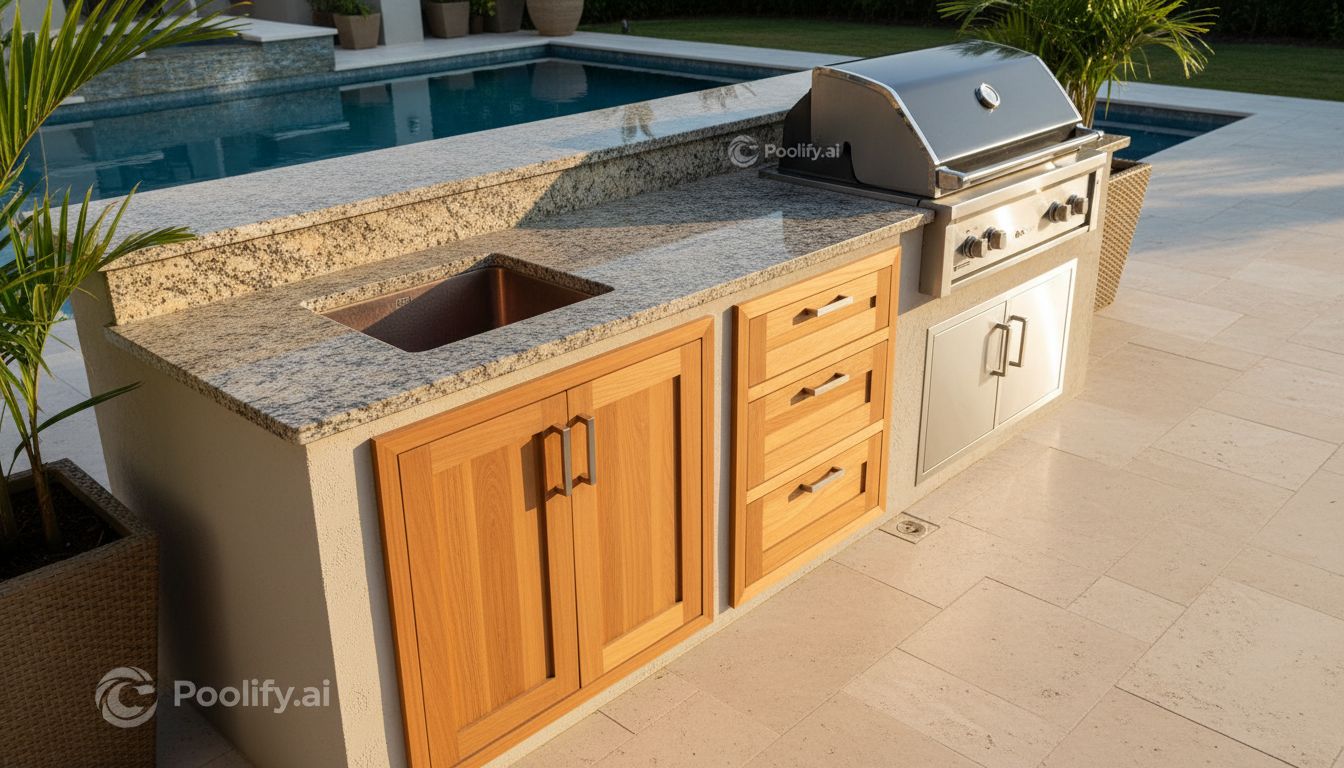
Choosing appropriate materials ensures your outdoor pool kitchen withstands weather exposure while maintaining visual appeal for years. Different components require specific material considerations based on their function and exposure levels.
Countertop Materials
Granite remains the most popular outdoor pool kitchen countertop choice, offering natural beauty, heat resistance, and durability. Sealed properly, granite resists staining and weathering while providing a premium appearance. Concrete countertops offer customization with integrated features like drainboards or trivets, though they require periodic resealing to prevent moisture damage.
Porcelain tile creates stunning outdoor pool kitchen surfaces with endless design possibilities and superior weather resistance. Large-format tiles minimize grout lines that can trap dirt and moisture. Avoid marble and limestone in outdoor applications, as these porous stones deteriorate quickly when exposed to pool chemicals and weather.
Cabinet and Storage Materials
Marine-grade stainless steel cabinets provide the ultimate durability for outdoor pool kitchen storage. Look for 304-grade stainless with welded construction rather than fastened panels. Polymer cabinets offer excellent weather resistance at lower price points, with modern designs that mimic wood grain or solid colors.
Avoid wood cabinets in outdoor pool kitchen installations unless you’re prepared for intensive maintenance. Even treated woods deteriorate faster outdoors, especially in humid climates or near pool water. If you prefer wood aesthetics, consider synthetic alternatives that replicate natural grain without the maintenance burden.
Flooring and Surface Options
The flooring around your outdoor pool kitchen must provide slip resistance when wet while complementing your overall design. Textured concrete offers affordability and customization through stamping, staining, or scoring. Ensure proper slope for drainage away from cooking areas and toward pool deck drains.
Natural stone pavers create elegant outdoor pool kitchen floors with inherent slip resistance. Choose stones with textured or flamed finishes rather than polished surfaces that become hazardous when wet. Porcelain pavers designed for outdoor use combine beauty with exceptional durability and minimal maintenance requirements.
Budget Planning for Your Outdoor Pool Kitchen Project
Understanding cost factors helps you plan a realistic budget for your outdoor pool kitchen while identifying opportunities to maximize value. Prices vary significantly based on size, materials, appliances, and complexity.
Cost Breakdown by Component
Basic outdoor pool kitchen installations start around $5,000 for simple setups with a built-in grill, small refrigerator, and minimal counter space. Mid-range projects typically cost $15,000 to $30,000, including quality appliances, ample counter space, storage cabinets, and a sink with plumbing. Luxury outdoor pool kitchen designs exceed $50,000 with premium appliances, extensive stonework, custom features, and professional landscaping integration.
Appliances represent the largest variable expense in your outdoor pool kitchen budget. Entry-level built-in grills start at $1,500, while professional-grade models reach $10,000 or more. Outdoor refrigerators range from $800 for basic models to $3,500 for high-capacity units with advanced features. Plan to allocate 40-50% of your total outdoor pool kitchen budget to appliances and fixtures.
Labor and Installation Costs
Professional installation ensures your outdoor pool kitchen meets building codes and functions reliably. Labor costs vary by region but typically account for 30-40% of total project expenses. Complex installations requiring gas line extensions, electrical work, and plumbing connections increase labor costs substantially.
Consider phased construction if budget constraints limit your initial outdoor pool kitchen scope. Start with essential components like the grill and basic counter space, then add refrigeration, sinks, and expanded storage in future phases. This approach spreads costs over time while providing immediate functionality.
Money-Saving Strategies
Strategic planning reduces outdoor pool kitchen costs without sacrificing quality. Purchase appliances during holiday sales or clearance events for significant savings. Consider previous-year models that offer identical functionality at reduced prices when manufacturers introduce new lines.
Handle some tasks yourself if you have appropriate skills. Simple projects like assembling modular outdoor pool kitchen islands or installing backsplash tiles can reduce labor costs. However, hire licensed professionals for gas, electrical, and plumbing work to ensure safety and code compliance. Check out our pool renovation costs guide for additional budget planning insights.
Permitting, Codes, and Safety Requirements
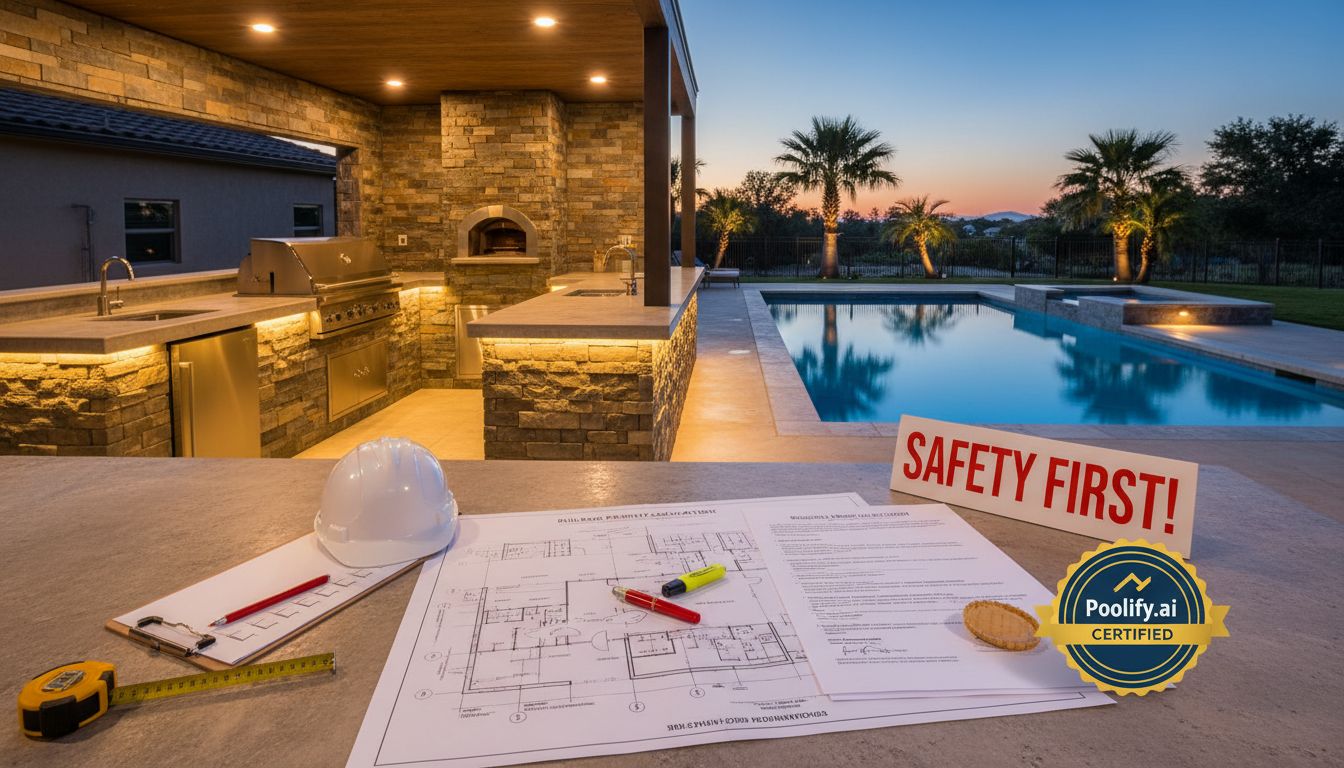
Building code compliance protects your investment and ensures your outdoor pool kitchen operates safely. Requirements vary by jurisdiction, making local research essential before starting construction.
Building Permits and Inspections
Most jurisdictions require building permits for outdoor pool kitchen installations involving permanent structures, gas lines, electrical work, or plumbing. Contact your local building department early in the planning process to understand specific requirements. Permit costs typically range from $100 to $500 depending on project scope and location.
Inspections occur at various construction stages, including foundation work, rough plumbing and electrical, gas line installation, and final completion. Schedule inspections promptly to avoid project delays. Working with licensed contractors familiar with local codes streamlines the permitting process for your outdoor pool kitchen.
Safety Clearances and Ventilation
Fire safety codes mandate specific clearances between cooking appliances and combustible materials. Most jurisdictions require at least 12 inches of clearance on sides and 36 inches above grills. Your outdoor pool kitchen design must incorporate these clearances to pass inspection and operate safely.
Proper ventilation prevents dangerous gas accumulation if you use natural gas or propane appliances. While outdoor settings provide natural airflow, enclosed or covered outdoor pool kitchen areas may require exhaust hoods similar to indoor installations. Consult with your contractor and local fire marshal about ventilation requirements for your specific design.
Electrical and Gas Line Safety
Electrical outlets in your outdoor pool kitchen must have ground fault circuit interrupter (GFCI) protection to prevent shock hazards near water. Position outlets at least six feet from pool edges and install weatherproof covers rated for outdoor use. Dedicated circuits prevent overloading when running multiple appliances simultaneously.
Gas line installations require licensed professionals and proper leak testing before use. Your outdoor pool kitchen should include an accessible emergency shut-off valve clearly marked for quick access. Install gas appliances according to manufacturer specifications with proper clearances and ventilation to prevent carbon monoxide buildup.
Enhancing Your Outdoor Pool Kitchen With Smart Features
Modern technology elevates outdoor pool kitchen functionality and convenience. Strategic integration of smart features creates a more enjoyable cooking and entertaining experience.
Lighting Design
Comprehensive lighting extends outdoor pool kitchen usability into evening hours. Task lighting above cooking and prep surfaces provides adequate illumination for safe food handling. Under-cabinet LED strips eliminate shadows on work surfaces while creating ambient glow.
Accent lighting highlights architectural features and creates ambiance in your outdoor pool kitchen. Install lights in toe kicks, along backsplashes, or within glass-front cabinets for dramatic effect. Dimmable systems allow you to adjust brightness based on activity and mood. For more outdoor lighting ideas, explore our pool lighting design guide.
Audio and Entertainment Systems
Weather-resistant speakers bring music and entertainment to your outdoor pool kitchen area. Bluetooth connectivity allows easy streaming from smartphones or tablets. Position speakers strategically to provide even coverage without overwhelming conversation volumes.
Mount a weatherproof television in covered areas of your outdoor pool kitchen for watching sports or cooking shows while preparing meals. Ensure proper protection from direct sun exposure and moisture to extend electronics lifespan.
Smart Appliance Integration
Connected grills with temperature probes and smartphone apps take the guesswork out of outdoor cooking. Monitor internal meat temperatures remotely and receive alerts when food reaches target doneness. Some smart grills in modern outdoor pool kitchen setups offer guided cooking programs that automatically adjust heat for perfect results.
Smart refrigerators with internal cameras let you check contents from your smartphone while shopping. Voice-activated assistants integrated into your outdoor pool kitchen help with recipe lookup, timer setting, and music control hands-free while cooking.
Maintenance and Winterization Tips
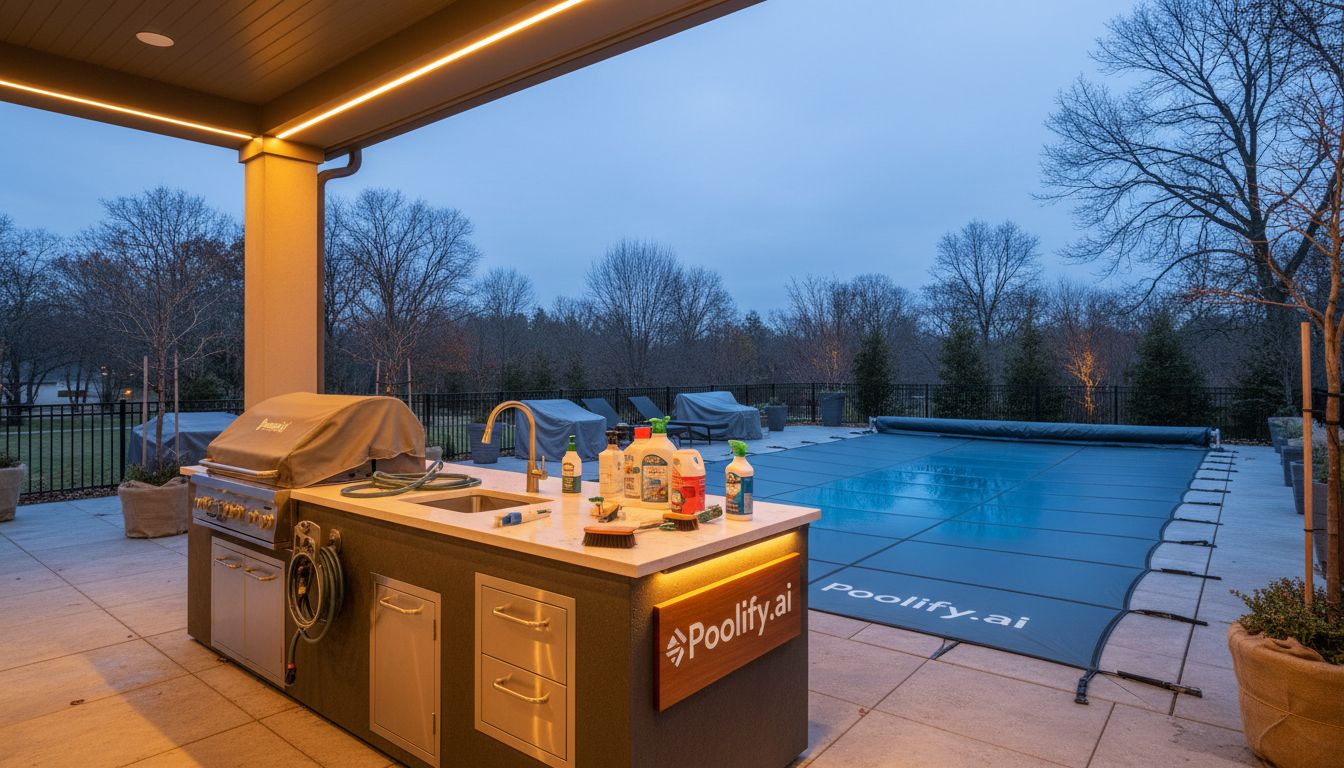
Regular maintenance preserves your outdoor pool kitchen investment and ensures reliable performance. Seasonal care requirements vary based on climate and materials.
Routine Cleaning and Care
Clean your outdoor pool kitchen surfaces after each use to prevent grease buildup and staining. Stainless steel appliances require specialized cleaners that remove fingerprints while protecting the finish. Wipe down countertops with appropriate cleaners for your material type, avoiding harsh chemicals that can damage sealers.
Deep clean your outdoor pool kitchen monthly, including degreasing grill grates, cleaning burner ports, and checking gas connections for leaks. Inspect cabinet hinges and drawer slides for corrosion, lubricating moving parts to ensure smooth operation. Remove debris from sink drains and check faucet aerators for mineral buildup.
Seasonal Winterization
In cold climates, proper winterization prevents freeze damage to your outdoor pool kitchen plumbing. Shut off water supply lines and drain all pipes, faucets, and the sink trap before temperatures drop below freezing. Blow out remaining water with compressed air to ensure complete drainage.
Protect appliances with weatherproof covers designed for outdoor use. Clean and oil grill grates before covering to prevent rust formation during storage. Remove propane tanks and store them upright in well-ventilated areas away from living spaces. Disconnect and store removable components like warming racks and rotisserie attachments indoors.
Apply protective treatments to natural stone countertops before winter. Check sealer integrity and reapply if water no longer beads on the surface. Cover your entire outdoor pool kitchen structure if possible to minimize weather exposure during months of non-use.
Frequently Asked Questions About Outdoor Pool Kitchens
How much does an outdoor pool kitchen typically cost?
Outdoor pool kitchen costs range from $5,000 for basic setups to over $50,000 for luxury installations. Most homeowners spend between $15,000 and $30,000 for a well-equipped outdoor pool kitchen with quality appliances, adequate counter space, storage, and a sink. Final costs depend on size, materials, appliance quality, and whether you include features like pizza ovens, bars, or extensive stonework.
What appliances are essential for an outdoor pool kitchen?
The essential appliances for a functional outdoor pool kitchen include a built-in grill, refrigerator or beverage center, and a sink with hot and cold water. These three components provide core cooking, food storage, and cleanup capabilities. Additional appliances like side burners, ice makers, warming drawers, and pizza ovens enhance functionality but aren’t strictly necessary for basic outdoor pool kitchen operations.
Can I build an outdoor pool kitchen myself?
DIY outdoor pool kitchen construction is possible for homeowners with construction experience, but certain tasks require licensed professionals. You can handle framing, some masonry work, and appliance installation if you have appropriate skills. However, hire licensed contractors for gas line installation, electrical work, and plumbing connections to ensure safety and code compliance. Many homeowners choose a hybrid approach, completing some tasks themselves while contracting specialized work.
How do I protect my outdoor pool kitchen from weather damage?
Protect your outdoor pool kitchen by choosing weather-resistant materials like stainless steel, granite, and outdoor-rated appliances. Apply appropriate sealers to porous surfaces like natural stone and concrete. Use appliance covers when not in use, and consider building a pergola or roof structure over your outdoor pool kitchen for additional protection. In freezing climates, winterize plumbing systems by draining all water lines before cold weather arrives.
Do I need a permit to build an outdoor pool kitchen?
Most jurisdictions require building permits for outdoor pool kitchen installations involving permanent structures, gas lines, electrical work, or plumbing. Requirements vary by location, so contact your local building department before starting construction. Permit costs typically range from $100 to $500. Working without proper permits can result in fines, forced removal, and complications when selling your property. Always verify local requirements for your specific outdoor pool kitchen project.
Key Takeaways
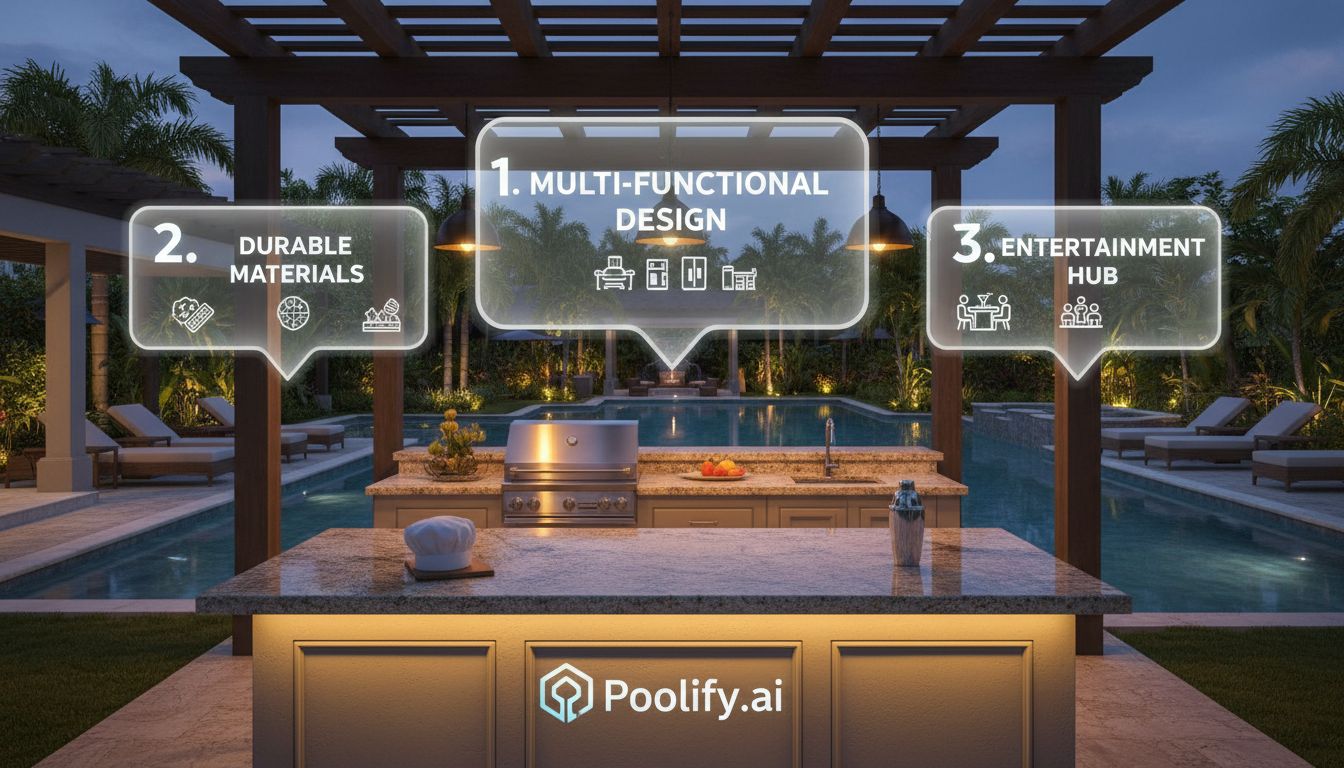
- Strategic Planning Pays Off: A well-designed outdoor pool kitchen requires careful consideration of layout, appliances, materials, and budget to create a functional space that enhances your property value and lifestyle.
- Invest in Quality Materials: Choose weather-resistant materials like marine-grade stainless steel, granite countertops, and outdoor-rated appliances to ensure your outdoor pool kitchen withstands environmental exposure and provides years of reliable service.
- Follow Building Codes: Obtain necessary permits and work with licensed professionals for gas, electrical, and plumbing installations to ensure your outdoor pool kitchen meets safety standards and local regulations.
- Prioritize Workflow Efficiency: Apply kitchen design principles like the work triangle and activity zones to create an outdoor pool kitchen that functions smoothly whether you’re preparing simple snacks or elaborate meals for large gatherings.
- Plan for Maintenance: Regular cleaning and seasonal winterization protect your outdoor pool kitchen investment, preventing weather damage and ensuring appliances perform reliably throughout their expected lifespan.
Conclusion
An outdoor pool kitchen represents a significant investment that transforms your backyard into a complete entertainment destination. By carefully planning your layout, selecting durable materials, choosing appropriate appliances, and following proper installation procedures, you create a functional cooking space that enhances every pool gathering. The convenience of preparing meals steps away from the water eliminates the constant indoor trips that interrupt social time, allowing you to remain fully present with family and guests.
As you move forward with your outdoor pool kitchen project in 2026, remember that successful installations balance aesthetics with functionality. Consider how you’ll actually use the space, prioritize features that align with your cooking style and entertaining habits, and invest in quality components that withstand your climate conditions. Whether you’re grilling burgers for family swim days or preparing elaborate dinners for poolside parties, a well-designed outdoor pool kitchen becomes the centerpiece of outdoor living that you’ll enjoy for decades.
Start your planning process by assessing your available space, establishing a realistic budget, and researching local building requirements. Consult with experienced contractors who specialize in outdoor pool kitchen installations to refine your vision and avoid common pitfalls. With proper planning and execution, your outdoor pool kitchen will deliver exceptional value, creating a backyard oasis that family and friends will cherish for years to come.
References
- National Association of Realtors – https://www.nar.realtor/research-and-statistics