
Introduction to Pool Chemistry for New Pool Owners
Starting your journey as a pool owner in 2026 can feel overwhelming, especially when it comes to maintaining proper water chemistry. This pool chemical guide for beginners will walk you through everything you need to know about keeping your pool water safe, clean, and inviting. Understanding pool chemicals isn’t just about aesthetics—it’s essential for protecting your health, preserving your pool equipment, and maximizing your investment. Whether you’ve just installed your first pool or inherited one with a new home, this pool chemical guide for beginners provides the foundation you need to confidently manage your pool’s chemical balance throughout the year.
Why Pool Chemistry Matters: The Foundation of This Pool Chemical Guide for Beginners
Before diving into specific chemicals, it’s crucial to understand why pool chemistry deserves your attention. Improperly balanced water creates an environment where bacteria and algae thrive, potentially causing illness to swimmers. According to the CDC’s recreational water guidelines, maintaining proper chemical levels prevents the spread of waterborne diseases and ensures safe swimming conditions.
Beyond health concerns, poor water chemistry damages your pool infrastructure. Unbalanced pH levels corrode metal fixtures, deteriorate plaster surfaces, and reduce the lifespan of your filtration system. The right chemical balance protects your investment while keeping maintenance costs manageable. This pool chemical guide for beginners emphasizes prevention over correction, saving you time and money in the long run.
Water chemistry also directly impacts swimmer comfort. Burning eyes, skin irritation, and that harsh chlorine smell actually indicate chemical imbalance—not too much chlorine as many believe. Properly balanced water feels smooth and has minimal odor, creating the pleasant swimming experience you envision.
The Core Chemicals Every Pool Chemical Guide for Beginners Should Cover
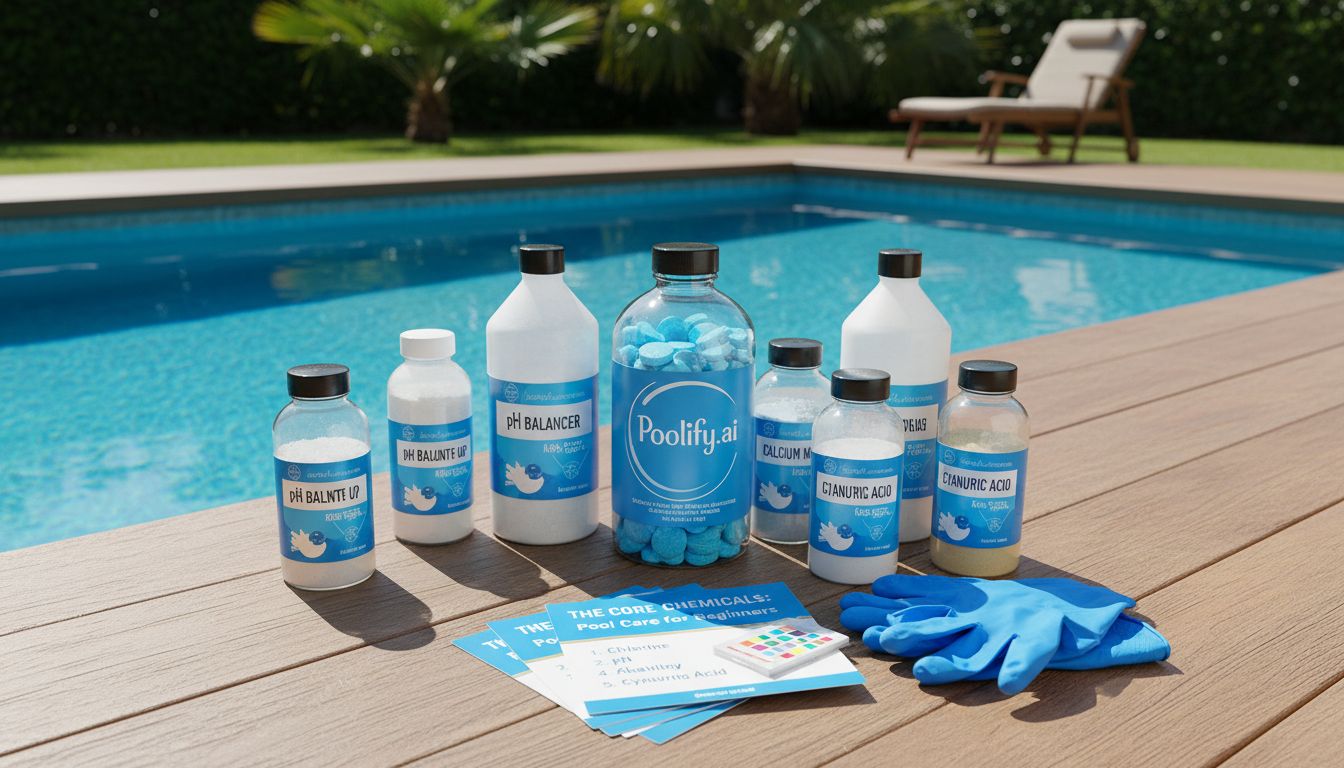
This section of our pool chemical guide for beginners introduces the essential chemicals you’ll work with regularly. Understanding each chemical’s purpose helps you make informed decisions about your pool maintenance routine.
Chlorine: Your Primary Sanitizer
Chlorine remains the most common pool sanitizer in 2026, killing bacteria, viruses, and other contaminants. Available in several forms—tablets, granules, liquid, and salt systems—chlorine maintains safe swimming conditions when kept at proper levels. For most residential pools, maintaining 1-3 parts per million (ppm) of free chlorine provides adequate sanitation. This pool chemical guide for beginners recommends starting with stabilized chlorine tablets for ease of use, though understanding all options helps you choose what works best for your situation.
pH Adjusters: Balancing Acidity and Alkalinity
pH measures how acidic or basic your water is on a scale from 0 to 14. Pool water should maintain a pH between 7.2 and 7.8 for optimal chlorine effectiveness and swimmer comfort. pH increasers (typically sodium carbonate) raise low pH, while pH decreasers (muriatic acid or sodium bisulfate) lower high pH. This pool chemical guide for beginners emphasizes that pH affects every other aspect of water chemistry, making it your first priority when balancing.
Alkalinity Adjusters: The pH Buffer
Total alkalinity acts as a buffer, preventing rapid pH fluctuations. Maintaining alkalinity between 80-120 ppm stabilizes your pH levels, making your pool easier to manage. Sodium bicarbonate (baking soda) raises alkalinity, while muriatic acid lowers it. This pool chemical guide for beginners notes that adjusting alkalinity should happen before pH adjustments for best results.
Calcium Hardness: Protecting Your Pool Surface
Calcium hardness measures dissolved calcium in your water. Too little calcium causes corrosive water that etches plaster and damages equipment. Too much creates scaling and cloudy water. Ideal levels range from 200-400 ppm for most pools. Calcium chloride raises hardness, while partial water drainage and refilling lowers it. This pool chemical guide for beginners recommends testing calcium hardness monthly, as it changes slowly.
Cyanuric Acid: Chlorine Stabilizer
Cyanuric acid (CYA) protects chlorine from sunlight degradation, extending its effectiveness. Outdoor pools need 30-50 ppm of CYA, while indoor pools require little to none. Many chlorine tablets include CYA, so levels can gradually increase. This pool chemical guide for beginners warns that excessive CYA (over 100 ppm) reduces chlorine effectiveness, requiring partial water replacement to correct.
Shock Treatment: Oxidizing Contaminants
Pool shock is concentrated chlorine or non-chlorine oxidizer that eliminates organic contaminants, chloramines, and algae. Weekly shocking maintains water clarity and prevents problems. This pool chemical guide for beginners recommends shocking after heavy pool use, rainstorms, or when water appears cloudy or smells strongly of chlorine.
Testing Your Water: A Critical Step in This Pool Chemical Guide for Beginners
Accurate testing forms the backbone of successful pool maintenance. This pool chemical guide for beginners covers testing methods and frequency to keep your water perfectly balanced.
Testing Methods and Tools
Test strips offer quick, affordable results for basic parameters. While convenient, they’re less precise than liquid test kits. Liquid test kits provide more accurate readings for chlorine, pH, alkalinity, and other factors. Digital testers offer the highest accuracy but cost more initially. This pool chemical guide for beginners suggests starting with a quality liquid test kit, which balances accuracy and affordability for most homeowners.
Professional water testing at pool supply stores provides comprehensive analysis, including parameters difficult to test at home. Many stores offer free testing when you bring a water sample. This pool chemical guide for beginners recommends professional testing monthly during swimming season and when opening or closing your pool.
Testing Frequency and Timing
Test your water at least twice weekly during swimming season, checking chlorine and pH levels. Test alkalinity, calcium hardness, and CYA weekly initially, then monthly once levels stabilize. This pool chemical guide for beginners emphasizes testing before adding chemicals, never after, to avoid overcorrection. Test at the same time daily, preferably before swimming and at least eight hours after adding chemicals, for consistent results.
Recording Your Results
Maintaining a log of test results helps you identify patterns and anticipate problems. Note the date, test results, chemicals added, weather conditions, and pool usage. Many pool owners in 2026 use smartphone apps to track this information. This pool chemical guide for beginners highlights that consistent record-keeping reveals how your specific pool responds to different conditions, making maintenance easier over time.
Balancing Pool Chemicals: Step-by-Step Instructions from This Pool Chemical Guide for Beginners
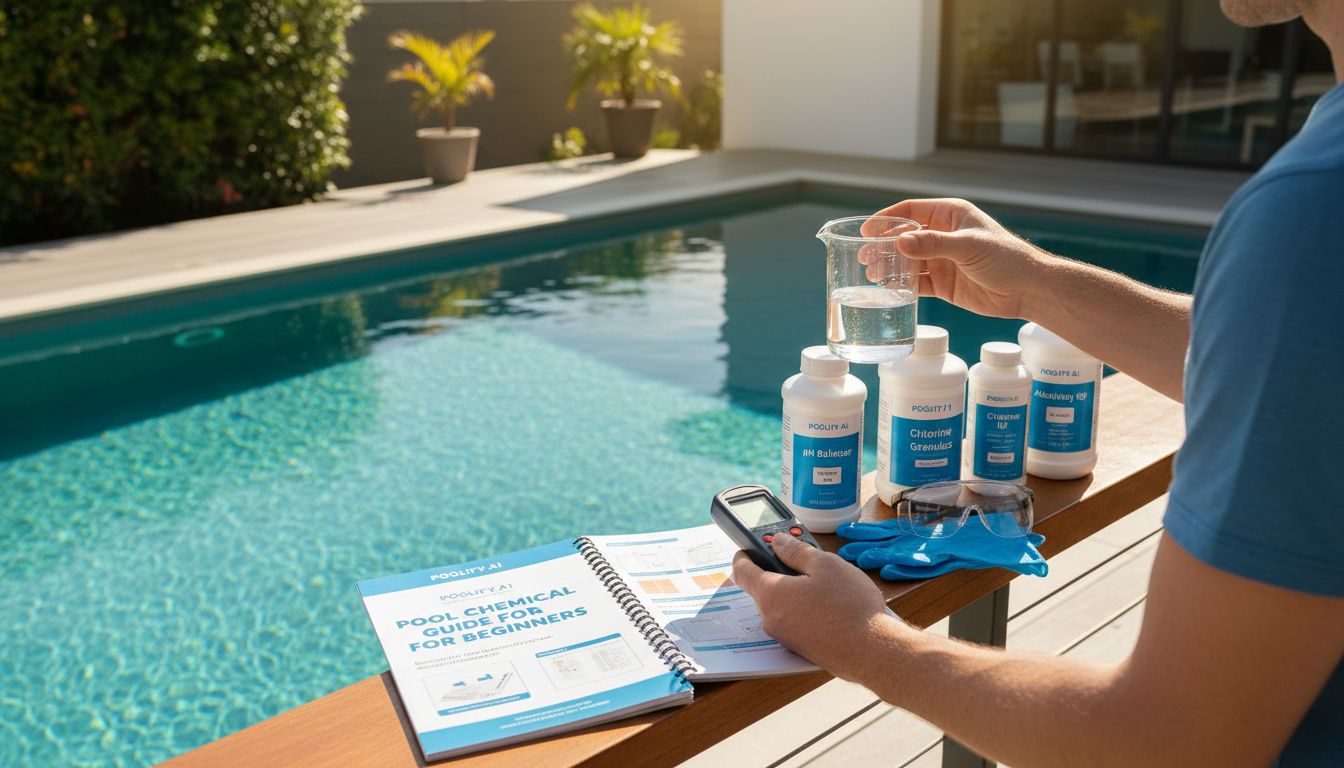
Understanding the proper sequence for chemical adjustments prevents wasted chemicals and achieves faster results. This pool chemical guide for beginners provides a systematic approach to balancing your pool water.
The Correct Order for Chemical Adjustments
Always adjust chemicals in this sequence: total alkalinity first, then pH, then calcium hardness, and finally chlorine. This order works because alkalinity affects pH, pH affects chlorine effectiveness, and all three affect calcium scaling. This pool chemical guide for beginners emphasizes patience—wait at least four hours between major adjustments, allowing chemicals to circulate and stabilize before retesting.
Calculating Chemical Dosages
Accurate dosing prevents overcorrection and wasted chemicals. Use your pool’s volume (length × width × average depth × 7.5 for rectangular pools) to calculate chemical amounts. Most chemical containers include dosing charts based on pool volume and current test readings. This pool chemical guide for beginners recommends using a pool calculator app or online tool to verify dosages, especially when starting out. When in doubt, add less than calculated, retest after circulation, and adjust incrementally.
Adding Chemicals Safely and Effectively
Never mix different chemicals together before adding them to your pool—dangerous reactions can occur. Add chemicals separately, allowing time for circulation between additions. Pour liquid chemicals around the pool perimeter while the pump runs, ensuring even distribution. Place tablets in a floating dispenser or automatic feeder rather than directly in the skimmer, which can damage equipment. This pool chemical guide for beginners stresses that granular chemicals should be pre-dissolved in a bucket of water before adding to the pool, preventing bleaching of surfaces.
Common Pool Chemistry Problems and Solutions in This Pool Chemical Guide for Beginners
Even with careful maintenance, pool chemistry issues arise. This pool chemical guide for beginners addresses the most common problems new pool owners encounter and how to resolve them efficiently.
Cloudy Water
Cloudy water typically results from poor filtration, low chlorine, high pH, or high calcium hardness. Start by testing all parameters and adjusting as needed. Run your filter continuously until water clears, backwashing or cleaning the filter as necessary. Shock the pool if chlorine is low. This pool chemical guide for beginners notes that clarifiers can speed the process by clumping small particles for easier filtration, but they don’t replace proper chemical balance.
Algae Growth
Green, yellow, or black algae indicate inadequate sanitization or circulation. Brush all pool surfaces thoroughly, shock the pool with double or triple the normal dose, and run the filter continuously. Add an algaecide formulated for your algae type. This pool chemical guide for beginners emphasizes that prevention through consistent chlorine levels and weekly shocking is far easier than treating established algae growth.
Strong Chlorine Smell and Eye Irritation
Contrary to popular belief, that harsh “chlorine smell” indicates insufficient free chlorine, not too much. Chloramines—formed when chlorine binds with contaminants—cause the odor and irritation. Shocking the pool breaks down chloramines, restoring water quality. This pool chemical guide for beginners recommends checking combined chlorine levels; if they exceed 0.5 ppm, shock treatment is necessary.
Staining and Discoloration
Metal staining appears as brown, green, or blue discoloration on pool surfaces. High metal content in fill water or corroded equipment causes these stains. A metal sequestrant prevents metals from precipitating out of solution. This pool chemical guide for beginners suggests testing for metals if staining occurs and using a specialized stain remover for existing discoloration. Maintaining proper pH prevents metal corrosion from pool equipment.
Scaling and Calcium Deposits
White, crusty deposits on pool surfaces and equipment indicate high calcium hardness or pH. Lower both parameters to recommended ranges and use a scale remover for existing deposits. This pool chemical guide for beginners notes that regular brushing and maintaining balanced chemistry prevents scale formation. In areas with hard water, consider using a pre-filter when filling your pool.
Safety Guidelines Every Pool Chemical Guide for Beginners Must Include
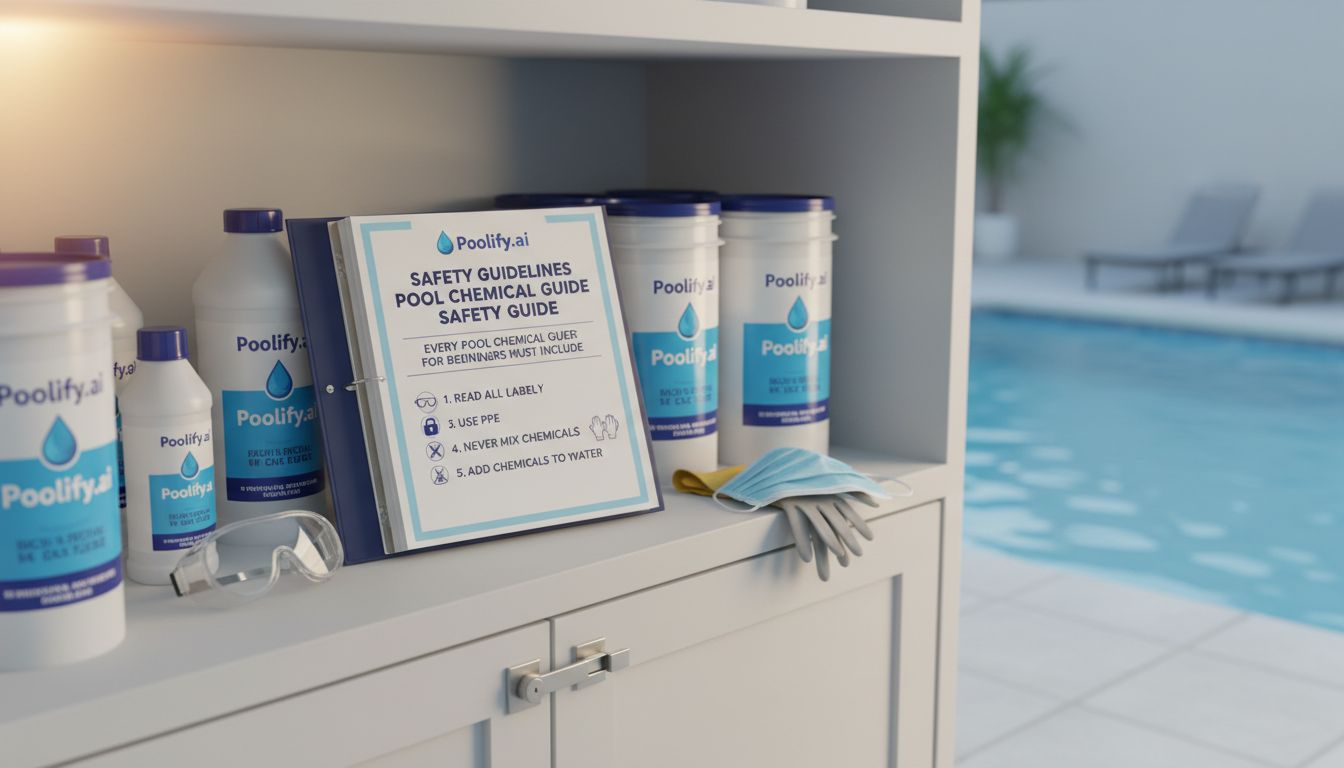
Pool chemicals are powerful substances requiring careful handling. This pool chemical guide for beginners prioritizes safety to protect you, your family, and your pool.
Storage and Handling Best Practices
Store pool chemicals in a cool, dry, well-ventilated area away from direct sunlight. Keep different chemicals separated—never store oxidizers (chlorine, shock) near acids. Use original containers with intact labels, and keep them tightly sealed when not in use. This pool chemical guide for beginners emphasizes storing chemicals out of reach of children and pets, preferably in a locked cabinet or shed. Check the OSHA guidelines for hazardous chemical storage for additional safety requirements.
Personal Protection Equipment
Wear safety goggles and chemical-resistant gloves when handling pool chemicals. Work in well-ventilated areas to avoid inhaling fumes. Keep a water source nearby for rinsing in case of skin contact. This pool chemical guide for beginners recommends wearing old clothes that you don’t mind bleaching, as chlorine products can discolor fabric.
Emergency Procedures
If chemicals contact your skin, rinse immediately with plenty of water for at least 15 minutes. For eye contact, flush with water continuously while seeking medical attention. If chemicals are ingested, do not induce vomiting—call poison control immediately. This pool chemical guide for beginners advises keeping Safety Data Sheets (SDS) for all chemicals on hand and emergency contact numbers posted in your pool chemical storage area.
Disposal of Old Chemicals
Never pour unused chemicals down drains or into storm sewers. Contact your local hazardous waste facility for proper disposal instructions. Many pool supply stores accept old chemicals for disposal. This pool chemical guide for beginners recommends checking chemical expiration dates annually and disposing of degraded products properly.
Creating Your Pool Maintenance Schedule Using This Pool Chemical Guide for Beginners
Consistency is key to maintaining perfect water chemistry. This pool chemical guide for beginners provides a framework for establishing an effective maintenance routine.
Daily Tasks
Check your pool’s appearance and skim surface debris. Verify that your pump and filter are running properly. Empty skimmer baskets. These quick daily checks take only minutes but prevent larger problems. This pool chemical guide for beginners notes that observant pool owners catch issues early, when they’re easiest to correct.
Weekly Maintenance
Test and adjust chlorine, pH, and alkalinity levels twice weekly. Shock your pool once weekly, typically in the evening to allow overnight circulation without sunlight degradation. Brush pool walls and floor to prevent algae growth. Vacuum the pool to remove settled debris. This pool chemical guide for beginners suggests choosing specific days for these tasks, making them part of your regular routine.
Monthly Responsibilities
Test calcium hardness, CYA, and total dissolved solids monthly. Clean or backwash your filter according to manufacturer recommendations. Inspect equipment for leaks, unusual noises, or other issues. This pool chemical guide for beginners recommends scheduling professional water testing monthly during peak season for comprehensive analysis.
Seasonal Considerations
Pool chemistry needs change with seasons and usage patterns. Summer’s heat and heavy use require more frequent testing and chemical additions. Spring opening requires thorough cleaning and rebalancing after winter. Fall closing involves adjusting chemicals for dormancy. This pool chemical guide for beginners emphasizes adapting your routine to your specific climate and usage patterns for optimal results.
Cost-Effective Pool Chemical Management for Beginners
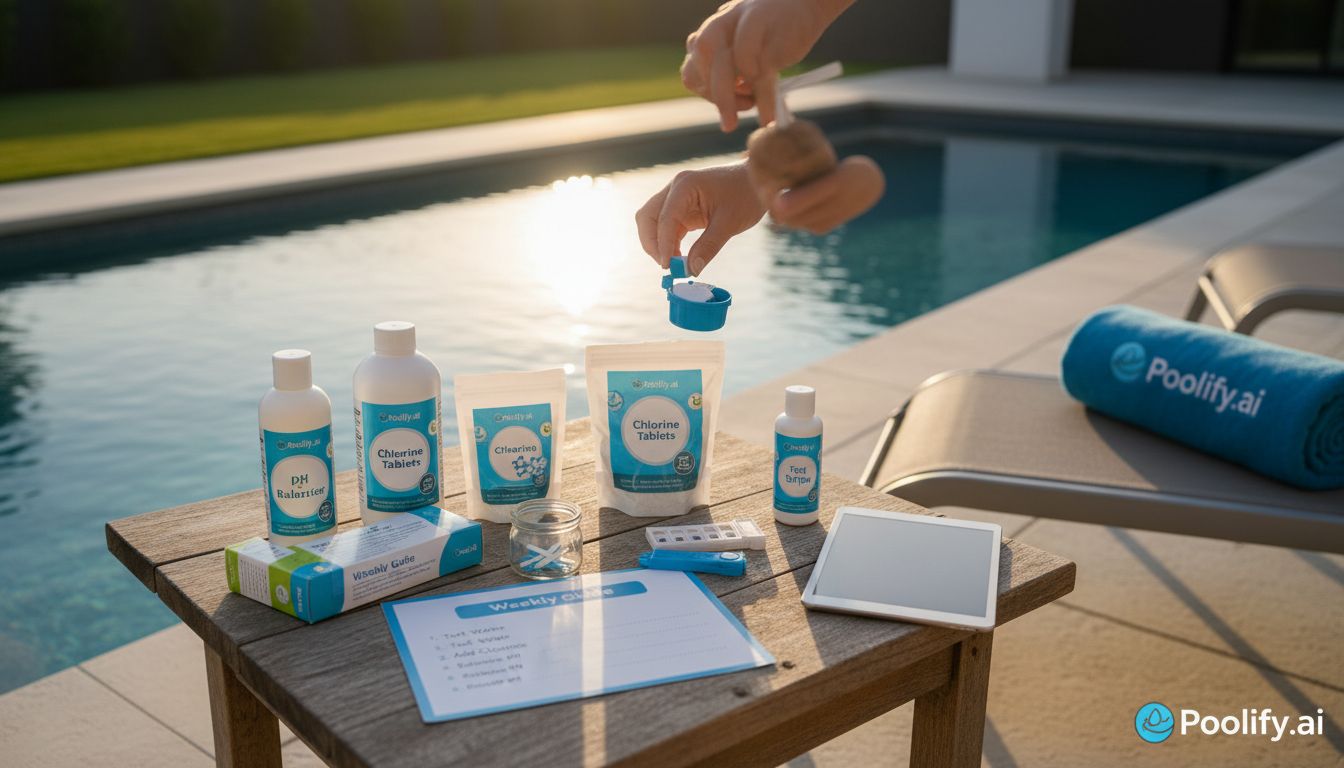
Managing pool chemistry doesn’t have to break the bank. This pool chemical guide for beginners shares strategies for maintaining your pool economically without compromising water quality.
Buying Chemicals Wisely
Purchase chemicals in larger quantities during off-season sales for significant savings. Compare prices between local pool stores, big-box retailers, and online suppliers. This pool chemical guide for beginners notes that generic chemicals with the same active ingredients work as effectively as name brands at lower cost. Join pool owner forums or groups to learn about bulk buying opportunities and seasonal deals.
Preventing Waste Through Proper Balance
Maintaining consistent water chemistry prevents costly correction cycles. Regular testing and small adjustments cost less than major rebalancing. This pool chemical guide for beginners emphasizes that prevention through consistent maintenance saves money compared to treating severe problems. Covering your pool when not in use reduces chemical consumption by minimizing evaporation and contamination.
Equipment That Reduces Chemical Use
Quality filtration systems reduce chemical demands by removing contaminants mechanically. Variable-speed pumps allow longer filtration times at lower energy costs. Saltwater chlorine generators eliminate the need to purchase chlorine, though they require higher initial investment. This pool chemical guide for beginners suggests evaluating these options based on your long-term plans and budget. Learn more about maintaining your pool equipment for optimal performance and longevity.
Advanced Tips for Pool Chemical Management Beyond Basic Guides
Once you’ve mastered the basics covered in this pool chemical guide for beginners, these advanced strategies optimize your pool maintenance routine.
Understanding Chemical Interactions
Pool chemicals interact in complex ways. High CYA reduces chlorine effectiveness, requiring higher chlorine levels for adequate sanitation. Low pH makes chlorine more aggressive but corrosive. This pool chemical guide for beginners introduces these concepts to help you understand why balance matters more than individual parameters.
Dealing with Phosphates
Phosphates feed algae growth, making pools harder to maintain. While not included in standard testing, phosphate levels above 500 ppb can cause recurring algae problems. Phosphate removers eliminate this nutrient source. This pool chemical guide for beginners recommends testing for phosphates if you experience persistent algae despite proper chemical balance.
Enzyme Products for Organic Waste
Enzyme-based products break down oils, lotions, and other organic contaminants that cloud water and create chlorine demand. While not essential, enzymes reduce maintenance in heavily-used pools. This pool chemical guide for beginners suggests trying enzymes if you frequently host pool parties or notice a persistent oily film on your water.
Seasonal Chemical Adjustments
Water chemistry behaves differently across seasons. Summer’s heat increases chemical consumption and evaporation. Spring pollen and debris create additional demand. This pool chemical guide for beginners recommends adjusting your testing frequency and chemical additions based on seasonal changes and pool usage patterns for optimal efficiency.
Frequently Asked Questions About Pool Chemistry for Beginners
How often should I test my pool water as a beginner?
This pool chemical guide for beginners recommends testing chlorine and pH at least twice weekly during swimming season. Test alkalinity, calcium hardness, and cyanuric acid weekly for the first month, then monthly once levels stabilize. Increase testing frequency during heavy use, after storms, or when water appears cloudy. Professional testing monthly provides comprehensive analysis and helps you learn proper testing techniques.
Can I swim immediately after adding pool chemicals?
Wait times depend on the chemical added. After adding chlorine tablets to a floater or feeder, swimming is safe once they dissolve and disperse, typically 30 minutes with the pump running. After shocking, wait until chlorine drops below 5 ppm, usually 8-24 hours. This pool chemical guide for beginners advises that pH adjusters typically require 20-30 minutes of circulation before swimming. Always read product labels for specific wait times.
Why does my pool need chemicals if I keep it clean?
Physical cleaning removes visible debris, but chemicals eliminate microscopic contaminants, bacteria, and viruses that cause illness. Chemicals also maintain pH balance for swimmer comfort and equipment protection. This pool chemical guide for beginners explains that even pristine-looking water can harbor dangerous pathogens without proper chemical treatment. Cleaning and chemistry work together for truly safe swimming conditions.
What’s the difference between free chlorine and total chlorine?
Free chlorine actively sanitizes your pool, killing contaminants on contact. Total chlorine includes both free chlorine and combined chlorine (chloramines). Combined chlorine consists of chlorine bound to contaminants, no longer effective at sanitization. This pool chemical guide for beginners emphasizes that your free chlorine level matters most for safe swimming. When combined chlorine exceeds 0.5 ppm, shock treatment is needed to restore free chlorine.
How do I know if my pool needs to be drained and refilled?
Excessive cyanuric acid (over 100 ppm), high total dissolved solids (over 2500 ppm above fill water), or persistent staining and scaling despite chemical adjustments indicate that partial draining may be necessary. This pool chemical guide for beginners notes that most pools require partial water replacement every 3-5 years under normal conditions. Consult a pool professional before draining, as improper draining can damage pool structures. For more guidance, check our comprehensive pool water maintenance tips.
Key Takeaways from This Pool Chemical Guide for Beginners
- Test regularly and adjust systematically: This pool chemical guide for beginners emphasizes that consistent testing twice weekly and following the proper adjustment sequence (alkalinity, pH, calcium, chlorine) prevents problems and maintains balanced water chemistry efficiently.
- Understand the core chemicals: Chlorine sanitizes, pH adjusters maintain proper acidity, alkalinity buffers pH changes, calcium hardness protects surfaces, and cyanuric acid stabilizes chlorine—mastering these five parameters covered in this pool chemical guide for beginners ensures safe, clear water.
- Safety first always: Store chemicals properly, wear protective equipment, never mix chemicals, and keep Safety Data Sheets accessible—this pool chemical guide for beginners prioritizes protecting yourself and others when handling powerful pool chemicals.
- Prevention beats correction: Maintaining consistent chemical levels through regular testing and small adjustments costs less and requires less effort than correcting major imbalances—this pool chemical guide for beginners shows that proactive maintenance saves time and money.
- Create and follow a routine: Daily visual checks, twice-weekly testing, weekly shocking, and monthly comprehensive analysis establish the consistent maintenance schedule that this pool chemical guide for beginners recommends for long-term success and enjoyable swimming.
Conclusion: Your Journey with Pool Chemistry Starts Here
Mastering pool chemistry as a beginner might seem daunting initially, but this pool chemical guide for beginners provides the foundation you need for success. By understanding the core chemicals, testing regularly, balancing systematically, and maintaining a consistent routine, you’ll quickly develop confidence in managing your pool’s water quality. Remember that every pool is unique—your specific climate, usage patterns, and water source influence your chemical needs.
This pool chemical guide for beginners has equipped you with knowledge about essential chemicals, testing methods, balancing procedures, safety protocols, and troubleshooting strategies. As you gain experience, you’ll develop an intuition for your pool’s needs and recognize problems before they escalate. The investment of time learning proper pool chemistry pays dividends in safer swimming, lower maintenance costs, and extended equipment life.
Don’t let initial complexity discourage you. Every experienced pool owner started as a beginner, learning through practice and occasional mistakes. Use this pool chemical guide for beginners as your reference, keep detailed records of your test results and adjustments, and don’t hesitate to seek professional advice when facing unfamiliar situations. Your pool represents a significant investment in your home and lifestyle—protecting that investment through proper chemical maintenance ensures years of enjoyment for you and your family. Start with the basics covered in this pool chemical guide for beginners, remain consistent with testing and maintenance, and you’ll soon wonder why pool chemistry ever seemed intimidating.
References
- Centers for Disease Control and Prevention (CDC) – Recreational Water Quality and Health: https://www.cdc.gov/healthywater/swimming/index.html
- Occupational Safety and Health Administration (OSHA) – Hazardous Chemical Storage Guidelines: https://www.osha.gov/hazardous-chemicals