
Understanding Pool Construction Cost in 2026
Building a swimming pool remains one of the most significant home improvement investments you can make in 2026. The pool construction cost varies dramatically based on size, materials, features, and location, typically ranging from $30,000 for basic above-ground installations to over $100,000 for luxury in-ground designs. Understanding these cost factors before breaking ground helps you create a realistic budget and avoid financial surprises during your project.
The pool construction cost landscape has evolved considerably in recent years. Supply chain improvements have stabilized material prices compared to previous years, while labor costs continue reflecting skilled worker demand. Modern construction techniques and energy-efficient equipment offer long-term savings that offset higher upfront investments. Whether you’re considering a simple plunge pool or an elaborate resort-style oasis, knowing what drives costs empowers you to make informed decisions aligned with your budget and lifestyle goals.
Primary Factors Affecting Pool Construction Cost
Several interconnected variables determine your final pool construction cost. Pool type represents the most fundamental decision, with above-ground pools starting around $3,000 to $15,000, while in-ground options begin at $30,000 and extend well beyond $100,000 for custom designs. The material you select—vinyl, fiberglass, or concrete—significantly impacts both initial expenses and long-term maintenance requirements.
Size and depth directly correlate with pool construction cost, as larger pools require more excavation, materials, and labor hours. A standard 12×24-foot pool costs substantially less than a 20×40-foot design. Depth considerations matter too, with diving pools requiring deeper excavation and additional structural reinforcement. According to the U.S. Census Bureau construction data, residential pool construction has shown steady growth, reflecting continued homeowner interest despite economic fluctuations.
Geographic location influences pool construction cost through multiple channels. Labor rates vary significantly between regions, with metropolitan areas typically commanding higher wages than rural locations. Local soil conditions affect excavation difficulty and foundation requirements. Climate considerations determine necessary heating systems and seasonal construction limitations. Proximity to suppliers impacts material delivery costs, while local building codes and permit requirements add administrative expenses that vary by jurisdiction.
Material Selection and Cost Implications
Vinyl-lined pools represent the most budget-friendly in-ground option, with pool construction cost typically ranging from $30,000 to $65,000. These pools feature steel, aluminum, or polymer panel walls with a custom vinyl liner. While initial costs remain lower, liners require replacement every seven to ten years at $4,000 to $7,000 per replacement, affecting long-term ownership expenses.
Fiberglass pools offer a middle-ground option with pool construction cost between $45,000 and $85,000. These pre-manufactured shells arrive ready for installation, reducing on-site labor time. Their smooth, non-porous surface resists algae growth and requires fewer chemicals, lowering maintenance costs. However, size and shape options remain limited to available molds, and transportation constraints may increase expenses in remote areas.
Concrete pools, including gunite and shotcrete varieties, command the highest pool construction cost from $50,000 to $100,000 or more. This premium reflects complete design flexibility and exceptional durability. Concrete pools accommodate any shape, size, or depth configuration, with customization options limited only by imagination and budget. The porous surface requires more maintenance and periodic resurfacing every ten to fifteen years, but properly maintained concrete pools can last fifty years or longer.
Labor Costs and Professional Services
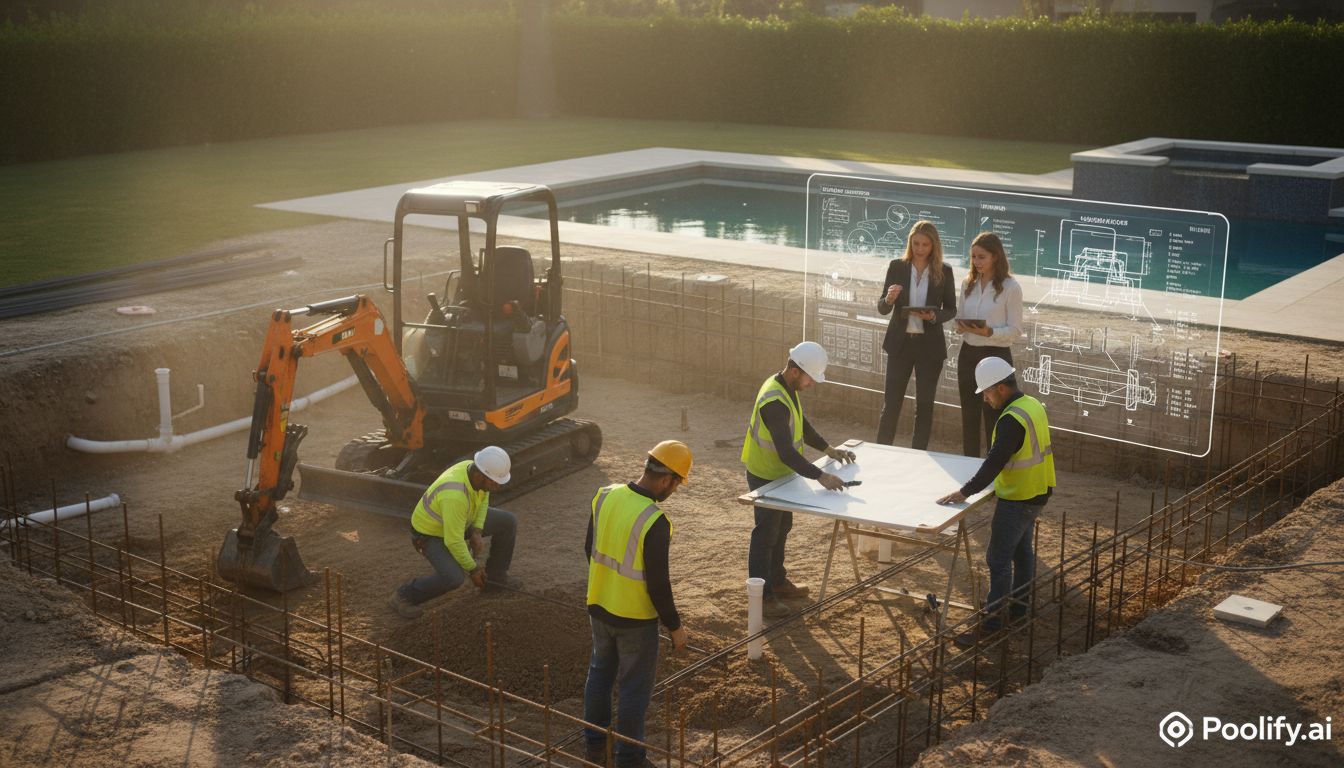
Labor typically represents 25% to 50% of total pool construction cost, varying by project complexity and regional wage rates. In 2026, skilled pool contractors charge between $50 and $150 per hour depending on expertise and location. Complete installation labor for standard in-ground pools ranges from $10,000 to $30,000, while complex custom designs with intricate features can exceed $50,000 in labor alone.
Professional services extend beyond the construction crew. Engineering and design consultations cost $500 to $3,000, ensuring your pool meets structural requirements and aesthetic goals. Experienced designers help optimize layouts for your property, maximizing functionality while minimizing unnecessary pool construction cost. Their expertise often saves money by preventing costly mistakes and identifying efficient solutions.
Specialized subcontractors handle specific aspects of pool installation. Excavation contractors charge $1,500 to $5,000 depending on soil conditions and access limitations. Electrical work for pumps, heaters, and lighting adds $1,000 to $5,000 to pool construction cost. Plumbing installation for filtration systems, returns, and water features contributes another $2,000 to $6,000. Gas line installation for heaters, when required, adds $500 to $2,500. Coordinating these professionals efficiently keeps projects on schedule and within budget.
Permit and Inspection Expenses
Building permits represent mandatory pool construction cost components, typically ranging from $200 to $1,500 depending on local requirements. These permits ensure compliance with safety codes, zoning regulations, and setback requirements. The permitting process may take several weeks, potentially delaying construction starts and extending project timelines.
Required inspections occur at various construction phases, verifying proper installation and code compliance. Inspection fees usually bundle with permit costs, but some jurisdictions charge separately for each inspection phase. Electrical and plumbing inspections ensure safe utility connections. Final inspections verify barrier requirements, including fencing and gate specifications mandated by safety regulations.
Essential Equipment and System Costs
Filtration systems form the heart of pool operation, with costs varying by type and capacity. Sand filters represent the most economical option at $300 to $1,000, requiring minimal maintenance but offering basic filtration. Cartridge filters cost $500 to $1,500, providing better filtration with easy cleaning but requiring periodic cartridge replacement. Diatomaceous earth filters deliver superior water clarity at $800 to $2,000 but demand more maintenance attention. Proper filtration system selection impacts both pool construction cost and ongoing operational expenses.
Pool pumps circulate water through filtration systems, with variable-speed models offering significant energy savings despite higher upfront costs. Standard single-speed pumps cost $200 to $800, while energy-efficient variable-speed options range from $800 to $2,500. Modern variable-speed pumps reduce electricity consumption by up to 75%, recovering their additional pool construction cost through lower utility bills within two to three years. For more information on maintaining these systems efficiently, explore our comprehensive pool equipment maintenance guide.
Heating systems extend swimming seasons in cooler climates, with pool construction cost varying by technology. Gas heaters cost $1,500 to $4,000 and heat water quickly but carry higher operational expenses. Electric heat pumps range from $2,500 to $5,500, operating more efficiently in moderate temperatures. Solar heating systems represent the highest initial investment at $3,000 to $8,000 but offer virtually free operation after installation. Climate conditions and intended usage patterns determine the most cost-effective heating solution.
Automation and Control Systems
Pool automation systems provide convenient control over equipment, lighting, and water features from smartphones or tablets. Basic automation adds $1,000 to $2,500 to pool construction cost, controlling filtration schedules and heating cycles. Advanced systems costing $3,000 to $7,000 manage multiple features including lighting scenes, water features, and chemical dosing. While automation increases upfront expenses, it optimizes equipment operation and reduces energy waste, providing long-term value.
Salt chlorination systems generate chlorine from dissolved salt, eliminating manual chemical addition. These systems cost $800 to $2,500 installed, with lower ongoing chemical expenses offsetting the initial pool construction cost addition. Salt systems produce softer-feeling water and maintain more consistent sanitization levels, appealing to many homeowners despite the premium price.
Excavation and Site Preparation Expenses
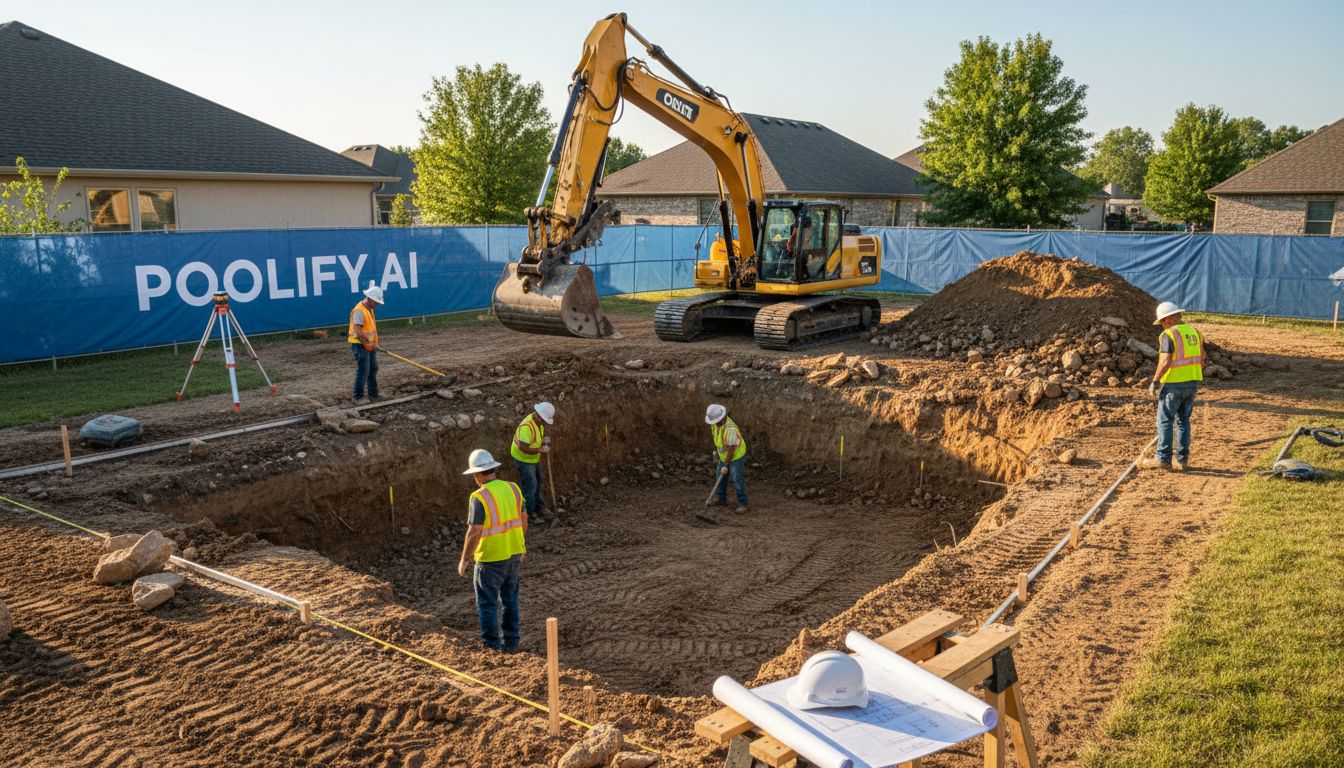
Site preparation significantly impacts pool construction cost, particularly when challenging conditions exist. Standard excavation for accessible, level yards with favorable soil costs $1,500 to $3,000. Rocky terrain, high water tables, or steep slopes increase excavation expenses to $5,000 or more. Heavy equipment access limitations requiring smaller machinery or hand digging substantially raise labor costs and extend project timelines.
Soil removal and disposal add to pool construction cost, typically included in excavation quotes but worth confirming. Standard projects generate 200 to 400 cubic yards of soil requiring removal. Disposal costs vary regionally from $10 to $50 per cubic yard. Some contractors offer reduced rates if soil can remain on-site for landscaping purposes, potentially saving $1,000 to $3,000.
Underground utility location and protection represent critical safety requirements. Most areas offer free utility marking services, but contractors may charge $200 to $500 for private utility location services identifying irrigation lines, septic systems, or other non-public infrastructure. Relocating utilities that conflict with pool placement adds significant pool construction cost, from $1,000 for simple irrigation adjustments to $10,000 or more for major utility rerouting.
Drainage and Water Management
Proper drainage prevents water accumulation around your pool, protecting structural integrity and surrounding landscapes. Basic drainage solutions add $500 to $2,000 to pool construction cost, directing surface water away from the pool area. Properties with significant drainage challenges may require French drains, catch basins, or sump pumps costing $2,000 to $8,000. Addressing drainage properly during construction prevents expensive remediation later.
Water source access affects initial filling costs and ongoing maintenance. Municipal water typically costs $50 to $200 for initial pool filling, depending on size and local rates. Well water may reduce filling costs but requires testing to ensure proper chemistry. Some contractors include initial fill costs in quotes, while others bill separately, so clarifying this detail helps accurately estimate total pool construction cost.
Decking, Coping, and Surrounding Features
Pool decking provides functional space around your pool while contributing significantly to aesthetic appeal and overall pool construction cost. Poured concrete represents the most economical decking option at $6 to $15 per square foot, offering durability and customization through stamping or staining. A 500-square-foot deck costs $3,000 to $7,500 in concrete, providing reliable performance for decades with minimal maintenance.
Pavers deliver enhanced visual appeal at $15 to $30 per square foot installed, with premium natural stone options reaching $40 per square foot or higher. Pavers offer design flexibility, easy repairs, and cooler surface temperatures than concrete. A 500-square-foot paver deck adds $7,500 to $20,000 to pool construction cost, with material selection and pattern complexity affecting final expenses.
Coping forms the pool’s edge, providing a finished appearance while protecting the shell structure. Standard concrete coping costs $30 to $50 per linear foot, while natural stone options range from $60 to $100 per linear foot. For a typical 12×24-foot pool requiring 72 linear feet of coping, expenses range from $2,160 for concrete to $7,200 for premium stone, representing a meaningful portion of overall pool construction cost.
Landscaping Integration
Integrating your pool with surrounding landscapes creates cohesive outdoor spaces while managing pool construction cost effectively. Basic landscaping including sod, shrubs, and mulch costs $2,000 to $5,000 for typical pool areas. Elaborate designs featuring mature trees, extensive plantings, and hardscape elements can exceed $20,000. Phasing landscaping over multiple seasons spreads expenses while allowing plants to establish gradually.
Retaining walls may be necessary for sloped properties, containing soil and creating level pool areas. Simple retaining walls cost $15 to $30 per square foot, while engineered walls for significant elevation changes reach $50 to $100 per square foot. These structures add substantial pool construction cost but enable pool installation on challenging sites that would otherwise be unsuitable.
Additional Features and Amenities
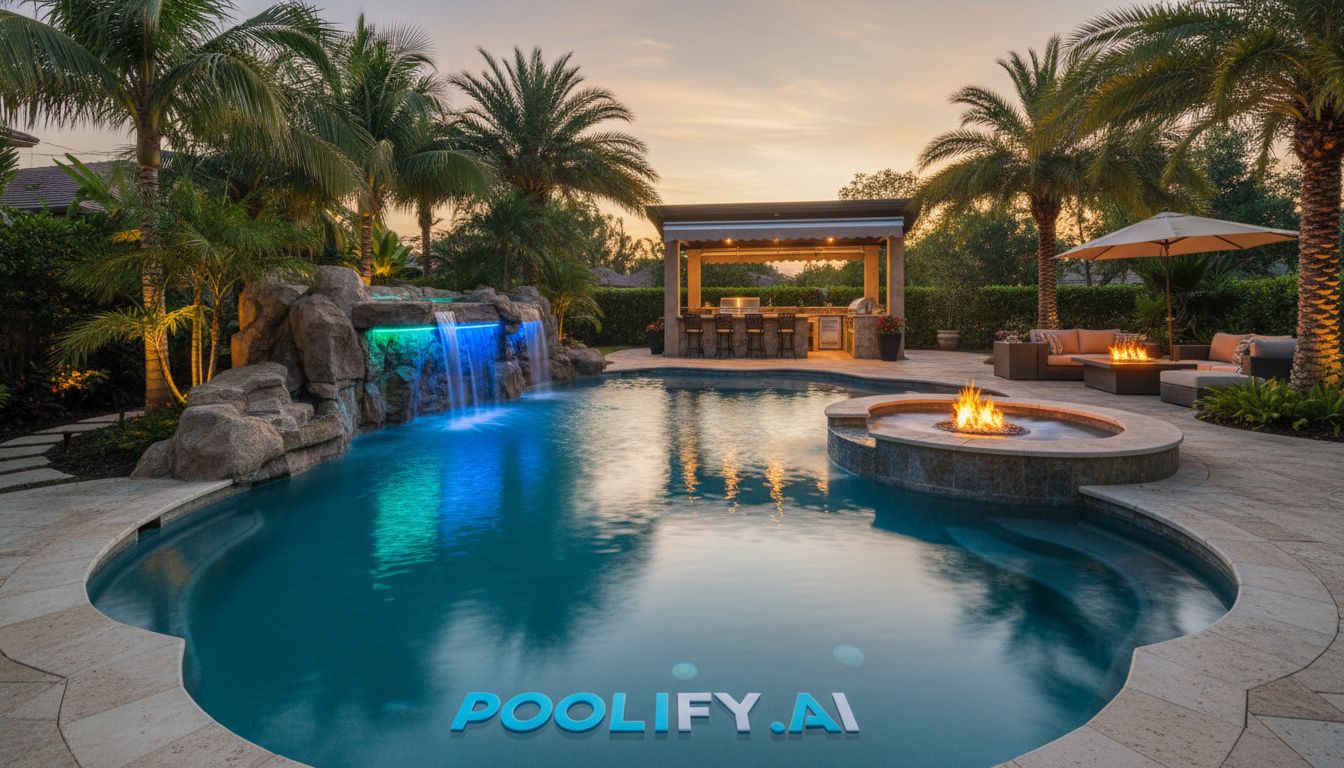
Water features transform basic pools into dynamic focal points, with costs varying by complexity. Simple bubblers or deck jets add $500 to $2,000 to pool construction cost, creating visual interest with minimal expense. Sheer descent waterfalls range from $1,500 to $5,000, producing elegant water sheets. Elaborate rock waterfalls with grottos cost $10,000 to $50,000, creating dramatic statements but significantly increasing overall project expenses.
Pool lighting enhances safety and ambiance, with LED technology offering energy efficiency and longevity. Basic lighting packages including a few strategically placed lights cost $700 to $1,500. Comprehensive lighting designs with color-changing LEDs, fiber optics, and landscape integration range from $3,000 to $10,000. While lighting increases pool construction cost, it extends usability into evening hours and showcases your investment.
Diving boards and slides appeal to families with children, adding entertainment value. Residential diving boards cost $300 to $1,000 for the board itself, plus installation expenses of $500 to $1,500. However, diving boards require deeper pools meeting specific dimensional requirements, potentially increasing excavation and construction costs. Pool slides range from $1,000 for simple models to $10,000 for elaborate designs with multiple curves and features.
Spa and Hot Tub Integration
Attached spas share equipment with the main pool, offering hydrotherapy benefits at moderate additional pool construction cost. Integrated spas add $8,000 to $20,000 depending on size and features. Spillover spas create visual appeal as water cascades into the pool, while raised spas provide architectural interest. Shared filtration and heating reduce operational costs compared to separate spa installations.
Separate hot tubs offer flexibility in placement and operation but require dedicated equipment. Portable hot tubs cost $3,000 to $12,000, while in-ground spa installations range from $10,000 to $25,000. Operating separate spas increases utility expenses but allows independent temperature control and usage. Understanding your preferences helps determine whether integrated or separate spa installations best suit your needs and pool construction cost budget.
Hidden Costs and Budget Contingencies
Unexpected site conditions frequently impact pool construction cost, making contingency budgets essential. Rock removal charges $100 to $300 per cubic yard when encountered during excavation. High water tables may require dewatering systems costing $1,000 to $5,000. Underground obstacles like old foundations, septic systems, or large tree roots add removal expenses ranging from hundreds to thousands of dollars depending on complexity.
Homeowners association requirements sometimes mandate specific design elements, materials, or screening that increase pool construction cost beyond initial estimates. Some associations require landscape screening, upgraded fencing, or architectural review fees. Researching HOA requirements before finalizing designs prevents costly changes during construction. Association approval processes may also extend project timelines, potentially affecting contractor scheduling and pricing.
Financing costs affect total project expenses when paying over time rather than upfront. Home equity loans typically offer the lowest interest rates for pool construction cost financing, with rates around 6% to 10% in 2026. Personal loans carry higher rates of 8% to 15% but require no home equity. Pool-specific financing through contractors may offer promotional rates but deserves careful comparison with traditional lending options. Interest charges over a ten-year loan can add 30% to 50% to total project costs.
Insurance and Liability Considerations
Homeowners insurance premiums typically increase $50 to $150 annually after pool installation, reflecting added liability exposure. Some insurers require minimum liability coverage of $300,000 to $500,000 for pool owners. Installing required safety barriers, covers, and alarms may qualify for premium discounts, partially offsetting increases. Discussing pool plans with your insurance agent before construction helps budget for these ongoing pool construction cost implications.
Contractor insurance verification protects homeowners from liability if workers are injured on your property. Reputable contractors carry general liability insurance and workers compensation coverage, but confirming current certificates before work begins prevents potential financial exposure. Uninsured contractors may offer lower bids, but the risk of assuming their liability far outweighs any pool construction cost savings.
Long-Term Maintenance and Operating Costs
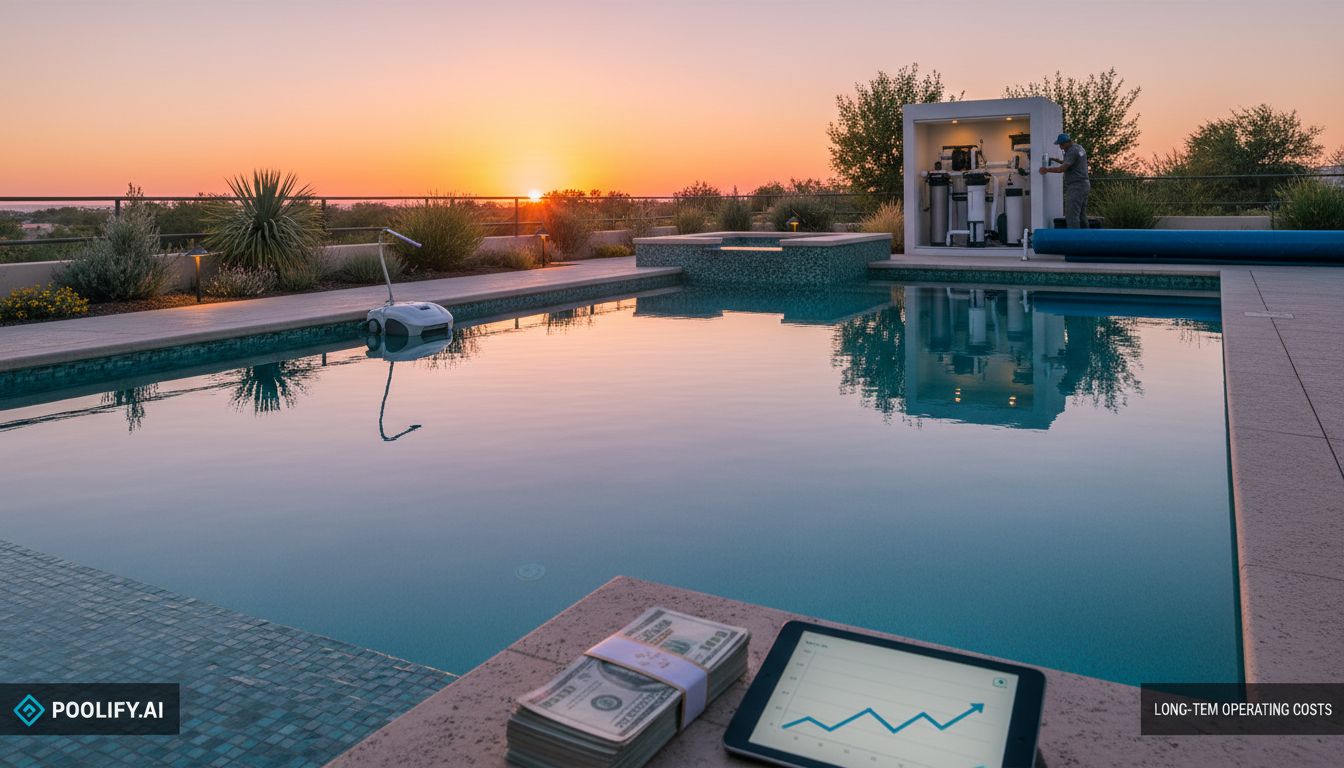
While not part of initial pool construction cost, understanding ongoing expenses helps evaluate true ownership costs. Annual maintenance expenses typically range from $1,200 to $2,500, including chemicals, cleaning supplies, and routine service. Weekly chemical costs average $20 to $40 during swimming season, with annual totals around $500 to $1,000. Professional service contracts cost $80 to $200 monthly, providing regular cleaning and chemical balancing while preventing costly problems from neglect.
Energy costs for pumps, heaters, and accessories vary by climate, usage patterns, and equipment efficiency. Standard pumps consume 1,500 to 2,500 kilowatt-hours annually, costing $200 to $400 in electricity. Variable-speed pumps reduce consumption to 500 to 1,000 kilowatt-hours, saving $100 to $250 yearly. Heating costs range from $300 to $1,500 annually for gas heaters depending on usage, while heat pumps cost $200 to $800 in electricity. Solar heating eliminates fuel costs after installation, providing long-term savings. Learn more about reducing these expenses through our energy-efficient pool operation strategies.
Equipment replacement represents significant future expenses that prudent pool owners anticipate. Pumps last eight to twelve years, costing $200 to $2,500 to replace depending on type. Heaters require replacement every eight to fifteen years at $1,500 to $5,500. Filters need replacement every ten to twenty years, costing $300 to $2,000. Salt chlorination cells last three to seven years, requiring $400 to $900 replacements. Automation systems may need updates every ten to fifteen years as technology advances. Budgeting $500 to $1,000 annually for future equipment replacement helps manage these inevitable expenses.
Resurfacing and Renovation Costs
Pool surfaces eventually require resurfacing, with timing and costs varying by material. Vinyl liners need replacement every seven to ten years at $4,000 to $7,000, representing the most frequent major expense. Concrete pools require resurfacing every ten to fifteen years, costing $5,000 to $15,000 depending on size and finish selection. Fiberglass pools rarely need complete resurfacing but may require gel coat repairs costing $1,000 to $3,000 periodically. Understanding these cycles helps evaluate long-term pool construction cost implications of different material choices.
Renovation and modernization allow updating older pools with current features and efficiency improvements. Equipment upgrades to variable-speed pumps, LED lighting, and automation systems cost $3,000 to $10,000 but dramatically improve efficiency and convenience. Aesthetic updates including new tile, coping, and decking refresh appearance at $10,000 to $30,000 depending on scope. Major renovations essentially rebuilding pools cost $25,000 to $75,000, approaching new pool construction cost but preserving existing excavation and basic structure.
Cost-Saving Strategies Without Compromising Quality
Strategic timing reduces pool construction cost through contractor availability and seasonal demand. Building during off-peak seasons, typically fall through early spring in most regions, may yield 10% to 20% discounts as contractors seek work during slower periods. However, weather limitations in northern climates may restrict off-season construction, making spring and early summer optimal despite higher demand and pricing.
Simplifying pool shapes significantly impacts excavation and construction expenses. Rectangular and geometric designs cost less than free-form organic shapes requiring more complex formwork and finishing. Standard sizes utilizing common dimensions reduce material waste and construction time. While custom shapes offer unique aesthetics, simplified designs can reduce pool construction cost by $5,000 to $15,000 while still providing excellent functionality.
Phasing features and amenities spreads pool construction cost over multiple budget cycles. Installing the basic pool initially, then adding waterfalls, spas, or elaborate landscaping in subsequent years makes projects more financially manageable. This approach allows enjoying your pool sooner while planning enhancements. However, some features cost more to add later than during initial construction, so discussing phasing strategies with contractors helps identify optimal sequencing.
DIY Opportunities and Limitations
Certain tasks suit homeowner completion, reducing pool construction cost through sweat equity. Demolition and site clearing can save $1,000 to $3,000 in contractor expenses if you have time and ability. Landscaping installation, including planting and mulching, saves $2,000 to $5,000 compared to professional services. Painting or staining decks, installing pool accessories, and performing initial chemical balancing represent other DIY opportunities.
However, core construction tasks require professional expertise and equipment. Excavation, plumbing, electrical work, and structural installation demand specialized skills and licensing. Attempting these tasks without proper knowledge risks safety issues, code violations, and costly corrections that ultimately increase rather than reduce pool construction cost. Focus DIY efforts on appropriate tasks while leaving critical work to qualified professionals.
Frequently Asked Questions About Pool Construction Cost
What is the average pool construction cost in 2026?
The average pool construction cost in 2026 ranges from $30,000 to $70,000 for standard in-ground pools, with above-ground options starting around $3,000 to $15,000. Luxury custom pools with extensive features can exceed $100,000. Your specific cost depends on size, materials, features, and location. Concrete pools represent the highest investment at $50,000 to $100,000+, while vinyl-lined pools offer more budget-friendly options at $30,000 to $65,000. Obtaining multiple detailed quotes from reputable contractors provides accurate estimates for your specific project.
How can I reduce pool construction cost without sacrificing quality?
Reduce pool construction cost by simplifying pool shapes, choosing standard sizes, and building during off-peak seasons for potential discounts. Select mid-range materials that balance cost and durability rather than premium options. Phase amenities like waterfalls and spas, adding them after initial construction. Handle appropriate tasks yourself, including site clearing and landscaping. However, never compromise on structural quality, proper equipment, or required safety features, as these affect long-term performance and value. Working with experienced contractors who suggest cost-effective alternatives maintains quality while managing expenses.
What hidden costs should I budget for in pool construction?
Budget 10% to 20% contingency for unexpected pool construction cost items including rock removal, utility relocation, or challenging soil conditions. Include permit fees ($200-$1,500), insurance increases ($50-$150 annually), and initial water filling ($50-$200). Factor in landscaping restoration around construction areas, upgraded electrical service if needed, and required safety barriers. First-year operating costs including chemicals, utilities, and maintenance supplies add $1,200 to $2,500. Financing charges significantly increase total costs if not paying cash. Planning for these expenses prevents budget surprises during and after construction.
Does pool construction increase home value enough to justify the cost?
Pools typically return 50% to 70% of pool construction cost in added home value, varying significantly by location and market conditions. In warm climates where pools are highly desirable, returns approach the higher end. In cooler regions with shorter swimming seasons, returns may be lower. Pools appeal to specific buyer segments, potentially limiting your buyer pool but commanding premium prices from interested purchasers. View pools primarily as lifestyle investments enhancing your enjoyment rather than purely financial investments. Proper maintenance and attractive design maximize value retention and buyer appeal when eventually selling.
How long does pool construction typically take?
Standard pool construction takes eight to twelve weeks from excavation to completion, though timelines vary by complexity, weather, and contractor schedules. Simple vinyl-lined pools may complete in six to eight weeks, while elaborate custom concrete pools require twelve to sixteen weeks or longer. Permit approval adds two to six weeks before construction begins. Weather delays, material availability issues, or change orders extend timelines. Peak season construction may face scheduling delays as contractors manage multiple projects. Discussing realistic timelines during planning helps set appropriate expectations and coordinate other aspects of your project.
Key Takeaways
- Pool construction cost in 2026 ranges dramatically from $3,000 for basic above-ground pools to over $100,000 for luxury in-ground designs, with most in-ground projects falling between $30,000 and $70,000 depending on size, materials, and features selected.
- Material choice significantly impacts both initial and long-term costs, with vinyl-lined pools offering the lowest entry price but requiring periodic liner replacement, while concrete pools command premium prices but provide maximum customization and longevity.
- Labor, permits, and site preparation represent 40% to 60% of total pool construction cost, making these often-overlooked factors critical to accurate budgeting alongside equipment, decking, and amenities that complete your pool project.
- Strategic planning reduces expenses without compromising quality through off-peak construction timing, simplified designs, phased feature installation, and appropriate DIY contributions while maintaining professional expertise for critical construction tasks.
- Long-term ownership costs including maintenance, utilities, and eventual equipment replacement add $1,500 to $3,000 annually, making total cost of ownership an important consideration beyond initial pool construction cost when evaluating project feasibility.
Conclusion
Understanding pool construction cost empowers you to make informed decisions that balance your dreams with financial realities. The investment extends beyond initial construction to include years of enjoyment, entertainment, and property enhancement. By carefully evaluating material options, prioritizing essential features, and planning for long-term expenses, you create realistic budgets that prevent financial stress while achieving your backyard oasis goals.
Successful pool projects begin with thorough research, multiple contractor consultations, and honest assessment of your needs versus wants. The lowest bid rarely represents the best value, as quality construction and reputable contractors provide peace of mind worth modest premiums. Investing time in planning, understanding cost drivers, and making strategic choices ensures your pool construction cost delivers maximum value and satisfaction for decades to come. For additional guidance on maintaining your investment after construction, visit our essential pool care basics guide.
References
- U.S. Census Bureau – Construction Statistics: https://www.census.gov/construction/c30/c30index.html
- Centers for Disease Control and Prevention – Healthy Swimming: https://www.cdc.gov/healthywater/swimming/