
Understanding Pool Cost Arizona: What to Expect in 2026
The pool cost Arizona homeowners face in 2026 ranges dramatically based on size, materials, and features. If you’re considering adding a swimming pool to your Arizona property, expect to invest anywhere from $35,000 for a basic fiberglass pool to over $100,000 for a custom gunite design with premium amenities. The desert climate, local regulations, and competitive market conditions all influence what you’ll ultimately pay for your backyard oasis.
Arizona’s unique environment creates both opportunities and challenges for pool ownership. The extended swimming season means you’ll enjoy your investment nearly year-round, but the intense heat and mineral-rich soil require specific construction considerations that affect overall costs. Understanding these factors helps you budget accurately and avoid expensive surprises during installation.
This comprehensive guide breaks down every aspect of pool cost Arizona residents should consider, from initial construction expenses to long-term maintenance budgets. Whether you’re exploring options in Phoenix, Tucson, or Scottsdale, you’ll discover actionable strategies to maximize value while creating the perfect pool for your lifestyle and property.
Breaking Down Pool Cost Arizona by Type and Material
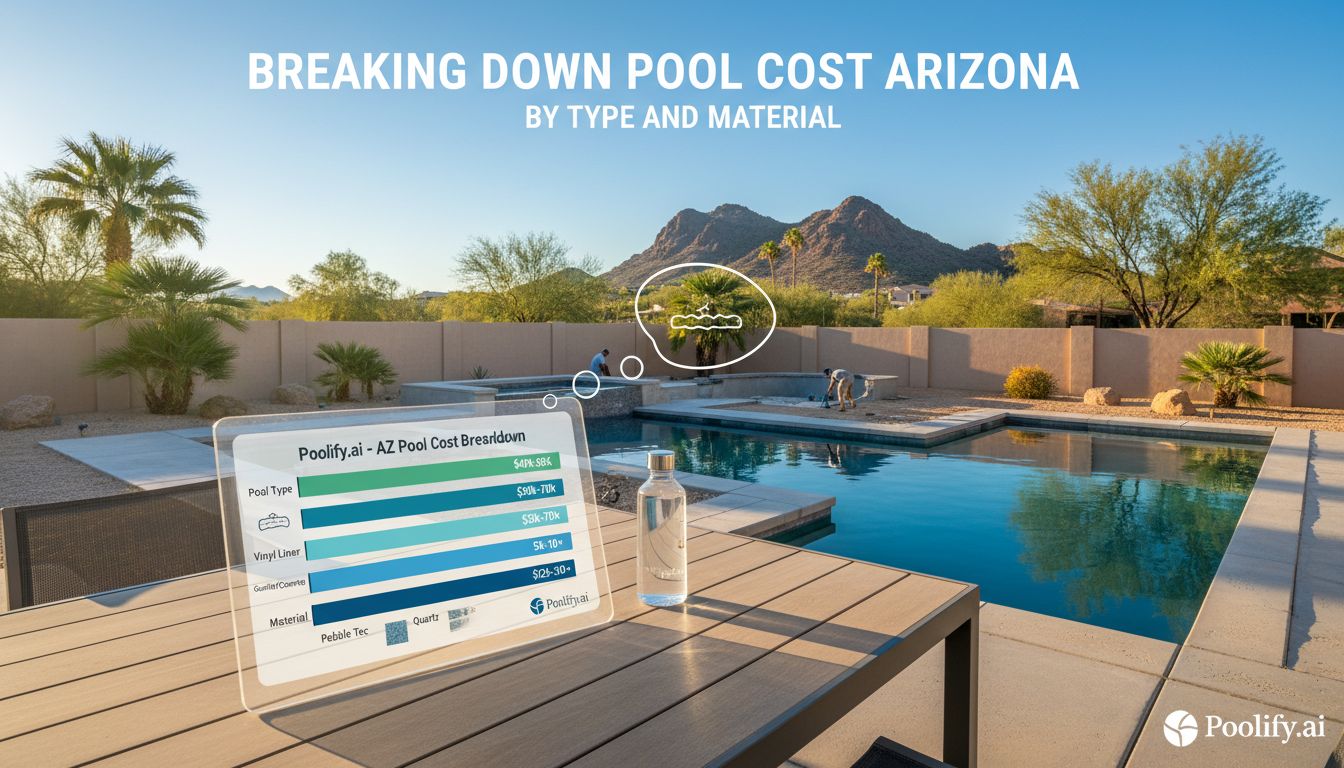
The type of pool you select represents the single biggest factor in determining your total pool cost Arizona budget. Each material offers distinct advantages, lifespan expectations, and price points that align with different homeowner priorities and property characteristics.
Fiberglass Pools: Quick Installation at Mid-Range Prices
Fiberglass pools typically cost Arizona homeowners between $35,000 and $65,000 installed in 2026. These pre-manufactured shells arrive ready to drop into an excavated hole, significantly reducing installation time to just 2-3 weeks. The smooth, non-porous surface resists algae growth naturally, lowering chemical costs by approximately 30% compared to concrete alternatives.
The primary limitation involves size and shape constraints. Fiberglass pools come in predetermined designs, typically maxing out around 16 feet wide due to transportation restrictions. However, for homeowners prioritizing quick installation and lower maintenance demands, fiberglass represents an excellent middle-ground option in the Arizona market.
Vinyl Liner Pools: Budget-Friendly Initial Investment
Vinyl liner pools offer the lowest entry point for pool cost Arizona spending, ranging from $30,000 to $50,000 for complete installation. A steel or polymer frame supports a custom-fitted vinyl liner that creates the water-containing surface. While initial costs stay low, homeowners must budget for liner replacement every 7-10 years at $4,000-$6,000 per replacement.
Arizona’s intense UV exposure accelerates vinyl degradation compared to milder climates. The harsh sun can fade colors and weaken material integrity faster than in northern states. Despite this consideration, vinyl pools remain popular among cost-conscious buyers and those seeking customizable shapes without premium pricing.
Gunite and Concrete Pools: Premium Customization
Gunite pools dominate Arizona’s luxury pool market, with costs ranging from $50,000 to $150,000 or more depending on size and features. This construction method sprays concrete over a rebar framework, allowing virtually unlimited customization in shape, depth, and integrated features. The pool cost Arizona homeowners pay for gunite reflects both material expenses and the skilled labor required for proper installation.
Construction timelines extend to 8-12 weeks for gunite projects, but the result delivers unmatched durability and design flexibility. These pools can incorporate beach entries, swim-up bars, integrated spas, and complex water features seamlessly. The porous concrete surface requires more frequent chemical balancing and periodic resurfacing every 10-15 years at $5,000-$10,000, but many Arizona homeowners consider these trade-offs worthwhile for the aesthetic possibilities.
Pool Cost Arizona: Regional Factors and Local Market Conditions
Arizona’s unique characteristics significantly impact pool pricing compared to national averages. Understanding these regional factors helps you anticipate costs specific to desert construction and leverage local market advantages.
Why Pool Cost Arizona Differs from National Averages
Arizona’s pool market operates under conditions that create both cost advantages and premium expenses. The state’s year-round construction season means contractors maintain consistent schedules without weather delays, potentially reducing labor costs. However, the extreme climate demands specialized equipment, materials, and techniques that can increase certain expense categories.
The competitive Arizona pool market includes over 600 licensed pool contractors statewide, creating pricing pressure that benefits consumers. Phoenix alone accounts for approximately 40% of new pool installations in the state, with Tucson and Scottsdale representing significant secondary markets. This concentration of expertise and competition helps keep pool cost Arizona within reasonable ranges despite premium demand.
Climate Impact on Construction and Materials
Arizona’s desert environment requires specific construction adaptations that influence overall pool cost Arizona budgets. Summer temperatures regularly exceeding 110°F demand enhanced cooling systems, shade structures, and UV-resistant materials. The alkaline soil common throughout the Phoenix valley requires additional excavation preparation and potential soil treatment, adding $2,000-$5,000 to standard installation costs.
According to the National Weather Service, Phoenix receives only 8 inches of annual rainfall, meaning pool water loss through evaporation becomes a significant operational consideration. Arizona pools lose 1-2 inches of water weekly during summer months, requiring automatic fill systems that add $500-$1,200 to initial construction costs but save considerable water and maintenance time long-term.
Local Regulations and Permit Requirements
Arizona municipalities enforce strict pool safety regulations that affect construction costs. All residential pools require barrier protection meeting state standards, typically adding $3,000-$8,000 for compliant fencing. Permit fees vary by jurisdiction but generally range from $500-$1,500 depending on project scope and property location.
Maricopa County requires electrical inspections for all pool equipment installations, while Pima County mandates additional drainage plans for properties in flood-prone areas. These regulatory requirements protect homeowners and neighbors but contribute to the total pool cost Arizona residents must budget. Working with experienced local contractors familiar with jurisdiction-specific requirements helps avoid costly delays and compliance issues.
Hidden Costs That Impact Your Pool Cost Arizona Budget
The advertised pool price represents only the foundation of your true investment. Smart Arizona homeowners budget an additional 25-40% beyond base construction costs to cover essential extras and unexpected expenses that inevitably arise during installation.
Site Preparation and Excavation Challenges
Arizona’s rocky desert soil creates excavation challenges that significantly impact pool cost Arizona totals. Caliche, a cement-like hardpan layer common throughout the valley, requires specialized equipment to penetrate. Contractors charge $1,000-$5,000 extra when encountering substantial caliche deposits, with costs escalating based on depth and coverage.
Access limitations pose another hidden expense. Properties with narrow side yards or restricted entry points may require smaller excavation equipment or hand-digging in certain areas, increasing labor costs by 15-30%. Mature landscaping requiring removal or protection adds further expenses, as does the disposal of excavated material in areas without convenient on-site placement options.
Utility Relocation and Electrical Upgrades
Pool equipment demands substantial electrical capacity that many older Arizona homes lack. Upgrading your electrical panel to accommodate pool pumps, heaters, and lighting systems costs $1,500-$4,000 depending on current capacity and required amperage increases. Gas line extensions for pool heaters add another $1,000-$3,000 when running lines from existing meters to pool equipment areas.
Underground utility conflicts occasionally emerge during excavation, requiring professional relocation of irrigation lines, electrical conduits, or communication cables. While contractors conduct utility locates before digging, private lines on your property may not appear in public databases. Budget a $2,000-$5,000 contingency for potential utility complications to avoid project delays and financial stress.
Decking and Hardscaping Essentials
The pool cost Arizona contractors quote rarely includes adequate decking and surrounding hardscape. Basic concrete decking adds $8-$15 per square foot, while premium options like travertine, flagstone, or decorative concrete range from $15-$40 per square foot. Most pools require 400-800 square feet of decking for functional access and aesthetic appeal, representing $3,200-$32,000 in additional investment.
Arizona’s intense sun makes shade structures nearly essential for comfortable pool use during peak summer months. Ramadas, pergolas, or shade sails cost $3,000-$15,000 depending on size and materials. Many homeowners also invest in outdoor kitchens, fire features, or enhanced landscaping that complement their pool investment, potentially doubling the total backyard renovation budget beyond the pool itself.
Long-Term Pool Cost Arizona: Maintenance and Operations
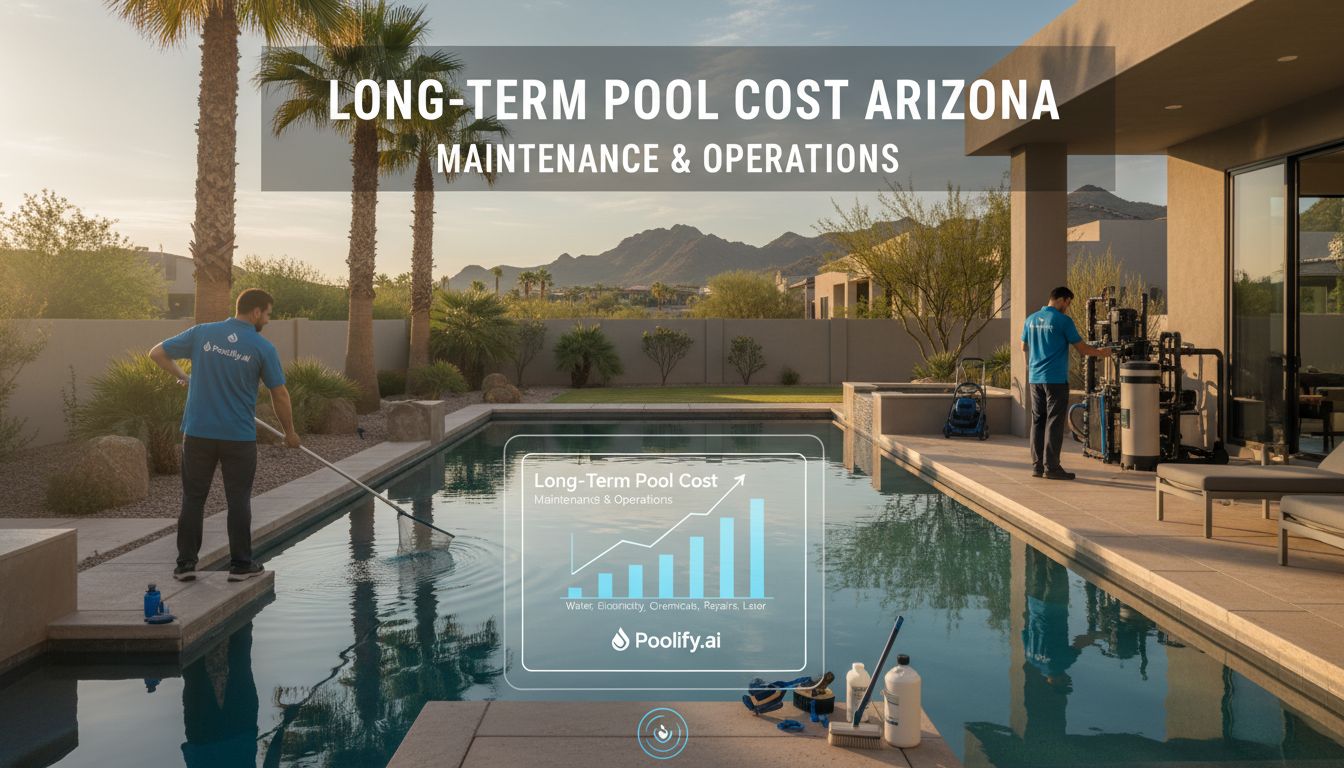
Understanding ongoing expenses helps you evaluate the true pool cost Arizona homeowners bear over their pool’s lifespan. Monthly and annual maintenance costs vary based on pool type, size, and usage patterns, but all pools require consistent investment to maintain safe, attractive conditions.
Monthly Chemical and Cleaning Expenses
Arizona pool owners spend $50-$150 monthly on chemicals depending on pool size and type. The intense UV exposure rapidly depletes chlorine and other sanitizers, requiring more frequent additions than pools in milder climates. Cyanuric acid, which protects chlorine from UV degradation, becomes essential for Arizona pools and adds $10-$20 monthly to chemical budgets.
Professional pool service costs $80-$150 monthly for weekly cleaning, chemical balancing, and equipment checks. Many Arizona homeowners opt for professional service during the demanding summer months while handling maintenance themselves during milder seasons. This hybrid approach balances convenience with cost management, reducing annual service expenses by 30-40% compared to year-round professional care.
Energy Costs for Pumps and Heating
Pool pumps represent one of the largest ongoing components of pool cost Arizona budgets. Traditional single-speed pumps consume 2,000-2,500 watts during operation, costing $50-$100 monthly when running the recommended 8-12 hours daily. Variable-speed pumps reduce energy consumption by 60-75%, paying for their $800-$1,500 premium through energy savings within 2-3 years.
Heating costs vary dramatically based on system type and usage patterns. Gas heaters cost $200-$400 monthly when maintaining comfortable temperatures during Arizona’s mild winters. Heat pumps offer more efficient operation at $100-$200 monthly, while solar heating systems eliminate ongoing fuel costs after the initial $3,000-$7,000 installation investment. Many Arizona pool owners forgo heating entirely, accepting cooler water during the brief winter season to eliminate this expense category.
Equipment Replacement and Repairs
Pool equipment requires periodic replacement regardless of maintenance quality. Pumps last 8-12 years before requiring $500-$1,500 replacement. Filters need replacement every 5-7 years at $300-$800 depending on type. Salt systems, increasingly popular in Arizona for their reduced chemical handling, require cell replacement every 3-5 years at $400-$800.
Automation systems that control pumps, lighting, and water features cost $1,500-$4,000 initially but reduce operational expenses through optimized scheduling and remote monitoring. These systems typically pay for themselves within 3-5 years through energy savings and reduced service calls. For comprehensive guidance on maintaining your investment, explore our pool maintenance best practices that help Arizona homeowners maximize equipment lifespan.
Strategies to Reduce Pool Cost Arizona Without Sacrificing Quality
Smart planning and strategic decisions can reduce your pool cost Arizona investment by $10,000-$30,000 without compromising the final result. Understanding where to allocate resources and where to economize creates the best value for your specific situation and priorities.
Timing Your Pool Installation Strategically
Arizona’s competitive pool market creates seasonal pricing variations that savvy buyers leverage. Contractors offer the best pricing during slower periods from November through February, when demand drops and companies compete for projects to maintain crew schedules. Discounts of 10-20% off peak-season pricing are common for winter installations, potentially saving $5,000-$15,000 on identical projects.
Winter installation also provides the advantage of having your pool ready for the prime swimming season beginning in April. Projects completed during cooler months avoid the complications of curing concrete in extreme heat and give you time to establish proper chemical balance before heavy use begins. The trade-off involves waiting several months before enjoying your investment, but the financial savings and reduced installation stress make winter timing attractive for budget-conscious homeowners.
Prioritizing Features and Avoiding Unnecessary Upgrades
The pool cost Arizona homeowners pay often includes features that sound appealing but deliver limited practical value. Elaborate water features, beach entries, and swim-up bars add $5,000-$30,000 to construction costs while requiring additional maintenance and increasing long-term operational expenses. Starting with a simpler design allows you to add features later if desired, spreading costs over time and ensuring you invest only in elements you actually use.
LED lighting represents one upgrade worth prioritizing despite added costs. Modern LED systems consume 75% less energy than traditional pool lighting while lasting 10-15 years versus 1-2 years for incandescent bulbs. The $1,500-$3,000 premium for quality LED installation pays for itself through reduced energy and replacement costs within the first 3-4 years of ownership.
Comparing Multiple Contractor Bids Effectively
Obtaining at least three detailed bids helps you understand the true pool cost Arizona market rates and identify potential issues with outlier quotes. Be wary of bids significantly below market averages, as they often indicate inexperienced contractors, substandard materials, or incomplete project scopes that lead to change orders and disputes during construction.
Review contractor licensing with the Arizona Registrar of Contractors to verify credentials and check complaint histories. The Arizona ROC maintains public records of all licensed contractors, including disciplinary actions and bond status. This verification takes just minutes but protects you from unlicensed operators who cut corners and leave homeowners with expensive problems and no recourse for resolution.
Financing Your Pool Cost Arizona Investment
Most Arizona homeowners finance their pool construction rather than paying cash, spreading the investment over several years while enjoying immediate benefits. Understanding financing options helps you structure payments that fit comfortably within your budget without overextending financial resources.
Home Equity Loans and Lines of Credit
Home equity financing offers the lowest interest rates for pool construction, typically 6-9% in 2026’s market conditions. Home equity loans provide lump-sum funding with fixed monthly payments over 10-15 years, while home equity lines of credit (HELOCs) allow you to draw funds as needed during construction. Both options offer potential tax advantages, as interest may be deductible when the loan improves your primary residence.
Arizona homeowners with substantial equity find these options most attractive, as they leverage existing home value to fund improvements that further increase property worth. Pools typically add 5-8% to home values in Arizona’s market, partially offsetting the pool cost Arizona homeowners invest. However, avoid borrowing beyond your comfortable repayment capacity, as your home secures the debt and default risks foreclosure.
Pool-Specific Financing Programs
Many pool contractors partner with specialty lenders offering pool-specific financing with promotional terms. These programs sometimes feature deferred interest periods of 12-24 months, allowing you to pay the balance without interest charges if paid in full before the promotional period ends. Standard rates after promotional periods typically range from 9-18% depending on creditworthiness.
Read financing terms carefully before committing, as deferred interest programs charge retroactive interest on any remaining balance when promotional periods expire. This structure works well for disciplined borrowers who plan to pay the balance quickly but creates expensive surprises for those who underestimate repayment timelines or encounter unexpected financial challenges.
Cash Payment Discounts and Incentives
Contractors often discount pool cost Arizona pricing by 3-7% for cash payments, as they avoid credit card processing fees and financing program commissions. This discount can save $1,500-$7,000 on typical projects while simplifying the transaction and eliminating interest charges. However, never pay the full amount upfront, even with cash transactions.
Structure cash payments in installments tied to project milestones: 10% deposit at contract signing, 25% at excavation completion, 30% when the pool shell is complete, 25% when equipment installation finishes, and the final 10% after you verify everything functions properly. This payment structure protects your interests while providing contractors with reasonable cash flow to fund materials and labor throughout the construction process.
Pool Cost Arizona: Local Market Insights and Trends
Arizona’s pool market reflects unique demographic, economic, and environmental factors that distinguish it from national trends. Understanding these local dynamics helps you make informed decisions aligned with regional conditions and future market directions.
Arizona’s Pool Market Statistics
Arizona ranks third nationally in pools per capita, with approximately 425,000 residential pools statewide as of 2026. The Phoenix metropolitan area alone contains over 280,000 pools, representing one pool for every 6-7 households. This concentration creates a mature, competitive market where contractors must deliver quality and value to succeed.
The median home price in Arizona reached $410,000 in 2026, with pool-equipped homes commanding premiums of $20,000-$35,000 depending on pool quality and overall property characteristics. In premium markets like Paradise Valley and North Scottsdale, luxury pools contribute $50,000-$100,000+ to property values, making them sound financial investments beyond lifestyle benefits.
Arizona’s population growth continues at 1.8% annually, with 7.4 million residents statewide. The warm climate attracts retirees and remote workers seeking year-round outdoor living opportunities, sustaining strong demand for pool installations. Major employment sectors include healthcare, technology, tourism, and manufacturing, providing diverse economic stability that supports discretionary spending on home improvements like pools.
Climate Considerations Unique to Arizona
Phoenix averages 299 sunny days annually with summer temperatures regularly exceeding 110°F from June through August. This extended heat season creates a 9-10 month prime swimming period, far longer than most U.S. markets. The exceptional usability justifies the pool cost Arizona homeowners invest, as they enjoy their pools nearly three times as much as homeowners in northern climates.
Low humidity averaging just 36% annually increases evaporation rates significantly compared to humid regions. Arizona pools lose 1-2 inches of water weekly during summer months, requiring automatic fill systems and careful water budget management. The intense UV exposure at Arizona’s elevation (Phoenix sits at 1,100 feet) accelerates chemical depletion and material degradation, increasing maintenance demands compared to pools at sea level or in cloudier climates.
Neighborhood Trends and Pool Popularity
Certain Arizona communities show particularly high pool concentration and demand. In Scottsdale, approximately 65% of single-family homes include pools, the highest rate in the state. Paradise Valley, Fountain Hills, and Gilbert follow with 55-60% pool penetration. These areas feature larger lots, higher home values, and demographics that prioritize outdoor living amenities.
Urban infill neighborhoods in central Phoenix show increasing pool interest as younger buyers renovate mid-century homes. Compact pool designs, plunge pools, and courtyard configurations suit smaller urban lots while delivering the Arizona lifestyle benefits residents seek. This trend influences pool cost Arizona pricing in urban markets, where space constraints require creative design solutions that sometimes increase per-square-foot construction expenses.
Interesting Arizona Pool Facts
Arizona’s pool culture reflects fascinating historical and contemporary characteristics. The state’s first residential pool boom occurred in the 1960s when air conditioning made Phoenix summers bearable, transforming the city from winter retreat to year-round destination. Pool construction exploded from 5,000 residential pools in 1960 to over 50,000 by 1970.
Arizona pioneered several pool innovations now standard nationwide. Pebble Tec, the popular aggregate finish that provides durability and aesthetic appeal, was developed in Scottsdale in 1987. The company revolutionized pool surfaces and remains headquartered in Arizona, supplying products worldwide while maintaining strong local market presence.
Water conservation concerns influence Arizona pool design more than in most states. Modern pools use 30-50% less water than 1990s designs through improved construction techniques, better filtration systems, and enhanced covers that reduce evaporation. Salt systems, popular in Arizona, reduce chemical waste and environmental impact while lowering operational costs for homeowners concerned about sustainability.
The Valley’s unique “monsoon season” from July through September brings dramatic dust storms called haboobs that can dump tons of debris into pools within minutes. This weather pattern influences pool equipment specifications and maintenance requirements unique to Arizona, affecting both initial pool cost Arizona budgets and ongoing operational expenses.
Frequently Asked Questions About Pool Cost Arizona
What is the average pool cost Arizona homeowners pay in 2026?
The average pool cost Arizona residents invest ranges from $45,000 to $75,000 for mid-range installations including basic decking and equipment. Budget fiberglass pools start around $35,000, while luxury custom gunite designs with premium features exceed $100,000. Your specific costs depend on pool size, type, features, site conditions, and contractor selection. Most homeowners find that planning for $50,000-$60,000 provides a realistic starting point for quality construction with standard amenities.
Does a pool add value to Arizona homes?
Pools typically add 5-8% to Arizona home values, translating to $20,000-$35,000 for median-priced properties. The return on investment varies by neighborhood, with premium areas seeing stronger value appreciation from quality pools. Unlike many states where pools can actually decrease home values by limiting buyer pools, Arizona’s climate and lifestyle make pools highly desirable amenities that attract buyers and justify premium pricing. However, you rarely recoup 100% of construction costs through increased home value alone.
What time of year offers the best pool cost Arizona pricing?
November through February represents the best timing for pool construction savings in Arizona. Contractors offer 10-20% discounts during slower winter months to maintain steady workflow and keep crews employed. You’ll also avoid the complications of concrete curing in extreme heat and have your pool ready for prime swimming season beginning in April. The trade-off involves waiting several months before using your pool, but the financial savings of $5,000-$15,000 make winter installation attractive for budget-conscious homeowners.
How much does pool maintenance cost monthly in Arizona?
Arizona pool owners spend $130-$250 monthly on maintenance including chemicals ($50-$100), energy for pumps and equipment ($50-$100), and water replacement ($30-$50). Professional service adds $80-$150 monthly if desired. Annual costs total approximately $1,500-$3,000 for DIY maintenance or $2,500-$4,500 with professional service. Variable-speed pumps, solar heating, and salt systems reduce operational expenses significantly, potentially cutting energy costs by 60-75% compared to traditional equipment.
Do I need a permit for pool construction in Arizona?
Yes, all Arizona municipalities require building permits for pool construction, typically costing $500-$1,500 depending on jurisdiction and project scope. Permits ensure construction meets safety standards, setback requirements, and barrier protection regulations. Reputable contractors handle permit applications as part of their service, but verify this is included in your contract. Installing a pool without proper permits creates liability issues, complicates future home sales, and may require expensive remediation to bring the installation into compliance.
Key Takeaways: Maximizing Your Pool Cost Arizona Investment
- Budget comprehensively – Plan for 25-40% beyond base construction costs to cover site preparation, decking, equipment upgrades, and unexpected complications that commonly arise during installation.
- Choose materials strategically – Fiberglass offers quick installation and low maintenance at mid-range prices ($35,000-$65,000), while gunite provides unlimited customization for premium budgets ($50,000-$150,000+). Match your selection to priorities and long-term plans.
- Time installation wisely – Winter construction (November-February) delivers 10-20% savings through off-season contractor discounts, potentially reducing pool cost Arizona spending by $5,000-$15,000 on typical projects.
- Invest in efficiency – Variable-speed pumps, LED lighting, and quality automation systems cost more initially but reduce operational expenses by 50-70% over the pool’s lifespan, paying for themselves within 2-4 years.
- Verify contractor credentials – Check licensing, insurance, and complaint history through the Arizona Registrar of Contractors before signing contracts. Proper vetting prevents costly disputes and ensures quality construction that protects your investment.
Conclusion: Making Smart Pool Cost Arizona Decisions
Understanding pool cost Arizona dynamics empowers you to make informed decisions that balance immediate budget constraints with long-term value creation. The investment extends beyond the construction phase, encompassing ongoing maintenance, operational expenses, and eventual equipment replacement that together define your total cost of ownership.
Arizona’s unique climate creates exceptional pool usability that justifies the investment for most homeowners. The 9-10 month swimming season delivers far more value than pools in northern climates, while the competitive local market keeps pricing reasonable despite premium demand. Strategic planning, careful contractor selection, and smart feature prioritization help you create the perfect pool within your budget parameters.
Start your pool journey by obtaining multiple detailed bids from licensed contractors, verifying references, and clearly defining your must-have features versus nice-to-have additions. For additional insights on creating your ideal backyard oasis, review our comprehensive pool design guide that explores layout options, aesthetic considerations, and functional planning strategies. With proper planning and realistic expectations, your pool investment will deliver decades of enjoyment, lifestyle enhancement, and property value appreciation that make the initial pool cost Arizona commitment worthwhile.
References
- National Weather Service – Phoenix Climate Data: https://www.weather.gov/psr/ClimatePhoenix
- Arizona Registrar of Contractors: https://roc.az.gov/
- U.S. Census Bureau – Arizona Population Statistics
- Arizona Regional Multiple Listing Service – Home Value Data
- Pool & Hot Tub Alliance – Industry Statistics