

Understanding Pool Cost Texas: Your 2026 Investment Guide
Building a swimming pool in Texas represents a significant investment that can transform your property and lifestyle. The pool cost Texas homeowners face in 2026 varies dramatically based on numerous factors, from the type of pool you choose to your specific location within the state. Whether you’re in Houston’s humid climate, Austin’s Hill Country, or the scorching heat of West Texas, understanding the complete financial picture helps you make informed decisions about this major home improvement project.
Texas pool construction costs have evolved considerably, with material prices, labor rates, and permitting requirements all playing crucial roles in your final investment. The average pool cost Texas residents can expect ranges from $35,000 to $100,000 or more, depending on size, features, and customization. This comprehensive guide breaks down every aspect of pool pricing across the Lone Star State, helping you budget accurately and avoid costly surprises during your pool building journey.
Average Pool Cost Texas Homeowners Face in 2026
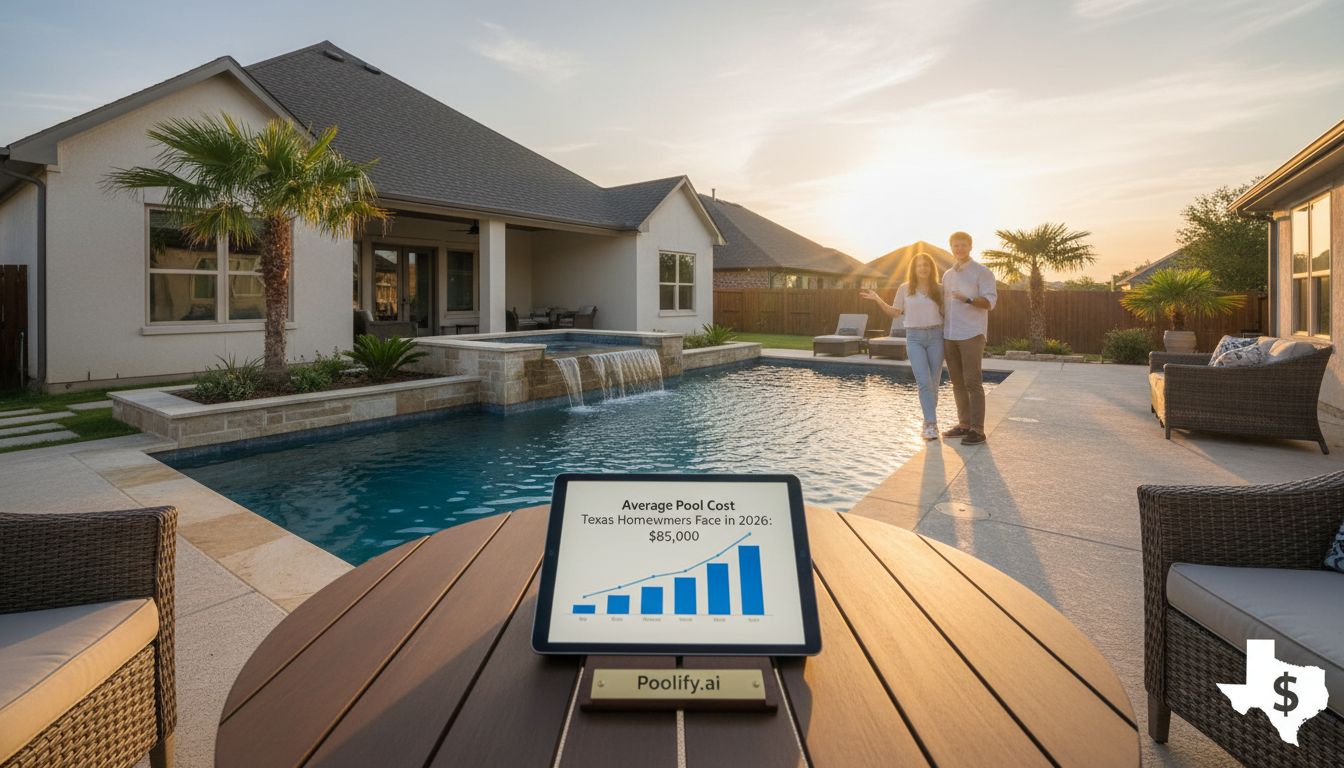
The pool cost Texas homeowners encounter varies significantly by pool type and construction method. In 2026, concrete or gunite pools remain the most popular choice, typically ranging from $50,000 to $100,000 for a standard 12×24 foot design. These durable pools offer unlimited customization options and can last 50 years or more with proper maintenance, making them an excellent long-term investment despite higher upfront costs.
Fiberglass pools present a mid-range option, with typical costs between $40,000 and $75,000 for installation. These pre-manufactured shells arrive ready to install, reducing construction time to just one to two weeks compared to the two to three months required for concrete pools. The smooth, non-porous surface resists algae growth and requires fewer chemicals, potentially saving you money on ongoing pool maintenance expenses throughout ownership.
Vinyl liner pools represent the most budget-friendly option, with installation costs ranging from $35,000 to $55,000. However, the liner requires replacement every seven to ten years at a cost of $4,000 to $8,000, which factors into your long-term ownership expenses. For Texas homeowners seeking immediate affordability, vinyl pools provide an accessible entry point into pool ownership while delivering the same recreational benefits as more expensive alternatives.
Breaking Down Construction Costs by Component
Understanding where your money goes helps you prioritize features and identify potential savings. Excavation and site preparation typically account for 10-15% of total pool cost Texas builders charge, ranging from $5,000 to $15,000 depending on soil conditions, accessibility, and required grading. Rocky terrain common in Central Texas can significantly increase excavation expenses, sometimes adding $3,000 to $8,000 to your project budget.
The pool shell itself represents 40-50% of total costs, whether you choose concrete, fiberglass, or vinyl. Plumbing and electrical systems add another $8,000 to $15,000, including pumps, filters, heaters, and automated control systems. Decking and coping materials contribute $5,000 to $20,000 depending on your material choices, with travertine and flagstone commanding premium prices compared to standard concrete finishes.
Additional features dramatically impact your final pool cost Texas contractors quote. A simple waterfall might add $1,500 to $5,000, while elaborate rock formations with grottos can exceed $25,000. LED lighting systems range from $1,000 to $5,000, heating systems cost $3,000 to $10,000, and automated cleaning systems add $800 to $2,500. According to the U.S. Census Bureau’s construction data, homeowners who carefully prioritize features based on actual usage patterns report higher satisfaction with their pool investments.
Why Pool Cost Texas Varies by Region
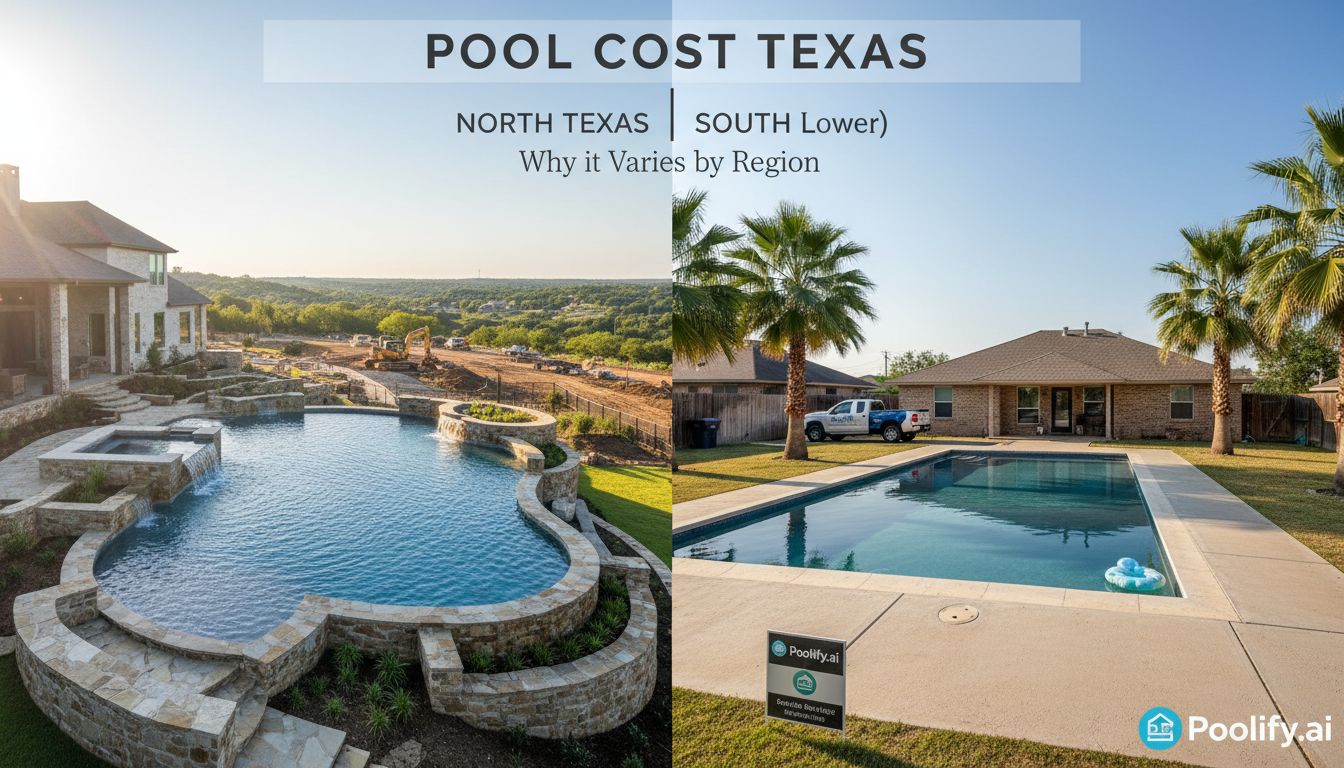
Texas spans 268,596 square miles with dramatically different climates, soil conditions, and economic factors that influence pool construction costs. Understanding these regional variations helps you budget accurately based on your specific location within the state. The pool cost Texas homeowners experience in Dallas differs considerably from what residents pay in El Paso or Corpus Christi, driven by local market conditions and environmental factors.
Climate and Geographic Considerations
Texas features diverse climate zones that directly impact pool design and construction costs. Houston and Southeast Texas experience subtropical conditions with average annual rainfall exceeding 50 inches, requiring enhanced drainage systems that add $2,000 to $5,000 to construction costs. The region’s high water table and clay-heavy soil also necessitate specialized engineering to prevent pool shifting or cracking over time.
Central Texas, including Austin and San Antonio, sits on limestone bedrock that significantly increases excavation expenses. Breaking through this rock formation can add $5,000 to $12,000 to your pool cost Texas contractors estimate, depending on depth and hardness. However, the region’s moderate climate with 300 sunny days annually maximizes your pool usage season, potentially justifying the higher initial investment through extended enjoyment.
West Texas and the Panhandle region experience extreme temperature fluctuations, with summer highs exceeding 100°F and winter lows dropping below freezing. These conditions require robust freeze protection systems, upgraded plumbing insulation, and potentially heated pool options, adding $3,000 to $8,000 to construction costs. The arid climate means lower humidity and minimal rainfall, reducing drainage requirements but increasing water evaporation rates that impact long-term operating expenses.
Local Economic Factors Affecting Pool Prices
Texas boasts a population of approximately 30 million residents as of 2026, with median household income varying significantly across regions. The Dallas-Fort Worth metroplex, with median household income around $75,000, supports a robust pool construction industry with competitive pricing due to high contractor availability. The Houston metro area, home to over 7 million residents, offers similar competitive rates driven by market density.
Austin’s booming economy and median home values exceeding $550,000 create premium pricing for pool construction, with costs running 10-20% higher than state averages. The city’s rapid growth has strained contractor availability, allowing established pool builders to command premium rates. Conversely, smaller markets in rural Texas often feature lower labor costs but may have limited contractor options, potentially extending project timelines.
Permitting costs vary dramatically across Texas municipalities. Major cities like Houston charge $500 to $1,500 for pool permits, while smaller jurisdictions may require just $200 to $400. Some Texas counties impose additional requirements such as archaeological surveys in historically significant areas, potentially adding unexpected expenses. Understanding your local regulatory environment prevents budget surprises during the construction process.
Texas Pool Market Trends and Statistics
Texas leads the nation in new pool construction, with approximately 25,000 to 30,000 inground pools installed annually. This robust market creates competitive pricing while ensuring access to experienced contractors. The state’s favorable climate allows year-round construction in southern regions, though most homeowners schedule projects for fall through early spring to have pools ready for summer enjoyment.
Property value impact represents a key consideration for Texas homeowners evaluating pool investments. Real estate data indicates that well-designed pools typically add 5-8% to home values in Texas markets, with higher returns in upscale neighborhoods where pools are expected amenities. In luxury markets around Austin, Dallas, and Houston, homes without pools may actually sell at a disadvantage compared to comparable properties with pool features.
Water conservation concerns have influenced Texas pool design trends, with saltwater systems and variable-speed pumps becoming standard features rather than upgrades. These efficient systems reduce water consumption by 30-40% compared to traditional designs, addressing both environmental concerns and the practical reality of potential drought restrictions. The initial investment in efficient systems typically pays back within three to five years through reduced operating costs.
Factors That Influence Pool Cost Texas Builders Quote
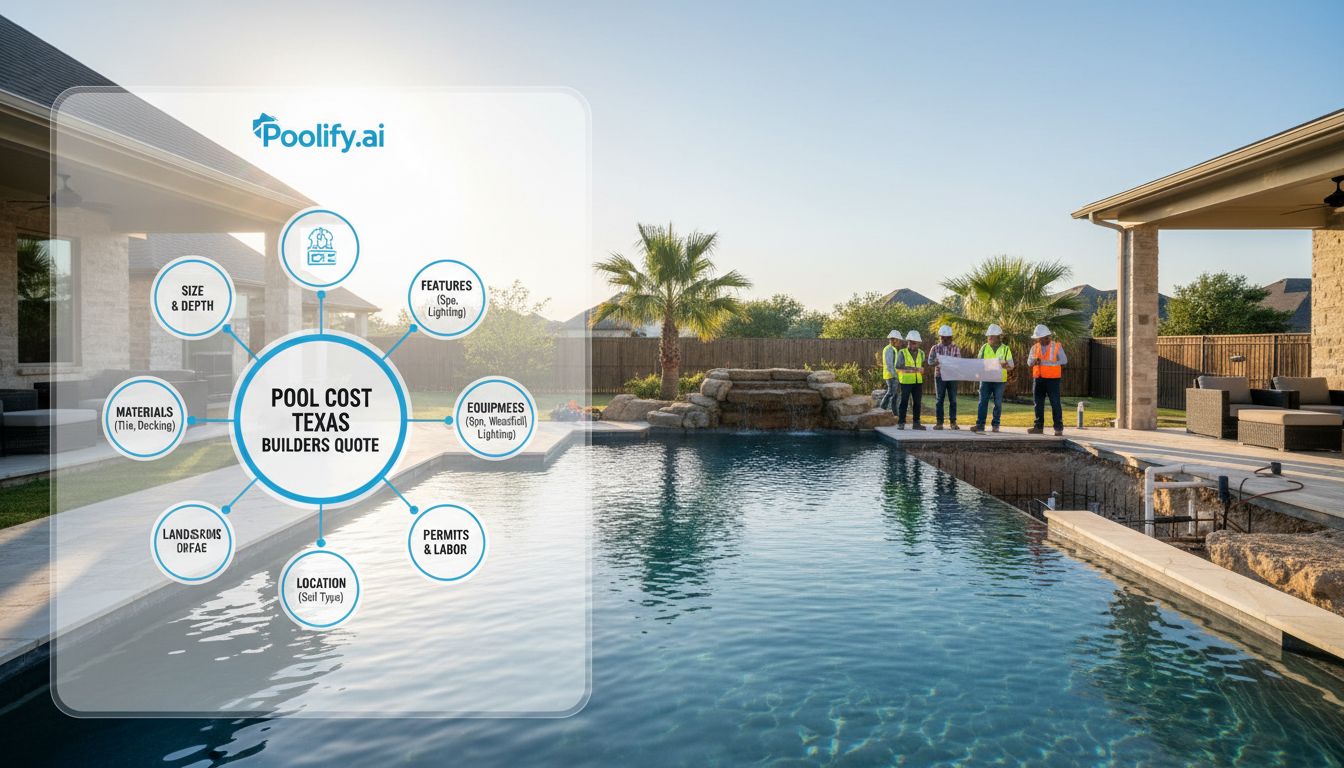
Multiple variables affect the pool cost Texas contractors provide in their estimates. Understanding these factors empowers you to make strategic decisions that align your pool design with your budget constraints. Some elements offer flexibility for cost management, while others represent necessary investments for long-term pool performance and safety.
Pool Size and Depth Specifications
Pool dimensions directly correlate with construction costs, as larger pools require more materials, labor, and time to complete. A compact 12×24 foot pool suitable for exercise and cooling off costs significantly less than a sprawling 20×40 foot resort-style design. Each additional square foot of pool surface adds approximately $50 to $150 to your total investment, depending on construction method and finish materials selected.
Depth considerations impact both construction costs and ongoing usability. Standard pools with shallow ends around 3.5 feet transitioning to 6-foot deep ends accommodate most recreational activities while minimizing excavation and material costs. Adding a diving area with 8-10 foot depths increases the pool cost Texas homeowners pay by $8,000 to $15,000 due to additional excavation, structural engineering, and safety requirements mandated by building codes.
Custom shapes and features like beach entries, swim-up bars, or integrated spas add complexity that increases labor costs by 15-30% compared to simple rectangular designs. While these features create stunning visual appeal and enhanced functionality, carefully evaluate whether they align with how you’ll actually use the pool. Many Texas families find that straightforward designs with one or two key features provide the best balance of cost and enjoyment.
Material Selection and Finish Options
Your choice of pool finish dramatically affects both aesthetics and the pool cost Texas contractors charge. Standard plaster finishes represent the most economical option at $3,000 to $6,000 for a typical pool, lasting 7-10 years before requiring resurfacing. Aggregate finishes incorporating pebbles or quartz cost $8,000 to $15,000 but deliver enhanced durability and visual appeal, often lasting 15-20 years before needing replacement.
Premium finishes like glass tile or custom mosaics can add $15,000 to $50,000 or more to your project, creating stunning visual effects that transform your pool into a true backyard centerpiece. While beautiful, these high-end finishes require careful consideration of your overall budget and long-term home plans. If you’re planning to sell within five to seven years, premium finishes may not deliver proportional return on investment in most Texas markets.
Decking material choices range from basic concrete at $6 to $12 per square foot to premium options like travertine at $20 to $40 per square foot. Texas’s intense summer heat makes material selection particularly important, as some surfaces become uncomfortably hot underfoot. Cool-deck coatings, pavers, or natural stone options that reflect rather than absorb heat enhance comfort while adding $3,000 to $10,000 to your total investment.
Equipment and Technology Integration
Modern pool equipment significantly impacts both initial pool cost Texas homeowners pay and long-term operating expenses. Variable-speed pumps cost $800 to $1,500 more than single-speed models but reduce energy consumption by 50-75%, saving $50 to $150 monthly on electricity bills. These efficient pumps typically pay for themselves within two to three years while reducing your environmental footprint.
Heating systems extend your swimming season but add substantial upfront and operating costs. Gas heaters cost $2,500 to $5,000 installed and work well for occasional use, while heat pumps require $3,500 to $7,000 initially but operate more efficiently for regular heating. Solar heating systems represent the highest upfront investment at $5,000 to $10,000 but deliver virtually free heating after installation, making them increasingly popular across sun-drenched Texas.
Automation systems that control lighting, heating, cleaning, and water chemistry from your smartphone add $1,500 to $5,000 to construction costs. These systems deliver convenience and can optimize equipment operation for energy efficiency, but represent optional upgrades rather than essential components. Consider starting with basic equipment and adding automation later if budget constraints require prioritization during initial construction.
Hidden Costs in Pool Cost Texas Homeowners Should Anticipate
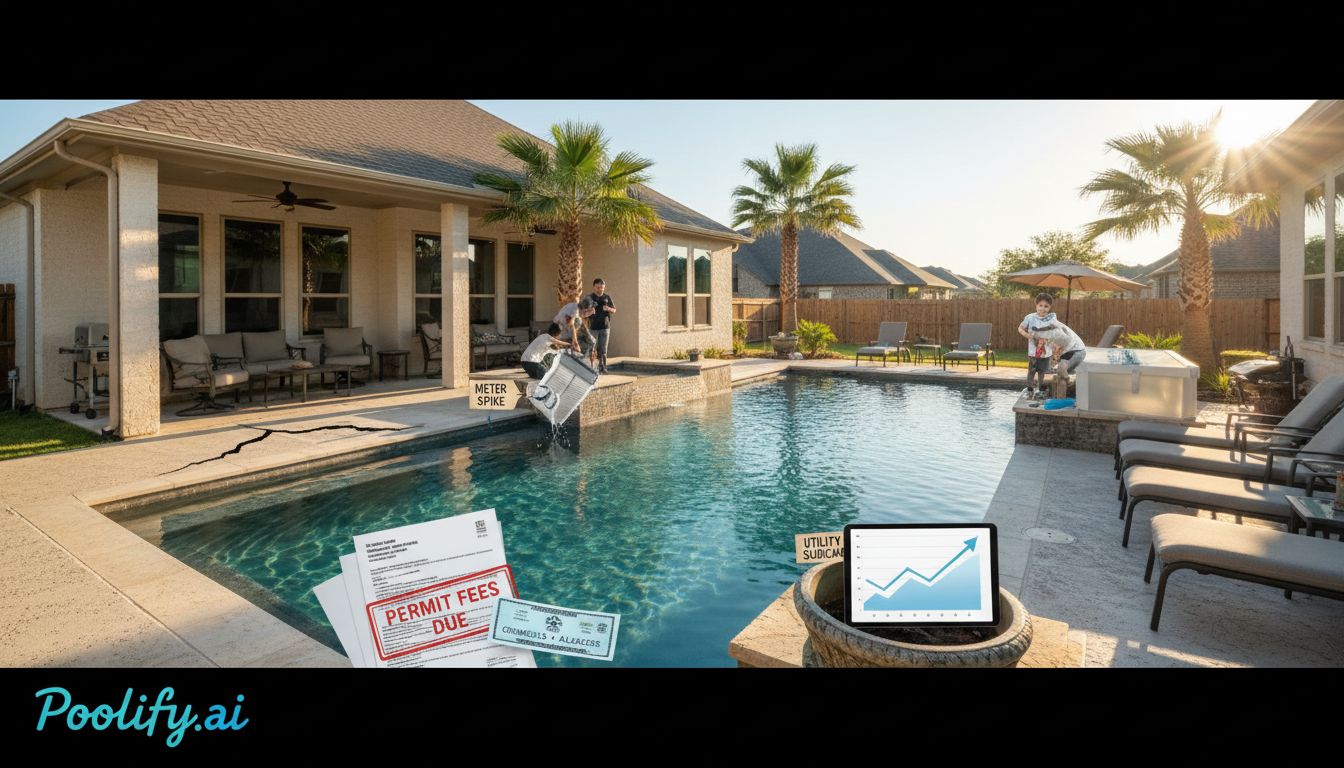
Beyond the base construction price, several additional expenses affect your total pool investment. Planning for these costs from the beginning prevents budget overruns and ensures you can complete your project without financial stress. The pool cost Texas contractors quote typically covers construction itself, but these supplementary expenses add 15-30% to your overall investment.
Site Preparation and Landscaping
Most properties require some degree of site work before pool construction begins. Tree removal costs $500 to $2,000 per tree depending on size and location, while relocating utilities like gas lines, electrical service, or irrigation systems adds $1,000 to $5,000. If your yard has significant slope, retaining walls may be necessary at costs ranging from $3,000 to $15,000 depending on height and materials.
Fencing represents both a legal requirement and safety necessity in Texas. Most municipalities mandate pool barriers meeting specific height and access requirements, with costs ranging from $3,000 to $10,000 for perimeter fencing. Decorative options like wrought iron or glass panels command premium prices but enhance your outdoor aesthetic while fulfilling safety obligations.
Landscaping around your new pool creates a cohesive outdoor environment but adds substantial costs often overlooked in initial budgeting. Professional landscape design costs $1,500 to $5,000, while plant installation, irrigation systems, and hardscaping elements add $5,000 to $20,000 or more. Many Texas homeowners phase landscaping over multiple seasons, completing essential elements immediately while adding enhancements as budget allows.
Permits, Inspections, and Insurance
Building permits for pools in Texas range from $200 to $1,500 depending on your municipality and project scope. The permit process typically requires detailed construction plans, engineering certifications for structural elements, and multiple inspections throughout construction. Some jurisdictions charge separate fees for electrical and plumbing permits, adding several hundred dollars to your total permitting costs.
Homeowners insurance premiums typically increase $50 to $200 annually after pool installation due to increased liability exposure. Some insurers require minimum liability coverage of $300,000 to $500,000 for homes with pools, potentially necessitating policy upgrades. Installing safety features like fencing, pool covers, and alarms may qualify you for insurance discounts that partially offset these increased premiums.
Property tax assessments increase following pool installation, as this permanent improvement adds to your home’s assessed value. The exact impact varies by county, but expect annual property tax increases of $300 to $1,000 depending on your pool’s value and local tax rates. While this ongoing expense continues throughout ownership, the lifestyle benefits and property value enhancement typically justify this incremental cost for most Texas homeowners.
First-Year Operating and Maintenance Costs
Operating expenses begin immediately after pool completion, with monthly costs varying based on pool size, equipment efficiency, and usage patterns. Electricity for pumps and heating typically costs $50 to $200 monthly, while chemicals for water treatment add $30 to $80 monthly. Water costs for initial filling and ongoing evaporation replacement range from $40 to $100 monthly during peak summer months in Texas.
Professional pool service costs $100 to $200 monthly if you prefer hands-off maintenance, though many Texas homeowners successfully maintain their own pools with minimal time investment. Initial equipment and supplies including test kits, cleaning tools, and chemicals require $300 to $600 upfront investment. Consider these ongoing expenses when evaluating the total pool cost Texas ownership entails beyond construction.
Unexpected repairs occasionally arise during the first year as equipment settles and minor issues emerge. Setting aside $500 to $1,500 for potential adjustments, warranty work, or minor repairs provides financial cushion for these situations. Most reputable contractors provide one-year warranties covering workmanship and equipment, but understanding what’s covered versus excluded prevents surprises if issues develop.
Strategies to Manage Pool Cost Texas Construction
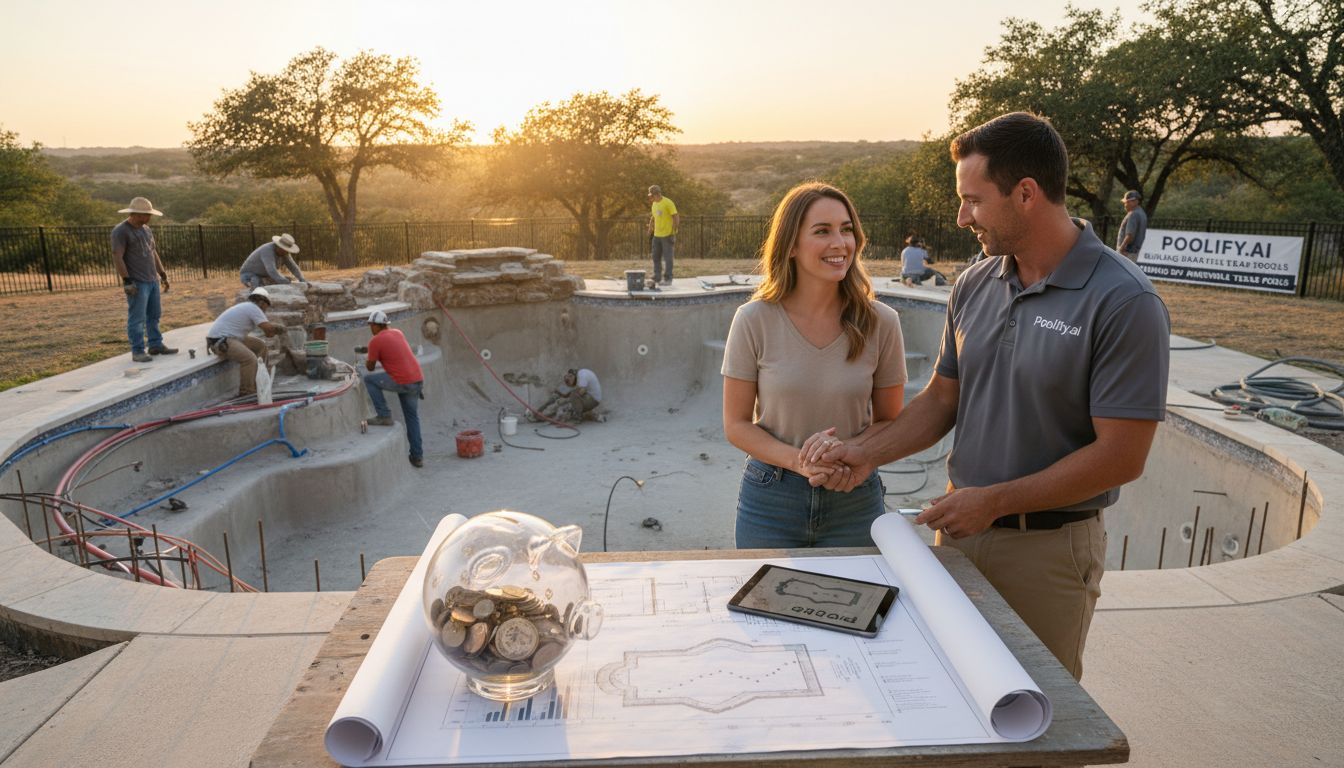
Strategic planning and informed decision-making help you maximize value while controlling the pool cost Texas builders charge. These approaches allow you to achieve your backyard oasis vision without overextending your budget or sacrificing essential quality and safety features. Smart homeowners balance immediate affordability with long-term value and enjoyment.
Timing Your Pool Construction
Scheduling construction during off-peak seasons can reduce costs by 5-15% as contractors offer incentives to maintain steady work. Fall and winter represent ideal timing in most Texas regions, allowing completion before peak summer swimming season while potentially securing better pricing. Contractors facing lighter schedules may negotiate on pricing or include upgrades to secure projects during slower periods.
Obtaining multiple detailed quotes from licensed, insured contractors ensures competitive pricing and helps you understand market rates in your area. Request at least three comprehensive estimates that break down costs by component, making it easier to compare proposals and identify outliers. Be cautious of quotes significantly below market rates, as these may indicate inexperienced contractors or plans to cut corners on materials and workmanship.
Consider phased construction approaches that spread costs over multiple years. Install the basic pool structure initially, then add features like waterfalls, upgraded lighting, or automated systems in subsequent years as budget allows. This strategy lets you enjoy your pool sooner while managing cash flow more comfortably than funding everything upfront.
Value Engineering Without Sacrificing Quality
Focus your budget on structural elements and essential equipment that impact long-term performance and safety. Invest in quality pumps, filters, and proper plumbing that operate efficiently and reliably for years. You can always upgrade aesthetic elements like lighting, water features, or decking materials later, but correcting structural shortcomings proves extremely expensive after construction completion.
Simple geometric shapes like rectangles or ovals cost significantly less than complex freeform designs while providing identical swimming functionality. If budget constraints require compromises, opt for straightforward shapes with one or two key features rather than elaborate designs that strain your finances. Many stunning Texas pools feature clean, simple lines that create timeless appeal without excessive construction costs.
Select mid-range finishes and materials that deliver durability and visual appeal without premium pricing. Aggregate finishes provide excellent longevity and appearance at moderate cost compared to basic plaster or expensive tile. Similarly, stamped concrete decking offers attractive patterns and textures at lower cost than natural stone while providing comparable performance in Texas’s climate.
Financing Options for Pool Construction
Home equity loans or lines of credit typically offer the lowest interest rates for pool financing, with rates ranging from 6-10% in 2026. These options allow you to borrow against your home’s value, spreading payments over 10-15 years while potentially qualifying for tax deductions on interest paid. Ensure your budget comfortably accommodates monthly payments without straining your overall financial position.
Many pool contractors partner with specialized lenders offering financing specifically for pool construction. These programs provide convenient one-stop shopping but may carry higher interest rates than traditional home equity products. Compare terms carefully, examining interest rates, fees, and repayment schedules to identify the most cost-effective financing solution for your situation.
Cash payment sometimes qualifies you for discounts of 3-5% as contractors avoid credit card processing fees and payment delays. If you’ve saved for your pool investment, inquire whether your contractor offers cash discounts. However, maintain adequate emergency reserves rather than depleting savings entirely for pool construction, as unexpected expenses occasionally arise during and after the project.
Choosing the Right Pool Contractor in Texas

Selecting a qualified, reputable contractor dramatically impacts both your construction experience and the final pool cost Texas homeowners invest. The right builder delivers quality workmanship, transparent communication, and fair pricing, while poor contractor choices lead to cost overruns, delays, and potentially substandard construction requiring expensive corrections. Thorough vetting protects your investment and ensures satisfaction with your completed pool.
Essential Contractor Qualifications
Verify that any contractor you consider holds proper licensing required by Texas regulations. The Texas Department of Licensing and Regulation oversees pool construction licensing, though requirements vary by municipality. Request proof of current licensing, liability insurance with minimum $1 million coverage, and workers’ compensation insurance protecting you from liability if workers are injured on your property.
Experience specifically with your chosen pool type proves crucial for quality results. A contractor specializing in concrete pools may lack expertise with fiberglass installation, and vice versa. Review portfolios showing completed projects similar to your vision, and request references from recent clients. Speaking directly with previous customers reveals insights about communication, problem-solving, and overall satisfaction that online reviews may not capture.
Membership in professional organizations like the Association of Pool and Spa Professionals indicates commitment to industry standards and ongoing education. These affiliations don’t guarantee quality but suggest contractors take their profession seriously and stay current with best practices. Check for any complaints or disciplinary actions through the Better Business Bureau and state licensing boards before making your final selection.
Contract Terms and Payment Structure
Comprehensive written contracts protect both you and your contractor by clearly defining scope, timeline, payment terms, and responsibilities. Your contract should specify exact pool dimensions, materials, equipment brands and models, and all included features. Vague contracts create opportunities for misunderstandings and disputes that delay projects and strain relationships.
Standard payment structures typically involve a deposit of 10-20% to secure your construction slot, followed by progress payments tied to completion milestones. Avoid contractors demanding large upfront payments exceeding 20% or full payment before completion. Retaining 10-15% as a final payment after you’ve inspected and approved all work provides leverage ensuring the contractor addresses any punch-list items promptly.
Ensure your contract includes detailed warranty information covering both workmanship and materials. Reputable Texas pool builders typically provide one-year warranties on construction and pass through manufacturer warranties on equipment. Understand what circumstances void warranties and what maintenance requirements you must fulfill to keep coverage valid. Clear warranty terms prevent disputes if issues emerge after project completion.
Maximizing Your Pool Investment Value
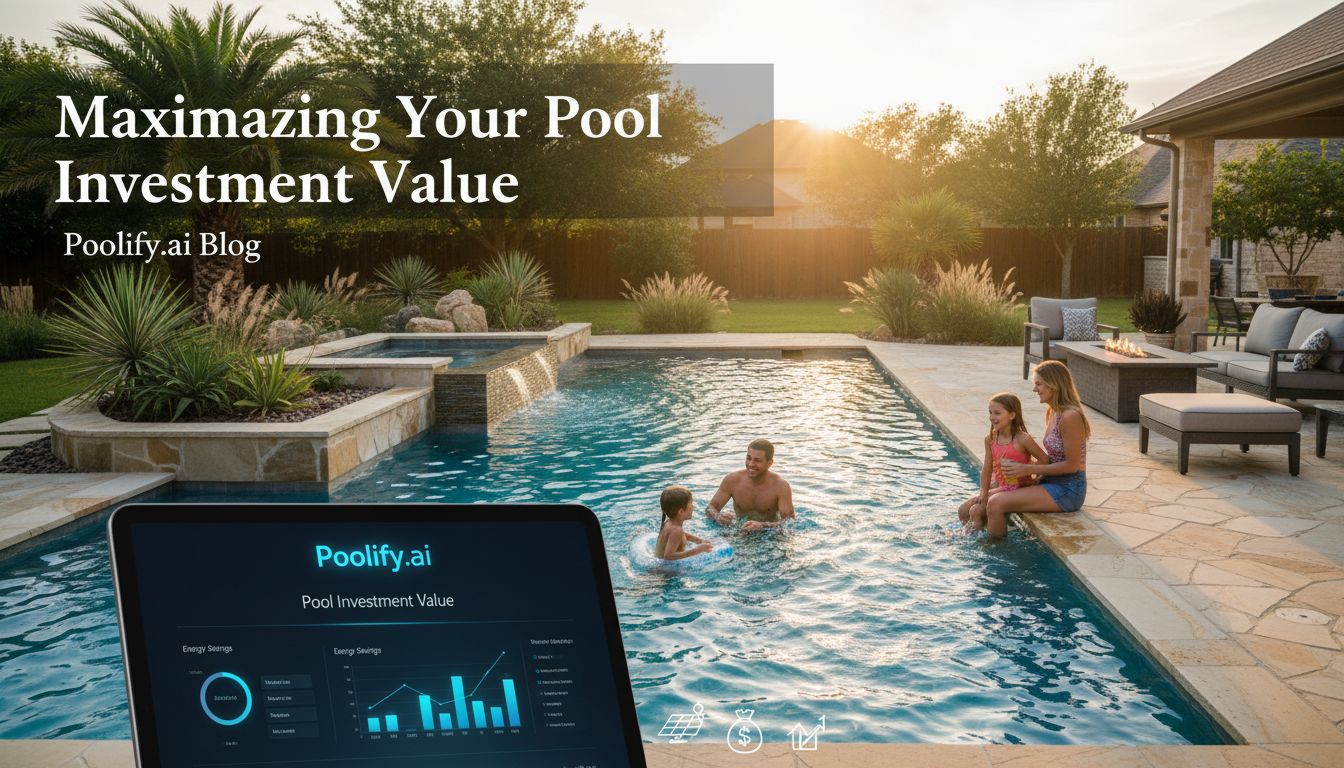
Smart design choices and quality construction ensure your pool enhances your property value and lifestyle for decades. The pool cost Texas homeowners invest represents significant capital that should deliver proportional returns through enjoyment, property value enhancement, and long-term durability. These strategies help you maximize the value of your pool investment well beyond initial construction.
Design for Your Lifestyle and Property
Align your pool design with how you’ll actually use the space rather than following trends that may not suit your needs. Families with young children benefit from generous shallow areas and safety features, while fitness enthusiasts prioritize lap lanes and resistance jets. Empty nesters might prefer compact designs with spa features and low maintenance requirements. Honest assessment of your usage patterns prevents investing in features that remain unused.
Scale your pool appropriately to your lot size and home value. Oversized pools on small lots create cramped outdoor spaces with limited functionality beyond swimming, while undersized pools on large properties appear out of proportion. Generally, pools should occupy 15-25% of your backyard area, leaving adequate space for lounging, landscaping, and other activities. Consider reviewing creative pool design approaches that maximize functionality within your available space.
Integrate your pool thoughtfully into your overall landscape design for cohesive outdoor living spaces. Position the pool to maximize sun exposure while providing convenient access from your home. Consider sight lines from indoor living spaces, privacy from neighbors, and how pool placement affects other yard uses. Thoughtful positioning enhances both visual appeal and practical functionality throughout ownership.
Energy Efficiency and Sustainability
Investing in energy-efficient equipment reduces operating costs throughout ownership while minimizing environmental impact. Variable-speed pumps, LED lighting, and solar heating systems cost more initially but deliver substantial savings over their lifespans. These efficient systems often qualify for utility rebates in Texas, reducing your net investment while lowering monthly operating expenses.
Pool covers reduce water evaporation by 90-95%, saving thousands of gallons annually in Texas’s arid climate. They also minimize heat loss, reduce chemical consumption, and keep debris out of your pool. While manual covers cost just $100 to $500, automatic systems ranging from $5,000 to $15,000 improve convenience and increase likelihood of consistent use. The water and chemical savings typically justify cover investments within two to four years.
Saltwater chlorination systems cost $1,500 to $2,500 installed but eliminate the need to purchase, store, and handle chlorine chemicals. These systems produce chlorine automatically from salt, reducing chemical costs by 50-70% while creating softer water that’s gentler on skin and eyes. Many Texas pool owners report higher satisfaction with saltwater systems despite slightly higher initial investment and equipment costs.
Long-Term Maintenance Planning
Establishing proper maintenance routines from day one protects your investment and prevents expensive repairs. Regular chemical testing and balancing, consistent cleaning, and prompt attention to minor issues prevent problems from escalating into major expenses. Many Texas homeowners find that 2-3 hours of weekly maintenance keeps their pools in excellent condition without professional service costs.
Budget for eventual equipment replacement and surface refinishing when planning your pool investment. Pumps and heaters typically last 8-12 years, requiring replacement costs of $1,500 to $3,000. Pool surfaces need refinishing every 10-20 years depending on material, costing $5,000 to $15,000. Setting aside $100 to $200 monthly in a dedicated maintenance fund ensures you’re financially prepared for these predictable expenses.
Winterization remains important even in Texas’s mild climate, particularly in northern regions experiencing occasional freezes. Proper winterization prevents expensive freeze damage to plumbing and equipment, costing just $150 to $300 for professional service or minimal expense for DIY approaches. Understanding seasonal maintenance requirements protects your investment and ensures your pool remains ready for enjoyment whenever weather permits.
Frequently Asked Questions About Pool Cost Texas
What is the average pool cost Texas homeowners pay in 2026?
The average pool cost Texas residents encounter ranges from $35,000 to $100,000 depending on pool type, size, and features. Vinyl liner pools start around $35,000, fiberglass pools typically cost $40,000 to $75,000, and concrete pools range from $50,000 to $100,000 or more. Your specific costs depend on customization, location within Texas, and contractor selection.
How does Texas climate affect pool construction costs?
Texas’s diverse climate significantly impacts construction costs. Southeast Texas’s high rainfall requires enhanced drainage systems adding $2,000 to $5,000. Central Texas’s limestone bedrock increases excavation costs by $5,000 to $12,000. West Texas’s temperature extremes necessitate freeze protection and upgraded systems adding $3,000 to $8,000. Regional climate considerations directly influence the pool cost Texas builders quote.
Can I build a quality pool in Texas for under $40,000?
Yes, vinyl liner pools and small fiberglass designs can be installed for $35,000 to $40,000 with basic features. Focus on simple rectangular shapes, standard equipment, and minimal customization to achieve this price point. However, ensure you’re working with licensed contractors using quality materials, as extremely low bids often indicate corners being cut that create problems later.
What ongoing costs should I budget for pool ownership in Texas?
Monthly operating costs typically range from $120 to $400 including electricity ($50-$200), chemicals ($30-$80), and water ($40-$100). Professional maintenance adds $100 to $200 monthly if desired. Annual costs include increased insurance premiums ($50-$200), property taxes ($300-$1,000), and equipment repairs or replacements averaging $500 to $1,500 annually.
Does a pool increase home value in Texas?
Pools typically add 5-8% to home values in Texas markets where they’re common amenities. In upscale neighborhoods around major cities, pools may be expected features that prevent your home from selling at a disadvantage. However, return on investment varies by location, with better returns in areas featuring long swimming seasons and strong demand for outdoor living amenities.
Key Takeaways: Pool Cost Texas Essentials
- Budget Realistically: The pool cost Texas homeowners face ranges from $35,000 to $100,000+ depending on type, size, and features, with concrete pools costing most and vinyl liner pools offering the most affordable entry point into pool ownership.
- Regional Variations Matter: Your location within Texas significantly affects costs due to soil conditions, climate requirements, and local market factors, with Central Texas limestone and Southeast Texas drainage needs adding substantial expenses to base construction costs.
- Plan for Hidden Costs: Beyond construction, budget an additional 15-30% for permits, fencing, landscaping, and first-year operating expenses that aren’t always included in contractor quotes but represent essential investments for complete pool installation.
- Prioritize Quality Over Features: Invest in structural integrity and efficient equipment rather than excessive aesthetic features, as you can upgrade decorative elements later but correcting structural issues proves extremely expensive after construction completion.
- Choose Contractors Carefully: Select licensed, insured contractors with specific experience in your chosen pool type, verified references, and comprehensive contracts that protect your investment and ensure quality construction meeting Texas building codes.
Conclusion: Making Your Texas Pool Dream a Reality
Understanding the complete picture of pool cost Texas homeowners encounter in 2026 empowers you to make informed decisions about this significant investment. From initial construction expenses to ongoing operating costs, careful planning ensures your pool enhances your lifestyle and property value without creating financial strain. Texas’s favorable climate and strong pool construction industry provide excellent conditions for successful pool projects when approached strategically.
The key to satisfaction lies in balancing your vision with realistic budgeting, prioritizing quality construction and essential features over excessive customization that may not deliver proportional value. Whether you’re building a simple lap pool for exercise or an elaborate resort-style oasis for entertaining, working with qualified contractors and planning comprehensively sets the foundation for decades of enjoyment.
Your pool represents more than just a financial investment—it creates a gathering place for family and friends, provides health and fitness benefits, and transforms your property into a private retreat. By understanding the factors influencing pool cost Texas builders charge and implementing smart strategies to manage expenses, you can achieve your backyard oasis vision while maintaining financial confidence throughout the construction process and beyond.
References
- U.S. Census Bureau – Construction Data: https://www.census.gov/construction/nrc/index.html
- Centers for Disease Control and Prevention – Pool Safety Guidelines: https://www.cdc.gov/healthywater/swimming/