
Pool filter problems rank among the most frustrating issues pool owners face in 2026. Whether you’re dealing with cloudy water, unusual noises, or complete system failure, understanding these common pool filter problems can save you hundreds of dollars in unnecessary repairs. This comprehensive guide walks you through diagnosing and solving the most prevalent pool filter problems, helping you maintain crystal-clear water all season long.
Understanding the Three Types of Pool Filters and Their Common Problems
Before diving into specific pool filter problems, it’s essential to understand which type of filter system you have. Each filter type experiences unique issues that require different troubleshooting approaches. Sand filters, cartridge filters, and diatomaceous earth (DE) filters each have distinct maintenance requirements and failure points that contribute to pool filter problems.
Sand filters use specially graded sand to trap debris and contaminants. These systems typically experience pool filter problems related to channeling, where water creates paths through the sand rather than filtering evenly. Cartridge filters employ pleated fabric elements that capture particles, often developing pool filter problems when the cartridge becomes clogged or damaged. DE filters provide the finest filtration but are prone to pool filter problems involving grid damage or improper DE powder distribution.
Sand Filter Specific Issues
Sand filters develop pool filter problems when the sand becomes compacted or contaminated with oils and minerals. The most common pool filter problems with sand systems include reduced flow rate, cloudy water despite proper chemical balance, and sand appearing in the pool. According to the CDC’s aquatics professionals guidelines, proper filtration is critical for maintaining safe swimming conditions.
Cartridge Filter Challenges
Cartridge filters face pool filter problems when the pleated material becomes saturated with oils, lotions, and microscopic debris. These pool filter problems manifest as increased pressure readings, shortened filter cycles, and difficulty maintaining water clarity. Cartridge-related pool filter problems often worsen during peak swimming season when bather load increases significantly.
DE Filter Complications
DE filters experience pool filter problems related to the delicate internal grids and the diatomaceous earth powder itself. Common pool filter problems include DE powder returning to the pool, uneven coating on grids, and torn filter fabric. These pool filter problems require more technical knowledge to diagnose and repair compared to other filter types.
Low Pressure and Flow Rate Pool Filter Problems
Low pressure represents one of the most common pool filter problems homeowners encounter. When your pressure gauge reads below the normal operating range, several pool filter problems could be responsible. Understanding these pool filter problems helps you restore proper circulation quickly.
The first pool filter problems to check involve the pump basket and skimmer baskets. Debris accumulation in these pre-filter components causes pool filter problems by restricting water flow before it reaches the main filter. Empty both baskets and inspect them for cracks that might allow debris to pass through, creating downstream pool filter problems.
Air leaks constitute another category of pool filter problems that reduce pressure. These pool filter problems occur at pump lid o-rings, valve stems, or pipe connections. When air enters the system, it creates pool filter problems including reduced filtration efficiency and potential pump damage. Listen for gurgling sounds that indicate air-related pool filter problems.
Impeller Blockages
Hidden pool filter problems often originate in the pump impeller. Debris that bypasses the pump basket can lodge in the impeller, creating pool filter problems that reduce water flow dramatically. These pool filter problems require disassembling the pump to access and clear the impeller blades. For more detailed maintenance guidance, check our pool pump maintenance guide.
High Pressure Pool Filter Problems
While low pressure indicates restriction before the filter, high pressure signals pool filter problems within the filter itself. These pool filter problems develop gradually as the filter media becomes loaded with contaminants. Recognizing high-pressure pool filter problems early prevents equipment damage and maintains water quality.
Most high-pressure pool filter problems resolve with proper backwashing or cleaning. Sand and DE filters require backwashing when pressure rises 8-10 PSI above the clean starting pressure. Cartridge filters need removal and thorough cleaning to address these pool filter problems. Ignoring high-pressure pool filter problems can damage the filter tank or cause system leaks.
Persistent high-pressure pool filter problems despite cleaning indicate deeper issues. These stubborn pool filter problems might result from calcified filter media, collapsed filter grids, or channeling in sand filters. Such pool filter problems often require media replacement or professional service to resolve completely.
When Backwashing Doesn’t Solve Pool Filter Problems
Some pool filter problems persist even after proper backwashing. These resistant pool filter problems typically indicate that the filter media has reached the end of its useful life. Sand should be replaced every 5-7 years, DE grids every 3-5 years, and cartridges every 1-3 years depending on usage. Failing to replace worn media creates ongoing pool filter problems that waste water, chemicals, and energy.
Cloudy Water and Pool Filter Problems
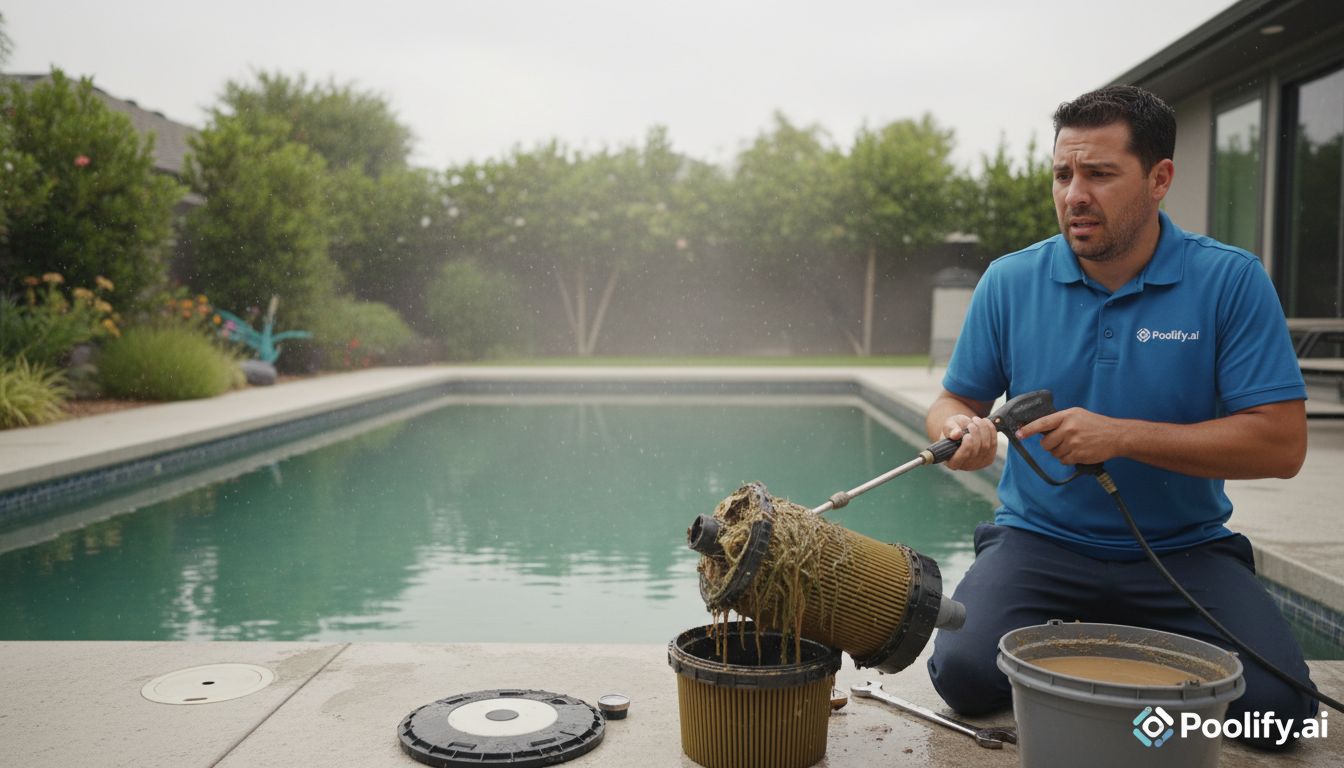
Cloudy water often points directly to pool filter problems, though chemical imbalances can also contribute. When your pool filter problems prevent adequate circulation and filtration, suspended particles remain in the water, creating that murky appearance. Distinguishing between chemical issues and true pool filter problems requires systematic troubleshooting.
First, verify your filter is running sufficient hours daily. Most pool filter problems related to cloudy water stem from inadequate filtration time. Pools typically need 8-12 hours of filtration daily, more during heavy use or hot weather. Insufficient run time creates pool filter problems by allowing debris to accumulate faster than the system can remove it.
Next, examine the filter media condition. Pool filter problems develop when sand becomes compacted, cartridges get clogged with oils, or DE grids tear. These pool filter problems allow particles to pass through the filter and return to the pool. Testing water clarity at the return jets helps identify filter-related pool filter problems versus circulation issues.
Multiport Valve Pool Filter Problems
Multiport valve malfunctions create pool filter problems that send unfiltered water back to the pool. These pool filter problems occur when the valve spider gasket wears out, allowing water to bypass the filter media. Such pool filter problems are particularly deceptive because the system appears to operate normally while providing inadequate filtration. Learn more about equipment maintenance in our pool equipment care article.
Leak-Related Pool Filter Problems
Leaking represents serious pool filter problems that waste water and potentially damage surrounding areas. These pool filter problems range from minor drips to significant water loss. Identifying the source of leak-related pool filter problems is essential for proper repair.
Tank leaks constitute major pool filter problems requiring immediate attention. These pool filter problems typically occur at the tank seam or around pipe connections. Cracked filter tanks create pool filter problems that cannot be permanently repaired and necessitate tank replacement. Never ignore tank-related pool filter problems as they can fail catastrophically.
O-ring failures cause common pool filter problems at the tank lid, drain plug, and multiport valve. These pool filter problems are easily fixed by replacing the worn o-ring. However, repeatedly tightening connections to stop leaks can create worse pool filter problems by warping the tank or cracking the lid. Always replace o-rings rather than over-tightening to prevent escalating pool filter problems.
Backwash Valve Pool Filter Problems
Backwash and waste valves develop pool filter problems when seals deteriorate. These pool filter problems cause continuous water loss and prevent proper backwashing. Replacing backwash valve components resolves these pool filter problems and restores normal operation. Ignoring these pool filter problems leads to water waste and inadequate filter cleaning.
Unusual Noises and Vibration Pool Filter Problems
Strange sounds often signal developing pool filter problems before they cause system failure. These auditory pool filter problems provide early warning of issues requiring attention. Learning to identify different noise-related pool filter problems helps prevent costly breakdowns.
Grinding noises indicate severe pool filter problems involving the pump bearings or impeller. These pool filter problems worsen rapidly and can cause pump failure if ignored. Bearing-related pool filter problems require pump motor replacement or professional rebuilding. Catching these pool filter problems early minimizes repair costs.
Rattling or vibrating sounds suggest pool filter problems with loose components or air in the system. These pool filter problems might seem minor but can lead to connection failures and leaks. Tighten all clamps and connections to resolve vibration-related pool filter problems. Persistent vibration despite tightening indicates more serious pool filter problems requiring professional diagnosis.
Cavitation Pool Filter Problems
Cavitation creates distinctive pool filter problems characterized by a rumbling or crackling sound. These pool filter problems occur when the pump cannot draw sufficient water, causing vapor bubbles to form and collapse. Cavitation-related pool filter problems damage the impeller and reduce pump lifespan. Address these pool filter problems by improving suction-side flow or reducing pump speed.
Preventive Maintenance to Avoid Pool Filter Problems
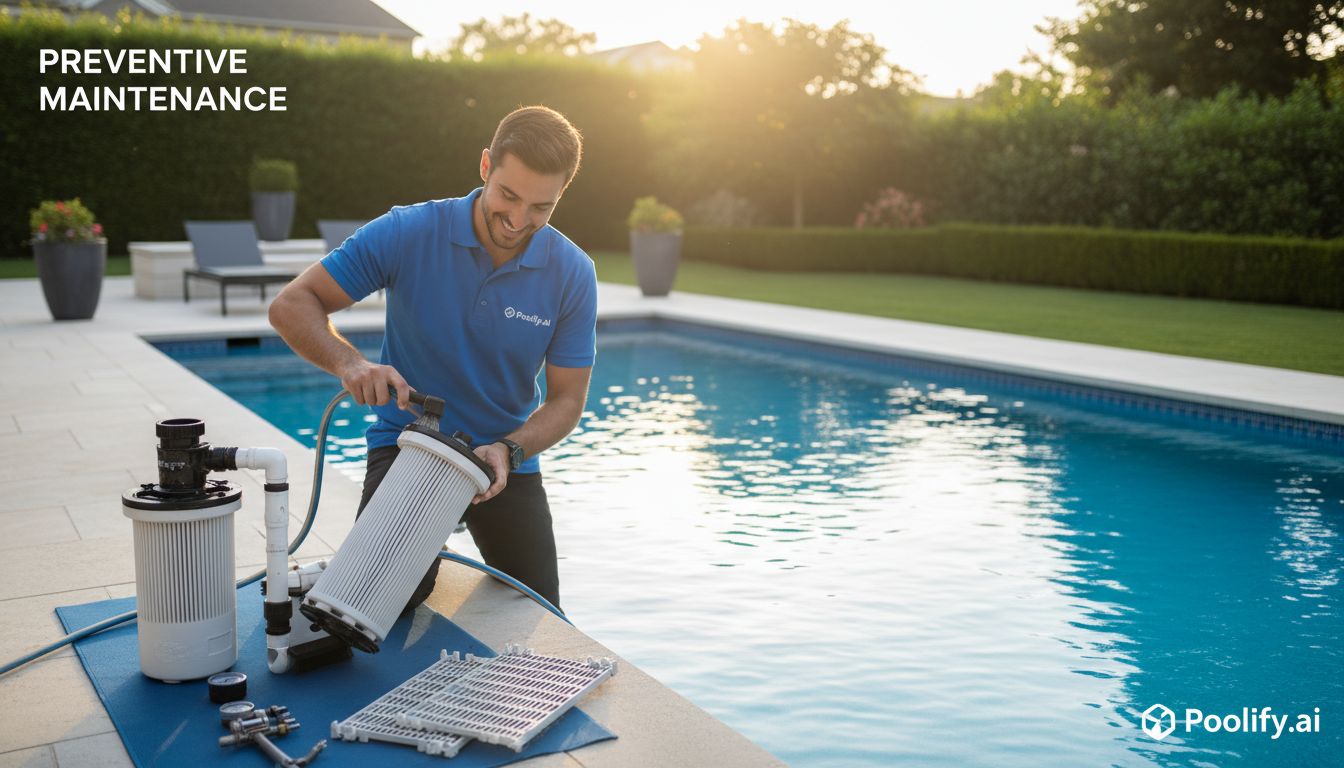
Most pool filter problems are preventable through regular maintenance. Establishing a consistent routine minimizes unexpected pool filter problems and extends equipment life. These preventive measures address pool filter problems before they disrupt your swimming season.
Weekly tasks prevent many pool filter problems. Check and clean skimmer and pump baskets, inspect the pressure gauge, and verify proper flow at return jets. These simple actions catch developing pool filter problems early when they’re easiest to fix. Document pressure readings to establish baselines for identifying future pool filter problems.
Monthly maintenance prevents long-term pool filter problems. Clean or backwash the filter according to pressure readings, inspect all o-rings and gaskets, and check for leaks around equipment. These monthly checks identify pool filter problems that weekly inspections might miss. For comprehensive seasonal maintenance tips, visit our seasonal pool care guide.
Annual Deep Maintenance
Annual service prevents major pool filter problems. Remove and thoroughly inspect cartridges or grids, check multiport valve operation, and verify pump performance. Professional inspection catches hidden pool filter problems that homeowners might overlook. Annual maintenance costs far less than emergency repairs for neglected pool filter problems.
When to Call a Professional for Pool Filter Problems
While many pool filter problems are DIY-friendly, some require professional expertise. Knowing when to call a technician prevents worsening pool filter problems through improper repairs. These situations warrant professional attention for pool filter problems.
Electrical issues related to pool filter problems always require licensed electricians. Never attempt DIY repairs on pool filter problems involving wiring, breakers, or motor connections. Electrical pool filter problems pose serious safety risks including shock and fire hazards. Professional diagnosis ensures safe resolution of electrical pool filter problems.
Structural damage creates pool filter problems beyond typical homeowner capabilities. Cracked tanks, broken pipes, and damaged equipment pads require professional assessment. These pool filter problems might involve warranty claims or permit requirements. Professional handling of structural pool filter problems ensures code compliance and proper repairs.
Key Takeaways
- Pool filter problems typically manifest through pressure changes, cloudy water, leaks, or unusual noises that indicate specific system failures requiring targeted troubleshooting approaches
- Regular preventive maintenance including weekly basket cleaning and monthly filter servicing prevents most common pool filter problems before they cause system failures or water quality issues
- Understanding your specific filter type—sand, cartridge, or DE—helps diagnose pool filter problems accurately since each system experiences unique failure modes and maintenance requirements
- High pressure readings signal clogged filter media requiring cleaning, while low pressure indicates suction-side restrictions or air leaks that reduce circulation efficiency and filtration effectiveness
- Professional service is essential for electrical pool filter problems, structural damage, or persistent issues that don’t resolve with standard maintenance procedures
Frequently Asked Questions About Pool Filter Problems
How often should I clean my filter to prevent pool filter problems?
Clean or backwash your filter when pressure rises 8-10 PSI above the clean starting pressure, typically every 4-6 weeks during swimming season. Cartridge filters need removal and thorough cleaning every 2-4 weeks under normal conditions. More frequent cleaning may be necessary during heavy use or after storms. Establishing a regular cleaning schedule prevents most pressure-related pool filter problems and maintains optimal water quality throughout the season.
Why does my pool filter keep getting dirty so quickly?
Rapid filter fouling indicates excessive debris entering the system, inadequate pre-filtration, or environmental factors. Check that skimmer baskets are functioning properly and consider upgrading to finer mesh baskets. Nearby trees, construction, or heavy bather loads accelerate filter contamination. Some pool filter problems stem from algae blooms or chemical imbalances that create suspended particles. Address the source of contamination rather than simply cleaning more frequently to resolve recurring pool filter problems.
Can I run my pool pump without the filter temporarily?
Never run your pool pump without the filter installed, as this creates dangerous pool filter problems including pump damage and potential injury. The filter tank provides essential back-pressure that prevents pump cavitation and motor overheating. Running without a filter also allows debris into the return lines, creating blockages and additional pool filter problems. Always ensure the complete filter assembly is properly installed before operating the circulation system.
What causes sand or DE powder to return to my pool?
Sand or DE returning to the pool indicates serious pool filter problems with internal components. In sand filters, this occurs when laterals crack or the standpipe fails. DE filters return powder when grids tear or the manifold cracks. These pool filter problems require opening the filter tank and replacing damaged components. Continuing to operate with these pool filter problems damages the pump impeller and worsens the issue significantly.
How do I know if my filter needs replacement versus just cleaning?
Replace filter media when cleaning no longer restores normal pressure and flow rates. Sand that clumps together, cartridges with damaged pleats or hard deposits, and DE grids with tears all indicate replacement needs. Most pool filter problems resolve with proper cleaning, but media has a finite lifespan. If pressure remains high after thorough cleaning or water clarity doesn’t improve, replacement resolves these persistent pool filter problems and restores system efficiency.
Conclusion
Understanding and addressing pool filter problems promptly keeps your pool safe, clean, and enjoyable throughout 2026. Most pool filter problems are preventable through regular maintenance and early intervention when issues first appear. By recognizing the signs of common pool filter problems and knowing when to perform DIY fixes versus calling professionals, you’ll minimize downtime and repair costs. Remember that your filter is the heart of your pool’s circulation system—keeping it healthy prevents the vast majority of water quality issues and equipment failures. Stay proactive with maintenance, document your system’s normal operating parameters, and address pool filter problems immediately for years of trouble-free swimming.
References
- Centers for Disease Control and Prevention – Aquatics Professionals Guidelines
- Poolify.ai – Pool Pump Maintenance Guide
- Poolify.ai – Pool Equipment Care
- Poolify.ai – Seasonal Pool Care Guide