

Introduction to Pool Financing Options
Installing a swimming pool is one of the most significant home improvements you’ll ever make, with costs ranging from $35,000 to $100,000 or more in 2026. For most homeowners, paying cash upfront isn’t realistic, which makes understanding pool financing options essential. Whether you’re dreaming of a luxurious inground pool or a practical above-ground option, the right financing can transform your backyard vision into reality without depleting your savings. This comprehensive guide explores the best pool financing options available in 2026, helping you choose the solution that aligns with your financial situation and long-term goals.
Why Pool Financing Options Matter in 2026
The pool industry has evolved significantly, and so have the pool financing options available to homeowners. With interest rates stabilizing after years of volatility and lenders offering more competitive terms, 2026 presents unique opportunities for strategic pool financing. Understanding your options isn’t just about getting approved—it’s about maximizing value, minimizing costs, and protecting your financial health while adding substantial value to your property.
According to the National Association of Realtors, pools can increase home value by 5-8% in desirable markets, making smart financing a true investment rather than just an expense. The key is choosing from the various pool financing options based on your credit profile, home equity, and cash flow situation.
Home Equity Loans for Pool Financing
Home equity loans rank among the most popular pool financing options for homeowners with substantial equity. These loans provide a lump sum based on your home’s value minus what you owe, with fixed interest rates typically ranging from 6.5% to 9% in 2026. The predictability of fixed payments makes budgeting straightforward, and interest may be tax-deductible if the pool qualifies as a home improvement.
The primary advantage of using home equity as one of your pool financing options is accessing larger amounts—often $50,000 to $250,000—with lower interest rates than unsecured loans. Repayment terms extend from 5 to 30 years, keeping monthly payments manageable. However, your home serves as collateral, meaning defaulting could risk foreclosure. Most lenders require at least 15-20% equity remaining after the loan.
When Home Equity Loans Make Sense
This pool financing option works best when you’ve owned your home for several years and built significant equity. If you purchased during the 2020-2022 housing boom, your home’s appreciation likely provides ample borrowing power. Home equity loans also suit homeowners planning to stay in their property long-term, as the investment directly enhances their living space and property value.
Home Equity Lines of Credit (HELOCs)
HELOCs represent flexible pool financing options that function like credit cards secured by your home equity. Rather than receiving a lump sum, you get a revolving credit line to draw from as needed during a 5-10 year draw period. This flexibility proves valuable when pool construction costs vary or when you’re completing the project in phases.
Interest rates on HELOCs are typically variable, starting around 7-10% in 2026, though some lenders offer fixed-rate options. You only pay interest on the amount you actually use, making HELOCs cost-effective pool financing options when you’re uncertain about final costs. The draw period transitions to a repayment period lasting 10-20 years, during which you can no longer borrow and must repay principal plus interest.
The variable rate structure means your payments can fluctuate with market conditions, creating budgeting uncertainty. However, for disciplined borrowers who understand the terms, HELOCs offer among the most economical pool financing options available. Many homeowners appreciate the ability to access remaining credit for future projects or emergencies.
Personal Loans as Pool Financing Options
Personal loans provide unsecured pool financing options requiring no collateral, making them attractive for homeowners without substantial equity or those uncomfortable leveraging their homes. These loans offer fixed rates typically between 8-18% in 2026, depending on your credit score, with terms ranging from 2-7 years.
The application process for personal loans is generally faster than home equity products, often providing approval within 24-48 hours and funding within a week. Loan amounts typically cap at $50,000 to $100,000, sufficient for many pool projects. The absence of collateral means your home isn’t at risk, though default damages your credit significantly and may result in legal action.
Advantages of Personal Loan Pool Financing Options
Personal loans shine as pool financing options when you need quick access to funds or have excellent credit that qualifies you for competitive rates. They work well for smaller projects or above-ground pools costing $20,000-$40,000. The fixed payment structure and defined payoff date help you budget effectively and eliminate debt on a clear timeline.
These pool financing options also avoid the closing costs and appraisal fees associated with home equity products, which can save $500-$2,000 upfront. For homeowners who’ve recently refinanced or don’t want additional liens on their property, personal loans offer a clean alternative.
Contractor and Dealer Financing Programs
Many pool builders and retailers offer in-house or partnered pool financing options, creating a one-stop shopping experience. These programs range from promotional 0% APR offers for 12-18 months to longer-term installment plans with competitive rates. Contractor financing can be among the most convenient pool financing options, with approvals happening on-site during consultations.
Promotional financing deserves careful evaluation—the 0% APR pool financing options typically require paying the full balance before the promotional period ends, or you’ll face retroactive interest charges at rates often exceeding 20%. These work excellently if you can commit to aggressive payments and eliminate the balance quickly.
Standard contractor pool financing options function like personal loans with rates between 9-15% and terms of 3-7 years. The convenience factor is substantial, as contractors handle paperwork and coordinate payments with project milestones. However, always compare these pool financing options against bank loans and home equity products to ensure you’re getting competitive terms.
Cash-Out Refinancing for Pool Projects
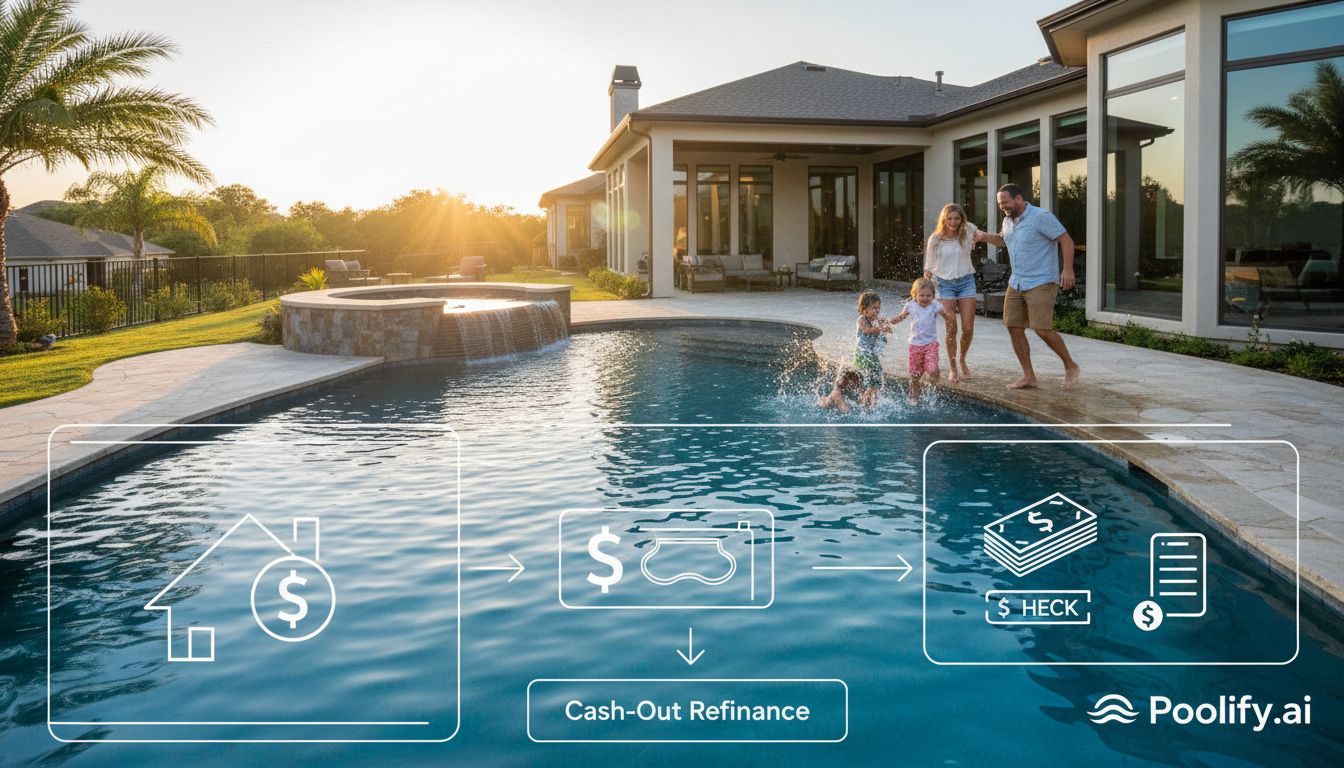
Cash-out refinancing replaces your existing mortgage with a larger loan, providing the difference in cash for your pool project. This strategy works as one of the pool financing options when current mortgage rates are comparable to or lower than your existing rate. In 2026, with rates moderating, some homeowners find cash-out refinancing economically viable.
The major advantage of this approach among pool financing options is consolidating your pool costs into your mortgage, often at the lowest available interest rate. You’ll spread payments over 15-30 years, minimizing monthly impact. The extended timeline means paying substantially more interest over the loan’s life compared to shorter-term pool financing options.
Cash-out refinancing involves closing costs of 2-5% of the loan amount, potentially $5,000-$15,000 for most homeowners. You’ll need sufficient equity—lenders typically require maintaining 20% equity after the cash-out. This pool financing option makes most sense when you’re already considering refinancing for other reasons or can secure a meaningfully lower rate.
Credit Cards and Alternative Pool Financing Options
While less common for full pool installations, credit cards serve as pool financing options for smaller projects, repairs, or partial payments. Premium rewards cards offering 0% introductory APR for 12-21 months can be strategic tools if you’re confident about rapid repayment. Some homeowners use multiple cards to maximize rewards and promotional periods.
The risk with credit card pool financing options is substantial—standard APRs of 18-25% make carrying balances extremely expensive. Credit utilization also impacts your credit score, potentially affecting other pool financing options you’re pursuing simultaneously. Reserve credit cards for deposits, specific materials, or components rather than financing entire projects.
Alternative and Creative Pool Financing Options
Beyond traditional products, several creative pool financing options exist for specific situations. FHA Title I loans allow borrowing up to $25,000 for home improvements without home equity requirements, though qualifying can be challenging. Some homeowners tap retirement accounts through 401(k) loans, borrowing against their balance without credit checks or tax penalties if repaid properly.
Peer-to-peer lending platforms offer pool financing options with rates between traditional banks and credit cards, sometimes providing more flexible terms for borrowers with unique situations. Local credit unions frequently feature specialized home improvement loan programs with competitive rates and community-focused underwriting that considers factors beyond credit scores.
Comparing Pool Financing Options: Key Factors
Selecting among pool financing options requires evaluating multiple factors beyond interest rates. Total cost of borrowing includes rates, fees, closing costs, and loan terms. A 7% home equity loan over 15 years costs substantially less than a 10% personal loan over 5 years, despite higher monthly payments on the shorter term.
Your credit score dramatically impacts available pool financing options and their terms. Scores above 740 unlock the best rates across all products, while scores below 640 may limit you to higher-cost pool financing options or require co-signers. Before applying, check your credit and address any errors or issues that could cost you thousands in additional interest.
Consider your financial stability and job security when choosing pool financing options. Home equity products make sense for stable situations, while personal loans might be safer if you’re concerned about job changes or income fluctuations. Match the loan term to your expected time in the home—financing a pool with a 20-year HELOC when you plan to sell in 5 years may not maximize your investment.
Tax Implications of Pool Financing Options
Tax treatment varies significantly among pool financing options. Interest on home equity loans and HELOCs may be tax-deductible if you itemize deductions and the pool qualifies as a substantial home improvement, according to IRS Publication 936. Personal loan interest isn’t deductible, making the effective cost higher than the stated rate for taxpayers in higher brackets.
Consult a tax professional to understand how different pool financing options impact your specific situation. The Tax Cuts and Jobs Act limited home equity interest deductions, but pools that add value to your property generally qualify. Proper documentation of how borrowed funds were used is essential for claiming deductions.
How to Qualify for the Best Pool Financing Options

Securing favorable terms on pool financing options starts with financial preparation. Lenders evaluate credit scores, debt-to-income ratios, employment history, and available equity. Aim for a credit score above 700 for good rates and above 740 for the best pool financing options available. Pay down existing debt to improve your debt-to-income ratio, ideally keeping it below 43%.
Gather documentation before applying for pool financing options: recent pay stubs, tax returns, bank statements, and property information. Having materials ready accelerates approval and demonstrates financial organization to lenders. Shop multiple lenders—rates and terms vary significantly, and comparing at least three pool financing options can save thousands over the loan’s life.
Timing matters when pursuing pool financing options. Apply during off-peak seasons when lenders have more capacity and may offer promotional rates. Avoid applying for multiple credit products simultaneously, as hard inquiries temporarily lower your score. Instead, submit applications within a 14-30 day window when shopping for the same loan type, as credit bureaus typically count these as a single inquiry.
Pool Financing Options: Common Mistakes to Avoid
Many homeowners make costly errors when selecting pool financing options. Borrowing more than necessary is tempting when lenders approve large amounts, but every dollar borrowed costs interest. Determine your true pool budget including installation, landscaping, fencing, and ongoing maintenance before choosing among pool financing options.
Focusing solely on monthly payments rather than total cost leads to expensive long-term pool financing options. A 30-year loan with low payments costs dramatically more in interest than a 10-year loan, even at the same rate. Calculate total interest paid over the loan’s life when comparing pool financing options.
Ignoring the fine print causes problems with promotional pool financing options. Deferred interest programs require complete payoff before the promotional period ends, or you’ll owe interest retroactively on the entire original balance. Prepayment penalties on some pool financing options negate the benefits of paying ahead, so verify terms before signing.
Overlooking Total Project Costs
Pool installation extends beyond the pool itself. Decking, fencing, landscaping, electrical work, and permits add 20-40% to base costs. When evaluating pool financing options, budget for the complete project plus a 10-15% contingency for unexpected expenses. Running out of money mid-project forces you into expensive emergency pool financing options or leaves your project incomplete.
Frequently Asked Questions About Pool Financing Options
What are the easiest pool financing options to qualify for?
Personal loans and contractor financing programs typically have the most accessible qualification requirements among pool financing options, though they may carry higher interest rates. These don’t require home equity and often feature faster approval processes. However, “easy” qualification usually means higher costs, so improve your credit profile before applying if possible to access better pool financing options.
How much should I expect to pay monthly with different pool financing options?
Monthly payments vary dramatically based on amount, rate, and term. For a $50,000 pool: a 7% home equity loan over 15 years costs approximately $450/month; a 10% personal loan over 5 years runs about $1,060/month; a 8% HELOC (interest-only during draw period) starts around $330/month. Compare multiple pool financing options using online calculators to understand payment impacts on your budget.
Can I use multiple pool financing options for one project?
Yes, combining pool financing options is common and sometimes strategic. You might use a home equity loan for the bulk of costs and a 0% credit card for specific equipment, maximizing benefits from each. However, managing multiple pool financing options requires careful coordination and discipline. Ensure your debt-to-income ratio can support multiple obligations and that you’re not overextending financially.
Do pool financing options affect my home’s resale value?
The financing method doesn’t directly affect resale value, but the pool itself typically adds 5-8% to home value in desirable markets. However, outstanding loans secured by your home must be paid at closing, reducing your net proceeds. When choosing pool financing options, consider your expected timeline in the home and whether the pool’s value appreciation will exceed your financing costs.
What’s the minimum credit score needed for pool financing options?
Minimum scores vary by lender and product. Home equity pool financing options typically require 620-640 minimum, with best rates at 740+. Personal loans may approve scores as low as 580-600, though rates will be significantly higher. Contractor pool financing options sometimes approve lower scores but at premium rates. If your score is below 640, focus on improvement before pursuing pool financing options to save substantially on interest.
Key Takeaways: Choosing the Right Pool Financing Options

- Home equity products offer the lowest rates among pool financing options but require substantial equity and use your home as collateral, making them ideal for established homeowners with stable finances and long-term plans.
- Personal loans provide speed and simplicity as pool financing options without collateral requirements, working well for smaller projects, borrowers without equity, or those seeking quick approval despite higher interest rates.
- Contractor financing delivers convenience but requires careful comparison against other pool financing options to ensure competitive terms, especially with promotional offers that may carry hidden costs.
- Total cost matters more than monthly payments when evaluating pool financing options—calculate interest paid over the loan’s entire life and consider tax implications to understand true costs.
- Preparation improves your options and rates significantly—boost your credit score, reduce existing debt, and shop multiple lenders to access the best pool financing options available in 2026.
Conclusion: Making Pool Financing Options Work for You
Choosing among pool financing options in 2026 requires balancing immediate affordability with long-term financial health. The right solution depends on your unique circumstances: equity position, credit profile, income stability, and how long you plan to enjoy your pool. Home equity products typically offer the most economical pool financing options for established homeowners, while personal loans provide accessible alternatives for those without equity or needing faster approval.
Take time to thoroughly research and compare pool financing options before committing. Request quotes from multiple lenders, calculate total costs including interest and fees, and ensure monthly payments fit comfortably within your budget alongside ongoing pool maintenance expenses. A pool represents a significant investment in your lifestyle and property value—the right financing approach ensures you enjoy your backyard oasis without financial stress.
For more guidance on maximizing your pool investment, explore our comprehensive pool maintenance guide and learn about pool design strategies that enhance value. With careful planning and the right pool financing options, your dream backyard is closer than you think.
References
- National Association of Realtors – Research and Statistics on Home Values: https://www.nar.realtor/research-and-statistics
- IRS Publication 936 – Home Mortgage Interest Deduction: https://www.irs.gov/publications/p936