
Understanding Pool Insurance Coverage in 2026
Owning a swimming pool transforms your backyard into a personal oasis, but it also introduces significant liability and financial risks. This pool insurance guide provides homeowners with essential information about protecting their investment and minimizing exposure to costly claims. Whether you’re installing a new pool or reviewing existing coverage, understanding pool insurance fundamentals helps you make informed decisions that protect your family and assets. The insurance landscape for pool owners has evolved considerably, with new coverage options and requirements emerging in 2026 that every pool owner should understand.
Pool-related insurance claims have increased by 23% over the past three years, making adequate coverage more critical than ever. This pool insurance guide walks you through coverage types, liability considerations, cost factors, and practical strategies to ensure comprehensive protection. From basic homeowners policy extensions to specialized pool insurance products, you’ll discover how to build the right coverage package for your specific situation and budget.
Why Pool Owners Need Specialized Insurance Coverage
Standard homeowners insurance policies typically provide limited coverage for swimming pools, often excluding certain types of accidents or damage. According to the Insurance Information Institute, pools increase liability exposure significantly, with drowning being the second leading cause of unintentional death for children. This pool insurance guide emphasizes that basic homeowners coverage may not adequately protect against pool-specific risks, leaving you vulnerable to substantial out-of-pocket expenses.
Pool insurance addresses several critical areas that standard policies may overlook. Liability protection covers medical expenses and legal fees if someone is injured in or around your pool. Property damage coverage protects the pool structure, equipment, and surrounding hardscaping from covered perils. Additional living expenses coverage helps if pool damage makes your home temporarily uninhabitable. Understanding these coverage layers is fundamental to this pool insurance guide’s recommendations for comprehensive protection.
The financial consequences of inadequate pool insurance can be devastating. A single drowning incident can result in lawsuits exceeding $1 million, while equipment failures or structural damage can cost tens of thousands to repair. This pool insurance guide helps you identify coverage gaps before they become expensive problems. Many homeowners discover their coverage limitations only after filing a claim, making proactive insurance planning essential for responsible pool ownership.
Types of Pool Insurance Coverage Explained
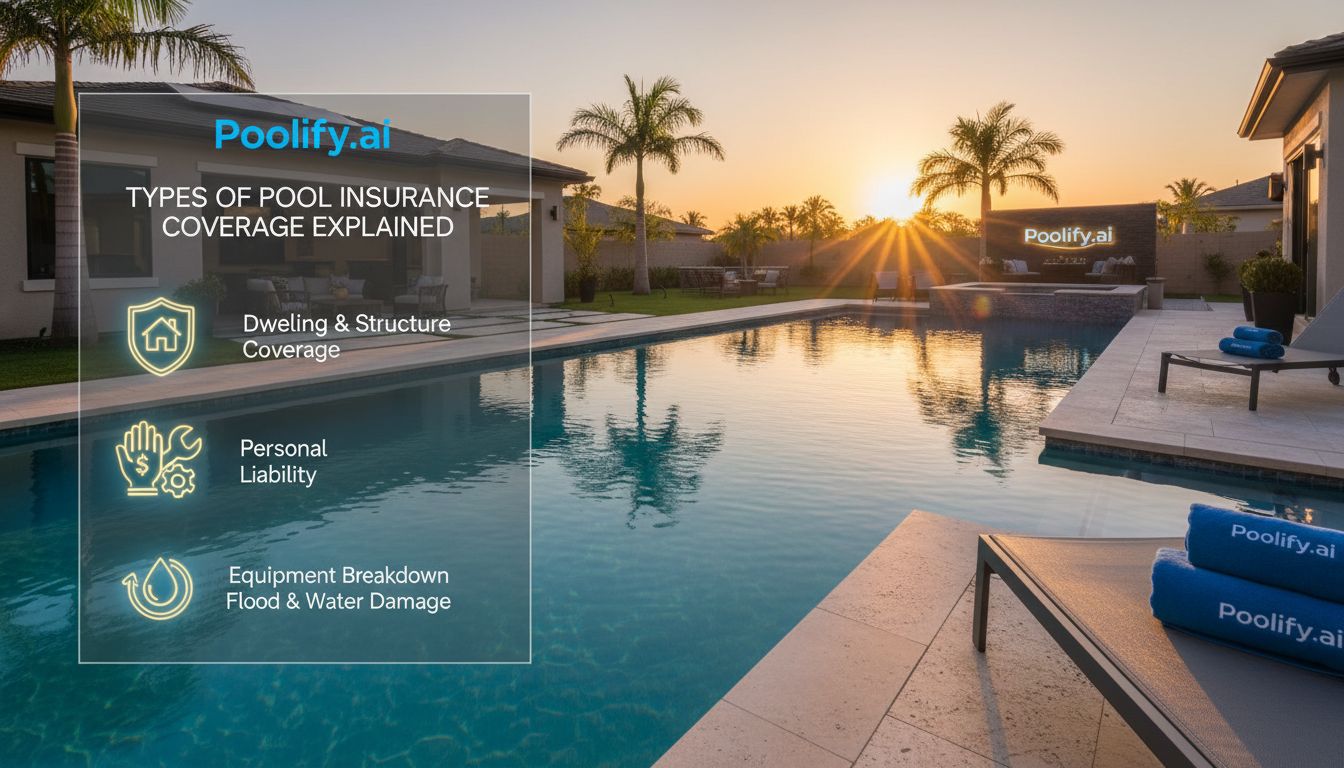
This pool insurance guide breaks down the primary coverage types available to pool owners in 2026. Liability coverage protects you if someone is injured on your property, covering medical expenses, legal defense costs, and potential settlements. Most insurance professionals recommend minimum liability limits of $500,000 for pool owners, though $1 million provides better protection. Higher liability limits cost surprisingly little more but provide substantially greater peace of mind.
Property coverage protects your pool structure and equipment from covered perils like storms, vandalism, or falling objects. This pool insurance guide notes that property coverage typically includes the pool shell, decking, fencing, pumps, filters, heaters, and lighting systems. However, coverage limits vary significantly between policies, with some capping pool equipment at $5,000 while others provide replacement cost coverage. Understanding your policy’s specific limits prevents unpleasant surprises during the claims process.
Medical payments coverage provides no-fault protection for minor injuries, paying medical expenses regardless of liability. This pool insurance guide recommends medical payments coverage as an affordable way to handle small claims without triggering liability investigations. Umbrella policies extend your liability protection beyond homeowners policy limits, providing an additional $1-5 million in coverage. For pool owners with significant assets, umbrella coverage represents essential protection at relatively modest cost.
Specialized Pool Insurance Endorsements
Beyond basic coverage, this pool insurance guide explores specialized endorsements that address specific pool-related risks. Equipment breakdown coverage protects expensive pool systems like heaters, pumps, and automation equipment from mechanical failure. Standard policies typically exclude mechanical breakdown, making this endorsement valuable for pools with sophisticated equipment. Water damage endorsements cover situations where pool leaks or overflow cause damage to your home or neighboring properties.
Diving board and slide coverage requires special attention in this pool insurance guide, as these features significantly increase liability exposure. Many insurers either exclude coverage for diving equipment or charge substantial premiums for inclusion. Pool enclosure coverage protects screened enclosures, gazebos, and pool houses from wind, hail, and other covered perils. Understanding which features require additional coverage prevents gaps in your protection strategy.
Pool Insurance Guide: Cost Factors and Pricing
Pool insurance costs vary widely based on multiple factors this pool insurance guide examines in detail. Pool type significantly impacts premiums, with in-ground pools typically costing more to insure than above-ground models. In-ground pools add approximately $50-75 annually to homeowners insurance premiums, while extensive features like waterfalls, spas, or custom lighting can increase costs further. Above-ground pools may add only $25-50 annually, though insurers often cap coverage for these structures.
Location plays a crucial role in pool insurance pricing, as this pool insurance guide reveals. Homeowners in hurricane-prone regions face higher premiums due to increased storm damage risk. Areas with longer swimming seasons see more claims, affecting regional pricing. Your home’s proximity to fire hydrants and fire stations influences rates, as does local crime rates for vandalism coverage. Understanding these geographic factors helps you anticipate insurance costs before pool installation.
Safety features significantly reduce pool insurance premiums according to this pool insurance guide’s analysis. Four-sided fencing with self-closing, self-latching gates can reduce premiums by 10-20%. Pool covers, alarms, and safety equipment demonstrate risk mitigation to insurers. Some companies offer discounts for completing pool safety courses or maintaining CPR certification. Investing in safety features not only protects your family but also delivers ongoing insurance savings.
Reducing Your Pool Insurance Premiums
This pool insurance guide provides actionable strategies to minimize insurance costs without sacrificing protection. Bundling pool coverage with your homeowners, auto, and umbrella policies typically yields multi-policy discounts of 15-25%. Increasing your deductible from $500 to $1,000 or $2,500 can reduce premiums by 10-30%, though ensure you maintain adequate emergency savings to cover higher out-of-pocket expenses during claims.
Maintaining a claims-free history represents the most effective long-term cost reduction strategy in this pool insurance guide. Insurers reward customers without recent claims with preferred pricing and loyalty discounts. Installing advanced safety systems like pool alarms, motion sensors, and security cameras demonstrates risk management commitment. Regular pool maintenance and professional inspections prevent equipment failures and structural issues that lead to claims, protecting both your pool and your insurance rates.
Liability Protection: Your Primary Pool Insurance Concern
Liability protection forms the cornerstone of any comprehensive pool insurance guide strategy. Pool owners face substantial legal exposure if guests, neighbors, or even trespassers suffer injuries on their property. The legal doctrine of “attractive nuisance” holds property owners responsible for injuries to children who trespass to access pools, making liability coverage essential regardless of fault. This pool insurance guide emphasizes that liability claims can exceed policy limits, potentially forcing asset liquidation or bankruptcy.
Common pool liability scenarios include slip-and-fall accidents on wet decking, diving injuries, drowning incidents, and chemical exposure injuries. This pool insurance guide notes that liability extends beyond the pool itself to surrounding areas, equipment, and access points. Legal defense costs alone can reach $100,000-300,000 even if you’re found not liable, making adequate coverage limits crucial. Many insurers provide defense costs in addition to policy limits, effectively increasing your protection.
This pool insurance guide strongly recommends umbrella liability policies for pool owners with assets to protect. Umbrella coverage activates after your homeowners liability limits are exhausted, providing an additional $1-5 million in protection. Given that umbrella policies cost approximately $150-300 annually for $1 million in coverage, they represent exceptional value for high-risk property owners. The peace of mind from knowing you have multi-million dollar protection justifies the modest premium investment.
Reducing Liability Exposure Through Risk Management
Beyond insurance coverage, this pool insurance guide addresses proactive liability reduction strategies. Proper fencing represents your first line of defense, with four-sided isolation fencing proving most effective. Gates should feature self-closing, self-latching mechanisms positioned beyond children’s reach. Pool covers, alarms, and safety equipment provide additional protection layers that both reduce accident risk and demonstrate reasonable care in potential litigation.
Establishing and enforcing pool rules helps manage liability exposure according to this pool insurance guide. Posted rules regarding diving, running, supervision requirements, and capacity limits demonstrate safety consciousness. Maintaining proper chemical balance prevents illness and injury while documenting regular maintenance shows responsible ownership. Prohibiting alcohol during pool parties and ensuring adequate adult supervision reduces accident likelihood and strengthens your liability defense.
Pool Insurance Guide: Claims Process and Documentation
Understanding the claims process represents a critical component of this pool insurance guide. When pool damage or injuries occur, immediately document the situation with photographs, videos, and written descriptions. Contact your insurance agent or company within 24-48 hours to report the incident, even if you’re uncertain whether you’ll file a claim. This pool insurance guide emphasizes that delayed reporting can jeopardize coverage, particularly for liability claims where witness memories fade and evidence disappears.
Gather comprehensive documentation to support your claim according to this pool insurance guide’s recommendations. For property damage, obtain multiple repair estimates from licensed contractors. Preserve damaged equipment and materials for insurer inspection. For liability claims, collect witness statements, medical records, and incident reports. Maintain detailed records of all communications with your insurer, including dates, representatives’ names, and conversation summaries. Thorough documentation accelerates claims processing and improves settlement outcomes.
This pool insurance guide advises working cooperatively with insurance adjusters while protecting your interests. Adjusters evaluate damage, determine coverage applicability, and calculate settlement amounts. Provide requested information promptly but avoid making recorded statements without understanding their implications. For significant claims, consider hiring a public adjuster or attorney to represent your interests. Understanding that insurers aim to minimize payouts helps you negotiate effectively for fair settlements.
Common Pool Insurance Claim Denials
This pool insurance guide identifies frequent reasons insurers deny pool-related claims. Lack of proper maintenance represents the leading denial reason, with insurers arguing that neglect rather than covered perils caused damage. Failure to maintain required safety features like fencing or alarms can void coverage entirely. Intentional acts, gradual deterioration, and wear-and-tear fall outside standard policy coverage. Understanding exclusions before incidents occur allows you to address coverage gaps proactively.
Policy limit disputes arise when damage exceeds scheduled equipment limits or when insurers apply depreciation to replacement costs. This pool insurance guide recommends reviewing your policy’s valuation method, with replacement cost coverage providing superior protection despite higher premiums. Timing issues cause denials when policyholders fail to report claims promptly or when damage occurred before coverage inception. Reading your policy carefully and maintaining detailed records prevents many common denial scenarios.
Pool Insurance Requirements for Different Pool Types
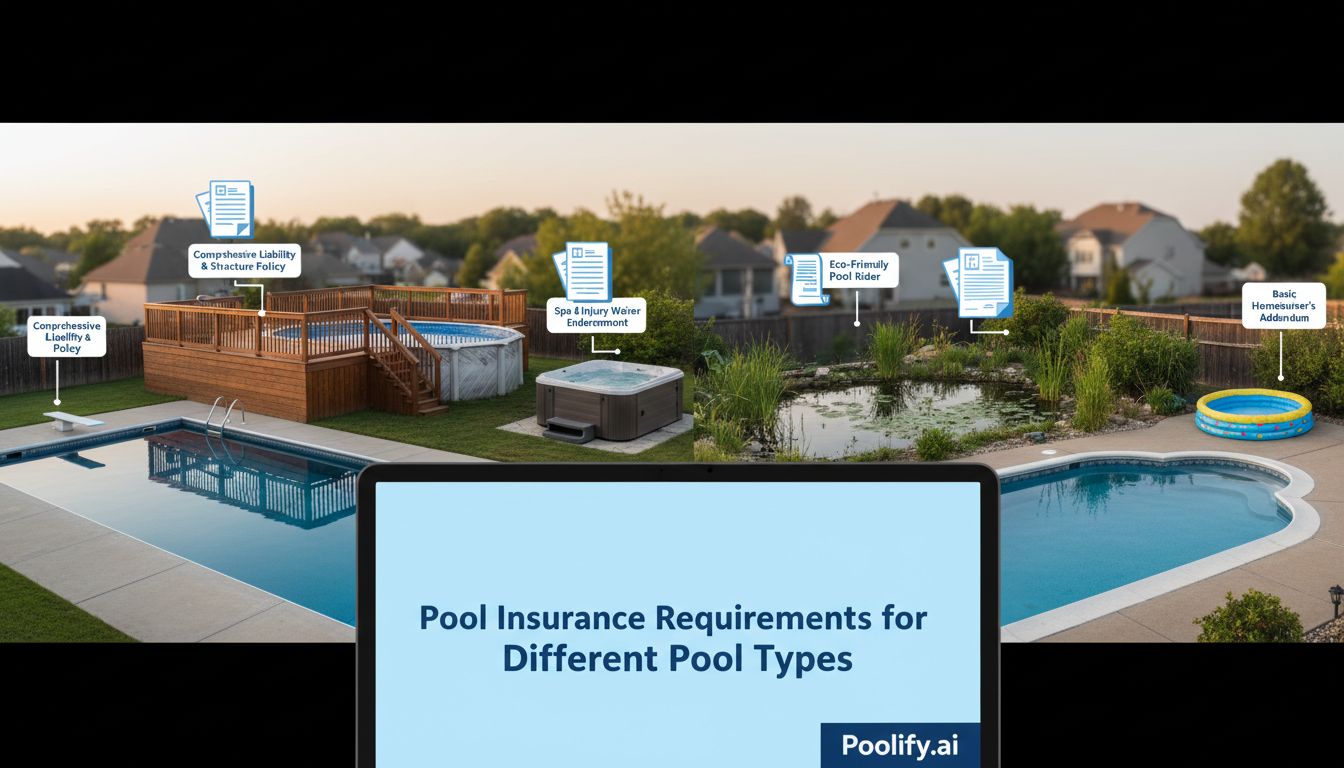
This pool insurance guide examines coverage considerations for various pool types. In-ground pools require comprehensive coverage due to their permanence and higher replacement costs. Concrete, fiberglass, and vinyl-lined pools each present unique insurance considerations, with concrete pools typically costing more to insure due to higher repair expenses. Infinity pools, natural pools, and custom designs may require specialized coverage or higher limits to ensure adequate protection.
Above-ground pools present different insurance challenges according to this pool insurance guide. Many insurers cap coverage for above-ground pools at $1,000-5,000, regardless of actual replacement cost. Soft-sided and inflatable pools may receive no property coverage, though liability protection remains essential. Semi-inground pools occupy a middle ground, with coverage and premiums falling between fully above-ground and in-ground options. Understanding your pool type’s specific insurance implications ensures appropriate coverage selection.
Hot tubs and spas require attention in this pool insurance guide, as coverage varies significantly between portable and built-in models. Portable spas may be covered as personal property with limited protection, while built-in spas typically receive coverage similar to pools. Swim spas combine pool and spa features, potentially complicating coverage determinations. Indoor pools present unique considerations regarding humidity damage, structural modifications, and mechanical systems that affect both coverage and premiums.
Pool Insurance Guide: Policy Review and Updates
Regular policy reviews represent a crucial element of this pool insurance guide’s recommendations. Review your pool insurance coverage annually, particularly before renewal. Verify that coverage limits remain adequate as replacement costs increase with inflation. Confirm that all pool features, equipment, and improvements appear on your policy with appropriate coverage. This pool insurance guide suggests scheduling reviews after major renovations, equipment upgrades, or changes to your pool area.
Life changes trigger insurance review needs according to this pool insurance guide. Increased net worth justifies higher liability limits and umbrella coverage. Children reaching swimming age or teenagers hosting parties elevate risk levels requiring coverage adjustments. Home-based businesses or rental activities may necessitate commercial coverage additions. Proactive policy updates ensure continuous adequate protection as your circumstances evolve.
This pool insurance guide recommends comparing quotes from multiple insurers every 2-3 years. Insurance markets fluctuate, with different companies offering competitive rates at different times. Specialized pool insurance providers may offer superior coverage or pricing compared to standard homeowners insurers. Working with an independent agent provides access to multiple carriers, increasing your likelihood of finding optimal coverage at competitive prices. Don’t sacrifice coverage for minimal premium savings, but ensure you’re receiving fair value for your insurance investment.
Key Takeaways
- Adequate liability coverage is essential – Pool owners should maintain minimum $500,000 liability limits, with $1 million or umbrella policies providing optimal protection against potentially devastating lawsuits and medical claims.
- Standard homeowners policies provide limited pool coverage – Review your policy carefully to identify gaps in property and equipment coverage, considering endorsements or specialized pool insurance for comprehensive protection.
- Safety features reduce both risk and premiums – Four-sided fencing, pool covers, alarms, and safety equipment protect your family while qualifying for insurance discounts of 10-20% or more.
- Documentation and maintenance prevent claim denials – Keep detailed records of pool maintenance, safety inspections, and equipment servicing to support claims and demonstrate responsible ownership to insurers.
- Regular policy reviews ensure adequate protection – Annual coverage reviews, comparison shopping every 2-3 years, and updates following major changes keep your pool insurance aligned with your needs and budget.
Frequently Asked Questions
Does homeowners insurance automatically cover swimming pools?
Most homeowners insurance policies provide basic coverage for pools, but this pool insurance guide emphasizes that standard coverage often proves inadequate. Policies typically include limited property coverage for pool structures and equipment, plus liability protection for injuries. However, coverage limits, exclusions, and deductibles vary significantly between insurers. Many policies cap pool equipment coverage at $5,000 or exclude certain features entirely. Review your specific policy with your agent to identify gaps, and consider endorsements or specialized coverage to ensure comprehensive protection for your pool investment and liability exposure.
How much does pool insurance typically cost per year?
According to this pool insurance guide, adding a pool to your homeowners insurance typically increases annual premiums by $50-75 for standard in-ground pools and $25-50 for above-ground pools. However, costs vary based on pool type, size, features, location, and safety equipment. Pools with diving boards, slides, or elaborate water features may increase premiums by $100-200 or more annually. Liability limit increases and umbrella policies add additional costs but provide essential protection. Safety features like fencing, covers, and alarms can reduce premiums by 10-20%, partially offsetting the base cost increase from pool ownership.
What pool safety features help reduce insurance premiums?
This pool insurance guide identifies several safety features that qualify for insurance discounts. Four-sided isolation fencing with self-closing, self-latching gates typically provides the largest discount at 10-20%. Pool covers, alarms, and motion sensors demonstrate additional risk mitigation. Safety equipment including life rings, reaching poles, and first aid supplies shows preparedness. Some insurers offer discounts for completing pool safety courses or maintaining CPR certification. Security cameras and lighting systems may qualify for discounts while deterring trespassing. Discuss available discounts with your insurer before purchasing safety equipment to ensure you’re investing in features that provide both protection and premium savings.
Are pool-related injuries covered under liability insurance?
Yes, homeowners liability insurance generally covers pool-related injuries, as this pool insurance guide explains. Coverage includes medical expenses, legal defense costs, and settlements or judgments if you’re found liable. However, coverage applies only up to your policy limits, making adequate limits crucial. The “attractive nuisance” doctrine may hold you liable for injuries to trespassing children, extending your responsibility beyond invited guests. Intentional acts, injuries to household members, and incidents during business activities may be excluded. Understanding your policy’s specific liability provisions, exclusions, and limits helps you determine whether additional coverage through higher limits or umbrella policies provides necessary protection.
Do I need additional insurance for a pool house or cabana?
Pool houses and cabanas typically require coverage evaluation according to this pool insurance guide. Detached structures receive coverage under homeowners policies, usually at 10% of your dwelling coverage limit. However, this may prove insufficient for substantial pool houses with bathrooms, kitchens, or living spaces. Verify that your policy’s other structures limit adequately covers your pool house replacement cost. Valuable contents inside pool houses may need additional personal property coverage. Permanent structures require building permit compliance and may affect property taxes alongside insurance considerations. Discuss your pool house specifications with your insurance agent to ensure adequate coverage for both the structure and its contents.
Conclusion
This pool insurance guide has provided comprehensive information about protecting your swimming pool investment and managing liability exposure in 2026. From understanding coverage types and cost factors to implementing safety features and navigating the claims process, informed pool owners can build comprehensive protection strategies that safeguard their families and assets. Pool insurance extends beyond simple property coverage to encompass significant liability considerations that every responsible pool owner must address.
The key to effective pool insurance lies in proactive planning, regular policy reviews, and maintaining proper safety features and documentation. By following this pool insurance guide’s recommendations, you’ll ensure adequate coverage limits, identify potential gaps before they become problems, and maximize available discounts through safety investments. Remember that insurance represents just one component of responsible pool ownership, complementing proper maintenance, supervision, and risk management practices.
Take action today by reviewing your current homeowners insurance policy, discussing pool coverage with your agent, and comparing quotes from multiple insurers. Implement recommended safety features, document your pool maintenance efforts, and consider umbrella liability coverage if you have significant assets to protect. For more information about maintaining your pool investment, explore our comprehensive pool maintenance guide and discover essential pool safety tips that protect your family. This pool insurance guide empowers you to make informed decisions that provide peace of mind while enjoying your backyard oasis.
References
- Insurance Information Institute – Swimming Pool Safety and Insurance: https://www.iii.org/article/swimming-pool-safety-and-insurance
- Centers for Disease Control and Prevention – Healthy Swimming: https://www.cdc.gov/healthywater/swimming/