
Introduction to Modern Pool LED Lighting
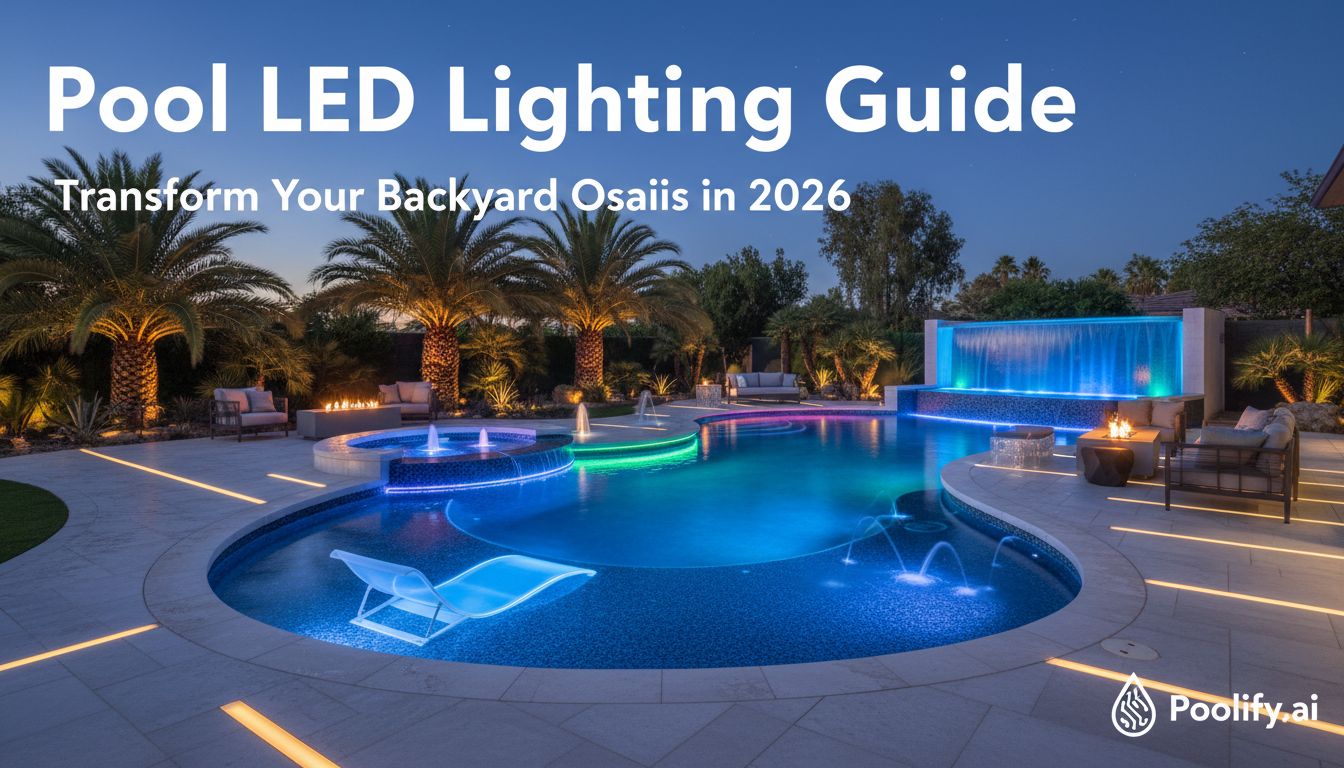
Pool LED lighting has revolutionized how homeowners enjoy their backyard pools after sunset. This comprehensive pool led lighting guide explores everything you need to know about transforming your swimming area into a stunning nighttime retreat. Whether you’re building a new pool or upgrading existing fixtures, understanding LED technology helps you make informed decisions that enhance safety, aesthetics, and property value. Modern LED systems offer unprecedented control over color, brightness, and energy consumption, making them the preferred choice for pool owners in 2026.
Why LED Lighting Dominates Pool Illumination in 2026
LED technology has become the industry standard for pool lighting, and this pool led lighting guide explains why. Traditional incandescent and halogen bulbs have essentially disappeared from the market due to their inefficiency and short lifespan. LEDs consume up to 90% less energy while lasting 15-25 years compared to just 1-2 years for older bulb types. The initial investment in LED fixtures pays for itself through reduced electricity bills and virtually eliminated replacement costs.
Beyond economics, LEDs offer superior performance. They produce minimal heat, reducing the risk of burns and thermal stress on pool components. The solid-state construction withstands vibrations and impacts better than fragile filament bulbs. Most importantly, LEDs provide instant full brightness without warm-up time and maintain consistent color temperature throughout their lifespan. These advantages make any pool led lighting guide incomplete without emphasizing LED superiority.
Environmental and Safety Benefits
This pool led lighting guide must address environmental considerations. LEDs contain no mercury or toxic gases, making disposal safer than fluorescent alternatives. Their low power draw reduces carbon footprint significantly. According to the U.S. Department of Energy, widespread LED adoption prevents millions of tons of carbon emissions annually. For pool owners, this means enjoying beautiful lighting while minimizing environmental impact.
Safety improvements extend beyond reduced heat output. Modern LED pool lights operate on low-voltage systems, typically 12 volts, dramatically reducing electrocution risk. The robust construction resists water intrusion better than older designs, and many fixtures include multiple redundant seals. These safety features make LEDs the responsible choice for any pool led lighting guide to recommend.
Types of Pool LED Lighting Systems
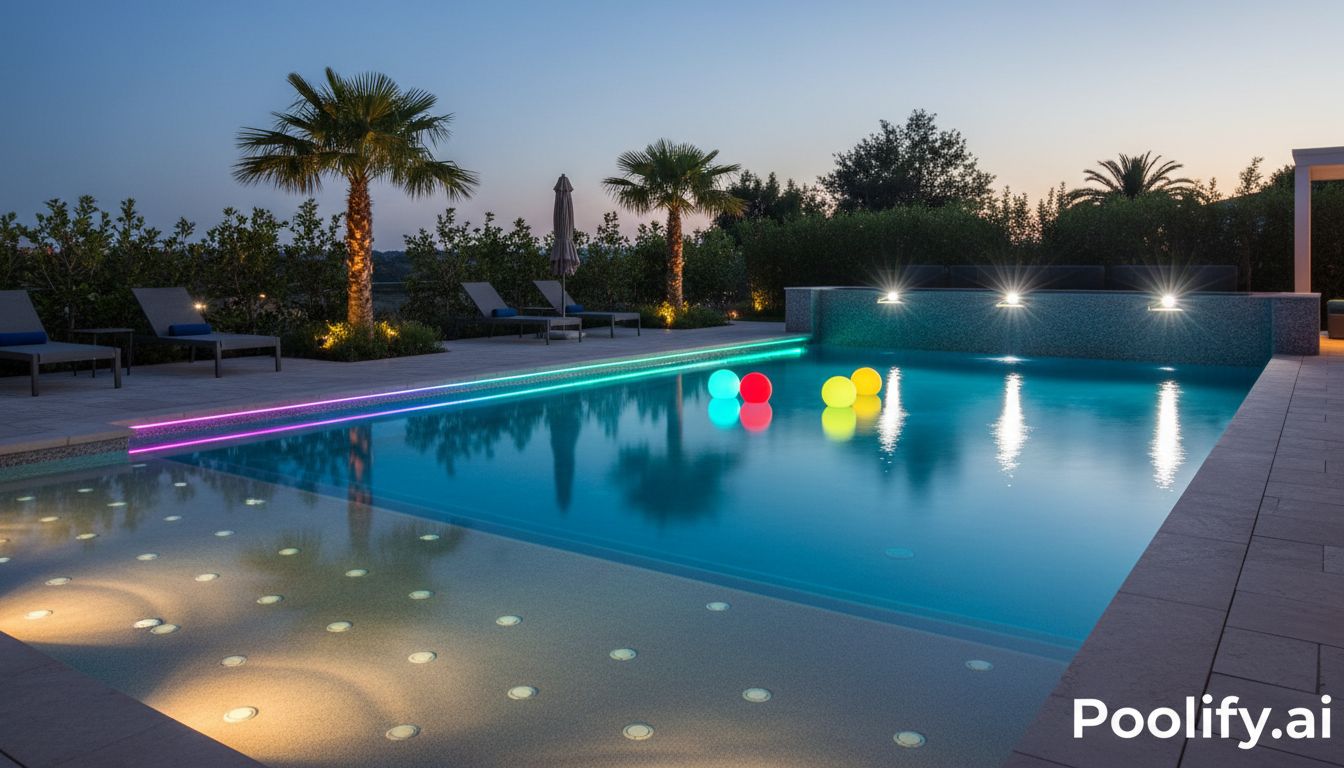
Understanding available options helps you select the right system. This pool led lighting guide categorizes LED fixtures into several types, each serving different needs and budgets. The choice depends on your pool type, desired effects, and installation constraints.
Flush-Mounted Nicheless LED Lights
Nicheless lights represent the latest innovation in pool lighting. Unlike traditional fixtures requiring large niches in pool walls, these compact units install in holes just 1-2 inches diameter. This pool led lighting guide highlights their advantages: easier installation, reduced leak risk, and sleek appearance. Nicheless LEDs work exceptionally well for retrofits since they don’t require major structural modifications. They’re available in white or color-changing versions, with outputs ranging from 100 to 600 lumens per fixture.
Traditional Niche-Mounted LED Fixtures
Standard niche lights remain popular for new construction and major renovations. These fixtures mount in dedicated housings built into pool walls during construction. This pool led lighting guide notes that niche lights typically provide higher output than nicheless alternatives, making them ideal for large pools. The replaceable design allows upgrading bulbs without disturbing pool structure. Quality niche fixtures include stainless steel faceplates and multiple gasket seals for long-term reliability.
Floating and Surface-Mounted Pool LED Lights
For above-ground pools or temporary installations, floating and magnetic surface lights offer flexibility. This pool led lighting guide explains that these portable options require no permanent installation. Solar-powered floating lights provide ambient illumination without electrical connections, while magnetic LED pucks attach to steel pool walls. Though less powerful than in-wall fixtures, they create attractive effects for smaller pools and spas.
Fiber Optic LED Systems
Fiber optic systems place LED generators outside the pool, transmitting light through flexible cables to underwater endpoints. This pool led lighting guide recognizes their unique advantages: the electrical components remain accessible for maintenance, and individual fiber strands can illuminate steps, benches, and decorative features. The high initial cost limits widespread adoption, but fiber optics excel for custom installations requiring precise light placement.
Color Options and Control Systems
Color capability distinguishes modern LED systems from older lighting. This pool led lighting guide explores the spectrum of possibilities available in 2026, from simple white lights to sophisticated programmable systems creating dynamic light shows.
White LED Pool Lights
Single-color white LEDs provide classic, elegant illumination. This pool led lighting guide notes that white LEDs come in different color temperatures: warm white (2700-3000K) creates inviting, yellowish light similar to incandescent bulbs; neutral white (4000-4500K) offers balanced, natural illumination; and cool white (5000-6500K) produces crisp, bluish light that enhances water clarity. Selecting the right temperature affects the entire pool ambiance.
Color-Changing RGB and RGBW Systems
RGB (Red, Green, Blue) LEDs mix primary colors to create millions of hues. This pool led lighting guide emphasizes that RGBW systems add dedicated white LEDs for better color rendering and brighter white light. These systems typically include remote controls or smartphone apps for selecting colors and creating programmed sequences. Popular modes include color cycling, party effects, and holiday themes. Advanced systems synchronize with music or integrate with smart home platforms.
Smart Pool LED Lighting Controls
Integration with home automation represents the cutting edge covered in this pool led lighting guide. Smart LED systems connect via WiFi or Bluetooth, enabling control through voice assistants, smartphone apps, or central home automation hubs. You can create schedules turning lights on at sunset, adjust brightness remotely, or activate specific scenes for different occasions. Some systems include astronomical timers that automatically adjust for changing sunset times throughout the year.
For comprehensive pool automation, consider systems that integrate lighting with pumps, heaters, and water features. Check out our pool automation systems guide for detailed information on creating a fully connected backyard environment.
Installation Considerations for Pool LED Lighting
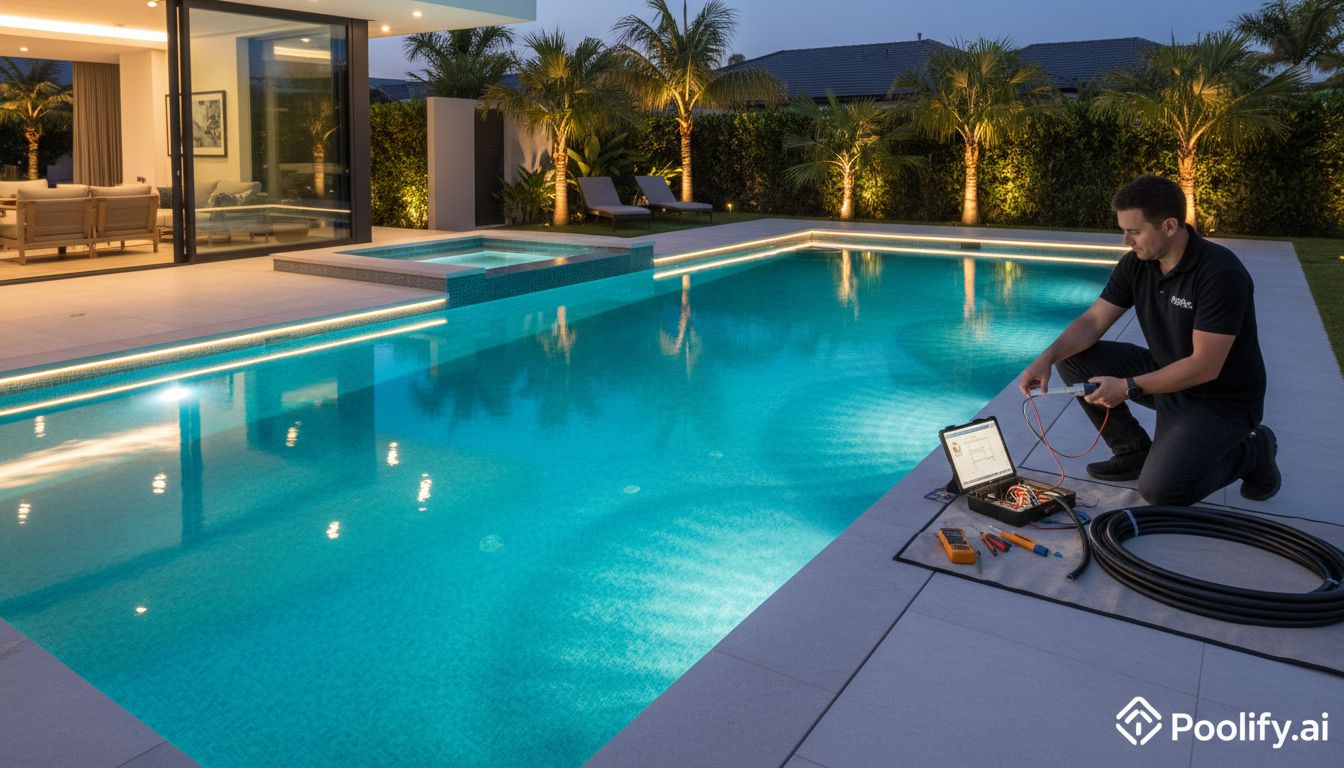
Proper installation ensures safety, performance, and longevity. This pool led lighting guide outlines critical factors for successful LED lighting projects, whether you’re working with professionals or planning a DIY approach.
New Construction vs. Retrofit Installation
New pool construction offers maximum flexibility for lighting placement. This pool led lighting guide recommends planning light locations during design phase, considering pool size, shape, and intended use. Standard practice places one light per 200-400 square feet of surface area, with additional fixtures for steps, benches, and water features. Positioning lights opposite primary viewing areas minimizes glare while maximizing illumination.
Retrofit installations present more challenges. Nicheless LED lights simplify the process by requiring only small core-drilled holes. Traditional niche retrofits involve draining the pool, cutting openings, installing housings, and replastering—a significant undertaking best combined with other renovation work. This pool led lighting guide suggests evaluating your pool’s current condition before committing to major lighting upgrades.
Electrical Requirements and Safety Codes
Pool lighting must comply with National Electrical Code (NEC) Article 680, which governs swimming pool electrical installations. This pool led lighting guide stresses that all work should be performed by licensed electricians familiar with pool-specific requirements. Key provisions include: ground-fault circuit interrupter (GFCI) protection for all pool circuits, bonding of metallic components, minimum clearances for electrical equipment, and proper conduit installation for underwater wiring.
Low-voltage LED systems (12V) offer inherent safety advantages but still require compliant transformers and wiring. The transformer must be located at least 10 feet from pool edge and properly grounded. This pool led lighting guide cannot overemphasize the importance of professional electrical work—improper installation creates serious electrocution hazards.
Optimal Light Placement Strategies
Strategic positioning maximizes lighting effectiveness. This pool led lighting guide recommends placing lights 12-18 inches below water surface for best illumination without excessive glare. For rectangular pools, position lights on the two long walls, spacing them evenly. Kidney-shaped and freeform pools benefit from lights at major curves and corners. Always place at least one light near steps and entry areas for safety.
Avoid positioning lights directly opposite primary viewing areas like patios or pool decks—this creates uncomfortable glare. Instead, angle lights slightly away from main sight lines. This pool led lighting guide also suggests considering how lighting interacts with landscaping, waterfalls, and architectural features to create cohesive nighttime aesthetics.
Energy Efficiency and Cost Analysis
Understanding the financial implications helps justify LED investments. This pool led lighting guide breaks down costs, savings, and return on investment for LED pool lighting systems in 2026.
Purchase and Installation Costs
LED pool light pricing varies significantly based on type and features. This pool led lighting guide provides typical 2026 ranges: basic nicheless white LEDs cost $150-300 per fixture; traditional niche-mounted color-changing units run $300-600 each; premium smart-enabled systems reach $600-1200 per light. Complete installations for average pools (3-4 lights) total $2000-5000 including professional labor.
Retrofit installations cost more than new construction due to additional labor. Cutting niches in existing pools adds $500-1000 per location for concrete cutting, niche installation, and refinishing. Nicheless retrofits reduce this premium to $200-400 per light. This pool led lighting guide recommends obtaining multiple quotes and verifying electrician licensing before proceeding.
Operating Costs and Energy Savings
LED efficiency delivers substantial ongoing savings. This pool led lighting guide calculates that typical LED pool lights consume 30-50 watts compared to 300-500 watts for equivalent incandescent fixtures. Running four LED lights four hours nightly costs approximately $50-80 annually at average electricity rates, versus $400-600 for old-style bulbs. The savings cover LED purchase costs within 2-4 years.
Maintenance savings amplify the advantage. LED lifespans of 30,000-50,000 hours mean 15-25 years of operation at typical usage rates. This pool led lighting guide notes you’ll likely never replace LED fixtures during pool ownership, eliminating recurring bulb purchases and labor costs that plagued older systems.
Return on Investment Calculation
Combining purchase, installation, operating, and maintenance costs reveals LED lighting’s true value. This pool led lighting guide presents a realistic scenario: $3000 LED system installation saves $350 annually in electricity and $200 in avoided bulb replacements, totaling $550 yearly savings. The system pays for itself in 5.5 years, then continues saving money for decades. Additionally, LED lighting increases property value and buyer appeal, though exact amounts vary by market.
Maintenance and Troubleshooting
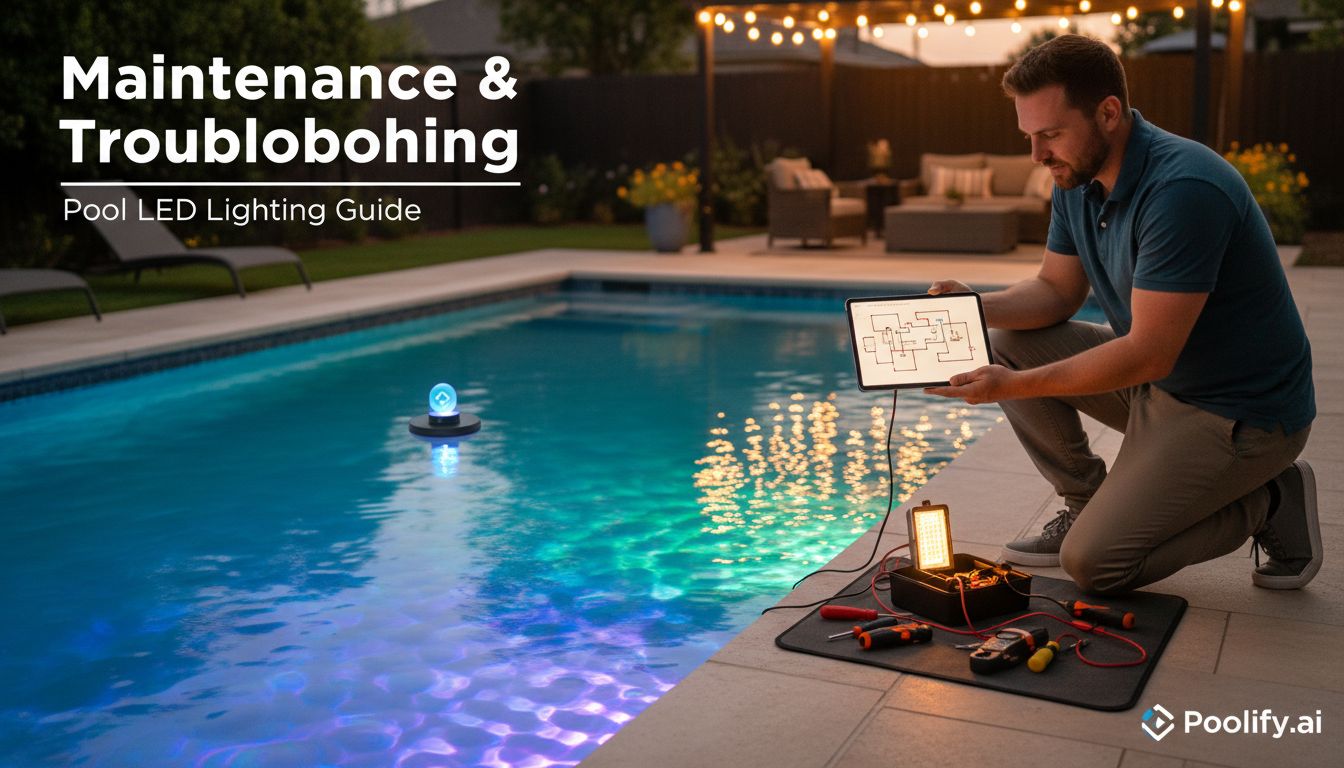
While LEDs require minimal maintenance, understanding basic care extends system life. This pool led lighting guide covers routine maintenance tasks and common issues pool owners encounter.
Routine LED Pool Light Maintenance
LED fixtures need little regular attention. This pool led lighting guide recommends inspecting lights monthly for debris accumulation on lenses, which reduces output. Clean lenses with soft cloths during regular pool maintenance. Check that fixture mounting remains secure—vibrations from pumps or water features can loosen hardware over time. Verify that control systems respond properly and update smart system firmware when manufacturers release updates.
Annual professional inspections should verify electrical connections, test GFCI protection, and examine seals for deterioration. This pool led lighting guide emphasizes catching small issues before they become expensive problems. For more information on overall pool upkeep, visit our comprehensive pool maintenance checklist.
Common Problems and Solutions
Despite reliability, issues occasionally arise. This pool led lighting guide addresses frequent problems: lights that won’t turn on typically indicate tripped GFCI breakers, failed transformers, or loose connections. Check the breaker panel first, then verify transformer output with a multimeter. Flickering lights suggest loose wiring or failing transformers requiring professional attention.
Color-changing lights stuck on one color often need controller resets or replacement. Water intrusion causing condensation inside fixtures indicates failed seals requiring immediate replacement to prevent complete fixture failure. This pool led lighting guide stresses that any water-related electrical issues demand professional evaluation—never attempt DIY repairs on submerged electrical components.
When to Replace vs. Repair
LED longevity means replacement rarely occurs during normal pool ownership. This pool led lighting guide suggests replacement when: fixtures suffer physical damage from pool equipment or cleaning tools; seals fail allowing water intrusion; or technology advances make upgrades worthwhile. Since LED replacement involves draining pools for niche fixtures, combine lighting work with other major maintenance to minimize disruption and cost.
Design Ideas and Aesthetic Applications
Beyond basic illumination, creative LED use transforms pools into artistic focal points. This pool led lighting guide explores design concepts that maximize visual impact.
Creating Ambiance with Color Schemes
Color selection dramatically affects pool atmosphere. This pool led lighting guide suggests warm colors (red, orange, amber) create intimate, romantic settings ideal for quiet evenings. Cool colors (blue, cyan, purple) evoke tranquility and highlight water clarity. Green tones produce tropical, lagoon-like effects. Many owners establish “scenes” for different occasions: bright white for swimming, soft blue for relaxation, and dynamic color-cycling for parties.
Accent Lighting for Water Features
Waterfalls, fountains, and spillways benefit from dedicated lighting. This pool led lighting guide recommends positioning small LED fixtures to uplight falling water, creating dramatic effects. Submersible accent lights highlight bubblers and deck jets. Fiber optic strands can outline spa spillways or illuminate steps. Coordinating these accent lights with main pool illumination creates cohesive, professional-looking designs.
Landscape Integration
Pool lighting should complement surrounding landscape lighting. This pool led lighting guide advises matching color temperatures between pool and yard fixtures for visual harmony. Use pathway lights to guide guests safely to pool areas. Uplighting trees and architectural features near the pool extends the illuminated area and creates depth. Smart systems can synchronize pool and landscape lighting for unified control.
Frequently Asked Questions
How many LED lights does my pool need?
This pool led lighting guide recommends one light per 200-400 square feet of pool surface. Small pools (under 400 sq ft) typically need 1-2 lights, medium pools (400-800 sq ft) require 2-3 lights, and large pools (over 800 sq ft) benefit from 3-4 or more fixtures. Add extra lights for steps, benches, and safety areas. Consider pool shape—irregular designs need more strategic placement than simple rectangles.
Can I install pool LED lights myself?
While this pool led lighting guide provides educational information, electrical work on pools requires licensed professionals in most jurisdictions. Pool electrical systems involve life-safety considerations and specific code requirements. Improper installation creates serious electrocution hazards. DIY enthusiasts can handle aesthetic decisions, fixture selection, and control programming, but leave actual installation to qualified electricians familiar with NEC Article 680 pool requirements.
Do color-changing LED pool lights cost more to operate?
No—this pool led lighting guide confirms that RGB and RGBW LED lights consume the same power regardless of color displayed. A 40-watt color-changing fixture uses 40 watts whether showing white, blue, or cycling through colors. The electronics controlling color mixing add negligible power draw. Operating costs depend on wattage and usage hours, not color capabilities, making color-changing systems economical choices.
How long do pool LED lights actually last?
Quality LED pool lights last 30,000-50,000 hours according to this pool led lighting guide. At four hours daily operation, that translates to 20-34 years. Real-world lifespan depends on operating conditions, water chemistry, and fixture quality. Premium brands with robust sealing and thermal management reach the upper range, while budget fixtures may fail sooner. Most pool owners never need LED replacement during pool ownership.
Will LED pool lights work with my existing system?
Compatibility depends on your current setup. This pool led lighting guide explains that LED retrofits for standard niche fixtures simply replace old bulbs with LED equivalents—most work with existing transformers and controls, though some require compatible transformers for dimming and color-changing features. Nicheless LEDs require new installations since they use different mounting systems. Consult with lighting specialists to verify compatibility before purchasing.
Key Takeaways
- LED technology dominates pool lighting in 2026 due to 90% energy savings, 15-25 year lifespans, and superior performance compared to outdated incandescent and halogen systems covered in any comprehensive pool led lighting guide.
- Multiple LED types serve different needs: nicheless fixtures offer easy retrofits, traditional niche lights provide maximum output, and smart color-changing systems create customizable ambiance as detailed throughout this pool led lighting guide.
- Professional installation ensures safety and code compliance with NEC Article 680 requirements for pool electrical systems—this pool led lighting guide emphasizes never attempting DIY electrical work on underwater fixtures.
- LED systems pay for themselves within 3-6 years through reduced electricity costs and eliminated bulb replacement expenses, then continue saving money for decades as explained in this pool led lighting guide.
- Strategic placement and color selection maximize aesthetic impact while proper maintenance extends system life—follow the design principles and care recommendations provided in this pool led lighting guide for best results.
Conclusion: Illuminating Your Pool’s Potential
This comprehensive pool led lighting guide has explored every aspect of modern LED pool illumination, from technology fundamentals to installation considerations and design applications. LED lighting represents a transformative upgrade that enhances safety, beauty, and property value while reducing operating costs and environmental impact. Whether you’re planning new construction or upgrading existing fixtures, the information in this pool led lighting guide helps you make informed decisions.
The pool lighting landscape in 2026 offers unprecedented options for customization and control. Smart systems integrate seamlessly with home automation, color-changing capabilities create unlimited ambiance possibilities, and energy-efficient operation eliminates guilt about extended usage. By following the guidance in this pool led lighting guide, you’ll create a stunning nighttime retreat that extends pool enjoyment well beyond daylight hours.
Remember that successful pool lighting projects balance technical requirements with aesthetic goals. Work with qualified professionals for installation, select fixtures appropriate for your pool type and usage patterns, and maintain systems properly for decades of reliable service. This pool led lighting guide provides the knowledge foundation, but your specific circumstances and preferences determine the ideal solution. Invest time in planning, choose quality components, and enjoy the remarkable transformation that proper LED lighting brings to your backyard oasis.
References
- U.S. Department of Energy – LED Lighting Information: https://www.energy.gov/energysaver/led-lighting
- National Electrical Code Article 680 – Swimming Pools, Fountains, and Similar Installations
- Pool & Hot Tub Alliance – Industry Standards and Guidelines