
Introduction to Pool Maintenance for Beginners
Owning a pool transforms your backyard into a personal oasis, but keeping it pristine requires consistent care. Pool maintenance for beginners doesn’t have to feel overwhelming when you understand the fundamental principles. This comprehensive guide walks you through every essential aspect of pool care, from water chemistry to equipment maintenance, ensuring your investment remains clean, safe, and inviting throughout 2026 and beyond. Whether you’ve just installed your first pool or inherited one with a new home, mastering these core maintenance tasks will save you thousands in repair costs while providing a healthy swimming environment for your family.
Understanding the Basics of Pool Maintenance for Beginners
Pool maintenance for beginners starts with recognizing that your pool is a complex ecosystem requiring regular attention. The water chemistry, filtration system, and physical cleanliness work together to create a safe swimming environment. According to the CDC’s swimming pool guidelines, proper chemical balance prevents waterborne illnesses and protects swimmers from harmful bacteria. Your maintenance routine should include daily visual inspections, weekly chemical testing, and monthly deep-cleaning tasks.
The three pillars of pool maintenance for beginners include circulation, cleaning, and chemistry. Circulation keeps water moving through your filter system, preventing stagnant areas where algae thrives. Cleaning removes debris, dirt, and contaminants that filtration alone cannot capture. Chemistry involves balancing sanitizers, pH levels, and alkalinity to maintain water quality. Understanding how these elements interconnect helps you troubleshoot problems before they escalate into expensive repairs.
Most pool maintenance for beginners requires just 30-60 minutes weekly once you establish a routine. Creating a maintenance schedule prevents forgotten tasks and helps you notice changes in water quality early. Keep a logbook tracking chemical levels, weather conditions, and any adjustments you make. This record becomes invaluable for identifying patterns and optimizing your maintenance approach over time.
Essential Pool Maintenance Equipment for Beginners
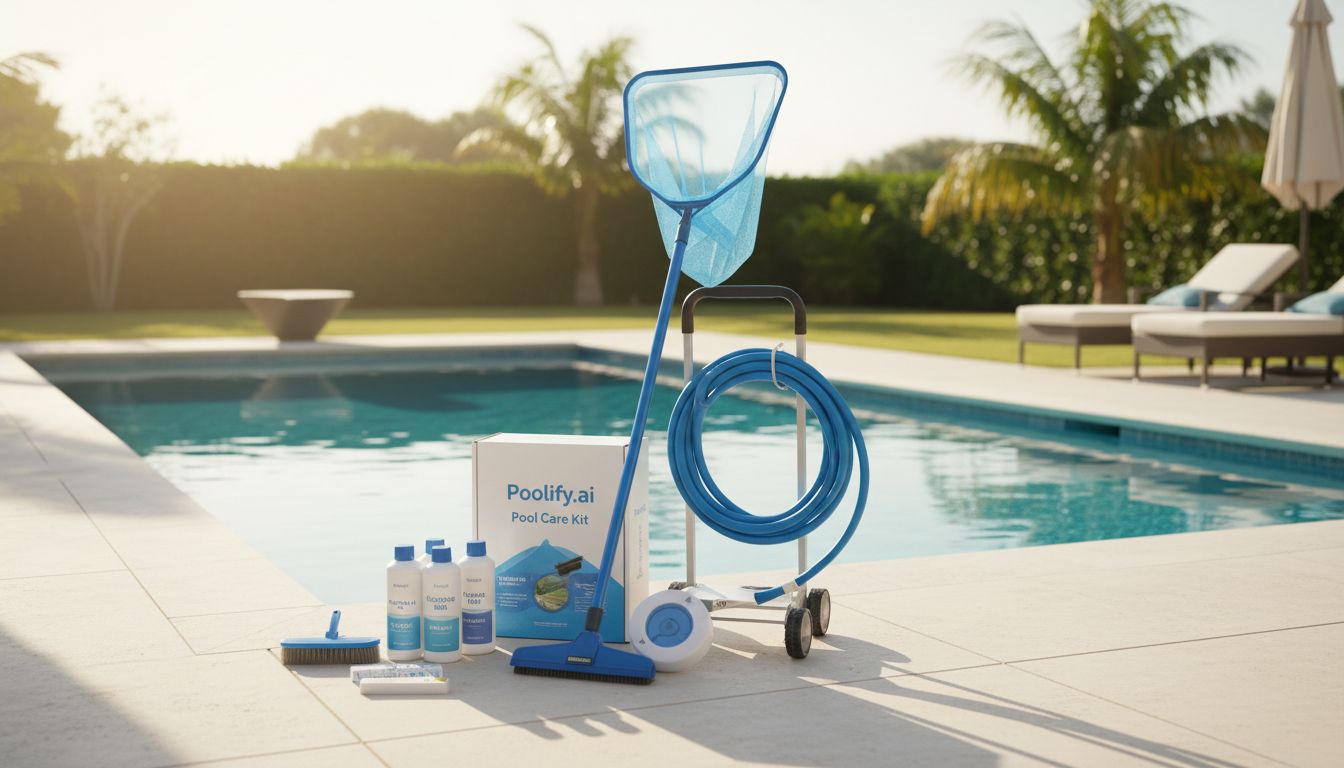
Before diving into pool maintenance for beginners, you need the right tools. A telescopic pole serves as the foundation, connecting to various attachments like skimmer nets, brushes, and vacuum heads. Invest in a quality skimmer net with a fine mesh to capture leaves, insects, and floating debris daily. A wall brush with nylon or stainless steel bristles removes algae and dirt from pool surfaces during weekly scrubbing sessions.
Chemical testing equipment is non-negotiable for pool maintenance for beginners. Test strips provide quick readings but can be less accurate than liquid test kits. A reliable test kit measures chlorine, pH, alkalinity, and calcium hardness—the four critical parameters for balanced water. Digital testers offer convenience and precision but require calibration and battery maintenance. Choose the testing method that matches your comfort level and budget.
A manual or automatic pool vacuum dramatically reduces cleaning time. Manual vacuums connect to your filtration system and require you to guide them across the pool floor. Automatic cleaners operate independently, using suction, pressure, or robotic technology to clean surfaces. While robotic cleaners represent a significant investment, they’re incredibly efficient for pool maintenance for beginners who want to minimize hands-on work. Consider exploring advanced pool cleaning equipment options to find the best fit for your needs.
Don’t overlook safety equipment in your pool maintenance for beginners toolkit. Chemical-resistant gloves protect your hands when handling sanitizers and acids. Safety goggles prevent splashes from reaching your eyes during chemical mixing. A sturdy storage container keeps all maintenance supplies organized and away from children and pets. Proper equipment storage extends tool lifespan and ensures everything is ready when needed.
Water Chemistry Fundamentals in Pool Maintenance for Beginners
Mastering water chemistry represents the most critical aspect of pool maintenance for beginners. The pH level measures water acidity or alkalinity on a scale from 0 to 14, with 7.2 to 7.6 being ideal for pools. Water outside this range causes eye irritation, equipment corrosion, and reduces sanitizer effectiveness. Test pH levels twice weekly during swimming season and adjust using pH increaser (soda ash) or pH decreaser (muriatic acid) as needed.
Total alkalinity acts as a pH buffer, preventing rapid fluctuations that make balancing difficult. For effective pool maintenance for beginners, maintain alkalinity between 80-120 parts per million (ppm). Low alkalinity causes pH to swing wildly, while high alkalinity makes pH adjustments challenging. Sodium bicarbonate raises alkalinity, while muriatic acid lowers it. Always adjust alkalinity before attempting to correct pH levels.
Chlorine remains the most common sanitizer in pool maintenance for beginners, killing bacteria, viruses, and algae. Maintain free chlorine levels between 1-3 ppm for residential pools. Chlorine comes in various forms: tablets for slow-release sanitization, granular shock for rapid treatment, and liquid chlorine for immediate adjustments. Stabilized chlorine contains cyanuric acid to protect chlorine from UV degradation, but excessive stabilizer levels above 50 ppm reduce chlorine effectiveness.
Calcium hardness prevents water from becoming corrosive or scale-forming. Pool maintenance for beginners should target 200-400 ppm calcium hardness. Low calcium causes water to leach calcium from plaster, tile, and grout, creating surface damage. High calcium creates cloudy water and scale deposits on equipment and surfaces. Calcium chloride raises hardness levels, while partial water replacement is the only practical way to lower them.
Weekly Cleaning Routine for Pool Maintenance for Beginners
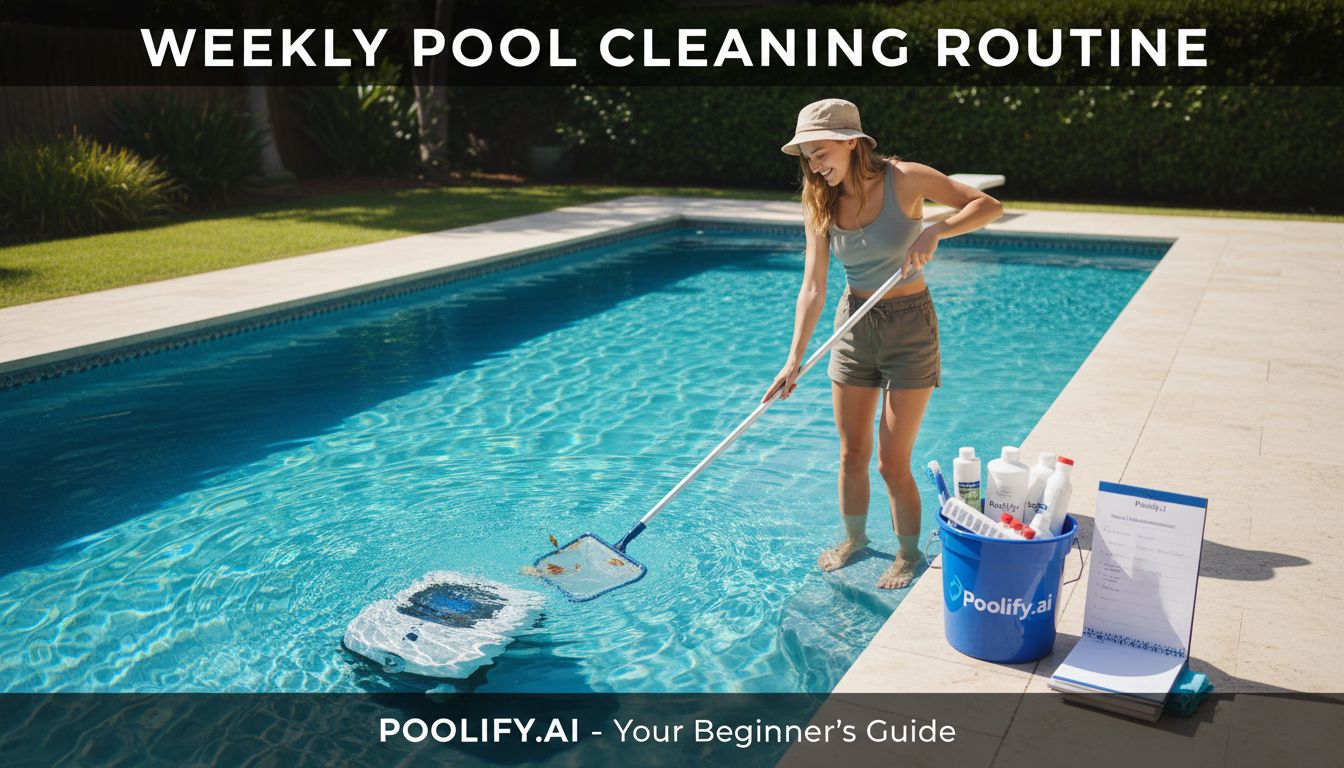
Establishing a consistent weekly routine makes pool maintenance for beginners manageable and prevents overwhelming workloads. Start each session by skimming the surface to remove floating debris like leaves, insects, and pollen. This five-minute task prevents debris from sinking to the bottom where removal becomes more difficult. Skim before vacuuming to avoid redistributing surface debris throughout the water.
Brushing pool walls, steps, and the waterline removes algae spores and prevents buildup in your pool maintenance for beginners routine. Use firm, overlapping strokes to scrub all surfaces, paying special attention to corners, crevices, and behind ladders where circulation is poor. Brush toward the main drain so debris gets pulled into the filtration system. Different pool surfaces require specific brush types—nylon for vinyl liners, stainless steel for concrete and plaster.
Vacuuming the pool floor removes settled debris and prevents staining in pool maintenance for beginners. Manual vacuuming takes 20-30 minutes depending on pool size and debris load. Move slowly to avoid stirring up sediment that clouds the water. Overlap each pass slightly to ensure complete coverage. For heavily soiled pools, vacuum to waste instead of through the filter to prevent clogging. Check out our guide on effective pool vacuuming techniques for more detailed instructions.
Empty skimmer baskets and pump strainer baskets weekly as part of pool maintenance for beginners. Clogged baskets reduce water flow, forcing your pump to work harder and potentially shortening its lifespan. Rinse baskets thoroughly before reinstalling to remove small particles. Inspect baskets for cracks or damage that could allow debris into your pump, causing mechanical problems.
Filter Maintenance in Pool Maintenance for Beginners
Your filtration system is the heart of pool maintenance for beginners, continuously removing particles and contaminants from the water. Three main filter types exist: sand, cartridge, and diatomaceous earth (DE). Each requires different maintenance approaches but serves the same purpose of keeping water clear and clean. Understanding your filter type and maintenance requirements prevents circulation problems and extends equipment life.
Sand filters require backwashing when the pressure gauge reads 8-10 psi above the clean starting pressure. During pool maintenance for beginners, backwashing reverses water flow through the filter, flushing trapped debris out the waste line. This process takes 3-5 minutes and should be followed by a brief rinse cycle. Sand media lasts 5-7 years before requiring replacement, though annual sand changes improve filtration efficiency.
Cartridge filters need cleaning every 2-4 weeks depending on pool usage and debris load in your pool maintenance for beginners routine. Remove cartridges and rinse them with a garden hose, working from top to bottom to flush debris from the pleats. For deep cleaning, soak cartridges overnight in filter cleaner solution to dissolve oils and minerals. Replace cartridge filters every 1-3 years when pleats become frayed or compressed.
DE filters provide the finest filtration but require more involved maintenance in pool maintenance for beginners. Backwash DE filters like sand filters, then add fresh DE powder through the skimmer to recoat the filter grids. Complete teardown and cleaning is necessary annually, removing the grids to inspect for tears and thoroughly washing away old DE. Replace DE grids every 5-7 years or when damage occurs.
Shocking Your Pool: A Critical Pool Maintenance for Beginners Task
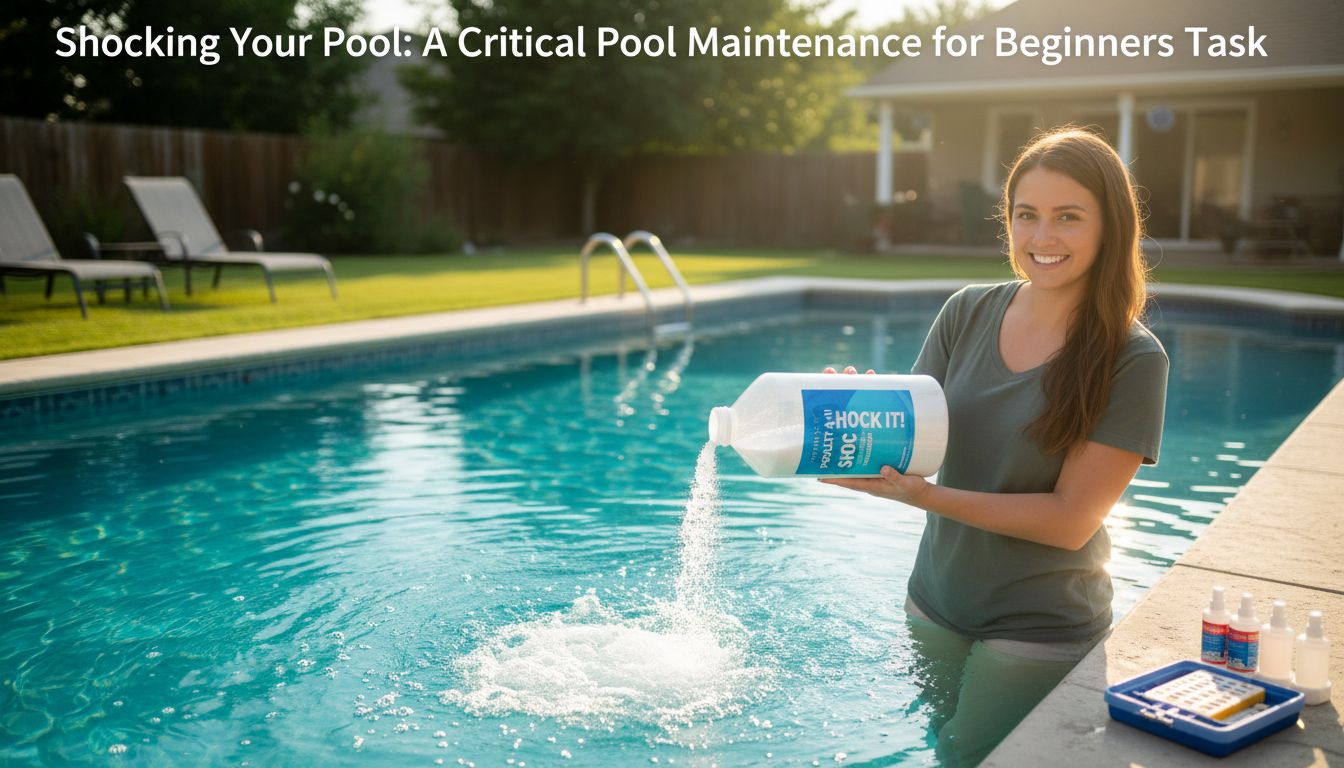
Pool shocking, or super-chlorination, is an essential pool maintenance for beginners practice that oxidizes organic contaminants and restores water clarity. Shock treatment raises chlorine levels temporarily to 10-30 ppm, far above normal swimming levels, to kill algae, bacteria, and break down chloramines. Chloramines form when chlorine binds with nitrogen compounds from sweat, urine, and cosmetics, creating that strong “chlorine smell” that actually indicates insufficient free chlorine.
Shock your pool weekly during peak swimming season as part of regular pool maintenance for beginners. Additional shocking is necessary after heavy pool use, severe weather, or when water appears cloudy or develops an odor. Always shock in the evening or at night when sunlight won’t degrade the chlorine before it can work effectively. Run your pump continuously for at least 8 hours after shocking to distribute chemicals evenly.
Different shock products serve specific purposes in pool maintenance for beginners. Calcium hypochlorite (cal-hypo) is the most common and economical choice, containing 65-75% available chlorine. Dissolve cal-hypo in a bucket before adding to prevent bleaching vinyl liners. Dichlor shock dissolves quickly and won’t affect pH but adds cyanuric acid with each treatment. Non-chlorine shock (potassium monopersulfate) oxidizes contaminants without raising chlorine levels, allowing swimming within 15 minutes.
Calculate the correct shock dosage for effective pool maintenance for beginners by knowing your pool volume. Most shock treatments require 1 pound per 10,000 gallons for routine maintenance, doubling or tripling that amount for algae treatment. Always follow manufacturer instructions and add chemicals gradually, testing between applications. Never mix different chemical types, and store shock products in cool, dry locations away from other pool chemicals.
Preventing and Treating Common Pool Problems for Beginners
Algae represents the most frequent challenge in pool maintenance for beginners, appearing as green, yellow, or black discoloration on surfaces. Green algae develops rapidly in pools with low chlorine or poor circulation. Yellow algae clings to shaded areas and resists normal chlorine levels. Black algae forms protective layers requiring aggressive brushing and shock treatment. Prevent algae by maintaining proper chlorine levels, ensuring adequate circulation, and brushing weekly.
Cloudy water indicates filtration or chemistry problems in pool maintenance for beginners. Test water chemistry first, adjusting pH, alkalinity, and chlorine to proper ranges. Run your filter continuously for 24-48 hours to clear suspended particles. If cloudiness persists, shock the pool and add a clarifier to bind small particles for easier filtration. Extremely cloudy water may require flocculent, which settles particles to the bottom for vacuuming to waste.
Staining appears when metals or minerals deposit on pool surfaces during pool maintenance for beginners. Copper creates blue-green stains, iron produces brown or rust-colored marks, and manganese causes purple or black discoloration. Identify stain type using a vitamin C tablet—if the stain lightens, it’s metal-based. Metal sequestrants bind dissolved metals, preventing staining. For existing stains, use specialized stain removers or ascorbic acid treatments.
Scaling forms when calcium hardness or pH levels run too high in pool maintenance for beginners. White, crusty deposits appear on tile, equipment, and plaster surfaces. Prevent scaling by maintaining balanced water chemistry and brushing regularly. Remove light scaling with pumice stones or scale remover products. Severe scaling may require professional acid washing or media blasting to restore surfaces without damage.
Seasonal Pool Maintenance for Beginners Considerations
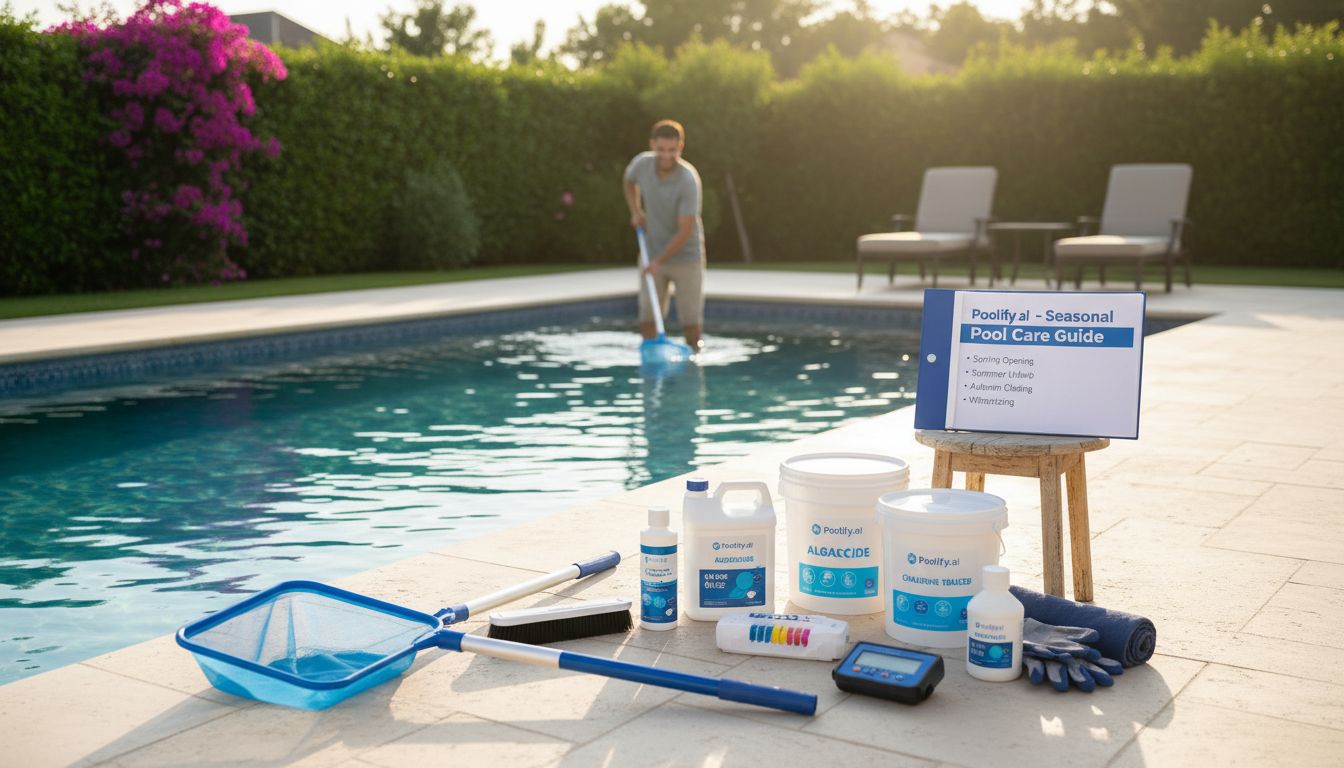
Spring opening requires thorough attention in pool maintenance for beginners after months of dormancy. Remove and clean the pool cover, storing it properly for next season. Reinstall removed equipment like ladders, diving boards, and skimmer baskets. Fill the pool to proper levels and start the circulation system. Shock the pool heavily and balance all chemical parameters before allowing swimming. Inspect equipment for winter damage and address any repairs immediately.
Summer demands the most intensive pool maintenance for beginners with daily use and high temperatures accelerating chemical consumption. Test water chemistry 2-3 times weekly, adjusting as needed to maintain balance. Clean the pool more frequently to handle increased debris and bather load. Monitor water levels closely as evaporation increases, refilling to maintain proper skimmer operation. Consider using a pool cover overnight to reduce evaporation and heat loss.
Fall preparation in pool maintenance for beginners extends swimming season and eases spring opening. Continue regular maintenance as long as temperatures support swimming. Gradually reduce chemical additions as usage decreases. Remove leaves promptly to prevent staining and organic buildup. As temperatures drop below 60°F, reduce pump run time since algae growth slows significantly in cooler water.
Winter closing protects your investment during pool maintenance for beginners in cold climates. Balance water chemistry one final time, shocking heavily to prevent algae growth. Lower water below skimmer level and blow out plumbing lines to prevent freeze damage. Add winterizing chemicals to suppress algae and prevent staining. Install a quality pool cover to keep debris out and reduce spring cleanup. For more detailed guidance, explore our seasonal pool care strategies.
Equipment Inspection and Maintenance for Pool Maintenance for Beginners
Your pool pump circulates thousands of gallons daily, making it critical to pool maintenance for beginners success. Listen for unusual noises indicating bearing wear or debris in the impeller. Check for leaks around the pump housing and connections monthly. Maintain proper water levels to prevent the pump from running dry, which destroys seals and bearings. Clean the pump strainer basket weekly and lubricate O-rings with silicone-based lubricant to maintain proper seals.
Pool heaters require annual professional servicing but benefit from basic pool maintenance for beginners attention. Inspect the heater for rust, corrosion, or debris buildup around vents and burners. Ensure proper gas pressure and flame color if using gas heat. Electric heat pumps need clean coils and unrestricted airflow to operate efficiently. Never operate heaters with unbalanced water chemistry, as low pH and high chlorine levels damage heat exchangers.
Automatic pool cleaners simplify pool maintenance for beginners but need regular attention. Empty debris bags or canisters after each use to maintain suction power. Inspect hoses for cracks, kinks, or wear that reduces efficiency. Clean filters and screens according to manufacturer schedules. Check wheels, tracks, and brushes for wear, replacing components before they fail completely. Store cleaners out of direct sunlight to prevent UV damage to hoses and components.
Saltwater chlorine generators reduce chemical handling in pool maintenance for beginners but require specific care. Inspect the salt cell monthly for scale buildup, cleaning with diluted muriatic acid when deposits appear. Test salt levels regularly, maintaining 2700-3400 ppm for optimal generator performance. Replace cells every 3-5 years as they gradually lose efficiency. Monitor pH closely since salt systems tend to raise pH, requiring more frequent acid additions.
Cost-Effective Pool Maintenance for Beginners Strategies
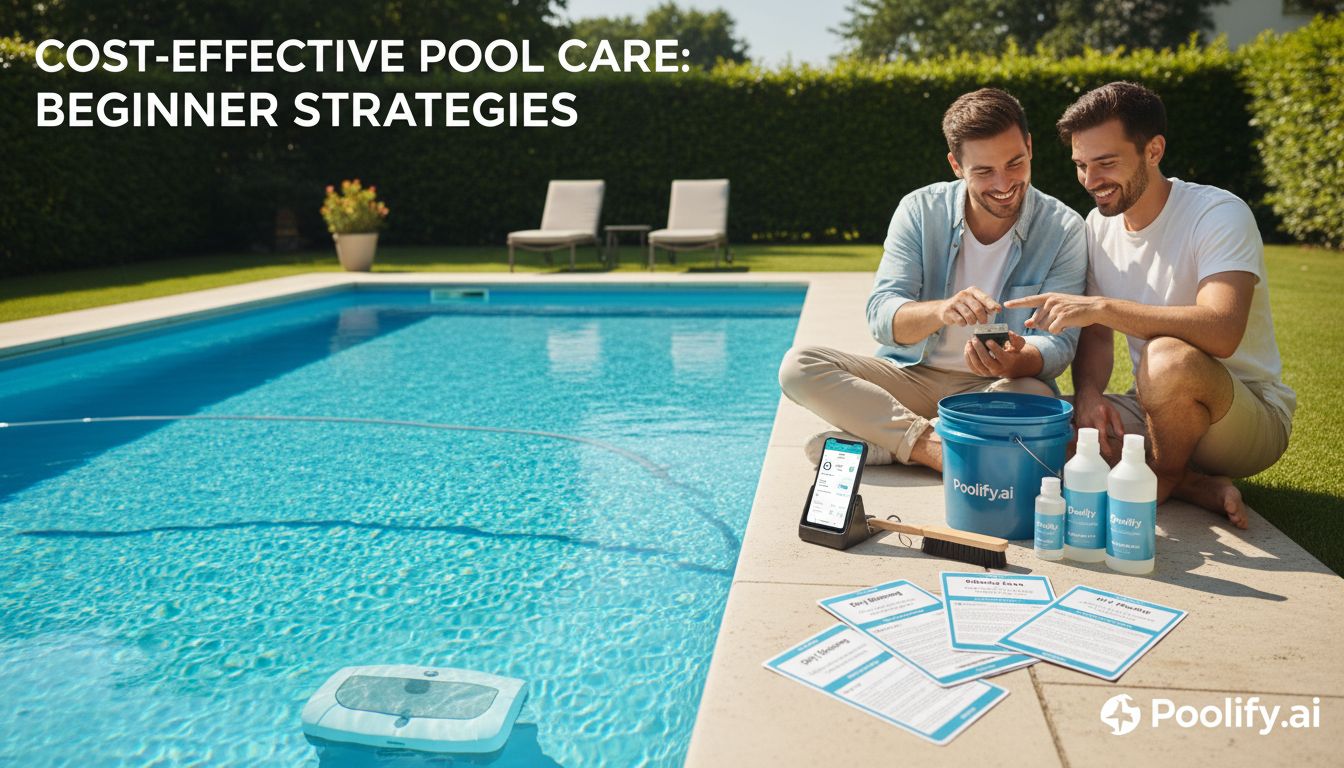
Buying chemicals in bulk reduces costs significantly in pool maintenance for beginners. Large containers of shock, chlorine tablets, and pH adjusters cost less per pound than small packages. Store chemicals properly in sealed containers away from moisture and sunlight to maintain effectiveness. Join pool supply store loyalty programs for discounts and seasonal promotions. Consider purchasing off-season when prices drop and inventory needs clearing.
Preventive maintenance saves thousands compared to reactive repairs in pool maintenance for beginners. Regular cleaning prevents stains requiring expensive treatments or surface replacement. Balanced water chemistry protects equipment from corrosion and scaling. Timely filter cleaning maintains circulation efficiency, reducing pump strain and energy costs. Addressing small leaks immediately prevents water waste and structural damage that escalates repair expenses.
Energy efficiency matters in pool maintenance for beginners with pumps consuming significant electricity. Variable-speed pumps reduce energy consumption by 50-75% compared to single-speed models, paying for themselves within 2-3 years. Run pumps during off-peak hours when electricity rates are lower. Use a pool cover to retain heat and reduce evaporation, cutting heating and water costs. Clean filters regularly since clogged filters force pumps to work harder, consuming more energy.
DIY maintenance handles most pool maintenance for beginners tasks without professional help. Learn to diagnose common problems using online resources and manufacturer manuals. Invest in quality tools that last years rather than cheap alternatives requiring frequent replacement. Join online pool forums where experienced owners share advice and troubleshooting tips. Reserve professional services for complex repairs, equipment installation, and annual equipment inspections.
Frequently Asked Questions About Pool Maintenance for Beginners
How often should I test my pool water as a beginner?
Pool maintenance for beginners requires testing water chemistry at least twice weekly during swimming season. Test pH, chlorine, alkalinity, and calcium hardness each time. Increase testing frequency after heavy rain, pool parties, or when water appears cloudy or develops an odor. Keep a log of test results to identify trends and optimize your chemical routine. Digital testers and test strips make testing quick and convenient for busy pool owners.
What’s the minimum time commitment for pool maintenance for beginners?
Expect to spend 30-60 minutes weekly on basic pool maintenance for beginners once you establish a routine. Daily tasks like skimming take just 5 minutes. Weekly cleaning, vacuuming, and chemical testing require 30-45 minutes. Monthly deep cleaning and equipment checks add another hour. Automatic cleaners and robotic vacuums significantly reduce hands-on time. The initial learning curve takes a few weeks, but maintenance becomes faster as you gain experience.
Can I swim immediately after adding chemicals during pool maintenance for beginners?
Most pool maintenance for beginners chemical additions require waiting before swimming. After adding chlorine tablets or adjusting pH, wait 15-30 minutes with the pump running. Shock treatments require 8-12 hours or until chlorine drops below 5 ppm. Algaecide typically needs 15-30 minutes circulation time. Non-chlorine shock allows swimming within 15 minutes. Always follow product label instructions and test water before allowing swimmers to enter.
What causes cloudy water in pool maintenance for beginners?
Cloudy water in pool maintenance for beginners results from several factors. Imbalanced pH or alkalinity prevents proper sanitizer function. Insufficient chlorine allows bacteria and algae to multiply. Clogged or inadequate filtration fails to remove particles. High calcium hardness causes cloudiness from scale formation. Heavy bather load introduces oils, lotions, and contaminants overwhelming the system. Test chemistry first, shock if needed, and run the filter continuously until clarity returns.
Should I drain my pool for pool maintenance for beginners?
Complete draining is rarely necessary in pool maintenance for beginners and can damage pool structures. Drain pools only for major repairs, severe staining, or when total dissolved solids exceed 2500 ppm above tap water levels. Partial draining (1/3 to 1/2) addresses high stabilizer or calcium hardness issues. Never drain pools during hot weather or in areas with high water tables, as empty pools can pop out of the ground or crack from pressure.
Key Takeaways for Pool Maintenance for Beginners
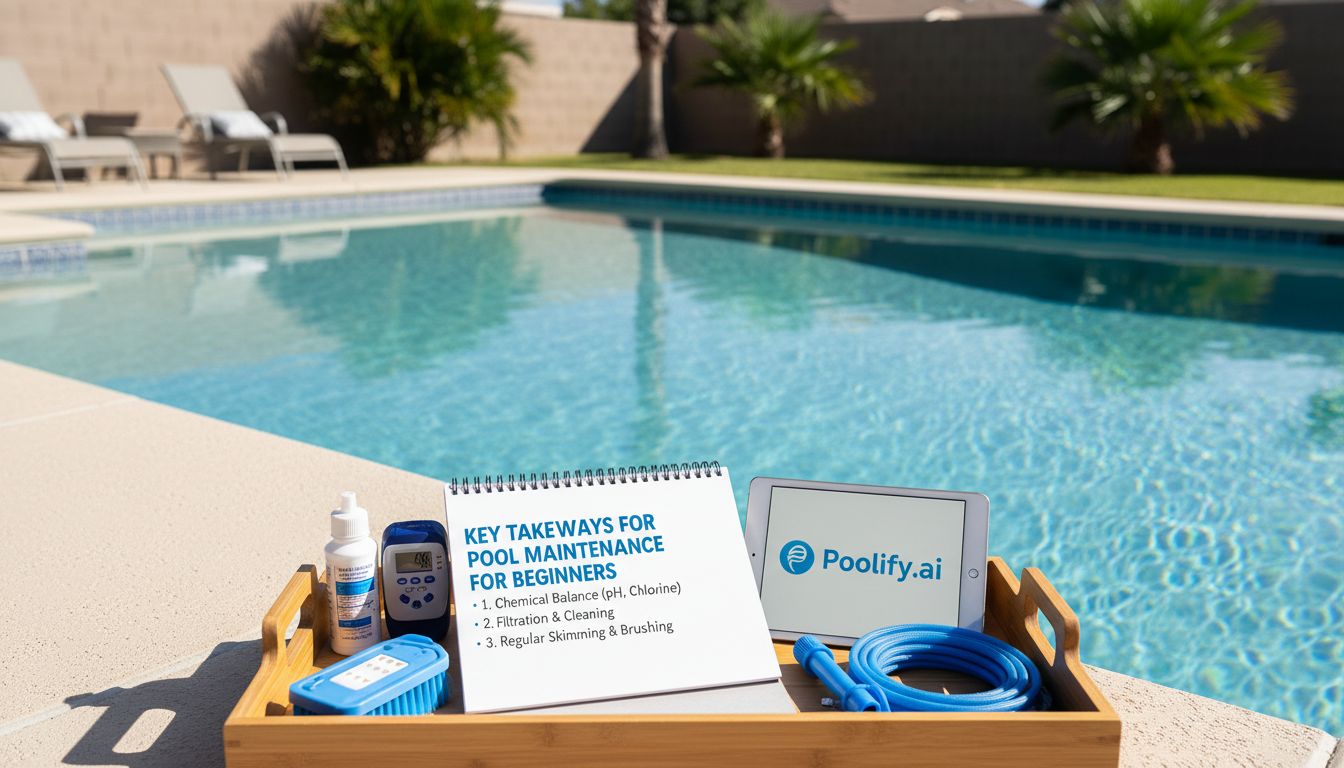
- Establish a consistent routine: Pool maintenance for beginners succeeds through regular weekly tasks including skimming, brushing, vacuuming, and chemical testing. Consistency prevents problems from escalating into expensive repairs while keeping water safe and inviting for swimmers.
- Master water chemistry fundamentals: Understanding pH, alkalinity, chlorine, and calcium hardness forms the foundation of pool maintenance for beginners. Test water twice weekly and adjust chemicals gradually to maintain balanced, healthy water that protects both swimmers and equipment.
- Invest in quality equipment: Proper tools make pool maintenance for beginners efficient and effective. Essential items include a reliable test kit, telescopic pole with attachments, quality vacuum, and chemical-resistant safety gear. Quality equipment lasts years and improves maintenance outcomes.
- Prioritize preventive care: Regular filter cleaning, equipment inspection, and prompt problem resolution prevent costly repairs in pool maintenance for beginners. Address small issues immediately before they compound into major failures requiring professional intervention and significant expense.
- Adapt to seasonal changes: Pool maintenance for beginners varies throughout the year with different demands in each season. Adjust chemical usage, cleaning frequency, and equipment operation based on temperature, usage patterns, and weather conditions for optimal results year-round.
Conclusion: Building Confidence in Pool Maintenance for Beginners
Mastering pool maintenance for beginners transforms an intimidating responsibility into a manageable routine that protects your investment and provides endless summer enjoyment. The techniques covered in this guide—from water chemistry and cleaning procedures to equipment care and seasonal adjustments—create a comprehensive foundation for successful pool ownership in 2026. Remember that every pool owner started as a beginner, and the learning curve flattens quickly with consistent practice and attention to detail.
Success in pool maintenance for beginners comes from developing good habits early. Create a maintenance schedule and stick to it, even when the pool looks clean. Test water chemistry regularly rather than waiting for problems to appear. Keep detailed records of chemical adjustments and equipment maintenance to identify patterns and optimize your approach. These practices prevent the overwhelming situations that make pool ownership feel burdensome rather than enjoyable.
Don’t hesitate to seek help when pool maintenance for beginners challenges exceed your comfort level. Online forums, local pool stores, and professional service providers offer valuable resources for troubleshooting complex issues. As your knowledge grows, you’ll handle more tasks independently while recognizing when professional expertise is warranted. The goal isn’t perfection—it’s maintaining a clean, safe pool that brings joy to your family throughout the swimming season and for years to come.
References
- Centers for Disease Control and Prevention (CDC) – Residential Pool Disinfection and Testing Guidelines
- Poolify.ai – Pool Cleaning Equipment Guide
- Poolify.ai – Pool Vacuuming Techniques
- Poolify.ai – Seasonal Pool Care Strategies