
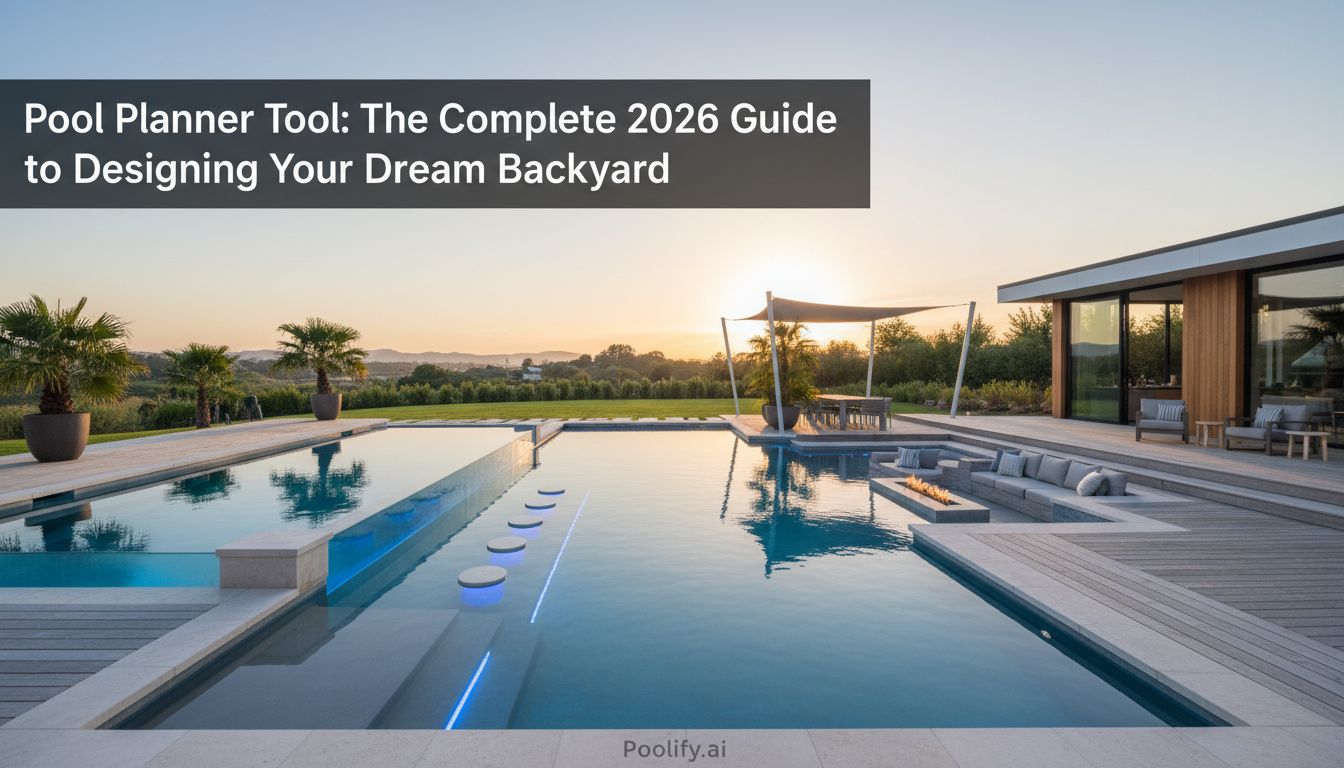
Introduction to Modern Pool Planning Technology
Planning a swimming pool installation represents one of the most significant home improvement investments you’ll make. A pool planner tool has become essential for homeowners who want to visualize their design, calculate costs accurately, and avoid expensive mistakes before breaking ground. In 2026, these digital planning solutions offer unprecedented capabilities that transform abstract ideas into detailed, actionable blueprints. Whether you’re considering a simple rectangular pool or an elaborate resort-style oasis, using a pool planner tool ensures your project starts on the right foundation.
The evolution of pool planning technology has democratized professional-grade design capabilities. What once required hiring expensive consultants for preliminary sketches now sits at your fingertips. Modern pool planner tool options provide 3D visualization, cost estimation, and compliance checking—all before you commit to construction. This guide explores everything you need to know about selecting and using these powerful planning resources effectively.
Why Every Pool Project Needs a Pool Planner Tool
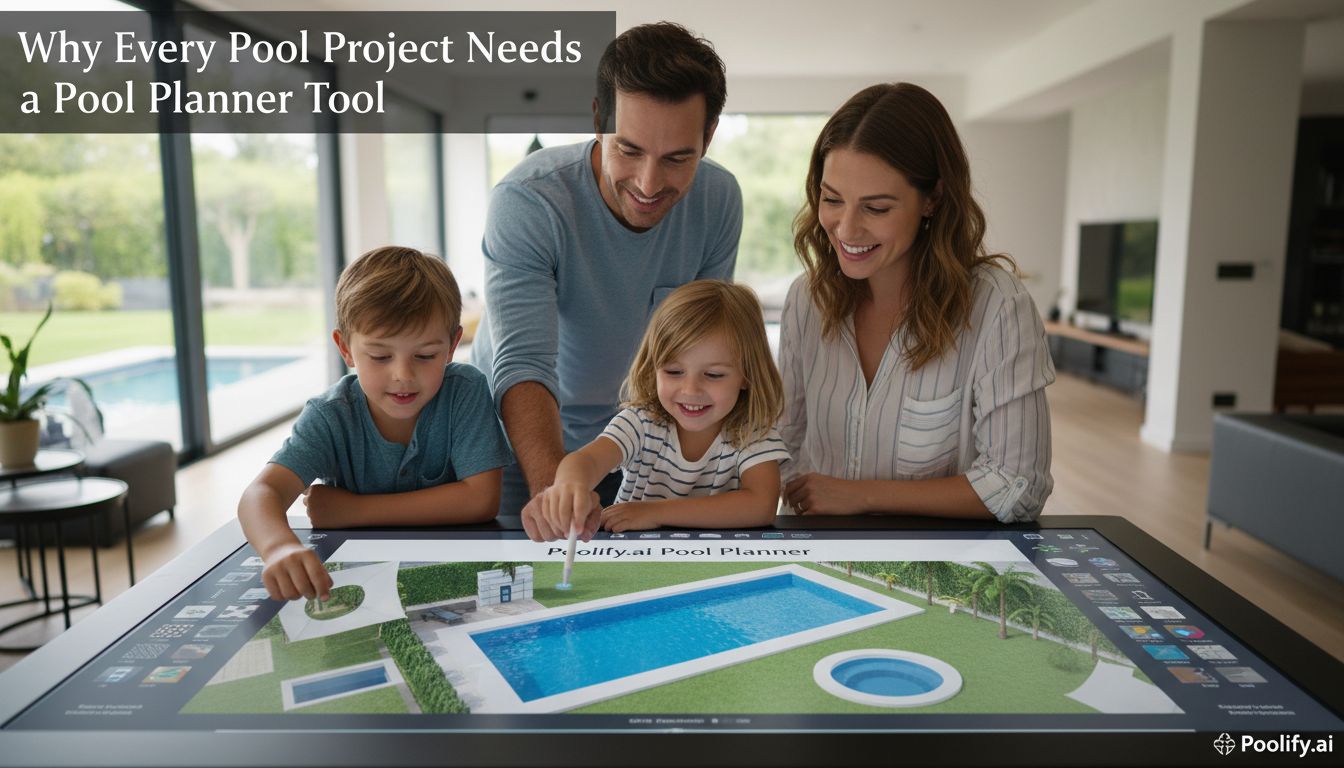
The benefits of using a pool planner tool extend far beyond simple sketching. These platforms serve as comprehensive project management systems that address multiple aspects of pool installation simultaneously. Understanding these advantages helps justify the investment of time and resources into proper planning.
Visualization Prevents Costly Design Changes
The primary value of any pool planner tool lies in its visualization capabilities. Seeing your pool design in three-dimensional space, positioned accurately within your actual backyard, reveals spatial relationships that two-dimensional drawings cannot capture. You’ll immediately recognize if the planned pool overwhelms your yard, blocks important sight lines, or conflicts with existing landscaping. Making changes digitally costs nothing; making changes after excavation begins can add thousands to your budget.
Advanced pool planner tool software now incorporates augmented reality features that let you view proposed designs through your smartphone camera. This technology overlays the virtual pool onto your real backyard in real-time, providing the most accurate preview possible. Homeowners who use these visualization features report significantly higher satisfaction with their final installations.
Accurate Budget Projections From the Start
Financial surprises derail more pool projects than any other factor. A quality pool planner tool includes cost estimation features that calculate expenses based on your specific design choices. As you adjust pool dimensions, add features like waterfalls or tanning ledges, or select premium finishes, the tool updates your projected costs instantly. This transparency allows you to make informed trade-offs that keep your project within budget.
According to the U.S. Census Bureau’s construction data, accurate preliminary budgeting reduces project cost overruns by an average of 23%. The cost calculator within a pool planner tool serves as your financial reality check, ensuring your dreams align with your resources before you sign contracts.
Compliance and Permitting Simplified
Every municipality enforces specific regulations regarding pool placement, setbacks from property lines, fencing requirements, and safety features. A comprehensive pool planner tool includes compliance checking features that flag potential violations before you submit permit applications. Some advanced platforms maintain updated databases of local building codes, automatically verifying your design meets regional requirements.
This proactive compliance verification saves weeks of permitting delays and prevents the frustration of redesigning plans to satisfy code enforcement. The pool planner tool essentially serves as a preliminary inspector, identifying issues when they’re still easy to fix.
Essential Features of an Effective Pool Planner Tool
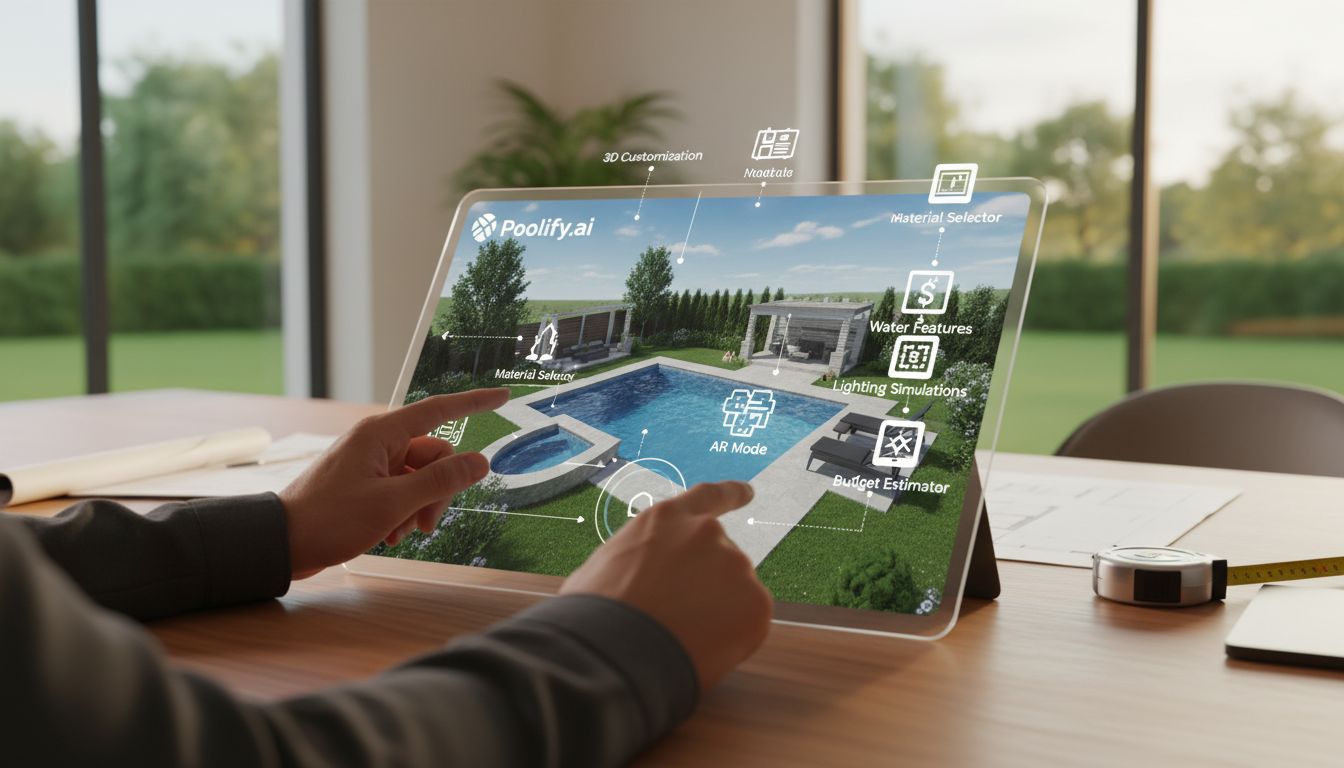
Not all planning software delivers equal value. Understanding which features matter most helps you select a pool planner tool that matches your project complexity and technical comfort level. These capabilities separate basic sketch tools from professional-grade planning platforms.
Customizable Design Templates
The best pool planner tool options provide extensive template libraries covering popular pool shapes and styles. Rather than starting from scratch, you select a base design that approximates your vision, then customize dimensions and features. Templates for rectangular pools, kidney shapes, freeform designs, and geometric patterns give you professional starting points that ensure proper proportions.
Template customization within your pool planner tool should feel intuitive. Drag-and-drop interfaces, simple dimension inputs, and visual editing tools make the design process accessible even if you lack technical drawing skills. The goal is empowering creativity without requiring CAD software expertise.
Material and Finish Selection Libraries
Your pool’s aesthetic depends heavily on surface finishes, coping materials, and surrounding decking choices. A comprehensive pool planner tool includes visual libraries showing how different materials look in actual installations. You can preview plaster colors, tile patterns, natural stone options, and deck surfaces, seeing how each choice affects your overall design.
This material visualization prevents the disconnect between imagination and reality. The blue you pictured might look entirely different when applied to your specific pool shape and lighting conditions. Testing options virtually through your pool planner tool eliminates expensive finish regrets.
Landscape Integration Capabilities
Your pool doesn’t exist in isolation—it becomes part of a complete outdoor living environment. An advanced pool planner tool allows you to incorporate existing landscape features, add proposed plantings, position outdoor furniture, and design complementary hardscaping. This holistic approach ensures your pool enhances your entire backyard rather than dominating it awkwardly.
Integration features within a pool planner tool should account for mature plant sizes, shade patterns throughout the day, and traffic flow between different outdoor zones. The most sophisticated platforms even simulate how your design will look across different seasons.
Equipment and Systems Planning
Behind every beautiful pool lies complex mechanical systems. Your pool planner tool should help you plan equipment placement, plumbing runs, electrical requirements, and automation systems. Understanding where your pump, filter, heater, and control systems will be located prevents last-minute scrambling during construction.
Equipment planning through your pool planner tool also helps optimize energy efficiency. Positioning pumps closer to the pool reduces plumbing friction losses. Planning for solar heating panels requires roof or ground space allocation. These technical considerations significantly impact long-term operating costs.
Choosing the Right Pool Planner Tool for Your Project

The market offers pool planner tool options ranging from free basic apps to professional software costing hundreds of dollars. Matching the tool to your specific needs ensures you invest appropriately without paying for unnecessary complexity or settling for inadequate features.
Free vs. Premium Pool Planning Software
Free pool planner tool applications provide excellent value for straightforward projects. These typically offer basic shape creation, dimension input, and simple visualization. If you’re planning a standard rectangular pool with minimal custom features, free tools often suffice. However, they usually lack advanced features like cost estimation, compliance checking, and detailed material libraries.
Premium pool planner tool software justifies its cost through comprehensive capabilities. Professional-grade platforms include photorealistic rendering, extensive customization options, contractor collaboration features, and ongoing support. For complex projects involving custom shapes, extensive landscaping, or high-end finishes, premium tools prevent expensive mistakes that far exceed their purchase price.
Cloud-Based vs. Downloaded Applications
Modern pool planner tool options divide into cloud-based web applications and downloaded desktop software. Cloud-based tools offer accessibility from any device, automatic updates, and easy sharing with contractors or family members. You can work on your design from your office computer, then review it on your tablet while standing in your backyard.
Downloaded pool planner tool software typically offers more robust features and works without internet connectivity. Professional designers often prefer desktop applications for their advanced rendering capabilities and integration with other design software. Consider where and how you’ll use the tool when choosing between these formats.
Mobile-Friendly Design Capabilities
The convenience of a mobile-optimized pool planner tool cannot be overstated. Being able to pull up your design while meeting with contractors, shopping for materials, or simply daydreaming in your backyard adds practical value. Touch-based interfaces designed for tablets provide intuitive control that sometimes feels more natural than mouse-based desktop editing.
However, ensure your mobile pool planner tool doesn’t sacrifice critical features for portability. The best solutions offer companion mobile apps that sync with more feature-rich desktop versions, giving you flexibility without compromise.
Step-by-Step Guide to Using a Pool Planner Tool Effectively
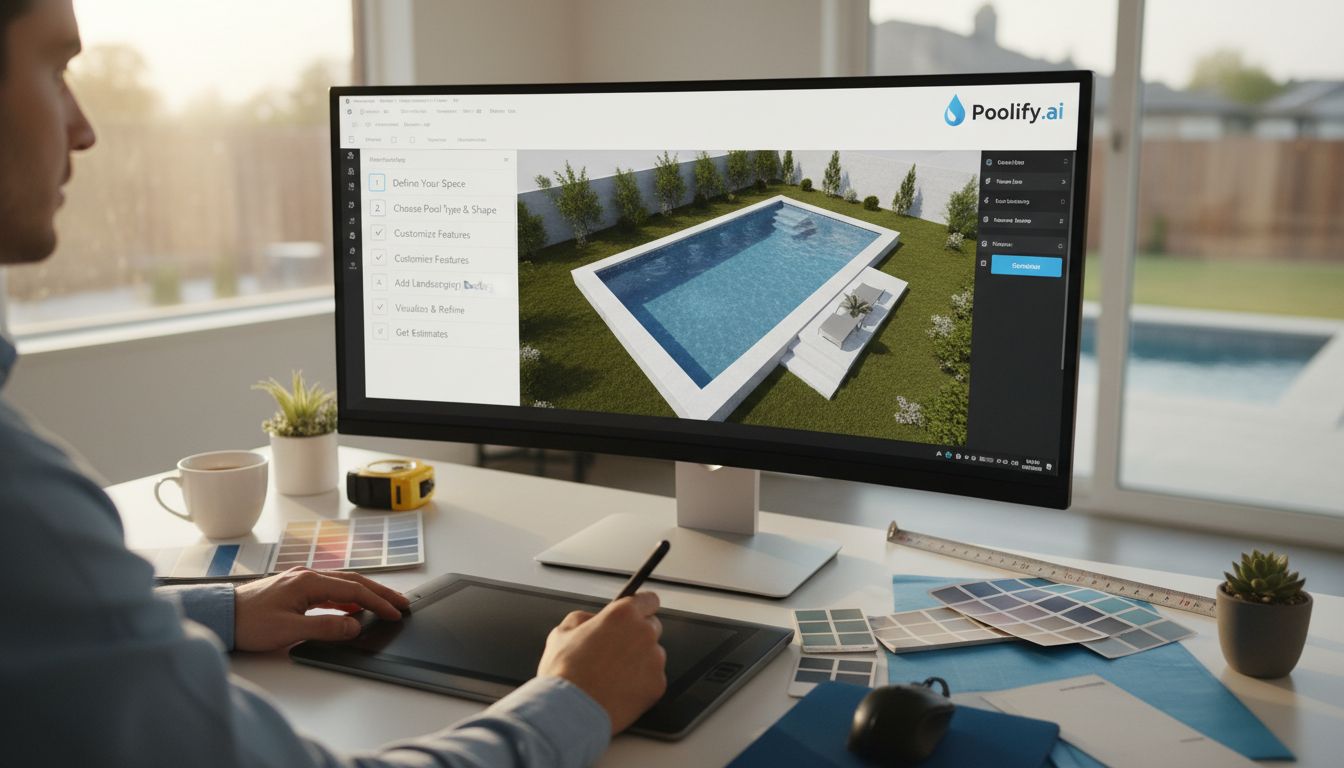
Maximizing the value of your pool planner tool requires a systematic approach. Following these steps ensures you capture all necessary information and make the most informed decisions possible.
Phase One: Site Assessment and Measurement
Before opening your pool planner tool, thoroughly document your existing backyard. Measure overall dimensions, note the locations of utilities, identify underground obstacles like septic systems, and photograph the space from multiple angles. Many pool planner tool applications allow you to import property surveys or satellite imagery as base layers, but you’ll need accurate measurements to scale everything correctly.
Pay special attention to slope and drainage patterns. Your pool planner tool should account for grade changes that affect excavation costs and drainage solutions. Document sun exposure throughout the day, prevailing wind directions, and views you want to preserve or block. This information guides design decisions within your pool planner tool.
Phase Two: Design Exploration and Iteration
With your site data loaded into your pool planner tool, begin exploring design options without self-censoring. Create multiple versions testing different pool sizes, shapes, and orientations. The beauty of digital planning is the freedom to experiment without consequences. Your pool planner tool makes trying ten different layouts as easy as trying one.
During this exploratory phase, use your pool planner tool to test extreme options. Design the largest pool your yard could physically accommodate, then scale back to something more practical. Try unconventional shapes or orientations you might not have considered. These experiments often reveal possibilities that become your final design or inform important compromises.
Phase Three: Feature Selection and Refinement
Once you’ve settled on a basic pool shape and size, use your pool planner tool to explore features and amenities. Add and remove elements like beach entries, swim-up bars, integrated spas, bubblers, deck jets, and lighting schemes. Each addition affects both aesthetics and budget, so your pool planner tool helps you prioritize based on value and available resources.
This refinement phase separates must-have features from nice-to-have luxuries. Your pool planner tool provides the visual feedback needed to assess whether each feature justifies its cost. Sometimes an element that seemed essential looks unnecessary in context, while other features you hadn’t prioritized transform the entire design.
Phase Four: Material and Finish Decisions
With your pool’s shape and features finalized, use your pool planner tool to make aesthetic choices. Test different finish colors, coping styles, and decking materials. View your design at different times of day if your pool planner tool offers lighting simulation. Consider how materials will look wet versus dry, in bright sun versus shade.
Material selection through your pool planner tool should balance aesthetics with practical concerns like maintenance requirements, heat retention, and durability. Some finishes look stunning but require intensive upkeep. Your pool planner tool helps you make informed compromises that you’ll appreciate years after installation.
Phase Five: Contractor Collaboration and Finalization
Most professional pool planner tool platforms allow you to export designs in formats contractors can use. Share your completed plan with multiple builders to obtain competitive bids based on identical specifications. This standardization ensures you’re comparing apples to apples when evaluating proposals.
Your pool planner tool design also serves as a communication tool throughout construction. When questions arise about your vision, you can reference the detailed plan rather than trying to describe abstract concepts. This clarity prevents misunderstandings that lead to disappointing results or expensive change orders.
Advanced Pool Planner Tool Techniques for 2026
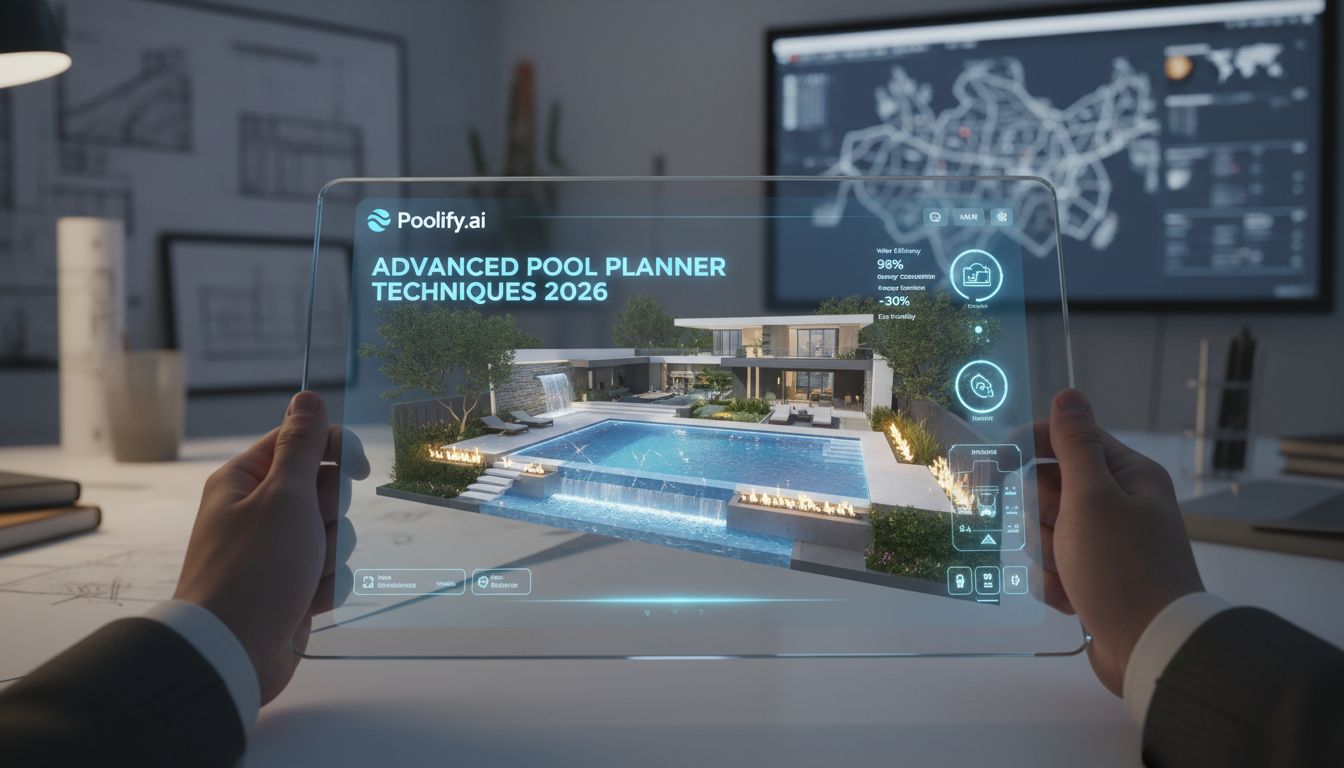
As pool planning technology evolves, new capabilities emerge that sophisticated users can leverage for even better results. These advanced techniques separate basic planning from truly optimized designs.
Seasonal Simulation and Sun Path Analysis
The most advanced pool planner tool options now include seasonal simulation features that show how your design performs throughout the year. Sun path analysis reveals which areas receive full sun during peak swimming season versus which zones stay shaded. This information guides decisions about pool orientation, where to position sun shelves for warmth, and where shade structures provide the most value.
Using your pool planner tool to simulate seasonal conditions prevents surprises like discovering your pool sits in complete shade during morning hours when you most want to swim. According to research from the U.S. Department of Energy, proper solar orientation can reduce pool heating costs by up to 50% through passive solar gain.
Energy Efficiency Optimization
Forward-thinking pool planner tool platforms incorporate energy modeling that estimates operating costs based on your design choices. Pool size, depth, surface area, and equipment selections all affect energy consumption. Your pool planner tool can compare the long-term costs of different scenarios, helping you make choices that reduce environmental impact and monthly expenses.
Energy analysis within a pool planner tool might reveal that a slightly smaller pool with a solar heating system costs less to operate over ten years than a larger pool with conventional heating, even though the initial installation costs more. These insights enable truly informed decision-making that considers total cost of ownership.
Virtual Reality Walkthroughs
Cutting-edge pool planner tool technology now supports virtual reality headset integration. Rather than viewing your design on a flat screen, you can virtually walk through your planned backyard, experiencing the space at human scale. This immersive preview reveals design elements that flat renderings miss, like whether the pool feels cramped or spacious, and how different areas connect visually.
While VR-enabled pool planner tool options remain relatively rare in 2026, they represent the future of design visualization. If you’re planning an elaborate installation with significant investment, seeking out a pool builder who uses VR-capable planning tools provides valuable peace of mind.
Common Pool Planner Tool Mistakes to Avoid
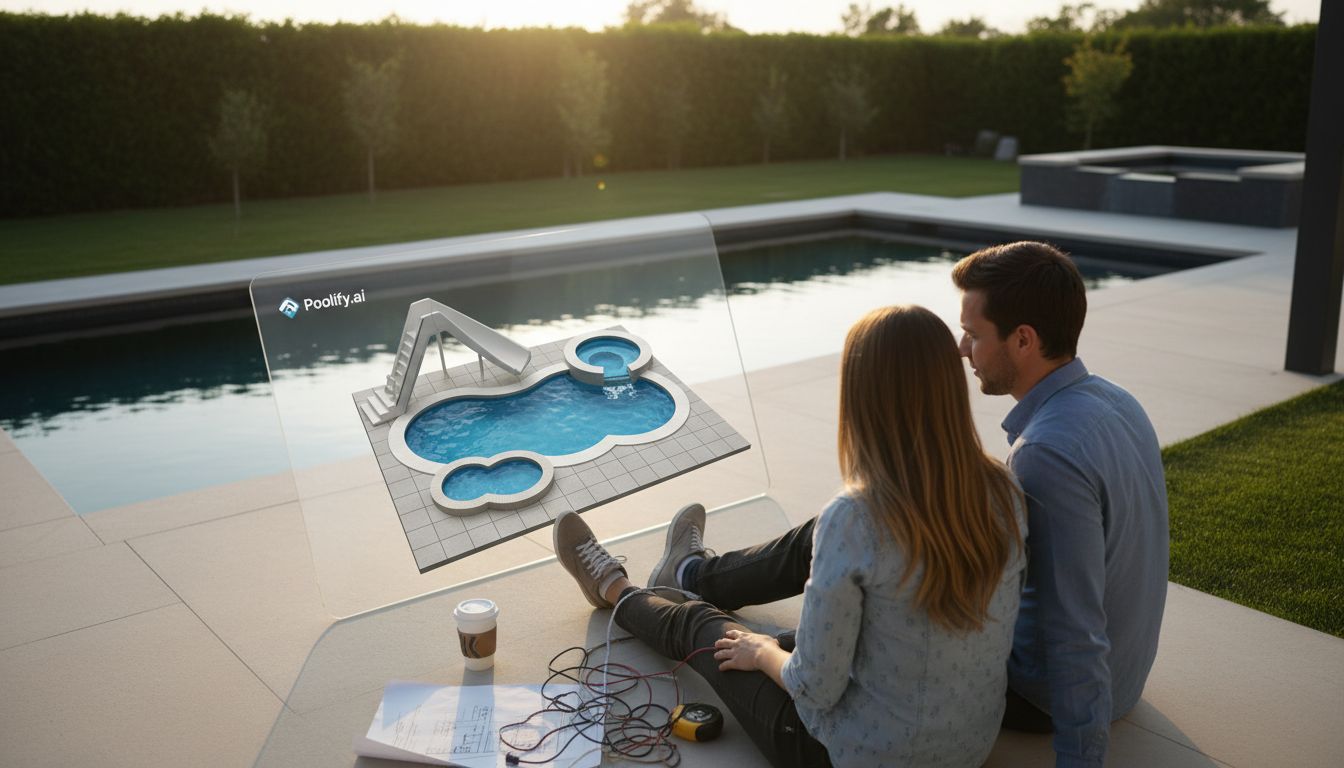
Even the best pool planner tool can’t prevent poor decisions if users fall into common traps. Awareness of these pitfalls helps you use your planning software more effectively.
Ignoring Scale and Proportion
The most frequent mistake when using a pool planner tool involves misjudging scale. A pool that looks perfect on your computer screen might overwhelm your actual yard. Always verify that your pool planner tool accurately represents real-world dimensions. If possible, stake out the planned pool footprint in your yard with string and stakes to physically experience the size before committing.
Your pool planner tool should display both the pool dimensions and surrounding space. A 20-by-40-foot pool requires significantly more total space when you account for required decking, equipment areas, and setbacks. Failing to consider these buffer zones leads to cramped layouts that feel claustrophobic despite careful planning.
Overlooking Practical Access and Circulation
Beautiful pool planner tool renderings sometimes neglect practical considerations like how you’ll access different areas for maintenance. Where will you store pool equipment, cleaning tools, and toys? How will you reach the equipment pad for service? Can furniture be rearranged easily, or does your layout lock everything into fixed positions?
Use your pool planner tool to map traffic patterns between your house, pool, outdoor kitchen, and other amenities. Ensure adequate circulation space so people aren’t constantly navigating tight squeezes. These practical considerations significantly impact how enjoyable your pool becomes in daily use.
Underestimating Future Needs
Your pool planner tool helps you design for today, but thoughtful planning considers tomorrow. If you have young children now, how will your pool use change as they become teenagers? If you’re installing a pool in your forever home, how might aging affect your needs? Features like beach entries and handrails that seem unnecessary now might become essential later.
Build flexibility into your pool planner tool design where possible. Rough-in plumbing for features you might add later, even if you don’t install them initially. Position equipment pads to accommodate upgrades. This forward-thinking approach maximizes your pool’s long-term value.
Integration with Professional Pool Design Services
While a pool planner tool empowers homeowners to create impressive designs independently, professional designers bring expertise that software cannot replicate. Understanding how to combine DIY planning with professional input produces optimal results.
When to Consult Professionals
Use your pool planner tool to develop a preliminary design that captures your vision, then engage a professional designer to refine and optimize it. This approach gives designers a clear starting point while reducing the billable hours you pay for. Professionals can identify structural concerns, suggest improvements based on experience with hundreds of installations, and ensure your design complies with local codes.
Professional input becomes especially valuable for complex sites with significant slope, poor soil conditions, or limited access. Your pool planner tool might create a beautiful design that’s impractical or prohibitively expensive to build given site constraints. Professionals recognize these issues early, saving you from disappointment.
Collaborative Design Workflows
Many professional pool builders now use the same pool planner tool platforms available to consumers, or they can import designs from popular planning software. This compatibility enables true collaboration where you develop the initial concept, the designer refines it, and you review iterations until achieving the perfect balance of vision and practicality.
Cloud-based pool planner tool platforms facilitate this collaboration by allowing multiple users to access and edit the same design file. You can make comments, suggest changes, and approve modifications without endless email chains or in-person meetings. This efficiency reduces design costs while maintaining quality.
Key Takeaways
- Visualization prevents expensive mistakes: A pool planner tool lets you test designs virtually before committing to construction, revealing spatial issues and design problems when they’re still easy to fix.
- Comprehensive planning saves money: Using a pool planner tool with cost estimation, compliance checking, and material selection features reduces budget overruns and permitting delays significantly.
- Choose tools matching your project complexity: Free pool planner tool options work well for simple designs, while premium software justifies its cost for complex projects through advanced features and professional-grade capabilities.
- Systematic planning produces better results: Following a structured process from site assessment through contractor collaboration ensures your pool planner tool captures all necessary information and facilitates informed decisions.
- Combine DIY planning with professional expertise: Use your pool planner tool to develop preliminary designs, then engage professionals to refine and optimize your vision for the best possible outcome.
Frequently Asked Questions
How accurate are the cost estimates from a pool planner tool?
Cost estimates from a quality pool planner tool typically fall within 15-20% of actual construction costs when you input accurate dimensions and select materials matching what you’ll actually install. However, these estimates provide general guidance rather than firm quotes. Site-specific factors like soil conditions, access challenges, and local labor rates affect final costs in ways no pool planner tool can predict. Use the estimates for budgeting and comparing design options, but always obtain detailed quotes from contractors before finalizing your budget.
Can I use a pool planner tool if I have a sloped or irregular yard?
Yes, advanced pool planner tool platforms include terrain modeling features that account for slopes and irregular topography. You’ll need to input elevation data at multiple points across your property, which you can obtain from a property survey or by taking measurements yourself. The pool planner tool then displays how your pool design adapts to the existing grade, showing required retaining walls, stepped designs, or infinity edges. For properties with significant slope, professional site analysis complements your pool planner tool work to ensure structural feasibility.
How long does it take to create a complete design using a pool planner tool?
Most homeowners spend 5-10 hours total working in their pool planner tool from initial concept through final design. This includes time for site measurement, exploring multiple design options, selecting materials and features, and refining details. Simple rectangular pool designs might take only 2-3 hours, while elaborate custom designs with extensive landscaping integration can require 15-20 hours. The time investment pays significant dividends by preventing expensive changes during construction and ensuring you’re completely satisfied with your design before breaking ground.
Will contractors actually follow the design I create with a pool planner tool?
Professional pool builders respect well-developed designs created with reputable pool planner tool software. Your design serves as a clear communication tool that reduces misunderstandings about your expectations. However, contractors may suggest modifications based on site conditions, code requirements, or construction practicalities you couldn’t anticipate. View your pool planner tool design as a starting point for collaboration rather than an unchangeable blueprint. The best contractors appreciate clients who’ve thoughtfully planned their projects, as it demonstrates commitment and reduces ambiguity.
Do I need special computer skills to use a pool planner tool effectively?
Modern pool planner tool platforms prioritize user-friendliness, requiring no specialized technical skills. If you can use basic smartphone apps or navigate websites, you can master pool planning software. Most tools offer tutorial videos, template libraries, and intuitive drag-and-drop interfaces that make design accessible to everyone. Start with simpler features and gradually explore advanced capabilities as you become comfortable. The learning curve is gentle, and the time invested in mastering your pool planner tool pays back many times over through better design decisions.
Conclusion
A pool planner tool has become an indispensable resource for homeowners embarking on pool installation projects in 2026. These sophisticated platforms transform abstract ideas into detailed, visualized plans that prevent costly mistakes, facilitate accurate budgeting, and ensure your finished pool matches your vision. Whether you choose a free basic application or invest in premium professional software, the planning process itself adds tremendous value by forcing you to consider every aspect of your project before construction begins.
The most successful pool projects combine the accessibility and flexibility of a pool planner tool with the expertise of professional designers and builders. Use your planning software to explore possibilities, test options, and develop a preliminary design that captures your vision. Then collaborate with professionals who can refine your concept, address technical challenges, and bring your dream to life. This balanced approach leverages technology’s power while respecting the irreplaceable value of human experience and craftsmanship.
As you begin your pool planning journey, remember that the time you invest in thorough design work pays dividends for decades. Your pool planner tool enables you to make informed decisions about every aspect of your project, from basic shape and size through finishing touches and landscaping integration. The result is a backyard oasis that enhances your home’s value, provides endless enjoyment, and reflects your unique vision—all because you took the time to plan carefully before breaking ground.
References
- U.S. Census Bureau – Construction Data: https://www.census.gov/construction/chars/
- U.S. Department of Energy – Swimming Pool Heating: https://www.energy.gov/energysaver/swimming-pool-heating