
Understanding pool resurfacing cost is essential for homeowners planning to restore their swimming pool’s beauty and functionality in 2026. Whether your pool surface shows visible cracks, rough texture, or fading color, resurfacing represents a significant investment that requires careful planning. The average pool resurfacing cost ranges from $4,500 to $15,000, depending on material choice, pool size, and regional labor rates. This comprehensive guide breaks down everything you need to know about pricing, material options, and strategies to make informed decisions for your pool renovation project.
What Influences Pool Resurfacing Cost in 2026
Several critical factors determine the final pool resurfacing cost for your project. Understanding these variables helps you anticipate expenses and make budget-conscious decisions. Pool size remains the primary cost driver, with larger pools requiring more materials and labor hours. A standard 12×24-foot pool typically costs less to resurface than an Olympic-sized pool or custom freeform design.
Material selection significantly impacts your total investment. Basic plaster finishes represent the most affordable option at $4 to $7 per square foot, while premium alternatives like glass beads or polished aggregate can reach $10 to $15 per square foot. Geographic location also affects pricing, as labor costs vary substantially between regions. Coastal areas and major metropolitan markets typically command higher rates than rural communities.
Surface preparation requirements add complexity to cost calculations. Pools with extensive damage, calcium buildup, or structural issues require additional prep work before resurfacing begins. According to the Department of Energy’s pool efficiency guidelines, proper surface preparation ensures longevity and energy efficiency for heated pools. Drainage improvements, crack repairs, and tile replacement can add $1,000 to $5,000 to your base pool resurfacing cost.
Pool Resurfacing Material Options and Pricing
Selecting the right resurfacing material balances aesthetics, durability, and budget constraints. Each option offers distinct advantages and cost implications that affect both initial investment and long-term maintenance expenses. Understanding these differences helps you choose the material that best suits your needs and financial situation.
Standard Plaster Finishes
Traditional white plaster remains the most economical resurfacing choice, with costs ranging from $4,500 to $7,500 for average-sized pools. This classic option provides a smooth, bright finish that enhances water clarity. However, plaster typically lasts 7 to 10 years before requiring replacement, making it less durable than alternative materials. Many homeowners choose colored plaster additives for $500 to $1,500 extra, creating custom aesthetics while maintaining affordability.
Aggregate-Based Surfaces
Exposed aggregate finishes combine cement with pebbles, quartz, or glass beads, creating textured surfaces that resist staining and etching. These materials cost $7,000 to $12,000 for standard pools but offer 12 to 20 years of service life. Pebble Tec and similar products provide natural aesthetics with superior durability, justifying their higher pool resurfacing cost through reduced long-term maintenance and replacement frequency.
Premium Glass Bead and Tile Options
High-end resurfacing materials feature glass beads, polished aggregate, or full tile installations. These premium choices range from $12,000 to $20,000 or more but deliver exceptional beauty and longevity. Glass bead finishes reflect light beautifully, creating shimmering water effects. Full tile installations offer ultimate durability and customization but represent the highest pool resurfacing cost at $25 to $50 per square foot installed.
Labor Costs and Installation Considerations
Professional installation represents 40 to 60 percent of total pool resurfacing cost in most markets. Skilled contractors charge $50 to $100 per hour depending on location and expertise level. The resurfacing process typically requires 3 to 7 days from start to finish, including surface preparation, application, and curing time. Rushing this timeline compromises quality and longevity.
Proper drainage and preparation work ensure successful outcomes. Contractors must sandblast or chip away old surfaces, repair structural damage, and address plumbing issues before applying new finishes. These preparatory steps add 1 to 2 days to project timelines and $1,500 to $3,000 to overall costs. Skipping thorough preparation leads to premature failure and costly repairs within months of completion.
Seasonal timing affects both availability and pricing. Spring and early summer represent peak seasons when contractors maintain full schedules and charge premium rates. Scheduling resurfacing during fall or winter months may reduce labor costs by 10 to 20 percent while ensuring contractor availability. However, temperature requirements for curing certain materials limit winter applications in colder climates.
Additional Expenses Beyond Basic Resurfacing
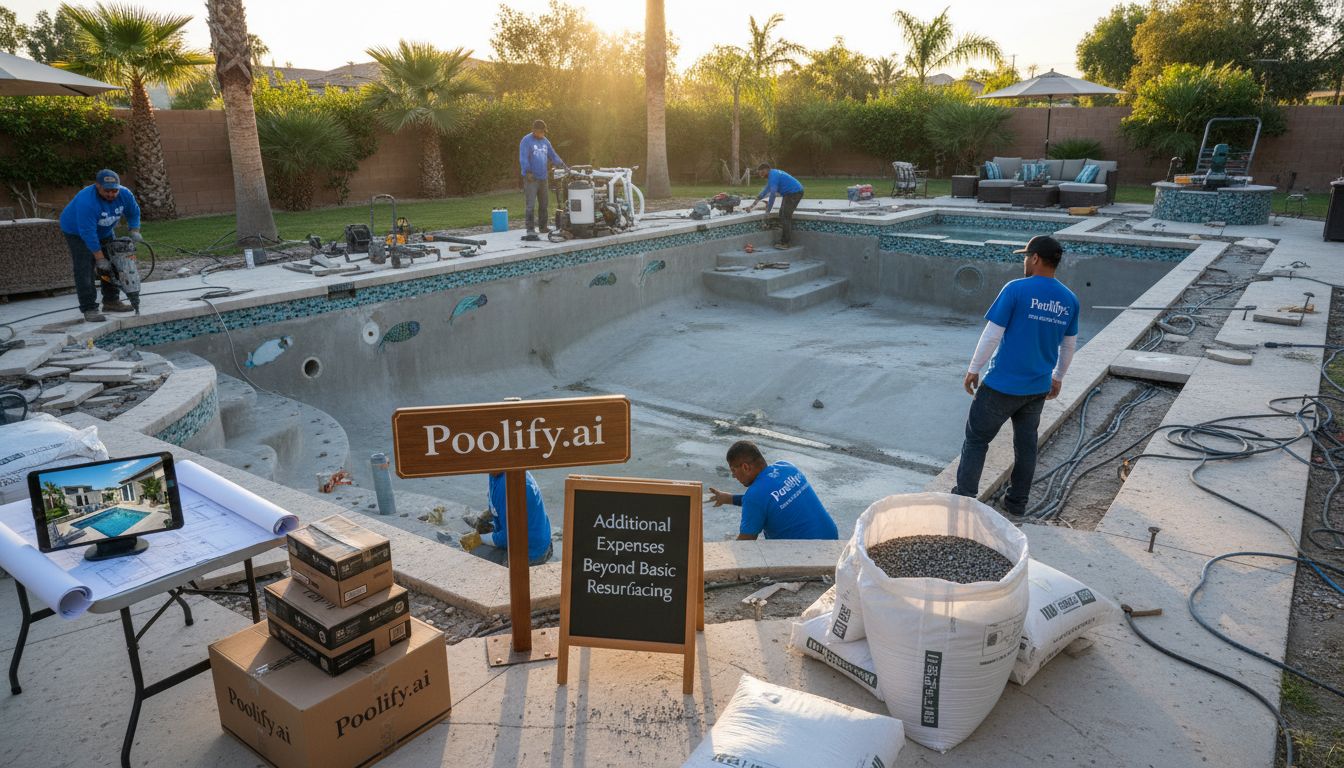
Smart budgeting accounts for complementary upgrades and necessary repairs that accompany resurfacing projects. Many homeowners discover additional issues once contractors drain pools and inspect underlying structures. Tile replacement around waterlines adds $1,000 to $5,000 depending on tile quality and linear footage. Coping stones that frame pool edges may require repair or replacement, costing $15 to $40 per linear foot.
Upgrading pool equipment during resurfacing makes financial sense since contractors already have pool access. New pumps, filters, or heaters integrate seamlessly into renovation projects. Energy-efficient equipment reduces operating costs while improving performance. LED lighting upgrades transform nighttime ambiance for $700 to $1,500 per light installation. For more information on maintaining upgraded equipment, explore our comprehensive pool maintenance guide.
Water chemistry startup costs follow resurfacing completion. New plaster surfaces require careful chemical balancing during the first 28 days to prevent etching and staining. Professional startup services cost $200 to $500 but protect your investment by ensuring proper curing. Many contractors include basic startup in their packages, while others charge separately for this essential service.
DIY vs. Professional Pool Resurfacing Cost Comparison
Ambitious homeowners sometimes consider DIY resurfacing to reduce expenses. While materials cost $2,000 to $5,000 for standard pools, this approach demands specialized skills, equipment, and physical stamina. Professional results require experience with surface preparation, material mixing, and application techniques that take years to master. Most DIY attempts result in uneven finishes, premature failure, or costly professional corrections.
Equipment rental adds unexpected expenses to DIY projects. Sandblasters, compressors, trowels, and safety gear cost $500 to $1,500 to rent for project duration. Disposal fees for removed materials add another $200 to $600 depending on local regulations. When factoring time investment, equipment costs, and risk of errors, professional installation typically provides better value despite higher upfront pool resurfacing cost.
Warranty coverage represents another critical consideration. Professional contractors offer 1 to 5-year warranties on workmanship and materials, protecting your investment against defects. DIY projects carry no such protection, leaving homeowners financially responsible for any issues. Insurance implications also matter, as some policies exclude coverage for owner-performed major renovations.
How to Reduce Pool Resurfacing Cost Without Sacrificing Quality
Strategic planning helps minimize expenses while maintaining high-quality results. Obtaining multiple detailed quotes from licensed contractors reveals market rates and identifies outliers. Request itemized estimates that separate materials, labor, preparation work, and additional services. This transparency enables accurate comparisons and negotiation opportunities.
Timing your project strategically reduces labor costs significantly. Off-season scheduling during fall or winter months provides negotiating leverage when contractors seek to maintain steady workflow. Some professionals offer 10 to 20 percent discounts for projects booked during slower periods. However, verify that weather conditions support proper material curing before committing to winter resurfacing.
Material selection balances initial investment with longevity expectations. While premium aggregates cost more upfront, their extended lifespan reduces lifetime ownership costs compared to basic plaster requiring more frequent replacement. Calculate total cost of ownership over 20 years when evaluating options. A $12,000 aggregate surface lasting 18 years costs less annually than $6,000 plaster requiring replacement every 8 years.
Bundling multiple improvements during single projects generates savings through efficiency. Contractors often discount combined work since they already have equipment onsite and crews mobilized. Addressing tile repair, equipment upgrades, and deck resurfacing simultaneously reduces overall project costs by 15 to 25 percent compared to separate renovations. Learn more about complementary improvements in our pool renovation ideas guide.
Pool Resurfacing Cost by Pool Size and Shape
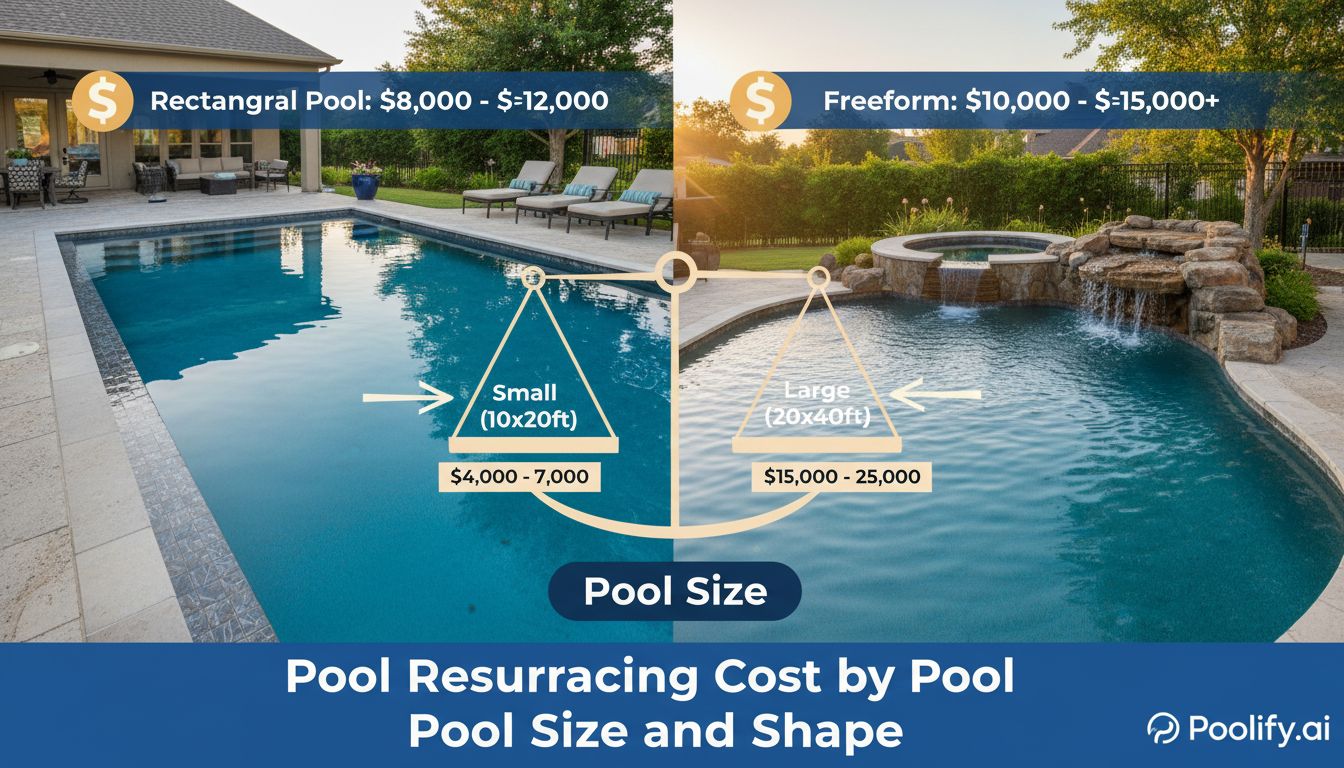
Pool dimensions directly correlate with material quantities and labor hours required. Small pools measuring 10×20 feet or 400 square feet typically cost $4,500 to $8,000 for basic plaster resurfacing. Medium pools ranging from 12×24 to 16×32 feet represent the most common residential sizes, with costs between $6,500 and $12,000 for standard materials. Large pools exceeding 20×40 feet or featuring complex shapes command $12,000 to $20,000 or more.
Custom freeform designs increase pool resurfacing cost by 20 to 40 percent compared to rectangular pools of similar square footage. Curves, beach entries, and integrated spas require additional labor for precise application and finishing. Contractors charge premium rates for these specialty installations due to increased difficulty and time requirements. Accurate measurements and detailed quotes prevent budget surprises for irregular pool shapes.
Depth variations also affect pricing calculations. Pools with diving wells, deep ends, or multiple depth transitions require more material and scaffolding for safe access. Shallow play pools with consistent depths cost less to resurface than pools with 8-foot deep ends. Discuss depth considerations with contractors during initial consultations to ensure accurate estimates.
Long-Term Maintenance and Pool Resurfacing Cost Recovery
Proper maintenance extends resurfacing longevity and protects your investment. Balanced water chemistry prevents premature deterioration of all surface materials. Test water weekly and maintain pH between 7.4 and 7.6, alkalinity from 80 to 120 ppm, and calcium hardness between 200 and 400 ppm. These parameters minimize etching, staining, and scaling that shorten surface lifespan.
Regular brushing removes debris and prevents algae growth that damages surfaces. Brush pool walls and floors weekly using appropriate tools for your surface type. Soft brushes suit plaster finishes, while stiffer bristles work better for aggregate surfaces. Consistent brushing reduces chemical demands and maintains aesthetic appeal between professional cleanings. For detailed maintenance schedules, visit our weekly pool care resource.
Professional inspections identify minor issues before they become major expenses. Annual evaluations by qualified pool technicians cost $150 to $300 but detect cracks, hollow spots, and chemical imbalances early. Addressing small repairs immediately prevents extensive damage requiring premature resurfacing. This proactive approach extends surface life by 2 to 5 years, substantially reducing lifetime pool resurfacing cost.
Financing Options for Pool Resurfacing Projects
Multiple financing solutions help homeowners manage significant resurfacing expenses. Home equity lines of credit (HELOCs) offer competitive interest rates and tax-deductible interest in many cases. These flexible credit lines allow you to borrow needed amounts while maintaining available funds for unexpected expenses. Interest rates in 2026 typically range from 7 to 10 percent for qualified borrowers with strong credit.
Personal loans provide fixed-rate financing without using home equity as collateral. Banks, credit unions, and online lenders offer pool improvement loans with terms from 3 to 7 years. Interest rates vary based on creditworthiness but generally range from 8 to 15 percent. Monthly payments remain consistent throughout loan terms, simplifying budget planning for pool resurfacing cost management.
Contractor financing programs deliver convenient approval processes and competitive terms. Many pool companies partner with lenders to offer promotional financing with deferred interest or reduced rates. Read terms carefully to understand interest accrual and payment requirements. Some programs charge no interest if balances are paid within 12 to 24 months, making them attractive for homeowners with available cash flow.
Frequently Asked Questions About Pool Resurfacing Cost
How often does pool resurfacing need to happen?
Resurfacing frequency depends on material type and maintenance quality. Standard plaster surfaces typically require replacement every 7 to 10 years, while aggregate finishes last 12 to 20 years. Premium materials like glass beads or tile installations may last 25 years or longer with proper care. Regular maintenance, balanced water chemistry, and prompt repairs extend surface lifespan regardless of material choice.
Can I resurface my pool in winter months?
Winter resurfacing feasibility depends on climate and material requirements. Most resurfacing materials require minimum temperatures of 50°F during application and curing. Southern regions with mild winters accommodate year-round scheduling, while northern climates restrict resurfacing to warmer months. Consult local contractors about seasonal limitations and optimal timing for your area to avoid curing complications that compromise quality.
Does pool resurfacing increase home value?
Professional resurfacing enhances property appeal and may increase home value by $5,000 to $15,000 depending on local market conditions. Buyers perceive well-maintained pools as valuable amenities rather than maintenance burdens. However, return on investment varies by region, with warm-climate markets showing stronger appreciation for pool improvements. Recent resurfacing eliminates buyer concerns about immediate renovation needs, facilitating faster sales at premium prices.
What signs indicate my pool needs resurfacing?
Several indicators signal resurfacing necessity. Rough texture that scratches feet or swimsuits suggests surface degradation. Visible cracks, hollow-sounding areas, or delamination require immediate attention. Persistent staining that resists chemical treatment indicates surface porosity. Frequent plaster dust in pool water or difficulty maintaining water chemistry also suggest compromised surfaces needing replacement. Address these issues promptly to prevent structural damage and escalating pool resurfacing cost.
Are permits required for pool resurfacing projects?
Permit requirements vary by municipality and project scope. Simple resurfacing without structural changes typically requires no permits in most jurisdictions. However, projects involving plumbing modifications, equipment upgrades, or deck work may require building permits and inspections. Reputable contractors understand local regulations and obtain necessary permits as part of their services. Verify permit responsibilities during initial consultations to ensure compliance and avoid fines.
Key Takeaways
- Average pool resurfacing cost ranges from $4,500 to $15,000 depending on material choice, pool size, and regional labor rates, with premium options exceeding $20,000 for large or custom pools.
- Material selection significantly impacts both initial investment and longevity, with basic plaster lasting 7-10 years while aggregate surfaces provide 12-20 years of service life.
- Professional installation represents 40-60% of total project costs but includes essential preparation work, proper application techniques, and warranty protection that DIY approaches cannot match.
- Off-season scheduling during fall or winter months reduces labor costs by 10-20% while ensuring contractor availability and potentially better service quality.
- Proper maintenance extends resurfacing longevity by 2-5 years through balanced water chemistry, regular brushing, and prompt attention to minor repairs before they escalate.
Conclusion
Understanding pool resurfacing cost empowers homeowners to make informed decisions about this significant investment in 2026. By evaluating material options, timing projects strategically, and selecting qualified contractors, you can achieve beautiful, durable results that enhance your property for years to come. Whether choosing affordable plaster or premium aggregate finishes, proper planning and maintenance maximize value while minimizing lifetime ownership costs. Start gathering quotes from licensed professionals today to transform your aging pool surface into a stunning backyard centerpiece that provides enjoyment for your family and increases your home’s appeal.
References
- U.S. Department of Energy – Swimming Pool Energy Efficiency: https://www.energy.gov/energysaver/swimming-pools
- Poolify.ai – Pool Maintenance Guide: https://content.poolify.ai/pool-maintenance-guide/
- Poolify.ai – Pool Renovation Ideas: https://content.poolify.ai/pool-renovation-ideas/
- Poolify.ai – Weekly Pool Care: https://content.poolify.ai/weekly-pool-care/