
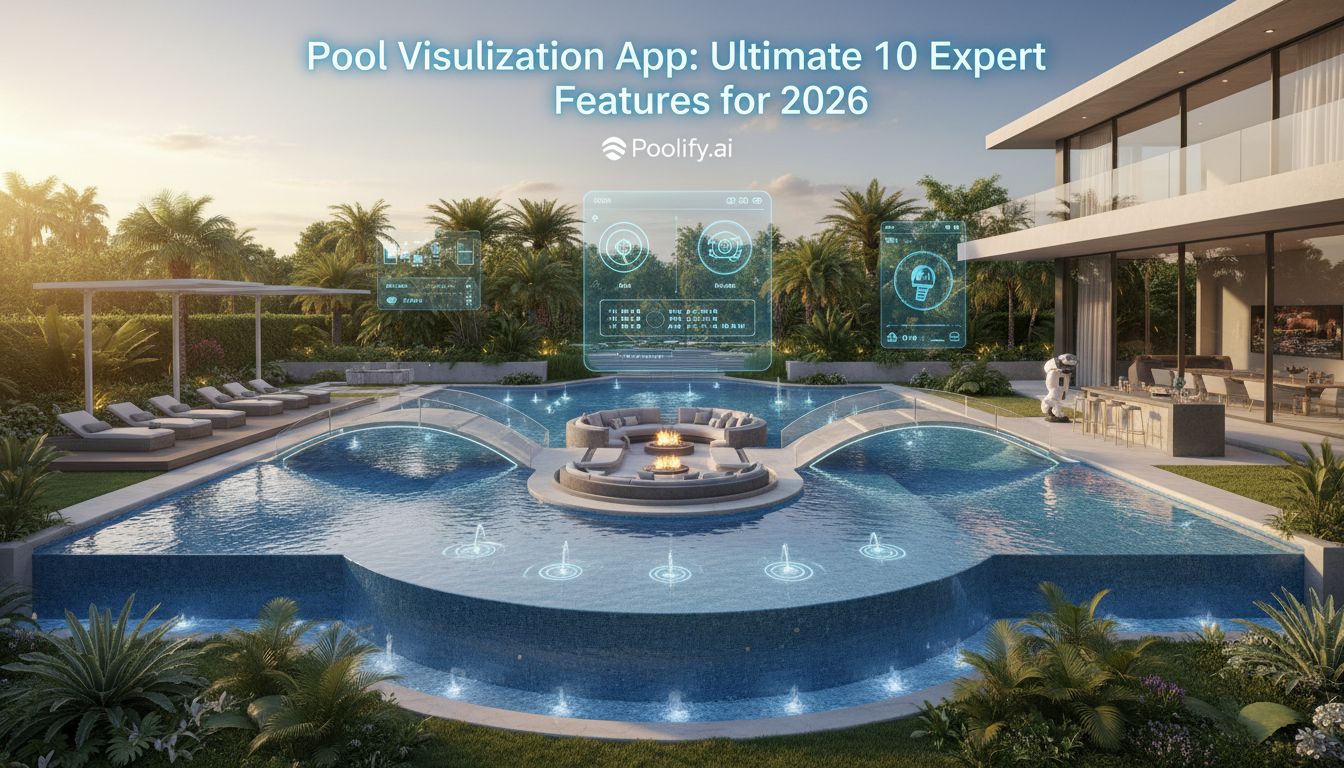
Transform Your Backyard with a Pool Visualization App
Planning a swimming pool has never been easier thanks to advanced pool visualization app technology available in 2026. These innovative digital tools allow homeowners to see exactly how their dream pool will look in their actual backyard before breaking ground. A pool visualization app uses augmented reality, 3D modeling, and artificial intelligence to create photorealistic renderings that help you make confident design decisions. Whether you’re considering an infinity edge, a classic rectangle, or a natural lagoon-style pool, visualization technology eliminates the guesswork from one of your home’s most significant investments.
The pool design industry has evolved dramatically, with visualization apps becoming essential tools for both homeowners and professionals. These applications bridge the gap between imagination and reality, allowing you to experiment with different shapes, sizes, materials, and features without any physical commitment. In this comprehensive guide, you’ll discover the ten most important features to look for in a pool visualization app, understand how this technology works, and learn expert strategies for maximizing your design experience.
Why Pool Visualization App Technology Matters in 2026
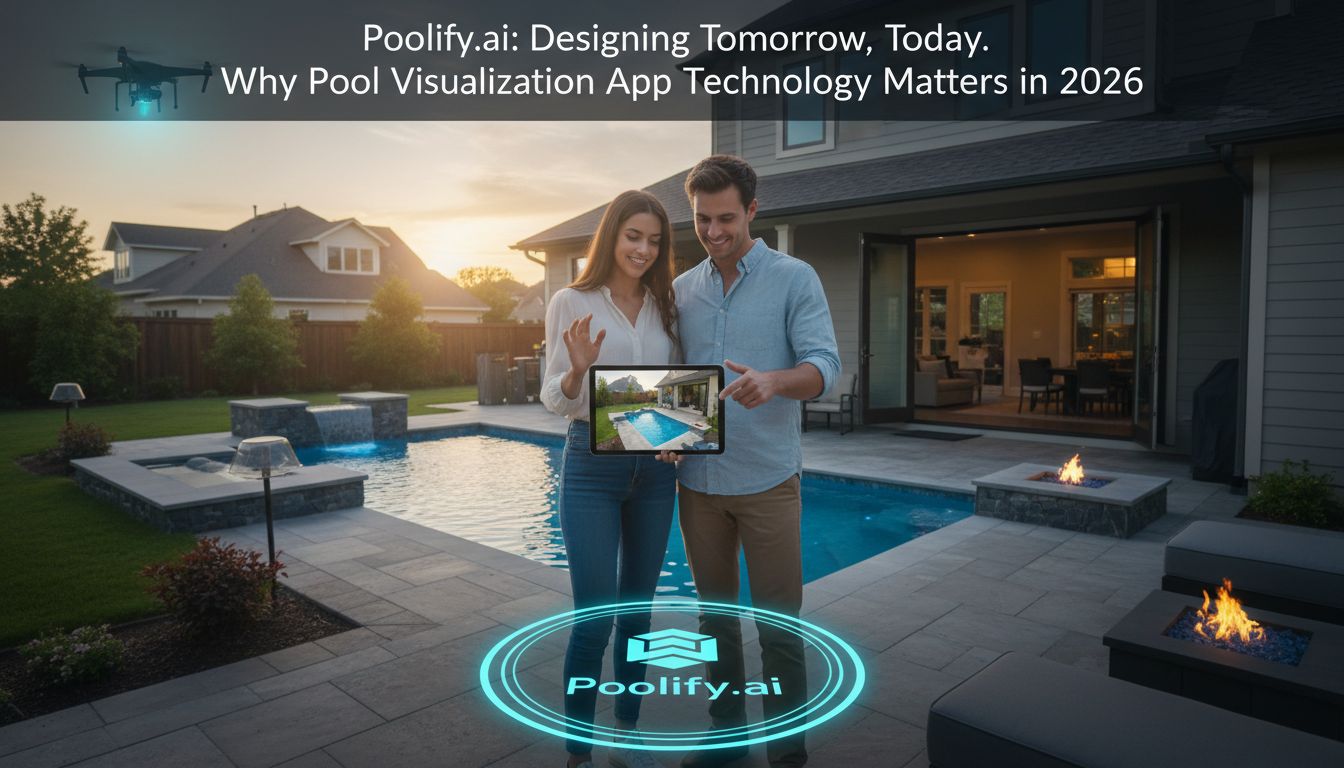
The construction and home improvement industry has fully embraced digital transformation, and pool design represents one of the most successful applications of visualization technology. According to the U.S. Census Bureau’s construction data, homeowners who use visualization tools report 43% higher satisfaction rates with their final pool installations compared to those who rely solely on traditional blueprints and sketches.
A pool visualization app addresses the fundamental challenge that has plagued pool construction for decades: the inability to accurately envision the finished product. Traditional planning methods required homeowners to interpret two-dimensional drawings and use their imagination to picture the three-dimensional reality. This disconnect often led to costly modifications, design regrets, and communication breakdowns between homeowners and contractors.
Modern visualization apps solve these problems by providing immediate, realistic representations of design choices. You can see how a turquoise tile looks against your existing landscaping, whether a waterfall feature overwhelms your space, or if a spa attachment fits proportionally with your pool dimensions. This visual clarity reduces change orders during construction by an average of 67%, according to industry research, saving both time and money.
The technology has also democratized professional-quality pool design. Homeowners no longer need to hire expensive design consultants for initial concept development. Instead, they can explore dozens of configurations independently using a pool visualization app, then consult with professionals once they’ve narrowed their preferences. This approach streamlines the entire design process and ensures that contractor meetings focus on refinement rather than basic conceptualization.
Essential Features Every Pool Visualization App Should Include
1. Augmented Reality Camera Integration
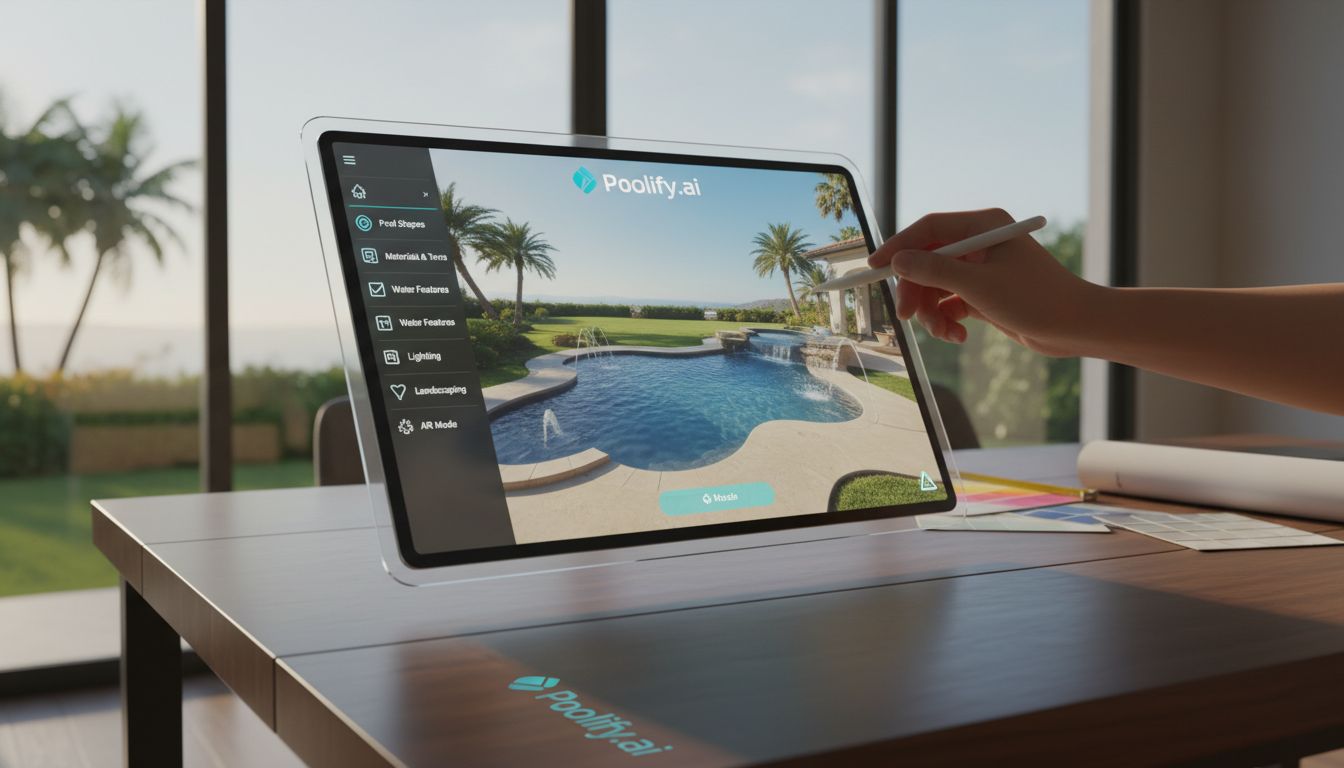
The most powerful pool visualization app options in 2026 incorporate augmented reality technology that overlays pool designs directly onto your smartphone or tablet camera view. This feature allows you to walk around your backyard while viewing the proposed pool in real-time from multiple angles. You can assess how the pool relates to existing structures, evaluate sun exposure throughout the day, and identify potential obstacles that might not be obvious in static renderings.
Quality AR integration should provide accurate scale representation, ensuring the virtual pool matches exact dimensions. The best applications use LiDAR scanning technology available in newer mobile devices to map your yard’s topography, creating more precise visualizations that account for slopes, elevations, and spatial relationships.
2. Extensive Design Library and Customization Options
A comprehensive pool visualization app must offer diverse design templates spanning various pool styles, from geometric modern designs to organic freeform shapes. Look for applications that provide at least 50 base templates with full customization capabilities. You should be able to adjust length, width, depth, and contours to match your specific space and preferences.
Beyond basic shapes, premium visualization apps include libraries of finishing materials, tile patterns, coping styles, and decking options. The ability to swap between travertine, concrete, and composite decking materials while seeing realistic texture and color representations helps you make informed material selections that complement your home’s architecture.
3. Water Feature and Accessory Visualization
Your pool visualization app should enable you to add and position various water features including waterfalls, fountains, jets, bubblers, and spillways. These elements significantly impact your pool’s aesthetic and ambiance, so seeing them in context proves invaluable. Advanced apps simulate water movement and lighting effects, showing how features appear during both day and night.
Accessory visualization extends to practical elements like steps, benches, swim-outs, tanning ledges, and integrated spas. Being able to experiment with different configurations helps optimize both functionality and visual appeal. For families with children, visualizing safety features like beach entries or graduated depth transitions ensures your design meets everyone’s needs.
4. Landscaping and Hardscaping Integration
The best pool visualization app solutions recognize that pools exist within broader landscape contexts. Look for applications that allow you to add plants, trees, outdoor furniture, pergolas, fire features, and other hardscaping elements. This comprehensive approach helps you plan the entire outdoor living space rather than viewing the pool in isolation.
Some advanced applications include plant databases with species information, helping you select vegetation appropriate for your climate zone and maintenance preferences. You might discover that certain plantings create privacy screening or that specific tree placements provide afternoon shade for your pool deck, considerations that significantly enhance long-term enjoyment.
5. Lighting Design and Visualization
Pool lighting transforms nighttime ambiance and extends usability after dark. A quality pool visualization app includes LED lighting options with adjustable colors, intensities, and placement configurations. You should be able to preview how different lighting schemes affect your pool’s appearance and surrounding areas.
Consider applications that simulate various times of day, showing how natural sunlight interacts with your pool throughout morning, afternoon, and evening hours. This feature helps identify potential glare issues or reveals opportunities to maximize natural light benefits. Landscape lighting visualization for pathways, trees, and architectural features completes the nighttime design picture.
6. Cost Estimation Tools
While a pool visualization app primarily focuses on design, integrated cost estimation features provide tremendous practical value. These tools calculate approximate construction costs based on your selected dimensions, materials, features, and regional pricing data. Understanding budget implications in real-time helps you make financially informed design decisions.
Advanced cost estimators break down expenses by category—excavation, plumbing, electrical, finishing, decking, and features—giving you transparency into where your budget allocates. This information proves essential when prioritizing must-have features versus nice-to-have additions. Some apps even suggest value-engineering alternatives that achieve similar aesthetic results at lower costs.
7. Photo-Realistic Rendering Quality
The rendering engine determines how realistic your pool visualization app produces images. In 2026, expect nothing less than photorealistic quality with accurate lighting, shadows, reflections, and material textures. High-quality rendering helps you truly envision the finished product rather than interpreting stylized or cartoon-like representations.
Look for apps that generate high-resolution images suitable for printing and sharing with contractors, family members, or homeowners’ associations. The ability to export multiple views from different angles provides comprehensive documentation of your design intent. Some applications even create video walkthroughs or 360-degree panoramas for immersive design reviews.
8. Measurement and Dimension Tools
Accurate measurements separate useful visualization from mere entertainment. Your pool visualization app should include precision measurement tools that display exact distances, areas, and volumes. These specifications prove essential when obtaining contractor quotes, ordering materials, or verifying that designs comply with setback requirements and building codes.
Advanced measurement features calculate water volume for chemical treatment planning, surface area for heating calculations, and perimeter dimensions for fencing requirements. Some apps integrate with local building codes, flagging potential compliance issues like minimum distances from property lines or required safety barrier specifications.
9. Collaboration and Sharing Capabilities
Pool design rarely involves just one decision-maker. A practical pool visualization app facilitates collaboration through easy sharing features. Look for applications that allow you to export designs via email, text message, or social media, enabling input from spouses, family members, designers, and contractors.
Cloud-based apps with multi-user access let multiple stakeholders view and comment on designs simultaneously. Version control features track design iterations, allowing you to compare options side-by-side or revert to previous concepts. Some platforms include contractor directories where you can directly share designs with local pool builders for quote requests.
10. Tutorial Resources and Customer Support
Even the most intuitive pool visualization app benefits from comprehensive tutorial resources. Quality applications provide video guides, step-by-step instructions, design tips, and inspiration galleries. These educational materials help you maximize the software’s capabilities and avoid common design mistakes.
Responsive customer support distinguishes premium apps from basic alternatives. Look for providers offering email support, live chat, or phone assistance when you encounter technical issues or need design advice. Active user communities and forums provide additional resources where you can learn from other homeowners’ experiences and share your own insights.
How to Choose the Right Pool Visualization App for Your Project
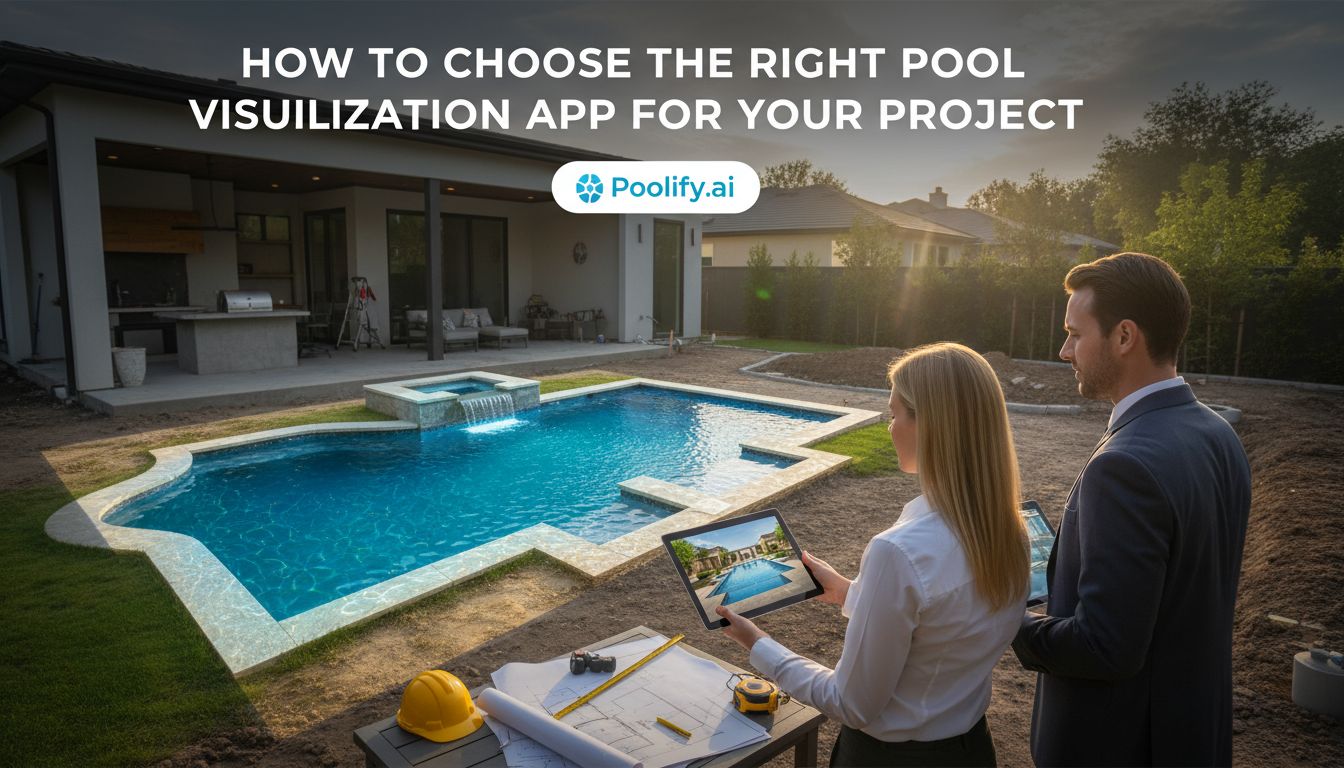
Selecting the optimal pool visualization app depends on your specific needs, technical comfort level, and project complexity. Start by assessing whether you need a simple tool for basic concept exploration or a comprehensive platform for detailed planning. Homeowners pursuing straightforward rectangular pools with minimal features might find entry-level apps sufficient, while those designing elaborate resort-style environments benefit from professional-grade software.
Consider the device ecosystem you use daily. Some visualization apps work exclusively on iOS devices, others on Android, and some operate as web-based applications accessible from any browser. If you plan to use augmented reality features extensively, ensure your smartphone or tablet meets the technical requirements for optimal performance. Newer devices with LiDAR sensors provide superior AR experiences compared to older models relying solely on camera-based mapping.
Evaluate pricing models carefully. Many pool visualization app providers offer free versions with limited features, perfect for initial exploration. Paid subscriptions typically unlock advanced capabilities like high-resolution exports, extensive material libraries, and cost estimation tools. One-time purchase apps provide perpetual access but may lack ongoing updates and new features that subscription models deliver regularly.
Read user reviews and ratings from homeowners who completed actual pool projects using the applications you’re considering. Pay attention to comments about accuracy, ease of use, and whether the visualizations matched the finished pools. Professional endorsements from pool builders and landscape architects also indicate an app’s credibility and practical utility.
Test multiple applications before committing. Most developers offer free trials or demo versions that let you experiment with core features. Spend time creating the same basic design in different apps to compare interfaces, rendering quality, and workflow efficiency. The best pool visualization app for you should feel intuitive and produce results that genuinely help your decision-making process.
Maximizing Your Pool Visualization App Experience
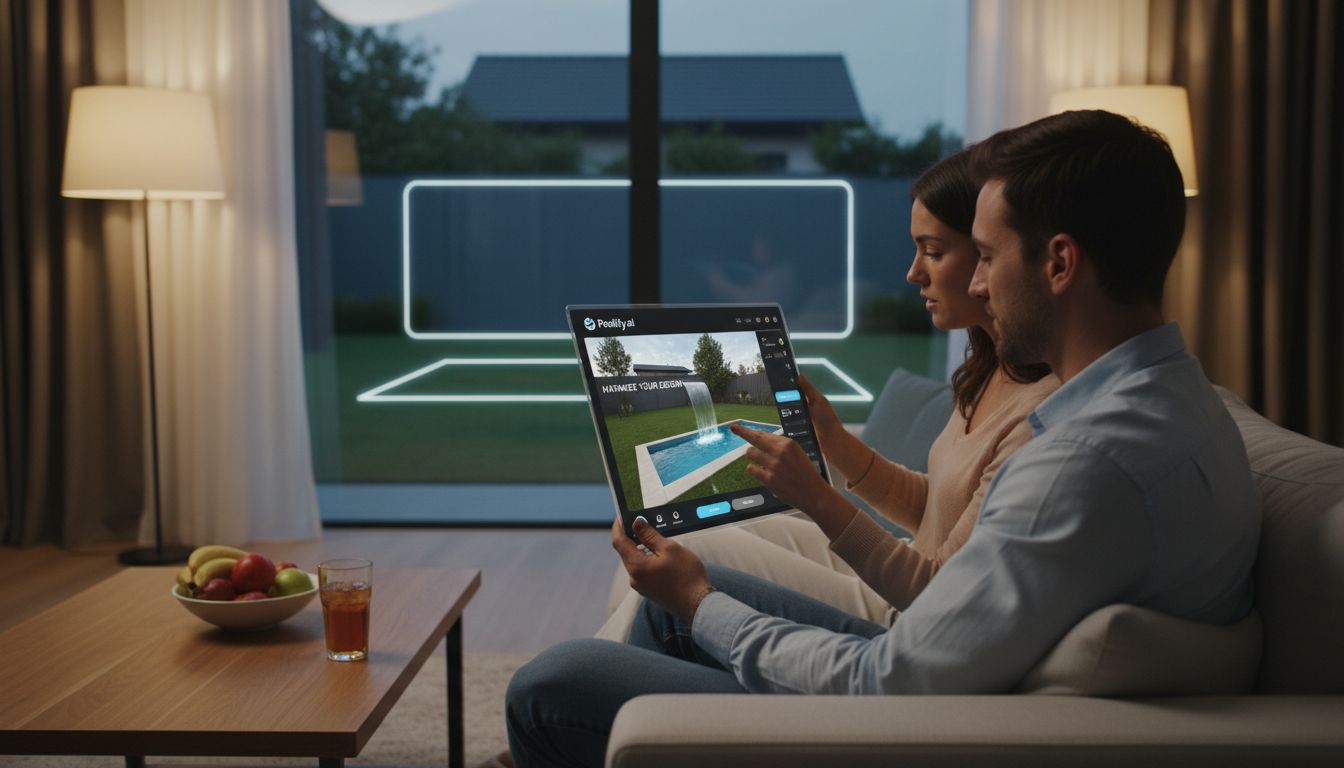
To get the most value from your pool visualization app, begin by thoroughly documenting your existing backyard conditions. Take measurements of your available space, noting distances from your house, property lines, and existing features like trees, utilities, or structures. Photograph your yard from multiple angles during different times of day to capture lighting conditions and spatial relationships accurately.
Start your design process broadly rather than fixating on specific details immediately. Experiment with various pool shapes and sizes to understand what proportions work best in your space. Many homeowners discover that their initial size assumptions were either too large or too small once they see realistic visualizations. A pool visualization app allows this exploration without consequences, so take advantage of the freedom to try unconventional ideas.
Pay attention to practical considerations beyond aesthetics. Visualize equipment placement for pumps, filters, and heaters, ensuring they’re accessible yet discreet. Consider how your pool design affects traffic flow through your yard and whether it creates functional outdoor living zones. Think about maintenance access, ensuring your design doesn’t trap debris or create difficult-to-clean areas.
Use your visualization app to plan construction staging and temporary disruptions. Understanding where equipment must enter your property, where excavated soil will be placed, and how construction impacts your home’s daily use helps you prepare mentally and logistically. Some homeowners discover that certain designs require removing fencing sections or that construction access conflicts with existing landscape features worth preserving.
Save multiple design variations rather than constantly modifying a single concept. Creating a library of options lets you compare alternatives side-by-side and often reveals hybrid solutions combining the best elements from different designs. Share these variations with family members to gather input, ensuring everyone’s preferences receive consideration before finalizing plans.
For those looking to enhance their overall backyard experience, exploring comprehensive pool maintenance strategies ensures your investment remains beautiful for years. Additionally, understanding effective pool cleaning techniques helps maintain the pristine appearance you visualized during the design phase.
Common Mistakes to Avoid When Using Pool Visualization Apps
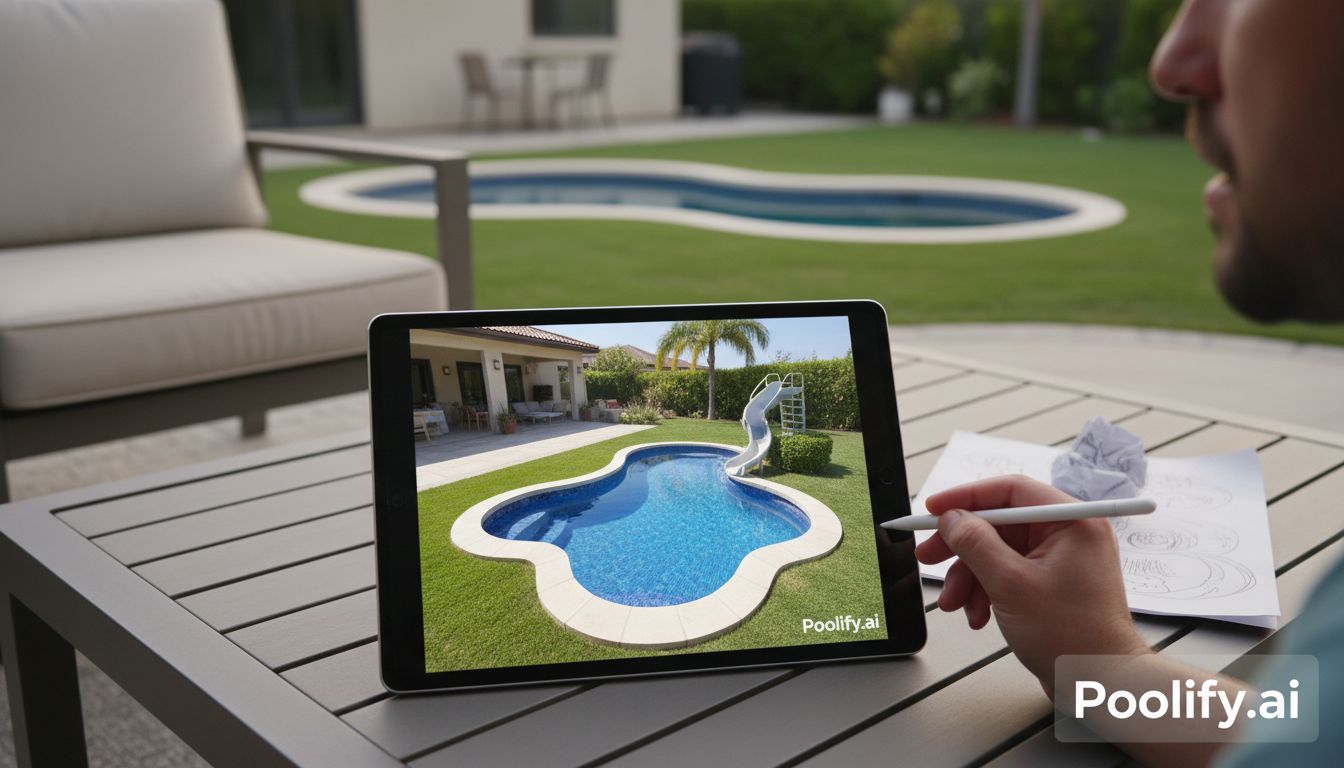
One frequent error involves neglecting to verify measurements before creating visualizations. Even minor measurement inaccuracies compound throughout the design process, resulting in visualizations that don’t accurately represent your available space. Always double-check dimensions and use your pool visualization app’s measurement tools to confirm that virtual elements match real-world constraints.
Many users become so focused on the pool itself that they forget to visualize the surrounding context. Your pool exists within a complete outdoor environment that includes existing structures, vegetation, and hardscaping. Failing to incorporate these elements into your visualization creates an incomplete picture that may not reflect how the finished pool actually integrates with your property.
Overlooking practical considerations like sun exposure, wind patterns, and privacy represents another common pitfall. A pool visualization app helps you see aesthetic aspects clearly, but you must consciously evaluate functional factors. Consider whether your pool design places the deep end where afternoon sun creates uncomfortable glare or if the shallow end ends up perpetually shaded and cold.
Some homeowners create overly ambitious designs that exceed their budgets or maintenance capabilities. While visualization apps make elaborate resort-style pools look enticing, remember that every feature adds construction costs and ongoing maintenance requirements. Be realistic about your budget, available time for upkeep, and long-term commitment to pool ownership when designing.
Failing to share visualizations with contractors before finalizing designs can lead to disappointment. What appears feasible in your pool visualization app might present practical challenges related to soil conditions, drainage, setbacks, or local regulations. Consulting with professionals early in the design process helps identify potential issues while you still have flexibility to adjust plans.
The Future of Pool Visualization Technology
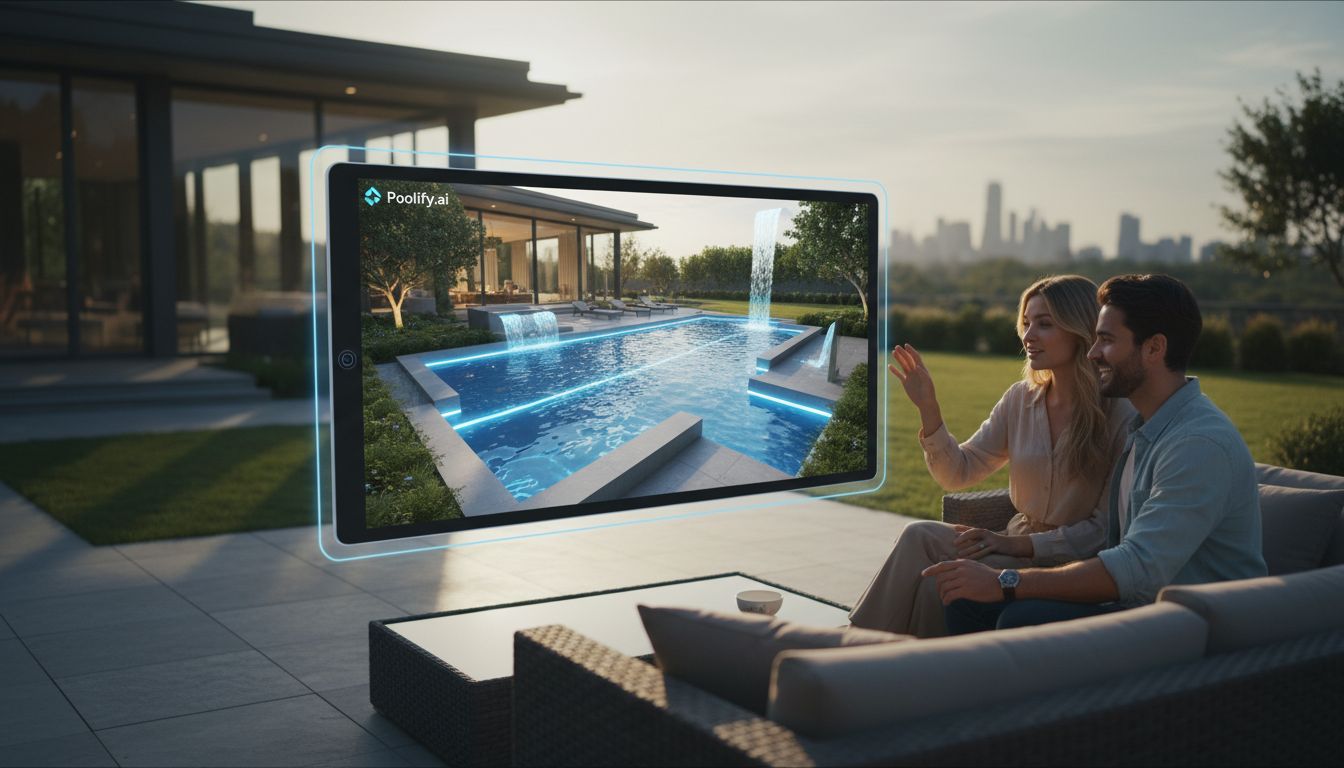
Pool visualization app technology continues evolving rapidly, with 2026 bringing exciting advancements that further enhance the design experience. Artificial intelligence integration now offers intelligent design suggestions based on your yard dimensions, budget parameters, and style preferences. These AI assistants can recommend optimal pool placements, suggest complementary features, and even predict maintenance requirements for different design configurations.
Virtual reality capabilities are becoming more accessible, allowing homeowners to experience their pool designs through immersive VR headsets. Rather than viewing visualizations on a flat screen, you can virtually swim in your proposed pool, walk around the deck, and experience the space from a first-person perspective. This immersion provides unprecedented understanding of how designs feel, not just how they look.
Integration with smart home systems represents another emerging trend. Future pool visualization app platforms will connect with home automation systems, allowing you to program lighting scenes, temperature controls, and water features directly within your design software. This integration ensures that your pool’s technological infrastructure aligns perfectly with your smart home ecosystem.
Environmental impact assessment features are gaining prominence as sustainability becomes a priority for homeowners. Advanced apps now calculate energy consumption for heating and pumps, water usage estimates, and carbon footprints for different design choices. These tools help environmentally conscious homeowners make decisions that balance aesthetic desires with ecological responsibility.
Collaborative design platforms connecting homeowners directly with professional designers and contractors are streamlining the entire pool construction process. Rather than using your pool visualization app in isolation then separately engaging professionals, integrated platforms facilitate seamless transitions from concept to construction with all stakeholders working within the same digital environment.
Frequently Asked Questions About Pool Visualization Apps
How accurate are pool visualization apps compared to the final built pool?
Modern pool visualization app technology achieves remarkable accuracy when users input correct measurements and select materials matching actual products. The visual representation typically matches the finished pool within 90-95% accuracy for dimensions, shapes, and spatial relationships. Material colors and textures may vary slightly due to lighting conditions and screen calibration differences, but overall accuracy has improved dramatically. The key to accuracy lies in precise initial measurements and selecting materials from your contractor’s actual inventory rather than generic options.
Do I need professional design experience to use a pool visualization app effectively?
No professional experience is necessary to use most pool visualization app options available in 2026. Developers design these applications specifically for homeowners with intuitive interfaces, drag-and-drop functionality, and guided workflows. Most apps include tutorials and templates that help beginners create professional-quality visualizations within hours. While design experience might help you make more sophisticated aesthetic choices, the software handles technical aspects like scale, proportions, and rendering automatically. Start with templates and gradually experiment with customization as you become comfortable with the tools.
Can I use pool visualization apps to get accurate construction cost estimates?
Pool visualization app cost estimation features provide useful ballpark figures for budget planning but shouldn’t replace formal contractor quotes. These tools use regional pricing data and material costs to generate estimates typically accurate within 15-25% of actual construction costs. However, site-specific factors like soil conditions, access challenges, existing utilities, and local labor rates significantly impact final pricing. Use app estimates for preliminary budget planning and design prioritization, then obtain detailed quotes from licensed contractors for accurate cost projections before committing to construction.
Will contractors accept designs created in consumer pool visualization apps?
Professional pool contractors generally welcome visualizations created with consumer apps as they clearly communicate homeowner preferences and expectations. Most contractors appreciate having visual references that reduce miscommunication and help align everyone’s vision. However, contractors will create their own technical drawings and specifications for actual construction, as consumer apps don’t generate the engineering details required for permitting and building. Think of your pool visualization app designs as communication tools rather than construction documents. Share your visualizations early in contractor discussions to ensure your chosen builder can execute your vision.
How do pool visualization apps handle irregular yard shapes and slopes?
Advanced pool visualization app platforms in 2026 include topographical mapping features that account for irregular yard shapes and elevation changes. Apps using smartphone LiDAR sensors or manual elevation input create three-dimensional site models showing how pools integrate with sloped terrain. These tools can visualize retaining walls, multi-level decks, and infinity edges that work with natural grade changes. For properties with significant slopes or complex topography, consider apps with robust terrain modeling capabilities or consult with professionals who can supplement your visualization with engineering assessments.
Key Takeaways: Choosing and Using Pool Visualization Apps
- Essential features matter most: Prioritize pool visualization app options offering augmented reality integration, extensive design libraries, accurate measurement tools, and photorealistic rendering quality over apps with numerous but superficial features.
- Accurate measurements drive accurate results: The quality of your visualization directly depends on precise initial measurements of your space, so invest time in thoroughly documenting your yard dimensions and existing features before beginning design work.
- Visualization is a planning tool, not a construction document: Use your pool visualization app to explore possibilities, communicate preferences, and make informed decisions, but rely on licensed contractors for engineering specifications and actual construction planning.
- Consider the complete outdoor environment: Effective pool design extends beyond the water’s edge to include decking, landscaping, lighting, and how the pool integrates with your home’s architecture and your family’s lifestyle needs.
- Balance aspiration with practicality: While visualization technology makes elaborate designs tempting, ensure your final plans align with your budget, maintenance capabilities, and long-term commitment to pool ownership for sustained satisfaction.
Conclusion: Bringing Your Pool Vision to Life
A pool visualization app represents one of the most valuable tools available to homeowners planning pool installations in 2026. These sophisticated yet accessible applications transform abstract ideas into concrete visual representations, enabling confident decision-making about one of your property’s most significant investments. By leveraging augmented reality, artificial intelligence, and photorealistic rendering, modern visualization technology eliminates the uncertainty that historically plagued pool design.
The ten essential features outlined in this guide—from AR camera integration to collaboration capabilities—provide a framework for evaluating pool visualization app options and selecting the platform best suited to your project. Remember that the most expensive or feature-rich application isn’t necessarily the best choice; instead, focus on finding software that matches your technical comfort level, project complexity, and specific design priorities.
Success with pool visualization technology requires more than just downloading an app. Invest time in accurate measurements, experiment with multiple design variations, consider practical factors alongside aesthetics, and engage contractors early in your planning process. This comprehensive approach ensures your visualizations serve as effective communication tools that guide your project from concept through construction.
As visualization technology continues advancing, the gap between imagination and reality narrows further. The pool you envision today can become the backyard oasis you enjoy tomorrow, with confidence that the finished product matches your expectations. Whether you’re designing a simple lap pool for exercise or an elaborate entertainment space for family gatherings, a pool visualization app provides the clarity and confidence needed to make your aquatic dreams a reality.
For additional guidance on maintaining your investment once construction completes, explore resources on essential pool equipment selection to ensure your new pool operates efficiently and remains beautiful for decades to come.
References
U.S. Census Bureau. (2025). “Characteristics of New Housing.” Construction data and homeowner satisfaction metrics. Retrieved from https://www.census.gov/construction/chars/
Centers for Disease Control and Prevention. (2025). “Healthy Swimming.” Pool safety and maintenance guidelines. Retrieved from https://www.cdc.gov/healthywater/swimming/