
Introduction: Making the Right Choice for Your Pool in 2026
The saltwater pool vs chlorine pool debate continues to be one of the most important decisions homeowners face when installing or converting a swimming pool. As we move through 2026, both systems have evolved with new technologies and improved efficiency, making the choice more nuanced than ever. Understanding the fundamental differences between these two sanitization methods will help you select the option that best fits your lifestyle, budget, and maintenance preferences.
This comprehensive guide examines every aspect of the saltwater pool vs chlorine pool comparison, from initial installation costs to long-term maintenance requirements. Whether you’re building a new pool or considering converting your existing system, you’ll discover the key factors that should influence your decision and learn which option delivers the best value for your specific situation.
Understanding the Saltwater Pool vs Chlorine Pool Systems
Before diving into the comparison, it’s essential to understand how each system actually works. Many homeowners mistakenly believe that saltwater pools don’t contain chlorine, but this isn’t accurate. The fundamental difference lies in how chlorine is generated and delivered to your pool water.
How Traditional Chlorine Pools Work
Traditional chlorine pools rely on manually added chlorine in various forms—tablets, liquid, or granular powder. Pool owners or service professionals regularly test water chemistry and add chlorine as needed to maintain proper sanitization levels. According to the CDC’s guidelines on residential pool disinfection, maintaining proper chlorine levels between 1-3 parts per million is critical for safe swimming conditions.
The chlorine directly kills bacteria, algae, and other contaminants through a chemical oxidation process. This system has been the industry standard for decades and remains the most common pool sanitization method in residential settings across the United States.
How Saltwater Pool Systems Function
Saltwater pools use a salt chlorine generator (also called a salt cell or chlorinator) that converts dissolved salt into chlorine through electrolysis. Pool owners add salt to the water once, and the system continuously produces chlorine automatically. The chlorine then reverts back to salt, creating a self-sustaining cycle that requires minimal manual intervention.
The salt concentration in these pools is approximately 3,000-4,000 parts per million—about one-tenth the salinity of ocean water. This level is barely perceptible to swimmers and won’t give you that “salty ocean” experience, but it’s sufficient for the generator to produce adequate chlorine for sanitization.
Cost Comparison: Initial Investment and Long-Term Expenses
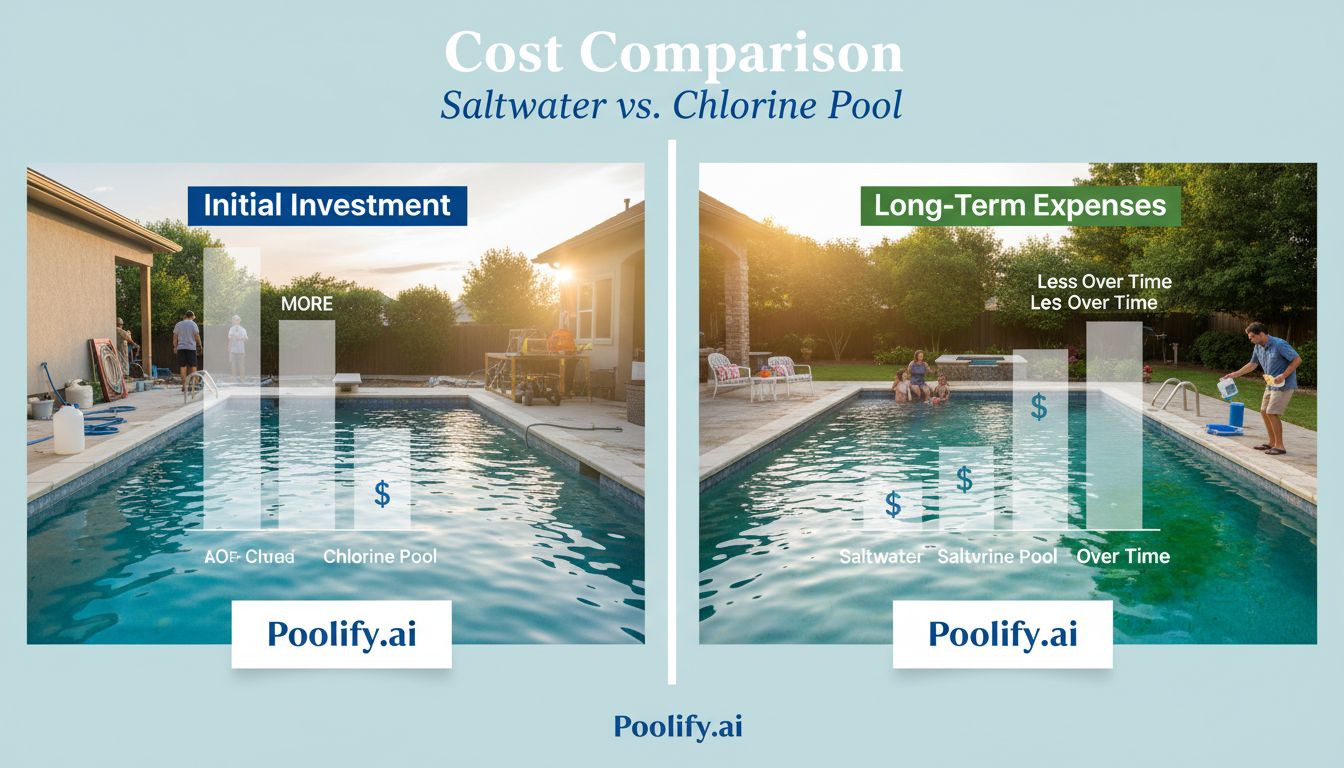
When evaluating the saltwater pool vs chlorine pool decision, cost considerations extend far beyond the initial purchase. Understanding both upfront and ongoing expenses provides a complete financial picture that should guide your choice.
Initial Installation Costs
Traditional chlorine pool systems have lower upfront costs. If you’re installing a new pool, the chlorination equipment is typically included in the base package at no additional charge. For existing pools, you simply purchase chlorine and basic testing equipment, which costs between $100-300 annually.
Saltwater systems require a significant initial investment. A quality salt chlorine generator costs between $1,500-2,500 for the equipment, plus $300-500 for professional installation. You’ll also need to purchase the initial salt supply, which runs approximately $200-400 depending on your pool size. This brings the total conversion cost to roughly $2,000-3,400.
Annual Maintenance and Operating Costs
The saltwater pool vs chlorine pool cost equation shifts when examining ongoing expenses. Traditional chlorine pools require continuous chemical purchases throughout the swimming season. Most homeowners spend $300-800 annually on chlorine alone, plus additional costs for pH balancers, shock treatments, and algaecides.
Saltwater pools have lower annual chemical costs, typically $100-200 for occasional salt additions and supplemental chemicals. However, the salt cell requires replacement every 3-7 years at a cost of $500-900. When amortized over the cell’s lifespan, this adds approximately $100-200 to your annual costs.
Long-Term Value Analysis
Over a 10-year period, saltwater systems often prove more economical despite higher initial costs. Traditional chlorine pools might cost $5,000-10,000 in chemicals and maintenance supplies, while saltwater systems typically run $3,000-6,000 including cell replacements. The break-even point usually occurs around year 4-5 of ownership.
Maintenance Requirements: Time and Effort Comparison
The saltwater pool vs chlorine pool debate often centers on maintenance convenience, as this directly impacts your quality of life as a pool owner. The time and effort required for upkeep varies significantly between these two systems.
Daily and Weekly Maintenance Tasks
Chlorine pools demand more frequent attention and manual intervention. Owners must test water chemistry 2-3 times weekly, manually add chlorine tablets or liquid, shock the pool weekly during peak season, and constantly monitor chemical balance. This routine typically requires 30-60 minutes per week, plus emergency interventions when algae blooms or cloudy water develop.
Saltwater pools offer a more automated experience. The salt chlorine generator continuously produces chlorine, eliminating daily dosing requirements. Most owners test water chemistry weekly, check salt levels monthly, and clean the salt cell every 3-6 months. Weekly maintenance typically takes just 15-30 minutes, and the system maintains more consistent chlorine levels with less intervention.
Seasonal Maintenance Considerations
Both systems require seasonal opening and closing procedures, but saltwater pools add specific winterization steps. The salt cell must be removed, cleaned, and stored properly in freezing climates. Traditional chlorine pools simply require standard winterization chemicals and covering.
For those interested in comprehensive pool care throughout the year, our complete pool maintenance guide provides detailed seasonal checklists for both system types.
Health and Comfort: The Swimming Experience
When comparing saltwater pool vs chlorine pool systems, the swimmer experience represents a crucial factor that goes beyond mere numbers and maintenance schedules. The water quality and how it affects your skin, eyes, and overall comfort can significantly impact your pool enjoyment.
Skin and Eye Irritation Differences
Traditional chlorine pools often produce chloramines—compounds formed when chlorine binds with contaminants like sweat, oils, and urine. These chloramines cause the characteristic “chlorine smell” and are responsible for red eyes, dry skin, and respiratory irritation that many swimmers experience. High chloramine levels create that harsh chemical feeling that discourages extended swimming sessions.
Saltwater pools generate chlorine continuously in smaller, more consistent amounts, which reduces chloramine formation. Swimmers typically report softer-feeling water, less eye irritation, and reduced skin dryness. The water feels silkier and more natural, similar to bottled water rather than chemical-treated tap water. Many people with sensitive skin or mild chlorine sensitivities find saltwater pools more comfortable for extended swimming.
Respiratory and Allergy Considerations
The saltwater pool vs chlorine pool comparison becomes particularly important for families with asthma or respiratory sensitivities. Strong chlorine odors and chloramine off-gassing can trigger respiratory symptoms in sensitive individuals. Saltwater systems typically produce fewer airborne irritants, making them a better choice for indoor pools or enclosed pool areas.
However, it’s important to note that poorly maintained saltwater pools can still develop water quality issues. The key advantage lies in consistent, automated chlorine generation that prevents the spikes and valleys common in manually chlorinated pools.
Equipment Durability and Pool Infrastructure Impact
The saltwater pool vs chlorine pool decision significantly affects your pool’s physical components and surrounding infrastructure. Understanding these impacts helps you anticipate long-term costs and potential complications.
Effects on Pool Surfaces and Finishes
Traditional chlorine, especially when added in concentrated forms, can be harsh on pool surfaces if not properly distributed. Tablets placed directly in skimmers or chlorine pucks sitting on pool floors can cause localized bleaching or etching of plaster, vinyl, and fiberglass surfaces.
Saltwater systems distribute chlorine evenly throughout the pool, eliminating hot spots and concentrated chemical exposure. However, salt itself can be corrosive to certain materials over time. Improperly balanced saltwater can accelerate deterioration of metal components, including ladders, handrails, light fixtures, and heater elements.
Impact on Pool Equipment and Accessories
The corrosive nature of salt requires careful equipment selection. Pool owners must ensure all metal components are made from corrosion-resistant materials like stainless steel or titanium. Standard galvanized steel or aluminum components will deteriorate rapidly in saltwater environments.
Heaters, in particular, require special consideration in the saltwater pool vs chlorine pool comparison. Standard pool heaters may experience reduced lifespans in saltwater applications. Many manufacturers now offer saltwater-compatible models with titanium heat exchangers, but these cost 20-30% more than standard versions. If you’re considering heating options, check our guide to pool heating systems for saltwater-compatible recommendations.
Landscaping and Deck Considerations
Saltwater splash-out and backwash water can affect surrounding landscaping more than traditional chlorine pools. Salt accumulation in soil can damage salt-sensitive plants and grass near the pool. Natural stone decking may also show accelerated weathering from salt exposure compared to chlorine exposure.
Proper drainage, strategic plant selection, and regular deck rinsing mitigate these concerns. Many saltwater pool owners successfully maintain beautiful landscaping by choosing salt-tolerant plant species and implementing good water management practices.
Environmental Considerations and Sustainability
As environmental consciousness grows in 2026, the saltwater pool vs chlorine pool debate increasingly includes sustainability factors. Both systems have environmental impacts worth considering in your decision-making process.
Chemical Production and Transportation
Traditional chlorine pools require ongoing production, packaging, and transportation of chlorine products. This supply chain generates carbon emissions and requires plastic containers that contribute to waste streams. The manufacturing process for chlorine products also involves significant energy consumption and potential environmental hazards.
Saltwater systems eliminate the need for manufactured chlorine products and their associated environmental footprint. Salt is a naturally abundant mineral requiring less processing than chlorine compounds. However, salt cell manufacturing involves electronic components and materials with their own environmental costs.
Water Conservation and Backwash Considerations
Both systems require similar water usage for normal operation, but backwash water disposal differs. Chlorinated backwash water can typically be discharged to sewers or landscaping after chlorine levels dissipate. Saltwater backwash requires more careful disposal due to salt content, which can damage soil and vegetation if concentrated in one area.
Some municipalities have specific regulations about saltwater pool drainage. Before choosing a saltwater system, verify local ordinances regarding backwash water disposal to ensure compliance with environmental protection requirements.
Making the Decision: Which System Is Right for You?
The saltwater pool vs chlorine pool choice ultimately depends on your specific circumstances, priorities, and pool usage patterns. Consider these key factors to determine which system aligns best with your needs.
Best Candidates for Saltwater Pools
Saltwater systems excel for homeowners who prioritize convenience and long-term cost savings. If you swim frequently, have sensitive skin, or dislike handling harsh chemicals, the gentler water quality justifies the higher initial investment. Families with young children often appreciate the reduced chemical exposure and softer water feel.
Saltwater pools also suit owners who prefer automated systems and minimal hands-on maintenance. If you travel frequently or want to minimize weekly pool care time, the self-regulating nature of salt chlorine generators provides peace of mind and consistent water quality.
Best Candidates for Traditional Chlorine Pools
Traditional chlorine systems remain ideal for budget-conscious homeowners or those with limited upfront capital. If you’re comfortable with routine maintenance tasks and don’t mind weekly chemical additions, chlorine pools deliver reliable performance at lower initial cost.
Chlorine pools also work well in areas with hard water or specific water chemistry challenges. The direct control over chlorine addition allows for more precise adjustments when dealing with problematic water conditions. Additionally, if your pool has existing equipment incompatible with saltwater, converting may require expensive upgrades that diminish the value proposition.
Hybrid Approaches and Alternative Considerations
Some pool owners implement hybrid approaches, using saltwater generators as primary sanitization while maintaining traditional chlorine for shock treatments or supplemental dosing. This strategy provides automation benefits while retaining the flexibility of manual chlorine addition when needed.
For comprehensive guidance on pool equipment selection and installation, explore our complete pool equipment guide covering all major system components.
Common Misconceptions About Saltwater vs Chlorine Pools
The saltwater pool vs chlorine pool conversation often includes persistent myths that cloud decision-making. Clearing up these misconceptions ensures you base your choice on accurate information.
Myth: Saltwater Pools Don’t Contain Chlorine
This is the most common misunderstanding. Saltwater pools absolutely contain chlorine—they simply generate it automatically from salt rather than requiring manual addition. The sanitization mechanism is identical; only the delivery method differs. Both systems maintain similar chlorine levels in the water for effective disinfection.
Myth: Saltwater Pools Require No Maintenance
While saltwater systems reduce maintenance frequency, they’re not maintenance-free. You still must monitor pH, alkalinity, calcium hardness, and salt levels. The salt cell requires periodic cleaning and eventual replacement. Neglecting maintenance on a saltwater pool leads to the same problems as an unmaintained chlorine pool—algae growth, cloudy water, and equipment damage.
Myth: Saltwater Pools Are Always More Expensive
The initial cost is higher, but the total cost of ownership over 10+ years often favors saltwater systems. When calculating the saltwater pool vs chlorine pool expense comparison, include chemical costs, equipment replacements, and time value of reduced maintenance labor. Many owners find the convenience and comfort worth any marginal cost difference.
Myth: You Can Taste Salt in Saltwater Pools
At 3,000-4,000 parts per million, salt concentration in pool water is barely detectable. Ocean water contains approximately 35,000 ppm—nearly ten times higher. Most swimmers cannot taste any salt in properly balanced saltwater pools. The water feels softer and silkier, but not noticeably salty.
Frequently Asked Questions
Can I convert my existing chlorine pool to saltwater?
Yes, most pools can be converted to saltwater systems. The process involves installing a salt chlorine generator, adding salt to achieve proper concentration, and ensuring all metal components are saltwater-compatible. Conversion typically costs $2,000-3,400 including equipment and installation. Consult with a pool professional to verify your specific pool’s compatibility, especially regarding surface materials and existing equipment.
How long do salt cells last in saltwater pools?
Salt cells typically last 3-7 years depending on usage, water chemistry maintenance, and climate conditions. Proper care extends cell life—maintaining balanced water chemistry, cleaning the cell every 3-6 months, and avoiding over-chlorination. Replacement cells cost $500-900, which should be factored into long-term operating costs when comparing saltwater pool vs chlorine pool expenses.
Are saltwater pools better for people with sensitive skin?
Generally yes. Saltwater pools produce chlorine continuously in smaller amounts, resulting in fewer chloramines that cause skin irritation and dryness. The softer water feel and reduced chemical odor make saltwater pools more comfortable for people with sensitive skin or mild chlorine sensitivities. However, individual reactions vary, and proper water balance matters more than system type for overall comfort.
Do saltwater pools damage pool equipment faster than chlorine pools?
Salt can be corrosive to metal components if water chemistry isn’t properly maintained. However, with correct balance and saltwater-compatible equipment, corrosion isn’t a significant problem. Modern saltwater systems include protective features, and manufacturers now produce saltwater-rated equipment. The key is using appropriate materials—stainless steel, titanium, or plastic components rather than standard metals.
Which system is better for the environment?
Saltwater systems have a slight environmental advantage by eliminating ongoing chlorine product manufacturing, packaging, and transportation. However, both systems use chlorine for sanitization and have similar water consumption. The environmental difference is modest—choose based on your personal priorities rather than expecting a dramatic sustainability improvement from either option.
Key Takeaways
- Both systems use chlorine for sanitization—saltwater pools generate it automatically from salt, while traditional pools require manual chlorine addition, making the primary difference one of convenience rather than fundamental chemistry.
- Saltwater systems cost more initially but often save money long-term—expect to invest $2,000-3,400 upfront for conversion, but reduced chemical costs typically create a break-even point around year 4-5 of ownership.
- Maintenance time differs significantly—saltwater pools require 15-30 minutes weekly compared to 30-60 minutes for chlorine pools, with more consistent water quality and fewer emergency interventions needed.
- Water quality and comfort favor saltwater—swimmers typically experience less eye irritation, softer-feeling water, and reduced skin dryness with saltwater systems due to lower chloramine formation and consistent chlorine levels.
- Equipment compatibility matters for saltwater conversions—ensure all metal components are corrosion-resistant and verify that heaters, fixtures, and accessories are rated for saltwater use to prevent premature deterioration and costly replacements.
Conclusion: Making Your Saltwater Pool vs Chlorine Pool Decision
The saltwater pool vs chlorine pool choice represents a significant decision that will impact your pool ownership experience for years to come. Both systems effectively sanitize pool water and can provide safe, enjoyable swimming when properly maintained. Your ideal choice depends on balancing initial investment capacity, maintenance preferences, swimmer comfort priorities, and long-term value considerations.
Saltwater systems offer compelling advantages for homeowners who value convenience, prefer gentler water quality, and plan to keep their pool long-term. The higher upfront cost transforms into ongoing savings and reduced maintenance time, while swimmers enjoy softer water with fewer irritants. Traditional chlorine pools remain an excellent choice for budget-conscious owners, those comfortable with hands-on maintenance, or situations where existing equipment makes conversion impractical.
As you move forward with your decision in 2026, consider consulting with pool professionals who can assess your specific situation, test your water chemistry, and recommend the system best suited to your pool’s characteristics and your family’s needs. Whichever option you choose, proper maintenance and balanced water chemistry will deliver the clean, safe swimming environment you desire.
References
Centers for Disease Control and Prevention. “Disinfection and Testing | Healthy Swimming | Healthy Water.” CDC.gov. https://www.cdc.gov/healthywater/swimming/residential/disinfection-testing.html