
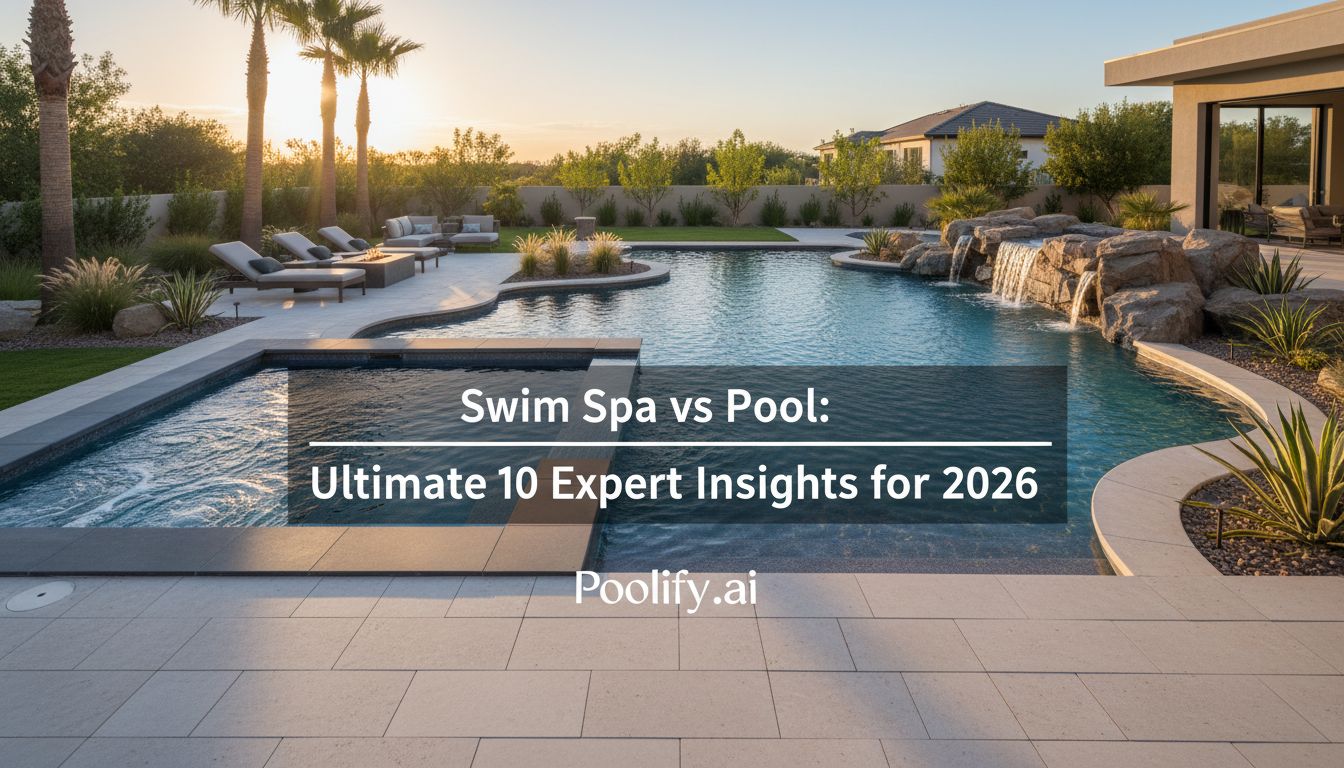
Deciding between a swim spa vs pool is one of the most significant investments you’ll make for your home in 2026. Both options offer unique benefits for fitness, relaxation, and family entertainment, but they differ dramatically in cost, space requirements, maintenance needs, and year-round usability. Whether you’re looking to create a backyard oasis or establish a dedicated fitness routine, understanding these differences will help you make an informed decision that aligns with your lifestyle and budget.
This comprehensive guide examines every aspect of the swim spa vs pool debate, from initial installation costs to long-term maintenance expenses, energy efficiency, and practical considerations. You’ll discover which option provides better value for your specific situation and learn what factors matter most when making this important choice.
Understanding the Basics: Swim Spa vs Pool Fundamentals
Before diving into detailed comparisons, it’s essential to understand what distinguishes these two aquatic options. A traditional swimming pool is a permanent structure designed primarily for recreation, exercise, and social activities. Pools typically range from 10 feet by 20 feet for compact designs to 20 feet by 40 feet or larger for luxury installations.
A swim spa, conversely, combines the benefits of a hot tub with the functionality of a lap pool. These self-contained units measure between 12 and 20 feet in length and use powerful jets to create a current that allows you to swim in place. According to the CDC’s residential swimming guidelines, both options require proper chemical maintenance and safety protocols to ensure healthy usage.
The swim spa vs pool decision ultimately depends on your available space, budget, intended use, and climate considerations. Swim spas offer year-round functionality with heating capabilities, while traditional pools provide more space for multiple users and various activities.
Cost Comparison: Initial Investment and Long-Term Expenses
When evaluating the swim spa vs pool question from a financial perspective, you’ll encounter significant differences in both upfront and ongoing costs. Understanding these financial implications helps you budget appropriately and avoid unexpected expenses.
Initial Installation Costs
Traditional in-ground pools typically cost between $35,000 and $100,000 in 2026, depending on size, materials, and features. Concrete pools represent the high end of this range, while fiberglass and vinyl liner options offer more affordable alternatives. Above-ground pools start around $3,000 to $15,000, making them the most budget-friendly pool option.
Swim spas generally range from $20,000 to $50,000 for quality models, including installation. This price includes the unit itself, electrical work, and basic site preparation. The swim spa vs pool cost advantage often favors swim spas for initial investment, particularly when compared to in-ground pools.
Operating and Maintenance Expenses
Monthly operating costs reveal another dimension of the swim spa vs pool comparison. Traditional pools typically cost $80 to $300 monthly for chemicals, electricity, and water, with higher expenses during peak swimming season. Annual maintenance including opening, closing, and repairs adds another $1,200 to $3,000.
Swim spas generally cost $50 to $150 monthly to operate, thanks to superior insulation and smaller water volumes. The enclosed design and efficient heating systems make swim spas more economical for year-round use. When you examine our comprehensive pool maintenance cost analysis, you’ll see how these expenses accumulate over time.
Space Requirements and Installation Considerations
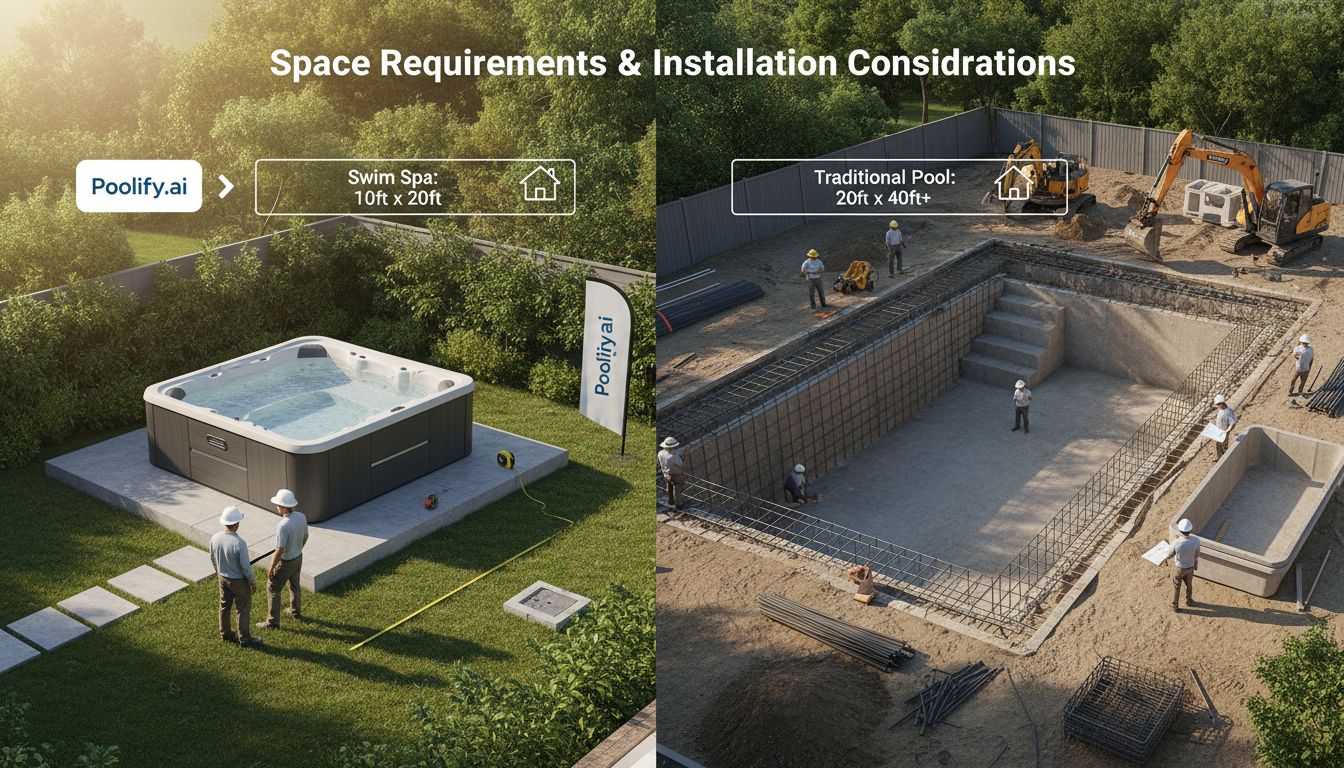
The physical footprint represents a crucial factor in the swim spa vs pool decision, especially for homeowners with limited yard space. Understanding spatial requirements helps you determine which option fits your property.
Traditional pools require substantial space, typically needing at least 600 to 1,200 square feet including the pool itself and surrounding deck area. You’ll also need to maintain setback distances from property lines, typically 5 to 10 feet, and ensure adequate space for equipment pads and access pathways.
Swim spas need only 150 to 300 square feet, making them ideal for smaller yards, urban properties, or homes where preserving green space matters. Many swim spa models can be installed above ground, partially recessed, or fully in-ground, offering flexibility that traditional pools cannot match.
Installation timelines differ significantly in the swim spa vs pool comparison. In-ground pools typically require 8 to 12 weeks from excavation to completion, involving permits, inspections, and multiple contractor phases. Swim spas can often be installed and operational within 1 to 3 days, with minimal disruption to your property.
Fitness and Exercise Capabilities
For homeowners prioritizing fitness, the swim spa vs pool debate centers on exercise effectiveness and convenience. Both options support cardiovascular health and low-impact workouts, but they deliver these benefits differently.
Swimming and Aquatic Exercise
Traditional pools excel for conventional swimming, allowing you to practice proper stroke mechanics with natural turns and push-offs. Competitive swimmers and those training for open-water events typically prefer pools for realistic training conditions. Pools also accommodate multiple swimmers simultaneously, making them ideal for families with various fitness levels.
Swim spas create adjustable currents that let you swim continuously without turns, perfect for endurance training and technique work. The resistance is customizable, allowing beginners to start gently while advanced swimmers can challenge themselves with stronger currents. Many 2026 swim spa models include rowing attachments, resistance bands, and underwater treadmills for comprehensive aquatic workouts.
Year-Round Training Advantages
The swim spa vs pool comparison strongly favors swim spas for year-round exercise capability. Swim spas maintain comfortable temperatures even in winter months, ensuring consistent training schedules regardless of weather. This advantage proves particularly valuable for rehabilitation programs, arthritis management, and maintaining fitness routines during colder seasons.
Pools in temperate climates typically operate 4 to 6 months annually without expensive heating systems. Pool heaters can extend the season but add $200 to $600 monthly to operating costs. For dedicated fitness enthusiasts, swim spas provide better value when calculating cost per workout throughout the year.
Maintenance Requirements and Time Commitment
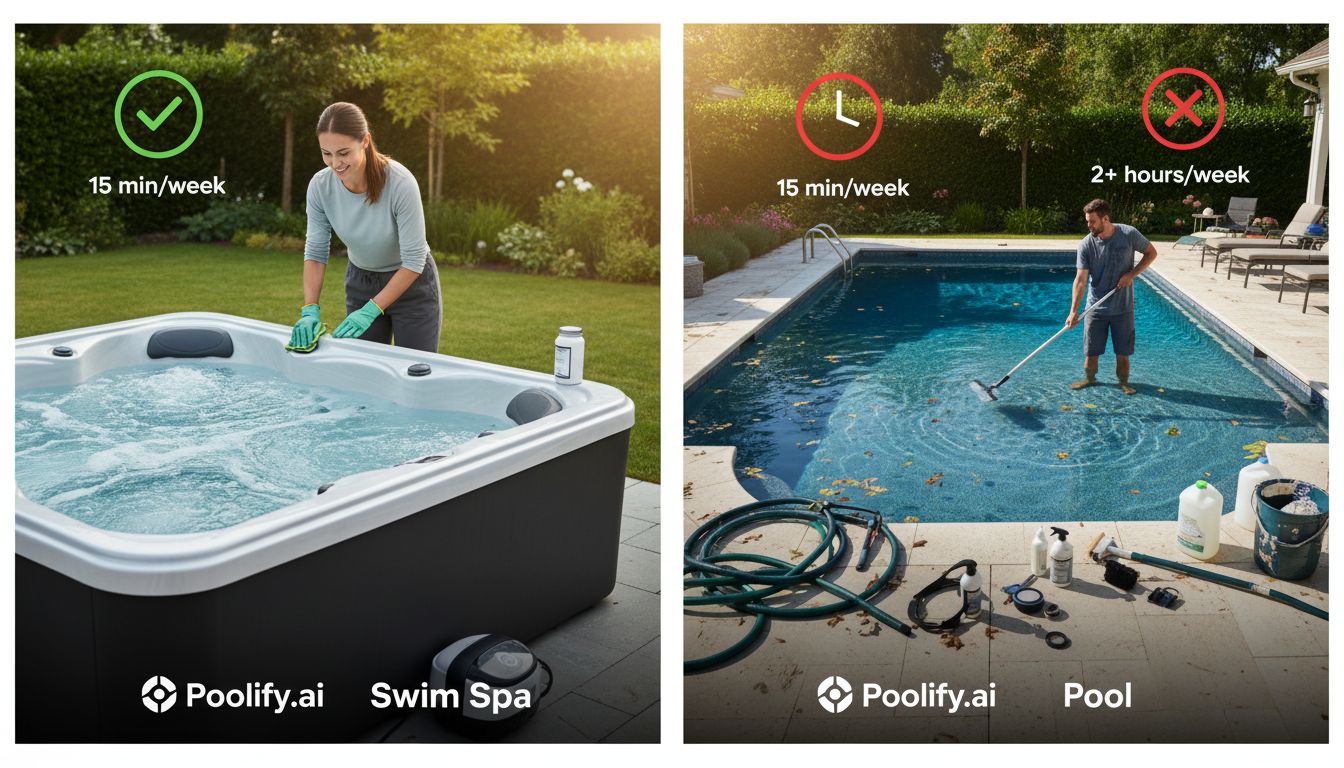
Ongoing maintenance significantly impacts the practical reality of pool ownership, making it a critical factor in the swim spa vs pool decision. Understanding time and effort requirements helps you assess whether you’re prepared for long-term ownership.
Traditional pools demand substantial maintenance attention. Weekly tasks include testing and balancing water chemistry, skimming debris, brushing walls, vacuuming, and cleaning filters. You’ll spend 3 to 5 hours weekly on basic maintenance, with additional time required for seasonal opening and closing procedures. Many pool owners invest $1,500 to $3,000 annually for professional maintenance services to reduce this burden.
Swim spas require less maintenance due to their smaller water volume and covered design. Weekly maintenance typically takes 30 to 60 minutes, focusing on water testing, filter cleaning, and surface wiping. Advanced filtration systems in modern swim spas reduce chemical needs and simplify water management. The enclosed design prevents debris accumulation, eliminating much of the skimming and vacuuming that pools require.
Water replacement schedules differ in the swim spa vs pool comparison. Pools need partial water replacement throughout the season but rarely require complete draining. Swim spas typically need complete water changes every 3 to 4 months, a process that takes several hours but ensures consistently clean water. Our detailed pool cleaning strategies provide additional guidance for maintaining water quality in both options.
Energy Efficiency and Environmental Impact
As energy costs rise and environmental consciousness grows in 2026, the swim spa vs pool debate increasingly incorporates sustainability considerations. Energy efficiency affects both operating costs and environmental footprint.
Modern swim spas feature superior insulation, often with foam-filled cabinets and insulated covers that minimize heat loss. This design allows swim spas to maintain temperatures efficiently, with quality models using $30 to $80 monthly in electricity even during winter. Variable-speed pumps and LED lighting further reduce energy consumption.
Traditional pools consume more energy, particularly for heating, filtration, and circulation. A heated pool can add $150 to $400 monthly to electricity bills during cooler months. However, solar heating systems, variable-speed pumps, and pool covers significantly improve efficiency. Unheated pools in warm climates offer reasonable energy profiles, typically using $50 to $150 monthly for filtration and cleaning equipment.
Water conservation represents another environmental consideration in the swim spa vs pool comparison. Pools lose water through evaporation, backwashing, and splashing, requiring 3,000 to 5,000 gallons of replacement water annually. Swim spas lose less water to evaporation thanks to insulated covers, though quarterly water changes still consume approximately 2,000 gallons annually.
Social and Entertainment Value
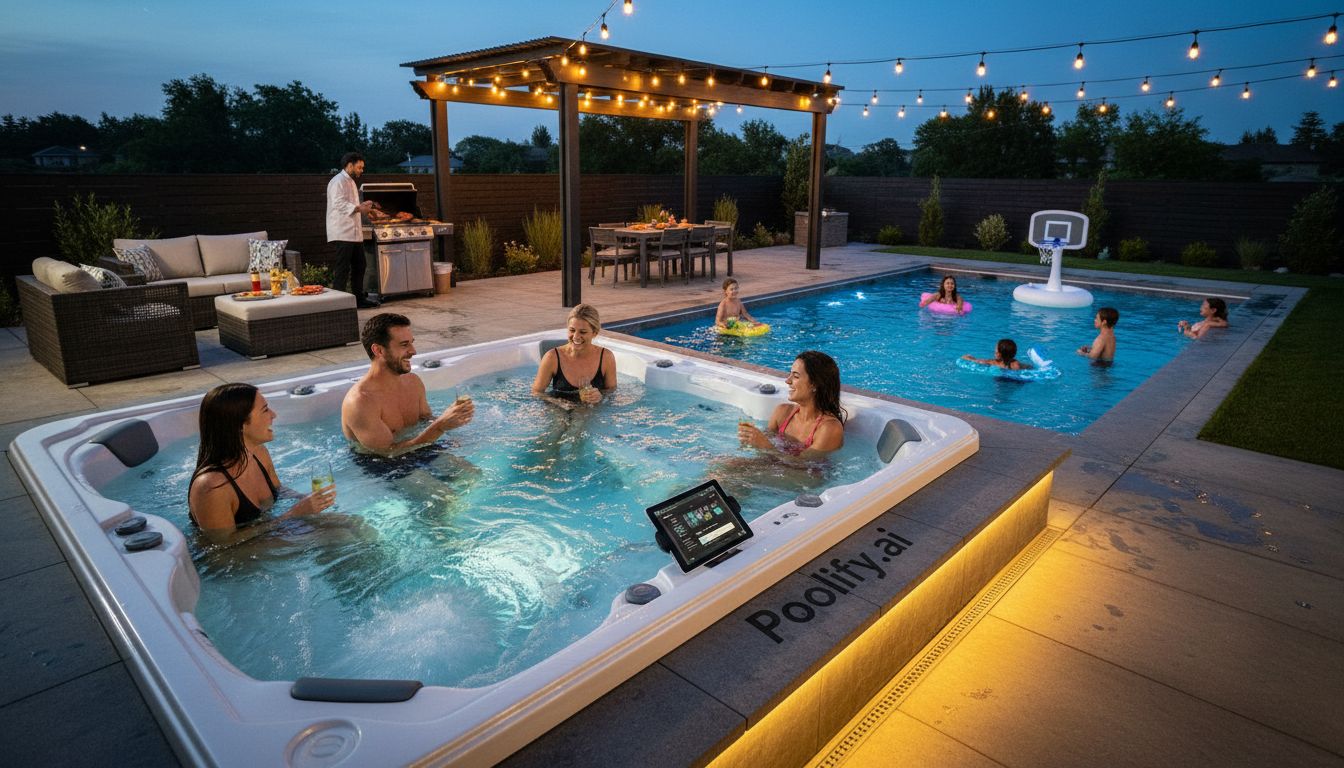
Beyond exercise and relaxation, many homeowners consider entertainment potential when evaluating swim spa vs pool options. Social functionality significantly impacts long-term satisfaction with your investment.
Traditional pools excel as entertainment venues, accommodating numerous guests for pool parties, family gatherings, and children’s playtime. The open water space supports games like volleyball, basketball, and diving activities. Pools create natural gathering spots that become focal points for summer entertaining and family bonding.
Swim spas offer more intimate social settings, comfortably accommodating 4 to 8 people depending on model size. While they don’t provide the same party atmosphere as pools, swim spas excel for small group relaxation and conversation. Many models include dedicated seating areas with massage jets, creating spa-like experiences alongside exercise capabilities.
The swim spa vs pool decision for families with children often favors pools, which provide more play space and accommodate various age groups simultaneously. However, swim spas offer safety advantages with their smaller size, controlled depth, and covered design when not in use.
Climate Considerations and Seasonal Usage
Your geographic location dramatically influences the swim spa vs pool value proposition. Climate affects usability, operating costs, and long-term satisfaction with either option.
In warm climates with extended swimming seasons, traditional pools provide excellent value. States like Florida, Arizona, and Southern California enjoy 8 to 12 months of comfortable pool temperatures, maximizing return on investment. The larger swimming area justifies the higher costs when you can use the pool most of the year.
Cold-climate homeowners face different considerations in the swim spa vs pool comparison. Northern states experience 3 to 5 month pool seasons without expensive heating systems. Winterization requires draining equipment, adding antifreeze, and covering the pool, with reopening procedures each spring. This seasonal limitation reduces the practical value of pool ownership in colder regions.
Swim spas shine in variable and cold climates, offering true year-round functionality. The combination of heating, insulation, and compact design allows comfortable use even when outdoor temperatures drop below freezing. This capability transforms the swim spa vs pool equation for homeowners in the northern United States, Canada, and other cold-weather regions.
Property Value and Return on Investment
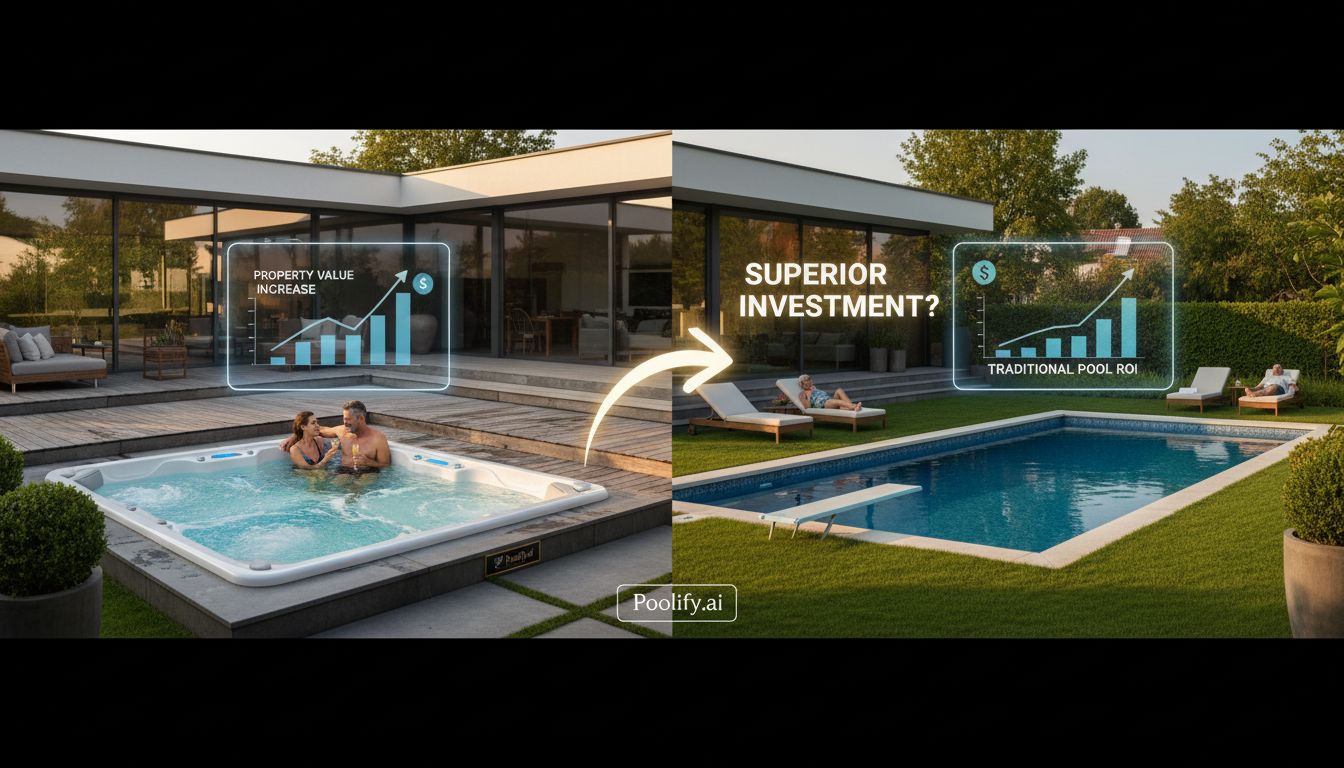
Real estate implications factor into the swim spa vs pool decision for homeowners concerned about resale value. Understanding how these features affect property marketability helps you make financially sound choices.
Traditional pools generally add 5% to 8% to home values in warm climates where pools are expected amenities. However, pools can actually decrease marketability in some regions, as potential buyers may view them as maintenance burdens or safety concerns. The return on investment varies significantly by location, with warm-climate properties seeing better returns than cold-climate homes.
Swim spas typically don’t add substantial resale value, as many buyers view them as personal property rather than permanent improvements. However, their portability represents an advantage—you can potentially take your swim spa to a new home or sell it separately. This flexibility makes swim spas less risky investments from a real estate perspective.
According to real estate professionals, the swim spa vs pool decision should prioritize personal enjoyment over resale considerations. The features you’ll use and enjoy daily provide more value than marginal property value increases. If you plan to remain in your home for 10 or more years, choose based on lifestyle fit rather than resale potential.
Customization and Feature Options
Personalization possibilities differ significantly in the swim spa vs pool comparison, affecting both aesthetics and functionality. Understanding available options helps you create the ideal aquatic environment.
Traditional pools offer extensive customization, including various shapes, depths, finishes, and integrated features. You can incorporate beach entries, tanning ledges, waterfalls, grottos, and elaborate lighting systems. Pool designs can complement architectural styles and landscape themes, creating cohesive outdoor living spaces. However, customization increases costs substantially, with high-end features adding $10,000 to $50,000 or more.
Swim spas provide fewer aesthetic customization options, as they’re manufactured units with predetermined dimensions and designs. However, 2026 models offer impressive functional features including adjustable current speeds, multiple jet configurations, underwater lighting, sound systems, and smartphone controls. You can customize the installation with decking, landscaping, and gazebos to enhance visual appeal and create private retreat spaces.
Swim Spa vs Pool: Key Considerations for Your Decision
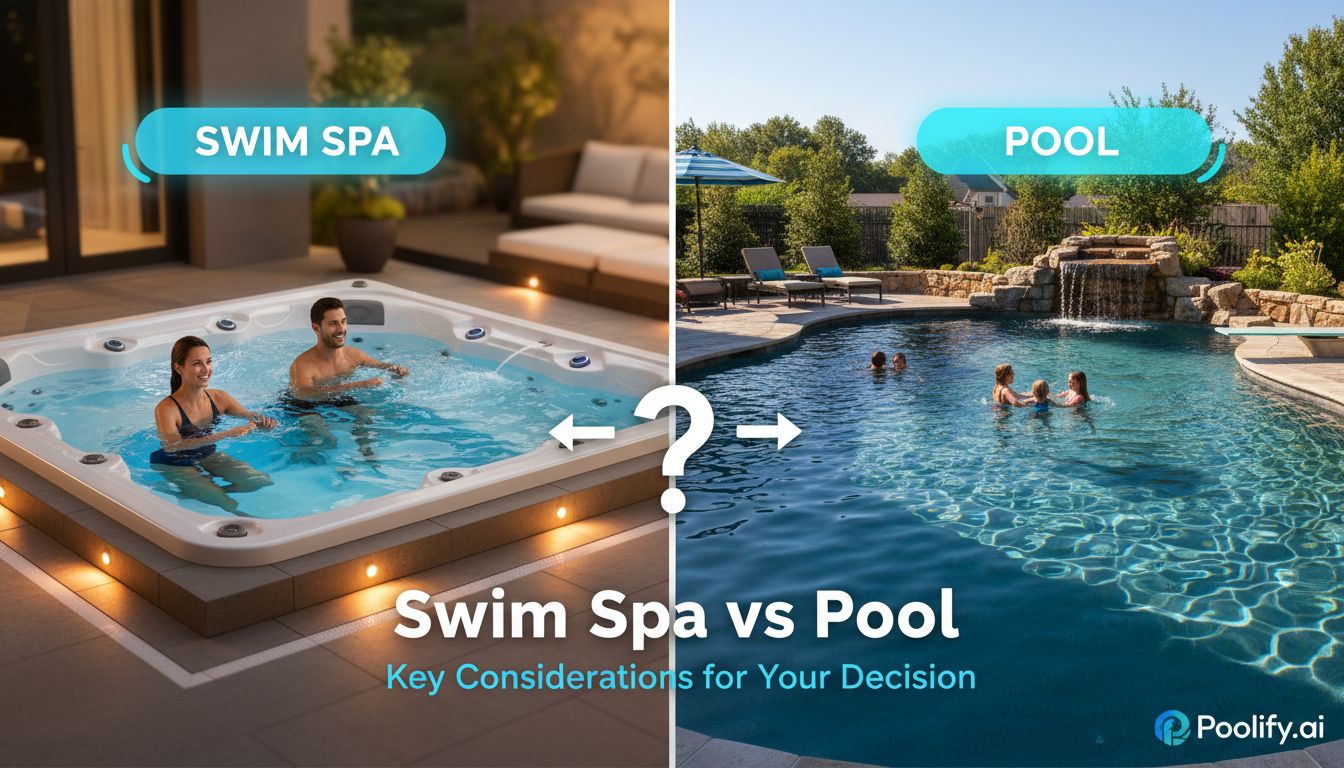
Making the right choice in the swim spa vs pool debate requires evaluating your specific circumstances against the factors we’ve explored. Consider these critical decision points as you finalize your choice.
Budget constraints often determine feasibility, with swim spas offering lower entry costs and operating expenses. If you have $20,000 to $30,000 available, a quality swim spa provides immediate functionality, while this budget limits you to above-ground or small in-ground pools that may not meet your needs.
Available space significantly impacts the swim spa vs pool equation. Properties with limited yard space, steep slopes, or restrictive setback requirements often make pools impractical. Swim spas adapt to challenging spaces and can be installed above ground, eliminating excavation concerns.
Primary usage intentions should guide your decision. Fitness-focused individuals who exercise year-round benefit most from swim spas, while families seeking entertainment and social spaces typically prefer pools. If you envision hosting pool parties and children’s activities, pools provide better value despite higher costs.
Climate and seasonal usage patterns matter tremendously in the swim spa vs pool comparison. Cold-climate homeowners gain more value from year-round swim spa functionality, while warm-climate residents maximize pool investments with extended swimming seasons.
Frequently Asked Questions
Can you really get a good workout in a swim spa compared to a pool?
Yes, swim spas provide excellent workouts through adjustable current resistance that creates continuous swimming without turns. The resistance is customizable from gentle to challenging, accommodating all fitness levels. While competitive swimmers training for events may prefer pools for realistic race conditions, swim spas excel for fitness swimming, resistance training, and rehabilitation exercises. Many athletes and physical therapists recommend swim spas for focused, effective aquatic workouts.
Which is easier to maintain: a swim spa or pool?
Swim spas require significantly less maintenance than traditional pools. The smaller water volume, covered design, and advanced filtration systems reduce maintenance time to approximately 30-60 minutes weekly compared to 3-5 hours for pools. Swim spas accumulate less debris and require fewer chemicals due to their enclosed design. However, swim spas need complete water changes every 3-4 months, while pools rarely require full draining. Overall, swim spas offer easier, less time-consuming maintenance.
Do swim spas add value to your home like pools do?
Swim spas typically don’t add substantial resale value compared to traditional pools, which can increase home values by 5-8% in appropriate markets. However, swim spas are often considered portable personal property rather than permanent improvements. This distinction means lower property tax implications but also less impact on home value. The swim spa vs pool decision should prioritize personal enjoyment over resale considerations, as both features appeal to specific buyer segments.
Can you use a swim spa year-round in cold climates?
Yes, swim spas are specifically designed for year-round use, even in freezing temperatures. Quality models feature comprehensive insulation, efficient heating systems, and insulated covers that maintain comfortable water temperatures throughout winter. This capability represents a major advantage in the swim spa vs pool comparison for cold-climate homeowners, who typically face 3-5 month pool seasons without expensive heating. Swim spas transform aquatic exercise and relaxation into true year-round activities regardless of outdoor temperatures.
What is the typical lifespan of a swim spa compared to a pool?
Quality swim spas typically last 15-20 years with proper maintenance, while traditional in-ground pools can last 25-50 years depending on construction materials. Concrete pools offer the longest lifespan at 40-50 years, fiberglass pools last 25-30 years, and vinyl liner pools require liner replacements every 7-10 years but the structure lasts 20-30 years. While pools generally outlast swim spas, the lower initial investment and operating costs of swim spas can offset the shorter lifespan in total cost of ownership calculations.
Key Takeaways
- Cost differences are substantial: Swim spas typically cost $20,000-$50,000 installed, while in-ground pools range from $35,000-$100,000, with swim spas also offering lower monthly operating expenses of $50-$150 versus $80-$300 for pools.
- Space requirements favor swim spas: Swim spas need only 150-300 square feet compared to 600-1,200 square feet for traditional pools, making them ideal for smaller properties and urban settings with limited yard space.
- Year-round functionality depends on climate: Swim spas provide true year-round use in all climates thanks to heating and insulation, while pools typically operate 4-6 months annually in temperate regions without expensive heating systems.
- Maintenance demands differ significantly: Swim spas require 30-60 minutes of weekly maintenance compared to 3-5 hours for pools, though swim spas need complete water changes quarterly while pools rarely require full draining.
- Usage priorities should guide your decision: Choose pools for family entertainment, social gatherings, and multiple simultaneous users; select swim spas for focused fitness routines, year-round exercise, therapeutic benefits, and smaller household needs.
Conclusion
The swim spa vs pool decision represents a significant investment that will impact your lifestyle, property, and finances for years to come. Both options deliver valuable benefits for fitness, relaxation, and enjoyment, but they serve different needs and circumstances.
Swim spas excel for homeowners prioritizing year-round fitness, efficient use of limited space, lower operating costs, and reduced maintenance demands. They’re particularly valuable in cold climates where traditional pools sit unused for much of the year. The compact footprint and self-contained design make swim spas practical for properties where traditional pools aren’t feasible.
Traditional pools remain superior for families seeking entertainment space, social gathering areas, and authentic swimming experiences. They provide more room for multiple users, accommodate various activities simultaneously, and create impressive backyard focal points. In warm climates with extended swimming seasons, pools deliver excellent value despite higher costs.
Ultimately, the swim spa vs pool choice depends on your specific circumstances—available budget, yard space, climate, intended use, and lifestyle priorities. Carefully evaluate these factors against the detailed comparisons in this guide to make the decision that best fits your needs. Whether you choose a swim spa or pool, you’re investing in health, wellness, and quality time with family and friends.
References
- Centers for Disease Control and Prevention – Residential Swimming Guidelines
- Poolify.ai – Pool Maintenance Costs
- Poolify.ai – Pool Cleaning Tips