
Introduction
Understanding what is a good pool depth is one of the most critical decisions you’ll make when designing or purchasing a swimming pool. The right depth affects everything from safety and usability to construction costs and maintenance requirements. In 2026, homeowners have more options than ever, but this abundance of choice can make the decision overwhelming. Whether you’re planning a family-friendly recreational pool, a lap swimming facility, or a diving paradise, selecting the appropriate depth ensures your investment meets your needs for years to come. This comprehensive guide explores the essential factors, safety standards, and expert recommendations to help you determine what is a good pool depth for your specific situation.
Understanding Pool Depth Fundamentals
When considering what is a good pool depth, it’s essential to understand that there’s no universal answer. Pool depth requirements vary significantly based on intended use, user demographics, and local building codes. According to the Consumer Product Safety Commission’s Pool Safely campaign, proper depth planning is a fundamental aspect of pool safety design that can prevent thousands of injuries annually.
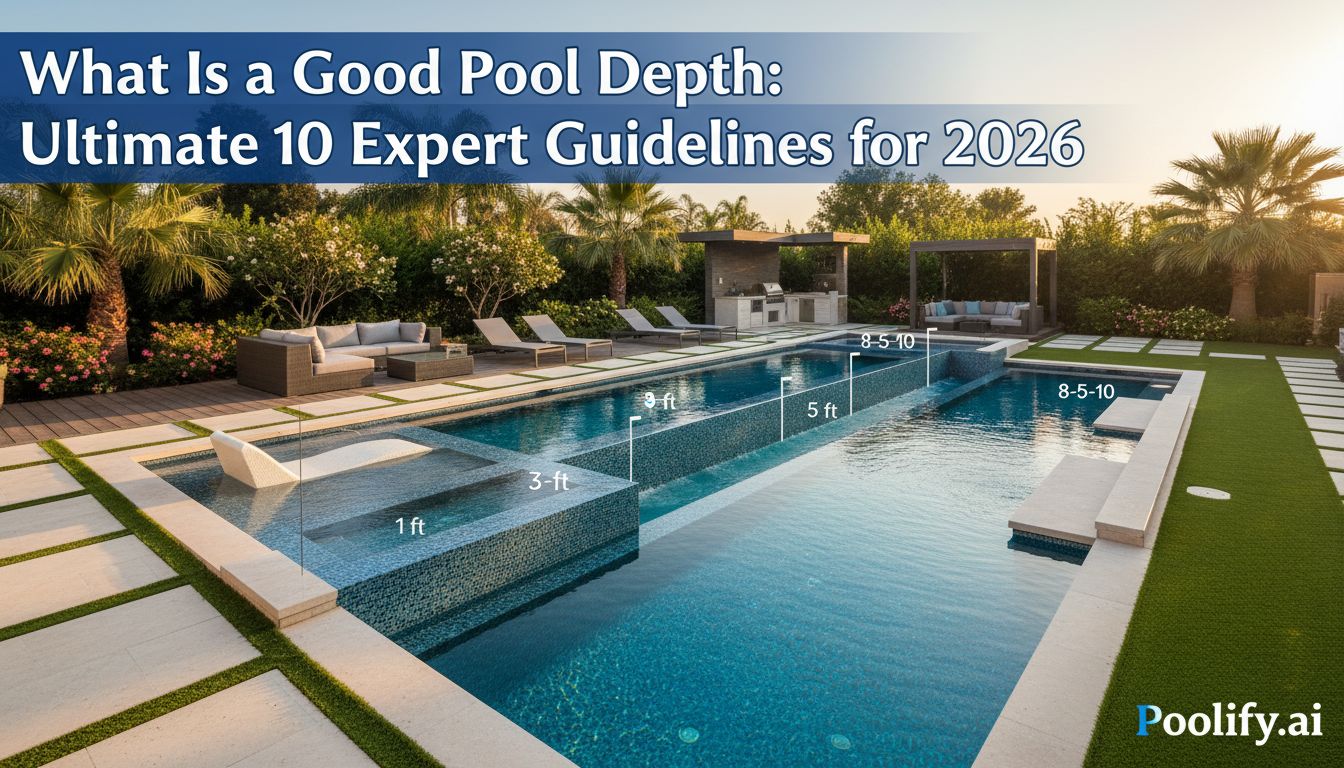
The standard residential pool typically ranges from 3 feet to 8 feet in depth, with many modern designs incorporating variable depths to accommodate multiple activities. Shallow areas provide safe zones for children and non-swimmers, while deeper sections enable diving, underwater swimming, and advanced aquatic exercises. The transition between depths should be clearly marked and gradual enough to prevent accidents.
Pool depth directly impacts construction costs, with deeper pools requiring more excavation, structural reinforcement, and materials. A pool that’s 8 feet deep costs approximately 25-35% more to build than a 4-foot pool of the same surface area. Understanding these fundamentals helps you balance functionality with budget constraints when determining what is a good pool depth for your project.
Optimal Depth Ranges for Different Pool Activities
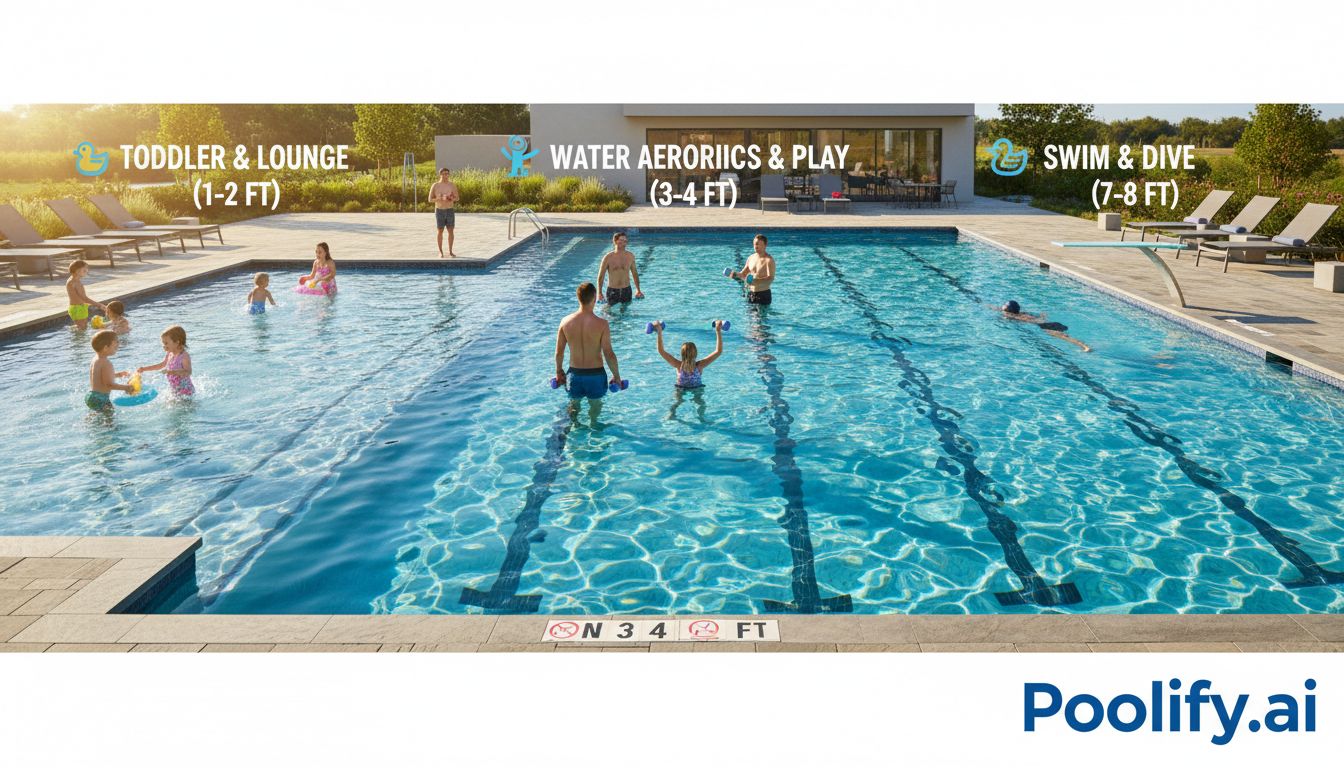
Determining what is a good pool depth requires matching the depth to your primary activities. Each aquatic pursuit has specific depth requirements that optimize safety and enjoyment.
Recreational Swimming and Play
For general recreational use, a depth range of 3.5 to 5 feet works exceptionally well for most families. This range allows adults to stand comfortably while providing enough depth for swimming strokes and underwater play. Children can touch the bottom in shallower areas while still having room to develop swimming skills. Many modern pool designs feature a gradual slope from 3 feet at the shallow end to 5 or 6 feet at the deep end, creating versatile space for various activities.
Lap Swimming Requirements
When considering what is a good pool depth for lap swimming, competitive swimmers and fitness enthusiasts need consistent depth throughout the swimming lane. The ideal depth for lap pools ranges from 4 to 6 feet, with 4.5 feet being optimal for most adults. This depth allows proper stroke mechanics without the risk of touching the bottom during flip turns while keeping construction costs reasonable. If you’re serious about swimming workouts, explore our pool design for exercise guide for additional considerations.
Diving Board and Platform Standards
Diving activities have the most stringent depth requirements due to safety concerns. For a standard residential diving board, the minimum depth should be 8 feet, extending at least 12 feet from the board’s tip. High diving boards require even greater depths—10 feet minimum for 3-meter boards. The American Red Cross swimming safety standards provide detailed specifications for diving installations, emphasizing that inadequate depth is a leading cause of diving-related injuries.
Water Sports and Volleyball
For water volleyball and basketball, what is a good pool depth falls between 3.5 and 4.5 feet. This allows players to stand and jump while maintaining enough water resistance for a challenging workout. Pools designed for water aerobics classes typically maintain a consistent 4-foot depth throughout, enabling participants of various heights to exercise comfortably.
Safety Considerations When Determining Pool Depth
Safety should be the paramount concern when deciding what is a good pool depth. Depth-related accidents account for a significant portion of pool injuries, making proper planning essential for protecting swimmers of all ages and abilities.
Children and Non-Swimmer Safety
For families with young children or non-swimmers, incorporating a shallow area of 2.5 to 3.5 feet is crucial. This “beach entry” or “zero-depth” design allows gradual water entry and provides a safe zone where children can play under supervision while adults remain standing. The transition to deeper water should be clearly marked with contrasting tiles, depth markers, and safety ropes.
Depth Markers and Visual Cues
Regardless of what is a good pool depth for your needs, proper marking is mandatory. Install depth markers at regular intervals around the pool perimeter, using contrasting colors that remain visible in various lighting conditions. In 2026, many pool designers incorporate LED lighting systems that illuminate depth changes, enhancing visibility during evening swimming sessions.
Supervision Zones
The pool depth you choose affects supervision requirements. Deeper pools require more vigilant monitoring, especially when children are present. Consider positioning seating areas and deck furniture to provide clear sightlines to all pool areas, particularly the deep end. For comprehensive safety planning, review our pool safety equipment recommendations to complement your depth decisions.
Building Codes and Regulatory Requirements
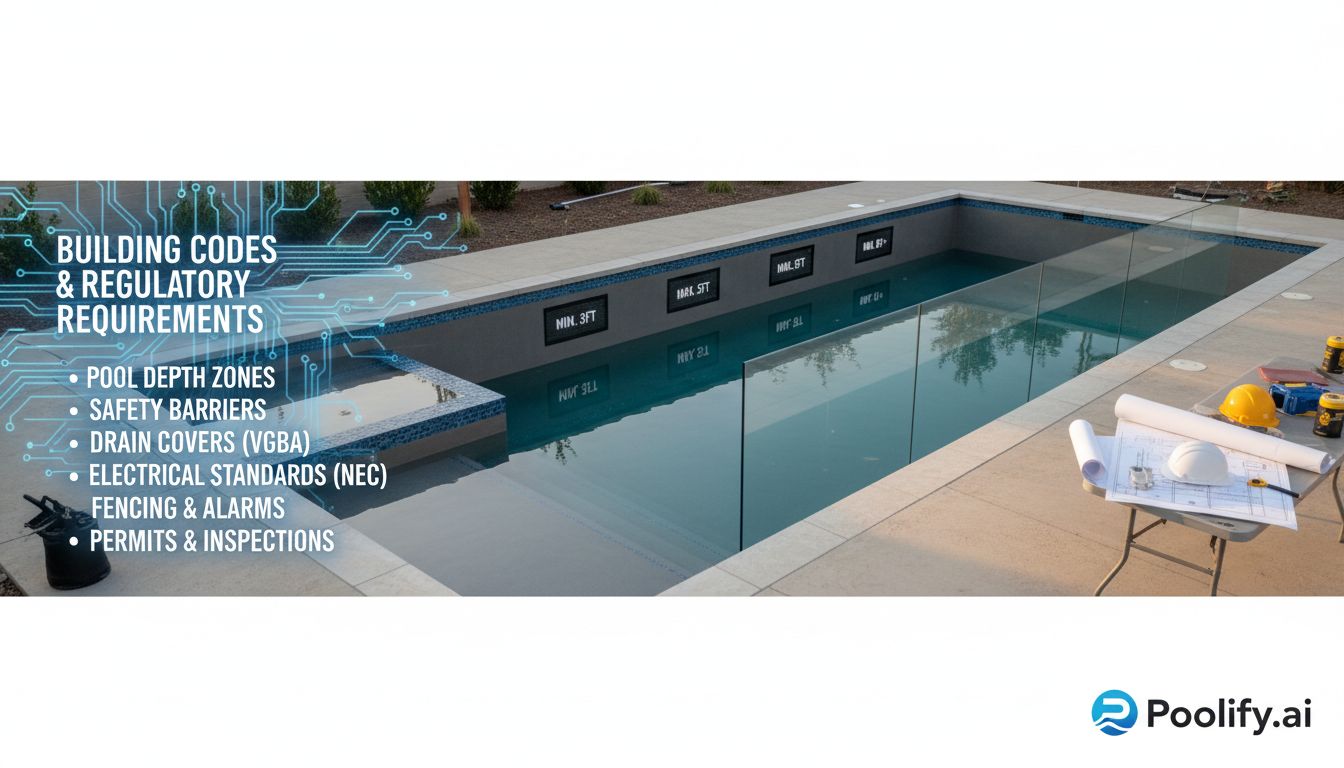
Understanding what is a good pool depth also means complying with local building codes and safety regulations. These requirements vary by jurisdiction but generally establish minimum standards for residential and commercial pools.
Most municipalities require pools deeper than 5 feet to have specific safety features, including non-slip decking, approved fencing with self-closing gates, and emergency equipment. Pools with diving boards face additional scrutiny, with inspectors verifying that depth measurements meet or exceed minimum standards. Before finalizing your pool design, consult with local building departments to ensure compliance with current 2026 regulations.
Commercial pools face more stringent requirements than residential installations. Public pools must accommodate diverse users, requiring clearly defined shallow and deep areas with appropriate transitions. Health department regulations often mandate specific depth ranges for different pool classifications, affecting design decisions for hotels, fitness centers, and community facilities.
Cost Implications of Different Pool Depths
When evaluating what is a good pool depth, budget considerations play a significant role. Depth directly impacts both initial construction costs and ongoing maintenance expenses.
Construction Cost Variables
Excavation costs increase exponentially with depth due to soil removal, disposal fees, and the need for specialized equipment. A pool requiring 8 feet of excavation costs 30-40% more than a 4-foot pool in excavation alone. Deeper pools also require thicker walls, additional steel reinforcement, and more concrete, further increasing material costs. The additional water volume in deeper pools means higher initial filling costs and increased chemical usage over time.
Heating and Maintenance Expenses
Determining what is a good pool depth includes considering operational costs. Deeper pools contain more water, requiring more energy to heat and longer filtration cycles to maintain water quality. A pool with an average depth of 6 feet costs approximately 25-35% more to heat annually than a 4-foot pool of equal surface area. Chemical treatment costs also increase proportionally with water volume, affecting your long-term budget.
Insurance Considerations
Pool depth affects homeowner’s insurance premiums, particularly for pools deeper than 6 feet or those equipped with diving boards. Insurance companies assess risk based on depth-related injury potential, with deeper pools typically commanding higher premiums. When deciding what is a good pool depth, factor in these ongoing insurance costs as part of your total ownership calculation.
Popular Pool Depth Configurations in 2026
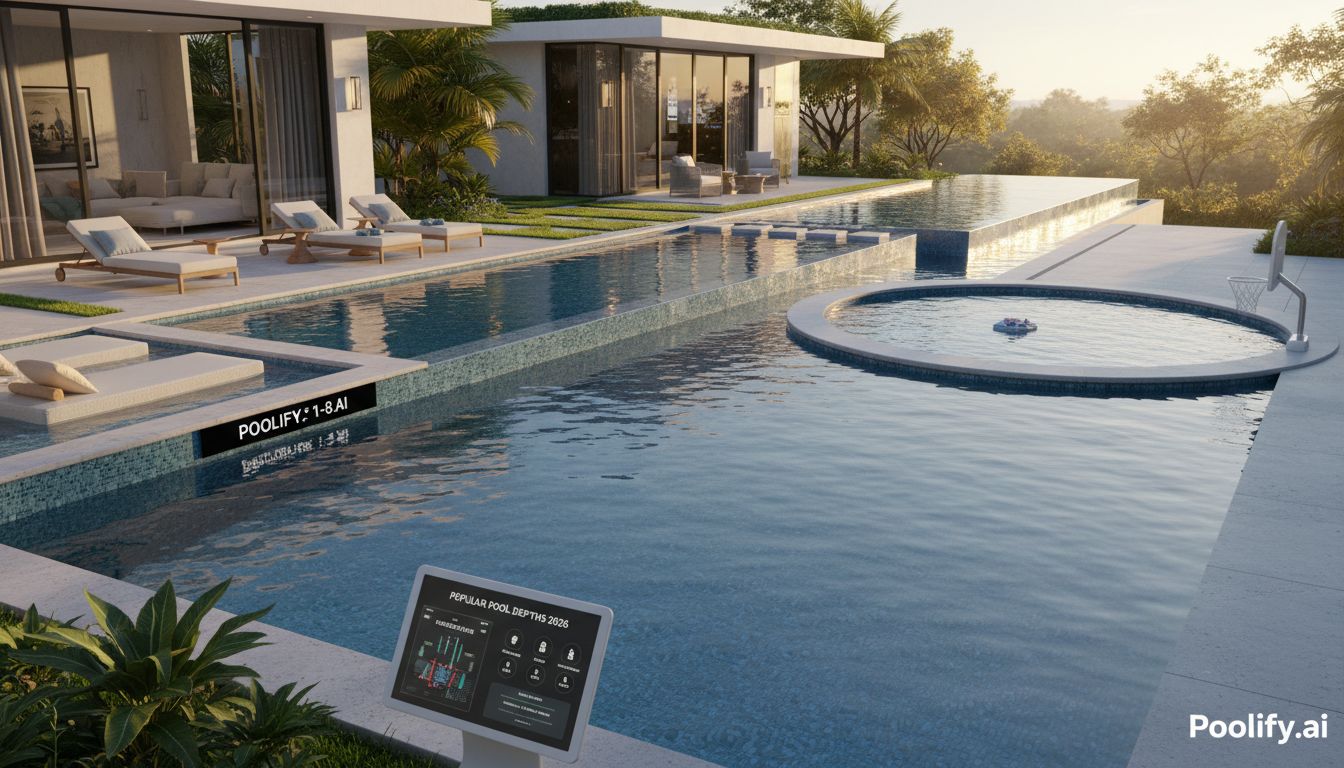
Modern pool design trends in 2026 favor versatility and multi-generational appeal. Understanding what is a good pool depth means exploring popular configurations that balance functionality with aesthetic appeal.
The Classic Slope Design
The most common residential configuration slopes gradually from 3 feet at the shallow end to 6 feet at the deep end. This traditional design accommodates various activities while keeping construction costs manageable. The gradual transition allows swimmers to adjust to increasing depth naturally, reducing accident risk.
Sport Pool Configuration
Sport pools maintain a consistent 4 to 4.5-foot depth throughout, optimizing the space for lap swimming, water volleyball, and aquatic fitness. This configuration eliminates wasted deep-end space, reducing construction costs while maximizing usable swimming area. Sport pools have gained popularity in 2026 as homeowners prioritize fitness and efficient space utilization.
Family-Friendly Multi-Depth Design
This configuration features distinct zones: a zero-entry beach area transitioning to 3.5 feet for children, a mid-section at 4.5 to 5 feet for general swimming, and a deep end reaching 6 to 8 feet for diving or advanced swimming. While more expensive to construct, this design answers the question of what is a good pool depth by accommodating every family member’s needs in a single installation.
Infinity and Perimeter Overflow Pools
Luxury infinity pools typically maintain consistent depths of 4 to 5 feet, prioritizing visual aesthetics over depth variation. The uniform depth creates a mirror-like surface that enhances the infinity edge effect. These pools demonstrate that what is a good pool depth sometimes depends more on design philosophy than functional requirements.
Special Considerations for Different Pool Types
The type of pool you’re installing significantly influences what is a good pool depth for your project. Each pool category has unique characteristics that affect optimal depth selection.
Above-Ground Pools
Above-ground pools typically range from 48 to 54 inches (4 to 4.5 feet) in depth due to structural limitations. This uniform depth works well for recreational swimming and provides adequate space for most activities while eliminating diving risks. The limited depth is actually a safety advantage, reducing the severity of potential accidents.
Inground Concrete and Fiberglass Pools
Inground pools offer maximum flexibility when determining what is a good pool depth. Custom concrete pools can be built to any depth specification, while fiberglass pools come in predetermined shapes with fixed depth profiles. Fiberglass pool buyers must select from available models, with most manufacturers offering options ranging from 3.5 to 6.5 feet in maximum depth.
Natural and Eco-Pools
Natural swimming pools and eco-pools often incorporate varied depths to support biological filtration systems. Regeneration zones typically remain shallow (1.5 to 3 feet) to promote plant growth, while swimming areas range from 4 to 6 feet. The depth variation serves both functional and ecological purposes, creating a self-sustaining aquatic ecosystem.
Therapy and Resistance Pools
Therapeutic pools and resistance swimming systems typically maintain depths of 4 to 5 feet. This range allows users to stand comfortably while exercising against water resistance or current systems. The consistent depth eliminates trip hazards and provides stable footing for rehabilitation exercises.
Climate and Geographic Factors
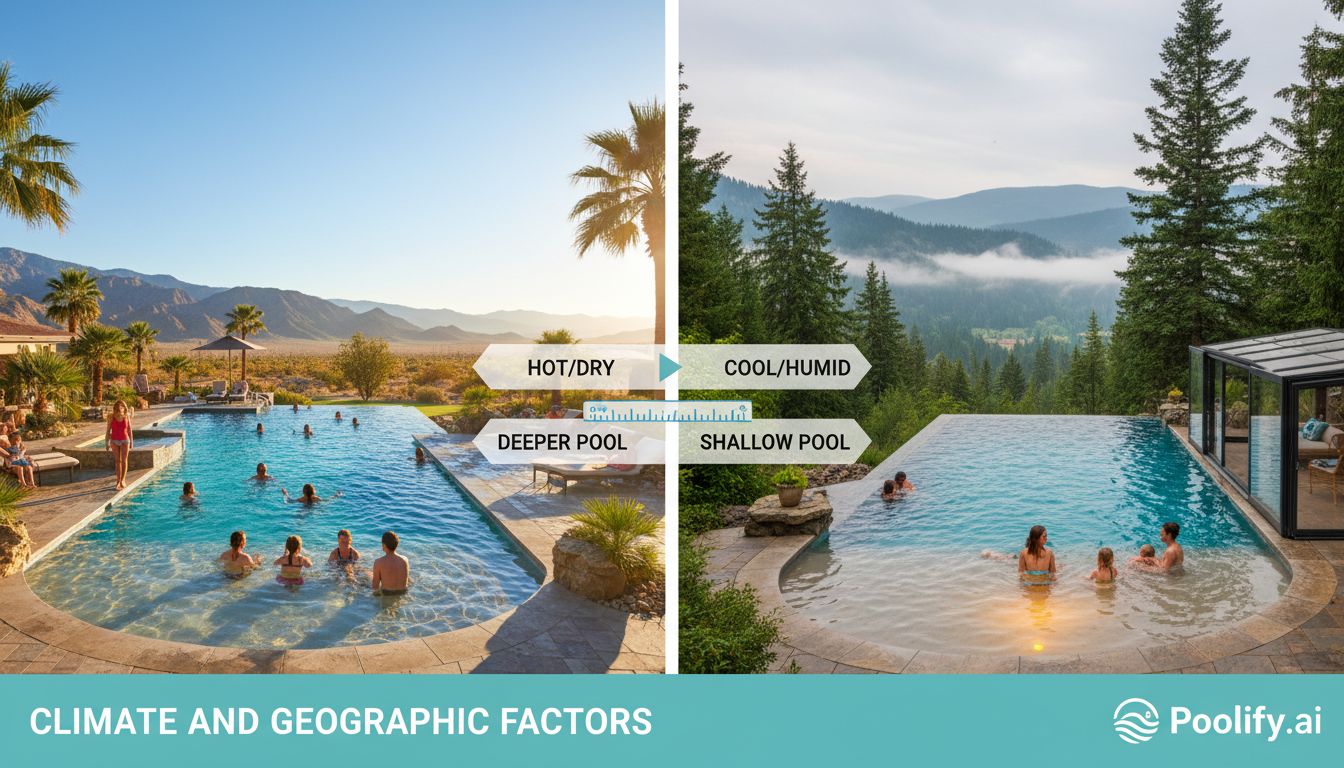
When considering what is a good pool depth, your geographic location and local climate play important roles. Temperature, sunlight exposure, and seasonal variations affect how depth impacts pool usability and enjoyment.
In warmer climates, deeper pools provide cooler water temperatures during hot summer months, as deeper water retains coolness better than shallow areas. Conversely, in regions with shorter swimming seasons, shallower pools heat more quickly and maintain comfortable temperatures with less energy input. Pool owners in northern climates often prefer maximum depths of 5 to 6 feet to balance heating costs with functionality.
Sunlight penetration also varies with depth. Shallow pools receive more direct sunlight, promoting algae growth but also warming water naturally. Deeper pools require more aggressive filtration and chemical treatment but maintain clearer water with proper maintenance. Consider your local climate patterns when determining what is a good pool depth for year-round or seasonal use.
Adapting Pool Depth for Aging in Place
As the population ages, many homeowners in 2026 are considering what is a good pool depth for long-term accessibility. Pools designed with aging in place principles incorporate features that remain usable as mobility changes over time.
Shallower pools with maximum depths of 4.5 to 5 feet reduce fall risks and make entry and exit easier for older adults. Installing graduated steps, bench seating at 12 to 18-inch depths, and handrails throughout the pool enhances safety and usability. Zero-entry designs eliminate the need to navigate stairs entirely, providing wheelchair accessibility and reducing injury risk.
Therapeutic benefits of aquatic exercise make pools valuable for maintaining mobility and fitness in later years. A depth of 4 to 4.5 feet allows most adults to stand comfortably while performing water-based exercises that reduce joint stress. When planning what is a good pool depth, consider not just current needs but how the pool will serve you over decades of ownership.
Common Mistakes When Choosing Pool Depth
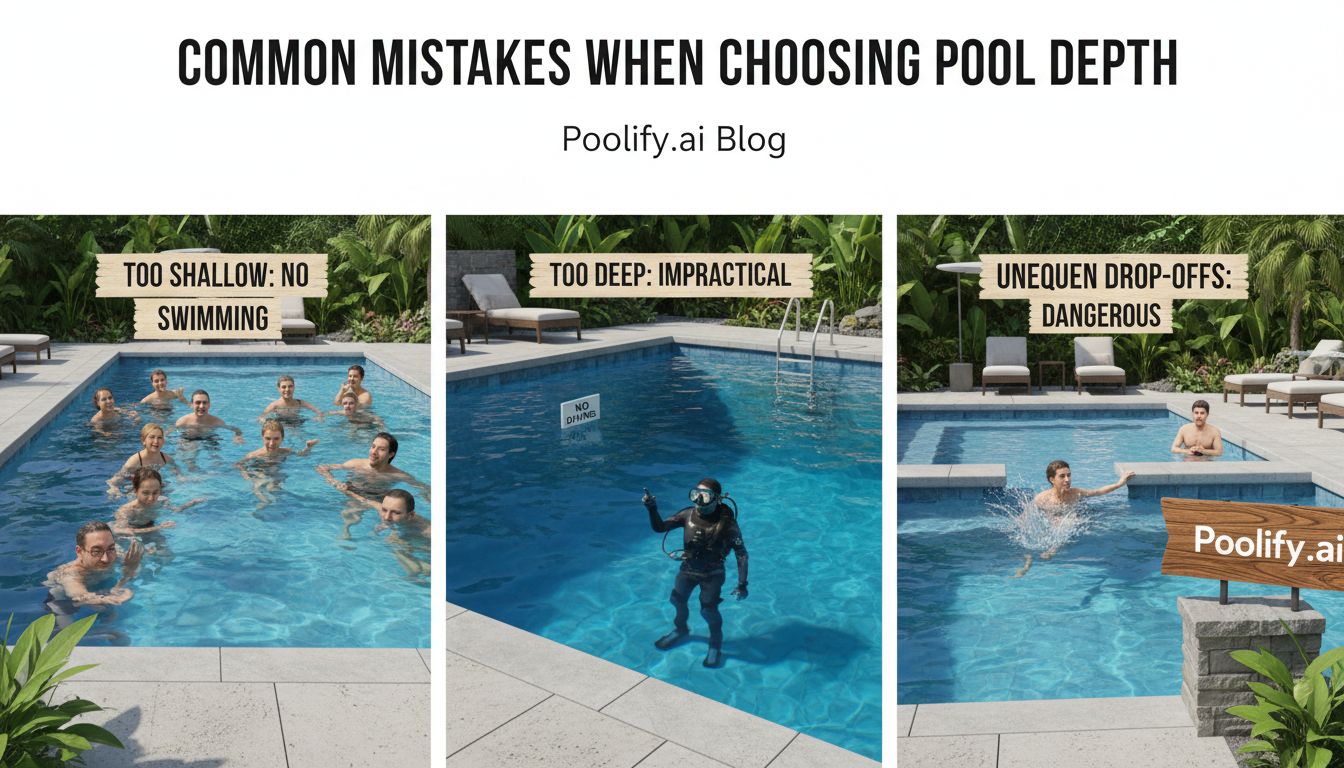
Understanding what is a good pool depth means avoiding common pitfalls that lead to regret and costly modifications. Learning from others’ mistakes helps you make informed decisions from the start.
Overemphasizing Diving Capabilities
Many homeowners build pools with 8 to 9-foot deep ends specifically for diving, only to discover that diving boards see minimal use. The deep end becomes wasted space that’s expensive to heat and maintain. Unless your family genuinely enjoys diving regularly, a maximum depth of 5 to 6 feet provides better versatility and lower costs.
Ignoring User Demographics
Failing to consider who will actually use the pool leads to inappropriate depth selection. Families with young children need shallow areas, while empty-nesters might prefer uniform depth for lap swimming. Assess your household composition realistically when determining what is a good pool depth, and plan for how needs might evolve over the pool’s 20 to 30-year lifespan.
Underestimating Maintenance Complexity
Deeper pools with significant depth variation require more sophisticated filtration systems and careful chemical balancing. The increased water volume and varying circulation patterns create maintenance challenges that surprise unprepared owners. Consider your willingness to invest time and money in ongoing maintenance when deciding what is a good pool depth for your lifestyle.
Neglecting Local Code Research
Building a pool without thoroughly researching local codes can result in expensive modifications or even pool removal orders. Some jurisdictions restrict maximum depths in residential areas or require specific safety features for pools exceeding certain depths. Always verify regulatory requirements before finalizing your depth specifications.
Frequently Asked Questions
What is a good pool depth for a family with young children?
For families with young children, what is a good pool depth includes a shallow area of 2.5 to 3.5 feet where children can play safely while adults supervise. The pool should gradually transition to a maximum depth of 5 to 6 feet, providing versatility as children grow while maintaining safety. Always include clear depth markers, safety ropes dividing shallow and deep areas, and consider a beach entry design for the easiest access.
Can I add a diving board to an existing pool?
Adding a diving board to an existing pool is only safe if the pool meets minimum depth requirements: at least 8 feet deep extending 12 feet from the board’s tip. Most residential pools weren’t built to diving specifications, making board addition unsafe and potentially illegal. Consult with a pool professional to assess whether your existing depth configuration can safely accommodate diving equipment.
How does pool depth affect heating costs?
Pool depth significantly impacts heating costs because deeper pools contain more water requiring more energy to warm. A pool with an average depth of 6 feet costs approximately 25-35% more to heat than a 4-foot pool of the same surface area. Deeper pools also lose heat more slowly, which can be advantageous in cooler climates. When considering what is a good pool depth, factor in both initial heating and ongoing temperature maintenance costs.
What is the ideal depth for water volleyball and games?
The ideal depth for water volleyball and most pool games ranges from 3.5 to 4.5 feet. This depth allows players to stand and jump comfortably while providing enough water resistance for an engaging workout. A consistent depth throughout the play area ensures fair game conditions and reduces injury risk from unexpected depth changes.
Should I build a deeper pool for better resale value?
Pool depth has minimal impact on resale value compared to overall pool condition, design aesthetics, and yard integration. Extremely deep pools (over 8 feet) may actually deter buyers with young children or safety concerns. When considering what is a good pool depth for resale purposes, focus on versatile configurations that appeal to broad buyer demographics, typically ranging from 3 to 6 feet with gradual transitions.
Key Takeaways
- Activity-Based Selection: What is a good pool depth depends primarily on intended use, with recreational swimming requiring 3.5-5 feet, lap swimming needing 4-6 feet, and diving demanding minimum 8-foot depths with proper clearances.
- Safety First: Proper depth selection, clear marking, gradual transitions, and appropriate supervision zones prevent the majority of depth-related pool accidents and injuries.
- Cost Considerations: Deeper pools cost 25-40% more to construct and maintain than shallow pools due to increased excavation, materials, water volume, heating, and chemical requirements.
- Versatile Configurations: Multi-depth designs with shallow areas (3-3.5 feet), mid-sections (4.5-5 feet), and optional deep ends (6-8 feet) accommodate diverse users and activities in a single installation.
- Long-Term Planning: Consider household demographics, aging-in-place needs, maintenance commitment, and local regulations when determining what is a good pool depth for your specific situation and future requirements.
Conclusion
Determining what is a good pool depth requires balancing multiple factors including intended use, user demographics, safety requirements, budget constraints, and long-term maintenance considerations. In 2026, pool design has evolved to emphasize versatility and multi-generational appeal, with most families benefiting from configurations that range from 3 feet in shallow areas to 5 or 6 feet at the deepest point. This range accommodates recreational swimming, children’s play, aquatic exercise, and general enjoyment without the expense and maintenance burden of extremely deep pools.
Safety should always be your primary concern when deciding what is a good pool depth. Proper depth selection, combined with clear marking, appropriate safety equipment, and vigilant supervision, creates an environment where swimmers of all ages and abilities can enjoy the water confidently. Avoid the temptation to build deeper than necessary based on occasional use cases like diving, which often sees minimal use after the initial excitement fades.
Remember that what is a good pool depth for your neighbor may not suit your needs. Take time to honestly assess how you’ll use the pool, who will swim regularly, and how your needs might change over the pool’s multi-decade lifespan. Consult with experienced pool designers and builders who can translate your vision into appropriate depth specifications while ensuring compliance with local codes and safety standards. By carefully considering all these factors, you’ll create a pool that provides years of safe enjoyment while maximizing your investment value.
References
- Consumer Product Safety Commission – Pool Safely Campaign: https://www.cpsc.gov/Safety-Education/Safety-Education-Centers/Pool-Safely
- American Red Cross – Swimming and Water Safety Standards: https://www.redcross.org/take-a-class/swimming/swim-safety