
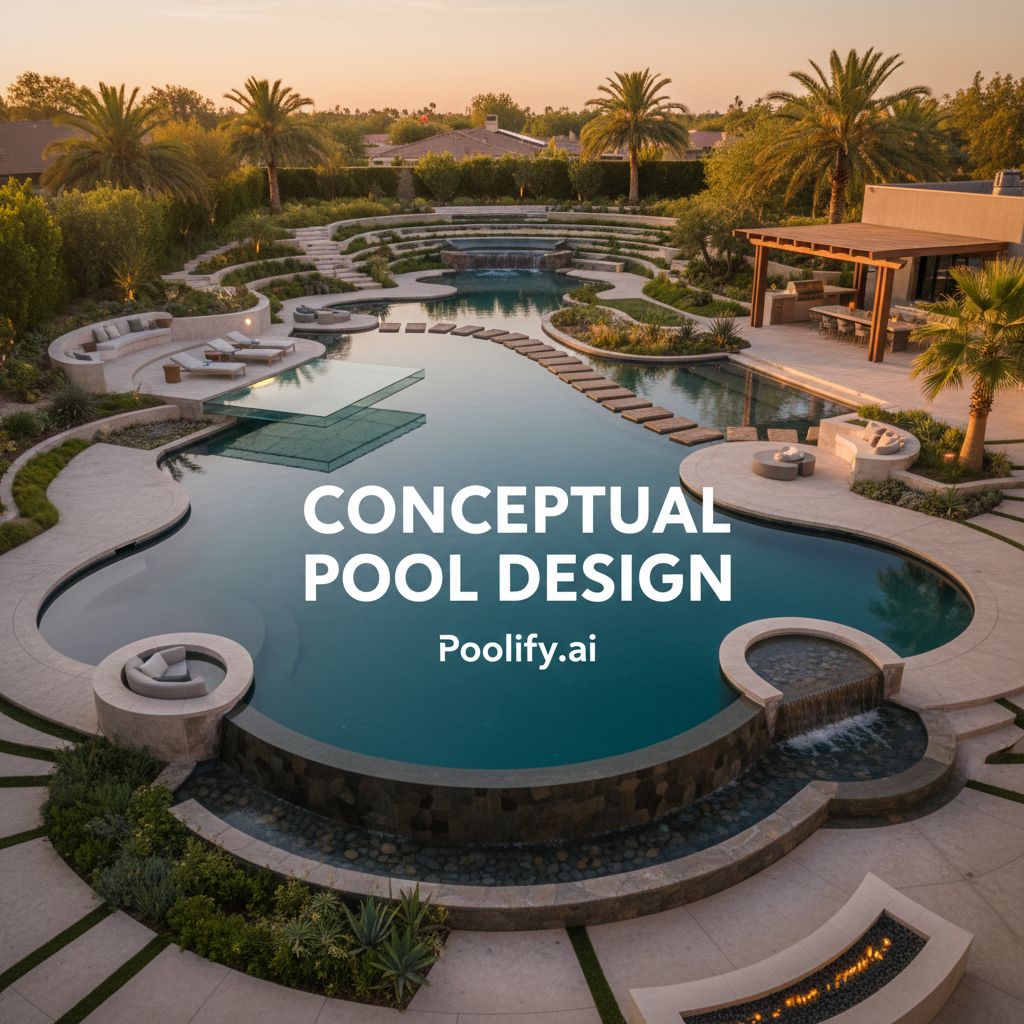
Conceptual pool design is the early planning stage where ideas take shape before construction details, permits, or engineering are involved. This phase focuses on layout, proportion, and how a pool fits into a specific backyard, rather than how it will be built.
Understanding conceptual pool design helps homeowners make better decisions early, avoid costly changes later, and move into construction with clarity and confidence.
What Happens During Conceptual Pool Design
Conceptual pool design is about defining the vision of the pool, not finalizing technical details.
Core elements of conceptual design
- Pool size and shape
- Placement in the backyard
- Relationship to the house and outdoor spaces
- General depth layout
- Feature priorities such as spas or tanning ledges
At this stage, flexibility is high and changes are easy to make.
How Conceptual Design Differs From Construction Design
Many homeowners confuse conceptual design with construction drawings. They serve very different purposes.
Conceptual pool design
- Focuses on layout and usability
- Explores multiple options
- Prioritizes visual balance and flow
- Happens early in the process
Construction pool design
- Focuses on engineering and code compliance
- Produces detailed plans
- Happens after decisions are finalized
- Is expensive to change
Skipping conceptual design often leads to rushed decisions during construction planning.
Why Conceptual Pool Design Matters
Most pool regrets come from decisions made too late. Conceptual design prevents that by slowing down the right part of the process.
Benefits of conceptual pool design
- Clear understanding of space and scale
- Better alignment with how the pool will be used
- Fewer surprises during construction
- Stronger cost control
- More confident communication with builders
A clear concept makes every later step easier.
Who Uses Conceptual Pool Design?
Conceptual pool design is used by:
- Homeowners planning their first pool
- Pool architects working on complex properties
- Landscape designers integrating outdoor spaces
- Builders preparing early proposals
It is especially valuable when the pool plays a central role in the backyard layout.
Common Mistakes When Skipping Conceptual Design
Jumping straight into construction plans
This locks in decisions before they are fully understood.
Designing around templates
Templates may not fit unique yards or lifestyles.
Making decisions in isolation
Features chosen without seeing the full layout often conflict later.
Underestimating cost impacts
Conceptual design highlights tradeoffs before money is spent.
How Visualization Supports Conceptual Design
Conceptual design works best when ideas are visual, not abstract.
Visualization allows you to:
- Compare multiple layouts side by side
- Understand proportions in your actual yard
- Test different pool sizes and placements
- Identify issues early
Seeing the concept clearly often changes preferences and priorities.
How AI Pool Design Fits Into the Conceptual Phase
AI pool design tools are built specifically for conceptual exploration. Instead of starting from a blank slate, homeowners can generate multiple pool concepts quickly and refine what works best.
Tools like Poolify focus on this early stage, helping users explore layouts, shapes, and features before committing to construction plans or professional services.
When Conceptual Design Is Complete
Conceptual design is complete when you can confidently answer:
- Where will the pool go?
- How big should it be?
- What shape fits best?
- Which features are essential?
- How does it fit the yard as a whole?
Once these questions are answered, moving into construction planning becomes far more efficient.
Key Takeaways
- Conceptual pool design happens before engineering and permits
- It focuses on layout, scale, and usability
- Skipping this stage leads to costly mistakes
- Visualization makes conceptual design clearer and faster
- AI tools are well-suited for early pool design exploration
Conceptual pool design sets the foundation for a successful pool project. Getting it right early saves time, money, and frustration later.