
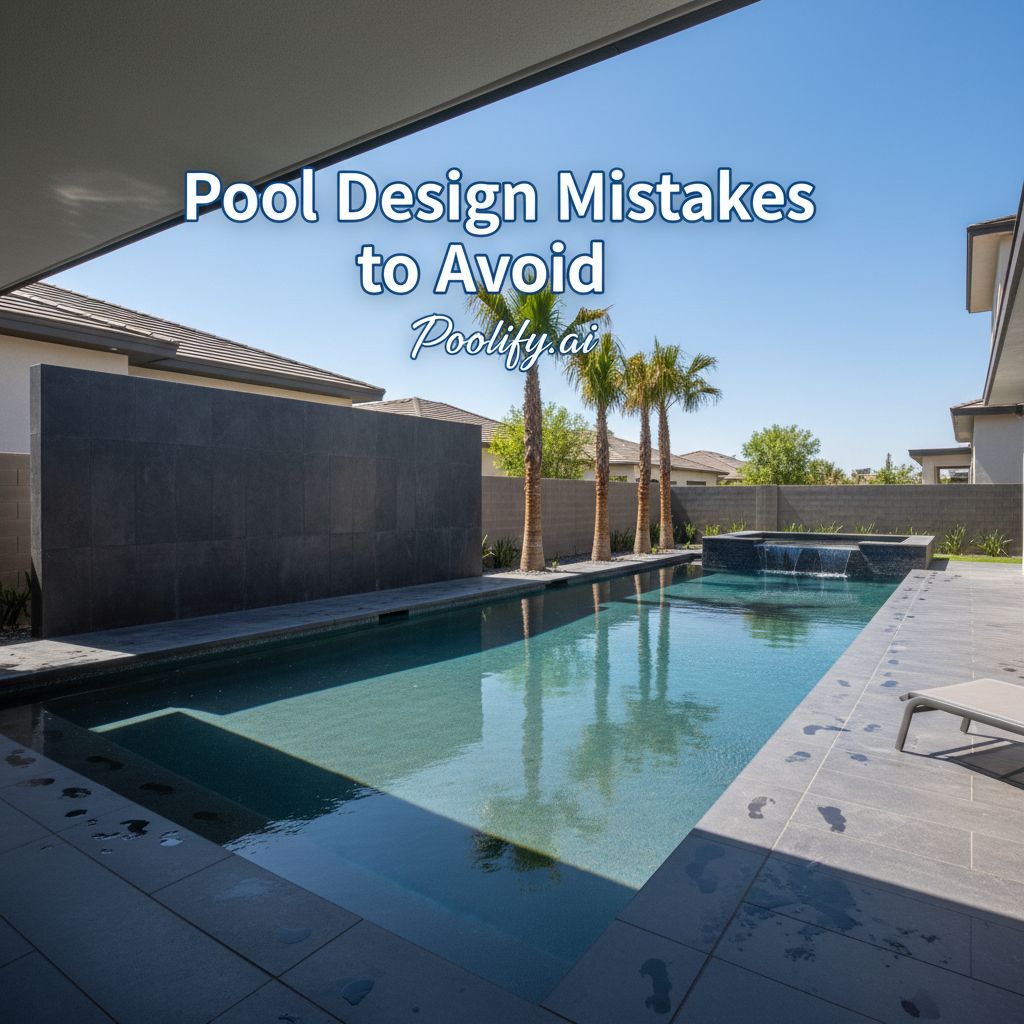
Many pool regrets are not caused by poor construction. They come from design mistakes made early in the planning process. Once a pool is built, these mistakes are difficult and expensive to fix.
This guide covers the most common pool design mistakes homeowners make, why they happen, and how to avoid them before construction ever begins.
Designing Without Understanding the Yard
One of the biggest mistakes is designing a pool without fully accounting for the backyard itself.
Common issues
- Ignoring slopes or elevation changes
- Overlooking setbacks and property lines
- Forgetting about easements or utilities
- Assuming the entire yard is usable
A pool that technically fits on paper may feel cramped or awkward once built. Design should always start with real site constraints.
Choosing a Pool That Is Too Large
Many homeowners assume bigger is better. In reality, oversized pools often reduce enjoyment.
Problems with oversized pools
- Little room left for decking or seating
- Reduced landscaping options
- Higher construction and maintenance costs
- Poor visual balance in the yard
A well-proportioned pool usually feels more luxurious than one that overwhelms the space.
Ignoring Deck and Circulation Space
Focusing only on the pool shell is a common mistake. The space around the pool is just as important.
What gets overlooked
- Walkways around the pool
- Seating and lounge areas
- Safe entry and exit paths
- Flow between the house and pool
Pools without adequate surrounding space feel cramped and uncomfortable, no matter how nice the water looks.
Overloading the Design With Features
Features add appeal, but too many features often create problems.
Feature-related mistakes
- Adding every upgrade available
- Prioritizing appearance over usability
- Choosing features without considering maintenance
- Reducing swim space with excessive add-ons
Features should enhance how the pool is used, not complicate it.
Designing Without a Budget Range
Designing without a realistic budget leads to disappointment and redesigns.
What happens
- Initial designs exceed budget
- Features must be removed late
- Layouts change mid-process
- Costs increase due to revisions
Having a rough budget range early allows smarter design decisions from the start.
Skipping Visualization Before Building
Trying to imagine the pool without seeing it in context leads to poor decisions.
Consequences
- Pool feels too big or too small
- Placement feels awkward
- Features don’t work together
- Changes happen after construction starts
Visualization is one of the most effective ways to prevent regret.
Relying Completely on Builder Templates
Builders often use standard layouts to move projects efficiently. While this is not inherently bad, it can limit customization.
Risks
- Generic designs that do not fit the yard
- Missed opportunities for better layouts
- Features added without clear purpose
Homeowners benefit from having a clear design vision before engaging builders.
Designing for Trends Instead of Long-Term Use
Trendy features and styles may look appealing now but can feel dated quickly.
Common trend mistakes
- Overly decorative water features
- Unusual shapes without functional benefits
- Styles that do not match the home
Pools are permanent. Design decisions should prioritize longevity.
Making Changes Late in the Process
Late design changes are among the most expensive mistakes.
Why late changes cost more
- Rework of construction plans
- Delays in scheduling
- Material changes
- Additional labor costs
Early exploration reduces the need for changes later.
How Early Visualization Helps Avoid These Mistakes
Visualizing the pool in your actual backyard allows you to identify problems before they become permanent.
Seeing different layouts helps you:
- Compare sizes and proportions
- Test placement options
- Evaluate feature tradeoffs
- Align design with budget
This step alone prevents many of the most common mistakes.
How AI Pool Design Supports Better Decisions
AI pool design tools help homeowners explore multiple design options quickly. Instead of committing to a single idea too early, you can compare layouts and refine choices before involving a builder.
Tools like Poolify focus on this early stage, helping homeowners avoid costly design mistakes and move forward with confidence.
Key Takeaways
- Most pool regrets come from early design mistakes
- Oversizing and poor layout are common issues
- Deck space and circulation are often overlooked
- Too many features reduce usability
- Visualization before building prevents costly errors
Avoiding pool design mistakes starts with thoughtful planning, realistic expectations, and seeing the design clearly before construction begins.