
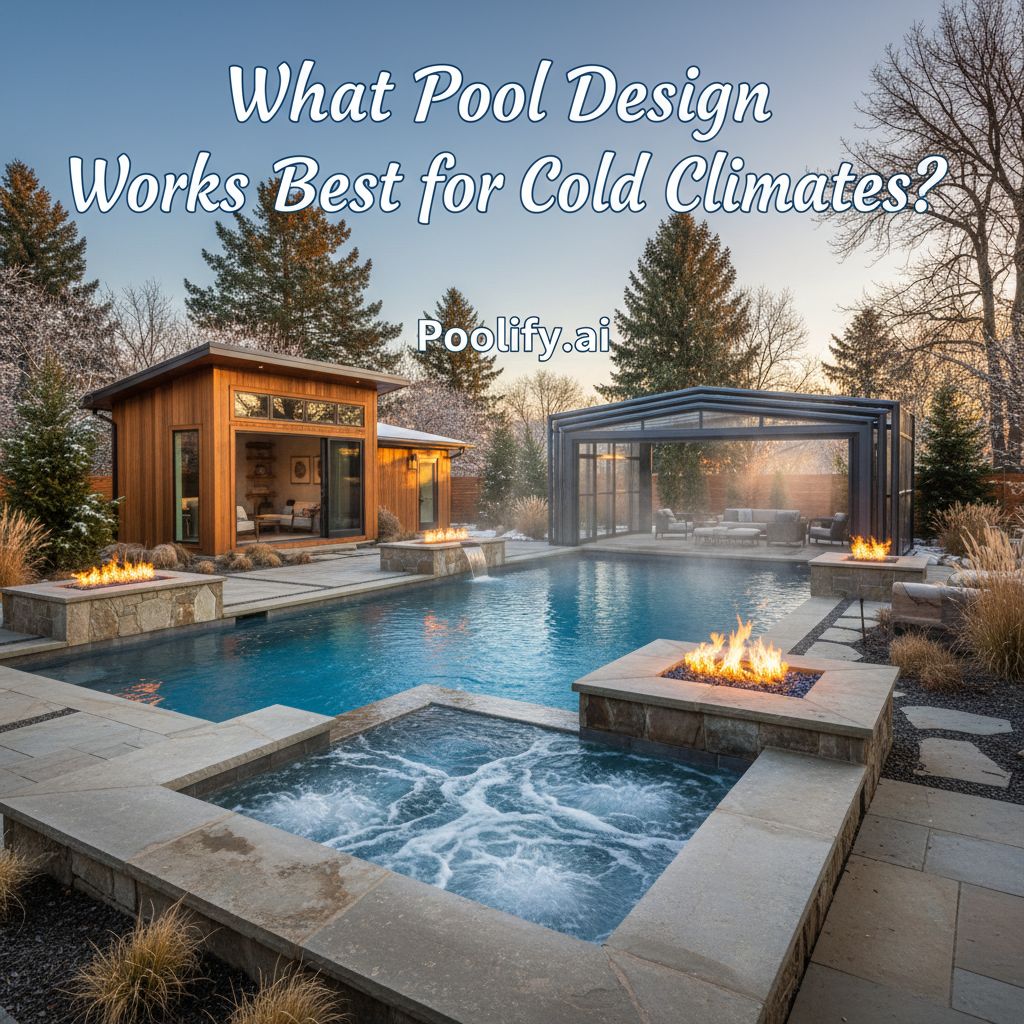
Designing a pool for a cold climate requires a different approach than warm-weather regions. The best designs focus on seasonal usability, durability, and efficient maintenance, ensuring the pool adds value even when it is not in constant use.
This guide explains what pool design works best for cold climates, which features perform well in freezing conditions, and how to avoid designs that increase cost or maintenance challenges.
Design for a Shorter Swim Season
In cold climates, pools are typically used fewer months per year. Design choices should reflect this reality.
Cold-climate design priorities
- Efficient layouts that heat easily
- Features that add value outside swim season
- Durable materials that handle freeze-thaw cycles
- Simple designs that winterize well
Pools should enhance the backyard year-round, not only in summer.
Choose Simple, Durable Pool Shapes
Freeze-thaw cycles can stress complex designs.
Best shapes for cold climates
- Rectangular pools
- Simple geometric designs
- Straight walls and clean corners
Simple shapes are easier to protect, cover, and maintain through winter.
Consider Pool Size Carefully
Oversized pools take longer to heat and cost more to operate.
Why moderate sizes work better
- Faster heating
- Lower energy costs
- Easier seasonal maintenance
- Better proportion to limited use months
A slightly smaller pool often provides better value in cold regions.
Integrate Features That Extend Seasonal Use
Cold-climate pools benefit from features that add value beyond peak summer.
Useful features
- Attached spas or hot tubs
- Wide steps and shallow lounging areas
- Built-in seating near the house
- Pool covers designed for insulation
These elements help justify the pool during cooler months.
Use Materials That Handle Freeze-Thaw Conditions
Material choice is critical in cold climates.
Cold-climate-friendly materials
- Durable concrete or gunite shells
- Frost-resistant coping and decking
- Neutral finishes that hide wear
- Non-slip surfaces for wet, cold conditions
Avoid materials that crack or shift easily with temperature changes.
Plan for Winterization and Maintenance
Pools in cold climates must be closed properly each year.
Design considerations for easier winterization
- Simple plumbing layouts
- Accessible equipment areas
- Standardized components
- Space for winter covers
Designing with winter maintenance in mind reduces long-term cost and effort.
Think About Pool Placement Relative to the House
Placement can improve comfort and usability.
Smart placement strategies
- Closer to the house for wind protection
- Positioned to capture maximum sun
- Integrated with patios for shoulder-season use
Strategic placement can extend usable months.
Balance Pool and Deck for Year-Round Appeal
In cold climates, the pool area should still look good when not in use.
Design tips
- Clean, uncluttered layouts
- Decks that function as patios year-round
- Landscaping that looks intentional without the pool in use
The backyard should feel complete even when the pool is closed.
Visualize the Pool Across Seasons
Cold-climate pool design benefits greatly from visualization.
Seeing the pool in context helps you:
- Evaluate winter appearance
- Balance pool and patio space
- Identify wind and sun exposure
- Design for year-round aesthetics
Visualization helps avoid pools that feel unused or out of place outside summer.
How AI Pool Design Supports Cold-Climate Planning
AI pool design tools allow homeowners to explore layouts that consider seasonal use, placement, and proportion.
Tools like Poolify help users visualize pool designs that work well in cold climates, making it easier to plan pools that add value even during the off-season.
Common Cold-Climate Pool Design Mistakes
Oversizing the pool
This increases heating and maintenance costs.
Ignoring winter appearance
Pools should still enhance the yard when closed.
Choosing fragile materials
Freeze-thaw cycles are unforgiving.
Key Takeaways
- Cold-climate pools should prioritize durability and efficiency
- Simple shapes handle freeze-thaw conditions better
- Moderate sizes heat more efficiently
- Features that extend seasonal use add value
- Visualization helps plan for year-round appeal
A well-designed pool in a cold climate feels intentional, efficient, and worthwhile — delivering enjoyment during swim season and visual value the rest of the year.