
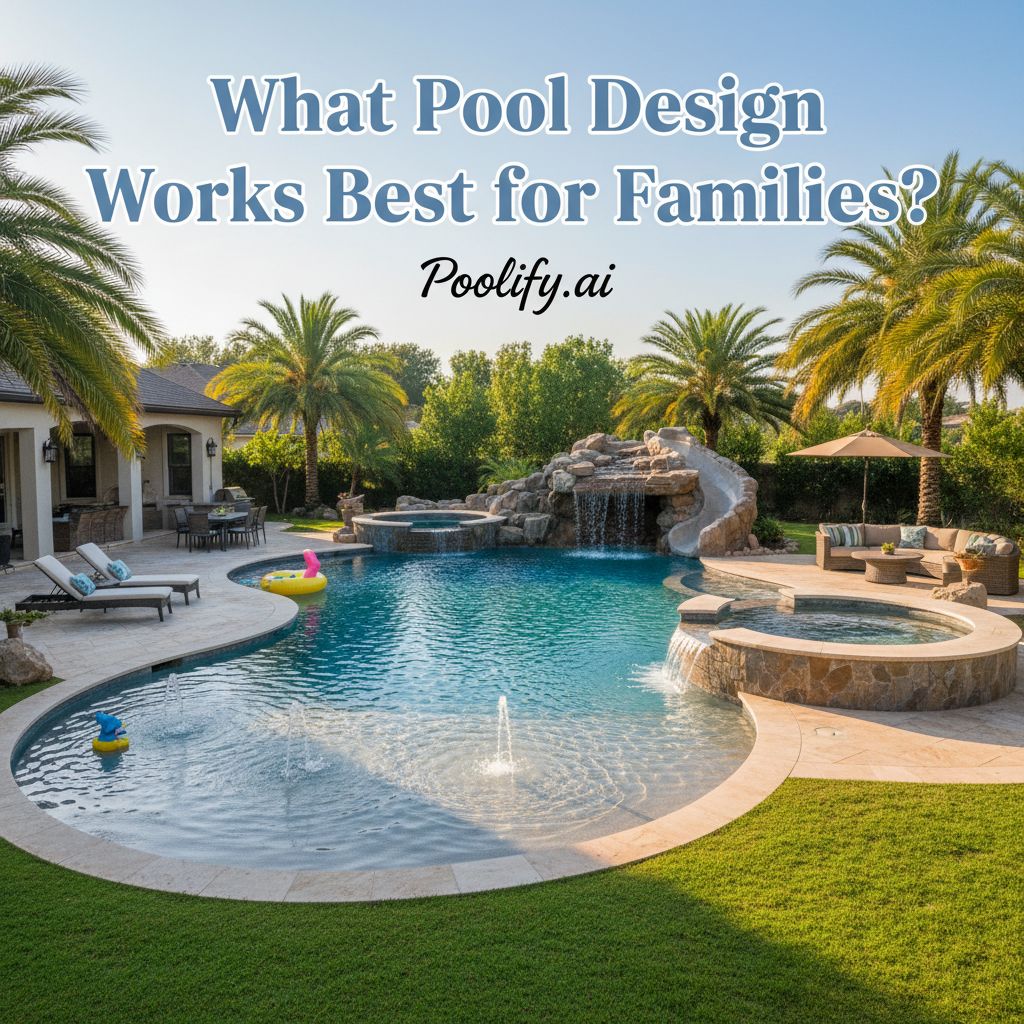
A family-friendly pool design focuses on safety, versatility, and long-term usability. The best designs accommodate different ages and activities while remaining easy to supervise and enjoyable as children grow.
This guide explains what pool design works best for families, which features provide everyday value, and how to avoid layouts that create safety or usability issues.
Prioritize Safety in the Layout
Safety starts with design, not accessories.
Layout choices that improve safety
- Clear sightlines from the house and patio
- Gradual depth transitions
- Defined shallow and deep areas
- Wide, slip-resistant entry points
Designs that allow easy supervision reduce risk and stress.
Include Generous Shallow Areas
Shallow water is essential for families.
Tanning ledges and shallow shelves
These areas provide safe play space for young children and comfortable lounging for adults.
Why they work
- Versatile for all ages
- Encourage social interaction
- Reduce crowding in deeper areas
Choose Pool Shapes That Support Supervision
Simple shapes make it easier to monitor activity.
Best shapes for families
- Rectangular or geometric pools for clear visibility
- L-shaped pools to separate play and relaxation zones
Avoid shapes with hidden corners that obstruct views.
Balance Pool Size With Yard Usability
Families need space beyond the pool.
Design considerations
- Leave room for play and seating
- Maintain clear walking paths
- Avoid oversized pools that dominate the yard
A balanced layout supports multiple activities at once.
Add Built-In Seating and Rest Areas
Built-in benches and steps provide safe places to rest.
Benefits
- Reduce fatigue for younger swimmers
- Provide supervision spots for adults
- Limit the need for extra furniture
These elements improve comfort and usability.
Plan for How Needs Will Change
A family pool should evolve with time.
Forward-thinking choices
- Moderate depths that remain useful as kids grow
- Flexible layouts that support different activities
- Timeless shapes that age well
Avoid designs that only work for one life stage.
Consider Maintenance and Upkeep
Families benefit from designs that are easy to maintain.
Low-maintenance design choices
- Simple shapes
- Durable finishes
- Minimal complex features
Lower maintenance keeps the pool enjoyable rather than burdensome.
Visualize Family Use Before Building
Imagining daily use is easier when designs are visual.
Visualization helps you:
- Confirm safe zones
- Identify supervision issues
- Adjust layout before construction
- Balance play and relaxation spaces
Seeing the pool in context often leads to better family-focused decisions.
How AI Pool Design Helps Family Planning
AI pool design tools allow families to explore multiple layouts and see how each supports different activities and age groups.
Tools like Poolify focus on early planning, helping homeowners visualize family-friendly designs and choose layouts that work today and in the future.
Common Family Pool Design Mistakes
Too much deep water
This limits use for younger swimmers.
Poor visibility
Hidden corners make supervision harder.
Overcomplicated features
Complex layouts increase risk and reduce usability.
Key Takeaways
- Family pools should prioritize safety and visibility
- Shallow areas add versatility for all ages
- Simple shapes support supervision
- Balanced layouts leave room for play and seating
- Visualization helps identify safety issues early
A well-designed family pool creates a space that feels safe, flexible, and enjoyable for everyone, from young children to adults, for years to come.