
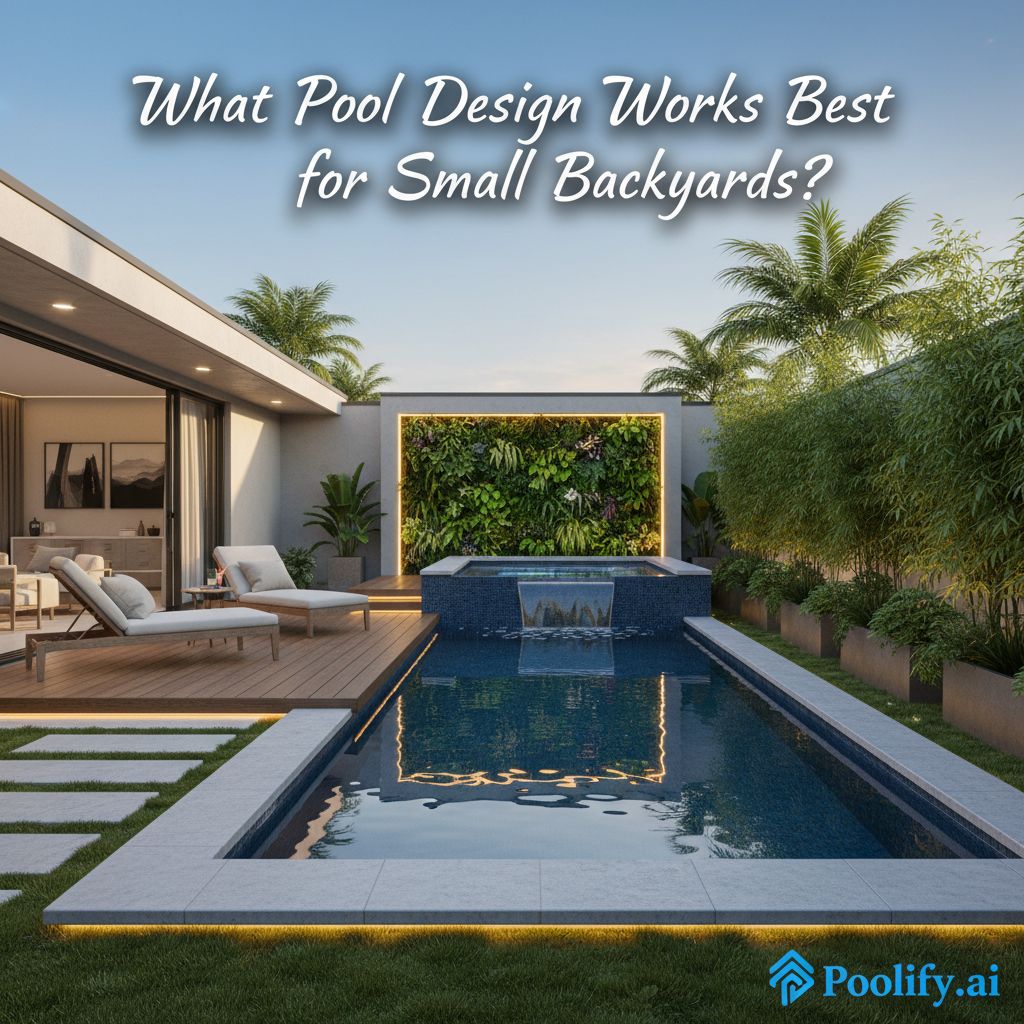
Designing a pool for a small backyard is absolutely possible, but it requires thoughtful planning. The most successful small-yard pools focus on proportion, placement, and usability rather than size alone. When done well, a small pool can feel intentional, luxurious, and highly functional.
This guide explains what pool design works best for small backyards, which layouts maximize space, and how to avoid common mistakes that make small yards feel cramped.
Start by Redefining What “Small” Means
A small backyard does not mean a small opportunity. Many compact spaces can support a pool if the design is efficient.
What matters more than yard size
- Usable space after setbacks
- Yard shape and proportions
- Relationship to the house and patio
- How the pool will be used
Designing for function first leads to better outcomes in limited spaces.
Choose Pool Shapes That Maximize Space
In small backyards, shape matters more than square footage.
Rectangular and geometric pools
Straight-edged pools use space efficiently and align well with patios and homes.
Why they work
- Clean lines
- Easy integration with decks
- Minimal wasted space
Narrow and lap-style pools
Long, narrow pools fit well in tight or side-yard layouts.
Benefits
- Strong visual impact
- Efficient footprint
- Ideal for exercise and cooling off
Plunge pools
Plunge pools prioritize relaxation over swimming distance.
Best for
- Very small yards
- Courtyards
- Urban properties
A plunge pool can deliver the pool experience without overwhelming the yard.
Keep Pool Size Proportional
In small yards, an oversized pool creates problems.
Signs a pool is too large
- Limited deck or seating space
- Difficult circulation around the pool
- Little room for landscaping
- Visual imbalance
A smaller pool with better spacing often feels more comfortable and upscale.
Prioritize Multi-Use Features
Features should serve more than one purpose in a small backyard.
Features that work well
- Tanning ledges that double as seating
- Built-in benches instead of furniture
- Simple water features for ambiance
- Integrated steps that save space
Avoid features that consume space without adding daily value.
Simplify the Surrounding Space
The area around the pool is just as important as the pool itself.
Smart layout strategies
- Combine pool and patio areas
- Use consistent materials to reduce visual clutter
- Keep circulation paths clear
- Minimize unnecessary level changes
Simplicity helps small spaces feel larger.
Use Visual Tricks to Make the Yard Feel Bigger
Design can influence perception.
Techniques that help
- Align pool edges with the house
- Use lighter finishes
- Keep shapes simple
- Maintain clear sightlines
A visually calm design makes the entire yard feel more open.
Visualize the Pool Before Building
Small backyards leave little margin for error. Visualization is especially important when space is limited.
Seeing the pool in your actual backyard helps you:
- Confirm proportions
- Test placement options
- Balance pool and deck space
- Avoid overcrowding
This step often leads homeowners to refine designs significantly.
How AI Pool Design Helps in Small Spaces
AI pool design tools allow homeowners to test multiple layouts quickly and see what works best in limited space.
Tools like Poolify focus on early planning, making it easier to explore compact pool designs and choose layouts that maximize usability without overwhelming the yard.
Common Small-Backyard Pool Mistakes
Oversizing the pool
This leaves no room to enjoy the rest of the yard.
Overcomplicating the design
Complex shapes and features reduce usable space.
Ignoring circulation
Tight walkways make the area feel cramped.
Key Takeaways
- Small backyards can support great pool designs
- Rectangular, narrow, and plunge pools work best
- Proportional sizing is critical
- Multi-use features maximize usability
- Visualization prevents costly mistakes
A well-designed pool in a small backyard can feel intentional, functional, and surprisingly spacious when planned thoughtfully from the start.