
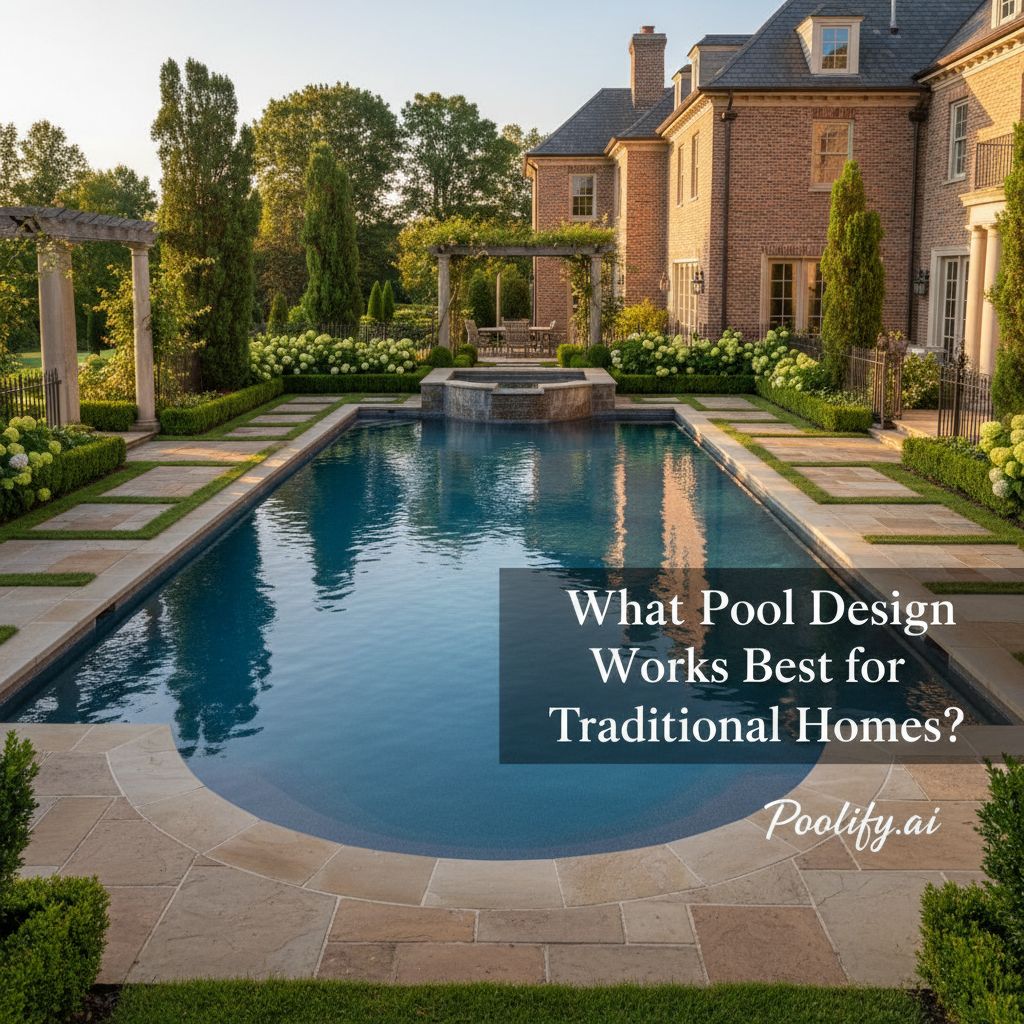
Traditional homes benefit from pool designs that feel balanced, timeless, and well-integrated with the architecture. The best traditional pool designs avoid extremes, focusing instead on proportion, symmetry, and subtle detailing that complements the home rather than competing with it.
This guide explains what pool design works best for traditional homes, which design choices reinforce a classic aesthetic, and how to avoid elements that feel out of place.
Emphasize Symmetry and Balance
Traditional architecture values order and proportion.
Pool shapes that suit traditional homes
- Rectangular pools
- Symmetrical geometric designs
- Classic L-shaped layouts with clean lines
Symmetry creates a sense of permanence and visual stability.
Align the Pool With the Home’s Layout
Traditional pools should feel intentionally placed.
Alignment strategies
- Center the pool on primary sightlines
- Align edges with major architectural elements
- Maintain consistent spacing from the house
This creates a composed, formal feel that complements traditional architecture.
Choose Timeless Materials and Finishes
Material selection plays a major role in traditional design.
Common traditional finish choices
- Neutral plaster or pebble finishes
- Natural stone or brick-inspired coping
- Warm, muted tones
Avoid overly bold or high-contrast finishes that distract from the overall design.
Use Features That Feel Classic, Not Trendy
Traditional pools benefit from familiar, understated features.
Features that work well
- Wide, formal steps
- Simple built-in benches
- Subtle water features like small scuppers
- Balanced lighting for evening use
Features should enhance usability without drawing attention to themselves.
Integrate the Pool With Landscaping
Landscaping plays a larger role in traditional pool design.
Landscaping strategies
- Framed planting beds
- Symmetrical tree or shrub placement
- Clear transitions between pool and garden areas
The pool should feel like part of a composed outdoor setting.
Avoid Overly Modern or Organic Elements
Certain elements can clash with traditional homes.
Use caution with
- Irregular freeform shapes
- Ultra-minimalist detailing
- Highly contemporary finishes
- Overly dramatic water features
Consistency with the home’s style is key.
Balance Pool Size With Yard Scale
Traditional homes often emphasize proportion over scale.
Layout considerations
- Moderate pool sizes that fit the property
- Adequate deck and circulation space
- Clear boundaries between pool and lawn
An oversized pool can disrupt the balance of a traditional yard.
Visualize the Pool in Context
Traditional design relies on subtle relationships between elements.
Visualization helps you:
- Confirm symmetry and alignment
- Evaluate material choices
- Balance pool and landscaping
- Avoid design clashes
Seeing the pool in your actual yard supports better traditional design decisions.
How AI Pool Design Supports Traditional Planning
AI pool design tools allow homeowners to explore classic layouts and visualize how a pool fits within a traditional setting.
Tools like Poolify focus on early planning, helping users refine proportions, placement, and style before construction begins.
Common Traditional Pool Design Mistakes
Over-modernizing
Design elements that are too contemporary can feel out of place.
Ignoring landscaping
Traditional pools rely on strong landscape integration.
Oversizing the pool
This disrupts balance and formality.
Key Takeaways
- Traditional pool design emphasizes symmetry and balance
- Rectangular and geometric shapes work best
- Timeless materials reinforce classic appeal
- Landscaping integration is critical
- Visualization helps refine traditional details
A well-designed traditional pool feels permanent, balanced, and naturally integrated with the home, creating an outdoor space that remains appealing for decades.