
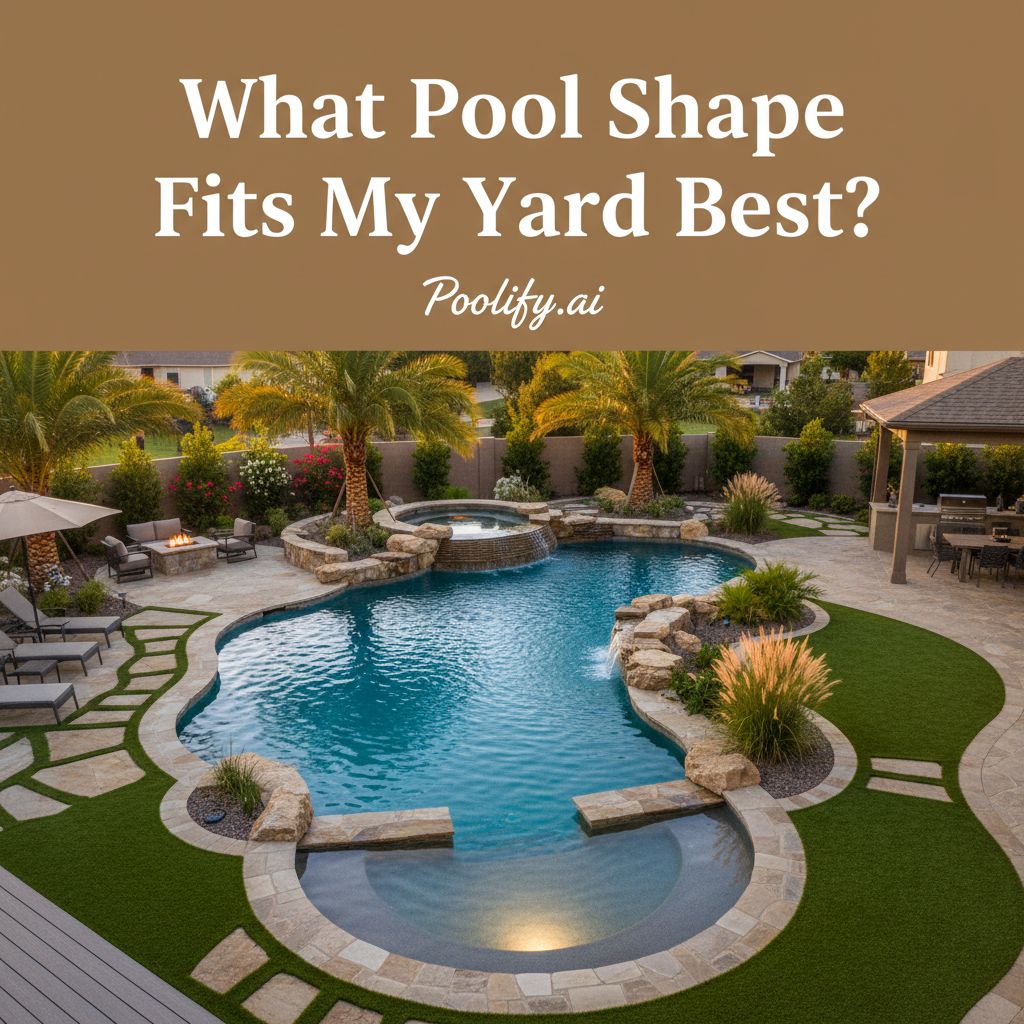
Choosing the right pool shape is one of the most important decisions in the pool design process. The shape determines how the pool fits your yard, how the space feels, how the pool is used, and how well everything flows together. A pool shape that looks great in one yard can feel awkward or oversized in another.
This guide explains how to determine what pool shape fits your yard best, what factors actually matter, and how to avoid common design mistakes before construction begins.
Start With the Shape of Your Yard
The best pool shape almost always mirrors the geometry of the backyard.
Things to evaluate first
- Overall yard shape (rectangular, narrow, irregular)
- Distance from the house
- Existing patios, decks, or walkways
- Setbacks and property lines
- Slopes or elevation changes
A pool should feel intentional in the space, not forced into it.
Rectangular Pool Designs
Rectangular pools are one of the most popular choices because they are clean, simple, and versatile.
When rectangular pools work best
- Modern or contemporary homes
- Straight property lines and clean geometry
- Yards with limited width
- Lap swimming or exercise use
Pros
- Efficient use of space
- Easy to furnish with decking and seating
- Often lower construction complexity
Cons
- Can feel rigid in organic landscapes
- Less forgiving in irregular yards
Rectangular pools often feel larger than they are because of their simplicity and symmetry.
Freeform Pool Designs
Freeform pools use curves and organic shapes to blend into the landscape.
When freeform pools work best
- Large or irregularly shaped yards
- Natural or tropical landscaping
- Properties with curves or elevation changes
Pros
- Softer, more natural appearance
- Flexible layout options
- Works well with landscaping features
Cons
- Can reduce usable swim space
- More complex to design and build
Freeform designs are visually appealing but should still be carefully scaled to the yard.
L-Shaped Pool Designs
L-shaped pools are practical solutions for complex layouts.
When L-shaped pools make sense
- Homes with wraparound patios
- Yards with limited central space
- Families wanting separate activity zones
Benefits
- Clear separation of shallow and deep areas
- Fits around structures better than standard shapes
- Supports multiple uses at once
This shape often solves layout problems that other designs cannot.
Narrow and Lap Pool Designs
Narrow pools are ideal for tight or urban yards.
Best use cases
- Side yards
- Long, narrow spaces
- Exercise-focused swimming
Advantages
- Minimal footprint
- Strong visual impact
- Lower water volume
These pools prioritize function while still adding visual appeal.
Plunge Pool Designs
Plunge pools focus on relaxation rather than swimming.
When plunge pools work best
- Very small backyards
- Courtyards
- Urban or high-density neighborhoods
Key benefits
- Lower cost than full-size pools
- Easier maintenance
- Great for cooling off and lounging
A well-designed plunge pool can feel intentional and luxurious despite its size.
How Pool Shape Affects Cost
Pool shape plays a direct role in construction cost.
Shapes that tend to cost less
- Simple rectangular designs
- Minimal curves
- Standard dimensions
Shapes that increase cost
- Complex curves
- Custom geometry
- Integrated features like spas or infinity edges
Choosing the right shape early helps prevent budget overruns.
Visualizing Pool Shapes in Your Yard
It is difficult to choose the best pool shape without seeing how it fits your space. What looks good on paper may feel oversized, cramped, or out of proportion in reality.
Visualizing different pool shapes directly in your backyard allows you to:
- Compare multiple layouts quickly
- Understand scale and spacing
- See how shapes interact with patios and landscaping
- Make confident decisions before construction
This step often changes opinions and prevents costly redesigns.
Common Pool Shape Mistakes to Avoid
Choosing based on trends
Trends change, but your yard does not.
Oversizing the pool
Bigger is not always better.
Ignoring deck space
The area around the pool is just as important as the pool itself.
Skipping visualization
Seeing the shape in context avoids guesswork.
How AI Pool Design Helps With Shape Selection
AI pool design tools make it easier to explore multiple pool shapes without committing to one too early. Instead of guessing, homeowners can compare layouts and see how each option fits their actual yard.
Tools like Poolify focus on early-stage planning, allowing you to visualize different pool shapes and layouts before contacting a builder or finalizing plans.
Key Takeaways
- The best pool shape depends on your yard, not trends
- Rectangular pools work well in modern, structured spaces
- Freeform pools suit organic or irregular yards
- Narrow, L-shaped, and plunge pools solve space constraints
- Visualizing shapes in your actual backyard leads to better decisions
Choosing the right pool shape early makes the entire pool project smoother, faster, and more successful.