
Understanding Infinity Edge Pool Cost in 2026
The infinity edge pool cost represents one of the most significant investments homeowners can make in their property, with prices ranging from $80,000 to $250,000 or more in 2026. These stunning architectural features, also known as vanishing edge or negative edge pools, create the illusion that water extends infinitely into the horizon. While the visual impact is undeniable, understanding the complete infinity edge pool cost requires examining multiple factors that influence your total investment.
Unlike traditional pools, infinity edge designs require specialized engineering, additional construction components, and precise installation techniques. The infinity edge pool cost typically runs 30-50% higher than standard inground pools due to these complexities. However, the dramatic aesthetic appeal and potential property value increase make this investment attractive for homeowners seeking a luxury outdoor experience.
This comprehensive guide breaks down every aspect of infinity edge pool cost, from initial construction expenses to long-term maintenance budgets. Whether you’re planning a hillside retreat or a backyard oasis, you’ll gain the insights needed to budget accurately and avoid costly surprises during your pool project.
Base Infinity Edge Pool Cost Breakdown
The foundation of any infinity edge pool cost estimate starts with understanding the core construction components. In 2026, the average base infinity edge pool cost for a standard residential installation ranges from $80,000 to $150,000 for a medium-sized pool measuring 12×24 feet. This baseline figure includes the primary pool structure, the catch basin system, and basic finishing materials.
The catch basin represents the defining feature that separates infinity pools from traditional designs. This secondary reservoir sits below the vanishing edge, collecting overflow water before pumping it back into the main pool. The catch basin alone adds $15,000-$30,000 to the overall infinity edge pool cost, depending on size and complexity. Larger pools or those with multiple vanishing edges require proportionally larger catch basins, increasing expenses accordingly.
Material selection significantly impacts the base infinity edge pool cost. Concrete or gunite construction remains the most popular choice, offering durability and design flexibility at $100-$150 per square foot. Fiberglass options exist but limit customization possibilities. Premium finishes like glass tiles, natural stone coping, or aggregate surfaces can add $10,000-$40,000 to your infinity edge pool cost, while standard plaster finishes represent the most economical choice.
Size and Depth Considerations
Pool dimensions directly correlate with infinity edge pool cost calculations. A compact 10×20 foot pool might start around $75,000, while expansive 20×40 foot designs easily exceed $200,000. Depth requirements also influence pricing, with standard 4-6 foot depths being most economical. Adding a deep end for diving or incorporating a spa component increases excavation, structural reinforcement, and overall infinity edge pool cost by $8,000-$20,000.
Site Preparation and Installation Costs
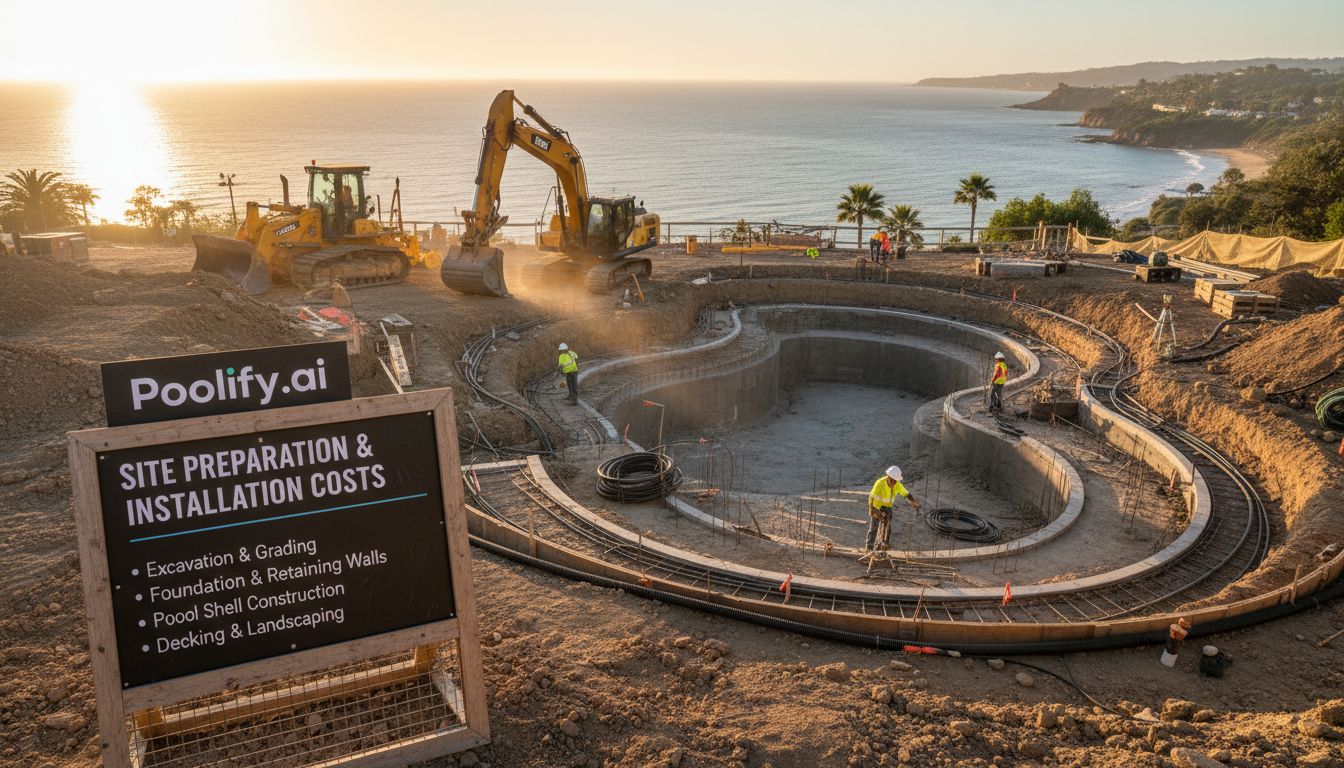
Site-specific factors can dramatically alter your final infinity edge pool cost. Properties with challenging terrain, poor soil conditions, or limited access require additional preparation work that impacts your budget. Excavation costs alone range from $5,000 to $25,000 depending on soil type, slope, and the need for rock removal or soil stabilization.
Hillside properties, while ideal for showcasing the vanishing edge effect, present unique challenges that increase infinity edge pool cost. Retaining walls, additional drainage systems, and specialized engineering may add $15,000-$50,000 to your project. According to the Association of Pool & Spa Professionals, proper site engineering prevents costly structural failures and ensures long-term pool stability.
Access limitations also affect infinity edge pool cost. Properties without direct backyard access require smaller equipment or hand-digging, increasing labor expenses by 20-40%. Crane services for lifting materials over homes add $2,000-$5,000 per day. Urban locations with strict working hours or noise ordinances may extend construction timelines, indirectly increasing your infinity edge pool cost through prolonged contractor engagement.
Utility and Infrastructure Requirements
Electrical, plumbing, and gas line installations represent essential components of infinity edge pool cost. Professional electrical work for pumps, lighting, and heating systems typically costs $3,000-$8,000. Plumbing for the dual-circulation system required by infinity pools adds $4,000-$10,000 beyond standard pool plumbing. Gas lines for heaters contribute another $1,500-$3,500 to the total infinity edge pool cost.
Equipment and Mechanical System Expenses
The mechanical systems required for infinity pools significantly impact overall infinity edge pool cost. These pools demand more sophisticated equipment than traditional designs due to the continuous water circulation between the main pool and catch basin. Variable-speed pumps, essential for efficient operation, cost $1,200-$2,500 each, and infinity pools typically require two pumps to manage the dual-circulation system.
Filtration systems for infinity pools must handle increased water volume and flow rates. High-capacity sand or cartridge filters range from $800-$2,500, while premium diatomaceous earth filters cost $1,500-$4,000. The enhanced filtration requirements add approximately $3,000-$6,000 to your infinity edge pool cost compared to standard pool equipment packages.
Heating systems represent a significant portion of infinity edge pool cost for homeowners in cooler climates. Gas heaters cost $2,500-$5,000, while energy-efficient heat pumps range from $4,000-$7,500. Solar heating systems offer long-term savings but require $5,000-$10,000 upfront investment. The larger water volume in infinity pools, including the catch basin, increases heating costs by 25-35% compared to traditional pools.
Automation and Control Systems
Modern pool automation enhances convenience but increases infinity edge pool cost. Basic control systems managing pumps, lighting, and heating start around $1,500-$2,500. Advanced smart systems with smartphone integration, automated chemical balancing, and remote monitoring cost $3,500-$7,000. These systems optimize energy efficiency and simplify maintenance, potentially offsetting their initial cost through reduced operational expenses.
Design Features That Impact Infinity Edge Pool Cost
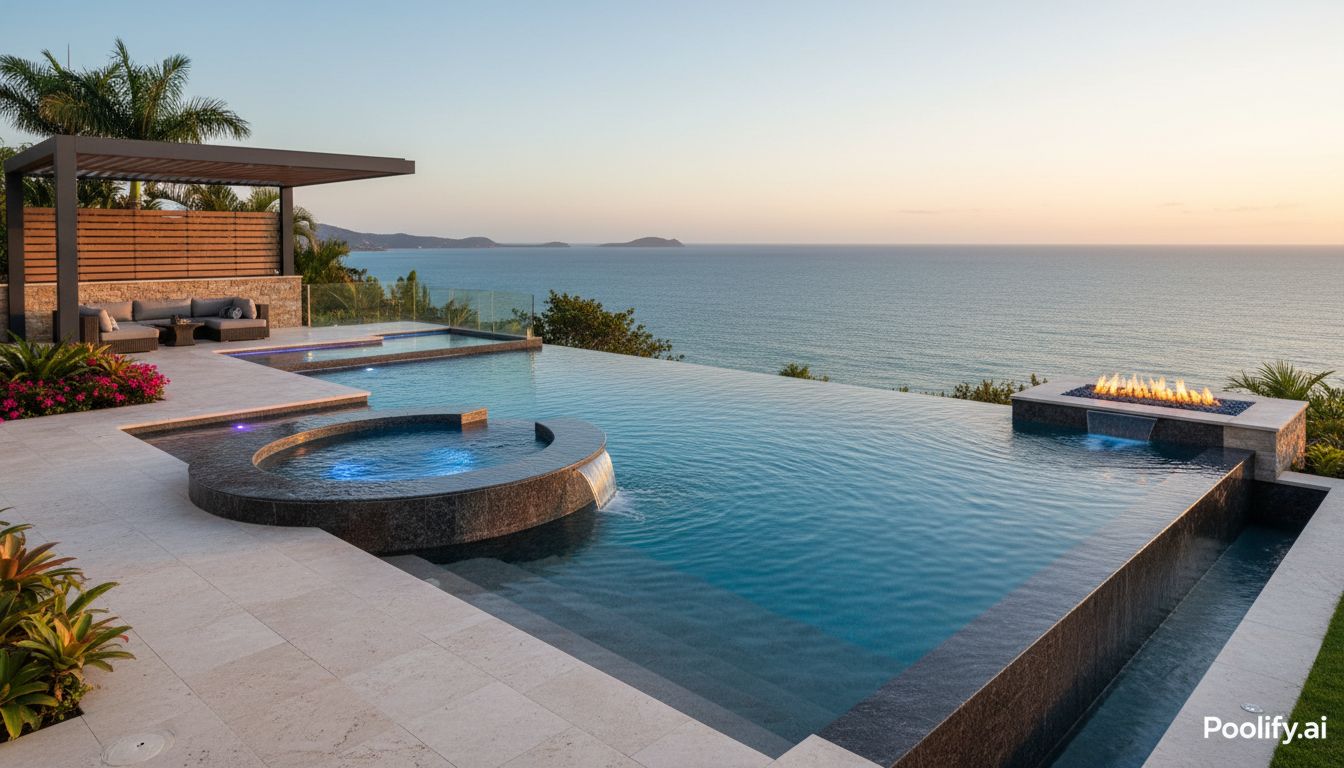
Customization options significantly influence your final infinity edge pool cost. Water features like spillways, bubblers, or deck jets add visual interest and ambient sound, costing $2,000-$8,000 per feature. Integrated spa sections increase infinity edge pool cost by $10,000-$25,000, while swim-up bars or submerged seating areas add $5,000-$15,000 depending on complexity.
Lighting transforms infinity pools into nighttime showcases. LED perimeter lighting costs $1,500-$3,500, while color-changing systems with multiple zones range from $3,000-$8,000. Fiber optic lighting for dramatic effects adds $5,000-$12,000 to infinity edge pool cost. Strategic lighting placement along the vanishing edge creates stunning visual effects that maximize your investment’s aesthetic impact.
Decking materials surrounding your pool substantially affect infinity edge pool cost and overall appearance. Poured concrete represents the most economical option at $6-$12 per square foot. Natural stone pavers cost $15-$30 per square foot, while premium materials like travertine or bluestone range from $25-$50 per square foot. For a typical 600-square-foot deck area, material choices alone can vary your infinity edge pool cost by $5,000-$20,000.
Landscaping and Aesthetic Enhancements
Landscaping integration enhances the infinity effect but adds to overall infinity edge pool cost. Strategic plantings, retaining walls, and hardscaping elements that frame the vanishing edge typically cost $10,000-$35,000. Fire features, outdoor kitchens, or pergolas create resort-style environments but can increase total project costs by $15,000-$75,000 depending on scope and materials selected.
Regional Variations in Infinity Edge Pool Cost
Geographic location substantially impacts infinity edge pool cost due to labor rates, material availability, and local building requirements. Coastal markets like California, Florida, and the Northeast command premium pricing, with average infinity edge pool cost ranging from $120,000-$250,000. Midwest and Southern regions typically see lower costs, averaging $80,000-$180,000 for comparable installations.
Climate considerations influence infinity edge pool cost through equipment selection and winterization requirements. Northern climates require robust freeze protection, automatic water leveling systems, and durable materials resistant to freeze-thaw cycles, adding $5,000-$12,000 to project costs. Conversely, year-round warm climates enable cost savings through simplified systems but may require enhanced evaporation management features.
Permitting costs and regulatory requirements vary significantly by jurisdiction, affecting infinity edge pool cost. Urban areas with strict codes may require $2,000-$8,000 in permits, engineering stamps, and inspection fees. Some municipalities mandate specific safety features, drainage systems, or setback requirements that increase construction complexity and overall infinity edge pool cost by 10-20%.
Labor Rate Differences
Skilled labor availability directly impacts infinity edge pool cost across regions. Metropolitan areas with high living costs see labor rates of $75-$125 per hour for specialized pool contractors. Rural areas may offer rates of $45-$75 per hour, but limited contractor availability can extend project timelines. The specialized expertise required for infinity edge construction commands premium rates regardless of location, typically 20-30% above standard pool installation labor costs.
Hidden Costs and Budget Considerations
Many homeowners underestimate the complete infinity edge pool cost by overlooking ancillary expenses. Soil disposal from excavation costs $500-$2,500 depending on volume and local dump fees. Temporary fencing during construction adds $800-$1,500, while landscape restoration after equipment access can require $2,000-$6,000. These miscellaneous expenses typically add 5-10% to your anticipated infinity edge pool cost.
Insurance implications represent an often-overlooked component of infinity edge pool cost. Homeowners insurance premiums typically increase $300-$800 annually after pool installation. Some insurers require specific safety features like self-closing gates, alarms, or safety covers, adding $1,500-$5,000 to upfront costs. Liability coverage becomes particularly important for pools with dramatic elevation changes or challenging access points.
Warranty and service agreements provide peace of mind but impact long-term infinity edge pool cost. Extended equipment warranties cost $500-$2,000 annually, while comprehensive service contracts including chemical balancing, cleaning, and equipment maintenance range from $1,500-$4,000 per year. These ongoing expenses should factor into your total ownership cost calculations beyond initial construction investment.
Financing and Interest Costs
Most homeowners finance their infinity edge pool cost through home equity loans, personal loans, or specialized pool financing. Interest rates in 2026 range from 6-12% depending on creditworthiness and loan type. On a $150,000 infinity edge pool cost financed over 15 years at 8%, total interest paid exceeds $60,000, nearly doubling the effective project cost. Exploring multiple financing options and understanding total repayment amounts ensures informed decision-making.
Annual Maintenance and Operating Costs
Beyond initial infinity edge pool cost, ongoing maintenance expenses require budgeting consideration. Annual operating costs typically range from $3,000-$6,000, covering chemicals, electricity, water, routine maintenance, and minor repairs. The dual-pump system and larger water volume in infinity pools increase energy consumption by 30-40% compared to traditional pools, adding $600-$1,200 annually to electricity costs.
Chemical requirements for infinity pools exceed standard pools due to increased water circulation and exposure. Annual chemical costs range from $500-$1,200 depending on usage patterns and water quality. Saltwater chlorination systems reduce chemical expenses but require $400-$600 in salt and periodic cell replacement costing $500-$800 every 3-5 years, factors that affect long-term infinity edge pool cost considerations.
Professional maintenance services simplify pool care but increase operational infinity edge pool cost. Weekly service contracts cost $100-$200 monthly, while bi-weekly service ranges from $75-$150 monthly. DIY maintenance reduces these expenses but requires time investment and equipment purchases totaling $500-$1,500 for testing kits, cleaning tools, and accessories. For guidance on maintaining your investment, explore our comprehensive pool maintenance strategies.
Repair and Replacement Reserves
Establishing reserves for major repairs prevents financial surprises during pool ownership. Pump replacements every 8-12 years cost $1,200-$2,500 each. Heater replacements every 10-15 years require $2,500-$7,500. Resurfacing every 10-20 years costs $5,000-$15,000 depending on materials. Setting aside $200-$400 monthly for these eventual expenses ensures your infinity edge pool cost remains manageable throughout ownership.
Cost-Saving Strategies Without Compromising Quality
Strategic planning can reduce infinity edge pool cost while maintaining design integrity. Scheduling construction during off-season months (late fall or winter) may yield 10-15% contractor discounts due to reduced demand. Obtaining multiple detailed quotes from licensed contractors ensures competitive pricing and helps identify inflated estimates that unnecessarily increase your infinity edge pool cost.
Material selection offers significant savings opportunities. Choosing standard plaster finishes instead of premium aggregates saves $8,000-$15,000 without compromising functionality. Opting for single-edge designs rather than multiple vanishing edges reduces catch basin requirements and lowers infinity edge pool cost by $10,000-$25,000 while still achieving dramatic visual impact on appropriately situated properties.
Phased construction approaches spread infinity edge pool cost over multiple years. Installing the basic pool structure initially, then adding features like spas, advanced lighting, or elaborate landscaping in subsequent years makes luxury pools more financially accessible. This strategy also allows homeowners to experience their pool before committing to additional enhancements, ensuring investments align with actual usage patterns.
DIY Opportunities and Limitations
While professional installation remains essential for structural and mechanical components, certain aspects of infinity edge pool cost allow DIY participation. Homeowners can handle landscaping, simple decking projects, or decorative elements, potentially saving $5,000-$15,000. However, attempting structural work, plumbing, or electrical installations without proper expertise risks costly corrections and code violations that ultimately increase total infinity edge pool cost. For related outdoor projects, check our pool landscaping inspiration guide.
Return on Investment and Property Value Impact
Understanding how infinity edge pool cost translates to property value helps justify the investment. According to real estate professionals, well-designed infinity pools in appropriate markets return 40-60% of construction costs in immediate property value increase. Premium properties with spectacular views may see even higher returns, as the pool becomes a defining feature that differentiates the home from comparable listings.
Market conditions significantly influence whether infinity edge pool cost represents sound financial investment. Properties in warm climates with year-round pool usage typically see stronger returns than those in seasonal markets. Neighborhoods where pools are common amenities benefit more from installations than areas where pools are rare, as buyers actively seek properties with existing pool infrastructure.
Beyond monetary returns, infinity edge pool cost should be evaluated against lifestyle benefits and personal enjoyment. Families who extensively use their pools over 10-20 years of ownership derive substantial value beyond resale considerations. The entertainment value, health benefits, and daily enjoyment often justify infinity edge pool cost regardless of strict financial return calculations.
Tax Implications and Considerations
Infinity edge pool cost may trigger property tax reassessments, increasing annual obligations by $500-$2,000 depending on jurisdiction and property value. Some locations classify pools as luxury improvements subject to higher assessment rates. Conversely, energy-efficient equipment or solar heating systems may qualify for tax credits or rebates that offset 10-30% of related equipment costs, effectively reducing total infinity edge pool cost.
Frequently Asked Questions About Infinity Edge Pool Cost
What is the average infinity edge pool cost in 2026?
The average infinity edge pool cost in 2026 ranges from $80,000 to $150,000 for standard residential installations. Premium projects with extensive customization, multiple vanishing edges, or challenging site conditions can exceed $250,000. The infinity edge pool cost typically runs 30-50% higher than comparable traditional inground pools due to specialized engineering, dual-circulation systems, and catch basin requirements.
Why does infinity edge pool cost more than traditional pools?
Infinity edge pool cost exceeds traditional pool pricing due to several factors. The catch basin system requires additional excavation, structural work, and waterproofing. Dual-pump systems and enhanced circulation equipment increase mechanical costs. Precise engineering ensures proper water flow over the vanishing edge, requiring specialized expertise. These technical requirements add $20,000-$50,000 to base infinity edge pool cost compared to standard designs.
Can I reduce infinity edge pool cost without sacrificing quality?
Yes, several strategies reduce infinity edge pool cost while maintaining quality. Choosing standard finishes over premium materials saves $8,000-$15,000. Single-edge designs instead of multiple vanishing edges reduce complexity and costs by $10,000-$25,000. Off-season construction scheduling may yield 10-15% discounts. Phased construction spreading features across multiple years makes projects more financially manageable without compromising core design integrity.
How much do annual maintenance costs add to infinity edge pool cost?
Annual maintenance adds $3,000-$6,000 to total infinity edge pool cost ownership. This includes chemicals ($500-$1,200), electricity for dual-pump systems ($1,200-$2,400), water ($200-$400), and routine maintenance or professional service contracts ($1,500-$4,000). Energy-efficient equipment and proper water chemistry management help minimize these ongoing expenses while protecting your initial infinity edge pool cost investment.
Does infinity edge pool cost include necessary permits and inspections?
Most contractor quotes include basic permitting in their infinity edge pool cost estimates, but homeowners should verify this explicitly. Permit costs vary by jurisdiction from $500-$8,000 depending on local requirements. Engineering stamps, soil tests, and multiple inspections may incur additional fees. Complex projects or strict municipal codes can add 5-10% to base infinity edge pool cost through regulatory compliance expenses.
Key Takeaways
- Budget Comprehensively: Infinity edge pool cost ranges from $80,000-$250,000+ in 2026, with the catch basin system and dual-circulation requirements adding 30-50% over traditional pool costs. Include site preparation, equipment, finishing materials, and contingency funds in your total budget.
- Location Matters Significantly: Regional variations in labor rates, material costs, and climate requirements substantially impact infinity edge pool cost. Coastal and metropolitan markets command premium pricing, while site-specific challenges like hillside installation or poor soil conditions can add $15,000-$50,000 to base estimates.
- Plan for Ongoing Expenses: Annual operating costs of $3,000-$6,000 plus eventual equipment replacements and resurfacing should factor into long-term infinity edge pool cost calculations. Establishing maintenance reserves prevents financial surprises and protects your investment over decades of ownership.
- Strategic Choices Reduce Costs: Material selection, single versus multiple vanishing edges, off-season construction timing, and phased installation approaches can significantly reduce infinity edge pool cost without compromising quality or visual impact. Multiple contractor quotes ensure competitive pricing.
- Evaluate Total Value: Beyond strict financial returns of 40-60% in property value increase, assess infinity edge pool cost against lifestyle benefits, family enjoyment, and long-term usage patterns. Well-designed pools in appropriate markets justify investment through both monetary and experiential value.
Conclusion
Understanding the complete infinity edge pool cost empowers homeowners to make informed decisions about this significant investment. While the initial expense exceeds traditional pool installations, the dramatic visual impact, potential property value increase, and lifestyle enhancement justify the premium for many homeowners. By carefully evaluating site conditions, selecting appropriate materials, and planning for long-term ownership costs, you can create a stunning infinity edge pool that fits your budget and exceeds your expectations.
The key to managing infinity edge pool cost lies in comprehensive planning, obtaining detailed quotes from experienced contractors, and understanding both immediate and ongoing expenses. Whether your project falls on the modest or luxury end of the spectrum, investing time in research and careful decision-making ensures your infinity edge pool delivers maximum value and enjoyment for years to come.
As you move forward with your infinity edge pool project in 2026, remember that this investment extends beyond simple construction costs. The memories created, health benefits enjoyed, and property enhancement achieved represent returns that transcend strict financial calculations, making your infinity edge pool cost an investment in your family’s lifestyle and your home’s legacy.